

Basement Drying Johns Creek Homeowners Can Actually Decide On: Pros or Do It Yourself?
Water already got in. Here’s how each path works, what decides it, and when we’d honestly tell you to skip the bigger option.
Come down the stairs with us for a minute. Every basement drying Johns Creek call starts the same way — we stop about three steps from the bottom and just look. Where is the water sitting? How far did it travel? Is the carpet dark all the way to the wall, or only in one corner?
Then we touch things — the bottom edge of the drywall, the tack strip. That first thirty seconds tells us which of your two options makes sense, and one is a lot cheaper than the other. Good news up front, too: plenty of the basements we walk into don’t need us at all.
First, what are we even looking for?
Before anything else, safety. Nobody steps into standing water while the basement still has power. Kill the circuits at the panel first, and if the panel itself is down there, call the power company instead. That’s the one rule we never bend.
After that, we read three things. How much water came in, how long it’s been sitting, and what it soaked. Clean rainwater across a bare slab is a completely different job than water that sat all weekend under a padded carpet. The National Weather Service flood safety guidance follows the same order — people first, stuff second.
One more question matters a lot: where did the water come from? Rain through the cove joint is one thing. A sewer backup is another, and that one isn’t a do-it-yourself project.
Option A: what does professional drying actually involve?
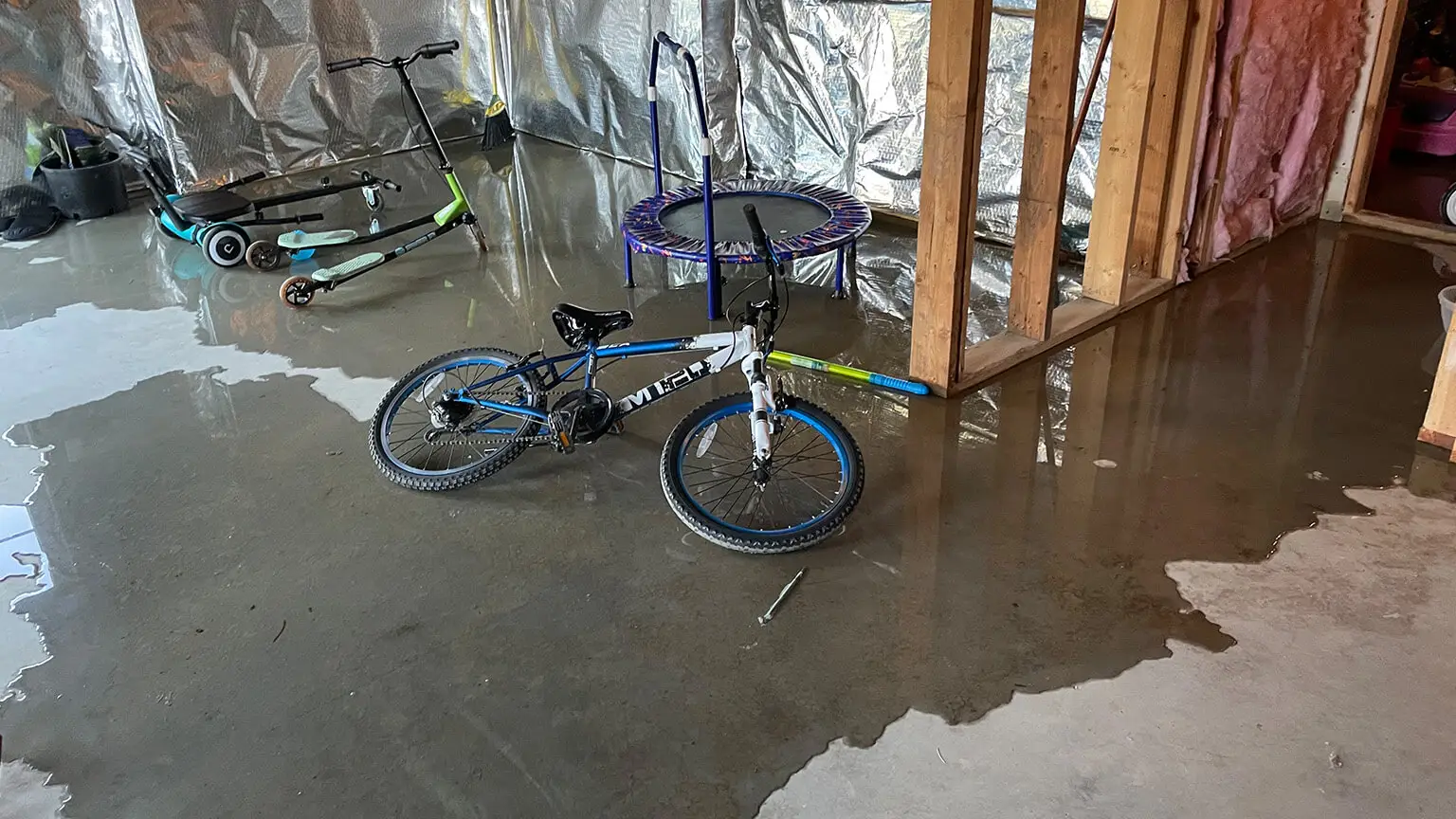
Structural drying sounds fancy, but it’s four steps. First we pull standing water out with an extractor, which moves far more volume than a shop vac. Then wet organic material comes out — carpet pad, soaked insulation, and usually the bottom six inches of drywall.
Next comes air movement, aimed on purpose. Air movers sit low and angle along surfaces, so they lift moisture off the material instead of stirring the room. Commercial dehumidifiers then pull that moisture out of the air and send it down a drain.
The last step separates this from a weekend project: readings. We take moisture readings in the framing and slab, write them down, and come back until the numbers match dry material elsewhere in the house. You’re not guessing — you’re watching a number go down.
When it wins: lots of water, finished walls, more than a day of sitting, or water that wasn’t clean. What it costs: it scales with square footage and days of equipment, so a small clean job sits near the bottom and a soaked finished basement well above it.
Good news
Drying and waterproofing are two separate conversations. We’ll tell you plainly which one you’re in — and often it’s only the first.
Option B: can you just do it yourself?
Honestly? Sometimes, yes. The homeowner version is a shop vac, a few box fans, and a rental dehumidifier from the hardware store. It costs a fraction of a professional job, and for the right basement it genuinely works.
Here’s how to do it well. Vacuum every bit of standing water, then get anything wet and soft out the same day — rugs, boxes, cushions, cardboard. Point fans across the floor rather than at it, run the dehumidifier with the doors closed, and empty the bucket nightly. Keep going for days, not hours, since material dries slower than air.
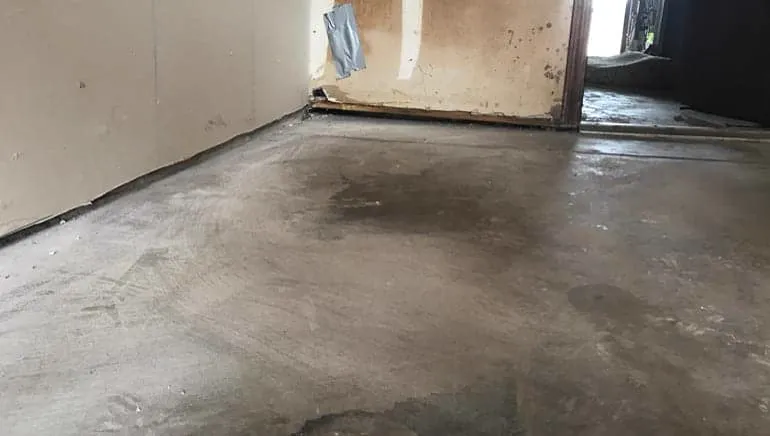
When it wins: a small amount of clean water, caught fast, on a bare slab with no finished walls. That happens all the time around here.
The trade-off: box fans move air, but they don’t remove moisture, and a small rental dehumidifier only pulls so much per day. So a big wet room can look dry on the surface while the wall cavity stays soaked. That’s the classic mistake, and the one thing we’d ask you to watch for.
How do the two compare, straight across?
Professional drying
- Extraction pulls water out fast, in volume
- Wet material behind walls gets opened and dried
- Commercial dehumidifiers drain, no buckets
- Moisture readings prove when it’s done
- Handles sewer water safely
- Costs more, and needs scheduling
The do-it-yourself version
- Cheap, and you can start in ten minutes
- Great on small, clean, freshly caught water
- Fine on a bare slab with nothing finished
- No readings, so “dry” is a judgment call
- Box fans move air but don’t remove moisture
- Not the right tool for sewer water
Notice neither column says “better.” Most basement drying Johns Creek jobs land somewhere on that line, and bigger tools only earn their keep when the job is bigger.
So which one is the expensive-sounding version?
Here’s the part most people expect us to bury. The professional route sounds expensive, and most of the time it isn’t the one you need. Four things decide it, and you can check all four yourself before anyone rings the doorbell.
The four deciding factors
- How much water. A damp strip along one wall is a fan job. An inch across the whole floor is not.
- How long it sat. Caught in a few hours is a different animal than found Sunday after a Friday storm.
- What’s behind the walls. Finished basements hide wet insulation and drywall in the cavity, where fans can’t reach.
- Where it came from. Clean rainwater, you can handle. A sewer backup needs proper handling and protective gear, full stop.
That third one is where Johns Creek gets its own answer. This city has an unusually high share of finished basements, so water almost never lands on bare concrete. It lands on carpet, pad, baseboard and drywall — and all four hold moisture long after the floor feels dry.
Speed is why we push on this. Mold can begin growing on wet building material within roughly 24 to 48 hours, so how fast you start matters more than how big your equipment is. The CDC’s guidance on mold after flooding lands in the same place. Better yet, that means a shop vac at 9 p.m. can genuinely beat a crew that starts Tuesday.

What would we actually tell you to do?
You asked for a recommendation, so here it is, no hedging. If the water is clean, under about an inch, you caught it the same day, and the room is unfinished — do it yourself. Vacuum, haul the wet stuff out, run a dehumidifier for several days, and save your money.
Call us instead when any one of these is true: the water is deep, it sat overnight, it touched finished walls, or it came from a drain or sewer line. Any single one is enough — you don’t need all four.
On the fence? Do the easy test. Pull the baseboard off one wet wall and look at the drywall behind it. Dry and clean back there? You’re probably fine. Dark, soft, or smelling like a wet towel? That cavity needs opening, and that’s where we come in.
Twenty years in, the pattern we trust most: the surface dries first and lies about the rest.
One honest note. Drying gets the water out, but it won’t stop the next storm. If the same wall gets wet every spring, the real fix is basement waterproofing, and drying alone becomes a yearly ritual you didn’t ask for.
What did that look like on a real job?
A homeowner in Sugar Mill called us on a Monday after a long weekend of rain. Water had come in at the cove joint along one back wall — the seam where wall meets floor — and spread about twelve feet into a finished media room. She’d run two fans all weekend, which was the right instinct.
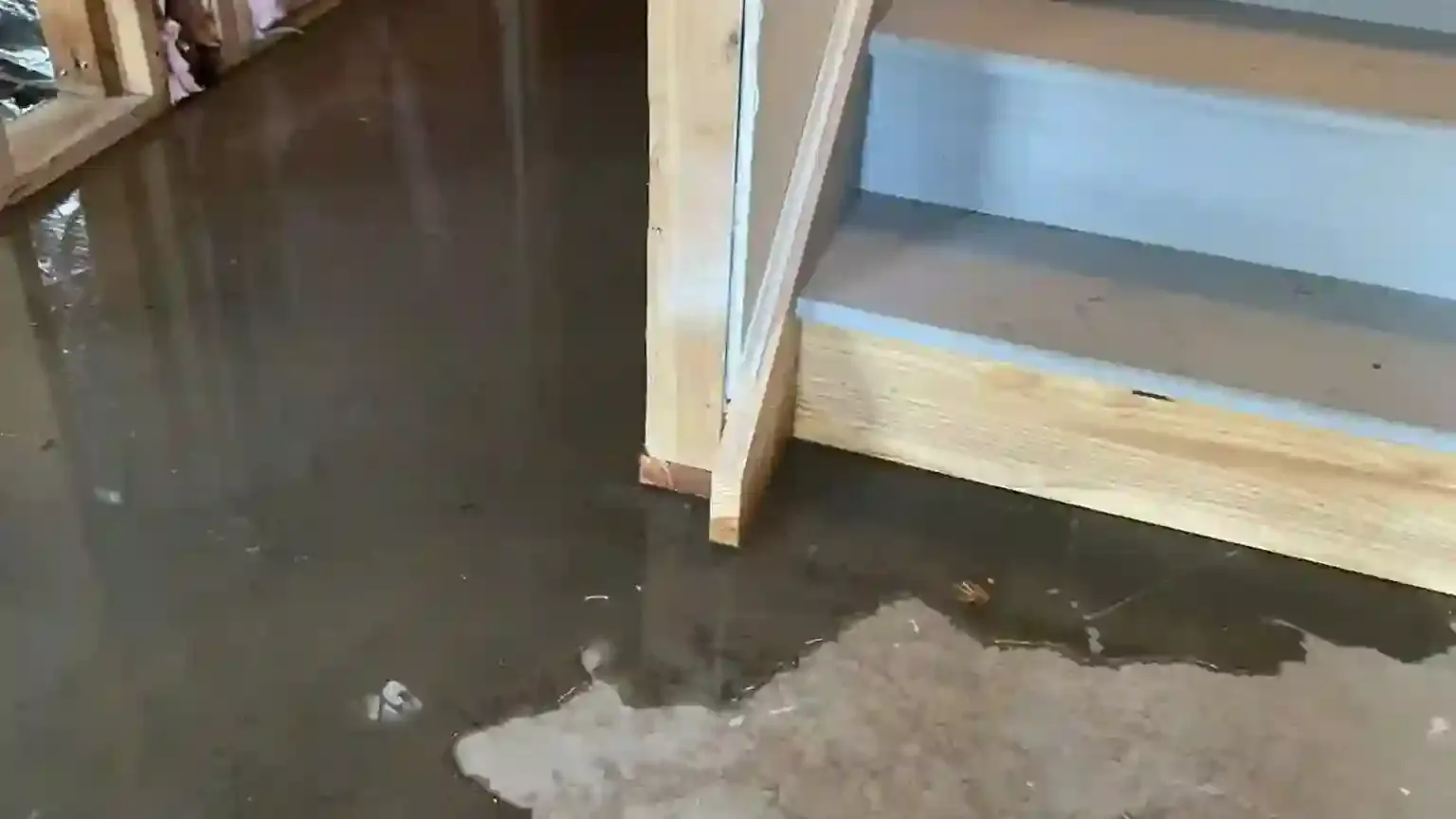
The floor felt dry when we got there. Behind the baseboard, though, the drywall was dark and the pad was soaked. So we pulled the pad, cut the bottom edge of the drywall, opened the cavity, and set air movers and a dehumidifier for four days of readings. Not one stick of framing needed replacing.
Two weeks later she had her media room back and a downspout rerouted. That’s the feeling we’re after — a homeowner who finally understood her own house and made the call herself.
We hear the same story in Doublegate and Seven Oaks, and there’s a reason. Johns Creek went up in one big wave, so a whole city’s worth of original waterproofing is aging out on roughly the same schedule. That’s not bad luck — that’s a birthday, and it shows up as cove-joint seepage after long rains.
Why does it help to call someone local?
Because we know these streets and slopes. We handle basement drying Johns Creek homeowners call about all year — off Jones Bridge Road, minutes from Emory Johns Creek Hospital, and a short drive from Johns Creek Town Center. Same crews, same trucks, every time.
Want to keep reading? Our guide to flood restoration covers what comes after the drying. Neighbors one town over can compare the same choices in our Alpharetta basement drying options breakdown. If your walls have cracks too, start with foundation repair.

Where we work around Johns Creek
We’re based in Lawrenceville, about twenty minutes east, so we’re in Johns Creek constantly. We also cover Alpharetta, Duluth, Suwanee, Roswell, Milton, Peachtree Corners, Berkeley Lake, Norcross and the wider Fulton area.
Questions Johns Creek homeowners ask us
Sometimes, yes. If the water is clean, shallow, caught the same day, and the room has no finished walls, a shop vac plus a rental dehumidifier will do the job. Add finished drywall or a full weekend of sitting, though, and fans alone won’t reach the wet material inside the wall.
Mold can begin on wet building material within roughly 24 to 48 hours. That’s why starting quickly matters more than having the biggest equipment. If you can get the standing water out and air moving the same day, you’re ahead of the clock.
Shut the power to the basement off at the panel before anyone steps into standing water. After that, take photos for your insurance, then start removing water and carrying wet items upstairs. Carpet pad, cardboard and cushions should leave the room first, because they hold the most moisture.
Long rain saturates the clay around your foundation, and saturated soil pushes water toward the easiest opening it can find. Around here that’s usually the cove joint, where the wall meets the floor. Drying handles the water that’s already in, while waterproofing addresses why it keeps arriving.
It depends on the source. Many policies cover sudden events like a burst pipe or a failed water heater, while groundwater seepage is often excluded and sewer backup usually needs its own rider. Photograph everything before you clean up, then call your agent and ask about your specific policy.
Not sure which one your Johns Creek basement needs? Let’s look together
The inspection is free, the estimate is free, and there’s no pressure. We’ll show you what’s still wet, walk you through both paths, and say honestly if this is one you can handle yourself.
(678) 914-5112Serving Johns Creek and all of Metro Atlanta · $500 off projects over $3,500 · Live support 7am–8pm, 7 days a week