

Basement Waterproofing in Suwanee: What It Costs and What to Expect
A plain-English look at the work, the real cost drivers, what’s included, and how the warranty actually works.
It usually starts with a line on an inspection report. The inspector walks the lower level, and there it is in plain type: “moisture intrusion observed at foundation wall — recommend evaluation by a qualified contractor.” That one sentence is how most basement waterproofing Suwanee calls begin, and it lands like a pop quiz nobody studied for.
Good news, though — that line isn’t a verdict. It’s a to-do item, and a pretty fixable one. Inspectors flag moisture because they’re trained to flag anything they see. So let’s walk through what the work involves, what it honestly costs, and what you get when it’s done.
What are you actually buying?
Here’s the simplest way we know to say it: waterproofing gives water an easier path than the one it’s currently taking through your house. That’s the whole idea in one line.
Water is lazy, and it’s stubborn. It takes whatever route needs the least effort, and on many Suwanee homes that route is the seam where the wall meets the floor. Plug that seam and water finds the next weak spot, so the hardware-store sealant buys you about one season. A real system doesn’t argue with water. It redirects it.
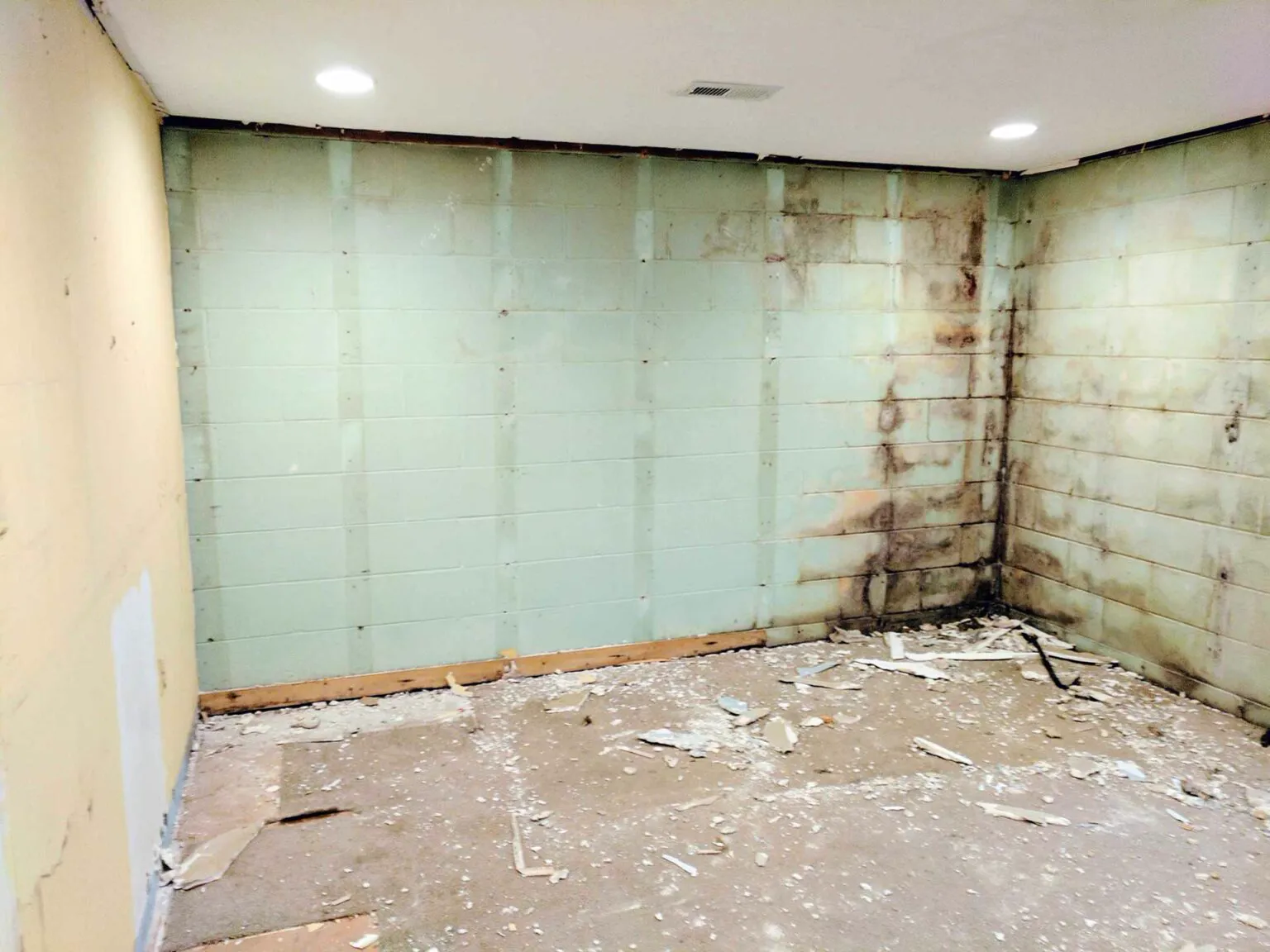
Why does this keep happening around here? Because Suwanee grew up in one fast wave in the late nineties and early two-thousands, so those homes are now hitting their first real waterproofing failure at roughly the same time. It’s not a defect, and it’s not bad luck. It’s a service life running out on schedule, the way a roof does.
Worth saying plainly
A damp basement and a structural problem are two different conversations, and most homes we look at only need the first one. We’ll tell you honestly which one you’re in, even when the answer is “less than you thought.”
What does a real job look like?
Most interior systems follow the same shape, so you can picture the week before anyone shows up with a jackhammer. Here’s the honest version:
- We find the source first. Before any number gets written down, we walk the outside — grading, downspouts, window wells. Then we walk the inside. Often the real problem is out in the yard, which means a smaller invoice.
- We open a channel at the perimeter. A narrow strip of slab comes up along the affected walls. It’s dusty and loud, but it’s usually a day or two, not a month.
- We install drainage below the slab. Perforated pipe set in clean stone, placed under floor level. Water gets caught before it reaches your floor instead of after, and that ordering is the whole trick.
- Everything routes to a sump. The pipe carries water to a basin, and the pump pushes it well away from the house. Not six feet away, where it would come right back for a second attempt.
- We close it back up. Fresh concrete over the channel, wall liner where it’s called for, and the site swept clean. We haul our own mess off, because a pile of broken slab in your driveway isn’t a finish.
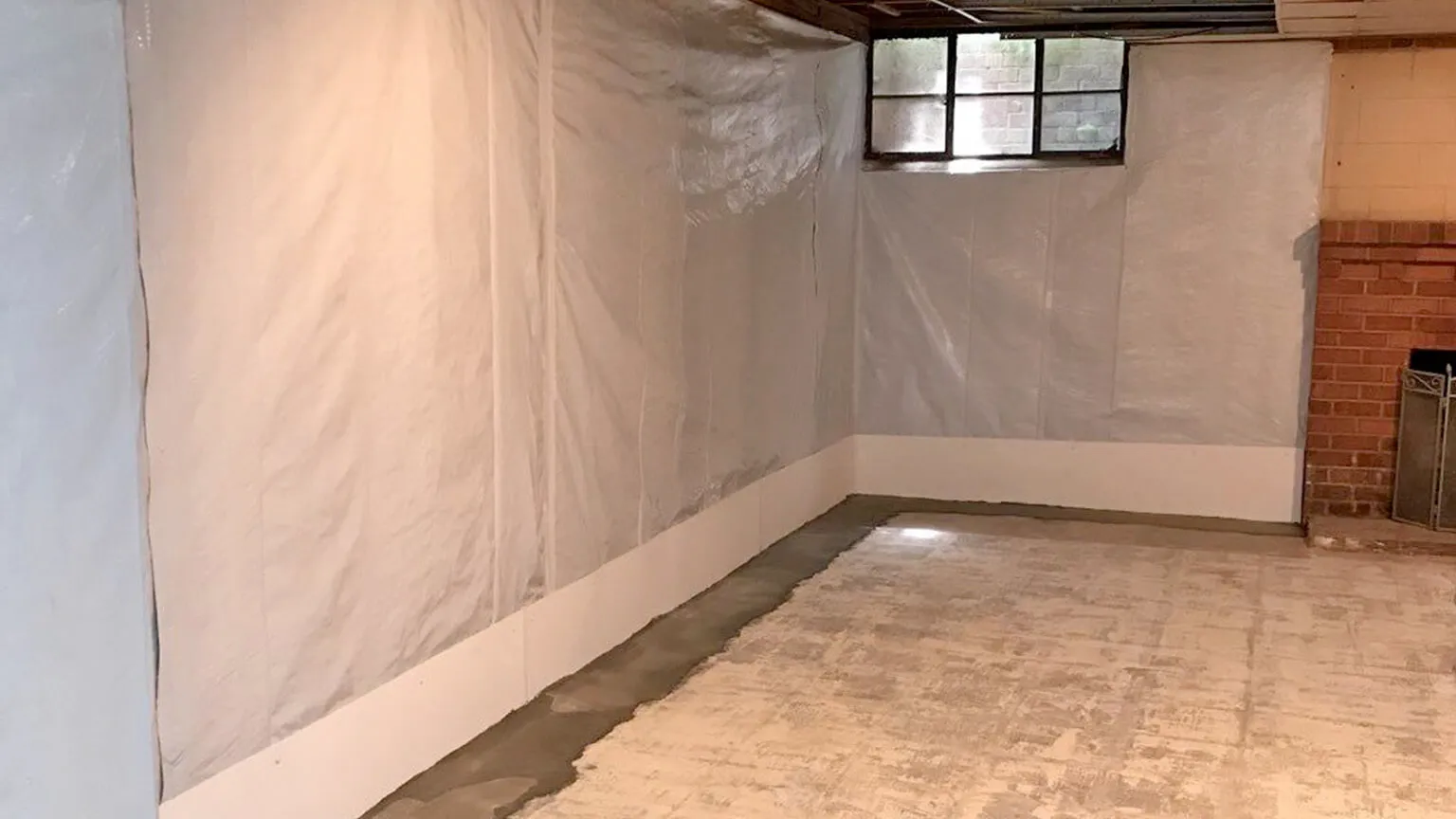
Notice what nobody did there? Nobody painted anything. Waterproof coatings are fine for what they are, but a coating can’t beat pressure — it’s a raincoat on a submarine. That’s also why we’ll warranty a system in writing and never a paint job.
Twenty years in, the thing that changed how we work is simple: we stopped trying to block water and started routing it.
Is there an easier first step?
Yes — and most homeowners don’t know it exists. Before you price a full interior system, there’s a smaller move that solves a surprising share of wet basements here, and it never touches your slab.
It’s the dirt. Specifically, the six to ten feet of ground wrapping your foundation. When these homes were built, that soil was graded to fall away from the house. Twenty-five years later it has settled and sunk, so now it quietly slopes back toward the wall. Every storm, that little bowl fills up.
We see this constantly in Morningview and around Ivy Falls, where mature landscaping and years of mulch have buried the original grade. On sloped lots off Moore Road it shows up faster, because the hill is already sending water your way and the settled soil catches it.
The fix is refreshingly ordinary. Rebuild the slope so the first ten feet fall away, extend the downspouts past that zone, and clear whatever’s damming things up. Not every basement gets solved this way, but plenty get improved this way — and when it works, you spent a fraction of what you were bracing for. We’d rather say that on day one than sell you something bigger.
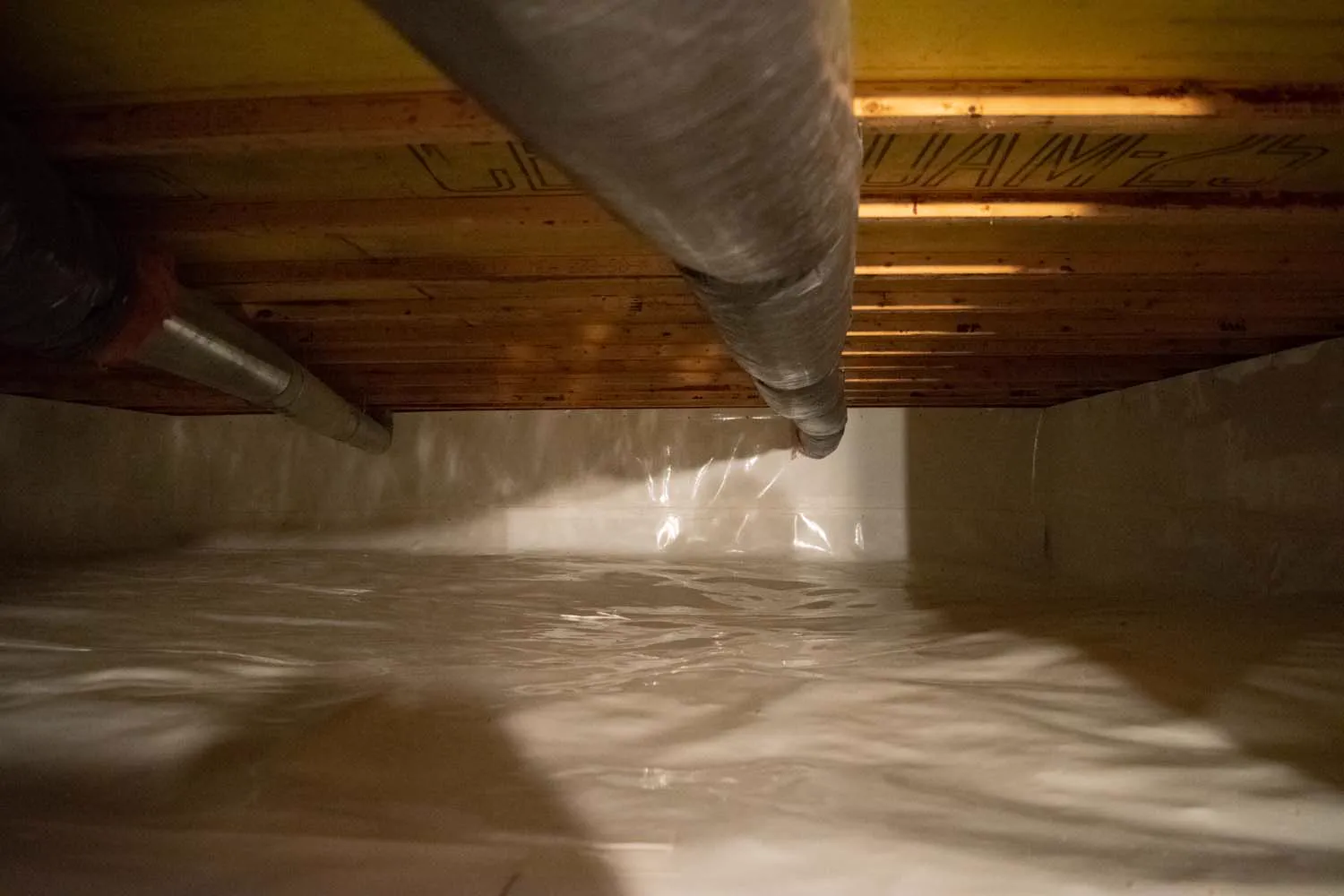
Still trying to work out what you’re even looking at down there? Our guide to what causes a wet basement walks through the usual symptoms in order, and if the damp space in question is a crawl space rather than a full basement, crawl space encapsulation is usually the better answer.
So what does it cost?
Straight answer: it depends on how much wall is involved and how hard it is to reach. Anyone quoting a flat number over the phone, sight unseen, is guessing — and you’d be paying for the guess. Still, you deserve to know what we look at when we price a job.
What drives the number up or down
- Linear feet. One wall is a very different job than a full perimeter. This is the biggest factor, every time.
- Access. An open basement is straightforward. A finished one with a bar and built-ins costs more, because there’s careful work before the real work.
- Sump and pump. Some homes have a serviceable basin already. Many don’t — or theirs is the original from 1999.
- Walkout doors and window wells. Suwanee has a lot of walkouts, and those openings need their own detail work.
- What’s happening outside. Sometimes regrading and downspout work handles most of it. Smaller invoice, and we’ll say so out loud.
- Wall condition. Cracking or bowing means structural work comes first. Waterproofing over a moving wall is money spent twice.
- Battery backup. It adds cost, and it runs during the storm that knocks your power out — the exact storm that floods basements.
Small drainage corrections land at the low end. A full perimeter system with a new sump, a backup and a finished basement to protect sits at the high end. Most basement waterproofing in Suwanee lands in the middle, and once we’ve walked it you get a written number with the scope spelled out — not a range, and not a price that changes on day three.
What’s included, and what isn’t
Included: the inspection, the estimate, the drainage, the sump work, the concrete we pour back, the liner, cleanup and haul-off, plus warranty paperwork. Not included: cosmetic rebuild — flooring, trim, drywall or paint. We leave you a clean, dry surface. Choosing the tile is the fun part, and you don’t want us picking it.
The number that reframes all of this
Ready for the one that surprises everybody? A single basement wall can face thousands of pounds of force from saturated clay. That force has a name — hydrostatic pressure — and it pushes water straight through solid concrete with no crack involved.
Think about that for a second. Concrete looks solid, but it’s porous, so under steady pressure water simply wicks through it. Piedmont red clay makes it worse, because clay swells as it takes on water and presses harder the wetter it gets. For the science without a sales pitch, the U.S. Geological Survey’s groundwater basics explains how water moves through soil, and the National Weather Service office in Peachtree City keeps our rainfall record.
Once you see it that way, a damp corner makes more sense, doesn’t it? No caulk gun is winning that fight. But drainage doesn’t fight it — it relieves it, by opening a door before the pressure ever builds. That’s why the fix lasts and the patch doesn’t.
What it feels like when it’s done
Picture the next hard spring storm. The Greenway is soaked, the yard is a sponge, and your floor is dry. That musty smell at the bottom of the stairs is gone. Instead of a room you apologize for, you’ve got storage you trust and a playroom where the kids can be as loud as they are at PlayTown Suwanee on a Saturday.
Better yet, you stop thinking about it. And when you eventually sell, that inspection line reads clean with paperwork behind it — which feels genuinely good. Your house is solid, and you’re the one who took care of it.

Why hire somebody local for this?
Because we’ve been doing basement waterproofing in Suwanee for over twenty years, and a warranty is only as strong as the company behind it. If something needs a look in year seven, you want to call the people who did the work — same crews, same trucks, same county — not a call center three states away.
Twenty-plus years in Gwinnett also means we’ve very likely been on a house near yours. We know how the walkouts behave on the sloped lots around Settles Bridge, and the tributary lots near Suwanee Creek Greenway carry seasonal water that shows up in March and vanishes by June. That history isn’t a brag — it just means fewer surprises on your invoice.
Want the technical detail on the systems themselves? We lay out the waterproofing systems we install in full. Comparing notes with family a few exits south? We cover the same ground for Peachtree Corners basement waterproofing.
Where we work around Suwanee
We’re based in Lawrenceville, about fifteen minutes south, so Suwanee is a short hop. We also work throughout Duluth, Buford, Sugar Hill, Johns Creek, Cumming, Berkeley Lake, Norcross, Dacula and the rest of Gwinnett County. If you’re near the Town Center, odds are we’ve got a truck nearby already.
Questions Suwanee homeowners ask us
The drainage itself is built to last the life of the house, because it’s just stone and pipe below the slab with nothing to wear out. The pump is the part with a service life — plan on replacing one somewhere around the ten-year mark, the same way you’d plan for a water heater.
Yes, and you get it in writing before the work starts rather than after. Ask us to walk you through exactly what’s covered and for how long. A warranty you can’t explain in one sentence isn’t doing you much good.
Usually, yes. We only need access to the bottom of the wall, so we open the finished surface along the affected perimeter and close it back up. It’s more careful work than an open basement, which is why access affects the price, but nobody is gutting your media room.
It protects value more than it adds it, and that’s the honest answer. A documented, warrantied system clears the moisture note off an inspection report, which keeps buyers from negotiating against a scary unknown. Plus a dry lower level is finishable square footage, and that part does add real value.
Usually within a few days, and faster if you’re under contract with a closing date. Live support runs 7am to 8pm, seven days a week, so you can reach an actual person on a Sunday. The inspection and the estimate are both free either way.
Let’s find out what’s really going on down there
The inspection is free, the estimate is free, and there’s no pressure at the end. We’ll show you where the water gets in and what it takes to stop it — even if the answer is simpler than you expected.
(678) 914-5112Serving Suwanee and all of Metro Atlanta · $500 off projects over $3,500 · Live support 7am–8pm, 7 days a week