

Basement Waterproofing in Cumming: What It Costs and What to Expect
What water is really doing down there, what a real job looks like start to finish, and how to tell a patch from a fix.
Water is not sitting outside your wall waiting politely. It’s being pushed. That single sentence explains most of what we get called about, and it’s why basement waterproofing Cumming homeowners need is almost never about sealing one spot. Wet soil presses on your foundation, and that pressure looks for the easiest way through.
Good news, though: this is a solved problem. We’ve been fixing it around Forsyth County for more than twenty years, and it rarely turns out to be the big scary thing people picture on the drive home. So let’s walk through what the work is, what a real job looks like on your house, and what actually moves the price.
What is the water actually doing down there?
Here’s the part that surprises people. Concrete looks solid, but it’s porous, so water moves through it by capillary action — the same way a paper towel pulls up a spill. That’s why a wall can be damp all over without a single visible crack. You’re not looking for a hole, because there often isn’t one.
Wet clay makes it stronger. Georgia red clay swells when it soaks up rain, and as it swells it leans on your foundation walls. That force has a name, hydrostatic pressure, and it never gets tired. If you want the plain-science version of where all that underground water comes from, the U.S. Geological Survey’s groundwater basics is a genuinely readable ten minutes.
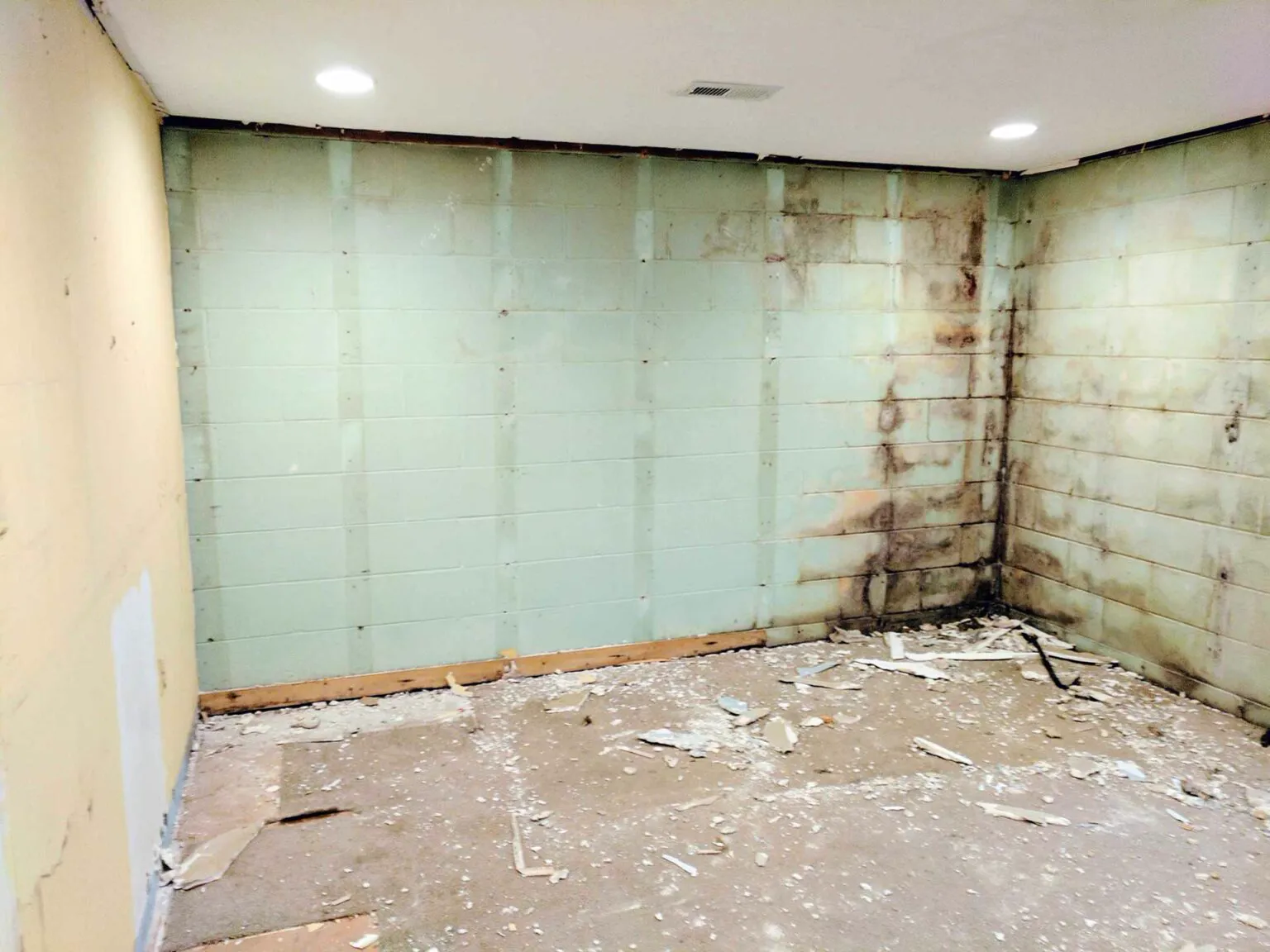
Now add Cumming to the picture. A lot of homeowners here are shocked to find water in a house that still feels new. The truth is that twenty years is exactly when builder-grade waterproofing starts to give up, and much of South Forsyth was built between the late 1990s and the 2010s. Your house isn’t falling down. It just hit a birthday.
Good news
A wet basement and a structural problem are two different conversations. Most homes we look at only need the first one, and we’ll tell you plainly which one you’re in before anybody talks about money.
There’s one more local wrinkle. Around newer subdivisions, the backfill soil that got pushed against the foundation during construction slowly settles. As it drops, the grade tips back toward the house instead of away from it, so rain that used to run off now runs in. We see it constantly in James Creek and across newer streets off Peachtree Parkway.
What does a real job look like on your house?
Most interior systems follow the same shape, so you’ll know what’s coming before a truck pulls up. Here’s the honest version, step by step.
- We find the source first. Before we quote a thing, we walk the outside — grading, downspouts, where roof water lands. Then we walk the basement. Sometimes the fix is smaller than you expected, and we’d rather say so.
- We open a channel at the perimeter. A narrow strip of slab comes up along the affected walls. It’s loud and dusty, but it’s usually a day or two of work.
- Drainage goes in below the slab. Perforated pipe in clean stone, set under floor level, so water gets collected before it reaches your floor rather than after.
- Everything routes to a sump. The pump then sends water well away from the house, because dumping it beside the foundation just invites it back for a second lap.
- We close it up clean. Fresh concrete over the channel, wall liner where it’s called for, and our mess hauled off. Leaving debris in your driveway isn’t a finish.
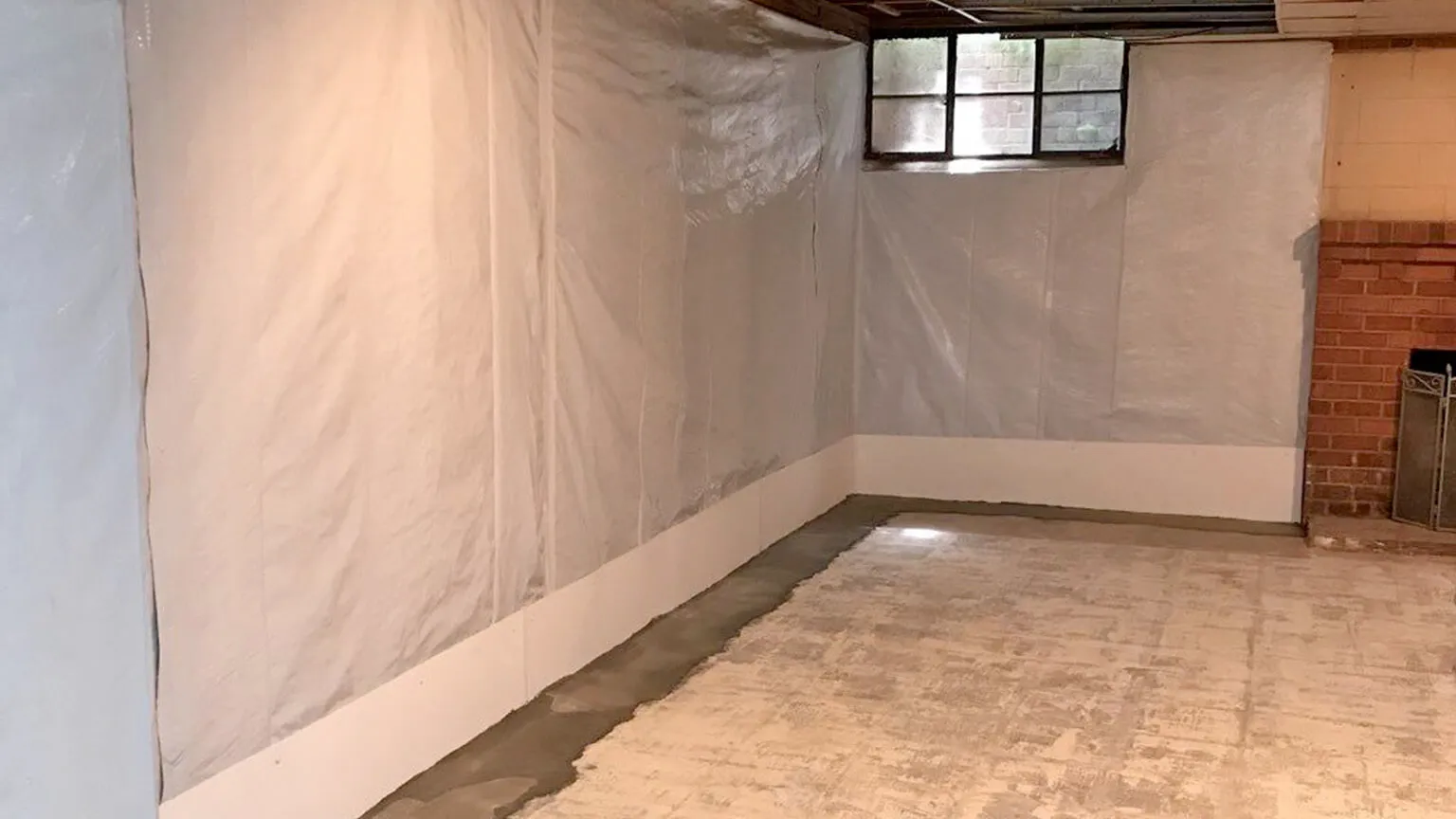
Notice what nobody did on that list? Painted anything. Waterproof coatings have their place, but a coating can’t beat pressure — it’s a raincoat on a submarine. Still, plenty of homeowners have been sold one, so if that’s you, you’re in good company and it wasn’t your fault.
Patch or fix — how do you tell the difference?
This is where the money question really lives. Two quotes can both say “waterproofing” and mean completely different things, so here’s the test we’d use if it were our own house: does the plan give water somewhere to go, or does it just try to stop it?
Twenty years in, the thing that changed our thinking is simple. We stopped trying to block water and started routing it.
A patch fights water at the wall. Hydraulic cement in a crack, a sealer rolled across block, a bead of caulk at the floor seam — each one works for a season, because the pressure never lets up and every product ages. As a result, you get four good months and a familiar puddle.
A fix assumes water will arrive and builds a better path for it to leave. Below-slab pipe, clean stone, a sump that discharges far from the foundation, and outside corrections so less water shows up in the first place. That’s why we’re comfortable putting a warranty in writing. You can’t honestly warranty a coating, but you can warranty a system built on how water behaves.

One more tell: a real inspection spends more time outside than most people expect. We had a homeowner over near Castleberry who was braced for a full perimeter system, but the culprit was two downspouts dumping right at the corner. Not every job is a big job, and pretending otherwise would be a lousy way to spend twenty years in one county.
So what does it cost in Cumming?
Straight answer: it depends on how much wall is involved and how hard it is to reach. Anyone who quotes a flat number over the phone, sight unseen, is guessing — and you’d be paying for that guess. Still, you deserve to know what moves the number, so here’s exactly what we’re weighing.
What drives the price up or down
- Linear feet. One wall is a very different job than a full perimeter. This is the single biggest factor.
- Access. An open basement is simple. A finished one with a bar, a bath and built-ins costs more, because there’s careful work before the real work.
- Sump and pump. Some homes have a serviceable basin already. Many builder-grade pumps out here are at the end of their life instead.
- What’s happening outside. Regrading and rerouting downspouts sometimes solves most of it, which means a smaller invoice.
- Wall condition. Cracks or bowing mean structural work comes first, since waterproofing over a moving wall is money spent twice.
- Backup power. A battery backup adds cost, but it runs during the storm that knocks out power — the exact storm that floods basements.
Small drainage corrections land at the low end. A full perimeter system with a new sump, a backup and a finished room to protect sits at the high end. Most jobs land somewhere in the middle, and after we walk it you get one written number with the scope spelled out — not a range, not a “starting at.”
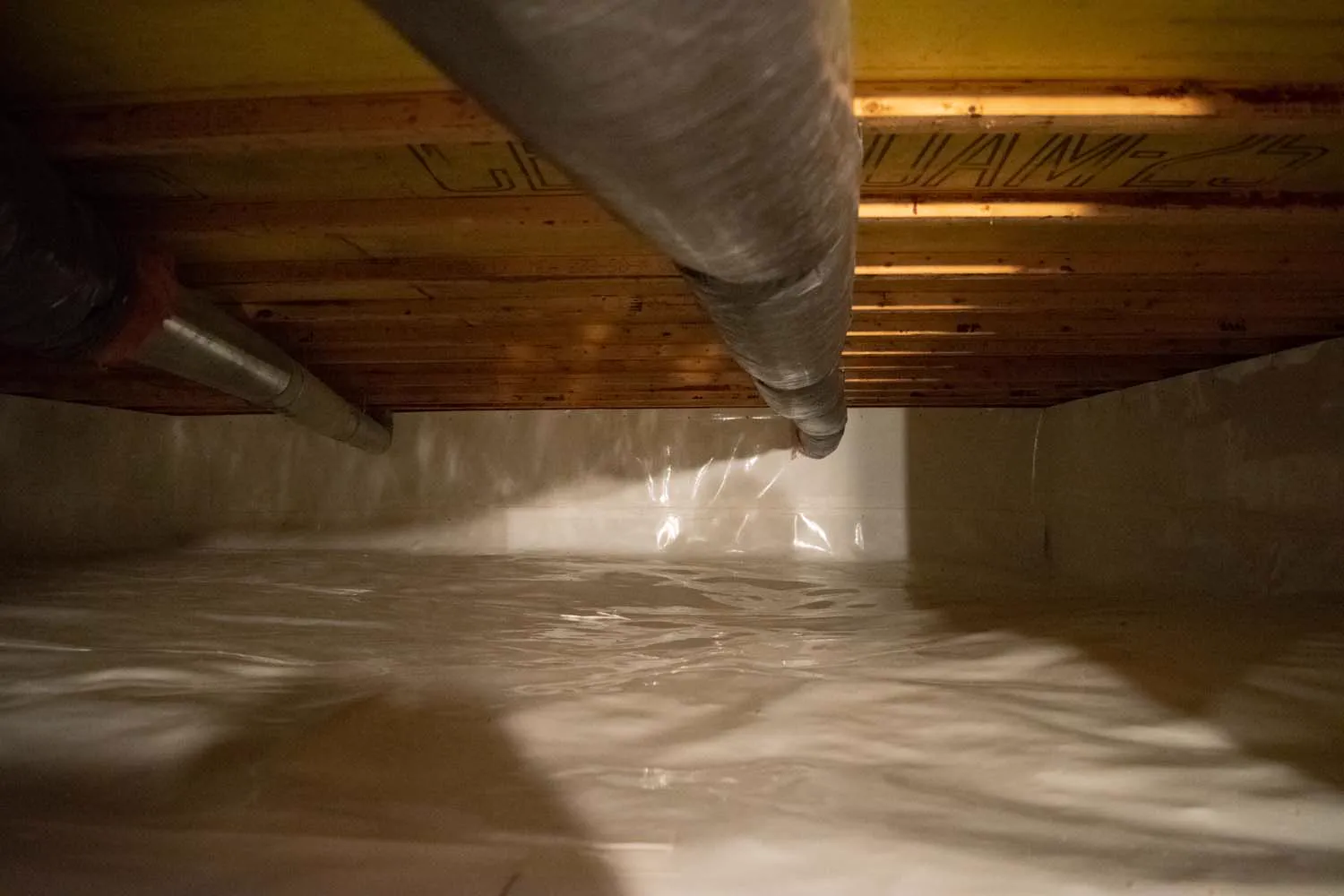
What’s included? Labor, materials, the concrete we replace, hauling the debris, and the warranty paperwork. What isn’t? Rebuilding finished walls we had to open, landscaping replacement, and mold remediation if a licensed specialist is the right call. We’d rather list that plainly than surprise you on day three. Also worth knowing: if your house has a crawl space instead of a full basement, crawl space encapsulation is usually the better answer.
What do week one, year one and year ten look like?
Ready for the part almost nobody explains? The timeline after the work is done. It’s the clearest way to see what you’re actually buying, so let’s walk it forward.
Week one is quiet in a way that feels strange. The floor is solid, the air already smells different, and the first real rain comes and goes without you checking the stairs. Plenty of homeowners tell us that first storm is the moment it lands emotionally. You wait for the puddle, then it just never shows.

Year one is when the space changes jobs. Humidity settles down, so boxes stop going soft and the musty smell at the bottom of the stairs doesn’t come back. That’s usually when people start finishing the room, or at least trusting it with things they care about. The EPA’s guidance on moisture and mold makes the same point in fewer words: control the moisture and the rest follows.
Year ten is the honest one. The below-slab drainage has no moving parts, so it’s built to last as long as the house does. Your pump is the piece with a service life — plan on a replacement somewhere around the ten-year mark, the way you’d plan for a water heater. Beyond that, a spring test and a clear discharge line is really the whole maintenance list.
Why does hiring somebody local matter here?
Because a warranty is only worth as much as the company standing behind it. If something needs attention in year six, you want to call the people who did the work, not a call center three states away. We’re about thirty minutes south of you in Lawrenceville, and our crews are up GA-400 constantly.
Experience with this specific ground matters too. Lots near the Sawnee Mountain area sit on rockier soil with steep uphill runoff, while streets closer to Cumming City Center and Central Park behave differently again. Knowing that before we dig saves you time, and honestly it saves us from selling you something you don’t need.
Not sure what you’re even looking at yet? Our guide to a wet basement walks through the common symptoms, and the systems we install are laid out on our basement waterproofing page. Comparing notes with family closer to town? We cover the same ground for Decatur basement waterproofing as well.
Where we work around Cumming
We cover Cumming and the wider Forsyth area, and most of our route runs through the same handful of towns every week. That includes Alpharetta, Milton, Suwanee, Buford, Gainesville and Dawsonville, plus Johns Creek, Duluth and Sugar Hill on the way north. Whether your lot slopes toward Lake Lanier or sits on flatter ground in South Forsyth, we’ve very likely worked a house near yours already.
Questions Cumming homeowners ask us
It comes down to how many linear feet of wall are involved, whether you need a sump, and how much finished space we have to work around. A small drainage correction sits at the low end, while a full perimeter system in a finished basement sits at the high end. After a free inspection you get one written number with the scope spelled out.
Most interior systems take one to three days on site. A single wall can wrap in a day, while a full perimeter with a new sump usually runs longer. We’ll give you the schedule before we start, so you can plan around the noisy part.
Only the perimeter. We need about four feet of clear space along the walls we’re working on, so shelves and boxes get pulled toward the middle. You don’t have to empty the room, and we’ll help with the heavy things.
Sometimes, but they’re really two jobs. Drainage handles the water, while a crack that’s still moving needs its own repair first. Sealing a wall that’s shifting only buys you a year, so we’ll tell you which situation you’re in during the inspection.
Neither one wins automatically — it depends on where water gets in and what’s sitting on the soil outside. Exterior work stops water before it touches the foundation, but it means excavating, and a deck or patio changes the math fast. Interior drainage is less disruptive and works well on most Forsyth County basements.
Let’s find out what’s really going on down there
The inspection is free, the estimate is free, and there’s no pressure at the end of it. We’ll show you where water is getting in around your Cumming home and what it would take to stop it — even if the answer turns out simpler than you feared.
(678) 914-5112Serving Cumming and all of Metro Atlanta · $500 off projects over $3,500 · Live support 7am–8pm, 7 days a week