

Basement Flooding Cost Norcross Homeowners Can Actually Plan Around
The cleanup, the permanent fix, and why those are two different bills — plus timelines, prep and honest DIY limits.
There’s a room in the house nobody opens anymore. Maybe it was the playroom, or where the treadmill sat. Now it holds plastic bins propped on scrap lumber, and the door stays shut. So when we talk about basement flooding cost Norcross homeowners deal with, the invoice is only half of it — the other half is a whole floor of house you quietly stopped counting.
Good news? You can have that room back. We’ve done this work around Gwinnett for twenty-plus years, and most of these jobs look worse from the top of the stairs than they are.
Why are there two prices instead of one?
Here’s the thing nobody explains up front. A flooded basement is really two jobs, so it’s billed as two jobs.
Job one is getting the water out and drying the space: extraction, hauling out soaked material, fans and dehumidifiers running for days, disposal. It ends when a moisture meter says the room is normal again.
Job two is making sure it doesn’t happen again: drainage, a sump, and outside corrections like grading and downspouts. That one ends the next time a hard rain rolls through and nothing happens downstairs.
Pay for the first and skip the second, and you’ll pay for the first again next spring. It’s a bit like mopping a boat that still has the hole in it.
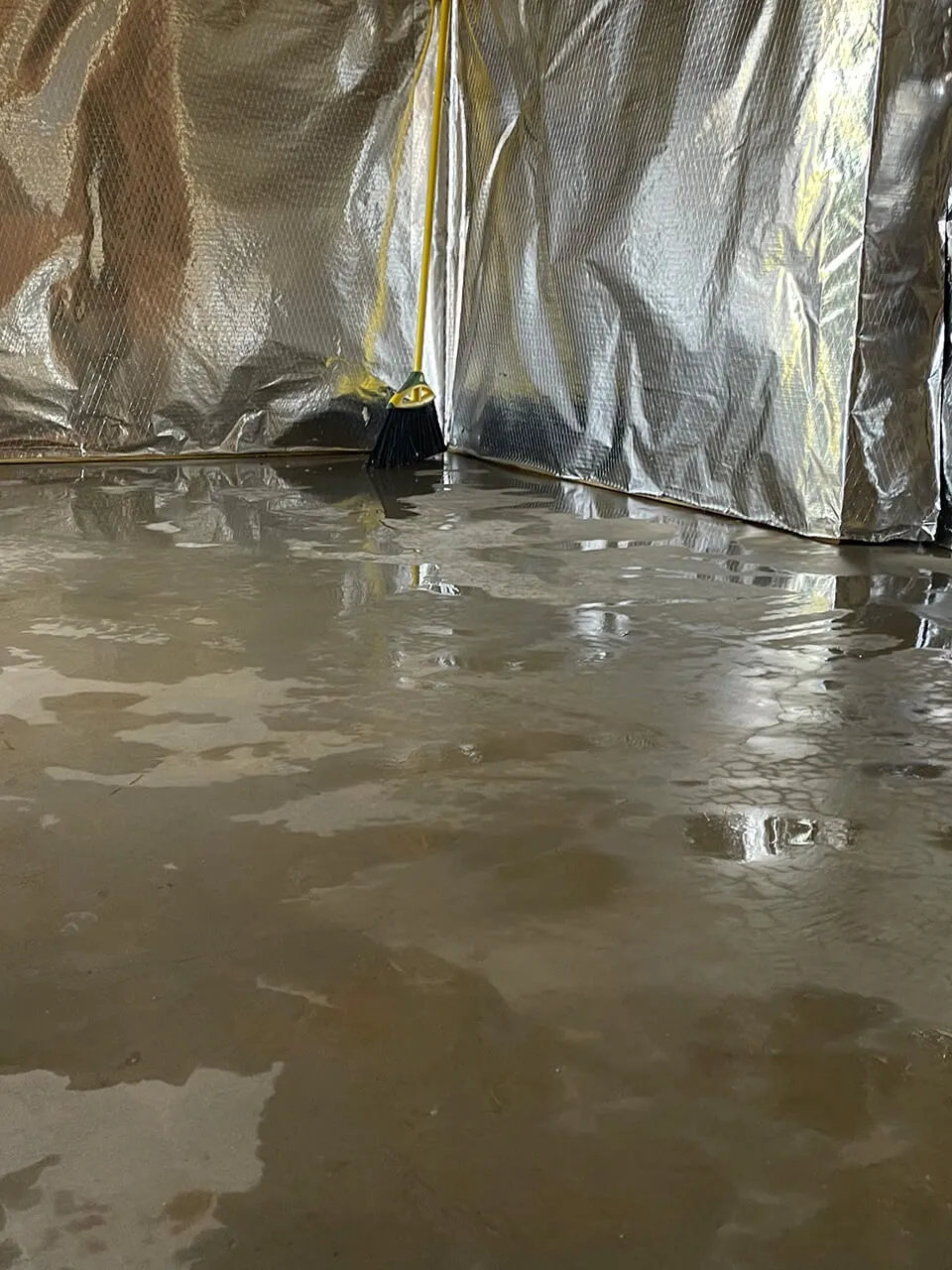
What does the process actually look like?
Nobody enjoys surprises once a truck is in the driveway, so here’s our order of operations.
- Free inspection. We walk the outside first — grading, gutters, downspouts — then come inside. Plenty of jobs get smaller right here.
- Pump it out. Standing water leaves first, along with anything electrical near it.
- Remove the wet organic material. Soaked drywall, insulation, carpet pad, cardboard — anything soft that drank water.
- Dry it properly. Air movers and dehumidifiers run for days while we track readings, because “feels dry” and “is dry” differ.
- Find the entry point. Cove joint, wall crack, window well or failed sump — the door water used, not just the puddle.
- Install the permanent fix. Drainage below the slab, wall liner where needed, then a sump and a discharge line carrying water well away.
- Rebuild and test. Fresh concrete, cleanup, then a live water test while you watch.
Why does drying speed matter so much?
Because time is a line item. Mold can begin growing on wet building materials within roughly 24 to 48 hours, so the clock starts the moment water arrives. Material dried on day one usually stays, while material that sat a week rides out in the truck. For a plain primer, the National Weather Service flood safety page is a good neutral read.
Where do a patch and a real fix stop looking alike?
Ask us where water gets in most often and the answer is boringly specific: the cove joint. That’s the seam where your basement wall meets the floor, and since the two were poured at different times, they never truly bonded.
Georgia red clay soaks up rain and swells, and swollen clay pushes. That push has a name — hydrostatic pressure — and it drives water along the footing until it finds the seam. Then it rises, which is why the stain sits low and spreads sideways instead of running down.
Good news: this is very fixable, and it’s the most common thing we handle. A patch sits at the wall surface, where water arrives with all its pressure behind it, while real drainage sits below the slab, where the same water arrives with almost none.
We quit trying to beat water at the wall years ago. Now we meet it lower, where it has nothing left to push with.

What about the sump pump?
Sump pumps don’t fail creatively — we see the same five stories, and each has a fix.
Five predictable sump failures
- Power goes out. The storm that fills a basement drops the lines, so add a battery backup.
- Stuck float. The switch drifts against the basin wall and the pump never gets the message.
- Undersized pump. It runs nonstop and still loses ground, because it was sized for a drizzle.
- No check valve. Water drains back down the line, so the pump keeps lifting the same gallon.
- Clogged discharge. A blocked line, or one dumping three feet from the wall, sends water back around.
What moves the number up or down?
Straight talk: nobody can price this over the phone, and anyone who tries is guessing with your money. Still, you deserve to know what sets the basement flooding cost Norcross homeowners end up paying.
The six things that set the price
- How much water came in. A damp corner and four inches across the slab are different projects.
- How long it sat. Hours versus days changes how much material can be saved.
- How much wet organic material comes out. Finished walls, carpet and insulation add labor and disposal.
- Whether drainage or a sump is part of the fix. The biggest swing on the second half.
- Linear feet involved. One wall versus a full perimeter, by a wide margin.
- What’s happening outside. Regrading and two downspouts sometimes handle most of it.
Exterior corrections plus a quick dry-out land at the low end, while a full perimeter system with a new sump and backup power sits at the top. You get one written number after we walk the house. Our guide to basement drying options compares equipment, and the math runs the same way in our Loganville basement flooding cost breakdown.
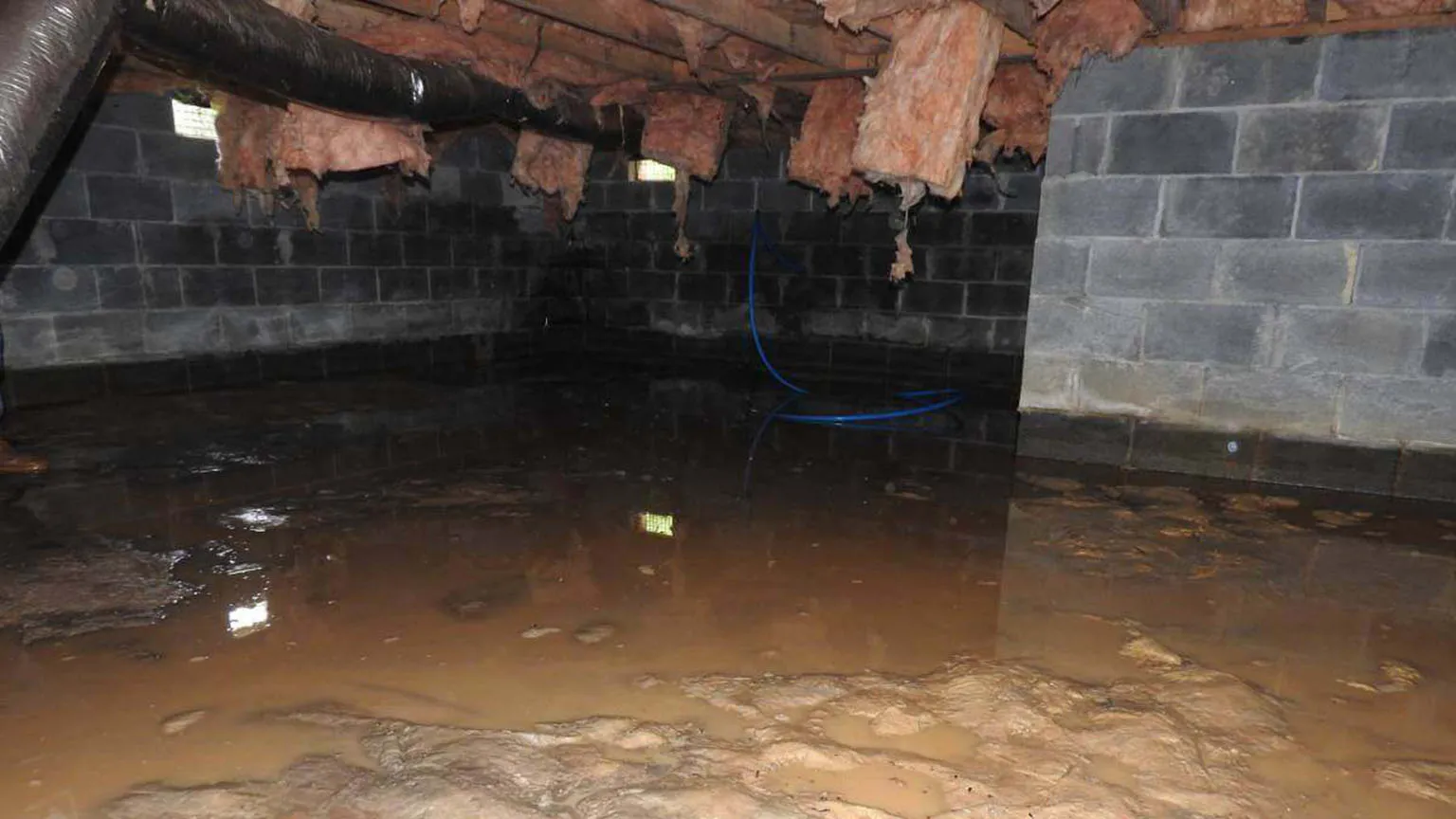
How long does it take, and how do you prepare?
Timing is part of the basement flooding cost Norcross homeowners plan for, since every extra day of equipment is another day of rental. Drying usually runs three to five days on site, drainage work takes one to three days after that, and fresh concrete wants a few more before you load it up.
Your prep list is shorter than people expect. Photograph everything before anything moves, clear about four feet along the affected walls, and make sure we can reach an exterior door. We’ll handle the heavy items, because nobody should wreck their back to save us a trip.
About insurance — the honest version
Standard homeowners policies commonly exclude surface flooding, and sump pump backup is usually a separate endorsement you add on. A burst pipe often is covered. Read your own policy or call your agent before assuming either way. FEMA’s flood protection resources are a useful starting point.
What can you honestly do yourself?
More than you’d think, and we’d rather tell you than bill you for a Saturday’s work.
Real DIY wins: running fans early, pulling up soaked rugs before they wick moisture into the walls, extending downspouts six to ten feet out, cleaning gutters twice a year, regrading soil away from the house, and bucket-testing the sump every few months.
What DIY can’t reach: anything below the slab. You can’t set drain tile without opening concrete, and no product in a bucket outperforms saturated clay pushing on a footing. Standing water plus electricity is a leave-it-alone situation too — cut power at the panel if that’s safe, then let someone with the right gear go first.
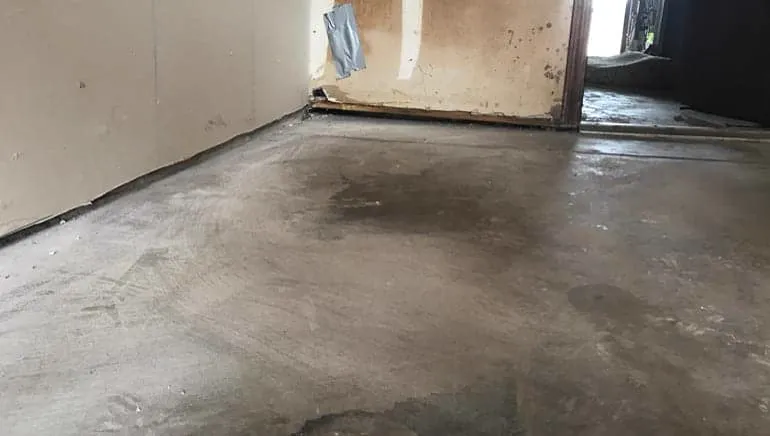
What happened at a house near the Lillian Webb district?
Last spring we spent a week on an older home near the Lillian Webb district — stone and brick foundation, the original kind. That basement had taken water at the same corner for decades, and the owner had already tried sealer twice.
What we found wasn’t dramatic. Grade had settled toward the house, one downspout emptied about a foot from the wall, and the cove joint was doing what cove joints do. So we fixed the outside first, opened a channel along two walls, set pipe in washed stone, added a basin with a check valve and a backup, then ran the discharge into the yard.
He texted a photo a few months later. The room is a woodshop now, with a dust collector where the bins used to be. That’s our favorite part of the work — not the dry floor, but the “look what I did with my house” message.
Norcross has houses from three different centuries, and each needs a different answer, which is why a real inspection beats a phone quote. A 1960s block basement toward the Peachtree Station edge behaves nothing like brick and stone in historic downtown Norcross, while lots near Lucky Shoals Park drain differently than the flatter ground by Best Friend Park. Add heavy runoff along the I-85 corridor, and diagnosis matters more than any product.
How do you know the job was done right?
Ask for four things and you’ll sort careful work from fast work quickly: a written scope naming linear feet, sump location and discharge point; photos of the stone and pipe before concrete goes back down; documented moisture readings at the end of drying; and a live water test while you watch.
After that, proof shows up on its own schedule. The floor stays dry through a long spring storm, and the door to that room stays open. Better yet, the next time the radar lights up you check it out of curiosity — proud that your house is solid because you took care of it.

If cracks or settling are part of your picture too, our foundation repair page covers that side, and the full range of basement waterproofing systems is laid out on the service page.
Where we work around Norcross
Our shop sits about twenty minutes northeast in Lawrenceville, so we’re in Norcross constantly. We also cover Peachtree Corners, Duluth, Lilburn, Doraville, Tucker, Berkeley Lake, Suwanee and the wider Gwinnett County area. If you’re near Jimmy Carter Boulevard or along Indian Trail, odds are we have a truck close by.
Questions we get from Norcross homeowners
Start the same day if you can. Mold can begin growing on wet building materials within about 24 to 48 hours, so early drying is what saves drywall, insulation and flooring. Fans and open doors help right away.
Usually it’s the cove joint, the seam where the wall meets the floor. Saturated clay pushes water along the footing until it finds that seam, and then it rises. Drainage below the slab gives that water an easier exit first.
In most homes, yes. Exterior corrections plus a sub-slab drainage system and a properly sized sump handle the large majority of repeat flooding. It comes with a written warranty, and since we’re local, the same crew answers the phone years later.
It depends on how much water came in, how long it sat, how much wet material has to go, and whether drainage or a sump is part of the fix. Exterior corrections with a quick dry-out sit at the low end, while a full perimeter system sits at the top. We give one written number after walking your basement.
That’s still worth a look, because occasional flooding is usually the same mechanism on a slower schedule. Sometimes the answer really is two downspouts and a grading correction. We’ll tell you when that’s the case instead of selling you a system.
Let’s find out what your basement actually needs
The inspection is free, the estimate is free, and nobody pressures you at the end. We’ll show you where water is getting in, what it takes to stop it, and what that costs in Norcross — often less than you expected.
(678) 914-5112Serving Norcross and all of Metro Atlanta · $500 off projects over $3,500 · Live support 7am–8pm, 7 days a week