

What Sets the Basement Flooding Cost Buford Homeowners Actually Pay
The two separate jobs hiding inside one invoice — plus the steps, the timeline, and what you can honestly handle yourself.
Two houses on the same street, same builder, same year, same slope out back. After a long April rain, one owner walks downstairs to a dry floor and the neighbor walks into an inch of water. So when people ask what the basement flooding cost Buford homeowners face comes down to, that’s the honest place to start — the difference is almost never the house.
Good news up front: whatever separated those two basements is findable, and fixable.
So what was different about the dry house?
Usually water management outside, plus something under the floor. Maybe one house ran downspouts ten feet into the yard while the other dumped everything at the corner. Or the dry house had a working sump, and the neighbor’s pump quit two storms ago without saying a word.
A third factor gets underestimated here. Living near Lake Lanier is wonderful right up until the water table decides your basement is part of the lake. Lots along that corridor, and the ground below Buford Dam, hold groundwater higher and longer than a yard three miles inland.

Water doesn’t need a crack, either. Red clay swells when soaked, and swollen clay pushes — that’s hydrostatic pressure, and it moves water straight through concrete. Where wall meets floor there’s a seam called the cove joint, and that seam is the most common door water uses.
Why do two bills show up for one flood?
Because a flooded basement is really two jobs, and mixing them up is where budgets get wrecked. Job one is getting water out and drying the space. Job two is making sure it doesn’t happen again. They’re priced separately, and one doesn’t include the other.
Job one — cleanup and drying. Extraction, hauling out soaked material, then days of air movers and dehumidifiers pulling moisture back out of framing and concrete.
Job two — the permanent fix. Interior drainage, a proper sump, exterior corrections, or some mix. It keeps job one from repeating every spring, and honestly, it’s the part we’d rather sell you.
Worth knowing
Plenty of folks pay for drying twice before anyone mentions job two. If a company only quotes cleanup, ask what’s stopping the next one.
What happens, in what order?
Nobody enjoys surprises when there’s a jackhammer in the driveway, so here’s the order.
- Stabilize and extract. Power gets checked first, then standing water comes out.
- Remove wet organic material. Soaked carpet, pad, drywall bottoms and cardboard go, because that’s what mold eats.
- Dry it properly. Air movers plus dehumidifiers, with moisture readings instead of guesswork.
- Find the source. Outside first — grading, gutters, downspouts — then inside for entry points.
- Written scope. Linear feet, sump location, discharge point, materials, price. On paper, before anyone starts.
- Open the channel. A narrow strip of slab comes up along the affected perimeter. Loudest day, shortest day.
- Install drainage and sump. Perforated pipe in washed stone below floor level, wall liner feeding it, all routed to a basin and discharged well away.
- Close up and test. Fresh concrete, cleanup, then a live test while you watch.

Is there a cheaper first move?
There is, and most homeowners don’t know it’s available. Before anybody prices a system, have someone walk the outside of your house with you — for free — and rule out the simple stuff. That one step shrinks a real share of the jobs we see.
We had a homeowner in the Bogan Road area sure they needed a full perimeter system. Turned out two downspouts emptied four feet from the wall, and the flower bed sat higher than the slab. Regrading and two line extensions handled it.
The cheapest fix is the one that turns out to be enough. We’d rather find that first than sell past it.
That said, the outside check doesn’t always end it. When groundwater is genuinely high — common on lots sloping toward Lake Lanier Islands — gutter work can’t change the water table. Then you’re looking at interior drainage, and knowing that early saves two seasons of guessing. Our rundown of basement drying options covers the cleanup half in more depth.
What actually moves the price?
Straight answer: nobody can price this over the phone, and anyone who tries is guessing with your money. Still, the basement flooding cost Buford homeowners get quoted comes down to a short list.
The seven things that set the number
- How much water. A damp corner and four inches across the slab are different jobs on day one.
- How long it sat. Water that stood all weekend soaks far more material than water caught in an hour.
- How much wet organic material comes out. Carpet, pad, drywall and insulation removal is a big share of the cleanup line.
- Finished or unfinished. A bar, built-ins and a bathroom mean careful work before the real work starts.
- Linear feet of drainage. One wall versus a full perimeter is the largest factor on the permanent side.
- Sump situation. Some homes have a serviceable basin. Plenty of late-nineties pumps around here don’t.
- Backup power. It costs more, but it runs during the storm that kills your power — exactly the storm that fills basements.
Small exterior corrections land at the low end, while a full perimeter system with a new sump, backup power and restoration sits at the top. Most jobs fall between, and you get one written number with the scope spelled out — never a “starting at.” For a neutral read, FEMA’s building science guidance is sales-free and useful.
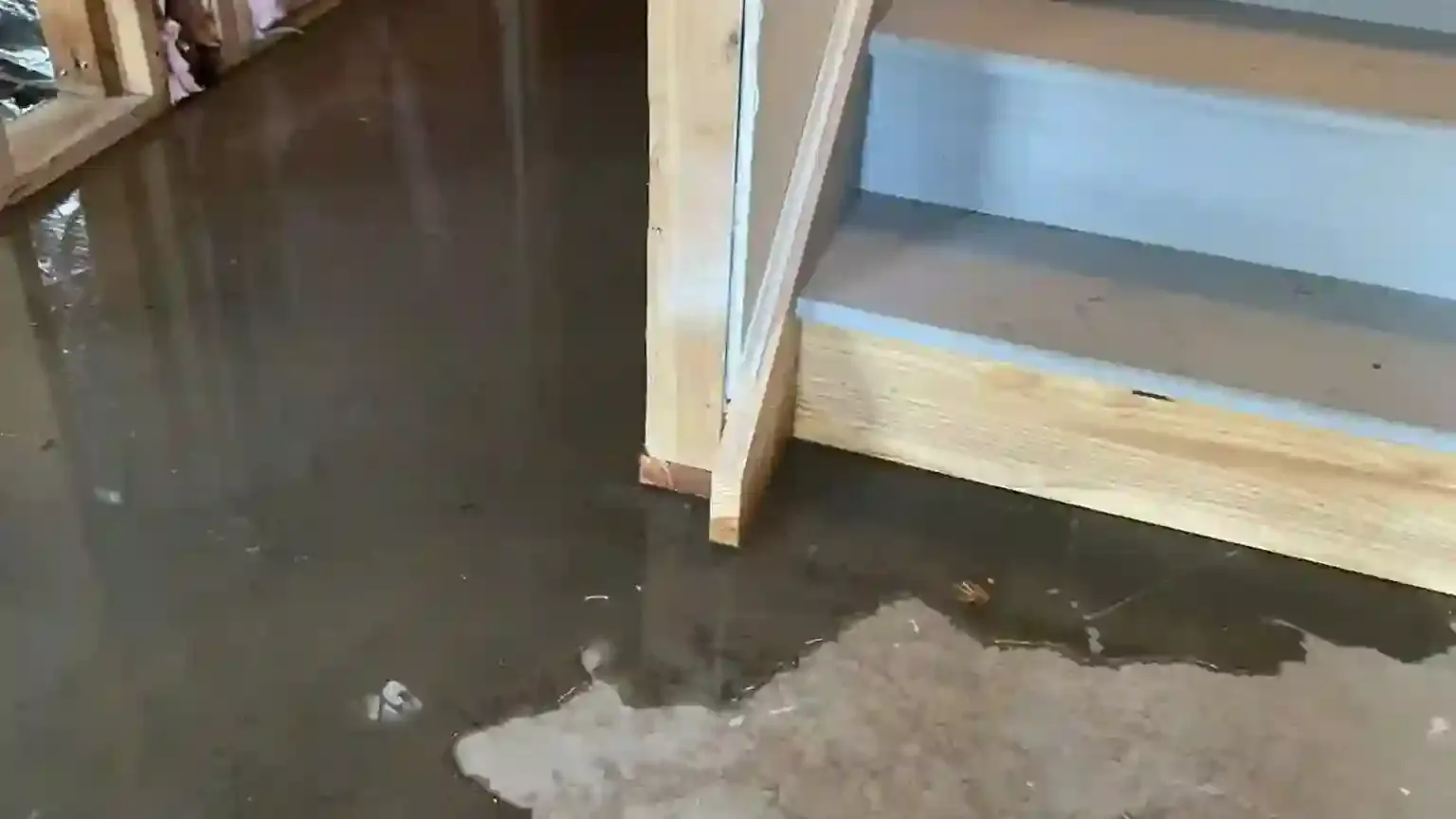
Why do sump pumps fail at the worst moment?
Because they fail in predictable ways. Power drops mid-storm and there’s no battery. The float sticks against the basin wall. The pump is undersized. There’s no check valve, so water drains back down. Or the discharge line is clogged or crushed under a mulch bed.
Good news? Each one has a cheap answer, and sorting them turns a hard rain into something you sleep through.
How long does it take, and what should you do first?
Drying typically runs three to five days on equipment. Interior drainage runs one to three days on site, and new concrete wants a few days before you load it up.
Your prep list is short. Clear about four feet along the working walls, pull fragile things off nearby shelves, and make sure we can reach an exterior door. We’ll move the heavy items, because nobody should throw out their back to save a truck trip.
One timing note: move quickly on the drying half. Mold can begin growing on wet organic material in roughly 24 to 48 hours, so delay adds material that has to come out. The CDC’s guidance on mold after flooding lays out the same window plainly.
What DIY genuinely handles
More than contractors usually admit. Extending downspouts six to ten feet out, cleaning gutters twice a year, regrading soil away from the house, clearing window wells, and testing your sump with a bucket — those five solve plenty of minor water complaints.
What DIY can’t reach is anything below the slab. You can’t set drain tile without opening concrete, and no product in a bucket beats saturated clay pushing on a wall. Large-scale drying is the other one, since rental fans move air but pull far less moisture than commercial equipment.
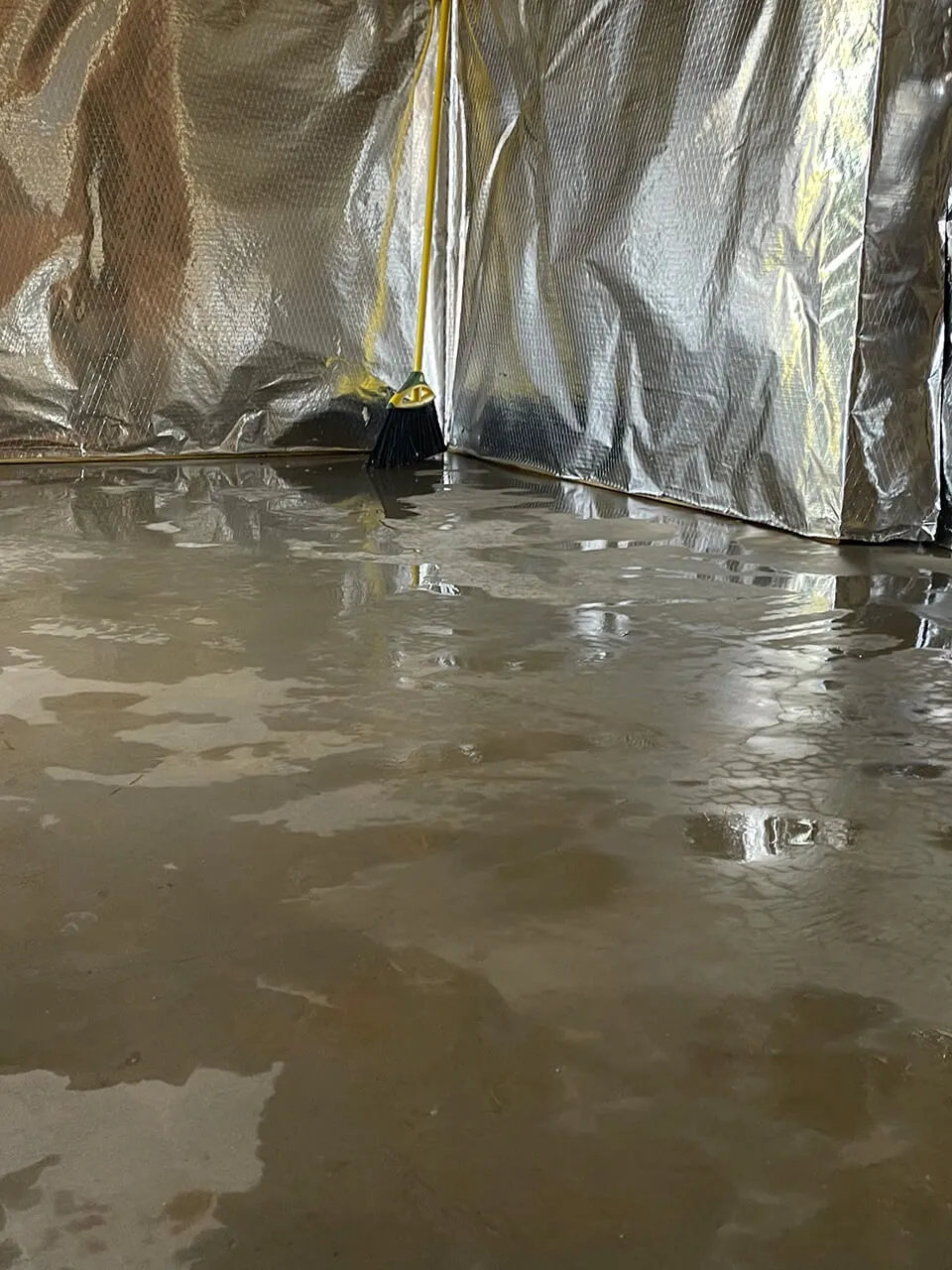
Once it’s fixed, what do you do every year?
Here’s the list nobody hands you, and it’s what keeps a one-time job from repeating. Put it on the calendar twice a year.
- Test the sump. Pour a five-gallon bucket in and watch it kick on, run, and shut off cleanly.
- Check the float. Nothing leaning on it, no cord wrapped where it can bind.
- Walk the discharge line. Find the outlet, clear the leaves, confirm water runs away from the house.
- Clean the gutters. Twice a year, plus after the pines drop.
- Check the soil line. Beds settle, so add dirt where the ground pulled back.
- Swap the backup battery. Most want replacing every few years.
- Check the floor after the first big storm. Thirty seconds with a flashlight.
That’s maybe an hour a year. In exchange, the next time a storm rolls up I-985 you check the radar out of curiosity instead of concern.
Where does insurance land in all this?
Let’s be straight, because vague answers here cost people money. Standard homeowners policies commonly exclude surface flooding and groundwater seepage, and sump pump failure coverage is usually a separate endorsement you add on purpose.
So call your agent with two questions: do I have a water backup or sump endorsement, and what does my policy say about groundwater? Read your own declarations page instead of trusting a general rule.
How do you know the job was done right?
Ask for five things and you’ll sort careful work from fast work in a minute. A written scope naming linear feet and the discharge location. Moisture readings, not just “it looks dry.” Photos of the stone and pipe before concrete goes back. A warranty you can read without a lawyer. And a live water test with you standing there.
Get those, and the basement flooding cost in Buford stops being a mystery number and becomes a plan you can check line by line. We’ve worked this side of Gwinnett for over twenty years, from newer builds in the Mall of Georgia corridor neighborhoods to older stone-and-block foundations in the Downtown Buford and Main Street district. Our basement waterproofing approach sits on the service page, and if cracks came along with the water, our foundation repair page covers that. The Grayson basement flooding cost breakdown uses identical math.

Where we work around Buford
Our shop is about twenty minutes south in Lawrenceville, so we’re up this way constantly. We also cover Suwanee, Sugar Hill, Braselton, Flowery Branch, Dacula, Gainesville, Duluth and the wider Gwinnett and Hall Counties area. If you’re near the dam or off I-985, odds are we have a truck close by.
Questions we get from Buford homeowners
For a small puddle caught right away, sure. For real flooding, no — a shop vac pulls surface water but leaves moisture inside concrete, framing and drywall, and a household fan moves air without removing much humidity. Proper drying uses air movers plus commercial dehumidifiers, verified with moisture readings.
Mold can begin on wet organic material in roughly 24 to 48 hours, so speed matters more than perfection. Get the water out, pull soaked carpet, pad and cardboard, then start air moving the same day. Fast action keeps the job smaller and cheaper.
Safety first — shut off power to the basement at the breaker before stepping into standing water. Then take photos for your records, lift what you can off the floor, and call for extraction. Documenting before cleanup makes any insurance conversation much easier.
Because soaked clay soil swells and presses water toward the house, usually entering at the cove joint where wall meets floor. Once the rain stops, the pressure drops and the seepage stops with it. That on-and-off pattern points to groundwater rather than a plumbing leak.
Often not by default. Standard policies commonly exclude surface flooding and groundwater seepage, and sump pump failure coverage is usually a separate endorsement you add on purpose. Call your agent and read your own declarations page, since policies really do differ.
Let’s find out what your basement actually needs
The inspection is free, the estimate is free, and nobody pressures you at the end. We’ll show you where water is getting in, what it takes to stop it, and what that costs here in Buford — including the times the answer is smaller than expected.
(678) 914-5112Serving Buford and all of Metro Atlanta · $500 off projects over $3,500 · Live support 7am–8pm, 7 days a week