

Standing Water Basement Tucker: What Causes It and How It Gets Fixed
Plain English on where the water got in, how serious it is, and what fixes it.
Ever notice how these calls all land in March? Spring storms park over DeKalb County for days, the ground quits taking water, and somebody heads downstairs for laundry and finds an inch of water instead. That’s the classic standing water basement Tucker homeowners phone us about every spring. So here’s the good news: it’s common, it’s understood, and very fixable.
Take a breath. Water on a floor looks alarming, but it rarely means something structural went wrong. Plenty of folks search standing water basement Tucker at 6 a.m. with a flashlight in hand, and most get good news.
What does standing water actually mean?
Damp and wet are different problems. A musty smell means moisture is moving through the wall as vapor. Standing water means bulk water is arriving through an opening — so we’re not chasing humidity, we’re looking for a door.
Four doors cover nearly everything we find: pressure at the cove joint, a sump pump that quit, a blocked drain line, and a window well with no working drain. Better yet, three of those take minutes to check.
The cove joint is the one most people have never heard of. It’s the seam where your wall meets the floor slab, and those two pours never bonded. So it isn’t a crack — it’s a seam running your whole perimeter. When the soil outside is soaked, the pressure has to go somewhere, and that seam is the easiest way through.
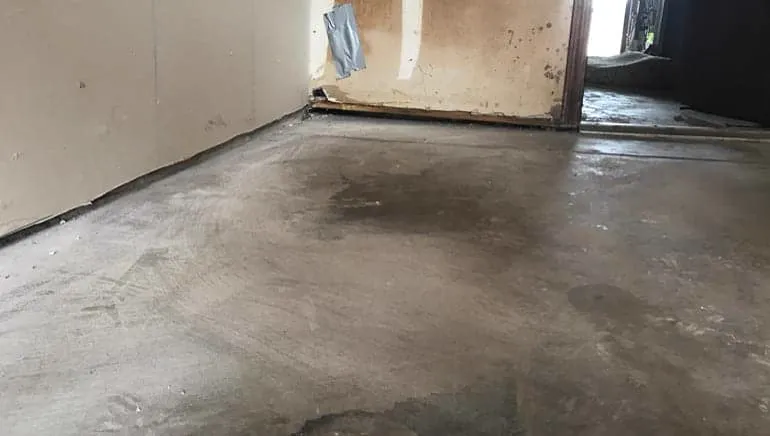
Now add what’s under this town. Red Georgia clay holds water like a sponge, so it stays wet against your wall for days after a rain. Hollow block walls have open cores, and once those fill, water pushes through down low. Plus Tucker sits on the edge of the Stone Mountain granite. When water hits that rock it can’t go down, so it goes sideways — and quite often it goes sideways straight into somebody’s basement.
Good news
Water at the cove joint is a drainage problem, not automatically a structural one. Most homes we see are only having that first conversation.
How do you tell mild from serious?
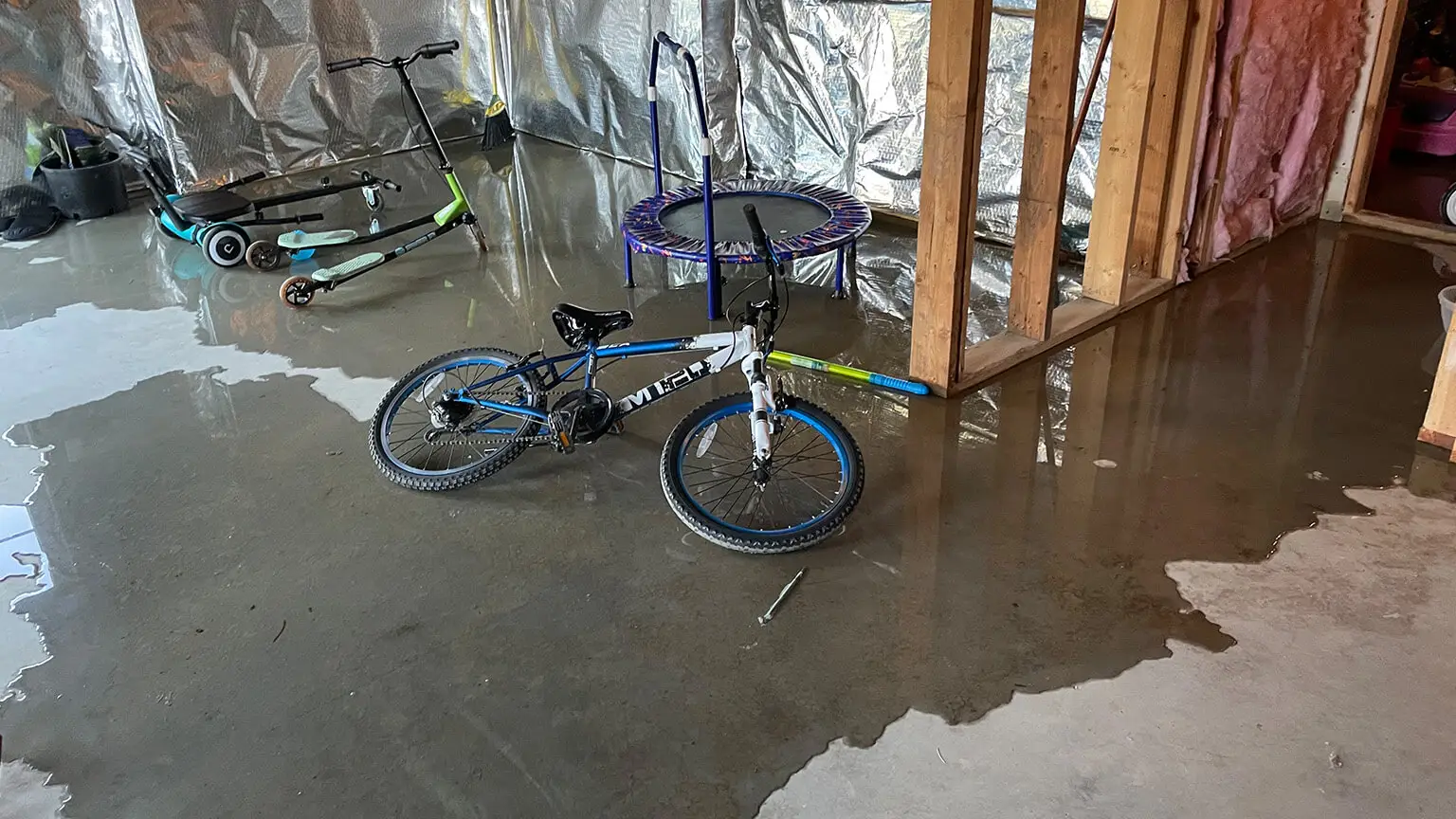
Want a quick read before anyone shows up? Look at where the water sits. A puddle in one corner points to a local entry — a window well, a pipe penetration, one tired section of wall. Water across the whole slab points to pressure underneath instead.
One thing before you head down, and it isn’t optional. Never step into standing water while the power is on. Kill the circuit at the panel first, and if the panel sits in the wet area, call your utility or an electrician instead.
Then check the pump, because sump pumps fail in boring, predictable ways. Power drops mid-storm, right when it matters most. The float sticks against the side of the pit. Other times the pump is undersized, the check valve is missing, or the discharge line is clogged at the far end.

So what if it’s left alone? The concrete holds up fine for a long time. What suffers is the drywall, the flooring, the paneling and whatever you stored down there. Water also returns on a schedule, so each storm picks up where the last left off.
The volume is bigger than it looks, too. An inch of water across a 1,000-square-foot basement is more than 600 gallons. That’s why a wet-vac feels hopeless ten minutes in — you’re not doing it wrong, you’re just outnumbered.
What does the real fix look like?
Ready for the part that makes people relax? The repair is routine, and it rests on one idea: quit holding water back and give it an easier way out.
- Find the source first. We walk the outside — grading, gutters, downspouts, window wells — then the inside. Sometimes the answer is smaller than expected, and we say so.
- Open a channel at the perimeter. A narrow strip of slab comes up along the affected walls. Loud and dusty for a day, then done.
- Set drainage under the floor. Perforated pipe in clean stone, below the slab, so pressure gets relieved at the cove joint instead of pushing through.
- Route it to a proper sump. Sealed lid, check valve, correct pump size, and a discharge that carries water well away from the house.
- Close it up clean. Fresh concrete over the channel, wall liner where it’s called for, and our mess hauled off.
Notice what nobody did there? Paint the walls. Sealers have their place, but a coating can’t beat pressure, and pressure is what we’re up against. That’s why the drainage carries a written warranty. FEMA’s building science library covers the same principles for homes everywhere.
We quit trying to hold water back years ago. Now we assume it’s coming, and we build it a faster way out.
Wondering what it runs? It depends on how much wall is involved, whether the basement is finished, and how easy it is to reach. Our breakdown of basement flooding cost covers what moves the number, and the systems are laid out on our basement waterproofing page.
What happens after the crew leaves?
Here’s the part nobody explains at the estimate. Installing the system is only half of it. The rest is what your basement does next.
Drying comes first. Fans and a dehumidifier usually run three to five days, because concrete gives moisture back slowly. Wet carpet pad and soaked cardboard go, since neither ever really recovers. After that, the room smells like a room again.
Then comes the first real storm, honestly the best day of the project. You’ll hear the pump kick on, run a while, and shut off. Nothing else happens.
Long term, the drainage under your slab is stone and pipe, so nothing wears out. The pump is the one part with a service life, so plan to swap it near the ten-year mark. Our shop is twenty-five minutes up the road in Lawrenceville, so the crew that builds it answers in year six.
Why do Tucker basements do this?
Isn’t it strange how one street floods and the next never does? Two things explain most of it: the age of the houses and the rock underneath.
Tucker built out heavily between the mid-fifties and the mid-eighties, so block basements from that era are everywhere. Original footing drains have usually silted up, which is normal for pipe buried sixty years. Homeowners around the Northlake area and out toward the Pine Lake edge hear this constantly, and it lands as relief. Their house isn’t failing. Its drainage aged out.
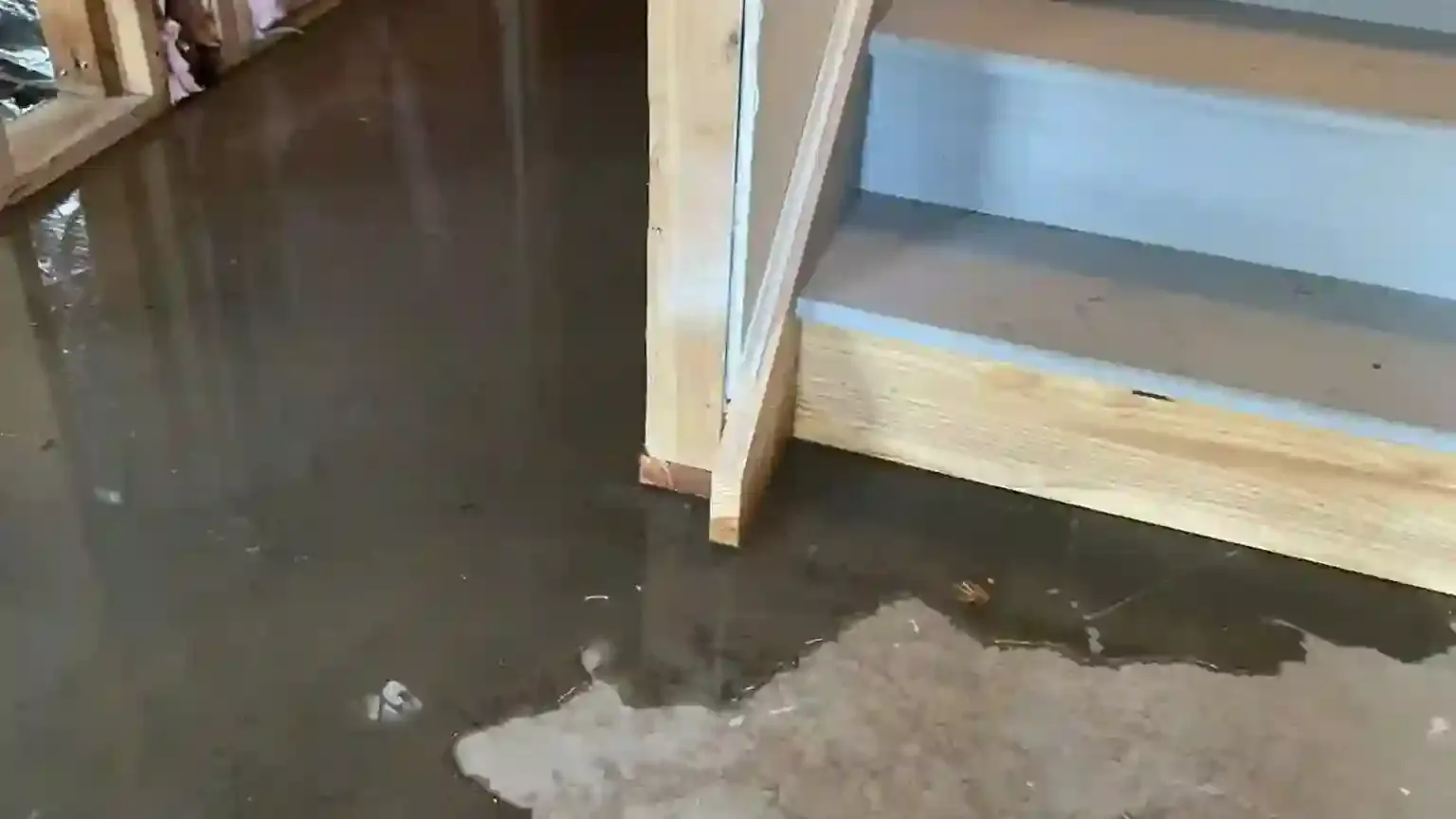
Terrain does the rest. Because shallow granite pushes water sideways, homes on the uphill side of a slope catch runoff their neighbors never see. We’ve worked wooded lots near Henderson Park where the answer was interception drainage, and older streets off Hugh Howell Road where the slab was under pressure. Even near Downtown Tucker Main Street, where lots look flat, water travels along whatever hard layer it lands on.
One local wrinkle we always check: plenty of these homes got finished basements in the eighties, and wood paneling hides long-term moisture beautifully. So when someone says the floor is only wet after big storms, we still pull a little trim loose. Half the time the wall behind it has been quietly damp for years.
Standing water and foundation movement sometimes travel together, though not always. If you’ve also noticed sticking doors or a stair-step crack, our page on foundation repair explains how those get checked. Neighbors north of here see the same thing, which is why we wrote up Johns Creek basement flooding too.
What does this have to do with the air upstairs?
More than most folks expect. Air in a house moves upward — it leaves through the attic and gets replaced from the lowest point. So your basement isn’t a sealed box. It’s more like the intake vent for the whole house.
That’s why a damp basement can show up as a smell in a bedroom two floors up. Mold can begin on wet organic material in roughly 24 to 48 hours, and it likes paper-faced drywall, carpet pad, cardboard and old paneling best. So drying fast matters. The CDC’s guidance on mold after flooding walks through it clearly.
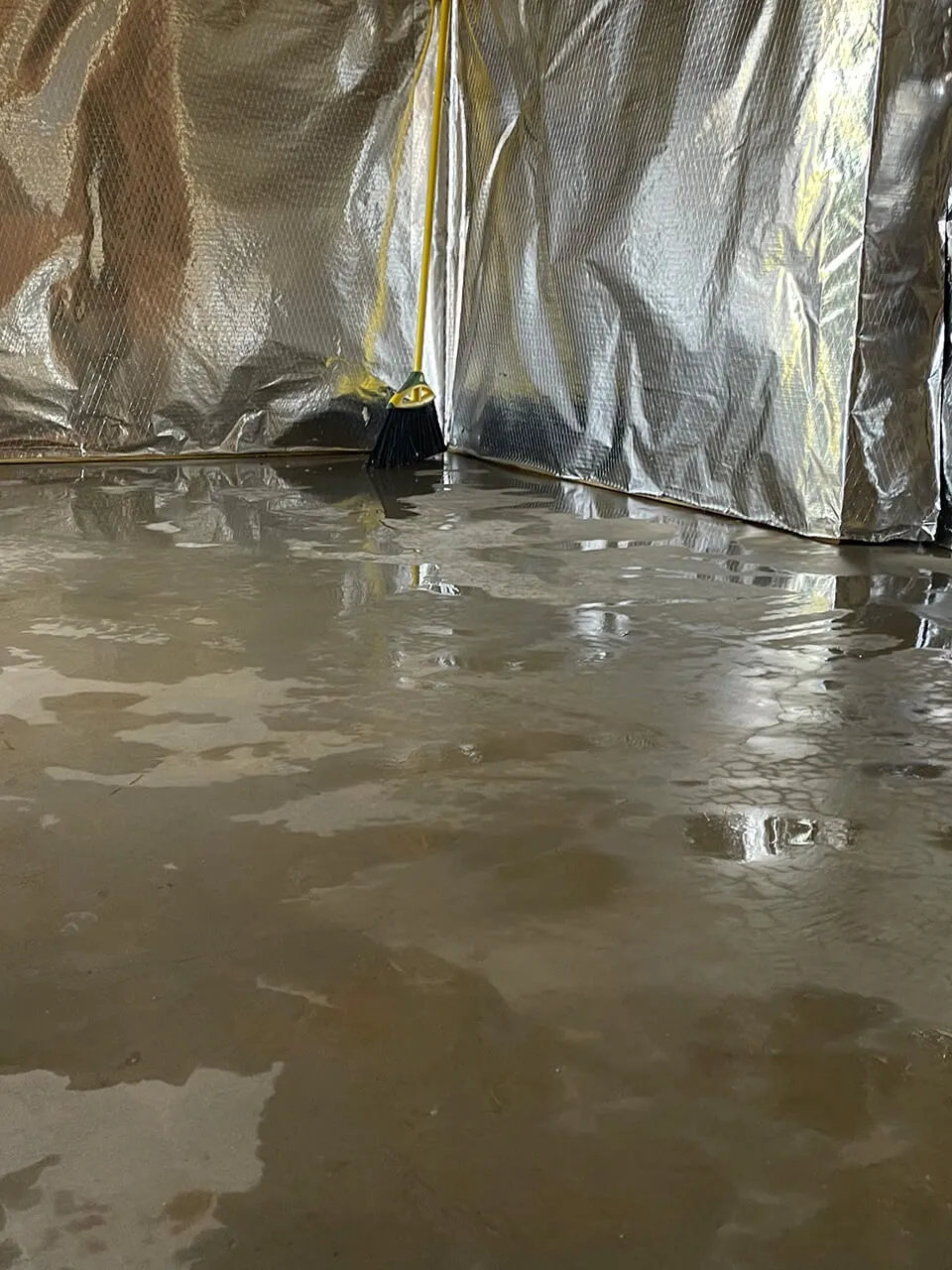
The good news? This part is the easiest to solve. Stop the water at the source, dry the space properly, pull anything that stayed soaked, and hold humidity down with a dehumidifier. Do that, and the air problem leaves with the water problem.
What does dry actually feel like?
Picture the next big spring storm. Rain hammers the windows all night, and in the morning the floor downstairs is just a floor. Nothing to mop, nothing to drag outside, nothing to apologize for. That’s the whole product — a basement that quit being a weather report.
After that, the room gets useful again. Some folks finish it, some build a gym, plenty just want storage they trust. Most standing water basement Tucker inspections we run end with a homeowner telling us they expected far worse news.
Where we work around Tucker
Tucker sits about twenty-five minutes from our shop, and standing water basement Tucker calls make up a good share of our spring work. We also cover Lilburn, Stone Mountain, Norcross, Decatur, Clarkston, Doraville and Brookhaven, plus the wider DeKalb area. If you’re between Northlake and Main Street, odds are a truck is already nearby.
Questions Tucker homeowners ask us
Sooner is better, since mold can begin on wet organic material in roughly 24 to 48 hours. Get the water out, pull soaked cardboard and carpet pad, then run fans and a dehumidifier. Concrete gives moisture back for days, so run that equipment longer than feels necessary.
Because saturated soil puts pressure under the slab, and the seam where the wall meets the floor is the weakest point. That seam is the cove joint, and it isn’t a crack — the two pours never bonded. Water spread evenly across the slab usually means pressure underneath.
For practical purposes, yes, as long as the fix matches the real source. Interior drainage with a properly sized sump handles pressure, while grading, gutters and window wells handle what arrives from outside. The drainage has no moving parts, so the pump is the only piece you ever service.
It depends on how many feet of wall are involved, whether the basement is finished, and how hard the space is to reach. One problem corner sits at the low end, a full perimeter with a new sump at the high end. The inspection and estimate are free, and projects over $3,500 get $500 off.
Still worth a look, though it’s rarely urgent. Water arriving twice a year means the same door keeps opening, and older drain lines silt up further over time. Sometimes the answer is a downspout and a regrade rather than a system.
Let’s find where that water is coming in
The inspection is free, the estimate is free, and nobody pressures you at the end. We’ll show you the entry point, explain the fix plainly, and put the scope in writing — even when the answer is simple.
(678) 914-5112Serving Tucker and all of Metro Atlanta · $500 off projects over $3,500 · Live support 7am–8pm, 7 days a week