

Standing Water Basement Norcross: Why It Happens and What Fixes It
A plain-English look at where the water came from, how to read your own floor, and what a fair estimate should say.
Two houses sit on the same street off the Indian Trail corridor. Same builder, same year, same red clay packed against both foundations. After a long weekend of rain, one basement is bone dry and the other has half an inch of water across the slab. That gap is the whole story behind every standing water basement Norcross homeowners call us about — and it comes down to where the water went, not how much of it fell.
Good news? This isn’t a mystery, and it isn’t rare. Water on a basement floor is one of the most common calls we take, plus one of the most fixable. So by the end you’ll know what to ask for and what a fair estimate looks like.
What is standing water telling you?
Here’s the thing — damp and wet are two different problems. Damp is vapor: humid air, a clammy wall, that smell at the bottom of the stairs. Water sitting on the floor means bulk entry — liquid water found an opening and came through it.
That matters, because it changes the fix. A dehumidifier can’t out-run bulk water, and waterproof paint won’t slow it either. Instead, water needs a path you built on purpose — otherwise it keeps picking its own, and it has excellent taste in flooring.
In most Gwinnett homes four suspects cover nearly all of it: hydrostatic pressure at the cove joint, a sump pump that quit, a clogged or crushed drain line, or a window well with no working drain. Each leaves a different signature, which is why looking beats guessing.
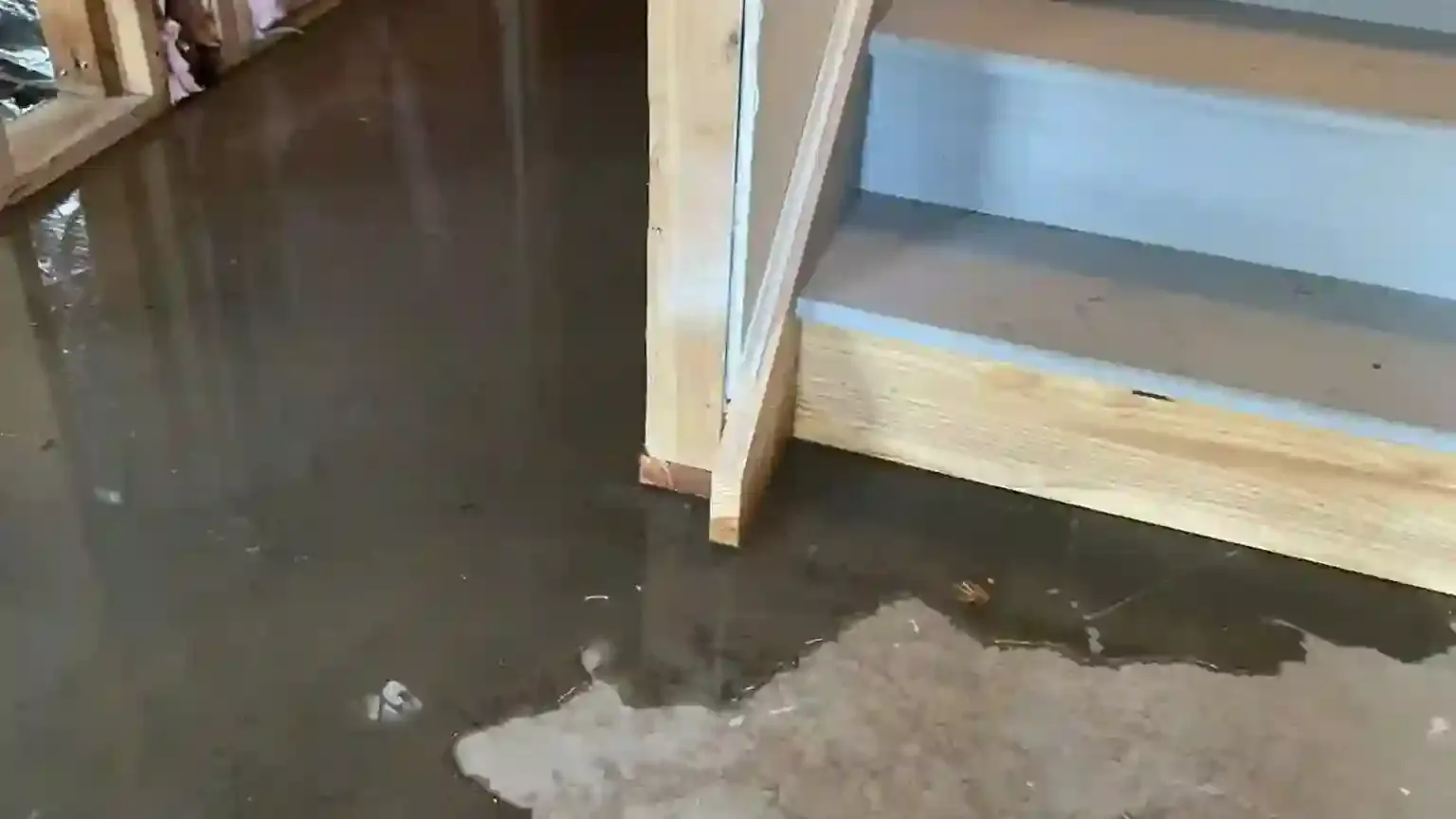
About that cove joint. It’s the seam where your wall meets the floor slab, and the most common entry point in a home under pressure. Those two pieces were poured at different times, so they never truly bonded. As a result the seam isn’t a crack — it’s a door running the whole perimeter, and water takes the door.
Worth knowing
Georgia red clay drains slowly. After a long rain it holds water against the wall like a wet sponge, so pressure builds and pushes through hollow block cores and that cove joint. Nothing broke — something just pushed harder than the seam could hold.
How do you read your own basement floor?
Good question — and you can do most of it yourself in five minutes. Where the water sits tells an inspector most of what he needs before anybody quotes.
A puddle in one corner or along one short wall. That points to a local entry — a window well filling up, a pipe penetration, one tired spot in the wall. Fixes here are often smaller than people expect, which is a nice thing to read for once.
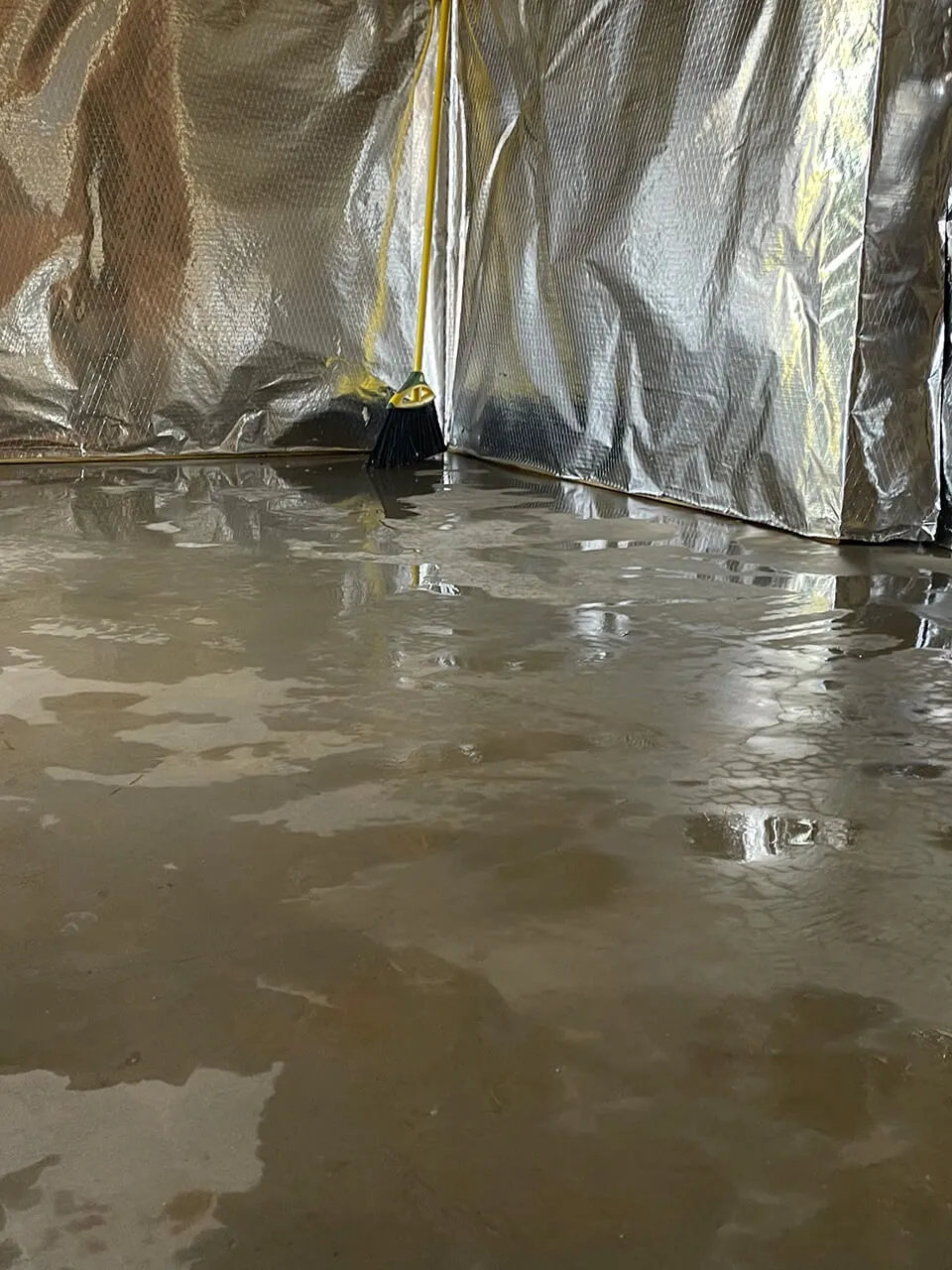
A thin sheet across the whole slab. That’s pressure under the floor, not a hole in a wall. Water rose through the cove joint all the way around. Bigger cause, still ordinary work.
One safety note before you go poking around, and we mean this plainly. Never step into standing water while the power is on down there. Kill the basement circuits at the panel first, and if the panel is in the basement, call an electrician or your utility. The National Weather Service flood safety guide covers the rest.
What happens if it just sits? Plainly: mold can begin on wet organic material — drywall paper, carpet pad, cardboard — in roughly 24 to 48 hours. So get water off the floor and air moving today, before anybody talks repairs. The CDC’s guidance on cleanup after flooding is a straight, no-drama read.
Can we back up for a second?
Because there’s a question underneath the question. Most folks ask how to get the water out. But the better one is why it started now. Your house didn’t change last Tuesday — something around it did, slowly, for years.
Norcross makes that interesting. This city has houses from three different centuries, and each needs a different answer, which is why a real inspection beats a phone quote every time. Anybody pricing your basement over the phone has never seen your basement.
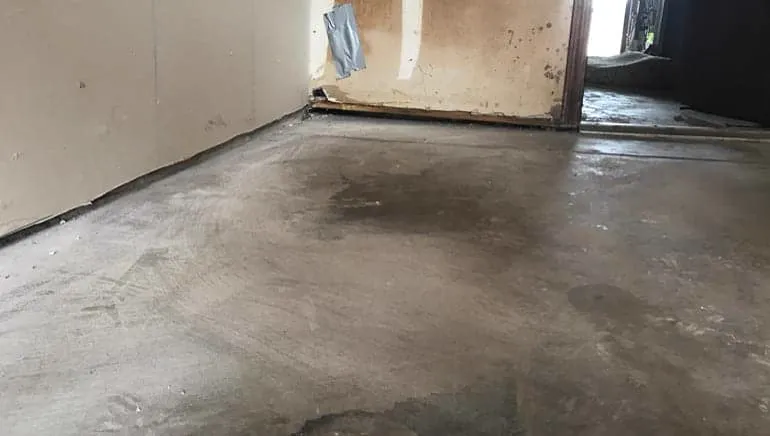
Out in the Beaver Ruin area and along the Peachtree Station edge, what we find is usually time. Those homes went in with little meaningful waterproofing, and the drain lines have spent decades collecting silt. So years of deferred maintenance add up to one wet Saturday. Nothing broke — the system used up its runway.
Why do sump pumps quit at the worst time?
Because pumps fail in a short list of ways, and every one shows up mid-storm. Once you know the list, you can check most of it on a dry afternoon.
- Power loss. The storm that fills the pit is the storm that drops the line. No battery backup, no pump.
- A stuck float. The switch leans on the pit wall or catches the discharge pipe, so the pump never gets the message.
- Undersized. A small builder-grade pump keeps up in a normal week and falls behind in a heavy one.
- No check valve. Water drains back into the pit, so the pump runs itself ragged moving the same gallon.
- A clogged discharge line. The pump works perfectly and the water has nowhere to go — a frustrating way to be right.
Here’s a money detail worth knowing first. Standard homeowners insurance typically excludes groundwater seepage, and sump pump failure coverage is usually a separate rider you add on purpose. So spend ten minutes with your policy — knowing that up front makes you much stronger when estimates arrive.
What does the real fix look like?
Let’s walk it, so nothing surprises you on install day. The idea is simple: quit fighting the water and give it an easier path than the one it’s using.
- Find the source first. When we come out for a standing water basement Norcross inspection, we walk the outside first — grading, gutters, where roof water lands. Sometimes the answer is smaller than expected, and we say so.
- Open a channel at the perimeter. A narrow strip of slab comes up along the affected walls. Loud and dusty for a day or two, then done.
- Set drainage below the floor. Perforated pipe in clean stone, under the slab, so water is collected before it reaches your floor instead of after.
- Route it all to a sump. The right size pump, a check valve, and a discharge line carrying water well away from the house.
- Close it up clean. Fresh concrete over the channel, wall liner where it’s called for, our mess hauled off.
We quit trying to block water years ago. Now we assume it’s coming, and we build it a better way out.
Wondering about the number? It moves with how much wall is involved, how easy the space is to reach, and whether it’s finished — which is why we measure before we quote. Our breakdown of basement flooding cost covers each factor, and the systems are on our basement waterproofing page.
What about the other rooms?
This is the part almost nobody connects. Water on a basement floor doesn’t stay a basement story, because the house shares air.
Your furnace and ductwork usually live down there. So damp air gets pulled in and pushed to every room above, which is why a main-floor closet smells musty while the basement door stays shut. Upstairs hardwood can cup. Insulation between the joists soaks up moisture, sags, and quietly stops insulating.

Then there’s the storage nobody thinks about until it’s wet — holiday bins, baby clothes, boxes from a parent’s house. Honestly, the concrete is the toughest thing down there and rarely the thing that pays.
Now picture the other side. The floor stays dry through a three-day soaker. That smell is gone. Instead of a room you apologize for, you get a gym, a playroom, or storage you trust. Better yet, on the next ugly forecast you won’t think about the basement at all.

Why does local experience matter here?
Because Norcross basements aren’t one thing. We’ve spent twenty-plus years on these houses, from the older streets near Lillian Webb Park to the split levels toward Lucky Shoals Park. Nearly every standing water basement Norcross call starts the same way — it rained hard, and Saturday morning there was water. What comes next depends on the decade.
Lots near the Peachtree Industrial Boulevard corridor sit lower and hold groundwater longer, while ridge homes often have a simple gutter and grading story. If your walls also show stair-step cracking or doors that stick, our foundation repair page covers that honestly. Folks further out see this too, so there’s a Loganville standing water basement version as well.
Our shop is twenty minutes northeast in Lawrenceville, so the crew doing the work is the crew answering in year six. Written scope, proof of insurance, a real warranty.
Where we work around Norcross
Norcross is a short run from our shop, so we’re out this way constantly. We also cover Peachtree Corners, Duluth, Lilburn, Doraville, Tucker, Berkeley Lake, Suwanee, Snellville and Stone Mountain, plus the wider Gwinnett area. If you’re along Jimmy Carter or Buford Highway, odds are we have a truck nearby.
Questions Norcross homeowners ask us
Because our red clay drains slowly, a long rain leaves water sitting against the foundation instead of moving away. That water pushes, and the seam where your wall meets the floor gives first. Between storms the pressure drops off, the floor dries, and everything looks fine again.
Usually not for groundwater seepage, which standard policies typically exclude. Sump pump failure is often covered, but only if you added that rider on purpose. Call your agent and ask about both, because the answer changes what you decide to do next.
Sooner is better. Mold can begin on wet organic material like drywall paper, carpet pad and cardboard in roughly 24 to 48 hours. Get the water off the floor, pull anything soaked away from the walls, and run air across the space while you sort out the repair.
That’s pressure from below, not a hole in a wall. When the soil under your slab is saturated, water takes the easiest opening it can find, and the cove joint around the perimeter is exactly that. It’s very common here, and interior drainage is built for it.
You can’t stop the rain, but you can control where the water goes. A proper drainage system plus a sized pump handles water below, while grading and gutter work handles it above. Keep up with the pump the way you would a water heater, and the floor stays dry.
Let’s find out where that water is coming from
The inspection is free, the estimate is free, and nobody pressures you at the end. We’ll show you the entry point, explain the fix plainly, and put the scope in writing — even when the answer is simpler than you expected.
(678) 914-5112Serving Norcross and all of Metro Atlanta · $500 off projects over $3,500 · Live support 7am–8pm, 7 days a week