

Standing Water Basement Lilburn: What Causes It and What Actually Stops It
Water you can step in means something different than a damp smell. Here’s the plain-English version, and the fix.
Start at the end for a second. It’s an April morning, it rained all night, and you walk down the basement stairs in socks without thinking twice. The floor is dry. Not mopped-dry — actually dry. That’s the finish line for every standing water basement Lilburn homeowners call us about, and getting there is less dramatic than it sounds today.
Because water on your floor isn’t a mystery. It’s a path. Once we find that path, we give the water a better one, and the room stops being something you think about when the forecast turns.
What is water on the floor telling you?
Here’s the first thing worth knowing. A musty smell and clammy air mean vapor — moisture drifting slowly through concrete. Water you can step in is different. That’s bulk entry, and volume always leaves a trail we can follow.
Better yet, the suspect list is short. Usually it’s hydrostatic pressure at the cove joint, a sump pump that quit, a drain line packed solid, or a window well with no working drain under it.

That first one deserves a name. The cove joint is the seam where your wall meets the floor slab. Those two pieces of concrete were poured on different days, so they never truly bonded — which means it isn’t a crack at all. It’s a door running your whole perimeter.
Georgia red clay supplies the pressure. Clay drains slowly, so after a long rain it holds water against the wall instead of letting it soak away. On block, that water fills the hollow cores like a pitcher and pushes out at the bottom, right where the seam waits.
Where the water sits is a clue, too. A puddle in one corner points to a local entry — a window well, a gap around a pipe, one tired stretch of wall. Water spread evenly across the slab means pressure underneath it, pushing up.
Please do this first
Never step into standing water while the power is on. Shut off the circuits feeding that space at the panel first. If the panel is down there, or you can’t reach it dry, call your electrician and wait.
How do you tell mild from serious?
Fair question, and you deserve a straight answer instead of a sales pitch. We sort every standing water basement Lilburn call into three groups, and none of them are cause for alarm.
Occasional. Water shows up once or twice a year, only after a storm that made the news, and it’s gone in a day. Usually that’s surface water — rain landing near the house faster than the yard can move it away.
Regular. Every decent rain puts water on the slab. You’ve moved boxes onto pallets, and you know which corner goes first. At this stage the drainage has stopped keeping up, so water arrives on a schedule.
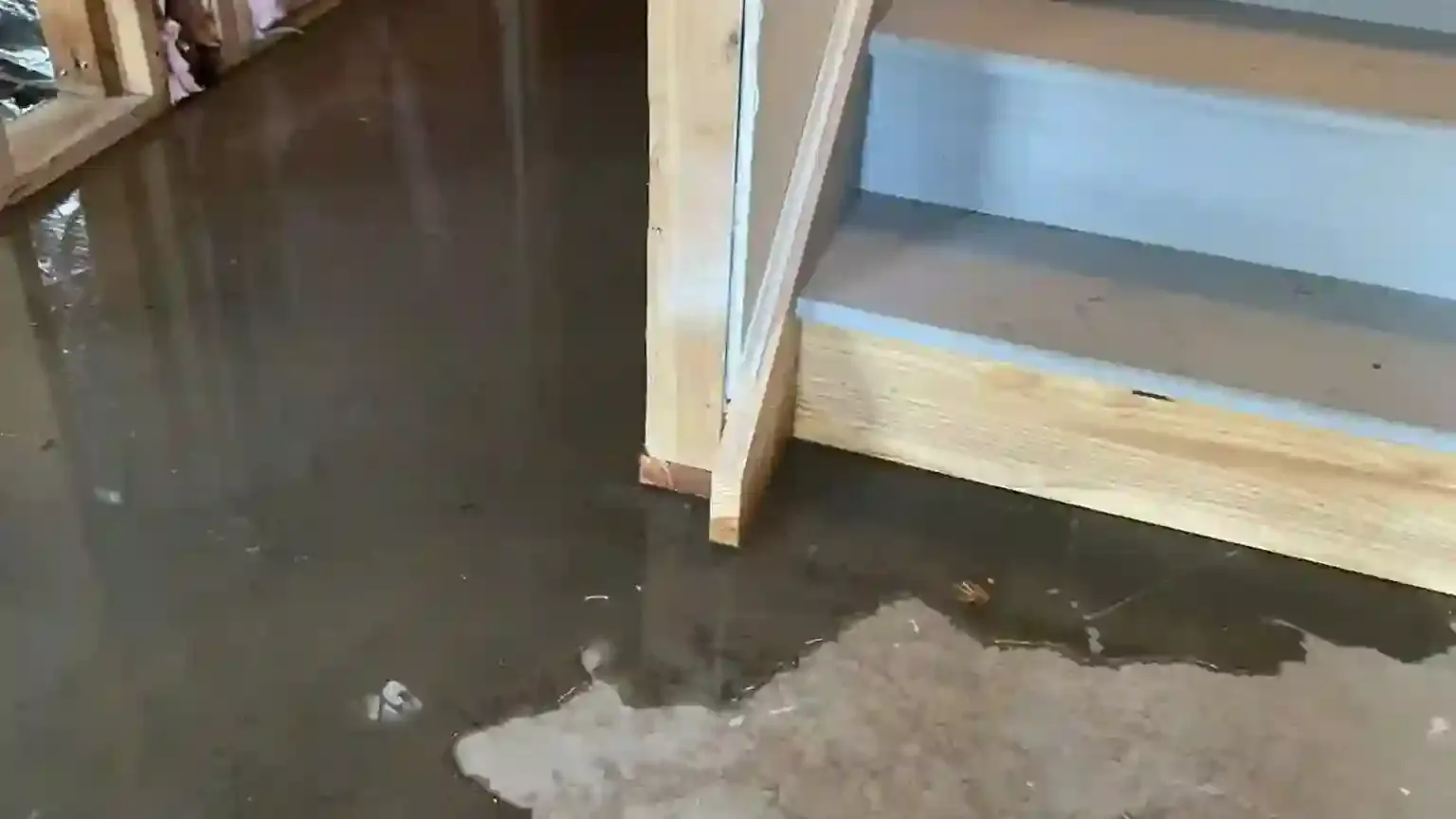
Standing. Water sits there between storms, or the sump runs and never gets ahead. That said, standing doesn’t mean urgent — it means we should stop guessing and go look.
So what if it’s left alone? Plainly: concrete is patient, but the stuff around it isn’t. Mold can start on wet organic material — cardboard, drywall paper, carpet pad — in roughly 24 to 48 hours, which is why the CDC’s guidance on mold cleanup leans so hard on drying fast.
Then there’s the part specific to this town. Plenty of Lilburn basements were finished into bedrooms and in-law suites without anyone solving the moisture first. When that happens, water doesn’t hurt a bare slab — it hurts a room somebody sleeps in. Good news, though: the repair is the same either way, and we can do it without gutting the space.
Is there an easier first step nobody mentions?
There usually is, and it costs a fraction of what people brace for. Here’s the rule we’ve leaned on for twenty-plus years: a basement that floods only in heavy rain almost always has a surface water problem, not a groundwater one. Surface water is the cheaper fix, so we look there first.
That means rain that never got away from the house. Downspouts dumping two feet from the wall. A flower bed built up until the grade tilts back toward the foundation. A yard drain full of oak leaves — which, under the canopy around Arcado, is practically a seasonal tradition.

Your sump pump is the other easy check, since pumps fail in predictable ways. Power drops mid-storm, exactly when it matters most. A float sticks against the basin wall. The pump is undersized. There’s no check valve, so everything it pushes up the pipe slides back down. Or the discharge line is clogged or crushed out in the yard.
Any of those can look exactly like a flood, which is oddly encouraging. A stuck float is a fifteen-minute fix, not a project. We’d rather say that than sell you something you don’t need — and that’s how we’ve stayed busy off Indian Trail for two decades.
Water follows the land, too. Lilburn rolls, and much of it drains toward Camp Creek and the Yellow River. So on a low lot, like the homes backing toward the Camp Creek Greenway, groundwater sits higher after a wet week. That doesn’t mean a bigger repair — just a design that matches the site.
What does the real repair look like?
Let’s walk it, so nothing surprises you on install day. The idea is simple: stop blocking water, and start giving it an easier route than the one it picked.
- Find the source. Outside first — grading, gutters, where roof water lands — then inside for staining and the path the water took.
- Open the perimeter. A narrow strip of slab comes up along the affected walls. Loud for a day or two, then quiet.
- Set drainage below the floor. Perforated pipe in clean stone, under the slab, so water is collected before it reaches your floor.
- Relieve the block. We drill weep openings at the base of hollow block walls so the cores empty into the drain, not your room.
- Route it to a real sump. Right-sized pump, check valve, sealed lid, and a discharge that carries water well away from the house.
- Close it up clean. Fresh concrete over the channel, wall liner where called for, and our mess hauled off.
Notice what’s missing from that list? Paint. Sealers have their place, but a coating can’t beat pressure — it’s a raincoat on a submarine. That’s why we warranty a drainage system in writing, never a bucket of paint.
We quit trying to block water years ago. Now we assume it’s coming and build it a better way out.
Curious what it runs? It depends mostly on the linear feet of wall involved, whether the space is finished, and how far the discharge has to travel — so we measure before we quote. Our basement flooding cost breakdown covers what moves the number, and the systems are on our basement waterproofing page. If you’re also seeing stair-step cracks or a bowing wall, that’s a foundation repair conversation.
Want the number that reframes all of this?
One inch of rain on a 1,500-square-foot roof sheds about 930 gallons. Not over a season — during that one storm. And all of it lands in a ring a few feet wide around your foundation, which is exactly where you’d least like to put it.
Suddenly the story changes shape. Your basement isn’t losing to a rare event — it’s handling several hundred gallons a few dozen times a year, and one day the old drainage stopped keeping up. FEMA’s guidance on protecting your property from flooding makes the same point: managing where water lands beats almost anything else you can spend money on.
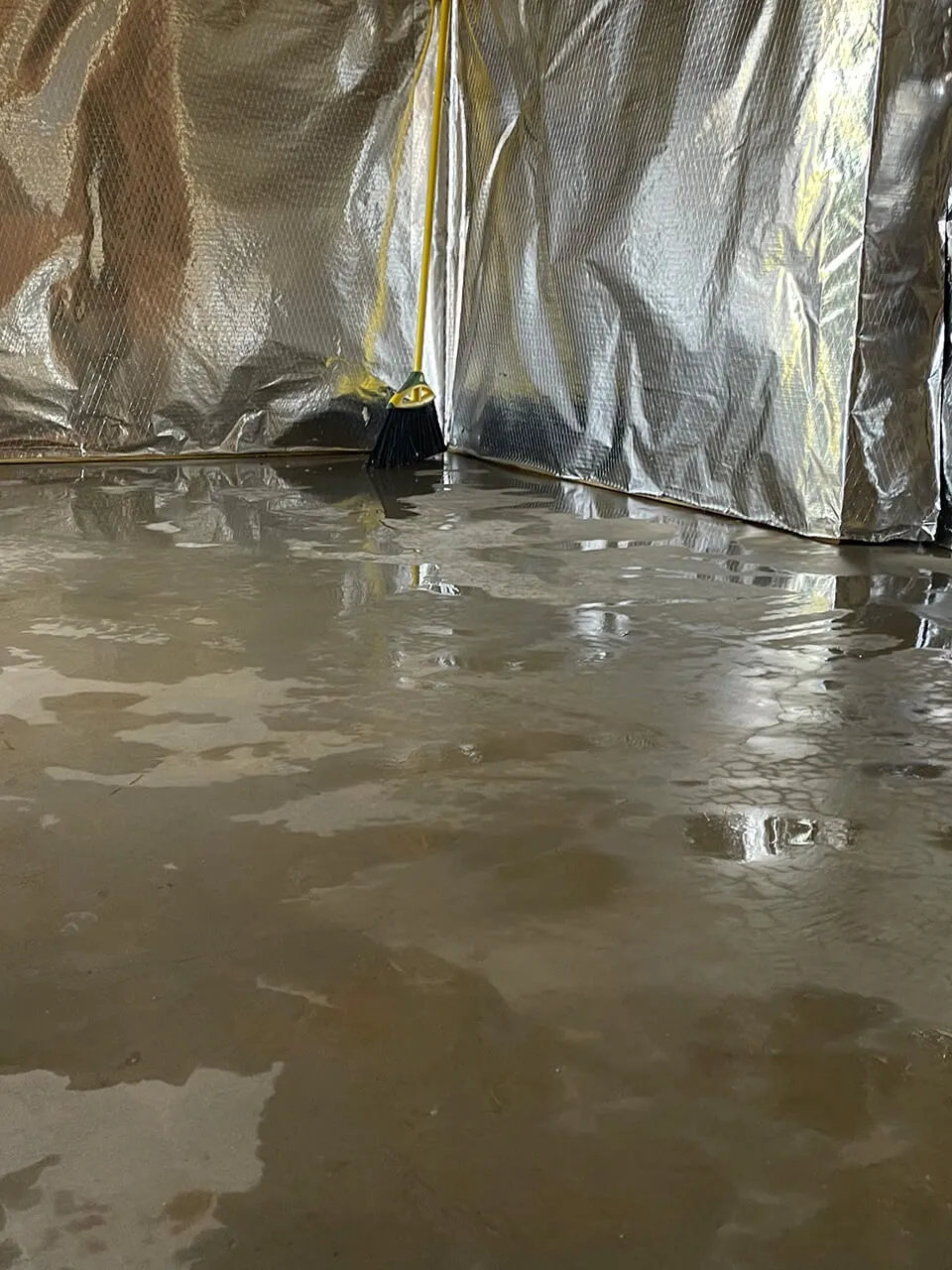
Here’s what the other side feels like. The storm rolls through, the pump cycles once, and you sleep through it. Nobody moves boxes at midnight. The kids’ room downstairs stays a room instead of a worry, and by spring you’re picking paint colors, not watching rainfall. That feeling — my house is looking after my family — is the real product.
Why does local experience matter in Lilburn?
Because these houses share a history. Lilburn homes were mostly built in the seventies and eighties, back when “waterproofing” meant a coat of tar and hoping for the best. Fifty years is a long time to hope. Plus the footing drains from that era are often crushed or silted solid, so the old system quietly retired without telling anybody.

So on most standing water basement Lilburn visits, we know the house before we pull into the driveway. We’ve worked block walls all over Rockbridge and older streets minutes from Old Town Lilburn, including homes where hardwood roots shoved a drain line sideways. Our shop sits fifteen minutes northeast in Lawrenceville, so the crew doing the work answers the phone in year six. We handle a Norcross standing water basement the same way.
Where we work around Lilburn
Lilburn is a short run from our shop, so we’re out this way most weeks. We also cover Lawrenceville, Snellville, Norcross, Tucker, Stone Mountain, Duluth, Grayson, Loganville and Peachtree Corners, plus the wider Gwinnett area. Near Killian Hill or Five Forks, odds are we already have a truck close by.
Questions Lilburn homeowners ask us
Shut off power to that space at the panel before you step in any water, and call your electrician if you can’t reach it safely. Then get the water out and start drying with fans and a dehumidifier. Photograph everything first, since that helps with a claim later.
That pattern usually points to surface water rather than groundwater, which is good news because it’s the cheaper problem. Rain is landing near the foundation faster than your gutters, grading and yard drains can move it off. Fixing what’s outside solves a real share of these.
It depends on the source, so call your agent before you assume either way. Sudden failures like a burst pipe are often covered, while groundwater seepage and surface flooding usually are not without separate flood coverage. Some policies add a sump pump rider for a small amount.
Aim to start within the first day. Mold can begin on wet organic material like cardboard, carpet pad and drywall paper in roughly 24 to 48 hours. Move stored items off the slab, run air across the floor, and pull humidity down while you sort out the source.
Because the seam where the wall meets the slab, called the cove joint, is the easiest opening in the basement. Those two pours never bonded, so water under pressure takes that route first. Interior drainage below the slab relieves the pressure and gives water somewhere better to go.
Let’s find out where the water is getting into your Lilburn basement
The inspection is free, the estimate is free, and nobody pressures you at the end. We’ll show you the entry point, explain the repair plainly, and put the scope in writing — even when the answer is simpler than you expected.
(678) 914-5112Serving Lilburn and all of Metro Atlanta · $500 off projects over $3,500 · Live support 7am–8pm, 7 days a week