

Foundation Repair Johns Creek Homeowners Can Plan For: Methods, Costs, and Warranties
You’ve decided to hire someone. Here’s what you’re actually buying.
Let’s start with the part nobody says out loud. Most of the homes we inspect for foundation repair Johns Creek homeowners call us about are in better shape than the owner feared. Something moved a little, the house mentioned it, and there’s a fix with a number and a warranty attached.
You’ve already decided to hire somebody, so we’ll skip the pitch. Below is the working version — how the repair gets done, what changes the price, and what lands in the contract.
What are you actually buying?
Strip off the sales language and it’s one idea. Your house has to rest on something that stays put. When the dirt under a footing stops staying put, we reach down to soil that will hold and move the weight of the house onto that instead. Everything else is method.
So why does the dirt quit? Because our Piedmont red clay changes size with the weather. Soak it through a March storm week and it swells. Bake it in a dry August and it shrinks back, sometimes pulling away from the footing entirely. Repeat that cycle for twenty-five years under one corner and you get settlement.
That one fact clears up a lot of guilt, by the way. Nobody’s builder ruined anything. Well-made homes off State Bridge Road move for the same reason their neighbors do — same clay, same seasons, same slope toward the river. For the plain-science version, the University of Georgia Extension’s soils resources explain shrink-swell clay better than any brochure.

There’s a local wrinkle too. Johns Creek went up in one big wave, so a whole city’s worth of original grading, gutters and drain lines are wearing out on roughly the same schedule. Once water handling gets sloppy, the clay swings harder between wet and dry. That’s why these calls tend to arrive in clusters on the same street.
How do we tell what’s moving?
The cracks talk, and they’re specific. Before anyone quotes you a dollar, the pattern narrows things down fast.
What the pattern usually means
- Thin vertical cracks in a poured wall. Usually shrinkage from the day that concrete cured, so often no movement at all.
- Stair-step cracks along mortar joints. In block or brick, that stepping points toward one part of the footing settling more than the rest.
- Horizontal cracks across a block wall. Different animal. That’s soil pushing sideways, not the house dropping.
- Diagonal cracks off window and door corners. Openings concentrate stress, so corners crack first when a wall racks out of square.
- Brick veneer separating. A widening seam at the trim, or a chimney pulling away, tells the same story.
Inside, the tells are quieter. Doors that used to close now need a shoulder. Floors read faintly downhill. Nail pops dot the ceiling, and a wedge-shaped gap opens at the top of a door frame — the one people notice while painting.
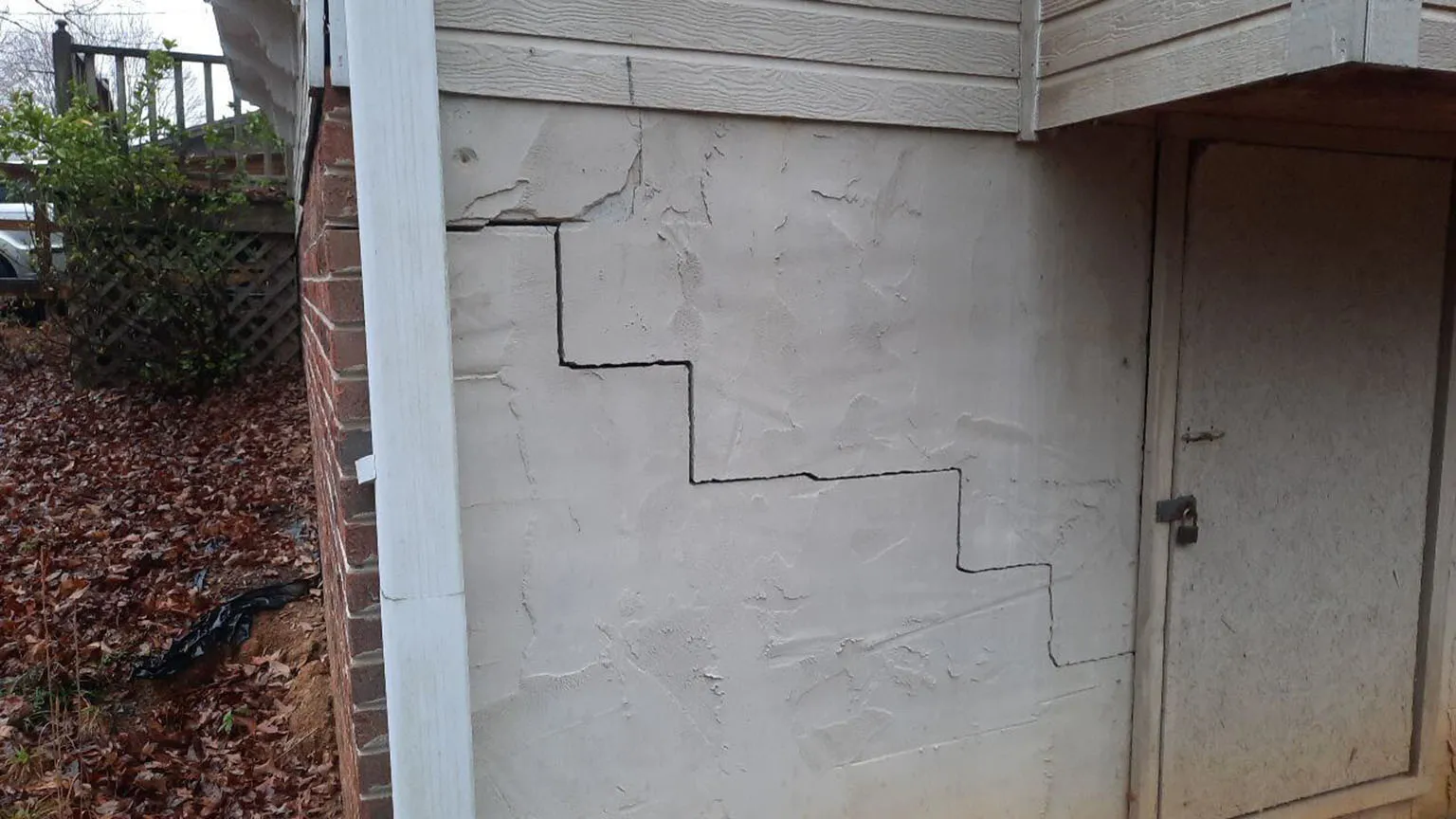
Still, a symptom list only tells you what kind of question you have. The answer takes measurements, floor elevations, and a look at what water does outside. Our breakdown of foundation settling walks the signs one at a time if you want to check your own house tonight.
Want the easiest first step? Most people skip it.
Before you gather three estimates, gather free information. Draw a short pencil line across the crack, write the date and the width beside it, then check it monthly for a few months. That’s the entire assignment.
Why bother? Because width over time answers the question that matters early: active or dormant? A dormant crack has already done what it was going to do. It may need nothing beyond a proper seal to keep water and bugs out, which is a small, honest invoice.
Worth saying plainly
Not every crack is an emergency. Plenty of walls we look at need monitoring and a little drainage work, not piers. We’d rather tell you that on day one than sell you steel you didn’t need.
An active crack is a different conversation, though still a calm one. If the gap widens through a wet spring and again through a dry August, the soil is cycling and the footing is riding along. That’s when piers earn their keep — and your own notes put you in a much stronger seat when the estimates land on the kitchen table.
So what are the actual repair methods?
Fewer than you’d guess, and each has a job it’s genuinely good at.
Helical piers are steel shafts with plates welded on, turned into the ground like an enormous screw. They keep going until the resistance shows the soil is dense enough to carry the load — depth comes from that resistance, not from a number somebody picked in advance. Brackets under the footing then transfer the house onto them. Lighter loads, porches, additions and stoops are their sweet spot.
Push piers, also called resistance piers, use the weight of your house as the press. Steel sections drive straight down until they hit refusal against firm ground. Heavier masonry homes are exactly where these fit.
Slab piers handle a sinking interior floor, while polyurethane foam lifting is the answer for a settled garage floor, patio or driveway. Small ports, injected foam, and the slab rises back toward where it started. Oddly satisfying to watch, and usually done the same day.
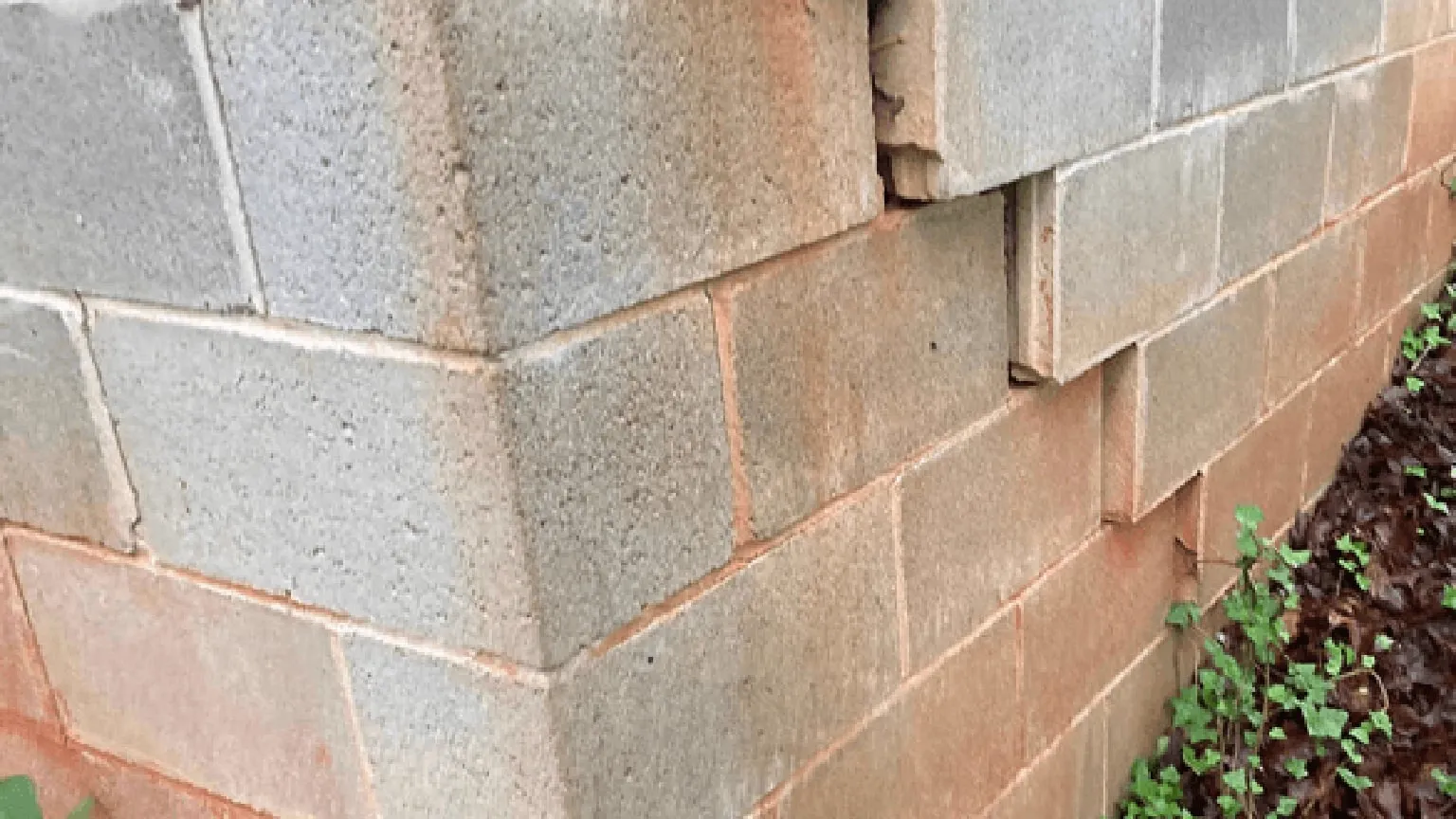
Then there’s the wall that leans inward. Carbon fiber straps or steel beams answer lateral soil pressure, and the wording matters: that work stabilizes a bowing wall. It isn’t settlement repair. Two different physics problems, and mixing them up is how people pay for the wrong thing.
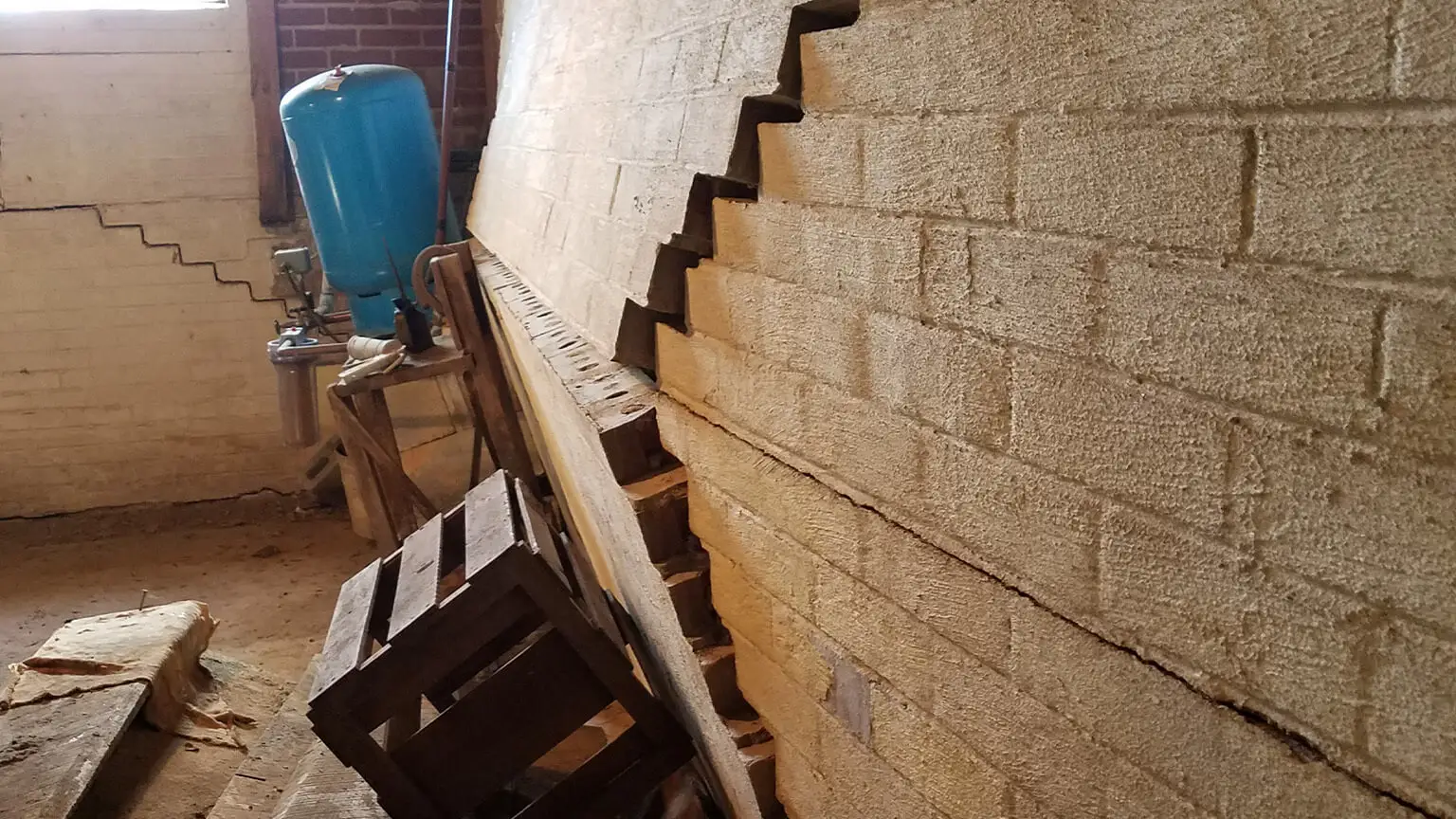
Stabilizing versus lifting — ask which one you’re getting
Stabilizing means the movement stops here. Lifting means we try to bring the structure back toward level. Different price, different risk, so the word on your estimate matters.
Lifting isn’t always possible, and it isn’t always smart. A house that settled slowly over two decades has trim, tile, plumbing and brick that all settled with it. Push everything back hard and you can open fresh cracks elsewhere. So we sometimes recommend stabilizing, taking whatever lift comes easily, and stopping there. Less exciting, frequently right.
What does it cost?
Ranges, not a sticker price. Here’s the math we’re doing while we write your number.
What moves the price up or down
- How many piers. The biggest lever by far. Two piers under a settled porch and a full run along a rear wall are different projects.
- How deep we go. Competent soil sits at different depths across one lot, so a pier that finds refusal shallow costs less than one that keeps going.
- Access. Open lawn is straightforward. Mature landscaping, a driveway, a deck, or interior work inside a finished basement all add labor before the real labor starts.
- Whether we attempt lift. Stabilizing costs less, since lifting is slower and monitored the whole way.
- Whether an engineer is involved. Bigger scopes deserve a structural engineer’s stamp. It adds cost up front and it protects you.
- Drainage corrections. Gutters, downspout extensions and regrading usually ride along, because steady soil moisture is what keeps the clay from cycling again.
A small slab lift or a couple of piers under a stoop sits at the low end. A long pier run under a settled rear wall with lift attempted, plus exterior drainage, sits at the high end. Most foundation repair Johns Creek projects land in between, and you get the scope written out line by line — because homeowners here read line by line.
Included: engineering coordination when needed, excavation, the piers or straps, backfill, cleanup, hauling and the warranty. Not included: drywall and paint after movement stops, flooring, replanting beyond rough restoration, and separate waterproofing scope if the basement also takes water. You’ll see that split on the estimate, not in fine print later.
The warranty question, asked correctly
Everybody says “lifetime warranty.” Fine. Ask the follow-ups: what’s covered — the pier hardware, the settlement itself, or the crack in the wall? Those are three very different promises. Then ask whether it transfers at resale, and what transferring costs.
Permits and inspections exist for a reason on structural work, too. The International Code Council’s building safety resources are a good neutral primer on why a stamped plan shows up on certain jobs. A contractor who quietly skips that step is saving himself money, not you.
Which rooms feel this that you’d never connect to it?
Here’s the part that surprises people. A footing drops a fraction of an inch, and the evidence shows up three rooms away, upstairs, where nothing looks structural at all.
Upstairs doors stick first, since a door frame is a precision instrument compared to everything around it. Guest bath tile develops a hairline through the grout. Cabinet doors stop lining up and the installer gets blamed. Windows stiffen, and baseboards show a shadow line at the corners.
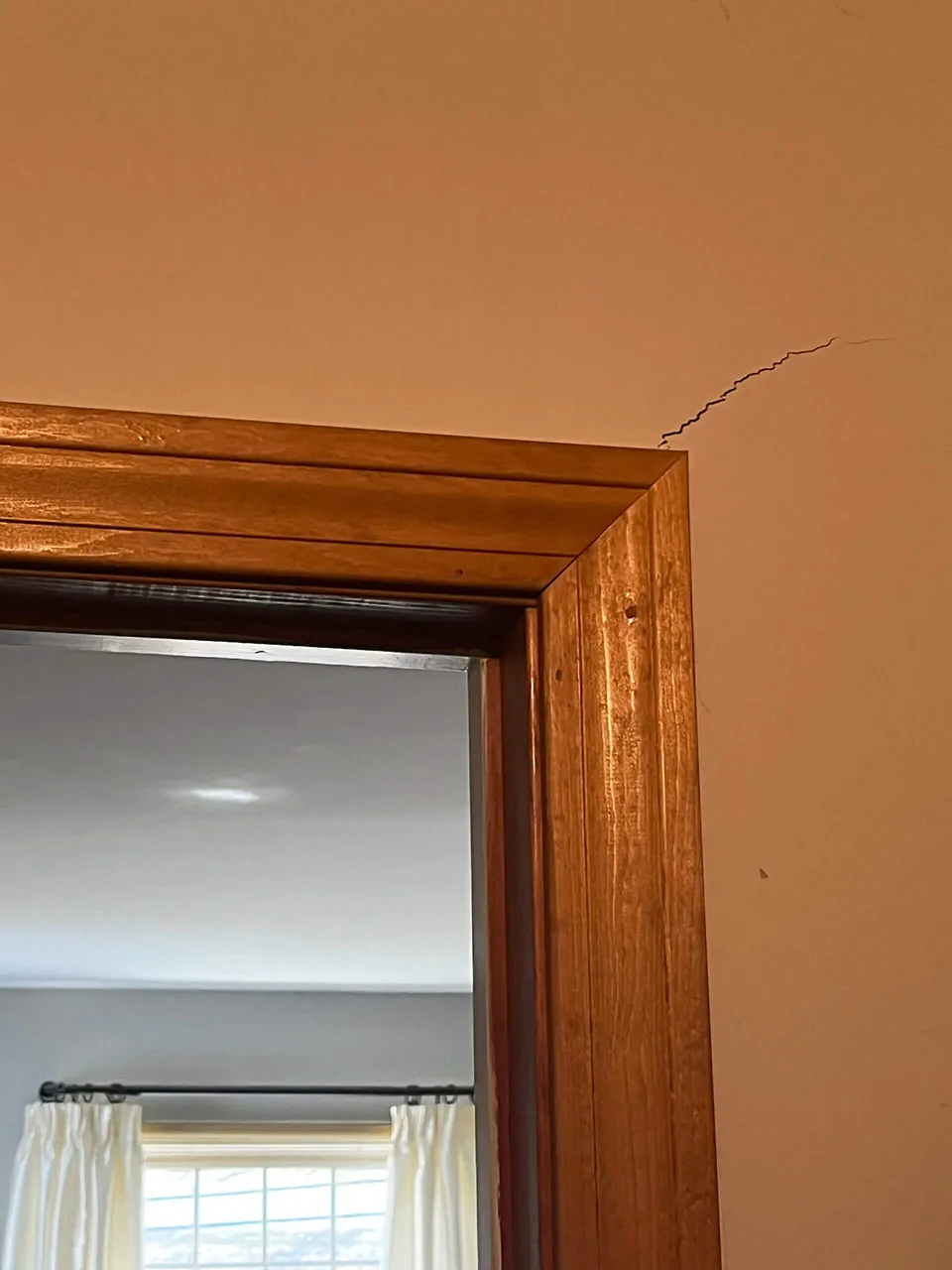
A homeowner in Falls of Autry Mill called us about exactly that. Two upstairs doors wouldn’t latch, and a painter had patched the same drywall crack twice in three years. Downstairs, a stair-step crack was working up the block at one corner, and the grade outside sent every storm at that same spot. Piers on the settled corner, buried downspouts and a regrade handled the whole list.
That’s the real payoff. Not steel — the fact that you quit patching the same crack, quit apologizing for the sticky door, and quit wondering whether it’s getting worse. Better yet, you end up with a folder: engineer’s letter, paid invoice, transferable warranty. Around The Standard Club and Medlock Bridge, homes trade hands often, and that folder answers a buyer’s inspector before he finishes the sentence.
Why does hiring local matter here?
Because a structural warranty is worth exactly as much as the company behind it. Our shop sits twenty minutes east in Lawrenceville, and we’ve done this work for over twenty years. If year seven brings a question, you’re calling the same crew that set the piers.
Local also means we know these lots. We’ve worked the wooded, sloping ground near Autrey Mill Nature Preserve and the flatter streets over toward Emory Johns Creek Hospital, so we know where fill dirt shows up. That context shapes a foundation repair Johns Creek plan before a shovel moves.
Still sorting out which problem you have? Our service page lays out every foundation repair method we install, and if the issue is limited to one wall, our guide to crack repair is the closer match. Comparing notes with family one exit north? We cover the same ground for Alpharetta foundation repair.
Where we work around Johns Creek
Johns Creek is a short drive from our Lawrenceville shop, so we’re out this way constantly. We also serve Alpharetta, Duluth, Suwanee, Roswell, Milton and Peachtree Corners, plus Berkeley Lake, Norcross, Sugar Hill and the wider Fulton area. If you’re near the 141 corridor or anywhere along State Bridge Road, odds are good we’ve been under a house on your street.
Questions Johns Creek homeowners ask us
Sometimes, though humidity swells wood too. The tell is whether it comes and goes with the season or simply stays. If the gap along the top of the frame is wider at one end and never closes back up, that leans structural, and an inspection settles it quickly.
They’re steel shafts with plates on them, turned into the ground like a giant screw. We keep going until the resistance shows the soil is dense enough to carry the load, so depth comes from what the ground tells us rather than a set number. Brackets then transfer your footing onto the piers.
Documented repair generally helps, because what worries buyers is unexplained movement, not a corner that’s fixed and warrantied. Keep the engineer’s letter, the invoice and the warranty in one folder. Ask us about transferring coverage at closing so the next owner inherits it.
Most pier jobs run two to five days on site, while a slab lift or a sealed crack is often a single day. If a structural engineer is reviewing the plan, add a week or two before the crew starts. Either way, you’ll have the schedule in writing before anyone digs.
Often, yes. When one corner is doing all the moving, that corner can be stabilized now and the rest handled later. Just map the full plan first, so phase one supports phase two instead of working against it.
Let’s take a real look under your Johns Creek home
The inspection is free, the estimate is free, and nobody pressures you at the end. We’ll show you what’s moving, what isn’t, and the smallest fix that actually solves it.
(678) 914-5112Serving Johns Creek and all of Metro Atlanta · $500 off projects over $3,500 · Live support 7am–8pm, 7 days a week