

A Foundation Contractor Johns Creek Homeowners Can Hire Without Second-Guessing
What a real diagnosis includes, which questions to ask, and when the honest answer is “watch it.”
Water under your house doesn’t sit still. It soaks into red clay and puffs it up, then dries out and lets it shrink back down, and everything built on top rides that slow rise and fall. Once that clicks, picking a foundation contractor Johns Creek neighbors pass around gets a lot simpler. You aren’t shopping for piers. You’re shopping for someone who can tell you why the ground moved.
Good news right up front: most cracks we get called out to look at aren’t emergencies. Plenty are normal, and a fair number only need watching. So let’s walk through how to tell the difference.
What’s actually moving under a Johns Creek house?
Start with the dirt. This side of Fulton County sits on Georgia Piedmont red clay, which acts less like soil and more like a sponge with opinions. Wet spring, it swells and pushes. Dry August, it shrinks and pulls away. Concrete doesn’t crack because clay is strong — it cracks because clay keeps changing size. The University of Georgia Extension has a plain rundown of our soils if you like the science.
Then add the land. Ground here rolls and drops toward the Chattahoochee along the western edge of town, so plenty of homes have walkout basements cut into a slope. One wall holds back eight feet of clay while the wall across from it holds back almost nothing. Uneven load, uneven movement — which is why cracks often show on one side of a house and nowhere else.
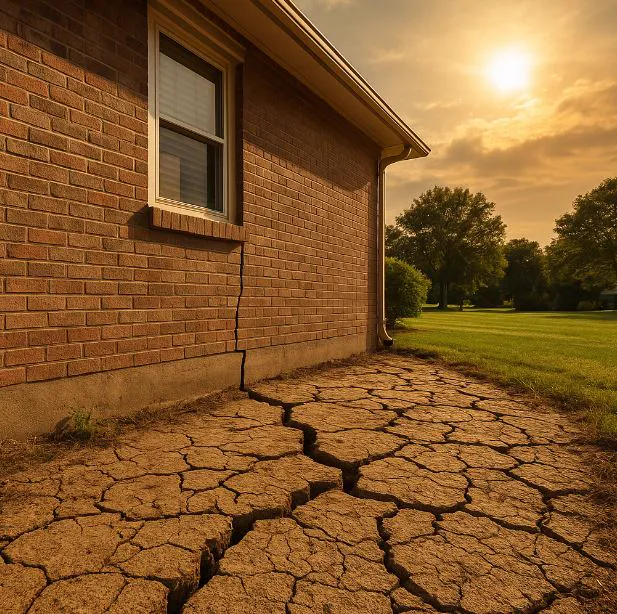
Now the timing, because this part explains your street. Johns Creek was largely built in one big wave, mostly between 1988 and 2007, which means a whole city’s worth of original waterproofing systems are aging out on roughly the same schedule. Grading that was crisp in 1997 has flattened. Buried downspout lines have sagged. Saplings planted with the house are now big trees pulling real moisture out of the soil every dry spell.
So homes in St. Ives, under that mature canopy, show different patterns than newer streets like Bellmoore Park or Kingsley Estates, where backfill is still settling into its final position. Same city, same clay, different stories.
What does a real diagnosis include?
Want the fastest way to judge somebody? Watch what they measure. A serious inspection produces numbers, not adjectives.
Elevation readings come first. We shoot the floor at points across the whole level, so you can see where it sits high and where it dips. One low corner with a smooth slope tells a very different story than a dish in the middle of a room. Those readings get written down, too, because next year’s visit only means something if it can be compared to this one.
Cracks get measured as well — real width, at a marked spot, with a date beside it. A crack that has stayed hairline for three years is a completely different animal from one that opened a sixteenth of an inch since March, and only a written record tells you which you own. Our guide to foundation repair in this city goes deeper on the methods.
After that we go outside, and honestly that’s where the answer usually lives. Grading, downspouts, where roof water lands, whether the yard tips toward the house or away. Then you should hear a theory out loud: here’s what we think moved, here’s why, here’s what changed. A pier count with no theory attached is just arithmetic.
But here’s the part most companies skip when they explain this
Ready for the thing that saves people the most money? Cracks are not all the same species, and the shape matters far more than the length.
A thin vertical crack in a poured concrete wall is usually curing shrinkage. Concrete gives up water as it hardens, and it pulls in on itself a little while doing it. Those tend to appear early in a home’s life, they don’t travel, and often they’re a seal-it-and-move-on item rather than a project.
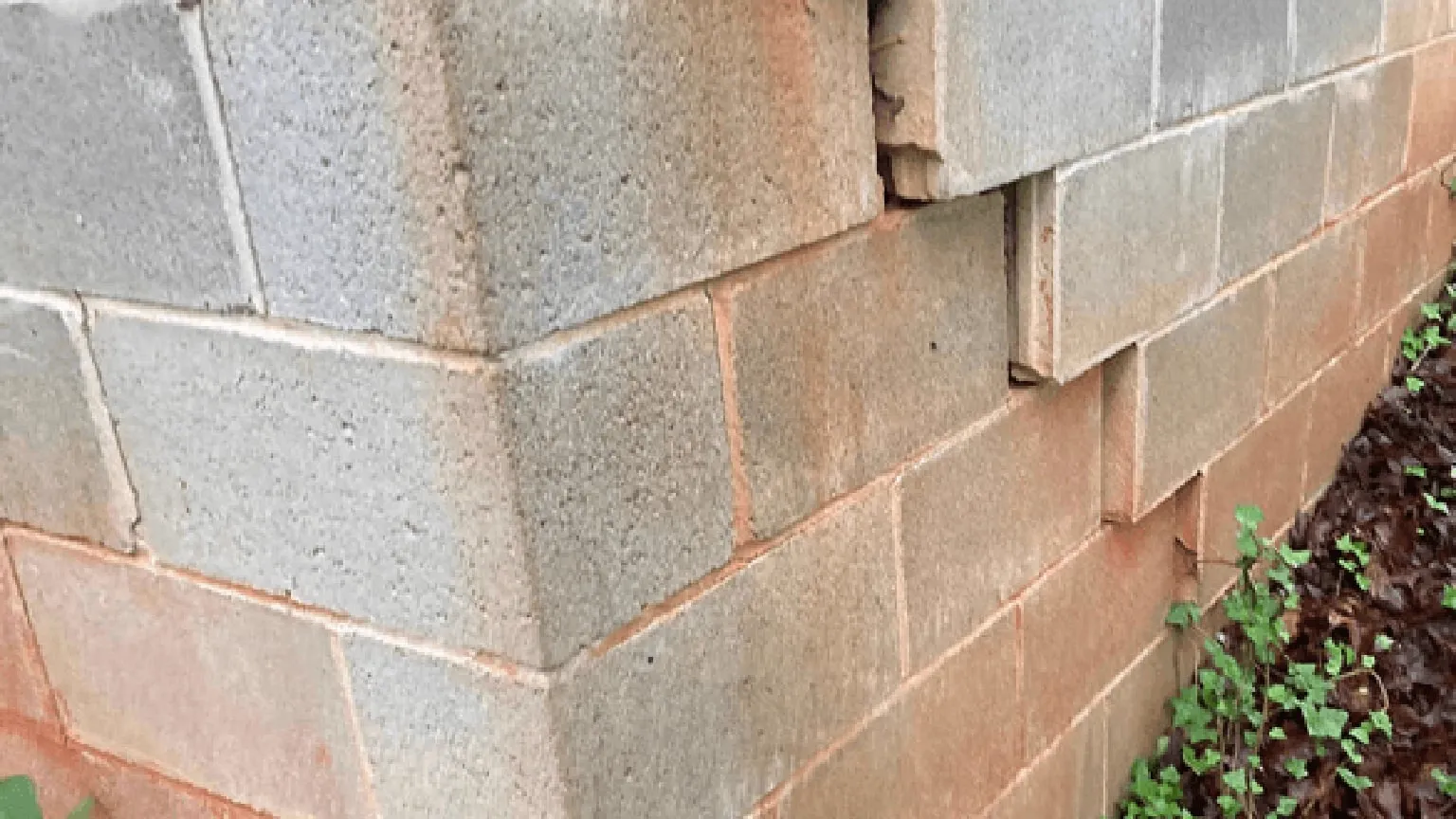
Stair-step cracks are the ones climbing the mortar joints in block or brick like a little staircase. That pattern points toward differential settlement, meaning one stretch of footing has dropped further than the rest. This is the family of problem that piers were actually invented for.
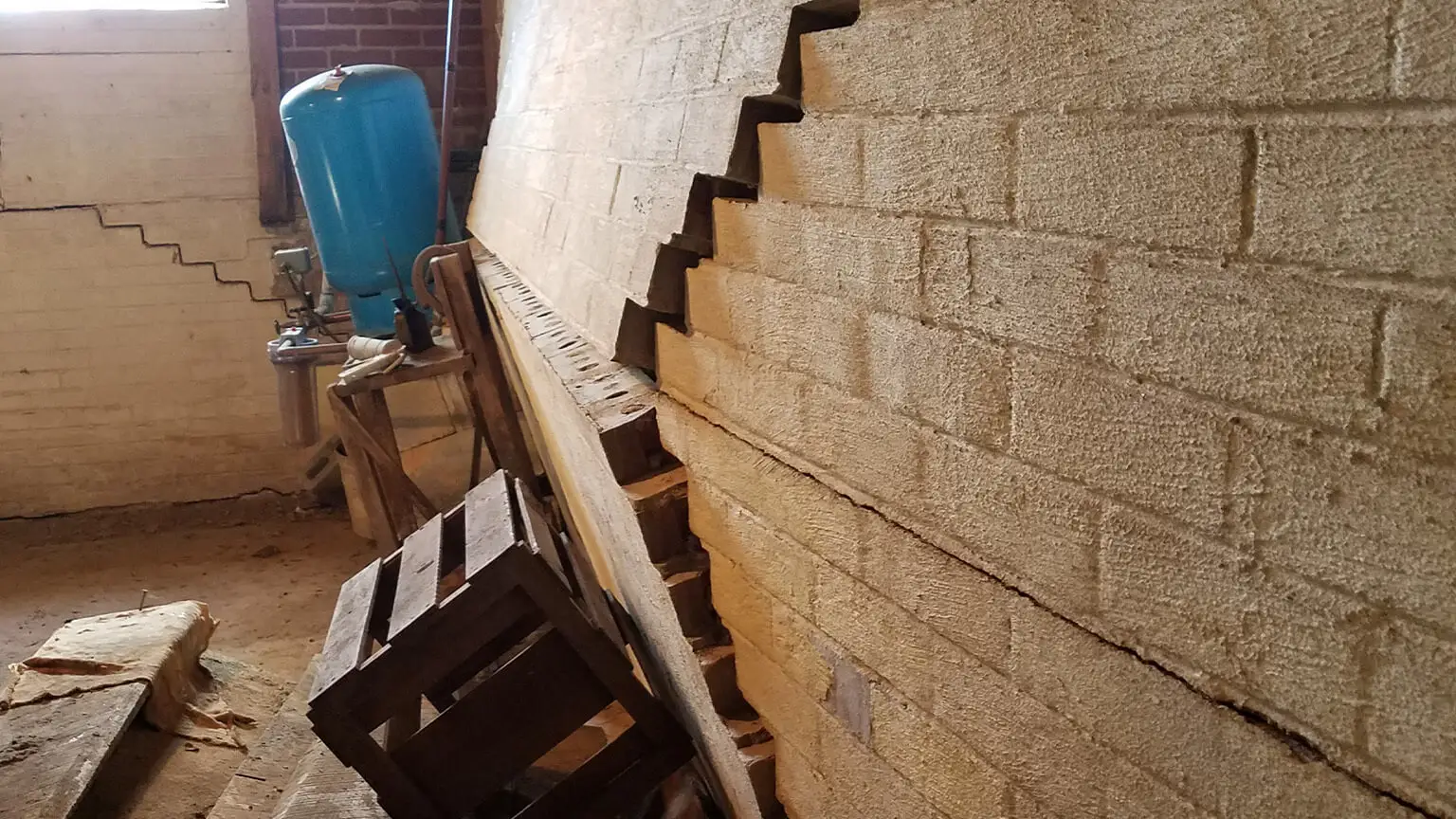
Horizontal cracks sit in their own category entirely. When a block wall splits straight across, that’s side pressure from wet soil leaning in, so the repair is bracing or anchoring the wall rather than lifting anything. Different cause, different method, different price. If a single crack is all you’re dealing with, our crack repair page covers that narrower job.
Here’s the easy test, then. Ask which of those three you have and why they think so. Anyone who does this work well will light up at the question, because it’s the interesting part of the job. Anyone who gives the same recommendation for all three has told you plenty.
How do you read a foundation estimate?
Line by line, slowly, with a pen. A proposal should say what’s going in, how many, exactly where, and what the plan is if the ground doesn’t cooperate on install day.
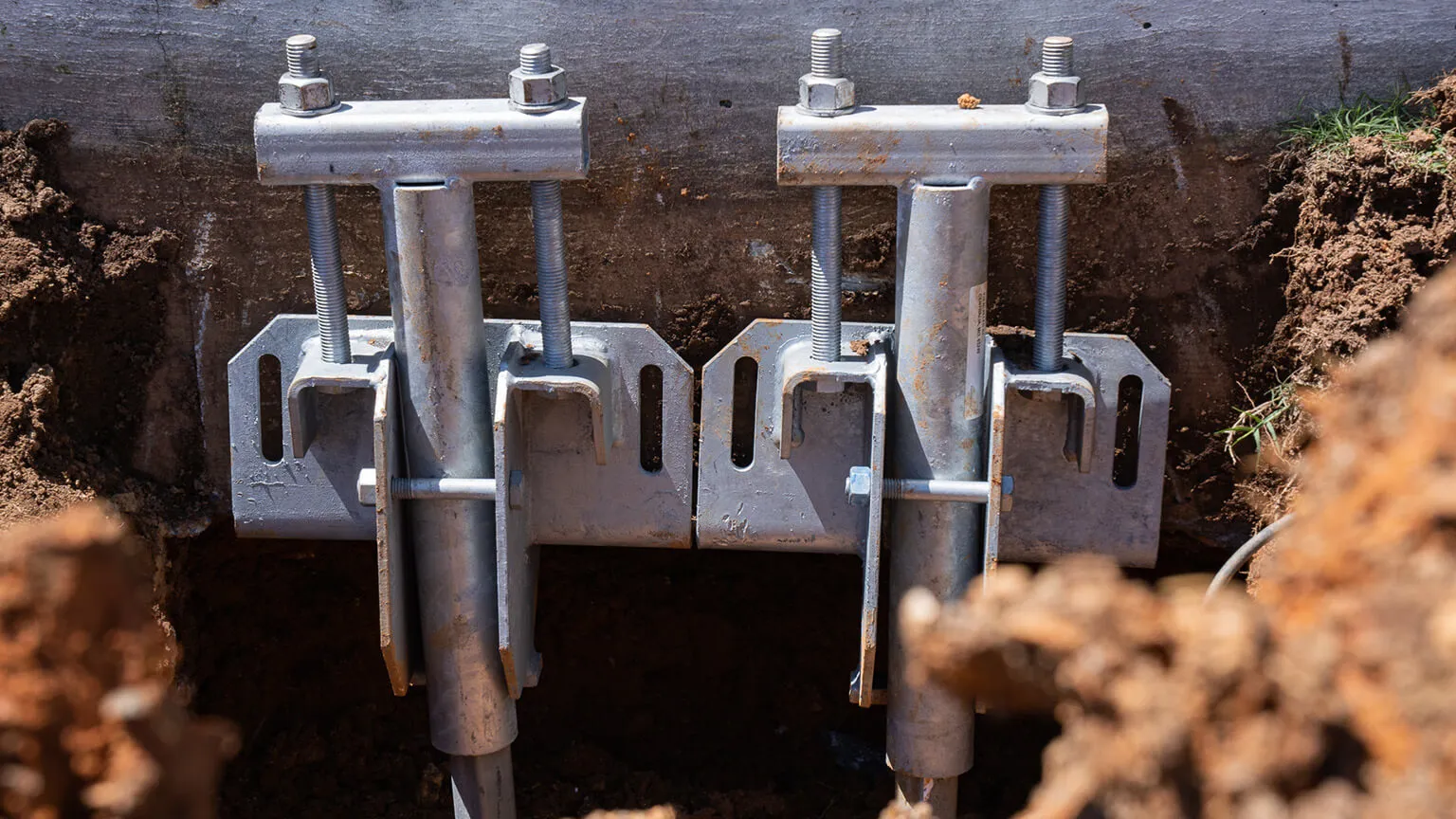
Take helical piers, since they come up constantly around here. They’re steel shafts with plates that get screwed down into the ground until they reach soil dense enough to carry the load, and then the foundation is transferred onto them. Depth is decided by resistance, not by a number somebody picked in advance. So an honest estimate says “we expect competent soil around this depth, and here’s what another section costs if we don’t find it.” That one sentence separates real planning from a hopeful guess.
Six questions worth asking before you sign anything
- How many piers, and why that number? The answer should point back to your elevation readings.
- How deep do you expect to go, and what if the soil is deeper than you thought? Get the extra-depth price in writing now, not later.
- Are you stabilizing the house where it sits, or trying to lift it back? Those are two different goals with two different prices.
- What does the warranty actually cover, and does it transfer when I sell? Ask for the document, not the summary.
- Will a structural engineer be involved, and are you fine if I hire my own? The reaction to that question is the real answer.
- What are you doing about the water, not just the movement? Clay only moves because moisture moves.
That last one deserves extra weight. A plan that stabilizes the house but leaves a downspout emptying beside the same corner is treating the symptom and hoping. Stop the source first, protect the structure second — in that order, every time. You can see how foundation repair and drainage work together on our service page.
On a larger job, an independent stamped report from a structural engineer is genuinely worth considering. You get an opinion from someone with no repair to sell, and the scope gets settled before work starts instead of debated halfway through. Any foundation contractor Johns Creek homeowners should be hiring will welcome that. If someone gets prickly about it, well, that’s information too.
Which warning signs should slow you down?
Fair question, and the list is short. A pier count quoted before anybody measured anything is the big one, because you can’t price movement you never mapped. Pressure to sign the same day runs a close second, since structural pricing has no reason to expire at sundown.
Watch for a scope that never gets written down, too. If the whole plan lives in a friendly conversation, there’s nothing to hold anyone to in year three. Be careful as well with a company that refuses to discuss monitoring a crack that may be dormant, or that treats every crack in the house as equally urgent. Houses settle a little. Pretending otherwise sells work that nobody needed.
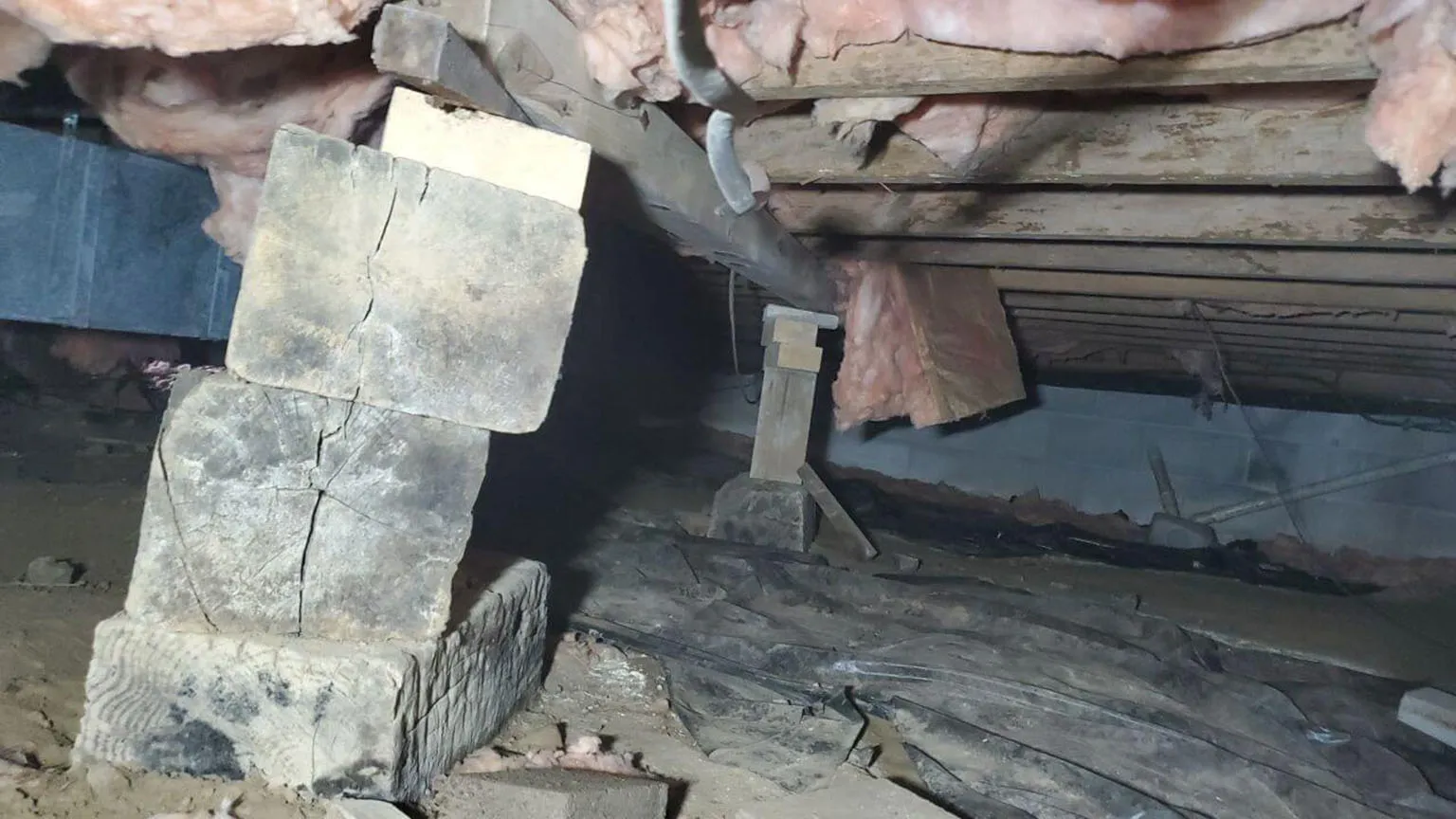
Sometimes the right call is monitor it and seal it. The company willing to say that out loud is usually the one to hire.
We mean that literally. There are houses in this city where we’ve recommended nothing but a tube of sealant and a note on the calendar. Not a big sales day, sure. Still, those are the homeowners who call us three years later when something genuinely does need doing, so it works out.
What should you do every year once it’s fixed?
Here’s the part that keeps a repair from turning into a rerun. Foundation work holds beautifully as long as the water around the house stays managed, so your yearly list is mostly about water and takes about an hour.
The once-a-year foundation checkup
- Clean the gutters twice — fall and spring. A packed gutter is an unusually expensive rain barrel.
- Follow the downspouts after a storm. Discharge should land six feet out or more, never right beside the wall.
- Check that soil still slopes away. Mulch and settling quietly flatten that grade every couple of years.
- Photograph any crack you’re watching — same spot, same month, with a coin for scale. Your phone makes monitoring easy.
- Water the foundation beds during a long dry stretch. It sounds backwards, but steady moisture beats big swings.
- Look at basement corners and trim after heavy rain. Slow leaks always show up down low first.
That last habit saves the most money around here. So many basements in this city are finished, and the damage that really hurts isn’t a dramatic flood — it’s the slow leak nobody saw, quietly wrecking drywall, flooring and trim behind the sectional for a year and a half.
Picture next March instead. Storms roll through, you check your two marked spots, the numbers read the same as last year, and you go back to your coffee. That’s what fixed looks like. Pleasantly boring, and worth every dollar you spent.
Why we might be a good fit for you
We’re about twenty minutes east of you in Lawrenceville, and we’ve been at this over twenty years. Our trucks are in Johns Creek constantly — the sloped older lots over near Jones Bridge Park, the flatter streets around Ocee Park, and a whole lot of homes off State Bridge Road. Familiar housing stock means faster, more honest answers.
What you get from us is simple: elevation readings, measured cracks, photos, and a written scope with a real number attached. The inspection costs nothing, the estimate costs nothing, and nobody leans on you at the end. If your situation turns out to be a water problem wearing a foundation costume, we’ll say so. Curious about your own lot first? The USDA Web Soil Survey will map what’s under it in a few clicks.
Where we work around Johns Creek
We’re on this side of Fulton nearly every week, so odds are decent a truck is already near you. Beyond Johns Creek, we handle Alpharetta, Duluth, Suwanee, Roswell, Milton, Peachtree Corners, Cumming, Norcross and Berkeley Lake, plus the wider Fulton and north Gwinnett area. Comparing notes with family a town over? We break down the same decisions for Alpharetta best foundation repair.
Questions Johns Creek homeowners ask us
Movement over time is the test, not the crack by itself. Mark the width, date it, and photograph the same spot a few months apart, because a crack holding steady behaves very differently from one that keeps opening. Elevation readings across the floor fill in the rest of the picture, and we take those free during an inspection.
It ranges widely, so anybody quoting you a flat price sight unseen is guessing. Sealing a single dormant crack sits at the very low end, while a run of piers along a settled corner sits much higher. What moves the number is how many piers, how deep they have to go, how hard the area is to reach, and whether drainage work belongs in the same plan.
Often they’re just humidity, since wood swells in a Georgia summer and eases back off in winter. It’s worth a closer look when sticking doors show up with other clues, like a gap over a doorframe, a sloped floor, or new cracks in the same part of the house. One symptom alone rarely means much, but three in the same corner is a pattern.
They’re steel shafts with helix plates welded on, turned into the ground like a giant screw until they reach soil dense enough to carry the weight. Then brackets transfer the foundation onto them, so the house rests on stable ground instead of shifting clay. Depth is set by resistance rather than a fixed number, which is why a good estimate spells out the cost of extra depth in advance.
Documented repair generally helps, while an unexplained crack scares buyers more than a fixed one ever will. Keep the written scope, the photos and the warranty together, and hand that folder to your agent. A transferable warranty is especially useful here, so ask about transfer terms before the work starts.
Let’s find out what your Johns Creek foundation is really doing
We’ll take elevation readings, measure and date the cracks, walk the outside of the house, and tell you plainly what we think moved and why. The inspection is free, the estimate is free, and if the right answer is “watch this one,” that’s what you’ll hear.
(678) 914-5112Serving Johns Creek and all of Metro Atlanta · $500 off projects over $3,500 · Live support 7am–8pm, 7 days a week