

Flooded Basement Repair Loganville Homeowners Can Count On
What the work really involves, what moves the price, and how to make the next storm boring.
Somebody already tried to fix this, didn’t they? Maybe a bucket of sealant on the wall, a bead of caulk along the floor, or a shop vac and two box fans and a lot of hope. Then the next real storm came through and the water came right back. Here’s the honest version of flooded basement repair Loganville homeowners need: what the work is, what it costs, and why the patch never had a chance.
Good news first, because you’ve earned it. This is a solved problem, and we’ve been doing the work for more than twenty years out of Lawrenceville — about twenty minutes up the road from you.
So why didn’t the patch hold?
Because a coating is fighting pressure, and pressure always wins. Sealant on the inside of a wall is trying to hold back water that’s already pushing from outside with real force behind it. It’s a screen door on a submarine.
That’s no knock on you, either. Sealant is cheap and it looks like a fix for a season. But the water never stopped coming — it just found the next easiest way in.
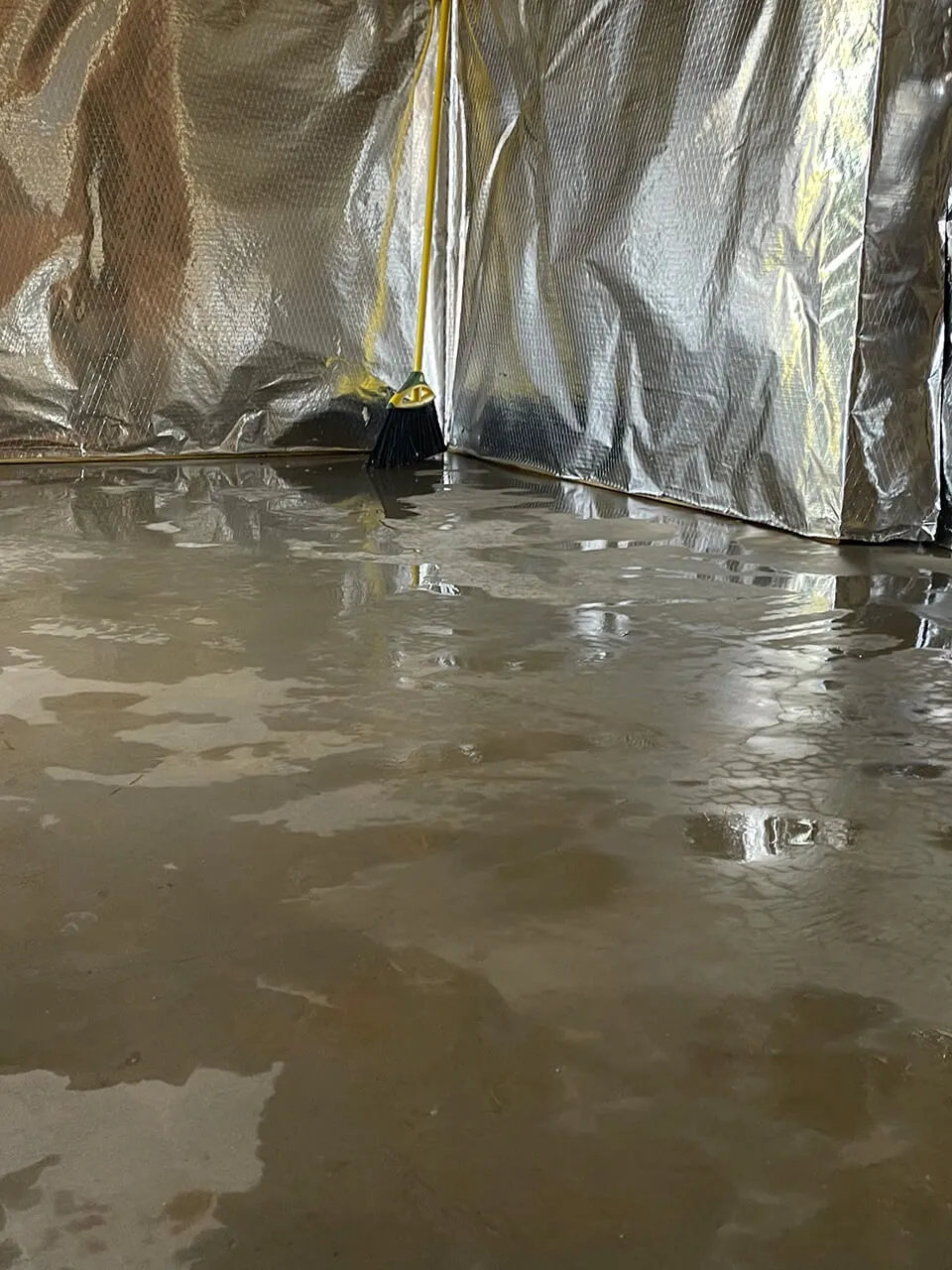
Is a flood the same thing as a leak?
Not even close, and this is the fork in the road. Seepage is slow — a damp line along the wall, a musty smell, a chalky bloom on the block. Bulk water means something specific has failed: hydrostatic pressure under the slab, a sump that quit, a drain line blocked or crushed, or a window well whose drain gave up years ago. Each has its own fix, so naming the right one is most of the job.
Where does it come in? Most often at the cove joint — the seam where your wall sits down on the floor slab. Here’s the surprise: that’s not a crack. It’s a designed seam, so it was never watertight to begin with, and when pressure builds underneath it’s simply the easiest path. If you’ve hunted for a crack and can’t find one, you’re not blind.
Good news
Bulk water almost never means your foundation is failing. Those are two different conversations, and we’ll tell you which one you’re having before anybody says a number.
Then there’s our dirt. Georgia red clay doesn’t drain, it holds. After a soaking week the soil against your walls stays saturated and keeps pressing, and on block walls that water fills the hollow cores like a stack of cups and pushes out low. That’s why so much standing water basement trouble here shows up along the floor line.
One more Loganville wrinkle. Out here a lot of homes sit on crawl spaces, and a wet crawl space doesn’t stay down there. That damp air rises right up into the house you’re living in, so some folks smell the problem before they see it.
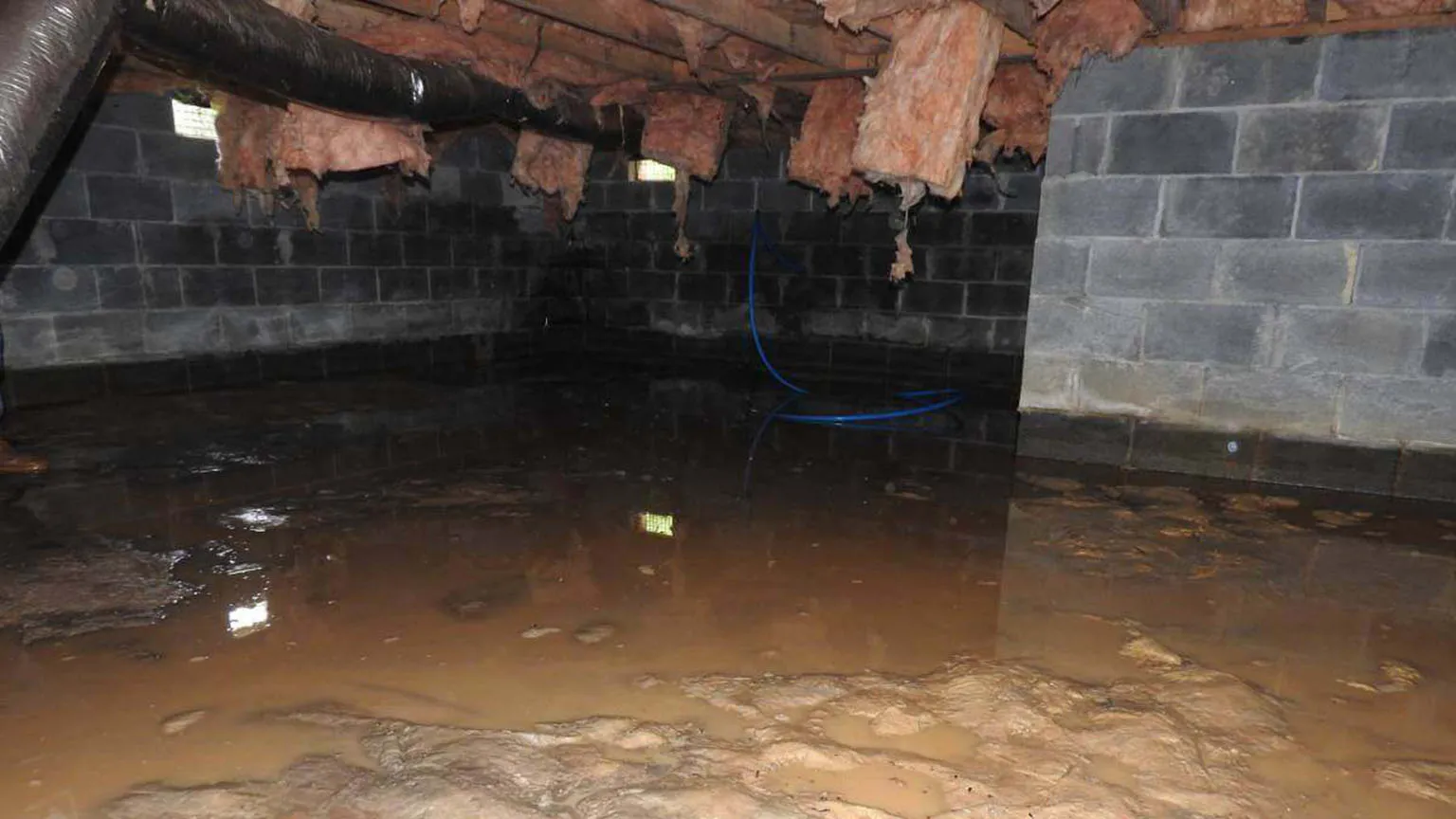
What does the actual job look like?
Predictable, honestly. Here’s the shape of it, so you can picture the week before a truck parks out front:
- We find the source first. Outside before inside — grading, downspouts, whether the lot sheds toward the house. Often the answer is smaller than expected.
- We get it dry. Standing water out, soaked cardboard and carpet pad out, then dehumidification. The CDC’s flood cleanup guidance covers this part well.
- We open a channel at the perimeter. A narrow strip of slab comes up along the walls that need it. Loud for a day, then done.
- We set drainage below the slab. Perforated pipe in clean stone, placed under floor level, so water is caught before it reaches your floor.
- Everything routes to a sump. The basin collects it, the pump sends it well away, and a check valve stops it sliding back.
- We close it up. Fresh concrete, wall liner where needed, and our mess leaves with us.
Most homes take two to four days. Notice what nobody did, though — nobody painted anything.
Twenty years in, the lesson that stuck is simple. You don’t block water. You give it a better place to go.
Want the small detail that decides everything?
It’s the discharge line. Not the pump, not the pipe under your floor — the line that carries water back outside, and where it lets go.
We see this constantly. A perfectly good system dumps water eight feet from the foundation, into the same saturated clay we just spent three days draining. So the water takes a lap and comes right back — an expensive merry-go-round.
The fix is unglamorous and it works: run the discharge downhill to where the lot actually sheds. On the big open yards around Chandler Ridge and Meadow Glen, that means burying a solid line well away from the house. Costs a little more, saves the system.
Sump pumps fail in a short, predictable list, too. Power drops mid-storm, exactly when you need it. A float sticks. The pump is undersized. There’s no check valve, so water drains back and the pump short-cycles itself to death. All cheap to prevent, which is why we spec a battery backup on most jobs.
So what does this cost?
Straight answer: it depends on how much wall is involved and how hard it is to reach. Anyone quoting a flat number without walking your house is guessing, and you’d be paying for that guess. Here’s what we weigh instead.
What moves the number up or down
- Linear feet. One wall versus a full perimeter is the biggest factor by far.
- Access. An open basement is simple. A finished one means careful demo first.
- Sump and backup. A new basin, pump and battery backup add cost — and they’re what runs during the storm.
- Outside work. Grading, gutters and a buried discharge line sometimes carry most of the blame. Smaller ticket, and we’ll say so.
- Crawl space. Plenty of homes here need the crawl handled too.
- Wall condition. A cracked or moving wall gets addressed first.
Small drainage corrections land at the low end. A full perimeter system with a new sump, battery backup and finished-space repair sits at the high end, while most flooded basement repair Loganville jobs land in the middle. After we walk your house, you get a written number with the scope spelled out.
What’s included? Labor, materials, the concrete we replace, hauling, and the warranty in writing before we start. What isn’t? Rebuilding finished walls we opened, ruined flooring, and structural work, which is priced separately. Better you hear that now than in fine print later.
Will insurance pay for it?
Maybe — but check your own policy rather than taking anyone’s word. Standard homeowners coverage commonly excludes groundwater seepage and surface flooding, and sump pump failure is usually a separate rider you add on purpose. Call your agent and ask about both. Five minutes, and far better to know now.
What should you do every year once it’s dry?
Here’s the part almost nobody hands you at the end of a job. A good system is close to maintenance-free, but “close to” isn’t “none,” so put these on the calendar:
- Test the pump. Pour five gallons in the basin. It should kick on, move it, shut off clean.
- Check the float. Swinging free, nothing leaning on it. Stuck floats cause more flooding than dead motors.
- Walk the discharge line. Outlet clear, not crushed, still pointed away downhill.
- Test the backup battery. Unplug the pump and confirm the backup takes over.
- Clean gutters twice. Spring and fall. One clogged downspout dumps hundreds of gallons where you don’t want it.
- Check the grading. Clay settles, so add dirt anywhere it’s dipped toward the house.
- Peek at the crawl space. Liner sealed, no standing water, no musty smell.
That’s it. Fifteen minutes a year, which is less time than you spend looking for the remote.

Picture next April. Radar lights up green over Walton County, rain falls two straight days, and the Alcovy River runs high enough that folks stop on the bridge to look. Meanwhile you’re upstairs making coffee — not checking, not listening. That’s the real product: not pipe and stone, but a storm you get to ignore. If you like watching weather anyway, the National Weather Service flood safety page is worth a look.
Why does hiring local matter here?
Because a warranty is worth exactly as much as the company behind it. We’re twenty minutes northwest of you, so if something needs a look in year seven, you’re calling the same people who did the work.
Local also means we know the housing stock. Much of Loganville went up between the late nineties and the mid two-thousands, so a lot of first-generation waterproofing is aging out on the same schedule — silted-up footing drains, original pumps past retirement. That’s a water-heater situation, not a defect. When a neighbor over in Bay Creek gets water for the first time in eighteen years, it isn’t a coincidence.

We’ve worked the sloped lots near Vines Park, the low corners along GA-20, and houses on the Walton side where a septic field keeps the ground wet longer than the weather does. Comparing notes with family closer in? We cover the same ground on Tucker flooded basement repair. Every system we install is on our basement waterproofing page, and if you’re seeing stair-step cracking instead, start with foundation repair.
Where we work around Loganville
We’re based in Lawrenceville, so Loganville is a quick run. We work all through Snellville, Grayson, Monroe, Between and Bay Creek, plus Dacula, Centerville and Walnut Grove and the wider Walton and Gwinnett Counties area. If you’re off Highway 78 or out toward the Alcovy, odds are we’ve been under a house on your road.
Questions Loganville homeowners ask us
Safety comes first. Never step into standing water while power is still on down there — shut that circuit off at the panel, and call your power company if you can’t reach it safely. Once it’s safe, get the water out and pull up soaked cardboard and carpet pad. Then call us to trace the entry point.
Because red clay holds water instead of draining it. After a long rain the soil against your walls stays saturated, and that pressure pushes water through the cove joint or up through hollow block cores. So the storm isn’t really the cause — it just reveals a drainage problem that was already there.
Often not in the way people expect, so check your own policy. Standard homeowners coverage commonly excludes groundwater seepage and surface flooding, and sump pump failure is usually a separate rider you add on. Your agent can answer both questions in about five minutes.
Quickly. Mold can begin growing on damp material in roughly 24 to 48 hours, so the goal is standing water out the same day, wet organic material out next, then dehumidification until the slab and the air read dry. Fans by themselves move air around without pulling much moisture out.
That’s usually the cove joint, the seam where the wall sits on the floor slab. It isn’t a crack — it’s a built-in seam, so when pressure builds under the slab, water takes that easy path. An interior drain system catches water right there, which is why it works so well on this symptom.
Let’s find out where water is really getting into your Loganville home
The inspection is free, the estimate is free, and nobody gets pushed at the end. We’ll show you the entry point, explain the fix in plain words, and say so honestly if it’s a smaller job than you expected.
(678) 914-5112Serving Loganville and all of Metro Atlanta · $500 off projects over $3,500 · Live support 7am–8pm, 7 days a week