

How to Choose the Best Basement Drainage Lilburn Homes Actually Need
Comparing bids, reading a scope of work, and telling a real diagnosis from a sales pitch.
The call usually starts with the same sentence. “Every time it rains hard, there’s water at the bottom of the stairs again.” Then comes the question underneath it — the one that brings people looking for the best basement drainage Lilburn homes can get: “How do I know which company is actually telling me the truth?”
Fair question, and here’s the good news. You don’t have to become a drainage expert to answer it. You just need to know what a real diagnosis sounds like, because that’s the part that varies between bids.
What makes Lilburn homes different?
Start with the age. Lilburn homes were mostly built in the seventies and eighties, back when “waterproofing” meant a coat of tar on the outside of the block and a hope for the best. Fifty years is a long time to hope. So most block basements here are running on a system that quietly retired sometime during the Clinton administration.
Then add the ground. Georgia red clay holds water like a sponge that never quite wrings out, and after a long rain it stays pressed against the wall for days. That steady push is why we see horizontal cracks and slight inward bowing on older block walls around Killian Hill and Cedar Creek. It’s common, it’s measurable, and it’s fixable.
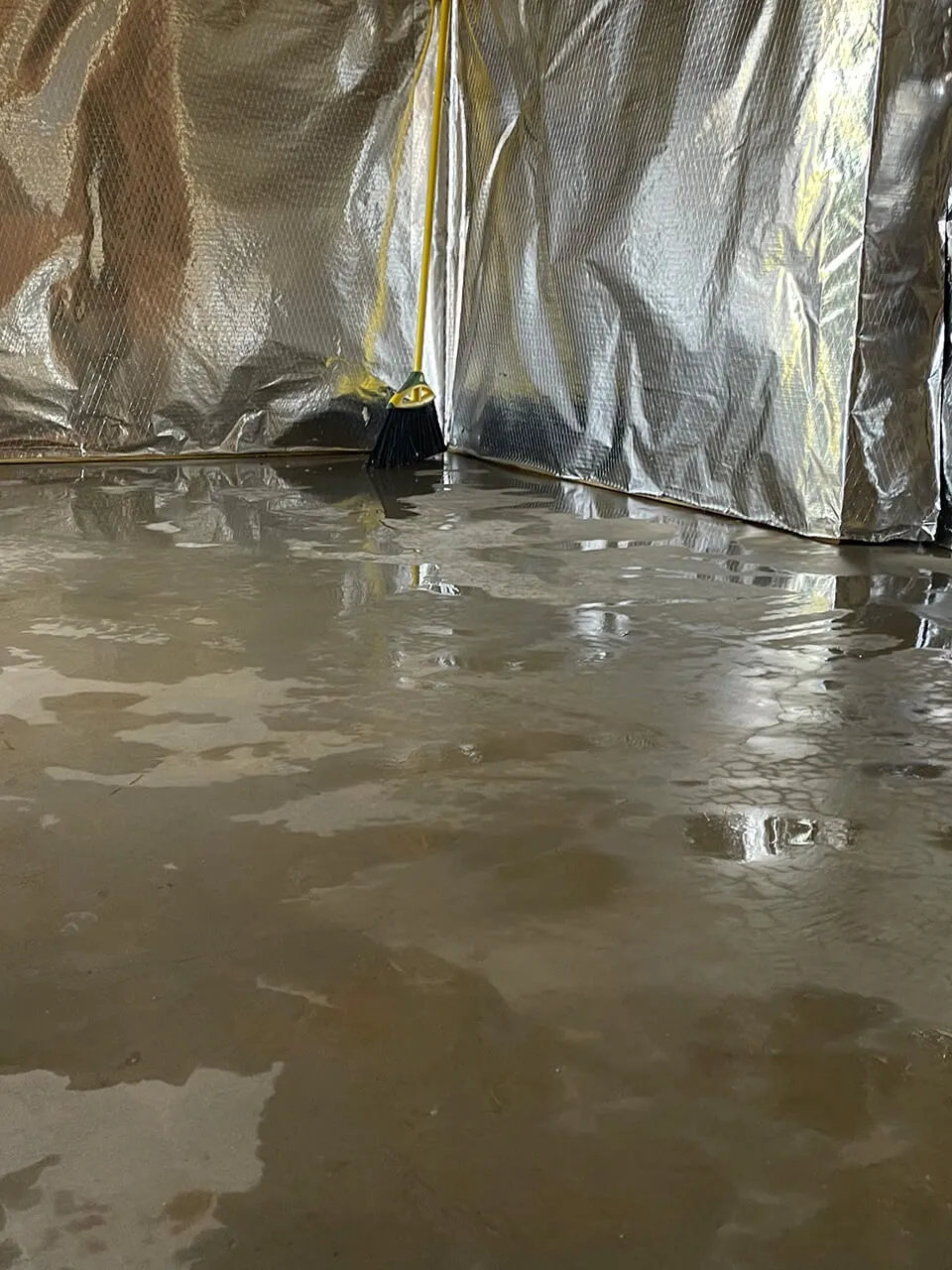
Terrain matters too. This part of Gwinnett rolls downhill toward the Yellow River, so plenty of lots shed water toward the house instead of away from it. Add the mature hardwood canopy, and you get roots crushing old drain lines while fall leaf drop packs the gutters solid. Nature is thorough like that.
One number puts the panic in perspective. An inch of water across a 1,000-square-foot basement is more than 600 gallons — which is why a shop vac feels like emptying a pool with a coffee cup. Good news, though: once the water has a path, that scene simply stops happening.
Before you call anyone, understand this one distinction
Ready for the thing that makes every bid readable? There are only two jobs in drainage. Job one is keeping water away from the house. Job two is giving water that already reached the house somewhere to go. Most confusion between estimates comes from companies quoting different jobs without saying which.
Job one lives outside. Regrading soil so it falls away from the foundation, extending downspouts past the drip line, clearing or replacing a failed footing drain — that’s all outside work. On a clay lot with any slope, this is often the cheapest correct fix, and an honest company will tell you so even though it’s the smaller invoice.
Good news
Plenty of basements we inspect don’t need a full perimeter system. Sometimes two downspout extensions and a regraded flowerbed do it. We’d rather say that out loud than sell you a bigger job.
Job two lives inside. An interior perimeter drain sits below the slab along the footing, catches water at the cove joint — the seam where the wall meets the floor — and carries it to a sump. That joint is the number one entry point under pressure, because it’s the natural gap in the pour. In other words, interior drainage doesn’t fight the water. It agrees with it and takes it somewhere useful.
Which one is right? That depends on where water enters and whether a patio, deck or fifty-year-old oak makes digging sensible. A crew that names the entry point before naming a system has done the work. Federal guidance on protecting a building from flooding lands in the same place: manage the water path first.
What should a good drainage crew do differently here?
Simple test — did they go outside? An inspection that never leaves the basement is a guess with a clipboard. We walk the grade, the gutters and the low corners of the yard, because on these lots the water causing the trouble often landed twenty feet from the wall.
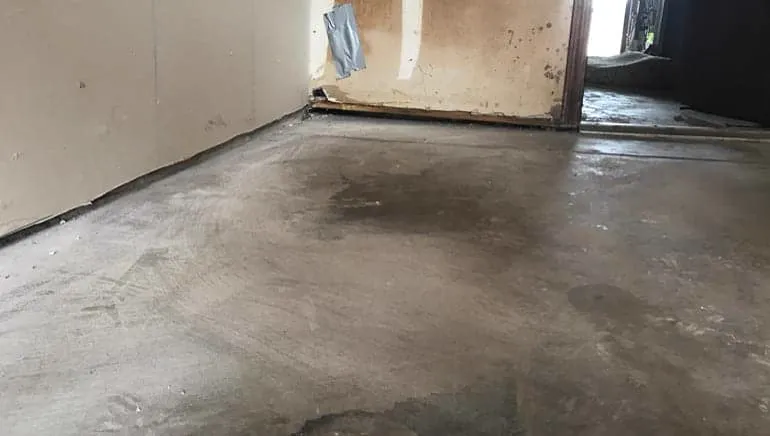
After that, they should be measuring. Linear feet of affected wall, slab thickness, where the old drain tile ran, whether a usable sump basin already exists. Those numbers build an honest price. Without them, the total at the bottom of the page is a mood.
The best review we ever got wasn’t about the work. It was four words: “They shrunk the job.”
Sump pumps deserve their own conversation, since they fail in predictable ways. Power drops during the storm, a float sticks, the pump is undersized, the check valve is missing, or the discharge line clogs. Every one of those is preventable, so ask about a battery backup and where the water ends up. Any real installer answers both without blinking.
How do you read a drainage estimate?
Line by line, out loud if it helps. A strong proposal says what gets installed, how much of it, where it goes, and what happens to the water at the end. A weak one says “drainage system” and a number. Sorting out the best basement drainage Lilburn homes need really comes down to that: a scope you can actually read.
Questions worth asking before you hire anyone
- Where is water entering, and how do you know? A confident answer includes something they saw outside.
- Why this route instead of the cheaper one? They should explain the trade-off plainly.
- How many linear feet, and why that section? Vague coverage means a vague price.
- Does the drain sit below the slab? Below floor level is a system. Above it is a gutter.
- Where does the discharge end? Well away from the foundation, never beside it.
- Is a battery backup included or optional? Storms and power outages arrive together.
- Is the warranty transferable, and what voids it? Ask for it on paper.
Red flags get obvious once you’ve asked those. Watch for a firm price quoted over the phone before anyone has seen the house, or a discount that expires tonight, since real pricing never needs a countdown clock. Be careful too when the scope has no measurements, or when every house on the street somehow needs the identical system.
On cost, we’ll be straight with you. Regrading and downspout work sit at the low end, while a full interior perimeter drain with a new sump, backup power and restored finished space sits at the high end. What moves the number is linear feet, access, slab depth and finished space — and you get one written figure, not a “starting at.”
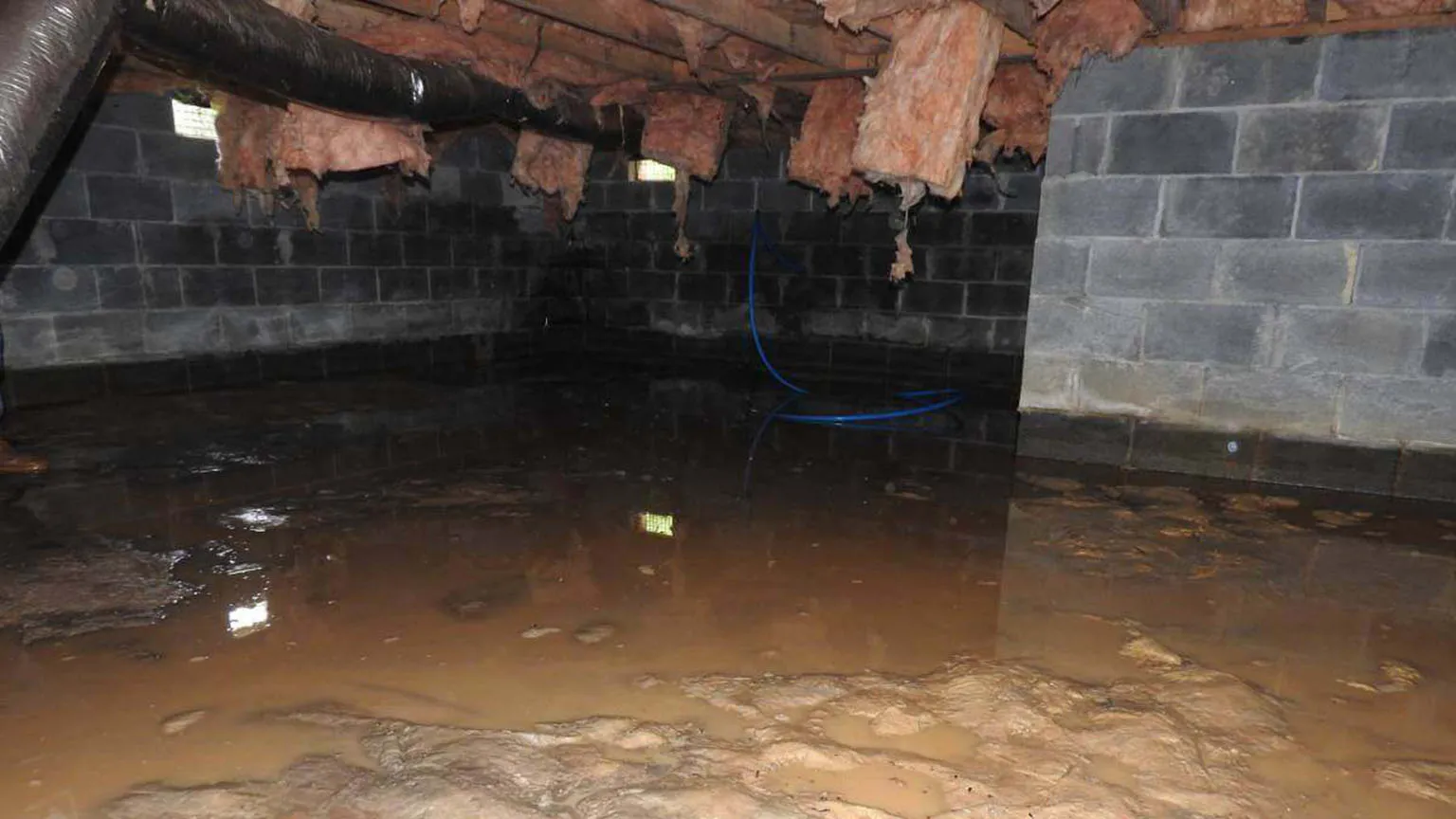
The house that wasn’t what they thought
Want the inspection that surprised everyone? A homeowner near Sweetwater called us certain the wall was failing — horizontal crack, water across the floor after every long rain, and one previous quote for a full perimeter system on all four walls.
Outside told a different story. A buried downspout line had collapsed at the elbow, so roof water poured into the clay at that exact corner storm after storm. Meanwhile the original 1970s footing drain had silted solid decades earlier, and the old sump discharge was packed with leaf debris.
So the plan shrank. Repair the buried line, correct the grade along one side, re-route the discharge, then add interior drainage on the one wall that truly needed it. The crack got monitored rather than rebuilt, because it stopped moving once the water load came off. Much smaller invoice than the first quote — and it’s the one that holds.

Now picture the after. March storms roll through, the floor stays dry, and the musty smell at the bottom of the stairs is gone. The basement goes back to being a room your family uses — which matters in a town with so many multi-generational households. Better yet, you spent what the problem actually cost. That’s the feeling we’re after: not relief, exactly. Smart.

Why we might be the right fit
We’re about fifteen minutes northeast of you in Lawrenceville, and we’ve been at this over twenty years. Run down Lawrenceville Highway (US-29) on a weekday and there’s a good chance one of our trucks is heading to a street near yours — we work these seventies-and-eighties block basements constantly, from the neighborhoods behind the BAPS Shri Swaminarayan Mandir to the older lots sloping toward the river. Familiar housing stock means a faster, more accurate diagnosis.
Same crews, same trucks, written scope every time. If we warranty it, you’re calling us. And when the honest answer is that your fix lives outside for a fraction of the price, we’ll say so on the first visit.
Still sorting out what’s happening down there? Our guide to flooded basement repair covers the emergency steps, while our basement waterproofing page lays out each system. If cracks or settling worry you more, start with foundation repair. Family one town over? We cover the same ground for Norcross best basement drainage. And if water has sat a while, the CDC’s guidance on mold cleanup after a flood is a calm, useful read.
Where we work around Lilburn
We’re in this area constantly, from Old Town Lilburn to the established streets around Killian Hill and Cedar Creek. Beyond Lilburn, we work in Lawrenceville, Snellville, Norcross, Tucker, Stone Mountain, Duluth, Grayson and Berkeley Lake, plus the wider Gwinnett area.
Questions Lilburn homeowners ask us
It depends on where water enters and how much wall is involved. Outside corrections like regrading and downspout extensions sit at the low end, while a full interior perimeter drain with a new sump and battery backup sits at the high end. You get one written figure after we walk the house.
That’s still worth solving, because the pattern rarely stays occasional as old drain lines keep silting up. The good news is that a twice-a-year basement often has one clear entry point, which usually means a smaller, cheaper scope. We’d rather find that now than after it becomes a monthly event.
They’re great for cleanup, but they don’t change why the water arrived. Remember that one inch across a 1,000-square-foot basement is more than 600 gallons, so a vac is always playing catch-up. Drying the room is step one; giving the water a path is what makes step one stop repeating.
Damp materials can begin growing mold within roughly one to two days, so quick drying matters. Pull up soaked carpet and padding, move stored boxes off the floor, and run fans and a dehumidifier. Once the drainage is corrected and humidity stays controlled, the conditions mold needs simply aren’t there anymore.
Safety first: keep clear of standing water near outlets or panels, and cut power to that area if you can do it safely. After that, take photos for your records, lift what you can off the floor, and start air moving. Then have someone find the entry point, because that decides the real fix.
Let’s find out where the water is really getting into your Lilburn basement
The inspection is free, the estimate is free, and nobody pressures you at the end. We’ll show you the entry point, explain why we’d pick one route over a cheaper one, and put the scope in writing — including the times the answer is smaller than you expected.
(678) 914-5112Serving Lilburn and all of Metro Atlanta · $500 off projects over $3,500 · Live support 7am–8pm, 7 days a week