

How to Choose the Best Basement Drainage Norcross Homeowners Can Count On
The four ways water gets in, what a real drainage plan looks like, and the red flags worth walking away from.
One inch of rain landing on an average roof drops roughly 900 gallons of water into the soil around the house. Not over a season — in one storm. So when folks ask what the best basement drainage Norcross homes actually need looks like, we start with that number, because it explains almost everything.
All that water has to go somewhere. If it lands beside your foundation, your basement becomes the low spot in the neighborhood. Good news, though: drainage is the permanent half of this problem, and it’s very fixable once someone finds the real entry point.
Why do Norcross basements need their own answer?
Start with the dirt. Georgia red clay doesn’t drain — it holds. After a long rain, clay stays saturated for days and leans wet soil right against your basement wall. That pressure is called hydrostatic pressure, and it’s patient. It doesn’t need a big crack, since it will happily use a small one.
Then there’s the land. Norcross rolls, and it keeps dropping toward the Chattahoochee River on the west side, so lots near the water sit on ground with a seasonal high water table. Meanwhile, homes along the Rockbridge streets sit on cut-and-fill lots where the backfill beside the foundation drains differently than the soil around it.
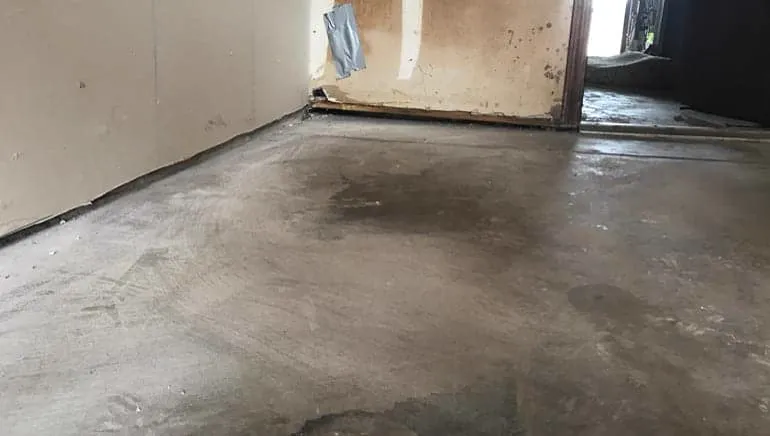
Now add the houses. Norcross has homes from three different centuries, and each one needs a different answer — which is exactly why a real inspection beats a phone quote every time. A stone-and-brick foundation near Historic Downtown Norcross behaves nothing like a 1970s block basement, and neither behaves like a poured wall out toward the Medlock Bridge edge.
One more local wrinkle: crawl spaces. Plenty of older homes around the Summerour area have standing water and no vapor barrier down there. Nobody looks, so nobody knows. That water isn’t dramatic, but it does feed damp air into the house all summer.
What are your actual drainage options?
There are four, and they solve four different problems. That’s the part most homeowners never get told, so let’s fix it right now.
Interior perimeter drain to a sump. A channel is cut along the inside edge of the slab, below floor level, and piped to a sump pump that sends water outside. Because it collects at the cove joint, it relieves exactly the pressure that pushes water through that seam. It’s the workhorse of interior drainage, and it fits most block basements here beautifully.
Exterior footing drain. This one goes outside, down at the footing, with gravel and pipe carrying water away before it ever touches the wall. It’s the more involved route since it means excavating, so a patio, deck or mature landscaping changes the math fast. Still, on the right house it’s the cleanest answer there is.
Regrading. Soil should fall away from the house, not toward it. Over twenty or thirty years, mulch beds settle and flowerbeds get built up until the yard quietly aims water at the foundation. Correcting that slope is cheap compared to everything else on this list.
Downspout extensions. Remember those 900 gallons? Your gutters concentrate them into a few spouts. If those spouts dump two feet from the wall, you’ve built a little water feature against your foundation — and not the nice kind. Carrying that discharge ten or more feet out solves a surprising number of “mystery” leaks.
The good news
A basement that floods only in heavy rain almost always has a surface water problem, not a groundwater problem. Surface water is usually the cheaper fix — and we’d rather tell you that than sell you the bigger job.
Now here’s where a lot of homeowners get steered wrong
Ready for the pattern? Many companies sell one system. Not one per house — one, period. So whatever your basement is doing, the recommendation shows up as a full perimeter drain with a new sump, every single time.
Sometimes that really is the right call. But sometimes the honest answer is three downspout extensions, a regraded bed, and a morning of work. When a crew is trained to install rather than diagnose, every house starts to look like a customer for the same product. That’s not usually dishonesty — it’s just a very narrow toolbox.
The cheapest correct fix is often outside the house. A good company will say so out loud, even though it’s the smaller invoice.
The other detour is the sump pump conversation, or rather the missing one. Pumps don’t fail randomly. They fail in five predictable ways: the power goes out mid-storm, the float sticks, the pump is undersized for the water it’s asked to move, the check valve is missing so water runs back down the pipe, or the discharge line clogs with leaves and mud.
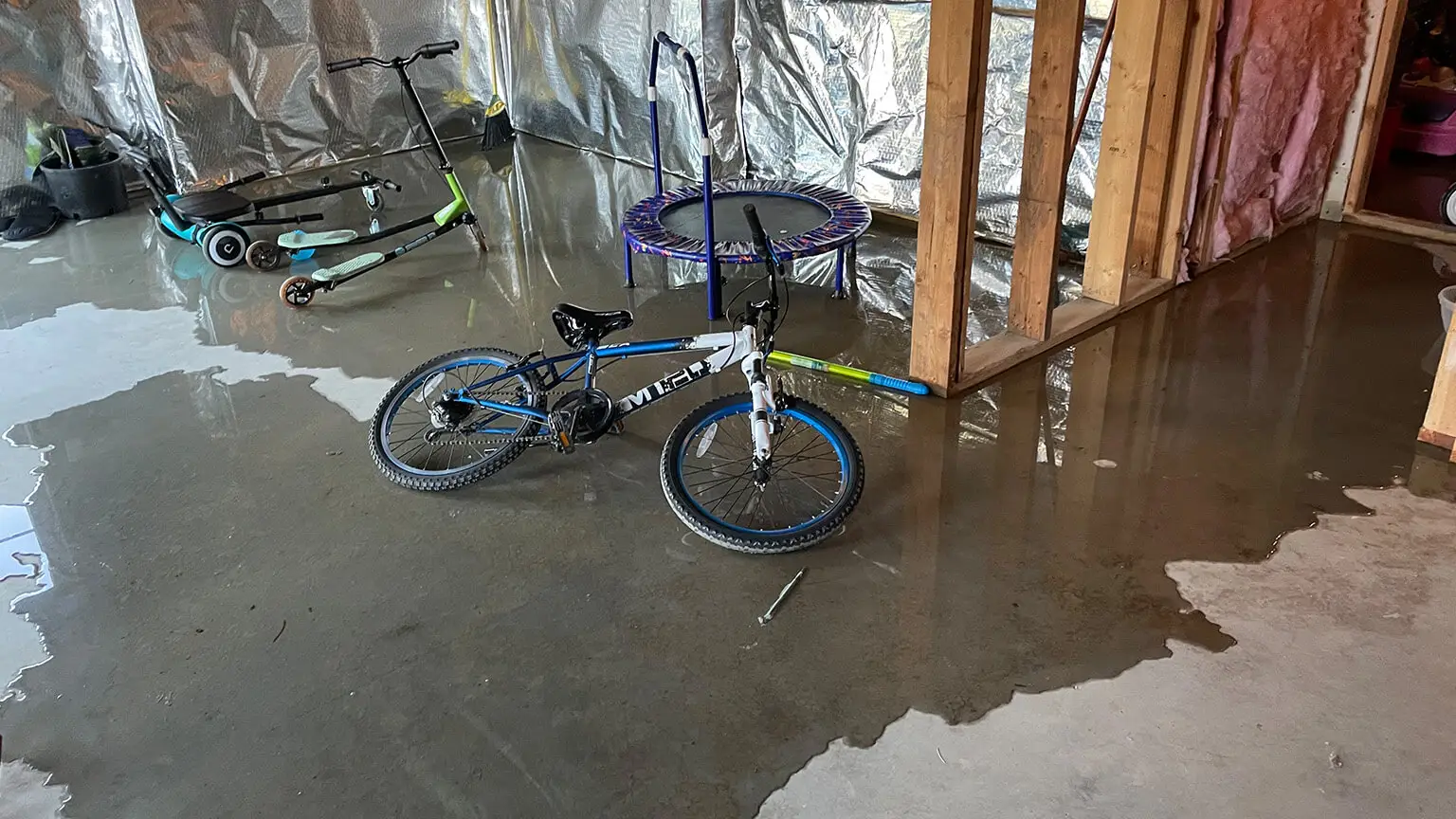
Notice that the first one happens during the exact storm you needed the pump for. So ask about a battery backup. Any crew worth hiring will have thought about it before you bring it up.
Timing matters too. Spring storms drive most of our calls, while fall leaf drop clogs discharge lines at the worst moment. You can track the local outlook yourself through the National Weather Service flood safety pages.
How do you read a drainage estimate?
Line by line, out loud if that helps. The best basement drainage Norcross homeowners end up with almost always comes from the proposal that names things: linear feet, depth, pipe size, pump horsepower, where the water goes. A weak estimate says “waterproofing system” and a total.
Questions worth asking before you sign anything
- Where exactly is water getting in, and how do you know? A real answer includes what they saw in the yard, not just the basement.
- Why this route instead of the cheaper one? If interior drainage is the plan, they should explain why grading and downspouts wouldn’t do it.
- How many linear feet, and why that section? Vague coverage always turns into a vague price.
- Does the drain sit below the slab? Below floor level is a system. At floor level is a gutter.
- Where does the discharge end up? Well away from the house, not back beside the foundation.
- Is there a battery backup, and a check valve? Both are small line items that decide whether the pump matters at 2 a.m.
- Is the warranty transferable, and what voids it? Ask them to explain it in one sentence, then ask for it on paper.
Red flags get easy to spot once you’ve asked those. Watch for a firm price quoted over the phone before anyone has seen the house, and for a discount that expires today, because real pricing doesn’t need a countdown clock.
A few more worth noting. If the inspection never left the basement, they skipped the half of the property where water usually starts. If the scope has no measurements, the total is a guess in a nice font. And if a coating is pitched as the whole solution, remember that paint is fighting pressure it can’t win.

On cost, we’ll be straight with you. Downspout and grading corrections land at the low end. A full perimeter drain with a new sump, a backup battery and a finished basement to protect sits at the high end. What moves the number is linear feet, access, slab depth and how much finished space has to come apart and go back together.
What does any of this have to do with the air upstairs?
More than most people expect. Air in a house doesn’t sit still — it rises. Damp air from a wet basement or a soggy crawl space moves up into the bedrooms, so a drainage problem downstairs quietly becomes an air problem everywhere else.
That’s why “it’s only the basement” isn’t quite true. Musty smells at the top of the stairs, a hallway that feels sticky in July, an air conditioner that runs long and never quite catches up — those often trace back to moisture nobody’s looking at. The CDC’s guidance on mold and dampness is a calm, plain-language read if you want the background.
Here’s the encouraging part: fix the water, and the air follows. Once drainage carries the water out and humidity is controlled, the smell fades, the sticky feeling goes, and the whole house gets easier to keep comfortable. Better yet, your family stops living downwind of a problem you can’t see.

Picture your after. A hard March storm rolls through, and you don’t go check the basement — you just hear rain. The bikes and boxes stay where you put them, the stairs smell like nothing at all, and the room becomes usable space again instead of a room you keep an eye on.
Why we might be the right fit
We’re about twenty minutes northeast of you in Lawrenceville, and we’ve been at this over twenty years. Because we work every kind of house Norcross has — the old ones near downtown, the block basements off Beaver Ruin, the newer poured walls east of town — we diagnose from experience instead of guessing.
Our crews are our own, the inspection is free, and we start outside. If the fix is small, we’ll tell you it’s small. If your basement takes water after every storm, our guide to flooded basement repair covers the emergency side, while the basement waterproofing systems we install are laid out in detail. Seeing cracks or settling instead? That’s a foundation repair conversation. Comparing notes with family east of here? We cover the same ground for Loganville best basement drainage.
Where we work around Norcross
We’re on these streets constantly, from the river side of town to the neighborhoods tucked behind I-85. Beyond Norcross, we work in Peachtree Corners, Duluth, Lilburn, Doraville, Tucker, Berkeley Lake, Lawrenceville and Suwanee, plus the wider Gwinnett area. Odds are good we already have a truck near you this week.
Questions Norcross homeowners ask us
Usually yes, and usually for less than you’d guess. Water that shows up twice a year is still soaking the slab and feeding damp air upstairs between visits. The upside is that occasional flooding often points to a surface water cause, so the repair can be as simple as grading and downspout work.
They’re great for cleanup, but they don’t change why the water came in. Think of them as a towel rather than a repair. Dry the space out by all means, then get the entry point found so the next storm doesn’t repeat the whole exercise.
Mold can begin within a day or two on damp material, which is why fast drying matters so much. Move wet cardboard and fabric out, run air across the area, and keep humidity down. If material stayed wet for several days, have it looked at before anything gets closed back up.
Safety first: don’t walk into standing water if outlets, cords or the panel are in it. Once that’s clear, get the water out, lift anything soft off the floor, and take photos for your insurance. After that, note exactly where the water first appeared, because that detail helps us find the source quickly.
That pattern usually points to surface water rather than groundwater. Roof runoff, a settled flowerbed or a yard that slopes back toward the house dumps more water beside the foundation than the clay can take. The good news is that this is often the cheaper category of fix.
Let’s find out where the water is really coming into your Norcross basement
The inspection is free, the estimate is free, and nobody pressures you at the end. We’ll walk the yard and the basement, show you the entry point, and give you a written scope — including the times the honest answer is smaller than you expected.
(678) 914-5112Serving Norcross and all of Metro Atlanta · $500 off projects over $3,500 · Live support 7am–8pm, 7 days a week