

Basement Drying Options Norcross Homeowners Weigh: Pro Crew or Do It Yourself?
Both paths are real. Here’s how each one works, what tips the call, and when we’d honestly tell you to skip the bigger one.
It’s 2 a.m. and the rain hasn’t let up in three hours. Then your brain walks itself straight down the basement stairs. If that’s how you landed here, take a breath — the basement drying options Norcross homeowners actually have come down to two honest paths, and one of them is likely cheaper than the number in your head right now.
So what are you really choosing between?
Two approaches, and they’re not as far apart as the price tags suggest. One is professional structural drying: real extraction, air movers aimed on purpose, commercial dehumidifiers, and moisture readings written down. The other is the do-it-yourself version — a shop vac, box fans, and a rental dehumidifier.
Both dry a basement. The gap is capacity and measurement. One pulls a lot of water fast and proves the wall is dry, while the other pulls a little slowly and asks you to trust your fingertips — which have never told the truth about drywall.
Here’s where our town makes it interesting. Norcross has houses from three different centuries: stone-and-brick foundations near the Lillian Webb district, block basements poured in the 1960s and 1970s with no meaningful original waterproofing, and newer walls out toward the Medlock Bridge edge. Each one needs a different answer, which is why a real inspection beats a phone quote every time.
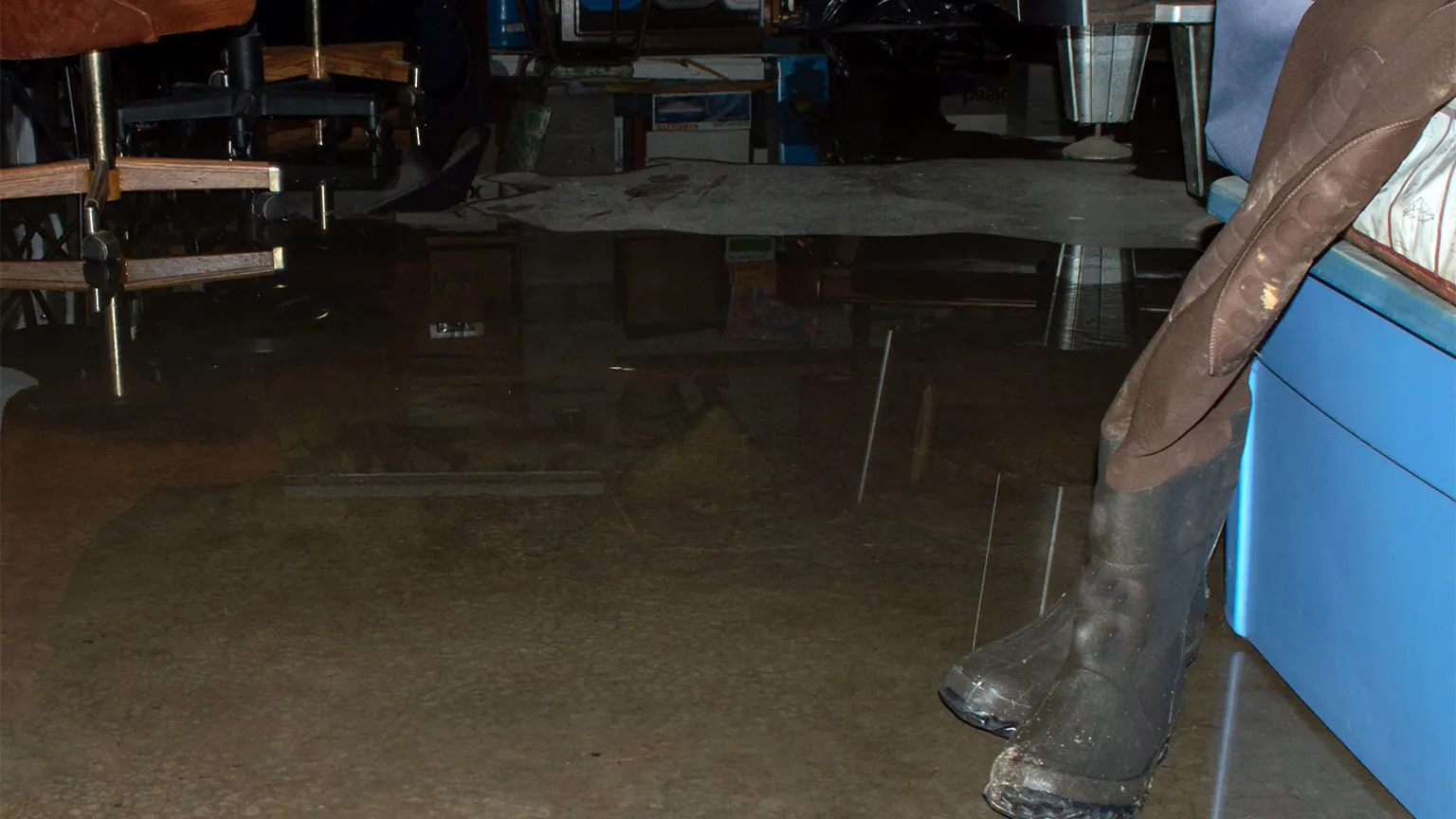
How does professional drying actually work?
It runs in a set order, and the order is the whole trick. Extraction comes first, with equipment that moves gallons per minute instead of per hour. Then the wet material that can’t be saved comes out: carpet pad, the bottom edge of drywall, soaked insulation inside finished walls.
After that, air movers go in at an angle along the surfaces rather than blasting the middle of the room. Moving air lifts moisture off the material, and commercial dehumidifiers pull it out of the air and drain it away — so the water leaves the house instead of touring it.
The last step is our favorite. We take moisture readings in the same spots daily and write them down, so the job ends when those numbers match dry, unaffected material — not when it “feels” dry.
When it wins: more than an inch of water, water that sat overnight, wet material trapped behind finished walls, or a sewer backup instead of clean rain.
What moves the cost: square footage, days of equipment, how much finished material comes out, and whether the water was clean or dirty.
Before you go down there
Never step into standing water while the power is still on. Shut the basement circuits off at the panel first, and if the panel itself sits in the wet area, call your utility and wait. Everything else can be handled later.
And when is doing it yourself genuinely fine?
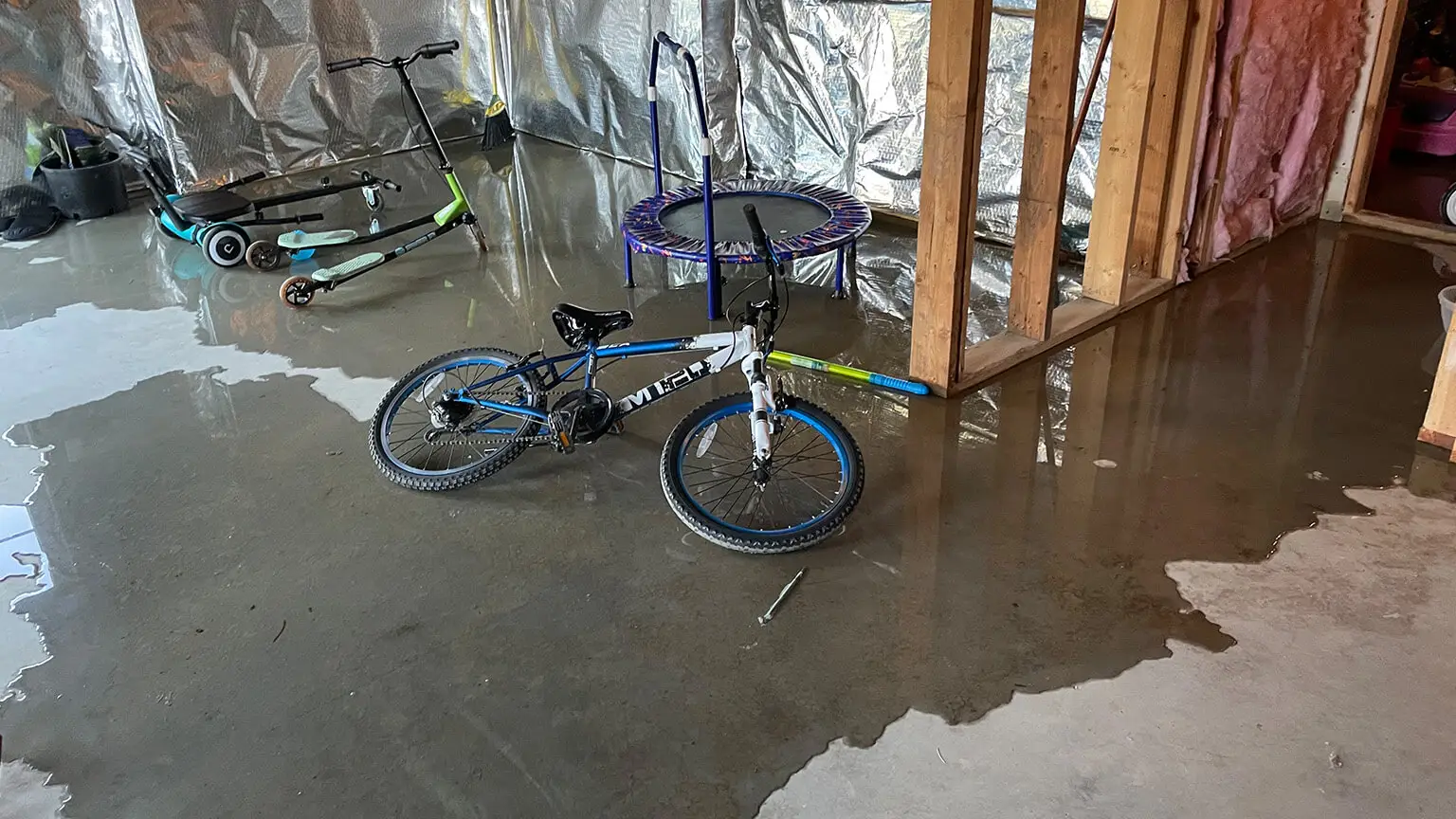
More often than you’d guess. Plenty of the calls we take near Best Friend Park turn out small, clean and shallow — an inch of rainwater on bare concrete with nothing soft sitting in it.
In that case the homeowner playbook works fine. Pull the water with a wet-dry vac, get everything soft out of the room, then run fans and a dehumidifier with the windows shut for a few days. A construction-grade rental unit pulls far more water than the one in your hallway, and it rents for about the price of a nice dinner.
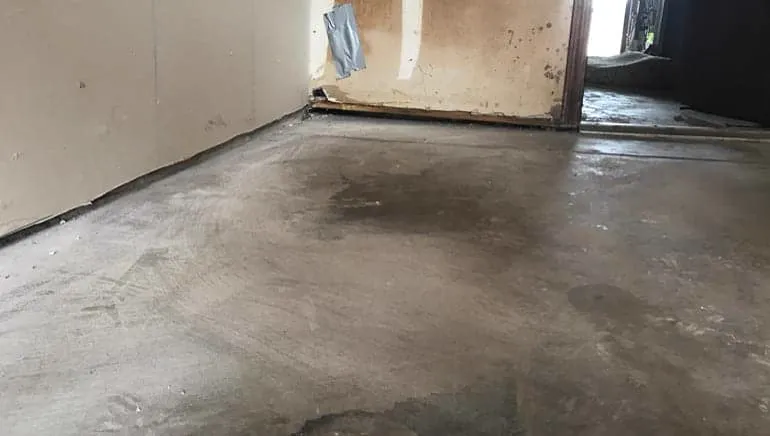
Where it stops working: the second water gets behind something. Drywall wicks moisture upward like a paper towel, carpet pad holds many times its own weight, and insulation in a wall cavity can stay soaked for weeks while the paint outside looks dry.
That’s the classic mistake: drying the surface while the cavity stays wet. The room passes the touch test, everybody relaxes, then three weeks later there’s a smell nobody can find.
How do the two compare, straight across?
Professional structural drying
- Extraction by the gallon per minute
- Wet material removed, not dried around
- Dehumidifiers drain outside the room
- Daily moisture readings, written down
- Handles sewer water safely
- Costs more, equipment stays for days
Doing it yourself
- Great for shallow, clean rainwater
- Ideal on bare, unfinished concrete
- Rental gear costs very little
- You control the schedule
- No proof the cavity ever dried
- Slow, so the clock keeps running
Notice that neither column says “better.” Most basement drying options Norcross homes need land in one of those lists, and the amount of water should be doing the picking — not the price tag.
Why do two estimates land thousands apart?
Alright — this next part is why two quotes for the same basement read like different houses. It comes down to one question: does the wet organic material behind the finished walls come out, or not?
One company bids to dry the room. Another bids to open the bottom foot of drywall, pull the soaked insulation, dry the cavity and put it back. Same storm, very different numbers, and neither is lying to you.
What’s really moving the number
- Depth and area. A damp corner and a flooded room aren’t the same job, and square footage drives the equipment count.
- How long it sat. Two hours is a drying job. Two days is often a removal job.
- Finished versus bare. Drywall, trim, carpet and pad all have to be handled. Bare block rarely does.
- Clean or dirty water. Rain through a window well is one protocol. A sewer backup is another.
- Equipment days. Drying is rented time, so three days costs less than seven.
- The source. Drying without fixing the cause just buys a rematch next spring.
So line the proposals up by scope before you compare price.
Twenty years in, here’s what we tell every homeowner on the phone: speed beats horsepower. A modest fan running two hours after the water shows up will beat a big machine that shows up Thursday.
What decides it for a Norcross basement?
Four things, and you can answer them before anyone comes out. How much water? How long did it sit? Is wet organic material trapped behind a finished wall? And was it clean rain or a sewer backup?
Say “a lot,” “overnight,” “yes” or “sewer” to any one and the professional route earns its keep. Say “a little,” “an hour,” “no” and “rain” to all four, and honestly, you’ve got this. Grab the vac.
Speed is why the clock matters. Mold can begin growing on wet organic material in roughly 24 to 48 hours, which means how fast you start matters more than how big your equipment is. The CDC’s guidance on mold cleanup after a flood is a calm, plain read on the health side.
Geography matters too. Lots near the Chattahoochee River sit on river-bottom pockets in the red clay, so groundwater rides high after a wet stretch. Homes along the Peachtree Industrial Boulevard corridor usually fight surface water instead — roof runoff and a driveway sloping the wrong way.
Want the number that reframes all of this?
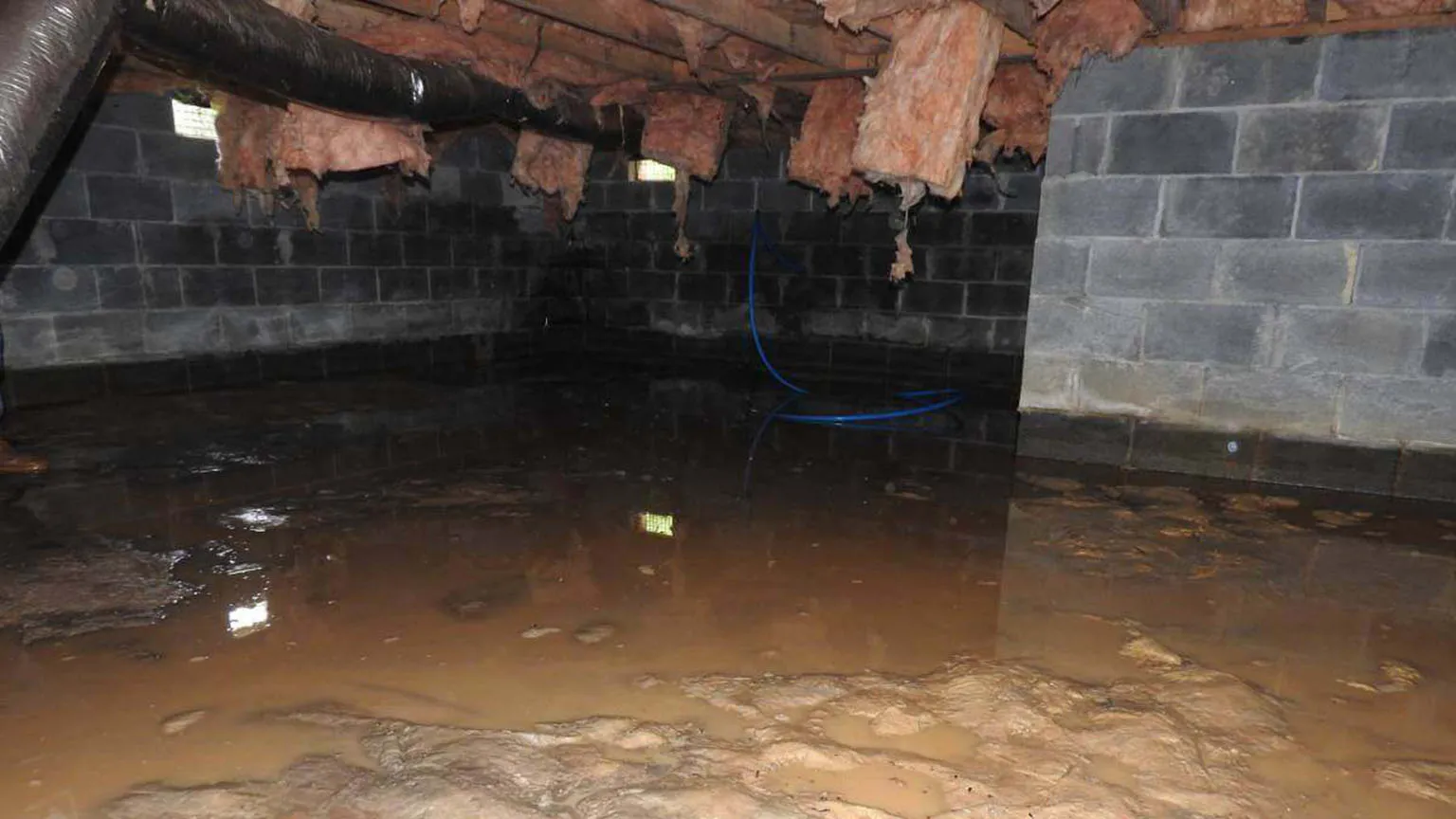
One inch of water across a 1,000-square-foot basement is more than 600 gallons. Six hundred. That’s why a shop vac feels hopeless around hour two — you’re not slow, you’re carrying a small swimming pool up the stairs five gallons at a time. So the real question isn’t “am I willing to work hard?” It’s “how many gallons are down there?”
The good news is that most calls we get are nowhere near an inch. Plenty are a damp strip along one wall — a Saturday and a rental dehumidifier. For the long-term side, FEMA’s building science and flood protection library covers how homes handle water.
So what would we tell you to do?
You asked for a recommendation, not a shrug. For a finished basement that took real water — carpet, drywall, anything soft — we’d bring in professional drying, same day. The material behind the wall is the whole ballgame, and you can’t check it from the finished side.
For an unfinished basement with clean rainwater you caught quickly, do it yourself. Seriously. Vac it, fan it, run a rental dehumidifier for three days, then put the savings toward stopping the source. We say that constantly, including to folks along the Berkeley Lake edge where a regraded downspout line solved the whole problem.
If it’s a sewer backup, though, skip the debate — that one comes with containment and disposal rules.
Here’s the honest part: drying is only half. It answers “how do I get the water out,” never “why did it come in.” That’s how we think about basement drying options Norcross homeowners bring us — dry it fast, then fix the reason it got wet.
Who should you call once it’s dry?
Somebody local, because a warranty is only as strong as the company behind it. We’re based in Lawrenceville, roughly twenty minutes northeast, so we know how these foundations behave.
Want to read ahead? Our guide to best basement drainage covers where the water should have gone, and the basement waterproofing page walks through the systems we install. If your walls have cracks, start with foundation repair instead. Neighbors east of here can read the same breakdown of Loganville basement drying options.
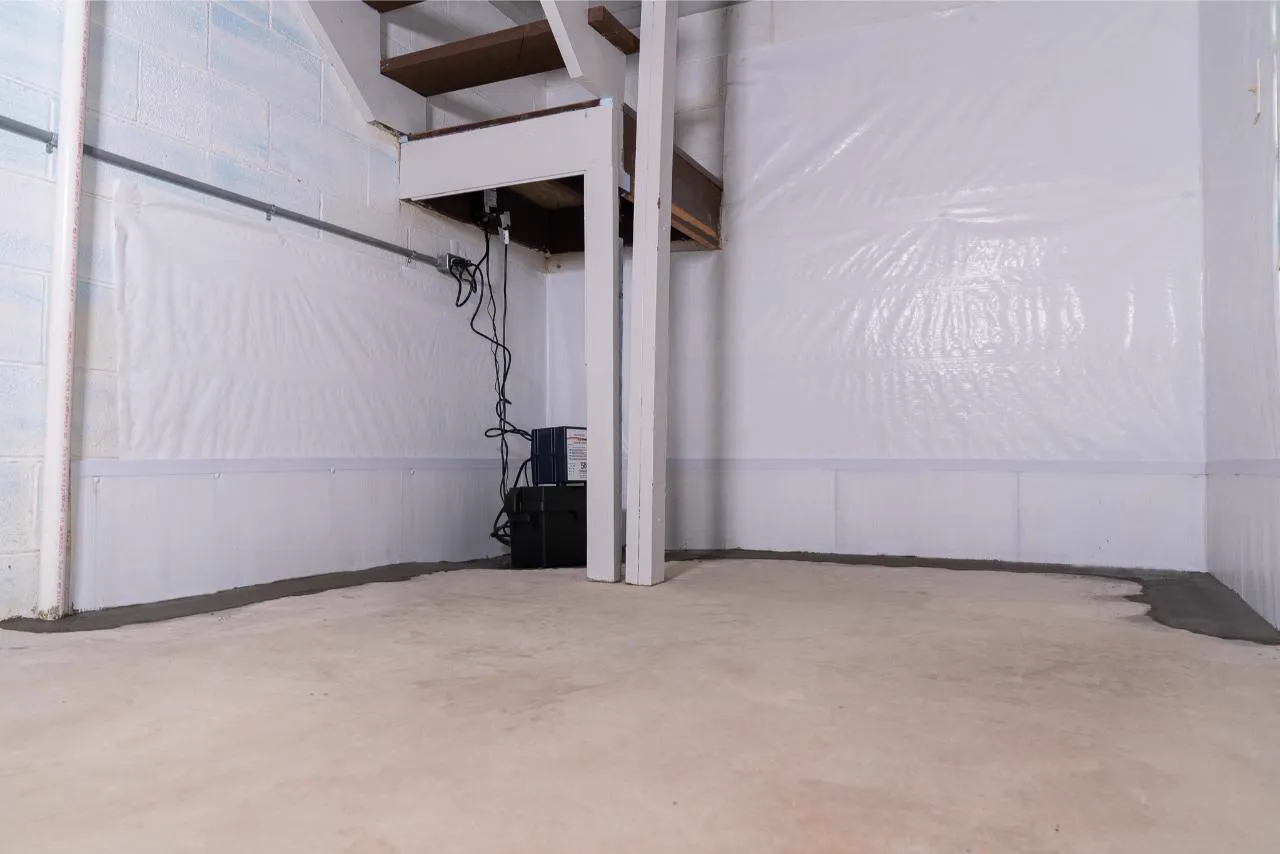
Picture the next storm from down there: rain on the windows, nobody hunting for a flashlight, everybody asleep. That’s the real product — a boring night.
Where we work around Norcross
We’re in Norcross constantly, and we cover the neighbors: Peachtree Corners, Duluth, Lilburn, Doraville, Tucker, Berkeley Lake, Suwanee and Lawrenceville, plus the wider Gwinnett area.
Questions Norcross homeowners ask us
In most homes, yes — as long as the source gets fixed and not just the puddle. That usually means drainage, a working sump, and better grading or gutter routing outside. Homes with a real system go years without a wet floor, even through spring storms.
It depends on how much wall is involved, whether a sump is needed, and how much finished space comes out first. A grading or downspout correction sits at the low end, while a full perimeter system under a finished basement sits at the high end. Either way, you get a written number with the scope spelled out.
That’s still worth a look, because twice a year is a pattern rather than an accident. Often the cause is surface water and the fix is small. We’ll tell you plainly if it’s a downspout afternoon instead of a full system.
For a shallow, clean-water event on bare concrete, yes — add a dehumidifier and you’re in good shape. It stops being enough when water gets behind finished walls, or when it sat overnight. Then the cavity has to be opened and dried, not just the surface.
Mold can begin on wet organic material in roughly 24 to 48 hours, so starting fast matters more than having big equipment. Get the standing water out, move soft materials out of the room, and keep air moving. If drying started quickly, you’re usually in good shape.
Let’s figure out which drying route your Norcross basement needs
The inspection is free, the estimate is free, and there’s no pressure at the end. We’ll show you where the water came in, say honestly whether this is a rental-dehumidifier weekend or a real drying job, and hand you the plan.
(678) 914-5112Serving Norcross and all of Metro Atlanta · $500 off projects over $3,500 · Live support 7am–8pm, 7 days a week