

Basement Drying Options Loganville Homeowners Can Pick From — Pro Crew or Do It Yourself
Both are real answers. Here’s how each one works, what moves the cost, and which one your basement is asking for.
Here’s the part nobody tells you: the fans matter least. Most of the basement drying options Loganville homeowners compare come down to fans and dehumidifiers, and yet the step that decides whether the room really ends up dry happens before anything gets plugged in. What comes out matters more than what gets blown around.
Good news, though? The choice is simpler than it looks. You’ve got two honest paths — hire a crew, or run it yourself with a shop vac, box fans and a rental dehumidifier.
We’re twenty minutes up Athens Highway (US-78), so we take these calls constantly. Newer basements in Windsor Creek get them. So do the bigger lots near Wildwood and the older places out toward Bay Creek.
Before anything else
Never step into standing water while the power is still on. Go to the panel first and shut off the circuits feeding the basement. If the panel is down there or you can’t reach it safely, call your electrician or the power company and wait.
What does “dry” actually mean down there?
A wet floor is the part you can see. But concrete, framing, carpet pad, insulation and the bottom edge of drywall all soak up water and hold it quietly. So a room can look dry by Sunday and still be carrying plenty of water inside the walls.
That’s the classic mistake: drying the surface while the cavity stays wet. The fix isn’t complicated, though. Wet organic material has to come out — soaked carpet pad, the bottom few inches of drywall, wet insulation behind finished walls. Once that’s gone, air movement and a dehumidifier finish the job in days instead of never.
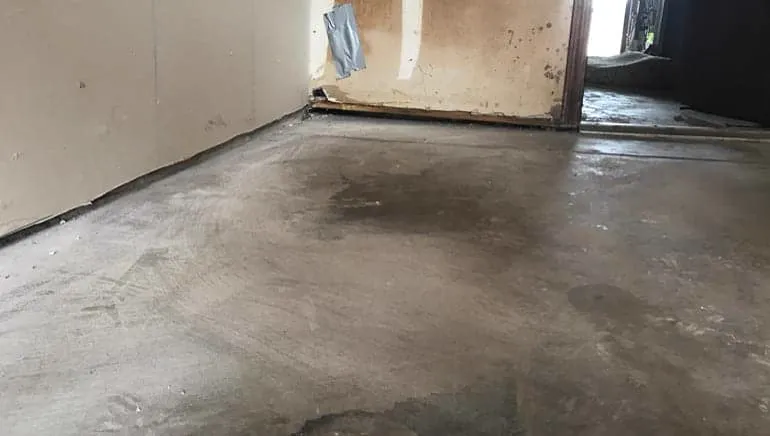
Timing matters more than horsepower, too. Mold can begin on wet organic material in roughly 24 to 48 hours, so a modest setup running tonight beats a big one running Thursday. The CDC’s guidance on mold cleanup after flooding covers the basics.
What does a professional drying crew actually do?
Less magic than you’d expect. The order is simple, and the discipline is what makes it work.
The four steps, in order
- Extraction. Pull the standing water out fast. Every gallon removed now is a gallon nobody has to evaporate later.
- Remove the wet organics. Carpet pad, soaked insulation and the bottom edge of drywall, cut at a clean line so the repair is easy.
- Targeted air movement. Air movers get aimed across wet surfaces at an angle, not pointed at the middle of the room.
- Commercial dehumidification. These pull far more water per day than a rental unit, and they keep pulling as the room warms.
Then comes the part homeowners like most: documented moisture readings. A meter goes on the same marked spots each day until the materials match a dry reference point upstairs. So nobody is guessing when it’s finished.
When it wins: a lot of water, water that sat overnight or longer, finished walls with wet insulation trapped behind them, or anything that came up from a sewer or septic line.
What moves the cost: square footage, drying days, how much material comes out, and whether the water was clean or contaminated. A small unfinished area caught early sits at the low end. A finished basement with soaked walls sits much higher.
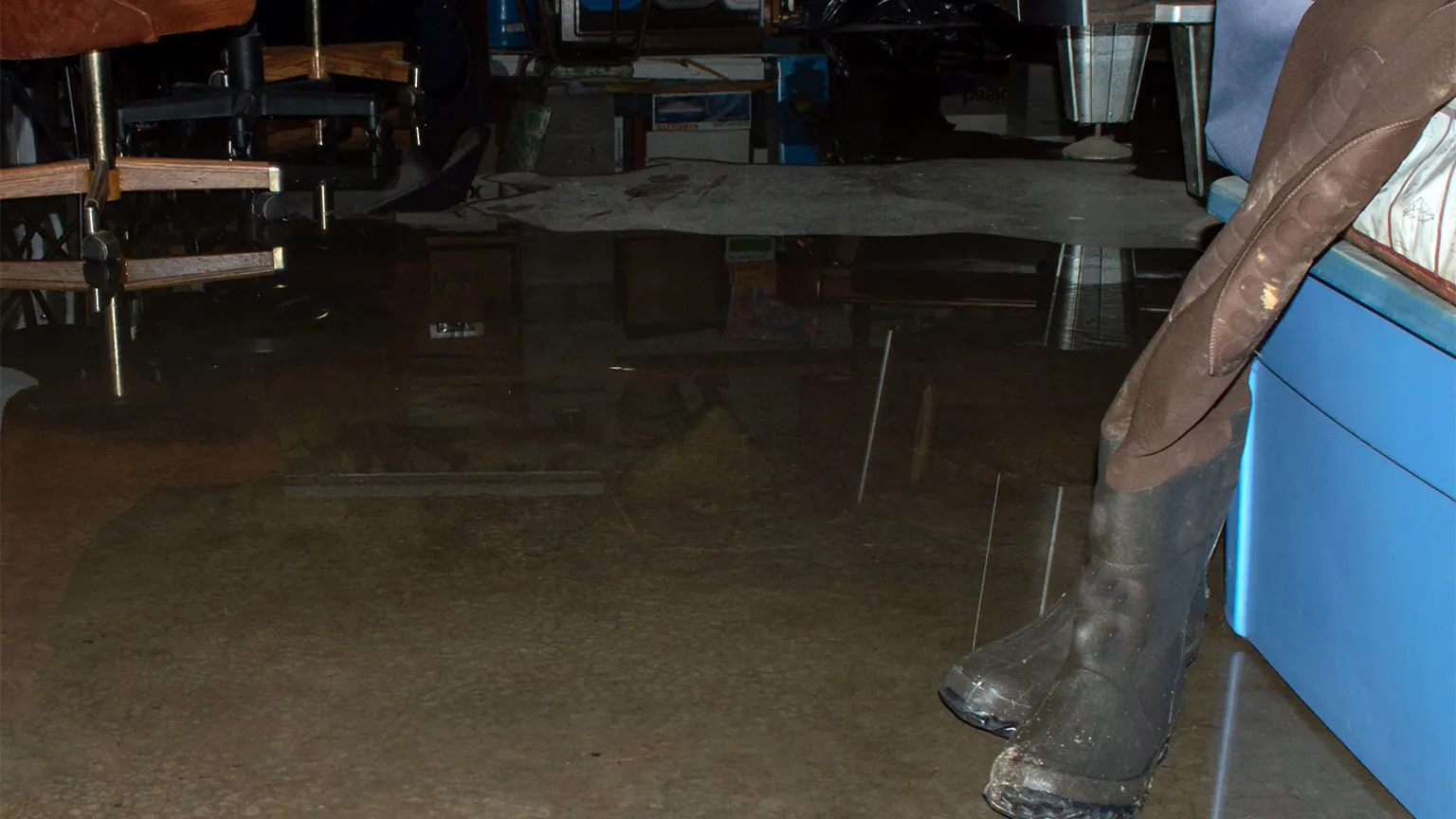
When is a shop vac and a couple of fans genuinely enough?
More often than our industry likes to admit. Real talk: plenty of wet basements are a Saturday, not a claim.
The DIY version is a wet/dry vac, two or three box fans and a rental dehumidifier. Vacuum until the vac stops finding water, pull up anything soaked and organic, aim the fans across the wet edges, then run the dehumidifier with doors and windows shut.
When it wins: a small area, clean rainwater, caught within a few hours, in an unfinished space. If the only casualty is a bare slab and a box of holiday decorations, you need a mop and a weekend, not a crew.
The honest limits: a box fan is a fine tool and a terrible detective. It can’t tell you what’s still wet behind drywall, and a small rental unit stalls out in a big cool space. Cost is mostly rental days plus a bump on the power bill.
How do they compare, straight across?
Professional drying
- Extraction removes gallons before drying starts
- Finds wet material behind finished walls
- Commercial dehumidifiers pull far more per day
- Written readings prove when it’s done
- Handles sewer and septic water safely
- Higher cost, and you’re on a crew’s schedule
Doing it yourself
- You can start tonight, which counts for a lot
- Cheap — rental days and electricity, mostly
- Great for small, clean, quickly caught water
- No way to see inside wall cavities
- Rental dehumidifiers fade in large cool rooms
- Wrong call for sewer or septic water
Notice neither column says “better.” Of the two basement drying options Loganville homeowners weigh, the right one comes down to how much water there was and how long it sat.
So what’s the part nobody mentions?
Where the water came from changes the whole job. Two basements can have the same puddle and need completely different work, because clean rainwater and a backed-up line are not the same substance.
Rainwater at the wall is a drying problem. A sewer or septic backup is a cleaning problem first, and porous things it touched — carpet, pad, drywall — generally need to go rather than be dried. That’s not upselling. That’s just what the material is once it’s soaked.
This lands hard out here, since plenty of Loganville lots run on septic. When a drain field stays saturated after a wet stretch, the soil near the foundation stays saturated too. We see it on larger lots out toward Bay Creek Park. Either way, the National Weather Service flood safety guidance is worth a read before spring storms.
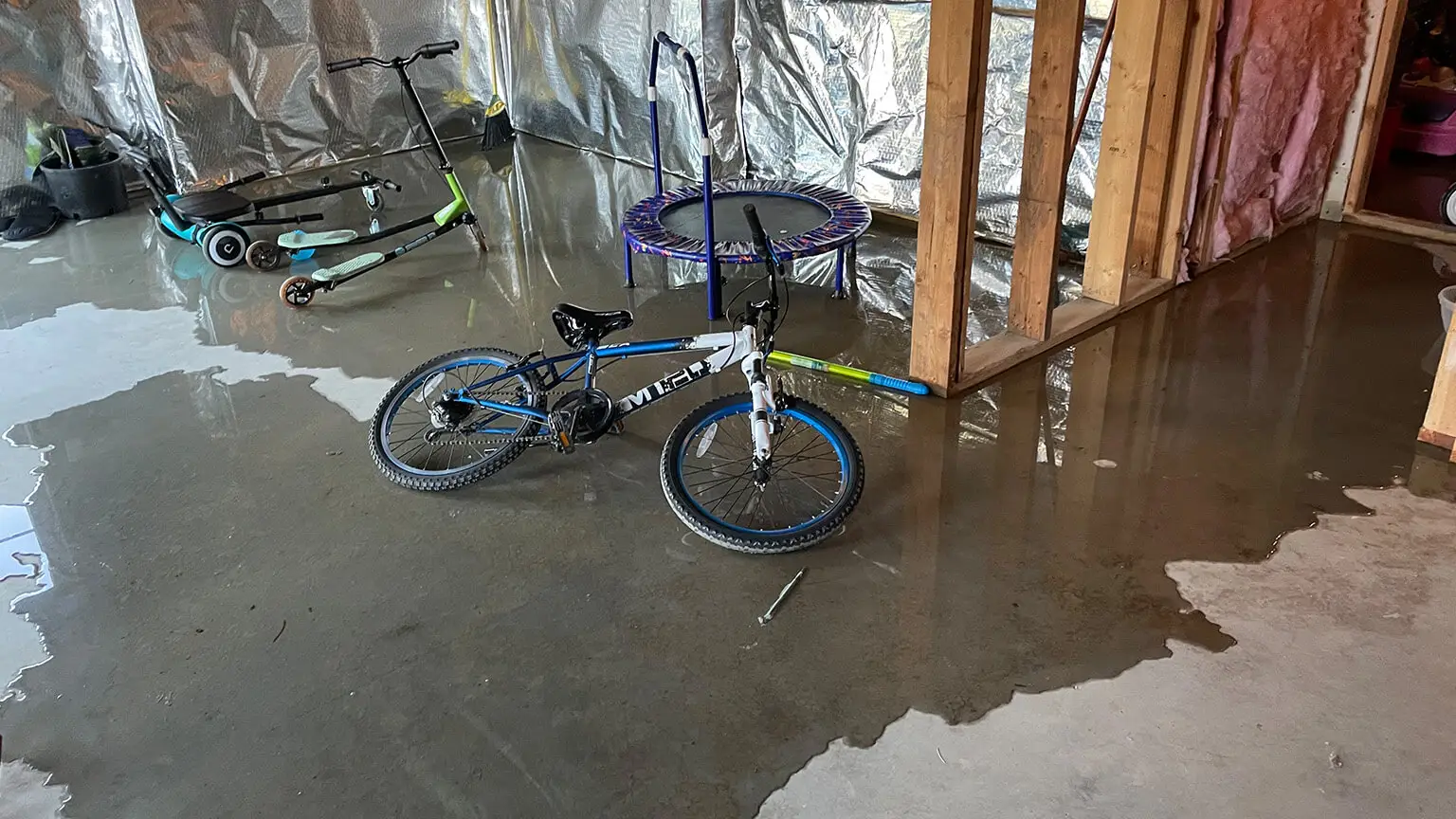
What actually decides it at your house?
Four questions, and you can answer every one of them yourself.
The deciding factors
- How much water? A damp patch along one wall is a different animal than an inch across the floor.
- How long did it sit? Caught in two hours beats found on Monday after a weekend away.
- Anything organic behind finished walls? Pad, insulation and drywall hold water you can’t see.
- Clean rain, or a sewer or septic backup? This one alone can move the answer from fans to a full crew.
Three smalls and clean water? Handle it yourself. Any one of them tipping the other way, and equipment stops being the deciding factor.
One more worth asking: does it only happen in heavy rain? Because a basement that floods only during a big storm almost always has a surface water problem rather than a groundwater one — gutters, downspouts, grading. Surface water is usually the cheaper fix by a wide margin.
So which one would we actually pick for you?
You asked for a recommendation, not a shrug. If the water was clean, the area is small, you caught it the same day and nothing finished got soaked — do it yourself.
Bring in a crew when the water sat more than a day, when it covered a large area, when finished walls got wet, or when it came from a septic or sewer line. Under those conditions the value isn’t the machines. It’s someone knowing where to look, and writing the numbers down until they’re right.
Here’s what people don’t expect us to put in writing, though. A homeowner near the Rock Gym called us after a wet weekend, and the whole story was a downspout dumping three feet from the wall on a lot that sloped back toward the house. He fixed it with an extension and an afternoon of dirt work, and we never sent a bill.
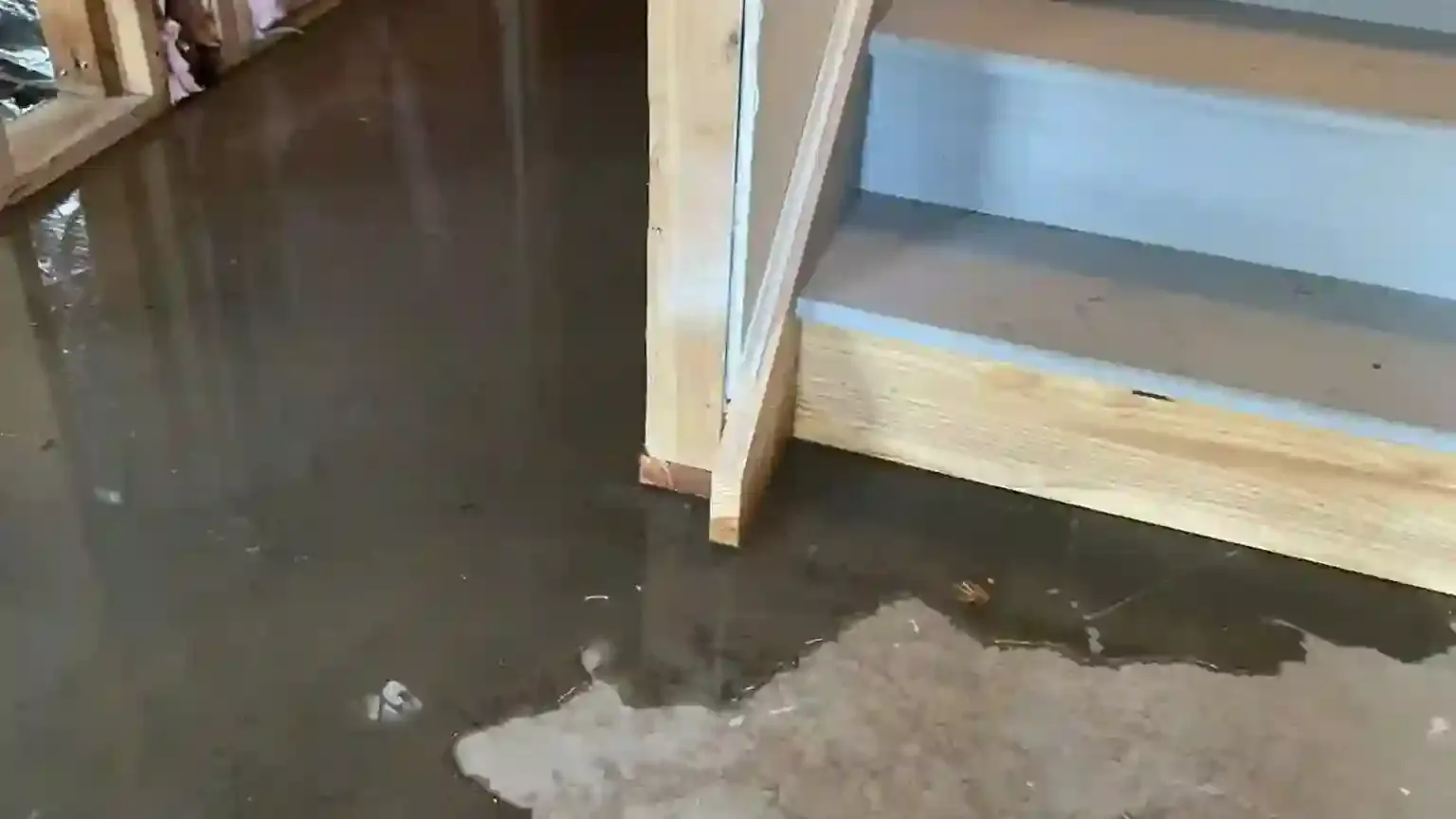
Twenty years in, the lesson stuck: drying is a measurement job, not a machine job. Anybody can run fans. Knowing when to shut them off is the part you’re paying for.
Why does the rest of the house feel different?
Ever notice how a wet basement doesn’t stay in the basement? Bedrooms smell faintly musty. Upstairs air feels sticky with the AC running. A door that closed fine in January sticks in June.
That’s air doing what air does. Warm damp air rises, your HVAC moves it around, and the whole house shares the moisture. Out here a lot of homes sit on crawl spaces, and a wet crawl space doesn’t stay down there either — that damp air rises right into the rooms you’re living in.
Once the source is handled and the materials are back to normal, that whole set of symptoms goes quiet together. The smell fades. Upstairs feels lighter. Now and then a sticking door turns out to be movement instead of moisture, and our foundation repair page explains how we tell the difference.
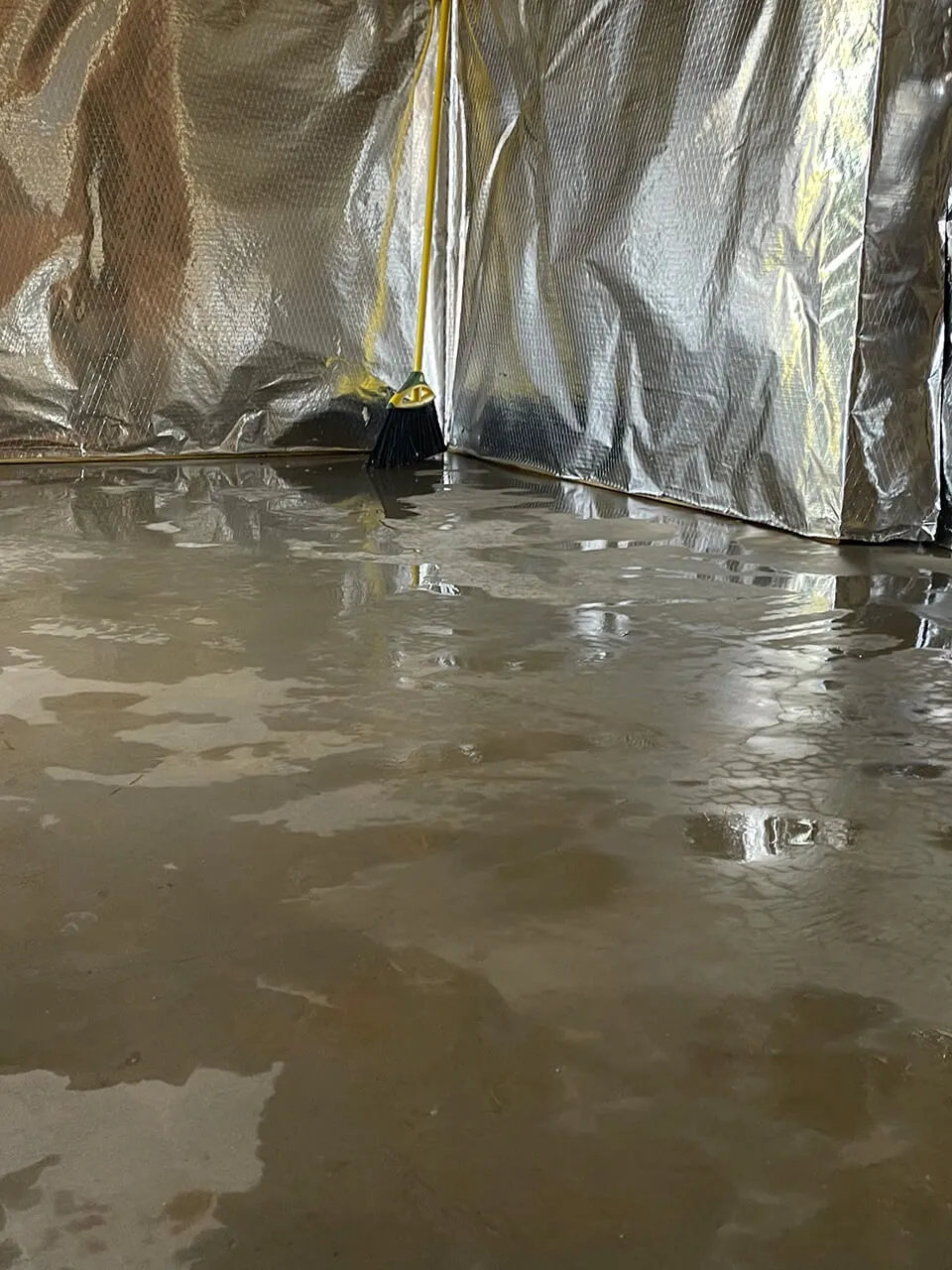
If it keeps coming back, drying is only half the conversation. That’s when it’s worth pricing the best basement drainage for your lot, or reading how a permanent system works on our basement waterproofing page. Neighbors west of here can read the same for Tucker basement drying options.
Where we work around Loganville
We’re based in Lawrenceville, about twenty minutes northwest. We also cover Snellville, Grayson, Monroe, Between, Bay Creek, Dacula, Lilburn and Centerville, plus the wider Walton and Gwinnett Counties area.
Questions Loganville homeowners ask us
It depends on the size of the wet area, how many days equipment runs, how much material comes out, and whether the water was clean or contaminated. A small unfinished area caught early sits at the low end, while a finished basement with wet walls sits much higher.
That’s encouraging news, actually. A basement that only takes water during heavy rain almost always has a surface water problem rather than a groundwater one, which usually points to gutters, downspouts or grading. Those fixes sit at the cheaper end, so check them before anyone talks about a bigger system.
Sometimes, yes, and we’ll tell you so. If the water was clean rainwater, the area is small, you caught it within hours and nothing finished got soaked, a vac plus fans and a rental dehumidifier can do it. Call for help when water sat overnight, covered a large area, got behind finished walls, or came from a sewer or septic line.
Mold can begin on wet organic material in roughly 24 to 48 hours, so speed matters more than equipment size. Starting a modest setup tonight beats starting a big one in three days. Getting soaked carpet pad, insulation and drywall out early removes most of what mold needs anyway.
Shut off power to the basement at the panel before you step into any standing water. Then take a few photos for insurance, stop the source if it’s something simple like a downspout, and start moving water out. After that, call us and we’ll help you decide whether it’s a weekend project or a crew job.
Not sure which way to go? We’ll look at your Loganville basement for free
The inspection is free, the estimate is free, and there’s no pressure. We’ll show you where the water is getting in, say honestly if you can handle it yourself, and only quote the work you need.
(678) 914-5112Serving Loganville and all of Metro Atlanta · $500 off projects over $3,500 · Live support 7am–8pm, 7 days a week