

The Basement Drying Options Tucker Homeowners Have — Pros or Do It Yourself?
A fair look at both, what decides between them, and when the big version is overkill.
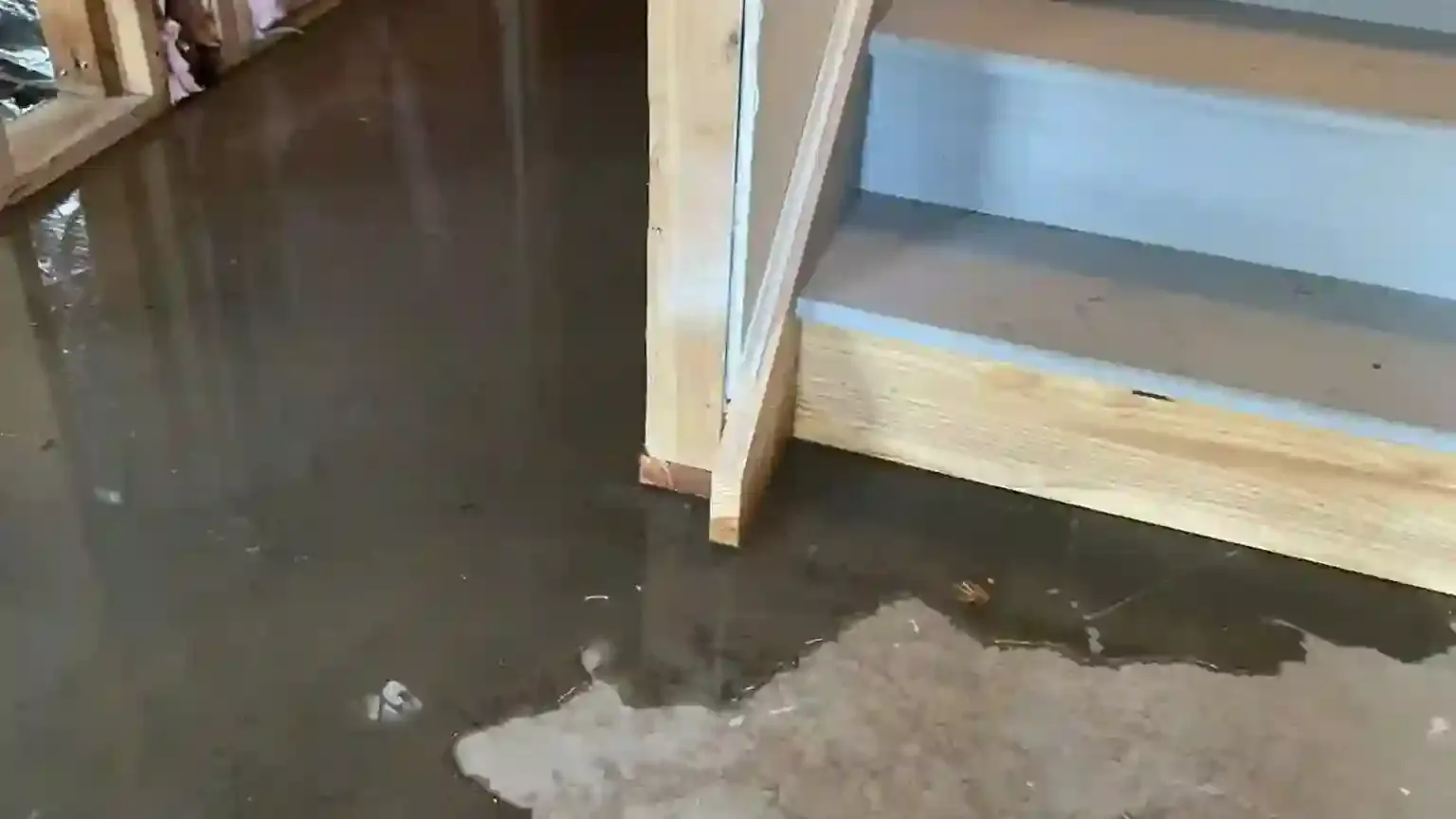
Can we start with the question people are almost embarrassed to ask out loud? “Is this normal?” You came downstairs after a storm, found water spreading by the steps, and quietly wondered whether every house on your street does this. Fair question — and it’s why folks go hunting for the basement drying options Tucker homes actually need, then drown in rental equipment ads instead.
So let’s make it simple. You have two paths: hire a crew to dry it professionally, or do it yourself with a shop vac, fans and a rented dehumidifier. Both are legitimate, and telling them apart takes four questions.
Why does a Tucker basement get wet in the first place?
Here’s the thing about the ground under this town. Tucker sits on the edge of the Stone Mountain granite, with red clay stacked on top. When rain soaks through that clay and reaches rock, it can’t keep going down. So it turns and runs sideways until it finds something easier to move through — quite often the uphill wall of a basement.
That’s why the wet corner is usually in the same spot every time. Homeowners in the Lakeside area and near Livsey describe it word for word: one wall, one storm pattern, same puddle. Up on the steep lots above Smoke Rise Country Club it’s louder, because those basements sit in a hillside and the water gets a running start.
Age matters too. Most homes here went up between 1955 and 1985, so plenty of block walls have leaned on wet clay for six decades, and the mortar joints eventually give water a route.

What does professional structural drying actually do?
The name sounds bigger than it is. Structural drying means pulling water out of the building materials, not only off the floor. Of the basement drying options Tucker homeowners get quoted, this is the thorough one, and it runs in four moves.
The four steps, plainly
- Extraction. Truck-mounted or portable units pull standing water off the slab fast.
- Wet material comes out. Carpet pad, soaked insulation and the bottom edge of drywall get removed, because they don’t dry in place.
- Targeted air movement. Air movers aim at wet surfaces on a low angle, so moisture lifts off instead of swirling.
- Commercial dehumidification. Big units pull that airborne water out and drain it away.
Then comes the part that separates a pro job from a hopeful one: measurement. We read moisture in the framing, slab and drywall on day one, then every day after, and those numbers get written down. The job is done when the wood and block read the same as the dry parts of the house — not when it “feels dry.”
When it wins: deep water, water that sat overnight, finished walls, or anything from a sewer line. What moves the price: square footage, days of equipment, and how much wet material gets hauled off. One unfinished room is the low end; a finished basement is a different animal.
Can a shop vac and a couple of fans really handle it?
Sometimes, yes. Plenty of Tucker basements get dried perfectly well by the homeowner on a Saturday, and there’s no trophy for hiring out.
The kit is short: a shop vac, a few fans, and a hardware-store dehumidifier. You vacuum until nothing comes up, drag the carpet pad to the driveway, aim the fans across the floor instead of straight down, and run the dehumidifier with everything shut. Open windows on a humid Georgia afternoon just invite more water in. Cost: a weekend and a rental fee.
Where it runs out of road is the stuff you can’t see. Box fans push air around, but they don’t pull water out of it. A home dehumidifier moves a fraction of what a commercial unit does, and none of it reaches the wall cavity.
How do the two stack up?
Professional drying
- Pulls water from materials, not just the floor
- Documented moisture readings, start to finish
- Handles finished walls and hidden cavities
- The right call for any sewer-related water
- Costs more, and it should
Doing it yourself
- Cheap, and you can start in ten minutes
- Great on shallow, clean, fresh water
- Perfect for unfinished storage basements
- Slower, so the timing gets tight
- No way to read what’s behind drywall
Notice neither column says “better.” They’re built for different amounts of water, and the amount decides it.
So what actually decides it?
Here’s the part people expect us to skip, because it costs us work: the expensive-sounding option usually isn’t the one you need. Plenty of our calls end with the homeowner running their own fans while we go fix the reason water showed up. That’s not us being nice — it’s what these four questions keep saying.
The four questions
1. How much water? A skim across the slab is a different job than four inches. 2. How long did it sit? Two hours is easy; two days is not. 3. Is wet organic material trapped in a finished wall? Carpet pad, drywall and insulation all hold water. 4. Where did it come from? Clean rain is one conversation, a sewer backup is another.
Question three trips people up. Drywall wicks water upward like a paper towel, and the insulation behind it holds that moisture a long time. So you can dry the painted surface until it looks perfect while the cavity stays soaked. That’s the classic mistake, and it’s why wet organics come out.
Speed also beats horsepower. Mold can begin growing on wet organic material in roughly 24 to 48 hours, so a modest fan running right now beats a great machine that arrives Thursday. Start with what you have.
What should you check before you go down there?
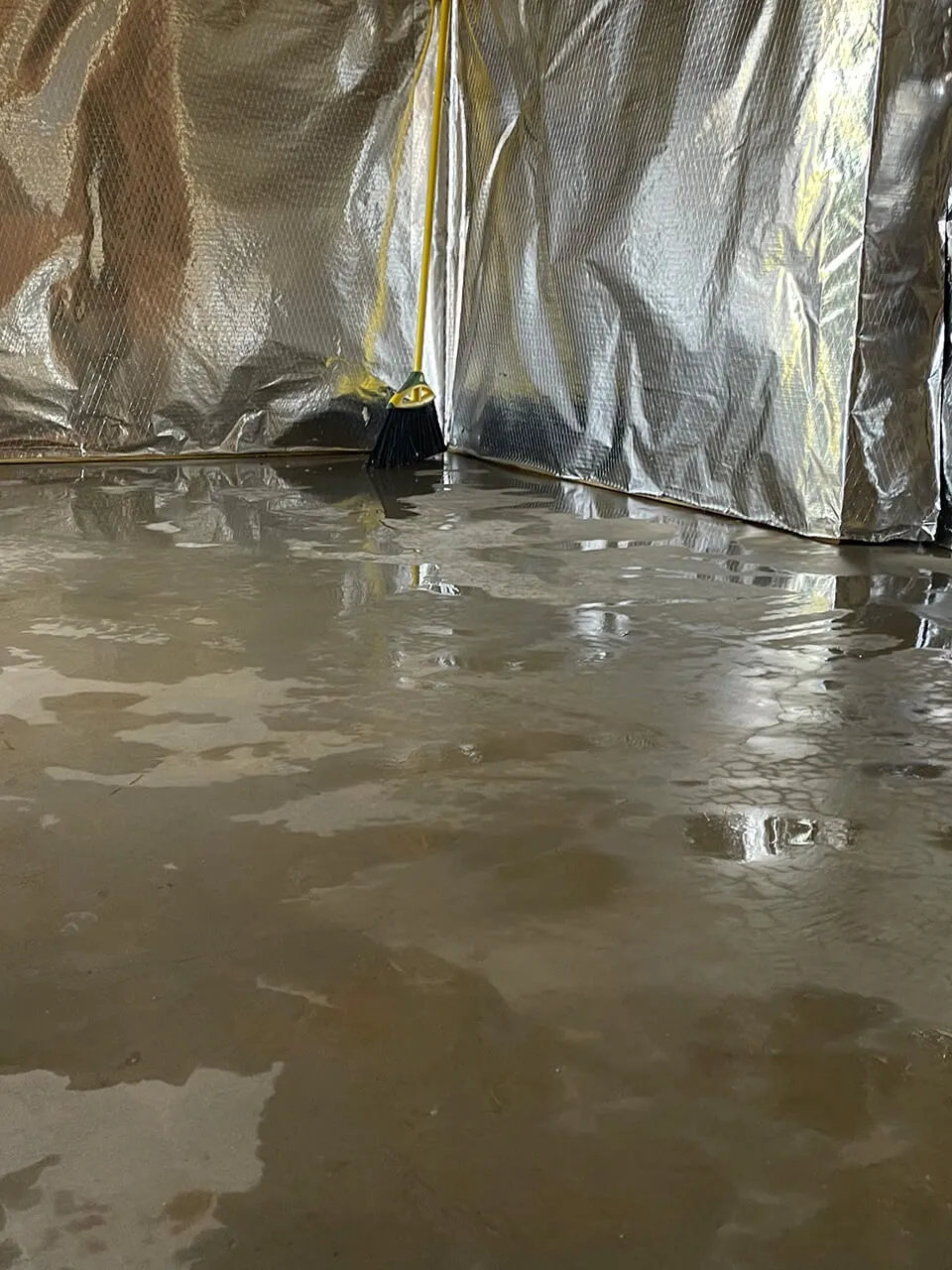
One thing comes before every option on this page. Never step into standing water while the power is on down there. Go to the panel first and kill the circuits feeding the basement, outlets included. If the panel itself is in the wet area, stop and call the power company.
After that, photograph everything before you move a box. The National Weather Service flood safety guidance is worth a skim before storm season, and FEMA’s building science resources cover the long-term side.
While the camera’s out, a word on coverage. Standard homeowners policies typically exclude groundwater seepage, and sump pump failure is usually a separate rider you have to ask for. That’s a five-minute call to your agent on a dry day.

Ever had a diagnosis go the other way?
Often. We had a homeowner near Midvale, off Hugh Howell Road, who had already decided the news would be bad. Their block wall had a slight bow, the finished basement had taken water twice that spring, and they were braced to hear the lower level had to come apart.
The meter said otherwise. Only about nine feet of drywall read wet, all in one corner, while the rest was as dry as the upstairs. Water wasn’t coming through the wall at all — it poured off a plugged window well uphill and ran along the slab.
So they pulled a strip of baseboard and two feet of drywall, ran their own fans two days, and we corrected the drainage outside. The bow was real and got its own plan later, but it wasn’t the leak. Nobody expects the drying company to say “you’ve got this part.”
Twenty years in, the lesson is the same. Measure before you demolish. Half the basements we’re called to don’t need the big version — they need the water stopped and a little patience.
Which one would we pick for your house?
You asked for a recommendation, so here it is. When the water is clean rain, under an inch or so, caught within a day, and sitting on an unfinished floor — handle it yourself. Shop vac, fans across the floor, dehumidifier running, carpet pad out.
Call a crew if any one of these is true: it sat overnight, it’s more than a couple of inches deep, it reached finished walls with insulation behind them, or it came from a sewer line. Sewer water isn’t a drying question at all — it’s a cleaning question first.
There’s a third answer nobody advertises, though. If your basement takes water more than once a year, drying is treatment, not a cure. The real fix is best basement drainage — routing water off before it reaches the wall. Our basement waterproofing page covers the systems we install, and if that bowed block wall is nagging at you, start with foundation repair. Folks up the road get the same comparison for Johns Creek basement drying.

Picture the next storm rolling over Kelley Cofer Park. Rain hammers the roof, the yard fills, and you keep watching the movie. No flashlight run down the stairs, no towels, no wondering. That’s the whole point of sorting the basement drying options Tucker homes need before the sky opens, not during.
Why does a local crew matter here?
Because a crew that understands the granite underfoot looks uphill first, instead of treating every wet wall the same. You’re also calling the same people in year six, not a call center in another state.
Where we work around Tucker
We’re based in Lawrenceville, about twenty-five minutes northeast, so we’re through Tucker constantly. We also cover Lilburn, Stone Mountain, Norcross, Decatur, Clarkston, Doraville, Pine Lake and Brookhaven, plus the wider DeKalb area.
Questions Tucker homeowners ask us
Dry it properly each time, and get the cause looked at once. Water that arrives on a schedule usually comes from a source you can correct outside, which is cheaper than drying the same room every spring. It’s a drainage conversation, not an emergency.
For shallow, clean water on an unfinished floor you caught the same day, honestly yes. Add a dehumidifier and keep the doors and windows shut while it runs. It isn’t enough once water reaches finished walls, sits overnight, or comes from a sewer line.
Mold can begin on wet organic material in roughly 24 to 48 hours. That’s why getting air moving in the first hour matters more than having the biggest equipment. Removing soaked carpet pad, insulation and the bottom of the drywall is the other half.
Kill the power to the basement at the panel before you step into standing water. Then photograph everything for insurance, start extracting, and lift what you can off the floor. After that, get air moving and have someone look at where the water came in.
Because the ground here can only take so much before it hands the rest over. Rain soaks the clay, hits the granite underneath, and travels sideways into whichever wall sits uphill of your house. Steady rain gives the soil time, so a fast storm tips it over.
Let’s figure out what your Tucker basement really needs
The inspection is free, the estimate is free, and there’s no pressure at the end. We’ll show you where the water gets in, say straight out whether this is a weekend job or ours, and put the plan in writing.
(678) 914-5112Serving Tucker and all of Metro Atlanta · $500 off projects over $3,500 · Live support 7am–8pm, 7 days a week