

Standing Water Basement Decatur: How to Read What the Floor Is Telling You
Where the water sits, what it means, and what a fair estimate should actually say — explained plainly.
Somebody stood on your lot a hundred years ago and made a call: dig down a few feet, lay up a wall, pour the floor later. Good work for the time — but nobody was thinking about drainage, because waterproofing wasn’t a trade yet. So a standing water basement Decatur homeowners wake up to after a long rain usually isn’t a new failure. It’s a hundred-year-old decision meeting a wet spring.
Good news? This isn’t a mystery, and it isn’t an emergency either. Water on a floor follows rules, so once you can read them, you’ll know what to ask for — and you’ll recognize a fair estimate when you see one.
Before you go down there
If there’s water on the floor, kill the power to that circuit at the panel before you step in. Not after. Standing water and live outlets don’t mix, so shut it off first and look second.
What did the builder actually decide?
Here’s the thing about a Decatur bungalow. Those houses went up between the twenties and the fifties, mostly by hand, often with stone, brick, or hand-laid block. The wall came first, and the slab got poured against it later — so those two pieces never bonded.
That gap has a name: the cove joint. It runs the whole perimeter of your basement, right where the wall meets the floor. And it isn’t a crack, so patching never quite works. It’s a seam, which is a very different animal.
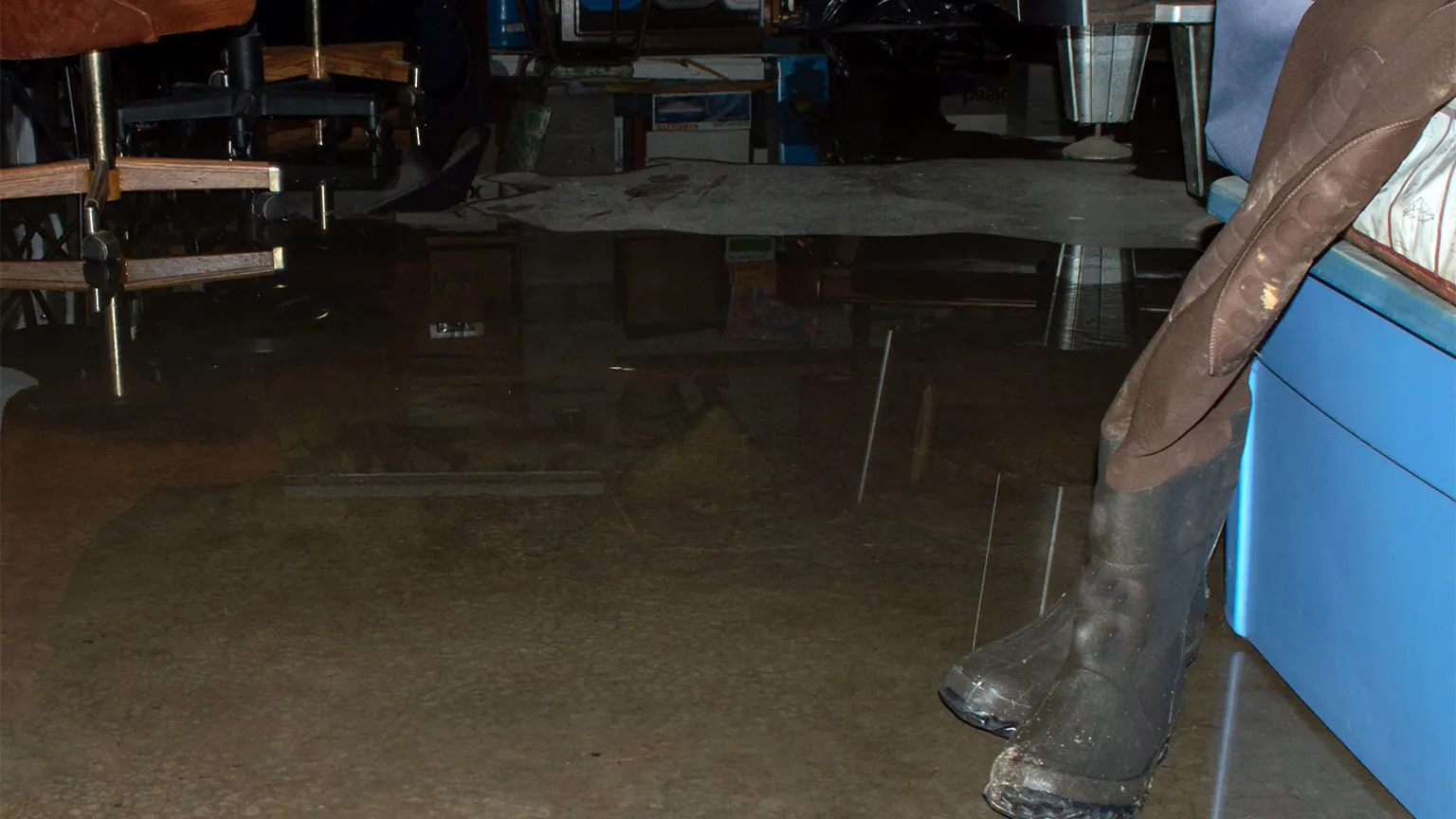
Then add our dirt. Georgia red clay soaks up rain and holds it, so after three wet days the soil against your wall is a saturated sponge that can’t drain. That pressure has to go somewhere. As a result, it pushes straight at the easiest opening — usually that seam, or the hollow cores inside old block.
So your foundation didn’t fail. It got outvoted by the weather, which is a much better story and a fixable one.
Where is the water sitting?
Look before you touch anything, because the map matters more than the amount.
A puddle in one spot. That usually points to something local — a window well with a dead drain, a gap around a pipe, a downspout dumping outside that wall, or one bad stretch of mortar. Local causes often have simpler fixes.
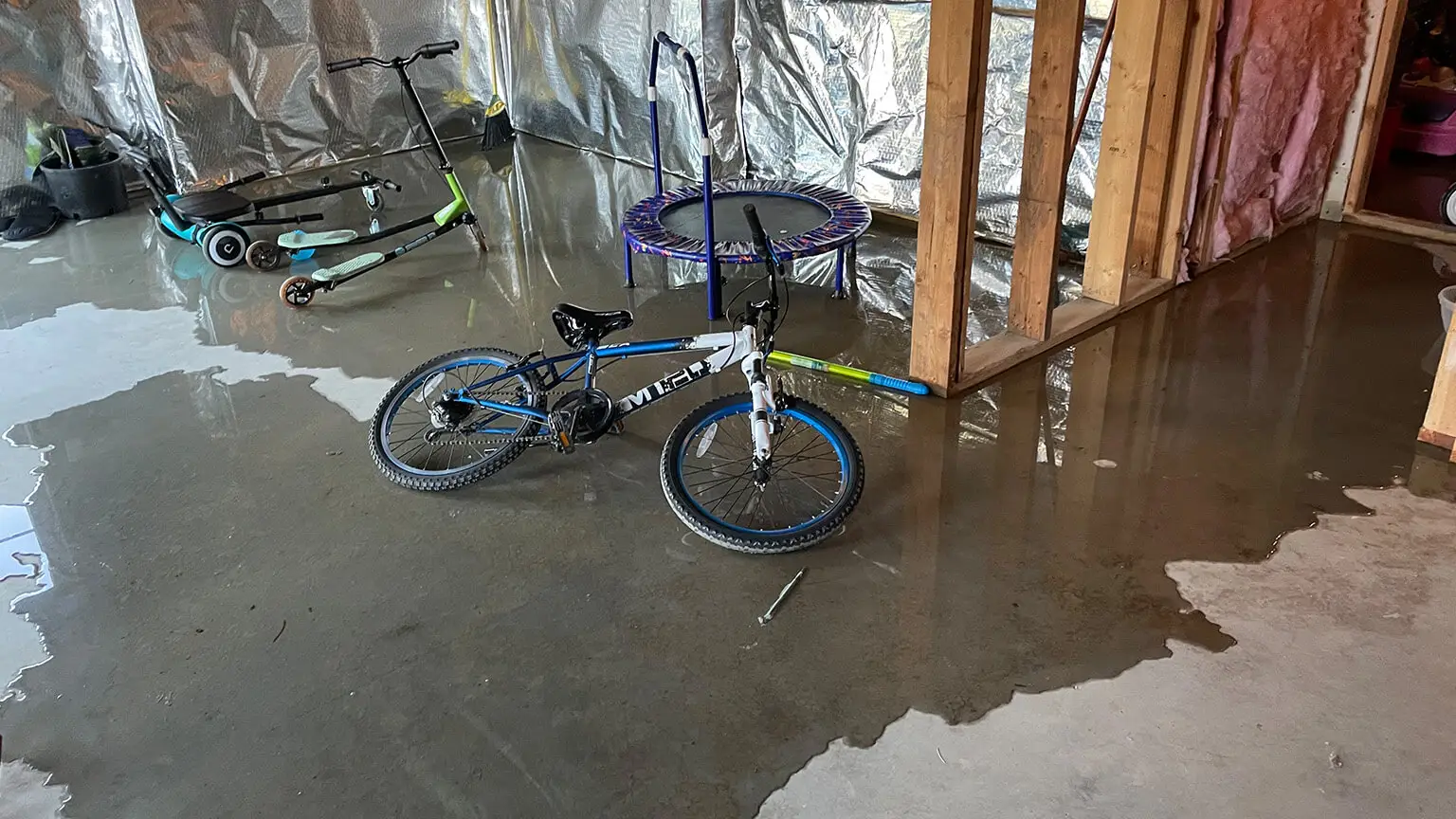
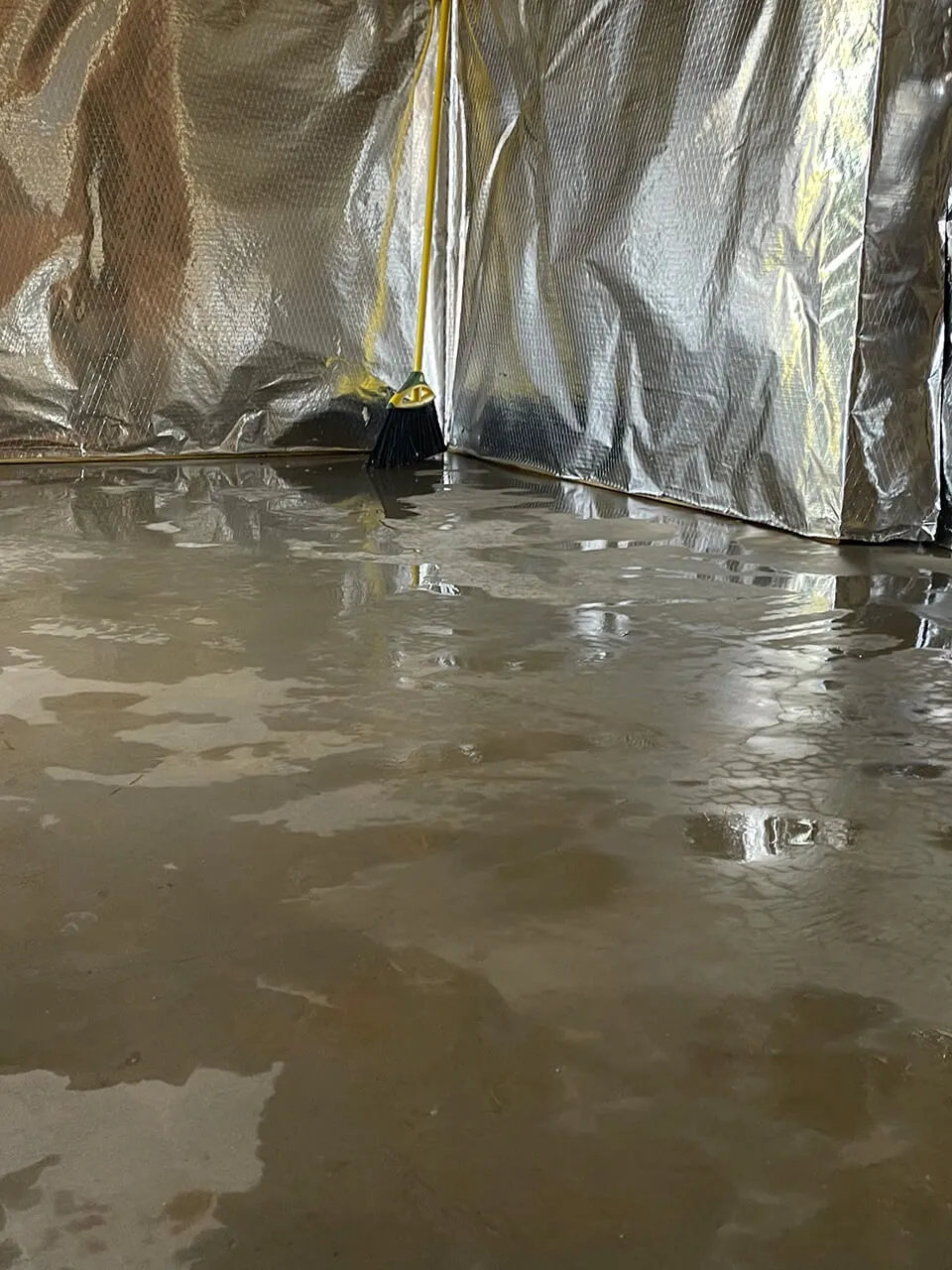
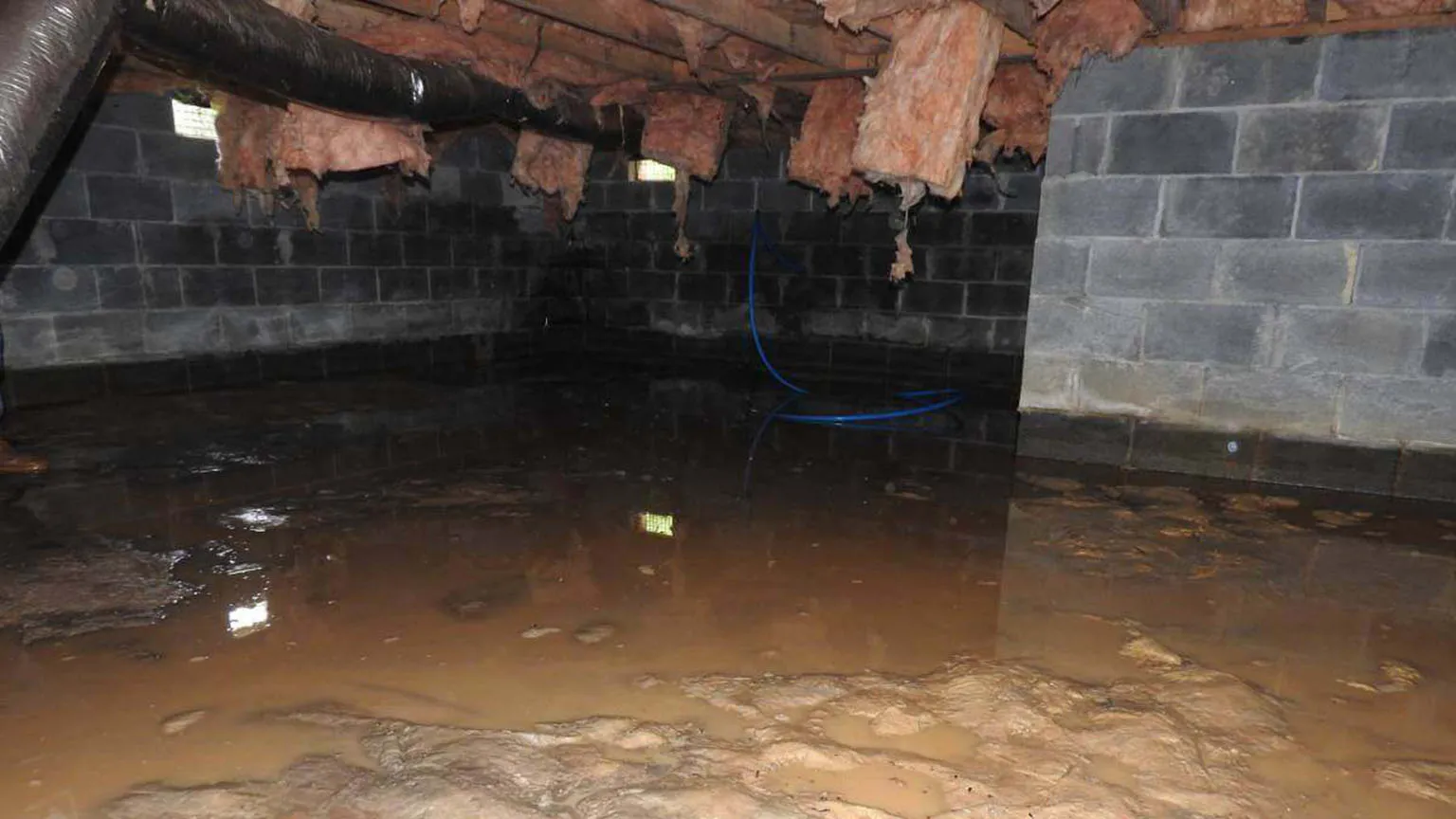
Water spread evenly across the floor. That’s pressure underneath the slab, pushing up through the cove joint all the way around. It’s common in older homes near Oakhurst, where the original grade got buried under a century of added soil.
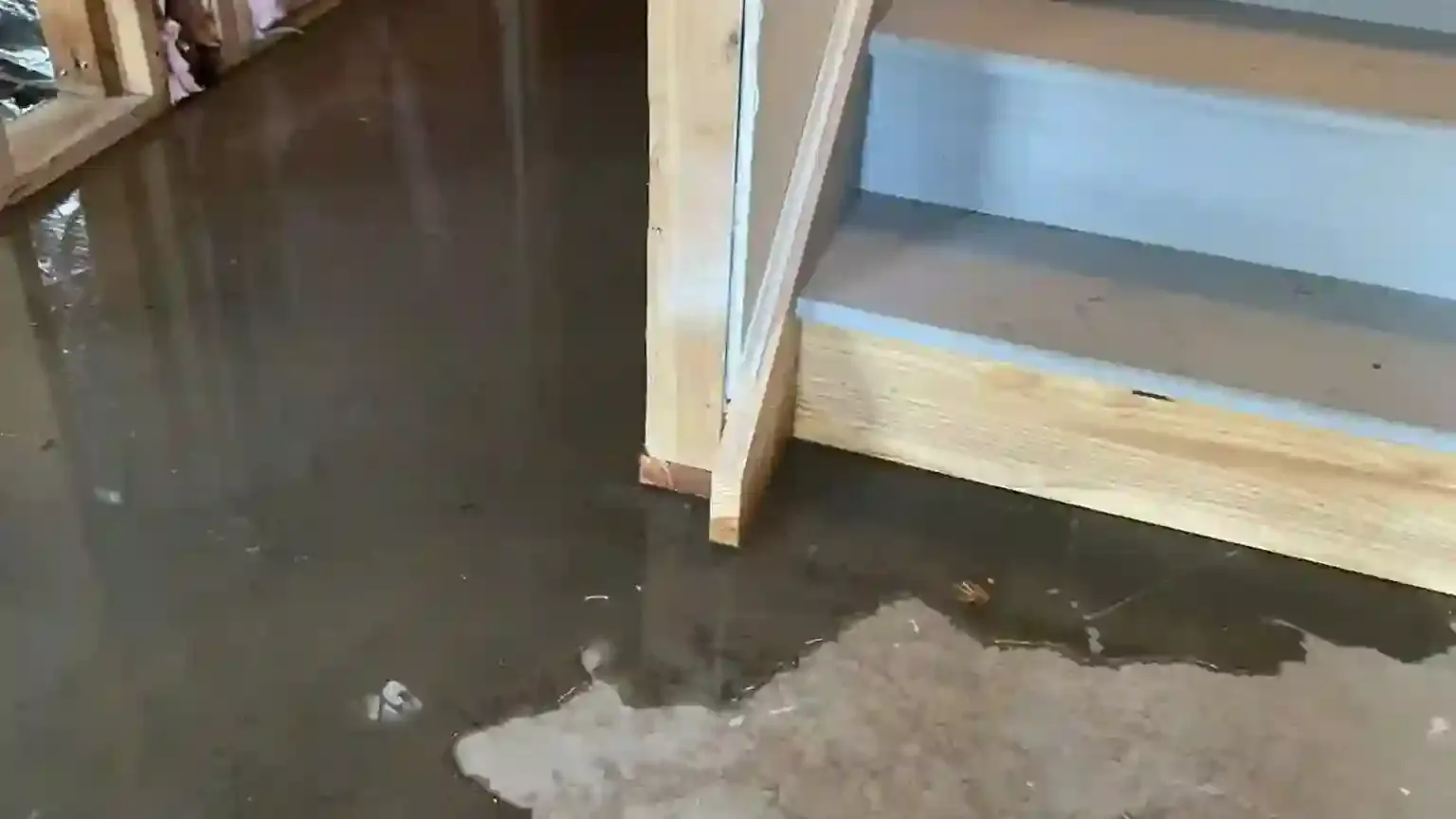
Also check the clock. Water during the storm points to surface runoff, while water a day or two later points to groundwater rising. Either way, your basement shouldn’t be keeping a rain gauge for you.
What happens if it’s left alone? Factually: mold can start on wet organic material — cardboard, paper, wood — in roughly 24 to 48 hours. That’s the real clock, and it’s about the stuff in the room, not the foundation. Dry it out promptly and the urgent part is handled.
Can we back up before you call anyone?
Because one distinction changes every conversation you’re about to have. Standing water is bulk water — not humidity, not vapor moving through concrete. Those are separate problems with separate price tags, and mixing them up is how homeowners buy the wrong thing.
Vapor gets solved with air management. Bulk water gets solved with drainage — a physical path that collects it and carries it out. So if anyone quotes a coating or a dehumidifier for water standing on your slab, you now know enough to ask a better question.
You can’t seal your way out of pressure. Once water arrives in volume, it needs somewhere to go — not something to push against.
This comes up a lot in renovated basements. Somebody finished the space in a hurry, framed over damp block, and the moisture got covered instead of solved. We’ve seen it in beautiful homes over in the MAK Historic District. Good news — the drywall coming off is the annoying part, not the expensive part.
One more piece of homework. Standard homeowners insurance typically excludes groundwater seepage, and sump pump failure coverage is usually a separate rider you add on purpose. So it’s worth a five-minute call to your agent before assuming you’re covered. The FEMA building science library is a good neutral read for the deeper version.
Is the sump pump the culprit?
Sometimes, yes — and pumps fail in boringly predictable ways. That’s helpful, because predictable means checkable.
- Power went out. The storm that needed the pump is the storm that killed the power.
- The float is stuck. Pinned against the pit wall or tangled in a cord, it never tells the pump to start.
- It’s undersized. A small pump handles a drizzle fine, then gets buried by a real Georgia downpour.
- No check valve. Water goes up the pipe and drains right back in, so the pump runs all night and moves nothing.
- The discharge line is clogged. Under that Decatur tree canopy, fall leaf drop buries outdoor discharge points every year.
A pump that’s quiet during a storm is worth a look. So is one running nonstop while the floor stays wet. Either way it’s a component, and components get replaced — cheaper than most people brace for.
So what does the actual fix look like?
Let’s walk it, because you should picture the whole job before anybody hands you a number.
- Find the source. We walk the outside first — grading, gutters, window wells — then read the inside, checking the mortar and the original drain lines.
- Open a channel at the perimeter. A narrow strip of slab comes up along the affected walls. Loud and dusty for a day or two, then done.
- Set drainage below the floor. Perforated pipe in clean stone, under the slab, so water is collected before it reaches your floor.
- Relieve the cove joint. This is the piece that matters most, because water at that seam finally has an easier path than your floor.
- Route it to a proper sump. Correctly sized pump, check valve, sealed lid, discharge carried well away from the house.
- Close it up clean. Fresh concrete over the channel, wall liner where it’s called for, our mess hauled off.
Notice nobody painted anything. A Decatur bungalow was built before basement waterproofing existed as a trade, so the fix has to respect how that old wall breathes instead of fighting it. We’ve done this on homes minutes from Emory University and on quiet streets near Lenox Place, and the approach never changes: stop the source, protect the structure, explain the plan.
Wondering about money? It moves with how many linear feet of wall are involved, how hard the space is to reach, whether finishes come off, and what the pump needs. Our breakdown of basement flooding cost covers every factor, and the systems are explained on our basement waterproofing page. If walls are also moving or cracking, start with foundation repair instead.
Ready for the number that reframes this?
One inch of water across a 1,000-square-foot basement floor is about 620 gallons — roughly 5,200 pounds sitting on your slab. That’s more than two cars, from water you could step over without wetting your ankles.
That number does two things. First, it explains why a shop vac feels like emptying a lake with a spoon. Second, it shows the pressure outside your wall is enormous — which is exactly why drainage beats sealant. For storm-day guidance, the National Weather Service flood safety page is worth a bookmark.
Now picture the other side. The next three-day soaker rolls through and the floor stays dry. Instead of a room you apologize for, you get storage you trust, a workshop, maybe a real finished space — plus you stop reading the forecast like a medical result.
Why does local experience matter on these houses?
Because old foundations here aren’t like the poured walls in a 1998 subdivision. Stone and hand-laid block behave differently, and century-old clay drain lines can quietly soak the soil at your footing. Most of the homes we visit for a standing water basement Decatur inspection sit off College Avenue or over near Your DeKalb Farmers Market, so we know where the water tends to run.
Expect straight answers, too: written scope, proof of insurance, a real warranty, and a crew that explains what it found. Ask us why, in detail — Decatur homeowners always do, and it makes the job better. If a relative closer to us sees the same thing, we cover the Lawrenceville standing water basement crowd as well.
Where we work around Decatur
Our shop sits about 35 minutes northeast in Lawrenceville, so we’re in DeKalb County constantly. Along with standing water basement Decatur work, we cover Avondale Estates, Tucker, Brookhaven, Atlanta, Stone Mountain, Clarkston, Scottdale, Chamblee, Doraville and the wider DeKalb area. Inside the city limits or just outside them, odds are we already have a truck nearby.
Questions Decatur homeowners ask us
Sooner is better, and the target is roughly the first day or two. Mold can begin growing on wet organic material — cardboard, paper, wood, drywall — in about 24 to 48 hours. Get the water out, lift anything porous off the floor, and run air movement. That handles the urgent part while you sort out the permanent fix.
Because the pressure is underneath, not just beside. When saturated clay raises the water table, it pushes up on the slab and finds the cove joint where the floor meets the wall. That seam was never bonded, so it’s the easiest opening in the room. It’s also why floor water usually appears evenly rather than in one spot.
Yes, when the fix matches the cause. Interior drainage under the slab is built to last the life of the house, since it’s just pipe and stone with nothing to wear out. The pump is the one part with a service life, so plan on replacing it eventually like a water heater. Coatings alone don’t hold up against pressure.
It depends on how many linear feet of wall are involved, how easy the space is to reach, whether finishes have to come off, and what the pump needs. A single problem wall with a straightforward pump swap sits at the low end. A full perimeter system in a finished old basement sits much higher. We walk it before we quote it, and the inspection and estimate are both free.
That’s still worth understanding, though it doesn’t mean you have to act today. Occasional flooding usually means the system barely keeps up, so a wetter-than-usual season tips it over. Sometimes the answer is small — a regraded spot, a longer downspout run, a working window well drain. We’ll tell you honestly if that’s all you need.
Let’s find out what’s really happening under your Decatur basement
The inspection is free, the estimate is free, and nobody pressures you at the end. We’ll show you exactly where water gets in, explain the fix in plain English, and put the scope in writing — even when the answer is smaller than you expected.
(678) 914-5112Serving Decatur and all of Metro Atlanta · $500 off projects over $3,500 · Live support 7am–8pm, 7 days a week