

Flooded Basement Repair Lawrenceville Homeowners Can Actually Plan For
What the work involves, what moves the price, and how the next storm stops being a worry.
Is this normal? That’s the question people almost apologize for asking when they call us, usually while standing at the bottom of the stairs looking at an inch of water. So here’s the plain answer, and then the whole guide to flooded basement repair Lawrenceville homeowners keep asking us for. No, it isn’t normal — but it is common, it’s understood, and it’s fixable.
You’ve already decided to hire someone, so this skips the sales talk: what the work is, what moves the number, and what you get in writing.
So what is flooded basement repair, exactly?
Let’s back up a second, because two different problems get called the same thing. Seepage is a damp line along the bottom of a wall after days of rain. Flooding is bulk water — water with somewhere to go and enough push to get there.
That difference matters, since bulk water points at one of four causes: pressure in the soil, a sump pump that quit, a blocked drain line, or a window well with no working drain. Good news? Every one has a known fix.

Repair, then, is two jobs stacked together. First we get the water out and the space dried properly. After that we fix the reason it came in, so drying isn’t something you repeat every spring.
One safety note, calmly
Don’t step into standing water while the power is on. Kill the circuit at the panel first, and if the panel sits in the wet area, call your electrician or the power company. It’s the one part of this we’re firm about.
Why does water come in at the floor?
Here’s the thing most homeowners never get told. The most common entry point isn’t a crack — it’s the cove joint, the seam where your wall meets the floor slab. Those are poured at different times, so they were never one solid piece.
Under pressure, that seam is the easiest opening in the room. Georgia red clay makes it worse, because clay holds water instead of draining it. After a soaking week, wet clay presses on the wall, and on older block foundations that pressure pushes straight through the hollow cores.
Plenty of Lawrenceville homes went up between the mid-seventies and the mid-two-thousands, so we see block walls and poured walls with original drainage that’s decades old. Downtown near the Gwinnett Historic Courthouse the foundations run older still, and that site drainage was never built for today’s rain. None of that is a defect. It’s a service life, same as a water heater.
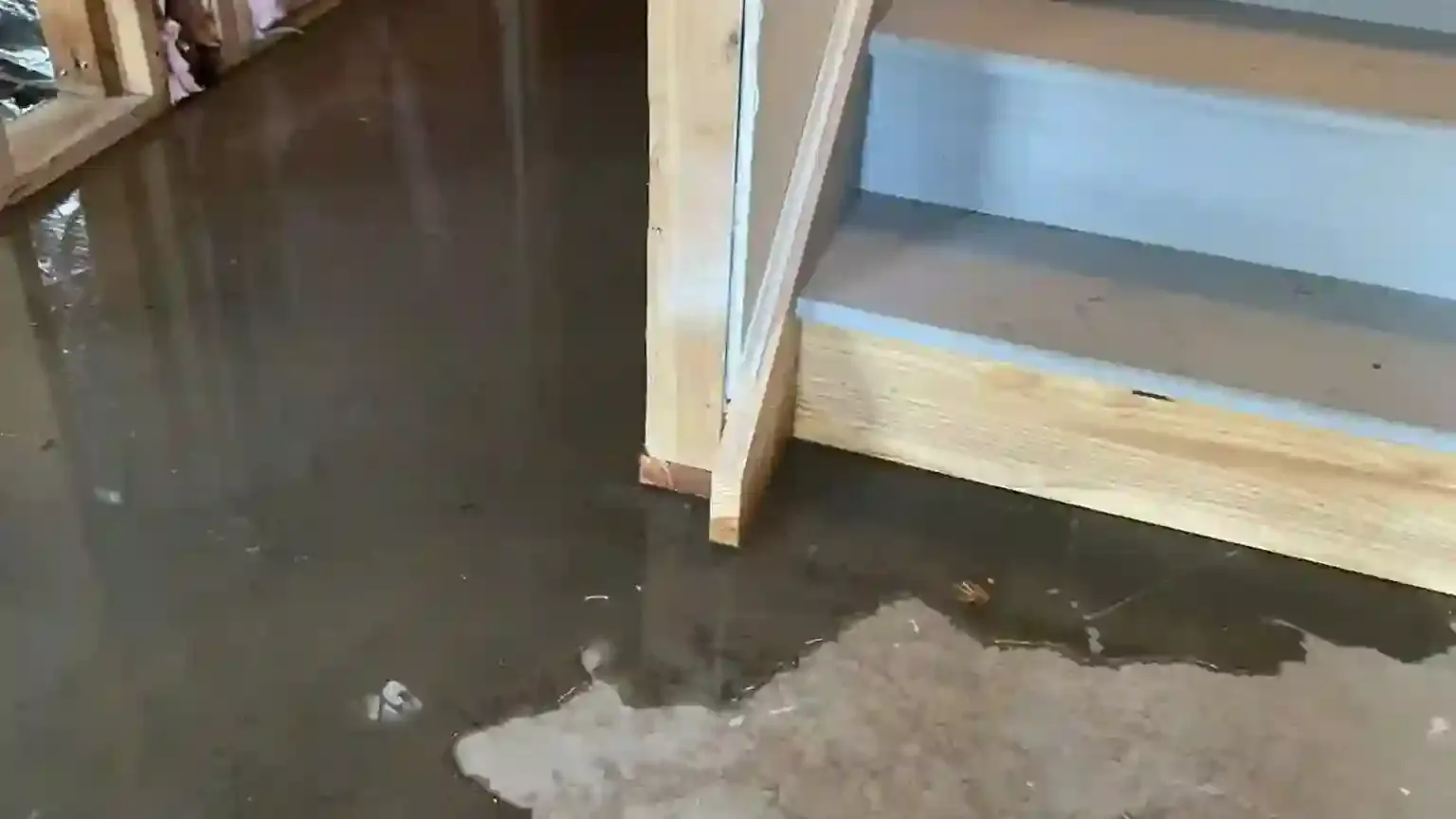
Then there’s the sump pump, which fails in five predictable ways: power goes out mid-storm, the float sticks, the pump was undersized, there’s no check valve so water runs back down, or the discharge line is clogged. Notice a pattern? Nothing exotic — every one is a part you can inspect.
What does a real job look like, start to finish?
Most jobs follow the same shape, so you can picture it before a truck ever parks out front.
- Water out, same day if we can. Pumps and extractors first, because nobody can see the real problem through an inch of water.
- Wet organics out. Soaked carpet pad, cardboard and wet drywall come out. That isn’t cosmetic — mold can begin in roughly 24 to 48 hours, so speed helps.
- Dry it properly. Air movers plus dehumidification, run until moisture readings say done — not until it looks dry, which is a different thing.
- Find the source. We walk the outside — grading, downspouts, window wells — then the inside. Sometimes the whole answer is out in the yard.
- Fix the path. Usually an interior perimeter drain: a channel cut at the slab edge, perforated pipe in clean stone set below floor level, routed to a sump basin.
- Pump and discharge. A properly sized pump, a check valve, and a line that carries water well away from the house instead of dropping it beside the foundation for a rematch.
- Close it up clean. Fresh concrete over the channel, wall liner where needed, our mess hauled off. A pile of broken slab by your garage is not a finish.
Most run one to three days. A finished basement takes longer, since there’s careful work before the real work begins.
Twenty years in, the lesson that changed how we work is simple: you don’t block water, you give it a better path than the one through your house.
Why are two estimates thousands apart?
Ready for the part that explains almost every confusing quote you’ll get? Two companies can look at the same basement and price two different jobs — and both numbers can be honest.
One is pricing cleanup: water out, dry it, done. The other is pricing cleanup plus the drainage that keeps it from happening again. Same house, wildly different scope. So read the scope line by line before you look at the total.
Other things move the number quietly. Is the pump replaced or reused? Is the discharge line re-routed or just reconnected? What’s more, some quotes include a battery backup and some don’t — which matters, because the storm that floods your basement is the same storm that kills your power.
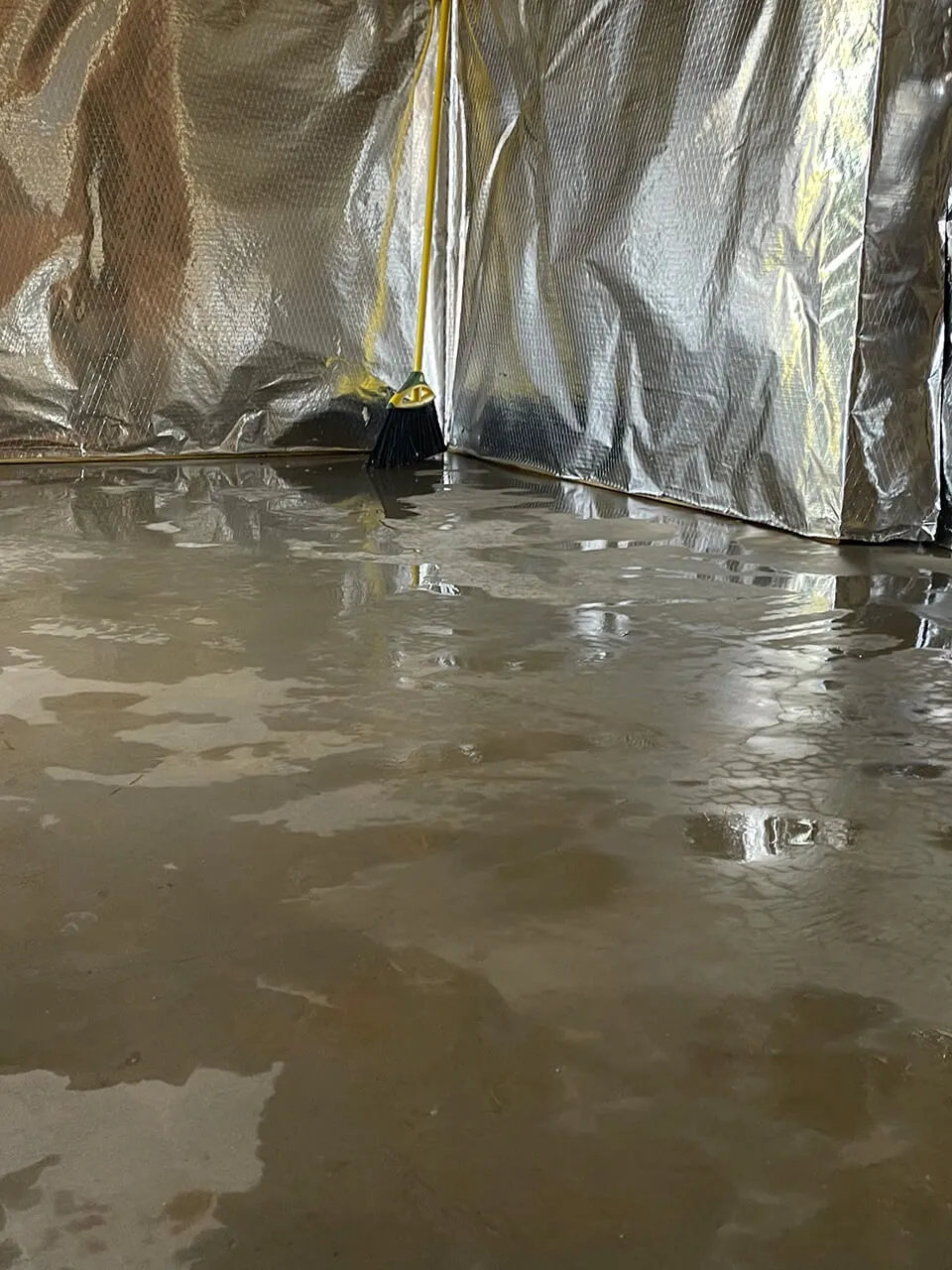
While we’re being straight with each other, let’s talk insurance. Standard policies commonly exclude surface flooding and groundwater seepage, and sump pump coverage is usually a separate rider you add on purpose. Check your own policy rather than take our word for it, and FEMA’s guidance on protecting property from flooding is a good place to read up.
What does it cost?
Straight answer: it depends on how much wall is involved and how hard it is to reach. Anyone quoting a flat price sight unseen is guessing, and you’d be paying for that guess. Here’s what we weigh.
What moves the price up or down
- Linear feet. One wall versus a full perimeter is the single biggest factor, by a wide margin.
- Access. An open basement is straightforward. Built-ins and finished rooms add demo and rebuild time.
- Sump work. Some homes have a serviceable basin. Many around here still have the one that came with the house in 1996.
- Outside conditions. Grading, downspouts and a silted-up footing drain sometimes carry most of the blame — a smaller ticket, which we’ll gladly tell you.
- Wall condition. If a wall is cracked or bowing, structural work comes first. Drainage over a moving wall is money spent twice.
- Backup power. A battery backup adds cost, then earns it back the first night the lights go out.
Small drainage corrections and a pump swap land at the low end. A full perimeter system with a new sump, backup power and careful work around finished space sits at the high end. Most flooded basement repair Lawrenceville projects land somewhere between, and after we walk your house you get a written number with the scope spelled out plainly.
What’s included? Labor, materials, the concrete we replace, haul-off, and the warranty on the system — transferable, in writing, before work starts. What isn’t? Rebuilding finished walls we opened, replacing ruined flooring or contents, and structural repair, which is priced separately. Better you hear that now than find it in fine print.

What do week one, year one, and year ten look like?
Want the part nobody describes? Not the job — the years after it. That’s really what you’re buying.
Week one. The concrete cures, the dehumidifier runs, and the room smells like a room again. You’ll probably test the pump by pouring a bucket into the basin, which we encourage. Everybody does it, and it’s oddly satisfying.
Year one. Spring storms roll through Gwinnett, the ground stays soaked, and your floor stays dry. A homeowner out toward Rivermist told us the strangest part was going to bed during a downpour without thinking about it at all.
Year ten. The stone and pipe under your slab have nothing to wear out, so they’re still working. The pump is the part with a service life, so plan on a replacement around year ten. Plus, if anything needs attention, you’re calling the same company — not a franchise number in another state.

If you like watching radar anyway, the National Weather Service flood safety pages are worth a bookmark. After the fix, though, you’ll be watching for fun.
Why does hiring somebody local matter here?
Because a warranty is worth exactly as much as the company behind it. We’ve been fixing basements in Lawrenceville for over twenty years, and this is home — not a territory. Odds are good we’ve already worked on a house in your neighborhood, maybe on your street.
Local also means we know the housing stock. We know how the older block walls behave, we’ve worked the sloped lots along the River Club edge, and we’ve been under newer poured foundations out by the Sugarloaf Country Club edge. From the ballfields at Alexander Park to the streets feeding GA-316, University Parkway, this is ground we cover weekly.
Still sorting out what you’re dealing with? Our guide to standing water basement problems covers the early symptoms, and every system we install is laid out on our basement waterproofing page. Comparing notes with family a few minutes south? We cover the same ground for Snellville flooded basement repair. If you’re also seeing stair-step cracks or a sticking door, our foundation repair guide is the better read.
Where we work around Lawrenceville
We’re based right here in Lawrenceville, so most days we’re ten minutes from your driveway. We also work throughout Snellville, Grayson, Dacula, Suwanee, Duluth, Lilburn and Loganville, plus the wider Gwinnett area. Near the Square, along Collins Hill, or east toward the Alcovy — there’s usually a truck nearby.
Questions Lawrenceville homeowners ask us
Often less than people expect. Standard policies commonly exclude surface flooding and groundwater seepage, and coverage for sump pump failure is usually a separate rider you add on purpose. Pull up your own policy or call your agent before you assume either way, because the answer really does vary by carrier.
Faster is better, and roughly 24 to 48 hours is the window worth aiming for. Get standing water out, pull wet carpet pad and cardboard, then run dehumidification until moisture readings come down. Drying quickly also keeps the repair simpler and cheaper.
Because the cove joint where the wall meets the slab is a seam, not a crack, and seams are the easiest opening when soil pressure builds. Wet red clay holds water against the foundation, so it pushes in at the weakest point. That’s why drainage below the slab works better than any coating painted on top.
A properly built system handles the water permanently, since the stone and pipe under your slab have nothing to wear out. The moving parts are the exception, so a pump usually needs replacing around year ten. Keep the discharge line clear and test the pump twice a year, and you’re in good shape.
It ranges widely, because scope drives everything. Drainage corrections outside and a pump replacement sit at the low end, while a full perimeter system with a new sump and backup power in a finished basement sits at the high end. We walk the house, then hand you a written number with the scope spelled out — and the inspection costs nothing.
Let’s find out where the water is getting into your Lawrenceville basement
The inspection is free, the estimate is free, and nobody pressures you at the end. We’ll show you the entry point, explain the fix in plain words, and tell you honestly if it’s simpler than you expected.
(678) 914-5112Serving Lawrenceville and all of Metro Atlanta · $500 off projects over $3,500 · Live support 7am–8pm, 7 days a week