

Flooded Basement Repair in Cumming: What It Involves and What It Costs
Water on the floor, a pump that quit, and the plain version of how this gets fixed.
It’s two in the morning, the rain hasn’t let up in hours, and you’re lying there thinking about the basement stairs. Maybe you already went down with a flashlight and found the floor shining back at you. This guide to flooded basement repair Cumming homeowners can actually use was written for that moment.
Here’s the good part, up front. This is fixable, and it’s work we’ve done every week for more than twenty years. Below is the honest version — the job, the cost drivers, what’s covered, and why hiring somebody down the road matters.
Is this flooding, or is it seepage?
Good question to open with, because the two get treated the same and shouldn’t be. Seepage is slow: a damp line along the base of the wall, a musty corner, maybe a chalky bloom on the block. Flooding is bulk water — it arrives fast and it puddles.
When water shows up in bulk, the cause is usually one of four things: pressure in the soil, a sump pump that quit, a drain line that’s clogged or crushed, or a window well with no working drain that filled up like a bucket. Each one has a fix.

Now for the spot it usually comes through: the cove joint, the seam where your basement wall meets the floor slab. People hunt for a crack and can’t find one, because it isn’t a crack — it’s a seam, and seams give first when pressure builds. So if you’ve been staring at a wall with a flashlight feeling like you’re missing something obvious, you’re not.
Why does the pressure build? Georgia red clay holds water instead of draining it, so after a long rain the soil against your wall stays saturated and keeps pushing. On block walls, water works into the hollow cores, fills them, then finds the seam. That’s why the floor can be wet while the wall above looks fine.
Before anything else
Never step into standing water while the power is still on. Kill the circuit at the panel first, and if the panel itself sits in the wet area, call your electrician or the power company.
What does a real job look like, start to finish?
Most flooded basement repair Cumming jobs follow the same shape, so you can picture it before a truck ever parks in your driveway.
- Water out, fast. Standing water gets pumped and extracted, not chased with a shop vac. One inch across a 1,000-square-foot basement is more than 600 gallons — which explains why a wet-vac feels like emptying a pool with a coffee cup.
- Wet organics out. Soaked carpet, pad, cardboard and the bottom of the drywall come out, because those hold water long after the floor looks dry.
- Dry it properly. Air movers plus a real dehumidifier, running until the materials read dry.
- Find the source. We walk the grade outside, check downspouts, test the pump and scope the discharge line. Often the cause is out in the yard.
- Fix the path. Usually an interior channel at the perimeter with perforated pipe in clean stone, set below the slab so water gets caught before it reaches your floor.
- Route it away. Everything drains to a sump basin, and the pump sends water well away from the house instead of beside it, where it would just line up for another turn.
- Close it up. Fresh concrete over the channel, wall liner where needed, and our mess hauled off.
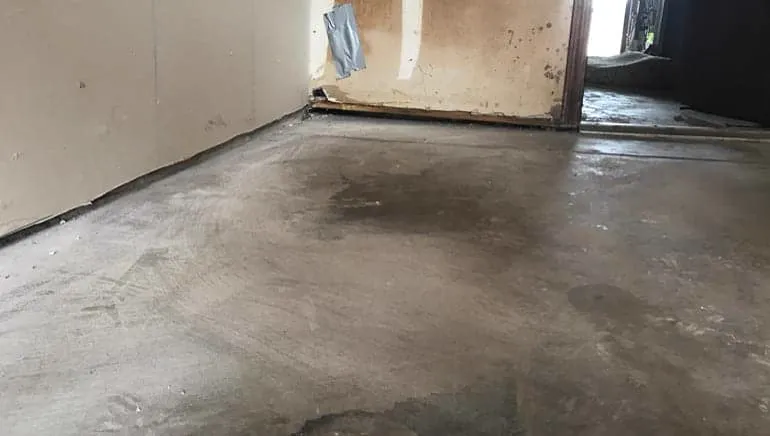
Notice what nobody did? Paint anything. Waterproof coatings are fine for what they are, but a coating can’t beat pressure. That’s a raincoat on a submarine.
Why the sump is usually the first suspect
Pumps don’t fail randomly. They fail five predictable ways: power goes out during the very storm you needed it for, the float sticks, the pump is undersized, there’s no check valve so water drains back into the basin, or the discharge line is clogged. That’s the whole list, and every item has a straightforward fix.
Which is why a battery backup earns its keep. Plenty of homes around Windermere lost power in the same storm that put water on the floor, and the pump was fine — it just had nothing to run on.
Twenty years in, the thing that changed how we work is simple: we stopped trying to block water and started giving it somewhere better to go.
What changed our thinking after twenty years?
Ready for the part that rarely makes a sales pitch? We stopped treating the basement as the problem. It’s only where you see it. The problem almost always starts eight feet outside your wall, in the dirt.
That shift changed what we quote. A lot of Cumming homeowners are surprised to find water in a house that still feels new, and honestly that reaction makes sense. Much of South Forsyth went up between the late nineties and the late 2010s, and twenty years is right about when builder-grade waterproofing starts giving up: the footing drain silts in, the backfill settles and tips grade back toward the house, and the original pump reaches the end of its run. None of that is a defect. It’s a service life, same as a water heater.
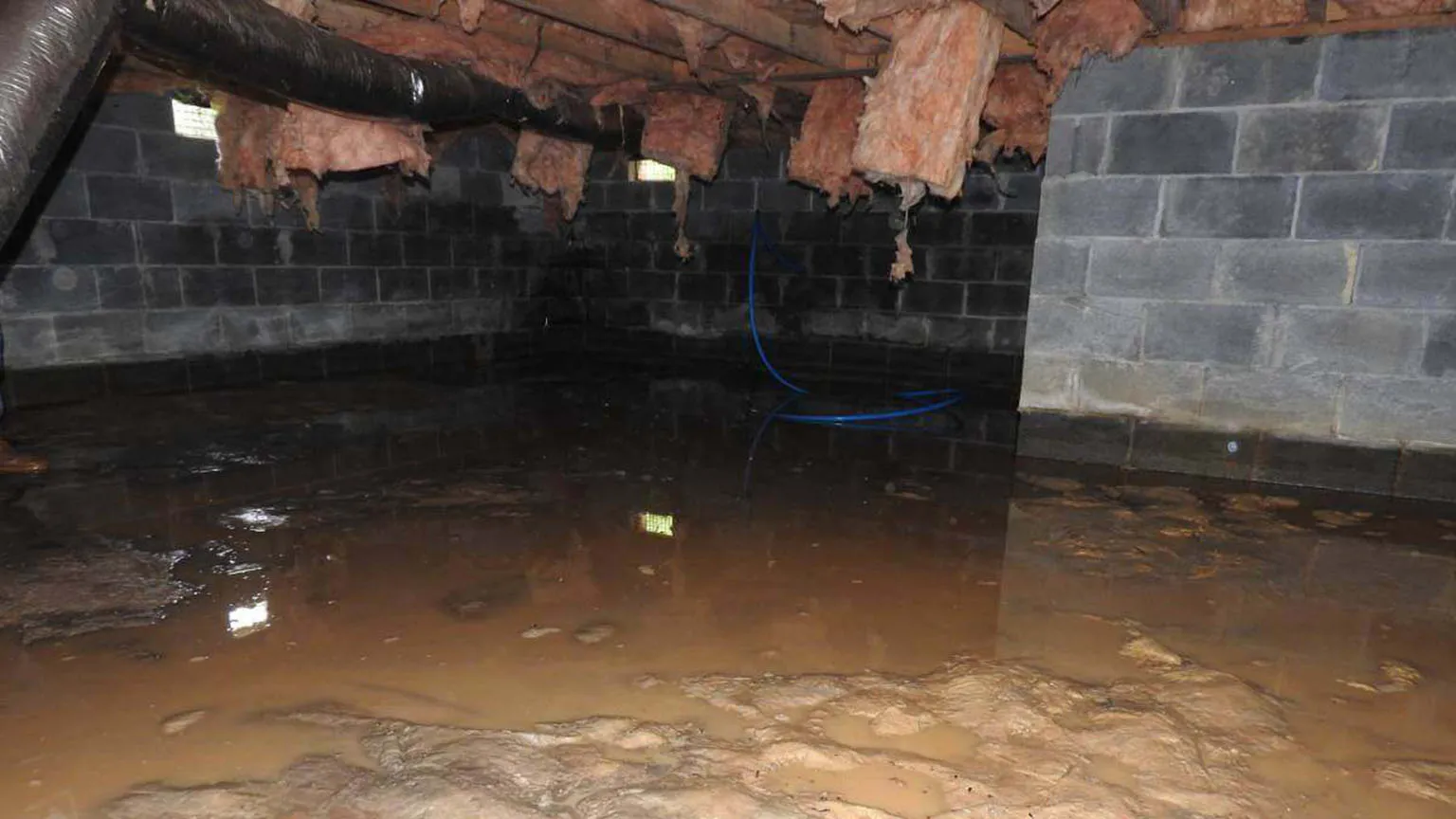
Terrain matters too, and it changes fast around here. Lots on the slopes near Sawnee Mountain Preserve take uphill runoff every storm, while lots closer to Lake Lanier can sit over a genuinely high water table. Two houses ten minutes apart, two different fixes — so we don’t sell one product. Sometimes the answer is a full system. Other times it’s a regrade, two buried downspouts and a properly sized pump, and we’ll say that out loud even though it’s a smaller invoice. For a plain-language primer, FEMA’s building science guidance is worth ten minutes.
So what does it cost?
Straight answer: it depends on how much wall is involved and how hard that wall is to reach. Anyone quoting a flat number sight unseen is guessing, and you’d be paying for the guess. Here’s what we weigh.
What moves the number up or down
- Linear feet. One wall versus a full perimeter is the biggest factor by far.
- Access. An open basement is simple. A finished one with built-ins costs more, because there’s careful work before the real work.
- Pump and backup. Reusing a good basin is cheap. A new basin, a properly sized pump and a battery backup add real cost.
- How much drying is needed. A damp slab is short. Soaked carpet, pad and drywall means removal, hauling and days of dehumidification.
- What’s happening outside. Grading, downspouts and a dead footing drain often carry most of the blame. Smaller ticket, and we’ll tell you.
- Wall condition. Cracked or bowing walls mean structural work comes first. Waterproofing over a moving wall is money spent twice.
Small drainage corrections and a pump swap sit at the low end of flooded basement repair Cumming pricing. A full perimeter system with a new sump, backup power and careful work around a finished space sits at the high end. Most jobs land somewhere in between, and after we walk your house you get a written number with the scope spelled out on it.
What’s included? Labor, materials, the concrete we replace, hauling, and the warranty in writing before we start. What isn’t? Rebuilding finished walls we opened, replacing ruined flooring, and structural repair, which gets priced on its own. Better you hear that now than in fine print later.
One honest note on insurance: standard homeowners policies commonly exclude surface flooding, and sump failure coverage is usually a separate endorsement you have to add. So call your agent and ask about your policy before you assume either way.
What does a wet basement have to do with your air?
More than most people expect. Air doesn’t stay in the basement — it rises through the house, so whatever the basement smells like, upstairs is quietly breathing a version of it.
That’s the real reason drying speed matters. Mold can begin growing in wet materials in roughly 24 to 48 hours, which is why we haul soaked carpet and pad out the same day instead of hoping a fan sorts it out. The CDC’s guidance on mold cleanup after flooding lays out the same timeline.
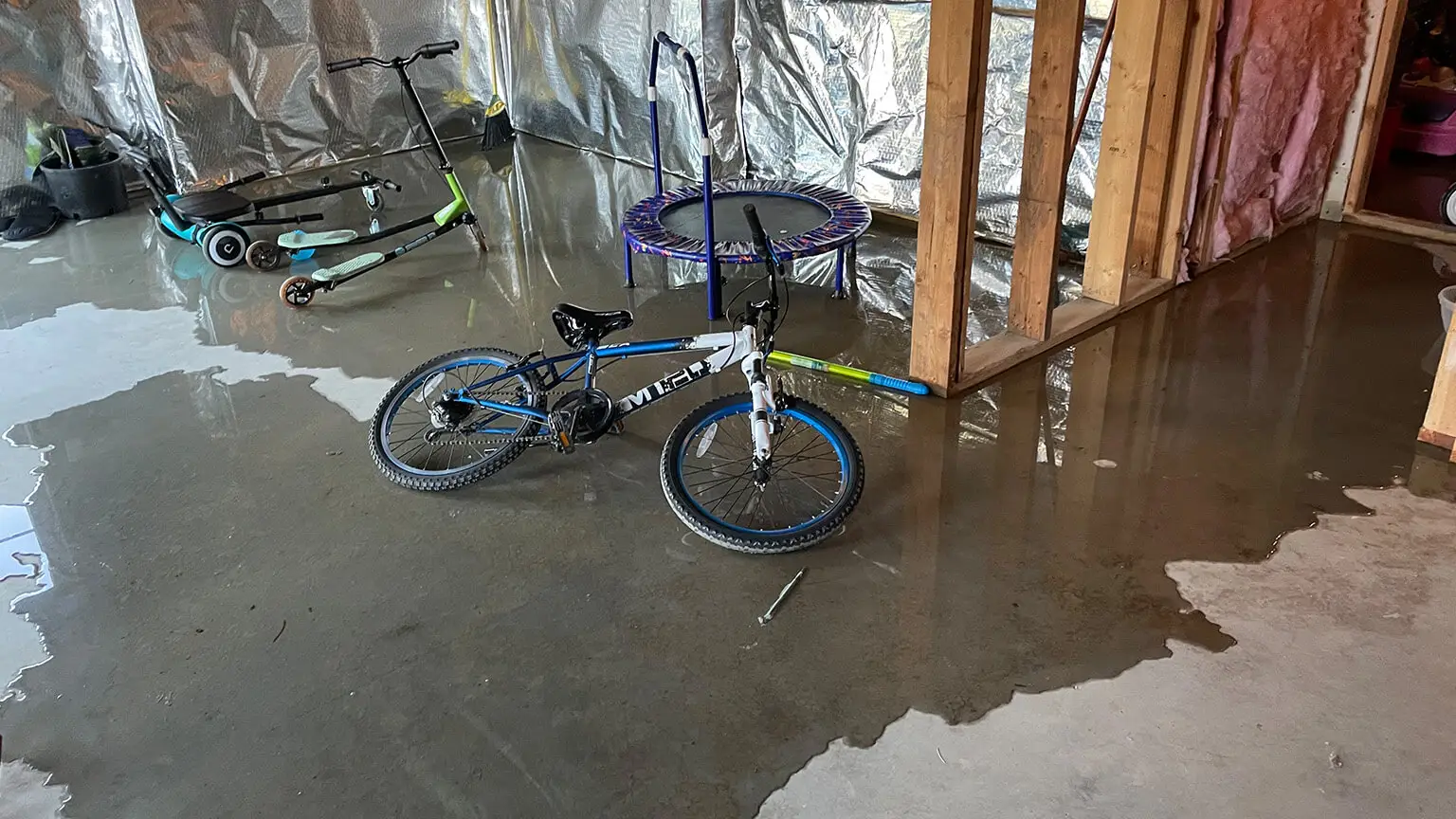
So picture the after. Dry slab, clean white liner, a dehumidifier humming in the corner, and a basement that smells like nothing at all. The bikes go back down. Better yet, the next long storm rolls through and you sleep straight through it, because there’s nothing down there that needs checking.

Why does hiring local matter here?
Because a warranty is only worth as much as the company behind it. We’ve been at this over twenty years, and our shop sits about thirty minutes down GA-400 in Lawrenceville. If something needs a look in year six, you’re calling the same people who did the work.
Local also means we know the ground. We’ve worked the walkout basements around Polo Golf & Country Club, the older poured walls on the St. Marlo edge, and plenty of homes minutes from The Collection at Forsyth.
Still sorting out what you’re dealing with? Our guide to standing water basement problems covers the early symptoms, and every system we install is on our basement waterproofing page. If walls are cracking or a corner is settling, start with foundation repair. Family in town dealing with the same thing? We cover Decatur flooded basement repair too.
Where we work around Cumming
We’re based in Lawrenceville, so Cumming is a straight shot up GA-400. We work throughout Alpharetta, Milton, Suwanee, Buford, Gainesville and Dawsonville, plus Sugar Hill, Johns Creek and Duluth and the wider Forsyth County area. If you’re anywhere in South Forsyth, odds are good we’ve got a crew nearby this week.
Questions Cumming homeowners ask us
Kill the power to the basement at the panel before you step into any water. After that, get the bulk water out and pull up soaked carpet, pad and cardboard, since those hold water the longest. Then call us and we’ll come look at why it happened, because moving water out is only half the job.
Because red clay holds water against your wall instead of draining it away. After a long rain the soil stays saturated, pressure builds, and water pushes through the cove joint or the hollow cores of a block wall. Short showers never load the soil enough to do that, so the basement stays dry.
Sometimes, but standard policies commonly exclude surface flooding and groundwater, and sump pump failure is usually a separate endorsement you have to add on. Every policy is written a little differently, so call your agent and ask about yours specifically. It’s a five-minute call worth making before you need it.
Quickly. Mold can start growing in wet materials in roughly 24 to 48 hours, so the goal is bulk water out, wet organics out, then real dehumidification running until materials read dry. A fan and an open window won’t get there on its own.
That’s the cove joint, the seam where the wall meets the floor slab. It isn’t a crack, it’s a joint, so it’s the first place water goes when pressure builds under the slab. The fix is drainage set below the floor that catches water before it reaches the seam.
Let’s find out what’s really going on under your Cumming home
The inspection is free, the estimate is free, and nobody pressures you at the end. We’ll show you where water is getting in and what it takes to stop it — even if the answer is simpler than you expected.
(678) 914-5112Serving Cumming and all of Metro Atlanta · $500 off projects over $3,500 · Live support 7am–8pm, 7 days a week