

Flooded Basement Repair in Buford: What It Involves and What It Costs
Water on the floor, a phone in your hand, and a plan that actually holds.
“There’s water all over my basement floor and I don’t know where it came from.” That’s the call, almost word for word, a few dozen times every spring. So if you’re standing at the bottom of the stairs right now, here’s the honest, unhurried version of how flooded basement repair Buford homeowners actually need gets done — the work, the money, and what you get in writing.
First, the good part. This is a solved problem. Water got in because it found an easy path, and paths can be changed.
One safety note, then we’ll move on
Never step into standing water while the power is still on down there. Kill the circuit at the panel first, or call an electrician if the panel itself sits in the basement.
Is a flood the same thing as a leak?
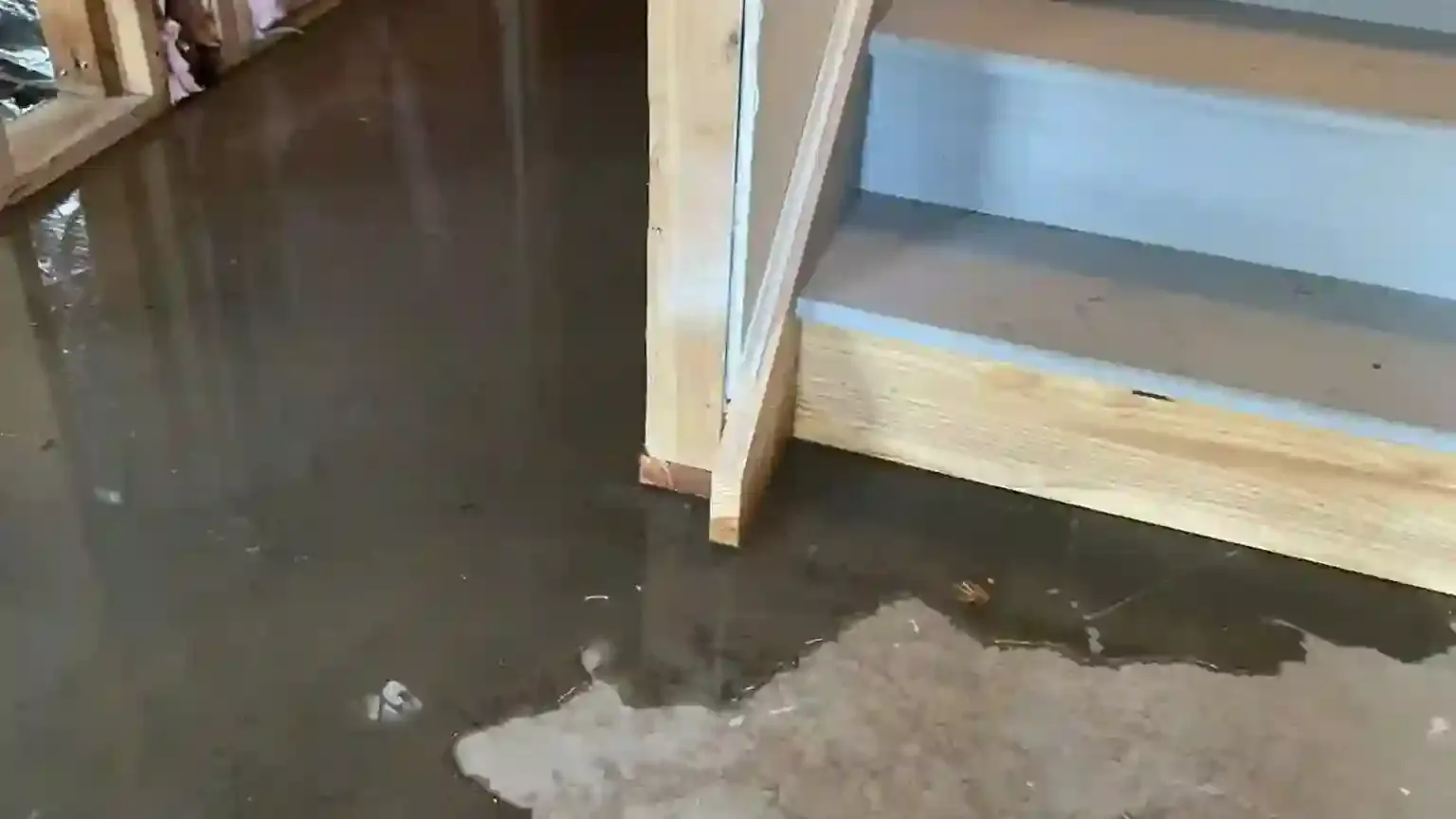
No, and that difference decides the whole repair. Seepage is slow. It shows up as a damp line, a musty smell, or a chalky bloom on the block. Flooding is bulk water — it arrives fast, and it means something bigger let go.
Bulk water usually traces back to one of four things: hydrostatic pressure under the slab, a sump pump that quit, a drain line that’s blocked, or a window well with no working drain. That’s the short list, and we can normally tell which one you’ve got in about twenty minutes.

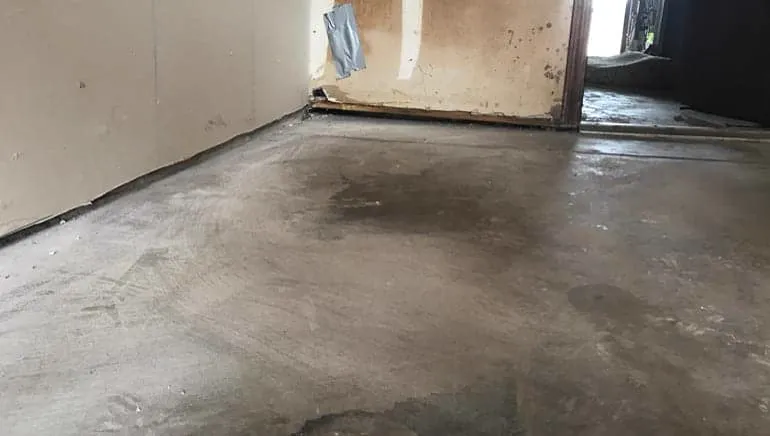
Where does it come in? Most often at the cove joint — the seam where your basement wall meets the floor slab. It isn’t a crack and it isn’t damage. The wall and the floor were poured at different times, so under pressure that seam is simply the easiest door in the house.
Then there’s our dirt. Georgia red clay holds water like a sponge that never quite wrings out, so it stays saturated against your wall after a long rain. Pressure builds, and on block foundations it pushes straight through the hollow cores. Living near Lake Lanier is wonderful right up until the water table decides your basement is part of the lake.
What does the actual repair look like?
Start to finish, a full job runs in two stages: dry it out, then stop it from happening again. Skipping the second stage is how people end up doing this twice.
- Water out first. Pumps and extractors, not a shop vac. Standing water leaves the same day whenever we can manage it.
- Wet organics out next. Soaked carpet pad, drywall bottoms, cardboard boxes. These hold moisture long after the floor looks fine.
- Then we dry the structure. Air movers plus a real dehumidifier, running until the wood and concrete read dry on a meter.
- We find the source. Grading, downspouts, window wells, the sump, the discharge line — before anybody prices a system.
- We build the permanent fix. Usually an interior perimeter channel with perforated pipe in clean stone, set below slab level and routed to a sump that throws water well away from the house.
- We close it up. Fresh concrete over the channel, wall liner where it’s needed, and our mess leaves in our truck.
Why does drying speed matter? Because mold can get started in roughly 24 to 48 hours in a wet, closed space. That’s not a reason to panic — just a reason to call today instead of Thursday. The CDC’s guidance on mold after flooding is a calm read if you want it from a neutral source.
Want the good news about the price?
Here’s the thing nobody expects a waterproofing company to say: the expensive-sounding version usually isn’t the one you need. Callers have already pictured excavators in the yard and a five-figure invoice. That’s rarely where it lands.
Sump pumps fail in predictable ways, and a surprising share of “floods” are really just a dead pump. Power goes out mid-storm. A float gets stuck against the basin wall. The pump is undersized for the water it’s being asked to move. There’s no check valve, so every cycle drops water right back down the pipe. Or the discharge line outside is clogged with mud and roots, which means the pump runs beautifully and moves nothing at all.
Any one of those is a same-day fix on a small invoice. We had a homeowner near Ivy Creek convinced they needed a full system after two bad springs. The real culprit was a discharge line crushed under a new patio, and their basement has stayed dry ever since.
So when we walk your house, we’re aiming for the smallest fix that will actually hold. Not because we’re generous — because the wrong system gets us a callback in nine months, and we’d rather earn your neighbor’s number than repeat your job.
The most useful thing we do isn’t the pipe or the pump. It’s telling you which of the two conversations you’re actually in.
So what does it cost in Buford?
Straight answer: it depends on how much wall is involved and how hard that wall is to reach. Anyone who quotes you a flat number over the phone is guessing, and guesses get padded. Here’s what we’re weighing instead.
What moves the number
- Linear feet. One wall versus a full perimeter is the single biggest factor, by a mile.
- Access. An open basement is quick work. A finished one in Chateau Forest with built-ins and a media wall costs more, because there’s careful work before the real work.
- Sump situation. Some homes have a good basin already. Many out along the Village at Deaton Creek edge have the builder pump from twenty years ago, still trying its best.
- Backup power. A battery backup adds cost, and it runs during the exact storm that takes your power out. Those two facts are related.
- Outside work. Regrading, buried downspout lines, or a window well drain — often the cheapest line item with the biggest effect.
- Wall condition. Bowing or active cracking means structural repair goes first.
Small corrections — a pump swap, a discharge repair, downspout extensions — sit at the low end and often wrap in one visit. A full perimeter system with a new sump and battery backup sits at the high end. Most flooded basement repair Buford jobs land somewhere in the middle, and you get a written scope before anyone picks up a hammer.
What’s included? Labor, materials, the concrete we replace, hauling, and a written warranty on the system. What isn’t? Rebuilding finished walls we opened, replacing ruined flooring, and structural repair, which is quoted on its own.
One honest word on insurance. Standard homeowners policies commonly exclude surface flooding, and sump failure coverage is usually a separate endorsement you add on purpose. Pull your own policy and check — it takes five minutes and it changes the math.
Ready for the number that reframes all of this?
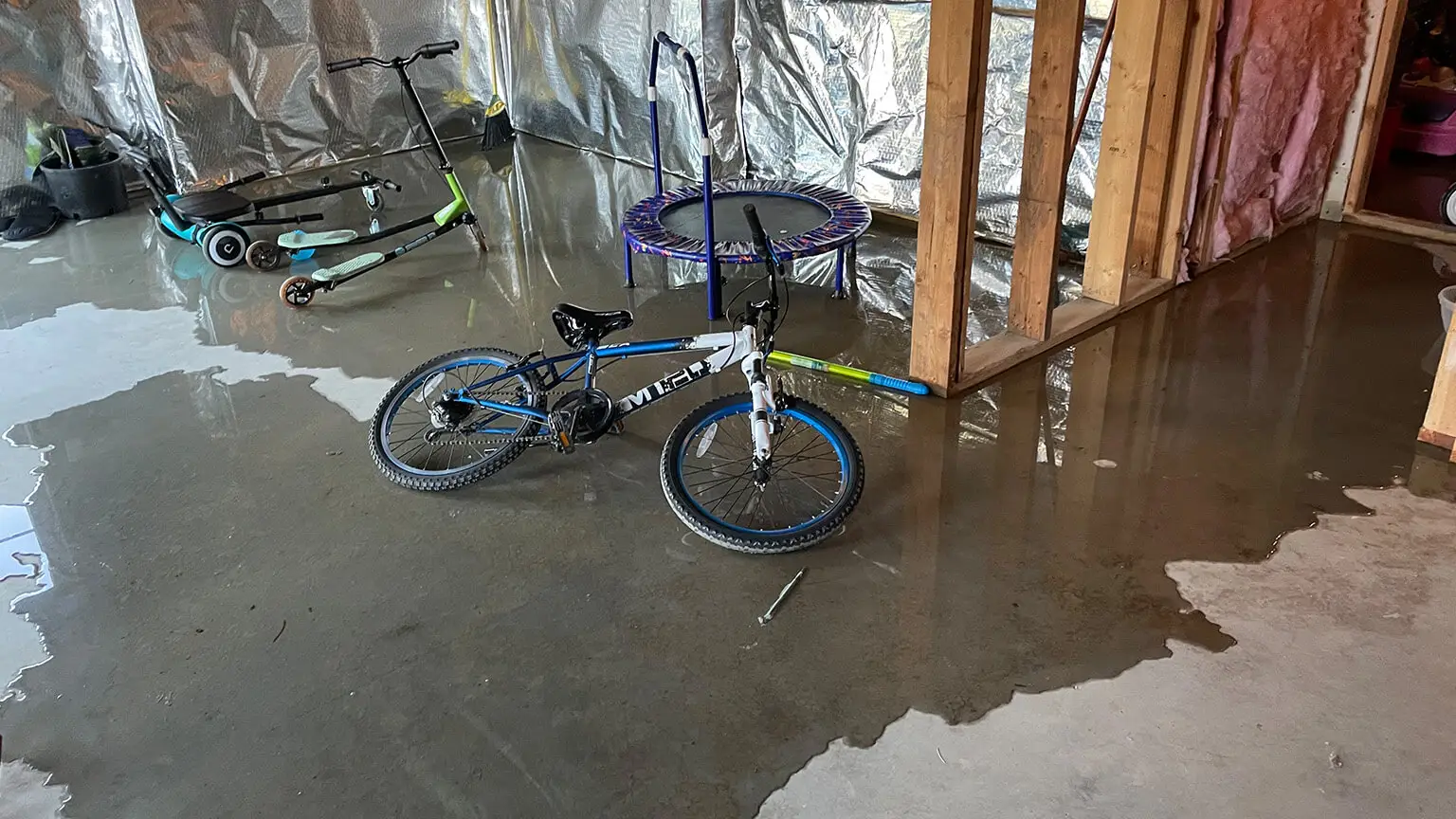
One inch of water across a 1,000-square-foot basement is more than 600 gallons. Six hundred. That’s why a shop vac feels so hopeless — you’re emptying a five-gallon bucket at a problem the size of a hot tub, over and over, at eleven at night.
Once you see the volume, the rest makes sense. That much water isn’t sneaking through a hairline crack — it’s arriving under pressure through a seam, so the fix has to be drainage, not sealant. Paint-on coatings are fine for damp walls, but they can’t argue with 600 gallons.
It also explains why older parts of town behave differently. Historic homes near downtown sit on stone and block foundations with no waterproofing at all, so they need a gentler, more custom approach than a 2004 subdivision basement. Both end up dry, just not by the same route.
Why does hiring local matter here?
Because a warranty is only worth as much as the company behind it. We’ve been at this more than twenty years, and our shop is twenty minutes south in Lawrenceville — a straight shot down I-985. In year seven, when the pump needs a look, you’re calling the same people who put it in.
Local also means we know how Buford drains. The grade changes between subdivisions here are real, so uphill runoff piles against back walls in ways it doesn’t in flatter parts of the county. We’ve worked the streets behind the Mall of Georgia corridor, and we know which lots near the lake sit low enough that groundwater is the whole story. That’s why every flooded basement repair Buford quote we write starts with a look at your lot, not a catalog.

Picture the after. The next big storm rolls through, you hear it on the windows, and you go back to sleep. The bikes and the holiday bins stay where you put them, because nothing goes on a higher shelf “just in case” anymore.
Still sorting out what you’re dealing with? Our guide to standing water basement problems covers what the symptoms mean, and every system we install is spelled out on our basement waterproofing page. If the walls themselves are the concern, start with foundation repair. Comparing notes with family a few exits away? We cover the same ground for Grayson flooded basement repair. And if you like watching the radar, the National Weather Service flood safety page is worth ten minutes.
Where we work around Buford
We’re based in Lawrenceville, so Buford is a short run north. We work throughout Suwanee, Sugar Hill, Braselton, Flowery Branch, Dacula and Gainesville, plus Duluth, Lawrenceville, Snellville and the wider Gwinnett and Hall Counties area. If you’re anywhere between the lake and the Mall of Georgia, there’s usually a truck of ours nearby.
Questions Buford homeowners ask us
Because the seam where the wall meets the floor slab is the easiest opening in the basement. When saturated clay presses water under the slab, it pushes up through that cove joint first. It’s the most common pattern we see, and the most fixable.
Yes, when the water is managed instead of blocked. A below-slab drainage system with a properly sized sump gives water somewhere better to go than your floor, and stone and pipe under concrete have nothing to wear out. The pump is the only part with a service life.
It depends mostly on how many linear feet of wall need drainage and how much finished space we have to work around. A pump replacement or a discharge line repair is a small, same-day ticket, while a full perimeter system with battery backup sits at the top end. We give you a written number after we see the house, never over the phone.
That’s still worth a look, because occasional flooding usually means a system that’s borderline rather than broken. Often it’s a pump that keeps up in normal rain and falls behind in a long one. Those are typically the least expensive situations to solve.
For a small spill, sure. For an inch across a finished basement, you’re moving hundreds of gallons five at a time, and a box fan won’t pull moisture out of soaked framing or carpet pad. Real drying needs extraction plus a dehumidifier running until a meter says the materials are dry.
Let’s find out where the water’s getting into your Buford basement
The inspection is free, the estimate is free, and nobody pressures you at the end. We’ll show you the entry point, explain the options in plain words, and tell you honestly if the small fix is the right one.
(678) 914-5112Serving Buford and all of Metro Atlanta · $500 off projects over $3,500 · Live support 7am–8pm, 7 days a week