

How to Hire Flood Restoration Sugar Hill Homeowners Actually Recommend
What a good crew checks, how to read the scope, and the questions that separate a cleanup from a real fix.
It usually shows up in a home inspection report, four days before closing, in one flat little line: “evidence of past water intrusion, lower level.” Nobody panics, but suddenly everybody is searching for flood restoration Sugar Hill can send out this week. Good news — that line is not a verdict on the house. It’s just a note that water got in once, and water getting in is a solvable, ordinary thing.
Here’s the thing, though. The company you pick decides whether that note ever gets written again. Some crews dry the room. Others find the way in and close it. Both hand you an invoice, so let’s talk about how to tell them apart before you sign one.
Why do Sugar Hill basements take water in the first place?
Start with the ground under you. Sugar Hill is named for a hill, and it earns it. On terrain like this, water doesn’t sit — it runs, and it runs toward whatever is downhill of it. That’s often a walkout basement, because the grade here makes walkout and daylight basements the normal build rather than the fancy one.
Then add the soil. Red clay holds water, and on the steeper slopes there’s rock close to the surface. When water hits that rock it doesn’t soak down. Instead it travels sideways until it meets a foundation wall and decides that’ll do.

Water tables matter here too. Lots that fall toward Lake Lanier or down into the Chattahoochee corridor below the dam can sit on a seasonal high water table, so the ground itself is loaded for weeks at a time. That’s not a defect in your house. It’s geography, and geography is something you build around.
Age is the last piece. Most homes around Whitfield Farms, the Lanier Golf area and Riverside went up between the early 1990s and the mid-2010s, so a lot of original pumps and drainage are retiring on the same schedule. Your basement didn’t fail. It turned twenty-something, and so did the neighbor’s.
What should a good crew do differently here?
Watch the first ten minutes. A crew that matters takes moisture readings — walls, framing, subfloor — then turns the meter around so you see the numbers yourself. Plus, that first set becomes your baseline for proving the place actually dried.
Second, they should photograph everything before a single fan comes off the truck. Water lines on the drywall, the serial plate on the dead pump, wide shots of the room. Your insurance company wasn’t standing there at 6 a.m., so those photos are the only witness you get.
Good news
Cleanup and the permanent fix are two separate jobs, and you’re allowed to hire them separately. Anyone who insists they’re one purchase is describing their pricing, not your house.
Third — the step people skip — wet organic material comes out. Soaked carpet pad, wet drywall bottoms, damp insulation. Drying around that stuff costs less on paper, but it leaves the food source right where the moisture was. Removing it is what keeps the smell from returning in September.
Fourth, somebody has to go find the door water used. Nine times out of ten on a slope like ours, it’s the cove joint — the seam where the basement wall meets the floor slab. Under hydrostatic pressure, that’s the path of least resistance, and it’s the entry point a crew focused only on extraction will never mention. Skipping the source hunt means you’ve bought a rehearsal.
Anybody can move water out of a basement. Knowing why it chose your house is the part you’re actually paying for.
Speed belongs on the list too. Mold can begin growing on wet building materials in roughly 24 to 48 hours, so asking how fast a company can be there is a completely fair question. We answer it honestly, even when the answer is tomorrow morning.
Now for the part nobody expects
Ready for some relief? The expensive-sounding version usually isn’t the one your house needs. Homeowners brace for a five-figure conversation and then hear the actual scope, and you can watch their shoulders drop about two inches.
Take a walkout near the Sugar Hill Golf Club. Water across the lower level twice in one spring, and the first company quoted a full perimeter system plus rebuilding half the finished space. Outside, though, the real story was uphill runoff hitting a tired retaining wall and getting steered at one corner. One wall of drainage, a new pump with backup, and a regrade fixed it.
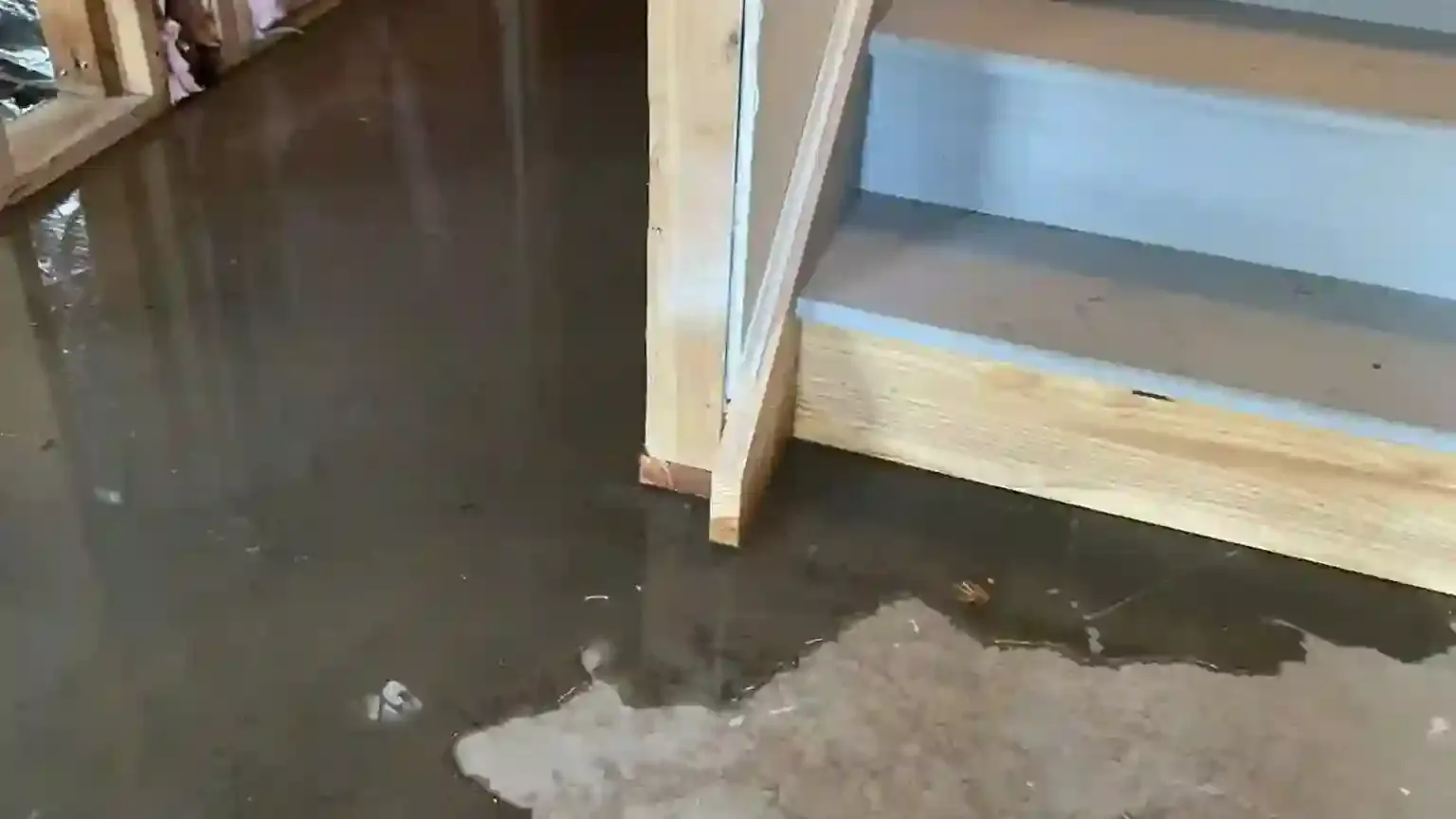
That’s the argument for a source-first inspection. When a company installs one system, every basement starts looking like a candidate for it — usually not dishonesty, just a crew trained to install rather than diagnose. So the smaller fix never gets offered.
You don’t have to take our word on it, either. The National Weather Service flood safety pages are a quick read, and FEMA’s guidance on protecting your property covers the same principles. Skim both before your estimates, and you’ll hear who’s explaining and who’s performing.
How do you read the estimate?
Slowly, and with a pen. A real scope says what’s removed, what’s dried, how many linear feet get drainage, where the discharge ends, and what happens at the cove joint. A weak one says “water mitigation” and gives you a total. Any flood restoration Sugar Hill homeowners hire should be willing to write all of that down. Folks here compare bids carefully, so specificity is how we win most jobs.
Questions worth asking before anyone starts
- Where is the water getting in, and how do you know? A good answer includes something seen outside the house.
- Can I see the moisture readings? Before and after, with the final set in writing.
- What gets removed versus dried in place? Wet organic material belongs on the removal side.
- Is the permanent repair quoted separately? Cleanup and prevention carry different warranties.
- Where does the discharge go? On a downhill lot it has to end well away.
- What documentation do I get for my insurer? Photos, readings and a written scope — handed over, not promised.
- Who is on the truck? Your own crew, or whoever was available?
On cost, we’ll be straight rather than clever. Extraction and drying alone sit at the low end, while a permanent system with drainage, a new sump and battery backup in a finished lower level sits at the high end. What moves the number is how long water sat, linear feet of wall, access down the slope, and how much finished space comes out and goes back.
Insurance deserves an honest paragraph too. Standard homeowners policies commonly exclude surface flooding, and sump coverage is usually a separate endorsement you’d have added on purpose. That surprises people, so read your own policy or call your agent. Either way, good documentation only helps you.
What are the real red flags?
Four of them, and they’re the reason people call a second company. A firm price quoted over the phone before anyone has seen the water tops the list, because nobody can price a basement they haven’t stood in. Pressure to sign while you’re still rattled is second, and it’s the one that works most often.
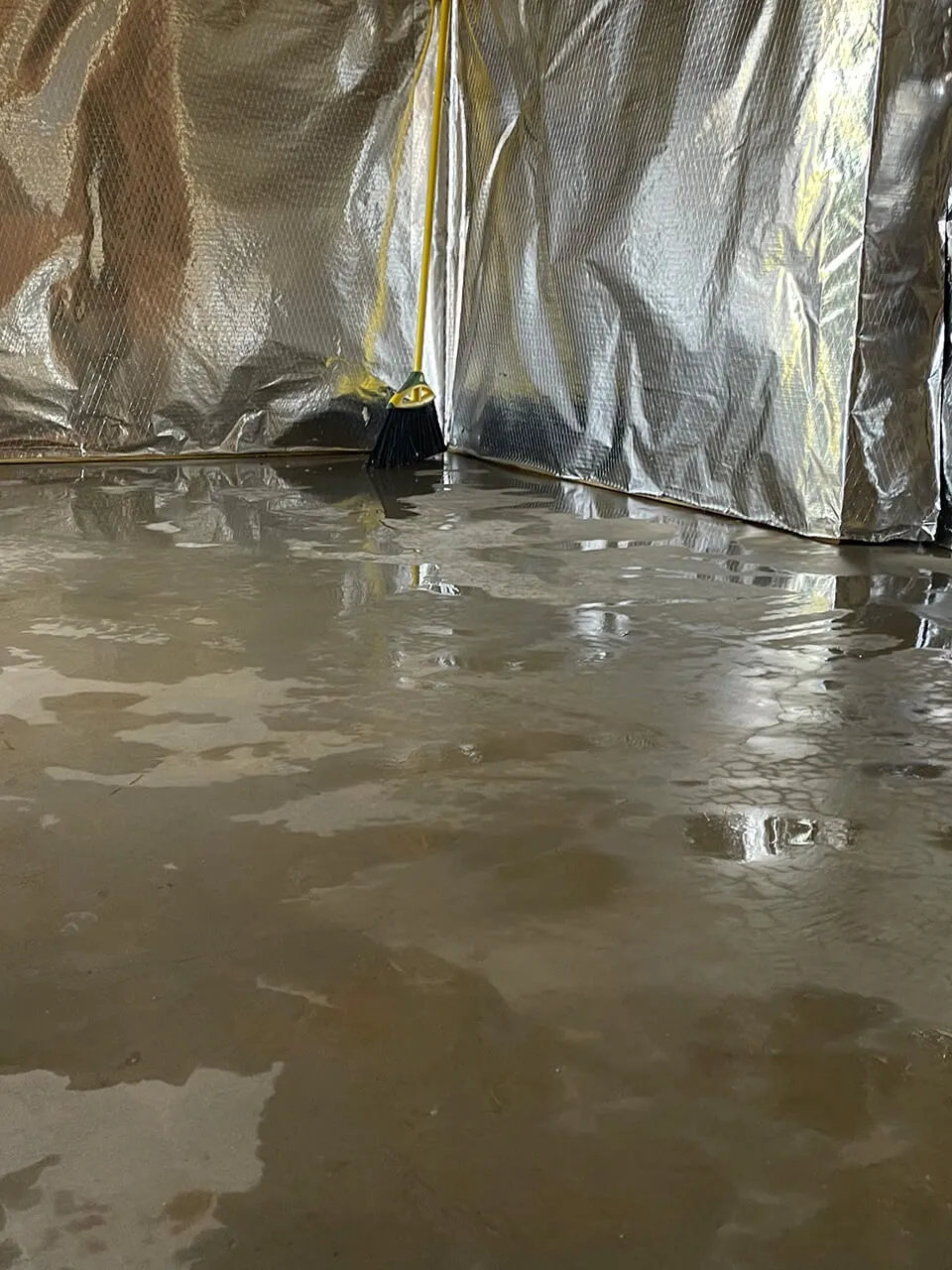
Third: no written scope. If the plan lives only in a conversation, there’s nothing to hold anyone to later. Fourth, and the costly one, is treating extraction as the whole job when nobody ever found the entry point. That basement will be dry — dry the same way it was dry last April.
The rooms nobody connects to the basement
Want the part that surprises people? A wet lower level rarely stays a lower-level problem. Your HVAC air handler usually lives down there, so it pulls damp air and pushes it upstairs all day. That’s why a guest room smells faintly like a tent in July while the basement looks fine.
Hardwood on the main floor feels it as well. Humidity from below moves through the subfloor, and boards cup at the seams months after the water everyone forgot about. Meanwhile, closets on outside walls get sticky, and stored paper goes soft.

Good news — all of that runs backward once the source is closed and the humidity drops. Fix the entry point, dry the materials properly, control the moisture, and the upstairs returns to normal on its own. That’s the fix working in rooms you never mentioned to us.
Picture the after. A hard spring storm rolls down the grade off Level Creek Road, and you don’t get up to check anything. The lower level stays a room you use — bikes, a treadmill, a couch. Better yet, when you sell, that inspection line reads clean and you’ll know exactly why.

Why we might be the right fit
We’re about twenty minutes south of you in Lawrenceville, and we’ve been at this over twenty years. Terrain like yours is a specialty rather than a surprise, so we know how water behaves on a lot that falls toward Lake Lanier. If you’d rather hire flood restoration Sugar Hill neighbors have already used, odds are we’ve worked a street near yours.
Still figuring out what’s happening down there? Our guide to a flooded basement covers the first 48 hours, while the drainage and basement waterproofing systems we install are laid out step by step. Seeing cracks or a door that stopped closing right? Foundation repair is a different conversation, and we’ll say so plainly. Comparing notes with family down county? We cover the same ground for Lilburn best basement drainage.
Where we work around Sugar Hill
We’re up this way constantly, on the sloped lots off Level Creek Road and the streets running back toward the lake. Beyond Sugar Hill, we work in Buford, Suwanee, Cumming, Gainesville, Duluth, Lawrenceville, Dacula, Braselton and Flowery Branch, plus the wider Gwinnett and Hall County area.
Questions Sugar Hill homeowners ask us
Yes, when the entry point gets found and handled rather than just dried. On our terrain that usually means managing water before it reaches the wall and giving whatever gets through a controlled path out. Drying alone is temporary, because the water still has the same route it used last time.
It depends on how much water sat, how long it sat, and how much wall needs drainage. Cleanup and drying alone land at the low end, while a full system with a new sump and battery backup in a finished lower level sits at the high end. After we walk the house you get one written number with the scope spelled out.
That’s still worth an inspection, because occasional usually means a specific trigger like a heavy spring storm or a seasonal high water table. Those triggers are predictable, which makes them easy to design around. Twice a year also tends to become more often as original drainage ages.
For a small, quick spill on bare concrete, sometimes yes. Once water reaches carpet pad, drywall or insulation, though, surface drying leaves moisture inside the material where a fan can’t reach it. That’s when wet material needs to come out and the space needs real dehumidification.
Mold can begin on wet building materials in roughly 24 to 48 hours, which is why response time matters so much. Fast removal of wet organic material plus proper drying is what keeps it from getting started. If a company can’t tell you when they can be there, that’s useful information.
Let’s find out what your Sugar Hill basement is actually doing
The inspection is free, the estimate is free, and nobody pressures you at the end. We’ll show you where the water is getting in, what the readings say, and how big the job honestly needs to be — including when the answer is smaller than you expected.
(678) 914-5112Serving Sugar Hill and all of Metro Atlanta · $500 off projects over $3,500 · Live support 7am–8pm, 7 days a week