

How to Choose the Best Basement Drainage Decatur Homes Actually Need
Which drainage route fits your house, what a real scope says, and the questions that sort a diagnosis from a sales pitch.
Choosing the best basement drainage Decatur has to offer isn’t really about picking a company. It’s about picking a route for the water. Handle it this spring and you’re usually moving water away from a wall. Wait three years and you’re often moving water away from a wall and replacing flooring, trim, and a wall of drywall that soaked one time too many.
Why does timing change the price so much?
Because drainage work is priced by the wall, and restoration is priced by the room. A perimeter channel costs what it costs whether you do it in April or three Aprils from now. Meanwhile the subfloor, the baseboards and the stored boxes are all on the clock.
Good news, though — this is the calm kind of home problem. Water follows rules, so once you know where it enters and why, the fix is usually straightforward and it stays fixed. It’s really just plumbing for rain.
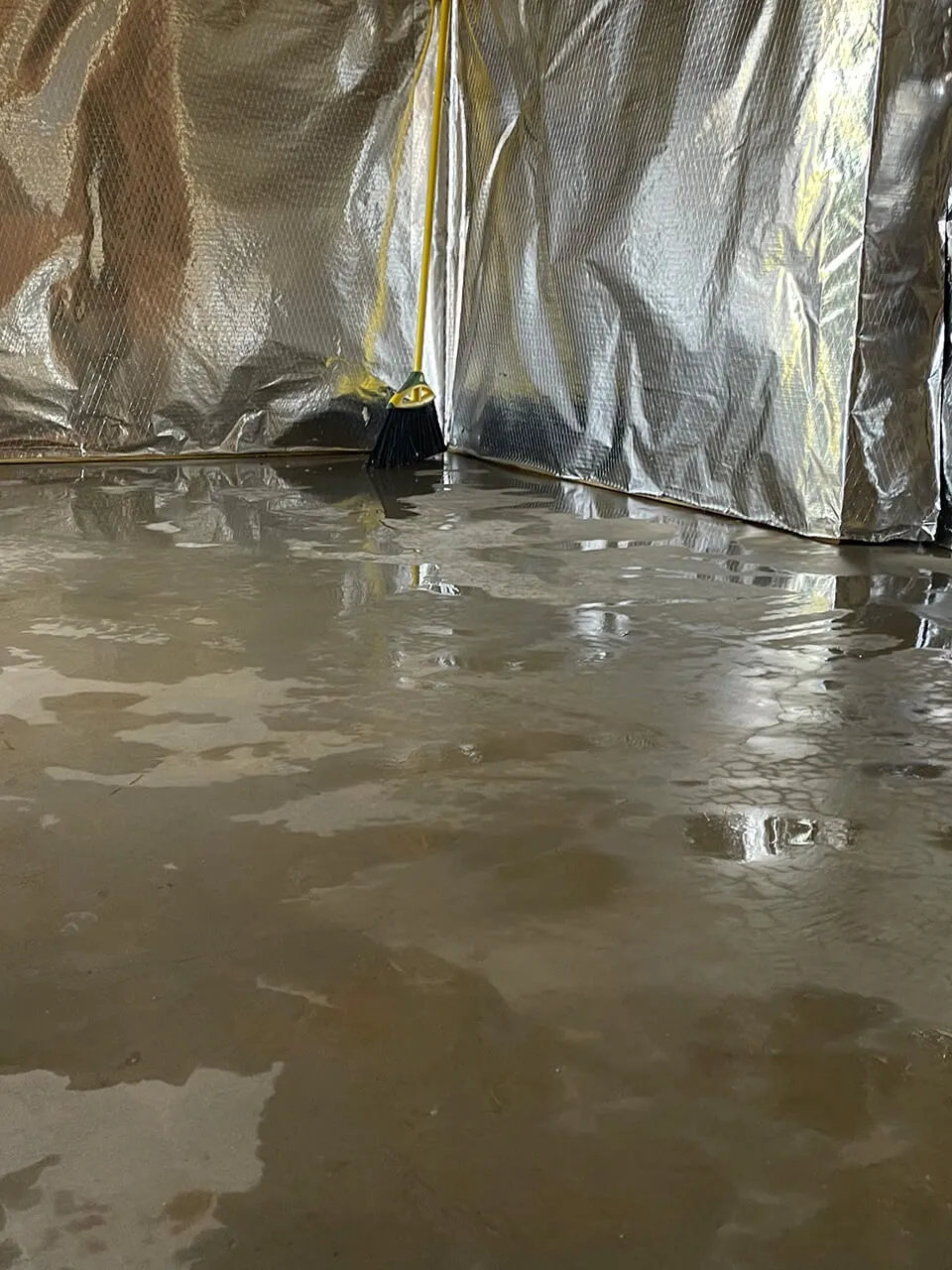
Here’s one clue worth holding onto before anyone gives you a number. A basement that floods only during heavy rain almost always has a surface water problem rather than a groundwater problem — and surface water is usually the cheaper fix.
What are your actual drainage options?
There are really three, and each answers a different entry route. Mixing them up is how homeowners pay for the wrong system.
Interior perimeter drain to a sump. A channel is cut into the slab edge, water is collected below floor level, and a pump sends it outside. This one targets the cove joint — the seam where wall meets floor. Under pressure from wet soil, that seam is the most common way water gets in, so relieving it solves a lot of basements.
Exterior footing drain. Excavate to the footing, seal the wall from outside, and lay pipe in gravel so water never reaches the foundation. It’s the most thorough route, and also the most disruptive — with the tree canopy over Decatur, mature roots and old landscaping change the math quickly.
Grading and downspout extensions. Move the dirt so it slopes away, and carry roof water well past the foundation instead of dumping it beside the wall. Unglamorous, but honestly? It’s the fix that surprises the most people.
Good news
A wet basement and a failing foundation are two separate conversations. Most homes we walk only need the first one, and we’ll say so before you ask.
Georgia red clay is why that third option matters more here than people expect. Clay drains slowly, so after a long rain it holds water against the wall like a wet sponge pressed to concrete. Keep roof water out of that ring of soil and a lot of the pressure never builds.
What should a good company do differently in Decatur?
Go outside first. That’s the short version. Then look at the age of the house, because Decatur has the oldest housing stock we serve — heavy on 1920s through 1950s bungalows, Tudors and mid-century homes, many with stone, brick or hand-laid block foundations.
A Decatur bungalow was built before basement waterproofing existed as a trade. These houses have stood a hundred years, so the fix has to respect that instead of fighting it. A crew that only knows poured-wall subdivisions treats hand-laid block like it’s the problem, when really it’s just old and honest.
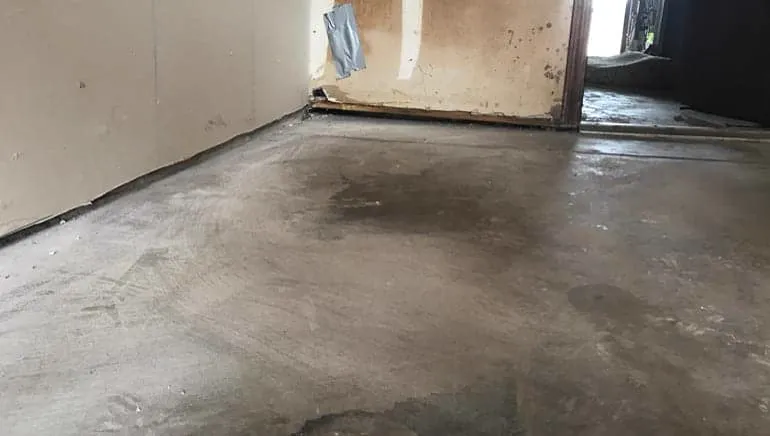
There’s one more local check that plenty of crews skip. Century-old clay sewer and drain lines run under a lot of these lots, and when they crack, they quietly saturate the soil right at the footing. So the basement gets wet on days it hasn’t rained. We’ve chased that one near the Druid Hills edge more than once.
Ask about grading history too. Around the Downtown Decatur core, a century of added soil, walkways and flower beds has buried the original slope. The lot didn’t change on its own — it just got landscaped, one nice weekend at a time, until it tilted back toward the house.
Patch or fix? Here’s where the difference shows up
Want the moment it shows? It’s the second storm after the work is done. A patch looks perfect until then, while a real fix looks the same on the twentieth.
Waterproof paint is the classic patch. It’s cheap and it looks like progress immediately. But concrete and old block are porous, and water moves through them under pressure, so a coating is asked to hold back something it was never built to hold. It’s a raincoat on a submarine.
The best compliment we get isn’t “nice work.” It’s “you talked us out of the bigger job.”
Sump pumps are the other place patches hide. Pumps don’t fail randomly — they fail in about five predictable ways. Power goes out mid-storm, or the float sticks, or the pump is undersized, or there’s no check valve so the discharge drains back into the pit, or the line is clogged.
That’s why asking about a battery backup is a fair question, not an upsell. Storms and power outages arrive together in Georgia, so a pump with no plan for that has a day off scheduled at the worst possible time.
Want a second opinion that isn’t a contractor’s? The National Weather Service flood safety pages explain how fast water moves and pools, and FEMA’s building science guidance covers protecting a property from flooding. Read either before your estimates and you’ll hear the difference between explaining and performing.
How do you read a drainage estimate?
Line by line, looking for measurements. A real scope names the route, the linear feet, the depth, and where the water ends up. A weak one says “drainage system” and a total. Folks here compare bids carefully, which we like, because specificity is how we win work.
Questions worth asking before you hire anyone
- Where is the water entering, and how do you know? A confident answer includes something they saw in the yard.
- Why this route instead of the cheaper one? If exterior grading would have worked, they should be able to say why it wouldn’t here.
- How many linear feet, and why that section? Vague coverage means a vague price.
- Does the drain sit below the slab? That’s the difference between a system and a gutter.
- Where does the discharge end? Well away from the house, not back beside the footing.
- What’s the pump sized for, and is a backup available? Ask what happens during an outage.
- Is the warranty transferable, and what voids it? Have them explain it in one sentence.
Red flags get easy after that. Watch for a firm price quoted over the phone before anyone has seen the house, or a discount that expires tonight, since honest pricing doesn’t need a countdown. Be careful too if the inspection never left the basement.
On cost, we’ll be straight with you. Grading and downspout work sits at the low end, a full interior perimeter with a new sump and backup sits at the high end, and exterior excavation sits higher still. What moves the number is linear feet, access, slab thickness, and how much finished space needs protecting.
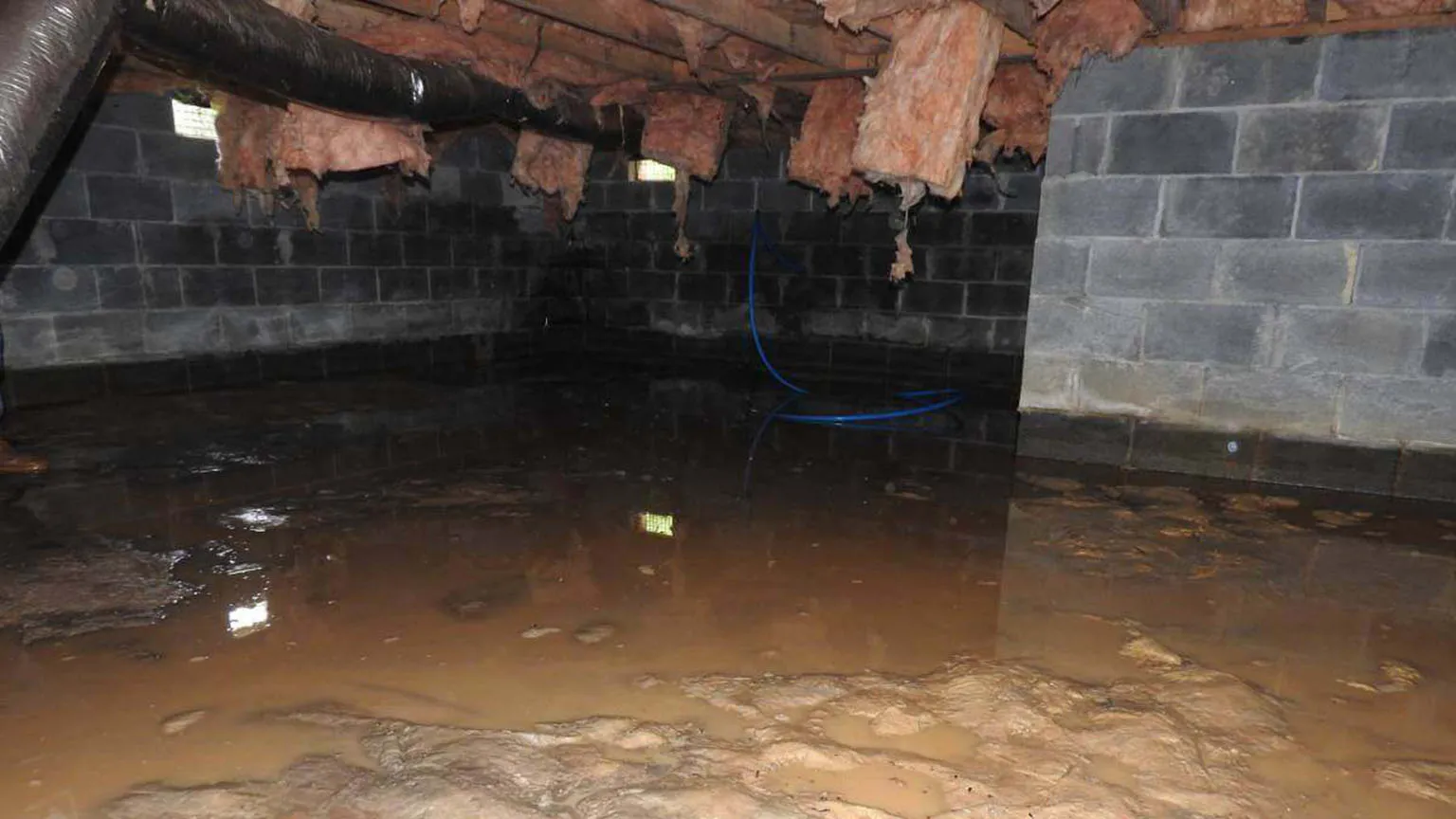
The house that wasn’t what they thought
Want the diagnosis that surprised everybody? A homeowner in the Adair Park area bungalows called us certain the foundation was giving up. There was a step crack in the old block, water along the floor after every long rain, and an estimate for a full perimeter system on all four walls.
Then we walked the outside. A buried downspout line had collapsed at the elbow, so every storm pushed roof water into the soil beside that corner. On top of that, years of added mulch had built the bed up above the sill line. The crack was real, but it wasn’t the cause — it was just the only part anyone could see from inside.
So the fix landed much smaller: repair the buried line, cut the grade back, extend two downspouts, and run drainage along one wall instead of four. That’s what a source-first inspection buys you. The goal isn’t a bigger job — it’s the right-sized one.

Picture the after. A hard March storm rolls through, and the floor at the bottom of the stairs stays dry. The musty smell is gone, so the basement goes back to a room you use instead of a room you check on. Your home is looked after, and you paid what the problem actually cost.
Why we might be the right fit
We’re about thirty-five minutes northeast of you in Lawrenceville, and we’ve been at this over twenty years. We’ve done plenty of old-house drainage here, from the streets running off Ponce de Leon Avenue to the lots near Glenlake Park. Familiar housing stock means a faster, more accurate diagnosis.
What we promise is simple. We find the source before we quote, put the scope in writing, and tell you when the cheaper outside fix will do the job. Sometimes that costs us the bigger sale, and that’s fine — we’d rather be the crew you call again.

Still sorting out what’s happening down there? Our guide to flooded basement repair covers the first 48 hours, while basement waterproofing lays out the systems we install. If the walls are moving, foundation repair is the other half. Comparing notes with family up the highway? See Lawrenceville best basement drainage.
Where we work around Decatur
You’ll find our trucks all over this side of the county, from the blocks around Decatur Square to the older streets behind the shops. Beyond Decatur, we work in Avondale Estates, Tucker, Brookhaven, Atlanta, Stone Mountain, Clarkston, Chamblee, Scottdale and Lithonia, plus the wider DeKalb area.
Questions Decatur homeowners ask us
Generally within one to two days on damp materials, and faster in warm weather. That’s why drying speed matters more than scrubbing. Get air moving and moisture out quickly, then handle the drainage source so the material never gets a second chance to stay wet.
Cut power to the basement at the breaker before you step into standing water, then get the water out with a pump or wet vac. After that, lift boxes and furniture off the floor and take photos for your records. Once it’s dry, the real question is where it came in.
That pattern usually points to surface water rather than groundwater. Roof water and yard runoff arrive faster than the soil can take them, so they pool beside the foundation and push in at the cove joint. The good news is that surface water is often the cheaper fix, since grading and downspout work happens outside.
It depends on where the water came from. Sudden problems like a burst pipe are commonly covered, while groundwater and surface flooding usually are not without separate flood coverage. Some policies add a sump pump failure rider, so it’s worth calling your agent and asking that question directly.
Aim for the first 24 to 48 hours. Fans, a dehumidifier and open interior doors do most of the work, and wet carpet padding should come out rather than dry in place. Move quickly and most basements come back fine.
Let’s find out where the water is getting into your Decatur basement
The inspection is free, the estimate is free, and nobody pressures you at the end. We’ll show you the entry point, explain which route fits your house, and say plainly when the smaller fix is the right one.
(678) 914-5112Serving Decatur and all of Metro Atlanta · $500 off projects over $3,500 · Live support 7am–8pm, 7 days a week