

The Questions That Point You Toward the Best Basement Drainage Dacula Homeowners Can Hire
How to tell a real drainage plan from a one-size-fits-all sales sheet — before you sign anything.
Here’s the question people almost apologize before asking: “Is it normal for a basement to get a little wet?” You’re not the only one wondering, and it’s a fair question. Short answer — a damp smell after a storm is common around here, but it isn’t something you have to live with. The best basement drainage Dacula homeowners can put in doesn’t dry a wet basement so much as it gives the water somewhere else to go, permanently.
So no apology needed. Water down there is a gravity problem, not a housekeeping failure. Once you know the route it’s taking, the fix is usually simpler than folks expect.
What makes Dacula basements their own situation?
Start with the dirt. Georgia red clay doesn’t drink water — it holds it. After two days of rain, that clay sits against your foundation wall like a wet sponge, and the pressure it creates pushes water toward any opening it can find. That’s why a wall can be bone dry in July and weeping in March.
Then add the land. Out toward Dacula the lots get bigger, and so does the amount of water that has to go somewhere when a storm rolls through. A half-acre in a tight subdivision sheds water to the street. Two acres with no defined drainage path just picks a direction, and sometimes that direction is your walkout.
Age matters too. Much of the housing here went up between 1998 and 2015, so homes in Trophy Club of Apalachee and Apalachee Farms are hitting first-generation drainage failure on roughly the same schedule. Good news, though — we’ve likely seen your exact floor plan before.
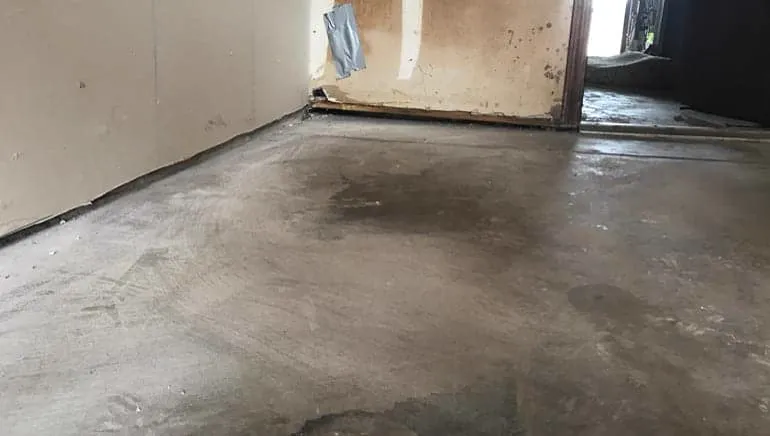
One more piece, and it’s the important one. Most water doesn’t come through the middle of a wall. It comes in at the cove joint, the seam where the wall sits down onto the floor slab. Under pressure, that seam is the path of least resistance. So if a company never says the word “cove joint,” they may be solving a problem your house doesn’t have.
What are the real drainage options?
There are basically four, and each one handles a different entry route. A good crew tells you which one your house needs and why the other three don’t apply. Here’s the plain-English version.
The four fixes, and what each one is actually for
- Interior perimeter drain to a sump. A channel cut below the slab around the inside edge, piped to a pump. This relieves pressure right at the cove joint, which is where most water shows up.
- Exterior footing drain. Excavating down to the footing and installing drainage outside the wall. It stops water before it ever touches concrete, but it means digging up your landscaping.
- Regrading. Reshaping the soil so the ground falls away from the house instead of toward it. Cheap, unglamorous, and shockingly effective on big lots.
- Downspout extensions and buried lines. Moving roof water well away from the foundation instead of dumping it at the corner.
Notice that two of those four happen outside the house. That surprises people. But since our clay holds water against the wall long after the rain quits, the outside work often matters more than homeowners expect — and it’s usually the cheaper half of the job.
Worth knowing
Sometimes the correct fix is entirely outside: two downspout runs and a grade correction. A company willing to tell you that is a company worth hiring.
Interior drainage still does the heavy lifting in most Dacula subdivisions, because it works no matter what the weather does. That said, the best basement drainage Dacula homes get is whatever matches the house, not the brochure. Two homes on the same street in Providence Club can genuinely need two different plans.

Now, the part nobody mentions
Ready for the second thing going on? Drainage estimates get compared line by line, while the sump pump — the one part that can fail while you sleep — barely gets a sentence. That’s backwards. The channel is passive and lasts decades. The pump is the moving part.
And pumps fail in boringly predictable ways. Power goes out mid-storm, which is exactly when you need it. The float sticks against a wall. The unit is undersized. There’s no check valve, so water drains back down and the pump cycles itself to death. Or the discharge line clogs.
Every one of those has a fix, which is the good part. A properly sized pump, a float with clearance, a check valve, a discharge line that ends well away from the house, and a battery backup. Ask about the backup by name — a good company will have brought it up already.
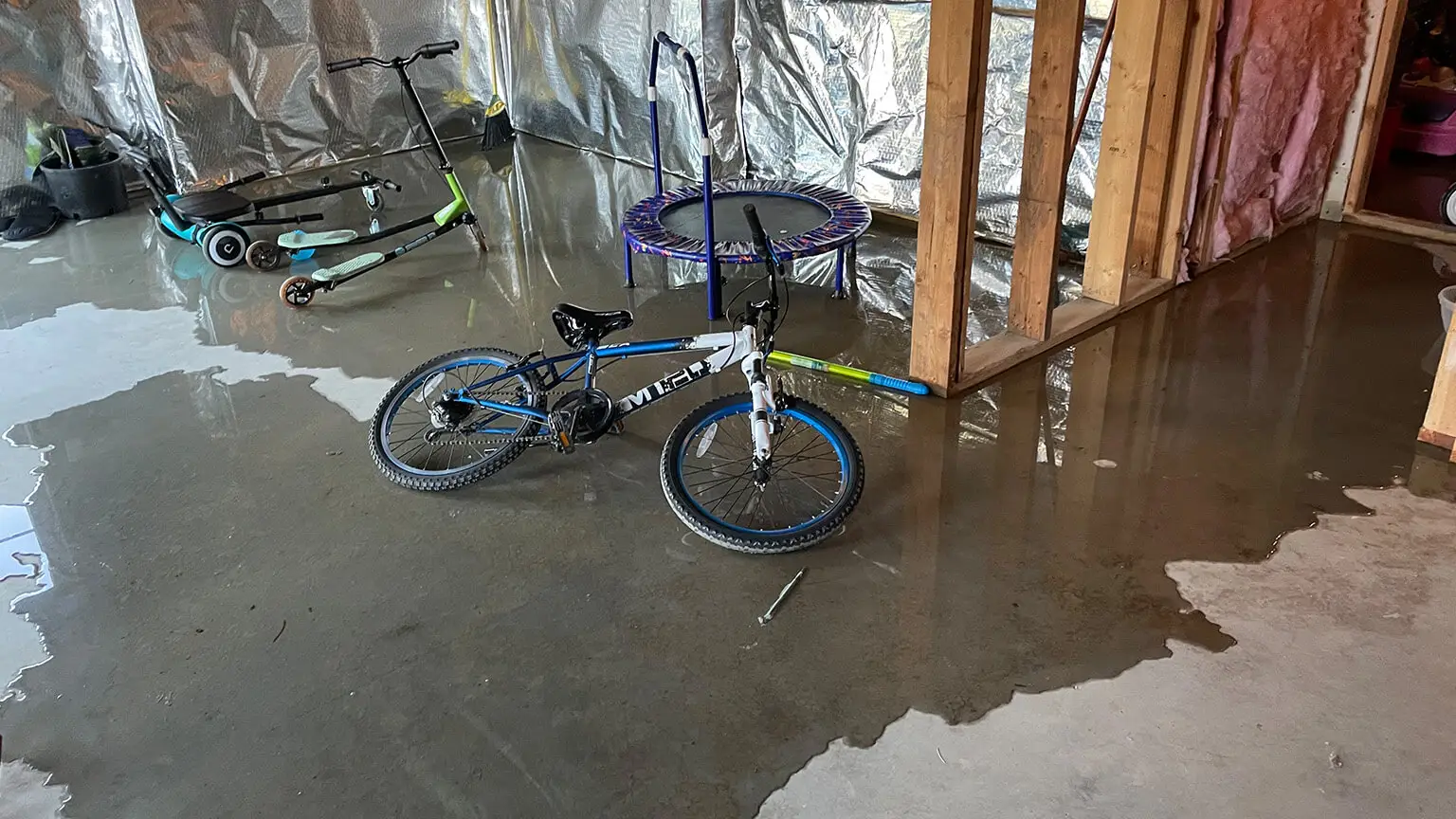
Picture it working. The storm knocks the lights out around Dacula Park, the neighborhood group chat lights up, and your basement just keeps quietly pumping. That’s the whole point. If your basement has already taken on water once, our guide to flooded basement repair walks through the cleanup side, and the CDC’s guidance on mold cleanup after a flood is a solid ten-minute read before anyone gives you an opinion.
How should you read the estimate?
Line by line, and slowly. A real scope of work says where the water is entering, how many linear feet get treated, how deep the channel sits, what pump goes in, and where the discharge ends up. A weak one says “drainage system” and gives you a number. Same paper, very different promise.
One test sorts the field fast: did they find the entry point before quoting? A crew that walked your yard, checked your downspouts and then explained their reasoning is doing diagnosis. A crew that measured the perimeter and reached for a price sheet is doing inventory, and that’s rarely the best basement drainage Dacula money can buy.
Ask why they picked this route over the cheaper one. If the answer is specific to your house, you’re probably in good hands.
Red flags are easy once you know them. Watch for a firm price quoted over the phone, a discount that expires tonight, an inspection that never went outside, a warranty described out loud but never printed, or a recommendation for waterproof paint on a wall under pressure. Coatings look like progress on day one, but they don’t move water anywhere.
On cost, we’ll be straight with you. A grading and downspout correction sits at the low end, a single-wall interior drain lands in the middle, and a full perimeter system with a new sump and battery backup in a finished basement sits at the top. Linear feet, slab depth, access and how much finished space we protect are what move the number — and you get one written figure, not a “starting at.”
Here’s the number that changes the conversation
One inch of rain on a 2,000-square-foot roof sheds roughly 1,250 gallons of water. That’s one inch, on the roof alone, before a single drop lands on your lawn. Now imagine that leaving four downspouts eight feet from your foundation, into clay that won’t absorb it. Suddenly the basement isn’t mysterious at all.
That number reframes everything, because it turns “why is my basement wet” into “where is all that water supposed to go?” Once you’re asking the second question, you stop shopping for a product and start shopping for a route. The National Weather Service flood safety pages show how fast our spring systems drop rain.
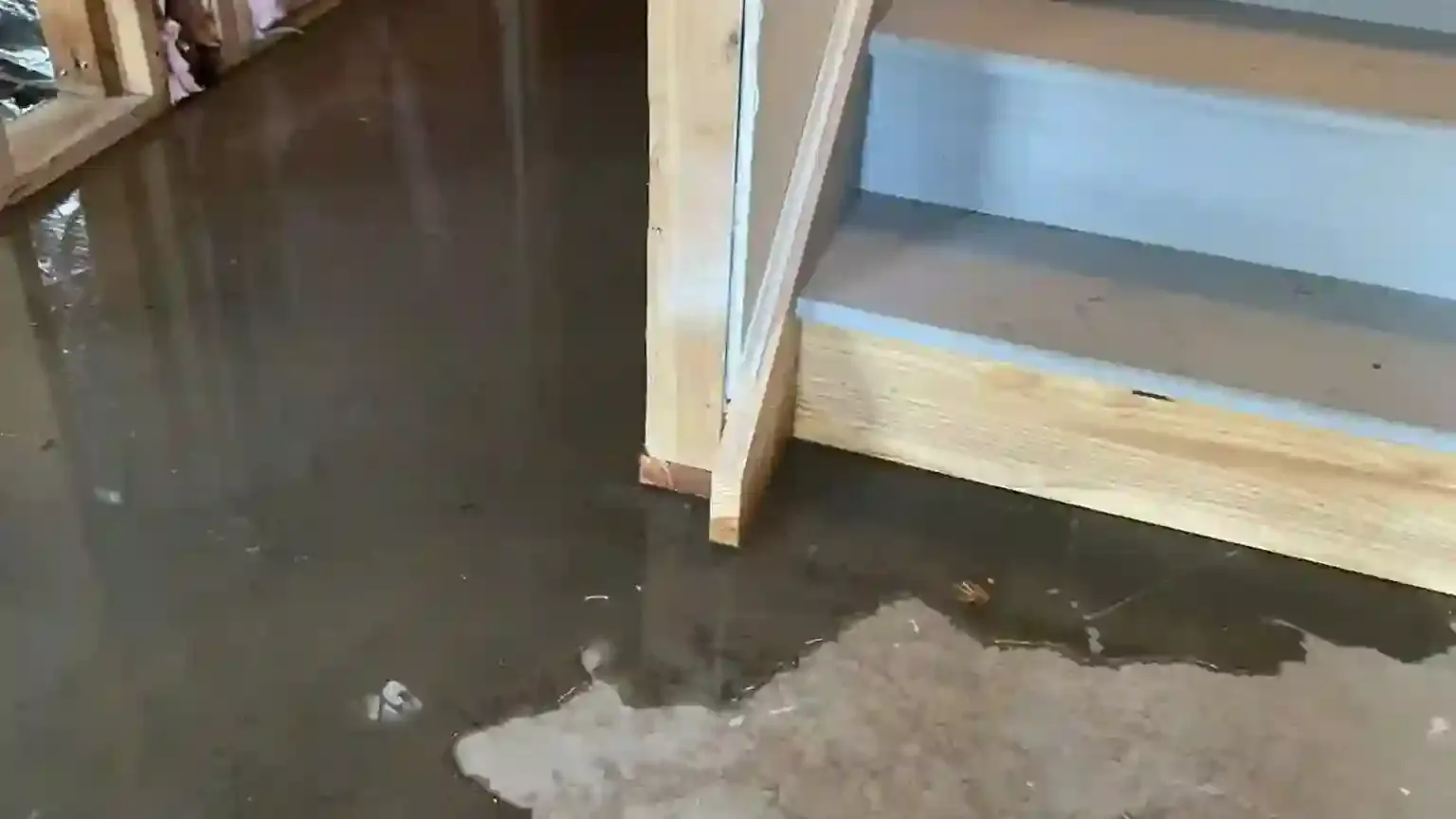
There’s a money angle here too, and it’s better to hear it now. Standard homeowners insurance usually excludes groundwater seepage, and coverage for sump pump failure is typically a separate rider you have to add. Not scary — just useful. Call your agent, ask about the rider, and put the drainage plan in place. That combination is what makes the next storm a non-event.
Why we might be a good fit
We’re in Lawrenceville, about twelve minutes west of you on GA-316, and we’ve been at this over twenty years. Same crews, same trucks. If something needs a look two years from now, you’re calling the people who did the work.
We also think about your property the way you do — as one system. Big lots, septic fields, outbuildings, a driveway that collects half the yard. Homeowners out past Little Mulberry Park don’t want a foundation wall treated in isolation, and neither do we. If the water starts at the top of the hill, that’s where the plan starts.
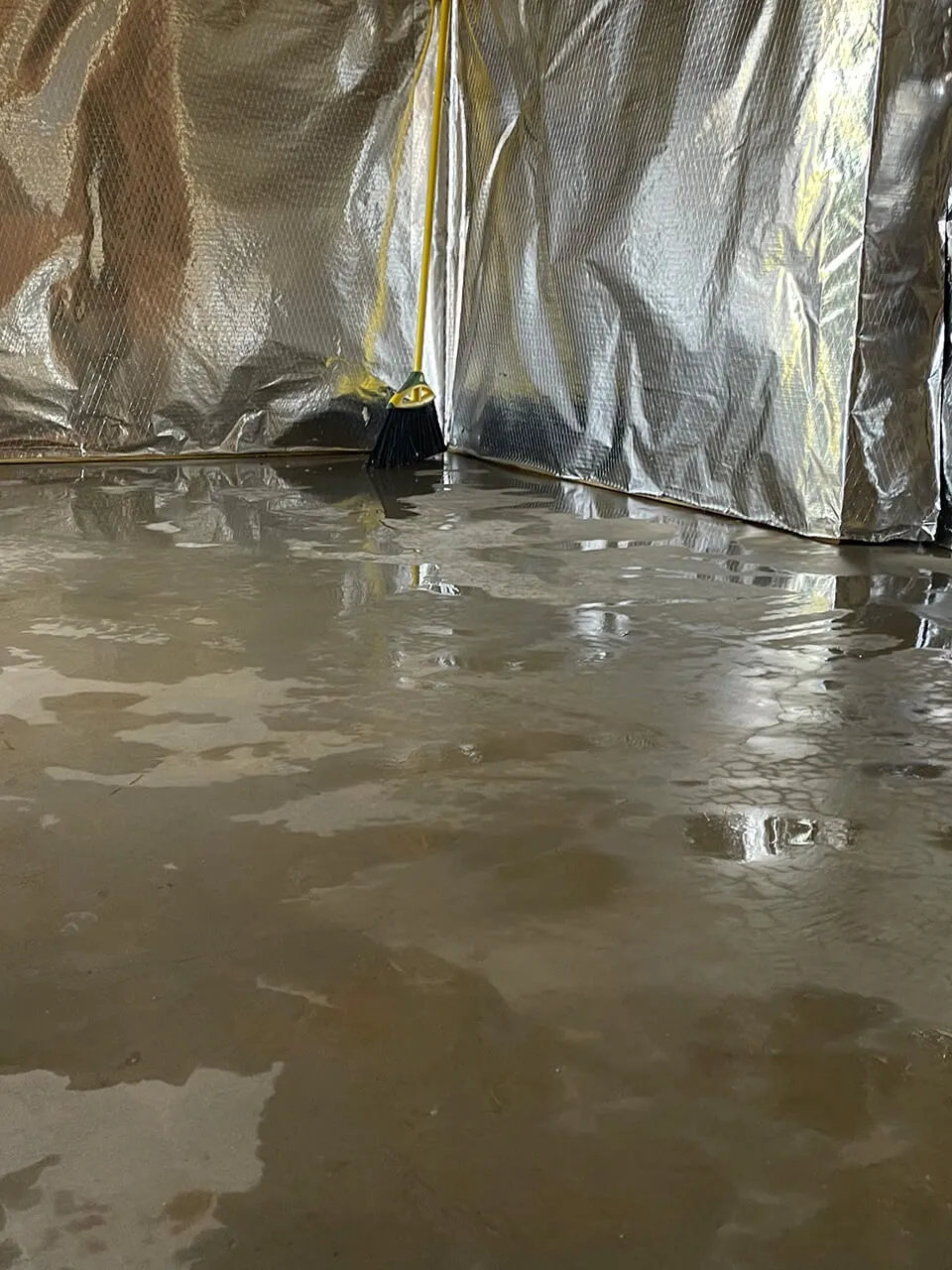
Want to go deeper before you call anyone? Our full breakdown of basement waterproofing systems covers what goes in and why. If you’re seeing cracks or doors that stick along with the water, foundation repair is a separate conversation worth having. And for anyone comparing notes with family up the road, we handle Sugar Hill flood restoration the same way.
Where we work around Dacula
We’re out this way constantly, from the newer streets off Dacula Road to the older properties on the rural fringe. Beyond Dacula, we work in Lawrenceville, Grayson, Buford, Auburn, Winder, Braselton, Hoschton, Bethlehem and Snellville, plus the wider Gwinnett area. Odds are good we already have a truck near you this week.
Questions Dacula homeowners ask us
Because the seam where the wall sits on the floor slab is the weakest point when wet clay presses in. That joint gives before the wall does, so water arrives at floor level. An interior perimeter drain relieves the pressure right at that seam, which is why it works so well here.
Yes, when the plan matches the actual entry route. Drainage doesn’t stop rain, but it gives water a controlled path away from the house every single time. Add a properly sized pump with a battery backup and the next storm becomes something you sleep through.
It depends on the route the water takes. Grading and downspout work sits at the low end, a single-wall interior drain lands in the middle, and a full perimeter system with a new sump and backup sits at the high end. After we walk the property, you get one written number with the scope spelled out.
That’s still worth an inspection, though it often points to a smaller fix. Occasional water usually means a surface path outside — a downspout, a low spot, a grade that fell over time. Those corrections are among the least expensive work we do.
For drying things out today, sure. For keeping it dry, no, because neither one changes where the water is going. Think of it as mopping the floor while the faucet is still running. Handle the route first, then the drying is a one-time job instead of a routine.
Let’s find out where the water is really coming from in your Dacula basement
The inspection is free, the estimate is free, and nobody pressures you at the end. We’ll show you the entry point, explain why we’d pick one route over another, and tell you plainly if the smaller fix is the right one.
(678) 914-5112Serving Dacula and all of Metro Atlanta · $500 off projects over $3,500 · Live support 7am–8pm, 7 days a week