

Basement Drying Options Lawrenceville Homeowners Have After a Wet Weekend
Shop vac and fans, or a pro drying crew? How each one works, when each wins, and which we’d pick for your house.
Before you read another word about the basement drying options Lawrenceville homeowners are weighing, go do a five-minute check. Kneel at the wall and press your palm flat on the carpet an inch from the baseboard, then press again three feet out. If the edge feels cool and damp while the middle feels normal, water is still living in the wall cavity — and that one difference decides almost everything below.
Then push a thumbnail into the drywall two inches off the floor. If it dents like a stale sponge, the bottom edge drank water and hasn’t given it back. Neither finding is bad news, though — each tells you which of two honest paths is yours.
What’s the very first thing to do?
Before any drying starts, kill the power to the basement at the panel. Never step into standing water while circuits down there are live. Outlets sit low, cords end up on the floor, and water finds all of it. The National Weather Service flood safety guidance says the same.
After that, get the standing water out and start moving air. Speed matters more than horsepower, because wet organic material — carpet pad, paper-faced drywall, insulation — can start growing mold in roughly 24 to 48 hours. So starting in hour two with a rental unit beats waiting three days for a perfect plan.

Option A: can you dry it yourself?
Often, yes — and we’d rather say that than sell you something. The kit is short: a wet/dry shop vac, a few box fans, and a rental dehumidifier from any hardware store off Scenic Highway. Pull the water, aim fans across the slab, shut the doors, and let the dehumidifier work for a few days.
How it actually works: fans don’t dry anything by themselves. They peel moisture off wet surfaces into the air, and then the dehumidifier has to catch it. Run fans without one and you’ve only moved the water around the room.
When it wins: a small amount of clean rainwater, on a bare slab, caught the same day. Unfinished basements are the sweet spot, since nothing is trapped and you can see every square foot you’re drying.
What it costs: a rental dehumidifier for several days plus a little electricity. It’s the cheapest real answer there is, and sometimes the correct one.
The trade-off: you’re only drying what you can reach. Rental dehumidifiers are built for a damp room, not a soaked one. Plus you’re judging “dry” by touch, and touch is a generous grader.
Option B: what does professional drying add?
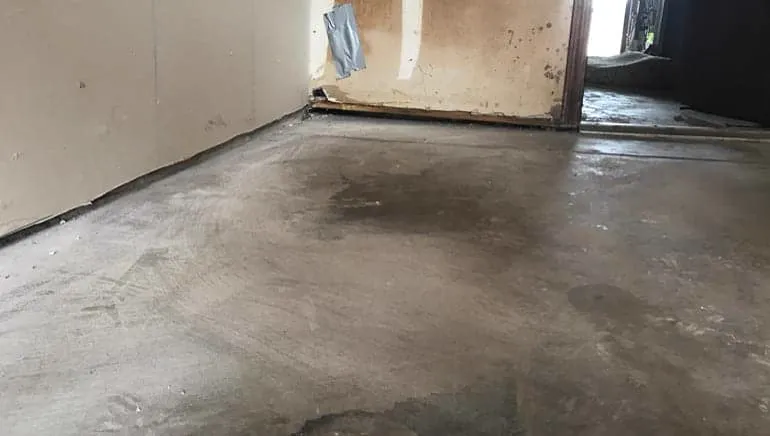
Structural drying is a bigger toolbox aimed at the same goal. Extraction comes first, pulling water out of the slab and carpet far faster than a shop vac can. Then air movers go in at angles along the walls, rather than pointed at the middle of the room, so the air scrubs the surfaces that are wet.
Commercial dehumidifiers do the heavy work after that, removing many times what a rental unit does in a day. And every stage gets measured — moisture readings in the drywall, framing and slab, written down and repeated until they match dry material elsewhere.
The other half is demolition, which homeowners rarely expect. Wet organic material has to come out. Carpet pad, the bottom edge of drywall and insulation inside finished walls hold water, and no amount of air across the surface reaches them.
The classic mistake
Drying the surface while the wall cavity stays wet. The room feels fine in three days, then a musty smell arrives in three weeks. Cutting a clean line a foot up the drywall looks dramatic, but it’s the difference between drying once and twice.
When it wins: a lot of water, water that sat more than a day or two, water behind finished walls, or anything from a sewer backup rather than the sky. That last one isn’t a drying question at all — contaminated water is a cleaning job first.
What it costs: more, and it rides on square footage, days of equipment, and how much finished material comes out and goes back. A small unfinished area sits at the low end; a finished basement with wet framing sits well above it.

How do they compare, straight across?
Doing it yourself
- Cheap — a rental unit and some fans
- You can start within the hour
- Great on a bare slab, clean rainwater
- Slower drying, so more days at risk
- No way to read moisture inside a wall
- Can’t reach wet pad or insulation
Professional structural drying
- Extraction pulls water out of the slab fast
- Commercial dehumidifiers cut days off the job
- Wet organics get removed, not just dried
- Written moisture readings prove it’s done
- Documentation helps an insurance claim
- Costs more, and some material comes out
Notice neither column says “better.” One is a tool, the other a bigger tool, and picking wrong in either direction costs money.
What do Lawrenceville houses change about this?
Here’s the thing about the homes in town. Lawrenceville isn’t one housing style — it’s several, and each leans a different way here. Downtown near the Aurora Theatre, you get older foundations with drainage that was never great. Out toward Sever’s Trail and the Hamilton Mill edge, you get 1990s and 2000s subdivisions where the original footing drain has silted up and quit working.
That second group matters most, because silted drains don’t fail loudly. They fail during one heavy storm, wet a single wall, then behave for months. Homeowners tell us it’s the first time it’s ever happened. Usually it’s the first time they noticed.
Finished basements tip the scale too, and this side of Gwinnett has plenty. Over on the Alcovy side, where lots run toward the river and the ground holds water longer, a finished lower level plus red clay is what turns a DIY job into a bigger one.
And we’re not guessing here. We’re based in Lawrenceville — this is home. Twenty-plus years of fixing basements in town means we’ve probably already worked on a house in your neighborhood, maybe on your street.
Want the number that settles the argument?
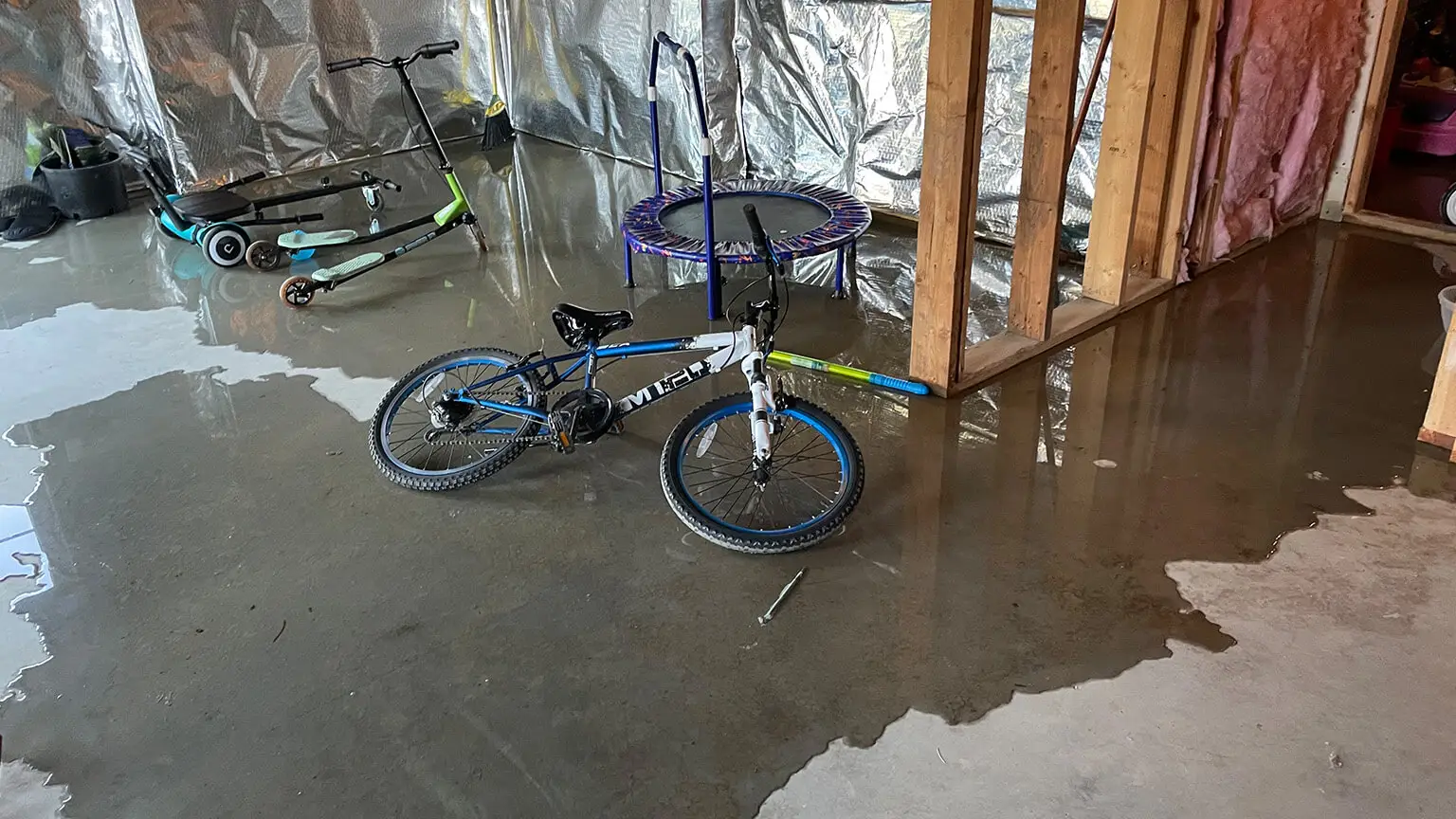
One inch of water across a 1,000-square-foot basement is about 620 gallons — roughly a dozen bathtubs on your slab. That number reframes the topic, because a shop vac holds five or six gallons. You’d empty it over a hundred times before you even started drying.
So the honest question isn’t which equipment is better. It’s how much water you have, and how long it’s been sitting.
The four things that actually decide it
- How much water. A damp strip along one wall is a different animal than an inch across the floor.
- How long it sat. Under a day is forgiving. Past two days, materials have taken it in.
- What’s finished. Bare slab, dry it yourself. Carpet pad, framing and drywall, get help.
- Where it came from. Clean rain is a drying job. A sewer backup is a cleaning job first, and that one isn’t DIY.
Twenty years in, the pattern is boring and consistent: the expensive jobs aren’t the ones that flooded worst. They’re the ones dried on the surface while the wall stayed wet.
So which one would we pick for your house?
You asked for a recommendation, not a shrug. If the water is clean rain, under about an inch, on a bare slab, and you caught it the same day — rent the dehumidifier, run it three or four days with fans, and keep your money. We say that on the phone all the time.
Bring us in when any one of these is true: the water sat more than a day or two, it’s behind finished walls, the area is large, or it wasn’t clean. Then faster drying and pulling the wet material out isn’t an upgrade — it’s the fix.
Then there’s a third answer nobody expects a waterproofing company to write down. A basement that floods “only in heavy rain” almost always has a surface water problem rather than a groundwater one — a clogged gutter, a downspout dumping three feet from the wall, or a grade that settled back toward the house. Surface water is usually the cheaper fix by a wide margin, so we’ve handed that plan to homeowners off US-29 and gone home.
Once things are dry, the real conversation starts: keeping it that way. That might mean improving the best basement drainage setup for your lot, or a full interior system — our page on basement waterproofing walks through how those go in. If you’re also seeing stair-step cracks or a sticking door, read up on foundation repair first, since a moving wall gets solved before anything else. Neighbors a few exits away can compare Snellville basement drying options, and FEMA’s building science resources cover the long-term side.

What does the good version feel like?
Picture the weekend after. The kids’ stuff goes back downstairs, the guest room is a guest room again, and the next storm rolls through while you’re on the couch. That’s the whole product — a storm you get to ignore.
We hear that most from families working odd shifts near Northside Hospital Gwinnett, who can’t spend a Tuesday night bailing out a basement. Whichever of the basement drying options in Lawrenceville you land on, getting that time back is the real return.
Where we work around Lawrenceville
Lawrenceville is home base, so our trucks are here every day. We also cover Snellville, Grayson, Dacula, Suwanee, Duluth, Lilburn and Loganville, plus Buford, Norcross and the wider Gwinnett area.
Questions Lawrenceville homeowners ask us
Sometimes, yes. For a small amount of clean rainwater on a bare slab you caught the same day, a shop vac, fans and a rental dehumidifier will get it done. Fans alone won’t, though, because they only move moisture into the air and something has to pull it back out.
Mold can begin on wet organic material in roughly 24 to 48 hours. That’s why speed beats equipment size. A modest setup running in the first few hours usually wins over a bigger one that shows up two days later.
Turn off power to the basement at the panel before you step into standing water. After that, take photos for insurance, get the water out, and start moving air. Then check whether anything soft — carpet pad, drywall, insulation — is holding water, because that decides your next move.
That pattern almost always points to surface water rather than groundwater. Gutters, downspouts and a grade that settled toward the house send roof and yard water straight down beside the foundation. The good news is that surface water is usually the cheaper problem to solve.
It depends on the source and your policy. A sudden failure like a burst pipe is often covered, while groundwater seepage and surface flooding usually are not without extra coverage. Photograph everything early and call your agent before throwing out damaged material.
Not sure which way to go? We’ll look at your Lawrenceville basement for free
The inspection is free, the estimate is free, and there’s no pressure at the end. We’ll take real moisture readings, show you what’s wet, and say plainly if you can handle this one yourself.
(678) 914-5112Based in Lawrenceville, serving all of Metro Atlanta · $500 off projects over $3,500 · Live support 7am–8pm, 7 days a week