

Basement Drying Options Dacula Homeowners Weigh: Shop Vac or Full Structural Dry-Out?
Both are real answers. Here’s how each one works, what tips the call, and when we’d tell you to save your money.
Two homes take an inch of water on the same stormy night. One gets dried out properly that week. The other gets a fan pointed at it and a closed door. Three years later those are not the same house — and that gap is what the basement drying options Dacula homeowners choose really come down to. Not fancy gear. Timing.
Here’s the calm version of the math. Water handled in the first day or two is mostly a cleanup bill, but water that sits behind a finished wall becomes a materials bill, because the drywall, pad and insulation all have to come out anyway.
Good news, though: you’ve only got two real paths, and by the end of this you’ll know which one is yours.
Why does this happen out here in the first place?
Out toward Dacula the lots get bigger, and so does the amount of water that has to go somewhere when a storm rolls through. Our red clay was packed hard when these subdivisions went up on old farmland, so it sheds water instead of drinking it. Plenty of homes here also run a septic drain field, and a field doing its job keeps the soil near the house damp for days after the rain quits.
So the water isn’t a mystery, and it isn’t your fault. It’s drainage — which means drying and fixing are two separate jobs, and you can win both.
Before anything else
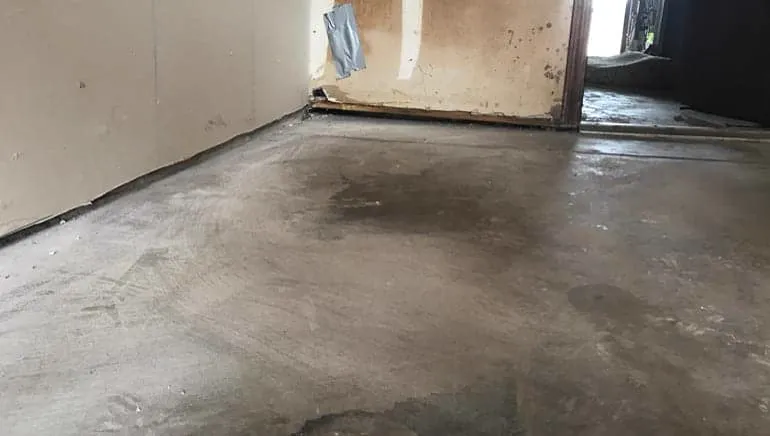
Never step into standing water while the power is on. Kill the circuit at the panel first, and if the panel itself is in the wet area, call the utility and wait outside. This one is not a corner to cut.
Option A: what does drying it yourself look like?
Plenty of people do this well. You pull the water out with a wet/dry shop vac, get the wet stuff outside, then set box fans across the slab and run a rental dehumidifier. After that you check it daily until things feel and smell normal.
When it wins: shallow water, caught fast, on an unfinished floor. Bare concrete and block dry beautifully, because nothing is trapped.
What it costs: a couple of days of rental fees and your weekend. Honestly, that’s the whole bill.
The trade-off: a rental dehumidifier is built for a damp room, not a soaked one, and box fans push air around instead of behind things. So the surface dries first and convinces you it’s done.
Option B: what is professional structural drying?
Different tools, and more to the point, a different goal. We’re not drying a room — we’re drying the building materials back down to the moisture level they had before the storm.
It runs in four parts. Extraction pulls standing water out fast, because removing water beats evaporating it. Then air movers get aimed low and along surfaces, right where the water is. Commercial dehumidifiers pull far more per day than a rental unit, and meter readings get written down daily, so drying stops being a guess.
Wet organics come out as part of the job. Carpet pad, the bottom few inches of drywall and insulation inside finished walls hold water like a sponge, so pulling them turns a sealed cavity back into something that can dry.
When it wins: more than a little water, water that sat overnight, finished walls, or anything from a sewer backup instead of the sky.
What it costs: more, and it moves with square footage, equipment days, and how much material comes out. A small unfinished area sits at the low end, while a finished basement with soaked walls sits well above it.

How do they compare, straight across?
DIY dry-out
- Shop vac, box fans, one rental dehumidifier
- Cheap, and you can start within the hour
- Great on bare slab and block
- Moves air, but not under or behind things
- No readings, so “done” is a judgment call
- Can’t reach a wet wall cavity
Professional structural drying
- Extraction, targeted air movement, commercial dehumidifiers
- Written moisture readings, day by day
- Wet organics removed, not dried in place
- Handles sewer water safely
- Documentation your insurer will ask for
- Higher cost, plus a crew in the house a few days
Put the two basement drying options Dacula homeowners choose between side by side, and notice that neither column says “better.” One is a cleanup, the other is a controlled process.
What question tells you somebody actually diagnosed it?
Ask this: “What’s the moisture reading inside the wall, and what number are we drying to?” That one question separates a real assessment from a guess, and it costs you nothing.
A reading is a number, and a number can be checked tomorrow. If nobody can say what the wall reads now, nobody can say when it’s dry — which is how a basement gets closed up while the bottom plate is still wet.
Drying the part you can see while the part you can’t stays wet is the classic mistake. It isn’t laziness — concrete just looks dry long before framing is.
What four things actually decide the call?
Run your situation through these
- How much water. A damp corner is not four inches across the slab, and volume changes how much drying capacity you need.
- How long it sat. Caught in two hours is a different job than found Sunday after a Friday storm.
- What it got into. Bare concrete dries. Carpet pad, drywall edges and wall insulation hold water and hide it.
- Where it came from. Clean rainwater is one conversation, but a sewer backup is a health cleanup, and that one is never DIY.
Speed matters more than equipment size. Mold can begin growing on wet organic material in roughly 24 to 48 hours, so a shop vac running tonight beats a great machine arriving Thursday. The CDC’s guidance on mold cleanup after a flood is worth five minutes before you start.
One more clue costs nothing. A basement that floods only in heavy rain almost always has a surface water problem rather than a groundwater one — and surface water is usually the cheaper fix.
So which one would we pick for your house?
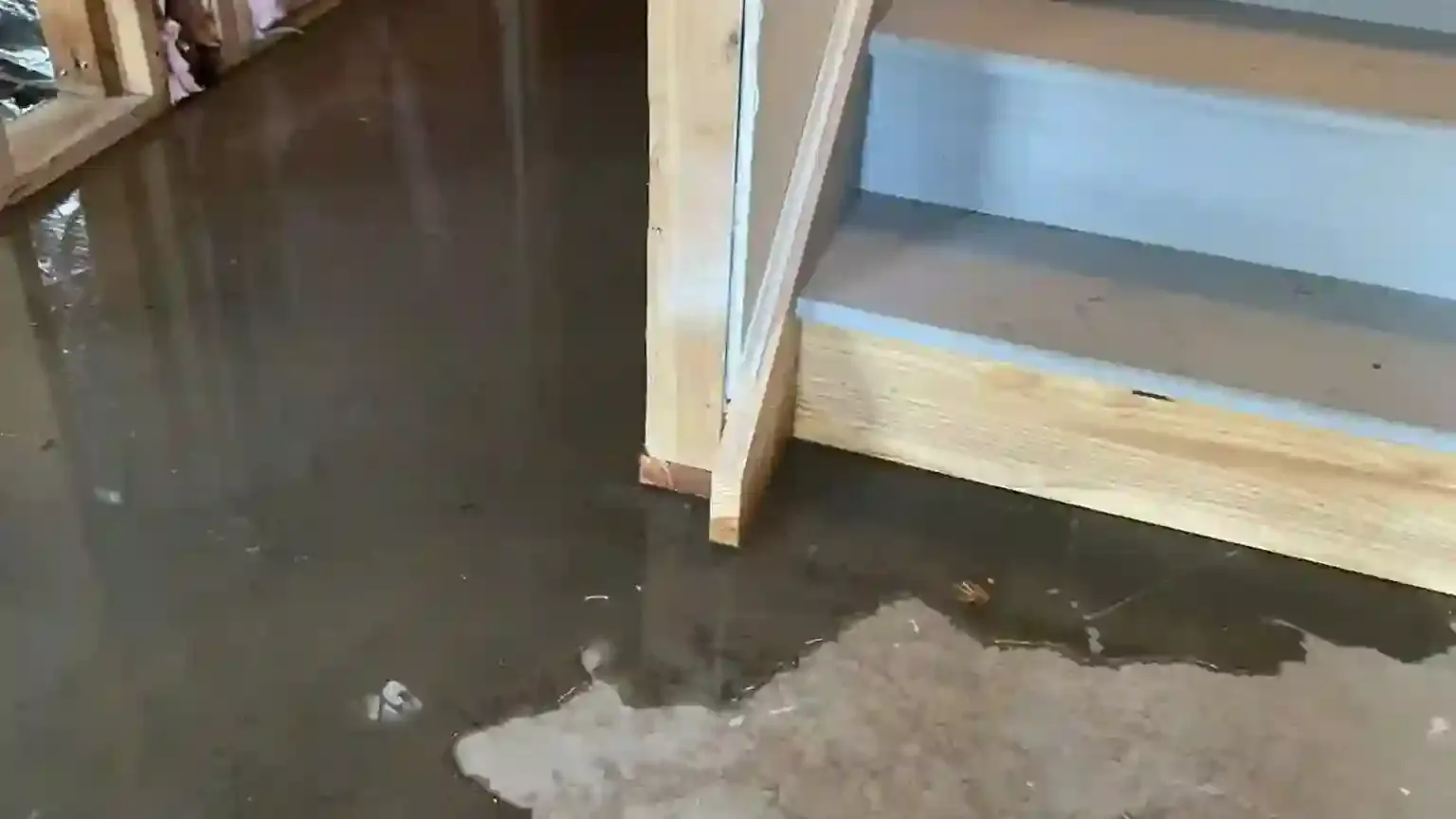
Of the two basement drying options Dacula homeowners ask us about, the smaller one wins more often than you’d expect. If the water is shallow, you caught it the same day, the space is unfinished, and it came from rain — dry it yourself. Fans low, dehumidifier running, windows shut, checked for three days.
Call us instead when any one of these is true: the water touched finished walls, it sat overnight, it covered a large area, or it came up from a drain. In those cases the wet material behind the wall is the whole job, and no amount of fan time reaches it.
Newer homes along the Dacula Road new construction stretch usually land in the first bucket, since those basements are often still open. Finished lower levels in Hamilton Mill land in the second one more often — not because they’re built worse, but because there’s more in the way.
What happened at a house off Auburn Road?
We had a homeowner in Trophy Club of Apalachee, one of the older streets, who did almost everything right. Water crossed about a third of the basement, and he had a shop vac going that night. Two weeks later the floor was dry and he moved on.
Then came the smell — faint, near one wall, mostly on humid days. He called us more annoyed than worried, which honestly was the right read. We pulled a baseboard, put a meter on the bottom plate, and there it was: the drywall and insulation behind it had never dried, because they were sealed in.
The fix was smaller than he expected. We cut the bottom sixteen inches of drywall, pulled the wet insulation, dried the open cavity to a documented number in a few days, and traced the water back to a downspout dumping at the corner.
Today that basement is finished again and boring, which is the best word in our business. He got the family room back before fall, and he stopped bracing every time the forecast turned.

How do you keep from doing this twice?
Drying handles today, while drainage handles next spring. Once things are dry, the honest next step is finding where the water came in — usually extending downspouts, correcting soil that dished toward the house, or giving runoff a defined path across a big lot.
If water keeps arriving anyway, an interior perimeter system takes it in and pumps it out. Our guide to the best basement drainage setups walks through that call, and the basement waterproofing page shows what a system looks like start to finish. Neighbors one town over can read the same breakdown in our Sugar Hill basement drying post. And if you’re seeing stair-step cracks too, start with foundation repair first, since that order saves money.
Fall is the sweet spot for exterior grading on big lots here, because the ground cooperates. FEMA’s guidance on protecting property from flooding covers the same basics if you like reading ahead.

Why does hiring local matter for this?
Because drying is a race, and a crew twelve minutes away wins it. A call from Auburn Road or the streets around Dacula Park gets equipment on site quickly, and that’s most of the battle. We also know these lots — what a septic field does to soil near a foundation, and how water moves off the rolling ground near Hamilton Mill Golf Club.
Where we work around Dacula
We’re based in Lawrenceville, about twelve minutes west, so we’re out this way constantly. We also cover Grayson, Buford, Auburn, Winder, Braselton, Suwanee and Snellville, plus Hamilton Mill and the wider Gwinnett County area.
Questions Dacula homeowners ask us
Sometimes, and it depends on the source. A burst pipe or a failed water heater is often covered, while groundwater seeping through the wall usually is not without separate flood coverage. Photograph everything before you move it and keep the drying documentation, because that paperwork is what a claim turns on.
Start the same day if you can. Mold can begin on wet organic material in roughly 24 to 48 hours, so getting water off the floor tonight matters more than having perfect equipment. A shop vac running now beats a great machine arriving Thursday.
Because the seam where the wall meets the slab is the easiest opening in the house. When saturated clay holds water against the foundation, pressure pushes it through that joint before it finds a crack. It looks alarming, but it’s very fixable, usually with drainage rather than anything structural.
It can be managed permanently, which in practice is the same thing. You give water somewhere better to go with grading, downspout extensions and, when needed, an interior drainage system with a pump. Homes we set up that way go years without a wet floor.
Drying and fixing are priced separately. A dry-out moves with the area involved, the days equipment runs, and how much wet material comes out, while the permanent fix ranges from a simple drainage correction at the low end to a full perimeter system with a pump at the high end. You get a written scope after the free inspection, never a phone guess.
Let’s find out which drying path your Dacula basement really needs
The inspection is free, the estimate is free, and there’s no pressure at the end. We’ll meter the walls, show you what’s wet behind them, and tell you honestly if you can handle this one yourself.
(678) 914-5112Serving Dacula and all of Metro Atlanta · $500 off projects over $3,500 · Live support 7am–8pm, 7 days a week