

Basement Flooding Cost in Roswell: Where the Money Actually Goes
Two separate jobs, one invoice — here’s how to tell them apart, what moves each number, and how long the whole thing really takes.
Water isn’t attacking your house. It’s simply looking for the lowest, easiest place to go, and your basement floor happens to be it. Once you see it that way, basement flooding cost Roswell homeowners face stops feeling like one scary mystery number and starts looking like what it is — a short list of decisions you get to make.
Good news up front: this is fixable. We do it constantly, and the fix is usually smaller than people brace for.
So what is water actually doing down there?
Rain soaks into the soil around your foundation. Georgia red clay holds that water and swells, and swollen soil pushes. That push has a name — hydrostatic pressure — and it moves water through concrete without needing a crack at all.
Roswell adds a wrinkle, because Roswell is built on hills. There’s shallow granite under a lot of these lots, so water can’t sink. Instead it runs sideways on top of the rock until it meets the back of your house, and then it stops being the hill’s problem.
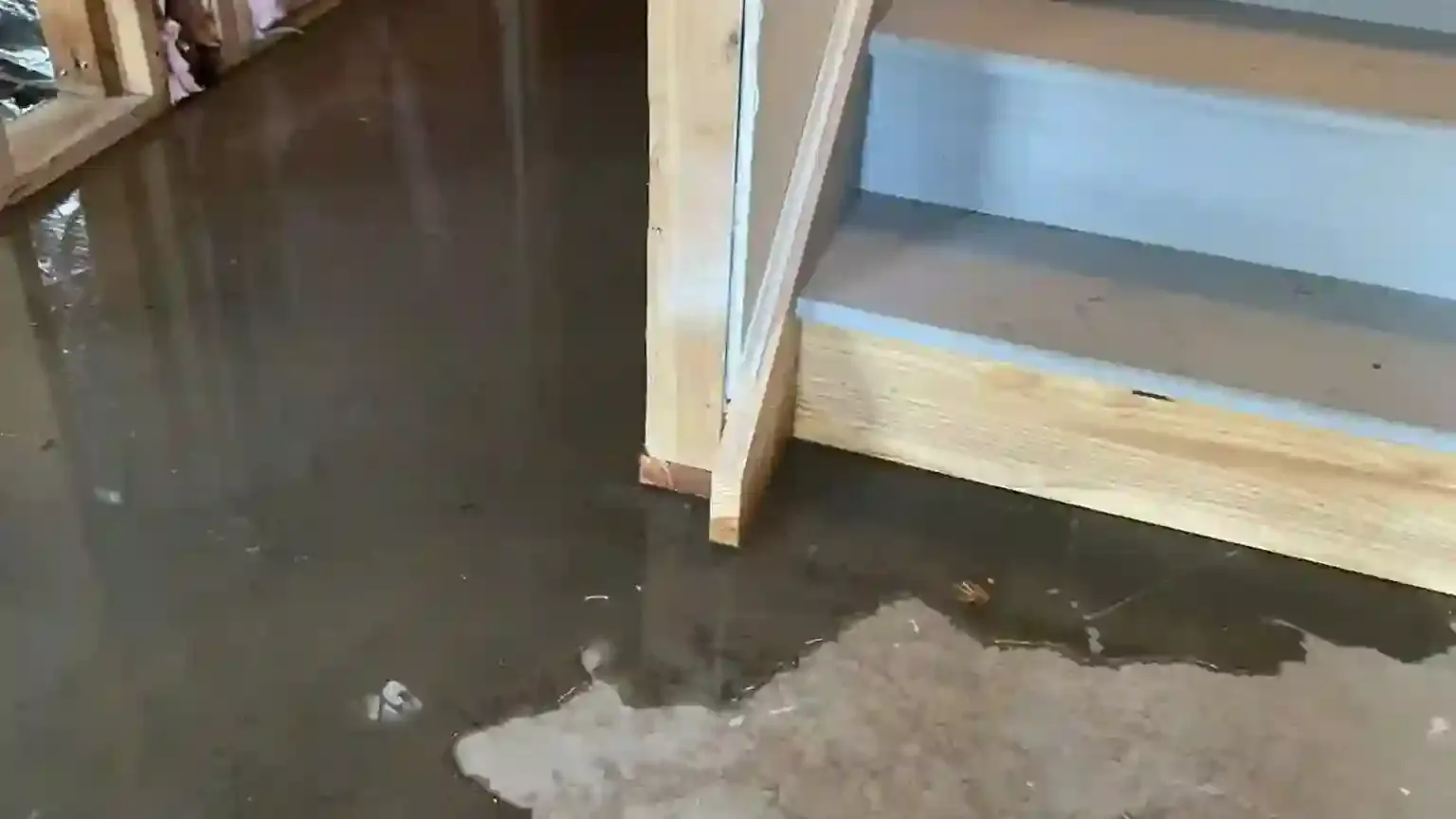
The usual door is the cove joint — the seam where the wall meets the floor. Concrete floors get poured after walls, so that seam is a natural gap. Water under pressure finds it every time.
Worth knowing
Water rising through the cove joint is a drainage question, not a foundation question. Plenty of Roswell homes we walk only need the first conversation, and we’ll tell you that instead of growing the job.
Why is one flood really two jobs?
Here’s the thing most estimates never explain. A flooded basement creates two completely separate pieces of work, and homeowners get confused when they land on the same page.
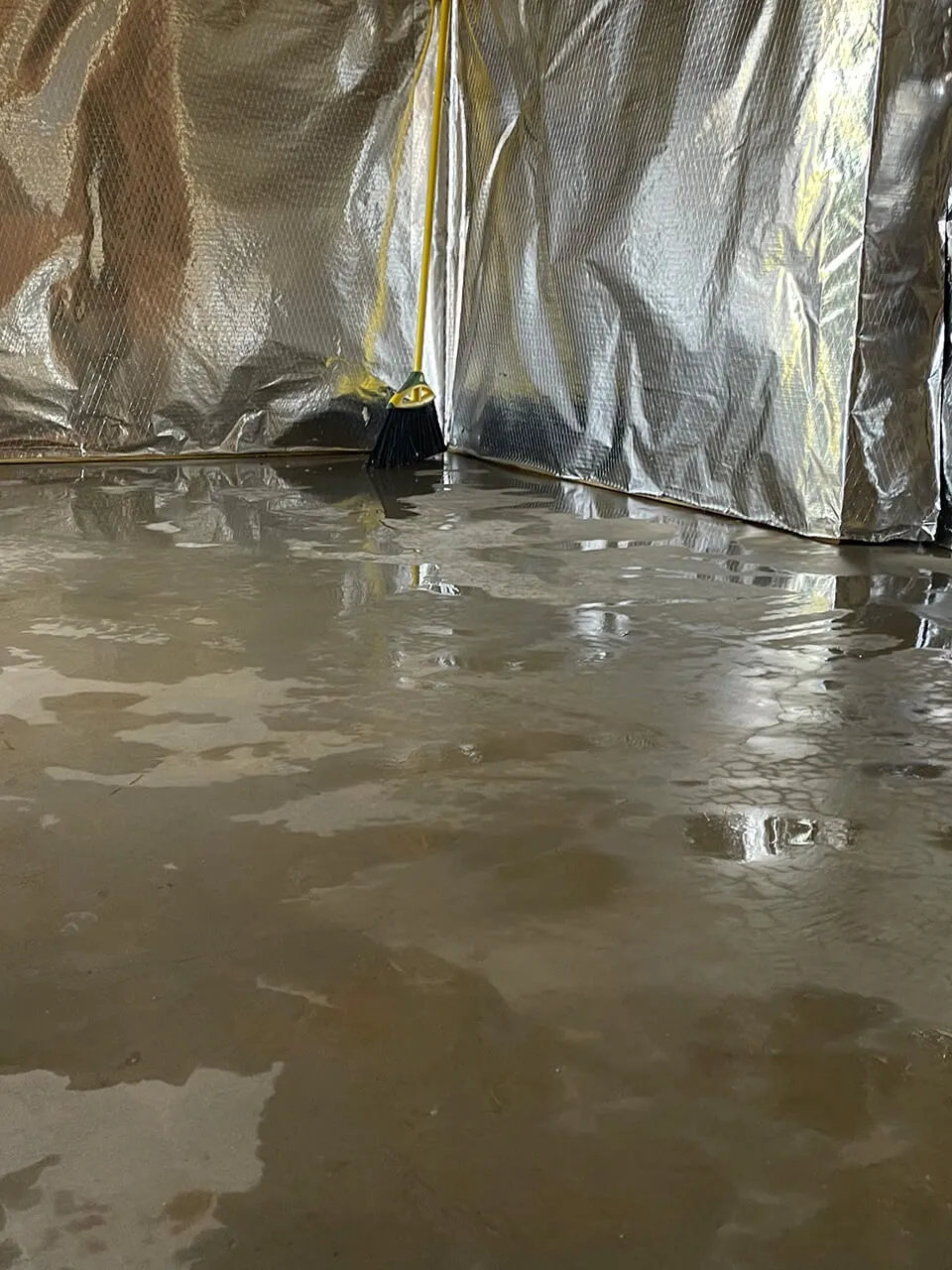
Job one is response. Get the water out, pull the wet material, dry the structure, and clean it. That work is about what already happened, and it’s priced by volume and hours.
Job two is prevention. Give the water somewhere better to go so the same storm stops writing you the same bill. That work is about next spring, and it’s priced by linear feet and equipment.
Skipping job two is where the real money leaks. We’ve met folks over near Martins Landing who paid for drying three times in five years, which is a rough way to buy a drainage system in installments.
What does the cleanup actually look like?
Nobody enjoys not knowing what happens next. So here’s the order.
- Safety and power. Electricity gets shut off to the affected area before anyone wades in. Always.
- Extraction. Truck-mounted or portable extractors pull standing water fast, because volume is the whole battle early on.
- Demolition of the wet stuff. Soaked carpet pad, wet drywall bottoms and saturated insulation come out. They hold water like a sponge and they never fully dry in place.
- Drying the structure. Air movers plus commercial dehumidifiers, running for days, with moisture readings taken as they go.
- Cleaning and treating. Hard surfaces get cleaned so nothing gets sealed in behind the repairs.
- The diagnosis. Now we find the entry point while the floor is bare and honest.
- The permanent fix. Interior drainage, a proper sump, exterior grading — whatever the water is telling us it needs.
Steps one through five are job one. Steps six and seven are job two. Same crew, two very different line items.
Now here’s where a lot of homeowners get steered wrong
Ready for the pivot? A lot of people are sold drying as if it were the repair. It isn’t. Drying restores the room, and that’s genuinely valuable — but it does nothing about the water’s route in.
Water always wins on a hill unless somebody gives it somewhere better to go. That’s the whole job.
The other common miss is a coating. Sealer sits on the wall surface, which is exactly where pressure is highest. Interior drainage sits below the slab, where water shows up already tired, and that’s why one carries a warranty and the other carries a receipt.
Then there’s the sump pump, which fails in five boring, predictable ways: the power goes out mid-storm, the float sticks against a wall, the pump is undersized for the volume, there’s no check valve so water drops back in and it cycles itself to death, or the discharge line is clogged or frozen. None of those are mysteries. All of them are cheap to prevent compared to the flood.
Good news? Every one of those has a fix you can see. A battery backup runs during the outage that causes the flood. A properly sized pump with a check valve and a clear discharge line moves water well away from the house, instead of politely handing it back.
What moves the number up or down?
Straight answer: nobody can price this over the phone, and anyone who does is guessing with your money. Still, you deserve to know what sets the basement flooding cost in Roswell before we ever ring the doorbell.
What the estimate is really measuring
- How much water. Depth and square footage drive extraction and drying time more than anything else.
- How long it sat. A few hours is a different job than a weekend away.
- How much wet organic material comes out. Carpet, pad, drywall and insulation are the bulk of demolition and haul-off.
- Finished or unfinished. Built-ins and a basement bathroom mean careful work before the real work starts.
- Linear feet of drainage. One wall versus a full perimeter is the biggest swing on the prevention side.
- Sump and backup. A new basin, a correctly sized pump, a check valve and battery backup each add cost — and each remove a failure mode.
- What’s happening outside. Sometimes regrading and moving two downspouts handles most of it, and that’s a smaller invoice.
Small exterior corrections land at the low end. A full perimeter system with a new sump and backup power sits at the top. Most Roswell jobs fall somewhere between, and you’ll get one written number with the scope spelled out. If you’re comparing across town lines, our breakdown of Milton basement flooding cost uses the same math, and our guide to basement drying options covers the response side in detail.
How long does it take, and what should you do first?
Extraction is usually same-day. Structural drying commonly runs three to five days with equipment humming, and interior drainage typically takes one to three days on site. New concrete then wants a few days before you load it up.
Speed matters for a real reason. Mold can begin growing on wet organic material in roughly 24 to 48 hours, so every day of delay quietly adds material to the demolition list. The CDC’s guidance on mold cleanup after a flood lays out the same timeline without any sales pitch attached.
Your prep list is short, thankfully. Move what you can off the floor, clear about four feet along the affected walls, photograph everything before anything moves, and make sure we can reach an exterior door. We’ll handle the heavy lifting, because nobody should wreck their back to save us a trip.

What can you honestly handle yourself?
More than you’d think, and we’d rather say so than bill you for a Saturday.
Real DIY wins: extending downspouts six to ten feet out, cleaning gutters twice a year, regrading soil so it slopes away from the house, clearing window wells, and pouring a bucket of water into the sump basin to make sure the pump actually kicks on. Homeowners around Brookfield solve a surprising share of minor seepage with those five alone.
What DIY can’t reach: volume, and anything below the slab. One inch of water across a 1,000-square-foot basement is more than 600 gallons — which is why a shop vac feels like emptying a lake with a coffee cup. You also can’t set drain tile without opening concrete, and no bucket of coating beats saturated hillside clay.
Will insurance pay for any of it?
Here’s the honest version. Standard homeowners policies commonly exclude surface flooding — water that came in from outside, over or through the ground. Sudden internal failures, like a burst supply line, are more often covered.
Sump pump failure and backup coverage is usually a separate endorsement you have to add on purpose, and plenty of people don’t know whether they have it. So read your own policy, or call your agent and ask both questions by name. Five minutes now beats a surprise later. FEMA’s guidance on protecting property from flooding is a solid neutral read while you’re at it.
How do you know the job was done right?
Ask for four things. A written scope naming linear feet and the discharge point. Moisture readings showing the structure actually reached dry, not just felt dry. Photos of the stone and pipe before concrete goes back down. And a live system test while you’re standing there watching.
After that, proof shows up on its own schedule. The floor stays dry through a hard spring storm rolling down off the ridge, the dehumidifier you’ve been emptying twice a day sits idle, and you check the radar out of curiosity instead of worry.

We’ve worked these hills for over twenty years, from the sloped walkouts in Roswell Farms to older lots down toward the Chattahoochee Nature Center and the streets above Old Mill Park. That history is why the warranty means something — if a system needs attention in year seven, the same local crew answers. Our full range of basement waterproofing systems is laid out on the service page, and if you’re also seeing movement in the walls, our page on foundation repair covers that side.
Where we work around Roswell
Our shop is about thirty minutes east in Lawrenceville, so we’re up GA-400 and across Roswell every week. We also cover Alpharetta, Milton, Sandy Springs, Johns Creek, Marietta, Duluth, Suwanee, Peachtree Corners, Norcross and the wider Fulton County area. If your street runs downhill toward a creek, odds are we’ve already worked a house on it.
Questions we get from Roswell homeowners
Often not. Standard policies commonly exclude surface flooding, meaning water that came in from outside or up through the ground. Sump pump failure coverage is usually a separate endorsement you have to add. Please check your own policy or call your agent, since coverage really does vary house to house.
Quickly. Mold can start on wet organic material within roughly 24 to 48 hours, so every extra day usually means more carpet pad and drywall coming out. Extraction the same day keeps the job smaller and cheaper.
Because of the cove joint, the seam where the wall meets the floor. Floors are poured after walls, so that seam is a natural gap, and pressure in wet soil pushes water right through it. It’s the most common entry point we find.
In most homes, yes. Interior drainage below the slab, a correctly sized sump with a check valve and battery backup, and good grading outside handle the vast majority of cases. The goal isn’t blocking water, it’s giving it a faster exit.
It splits into cleanup and prevention. Cleanup depends on how much water there was, how long it sat, and how much wet material comes out. Prevention depends on linear feet of drainage and whether you need a sump. Simple exterior corrections sit at the low end, a full perimeter system with backup power sits at the top, and we give one written number after walking the house.
Let’s find out what your basement actually needs
The inspection is free, the estimate is free, and nobody pressures you at the end. We’ll show you exactly where water is getting in, what it takes to stop it, and what that costs here in Roswell — even when the answer turns out simpler than you expected.
(678) 914-5112Serving Roswell and all of Metro Atlanta · $500 off projects over $3,500 · Live support 7am–8pm, 7 days a week