

Basement Flooding Cost Dunwoody Homeowners Can Actually Plan For
What we look at, the two separate jobs, what moves the number, and how long it takes.
The first thing we do isn’t math. We come down your stairs, stop on the bottom step, and just look for a minute — because a basement usually tells most of its own story before anybody says a word. That quiet minute is also where the real answer on basement flooding cost Dunwoody homeowners keep searching for starts to take shape.
Good news up front: this is solvable, and it’s work we handle constantly.
So what are we actually looking at?
We start with height. Water leaves a line, and that line says how deep it got and how long it sat. A faint half-inch mark is a different conversation than staining eight inches up drywall.
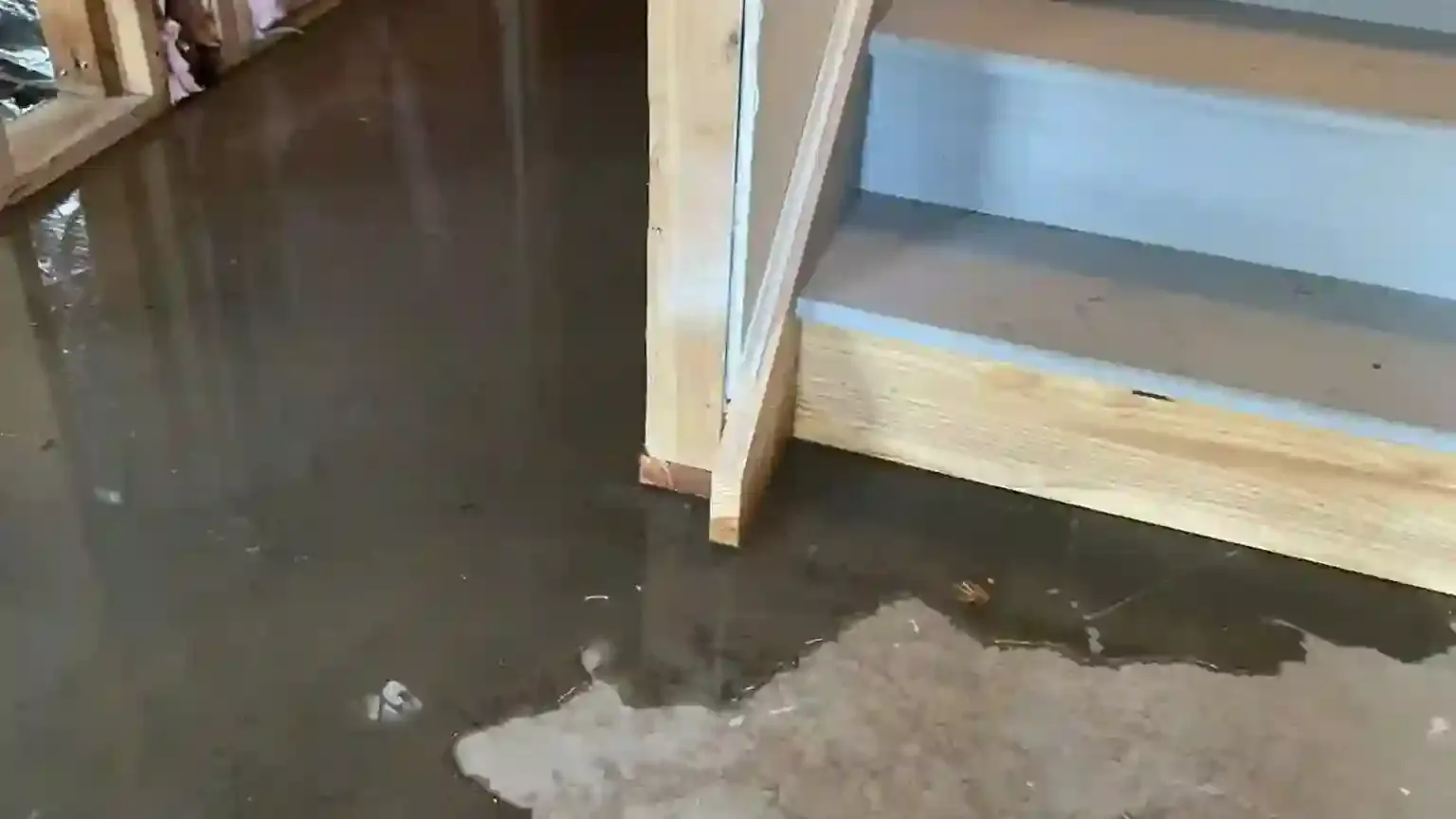
Then we get low and check the cove joint — the seam where wall meets floor. That seam is the most common entry point in a flooded basement, because soil water under pressure pushes up right where two slabs of concrete meet. It isn’t a crack, so sealing the wall never touches it.

After that we look at what got wet. Carpet pad, boxes, insulation, that couch nobody wanted upstairs — all of it soaks and holds, and wet organic material drives cleanup cost more than anything else. Last stop is the sump, the discharge line, then outside.
Worth knowing
Mold can start on wet building materials in roughly 24 to 48 hours, so drying speed matters more than almost anything else after a flood.
Why does this keep happening here?
Dunwoody is hilly, and plenty of homes sit below street grade with the basement cut into a slope. When a spring storm dumps on that hillside, gravity sends water toward the lowest wall on the street.
Then there’s the age of the houses. Most of this city went up between 1965 and 1985, when “waterproofing” meant a spray coat of asphalt on a block wall. Fifty years of red clay later, those walls are telling on themselves.
Clay is the other half. It swells when it drinks, and swollen clay pushes — a force called hydrostatic pressure. That’s also behind the bowing block walls we see from the split-levels in Village Mill to the brick ranches in Kingsley. If a wall is already moving, we handle that first with foundation repair, because waterproofing a shifting wall is money spent twice.

Tree roots matter too. Old oaks grow into original footing drains and crush them flat, and once that drain quits, water heads for the house. The National Weather Service flood safety pages cover how fast heavy rain stacks up.
Before you call anyone, can we explain one thing?
Here’s the distinction that clears up almost every confusing estimate people show us. A flooded basement isn’t one job. It’s two, and they often get priced by different companies.
Job one vs. job two
- Job one — get the water out and dry the space. Extraction, removing soaked material, fans and dehumidifiers. Emergency work, priced by how much water, how long it sat, and how much wet material leaves the house.
- Job two — stop it happening again. Interior drainage, a proper sump and discharge, grading and downspout corrections, wall repair where needed. Planned work, priced by linear feet and what the system includes.
People get sticker shock because they hear one price and assume it covered both. Drying alone leaves a clean basement with the same setup that flooded, so the next storm reruns it.
Drying is the ambulance ride. Drainage is the reason you don’t need one again.
Name the two jobs and every quote gets easier to read, because most of the basement flooding cost Dunwoody folks worry about lands in one column or the other. For the drying half, our rundown of basement drying options lays out equipment and timing.
What does the work look like, in order?
Nobody likes surprises when a jackhammer is involved, so here’s the order.
- Free inspection. Outside first — slope, downspouts, where water collects — then the stains, cove joint and sump inside.
- Water out, if it’s still standing. Pumps and extractors, then wet material leaves. Speed matters most here.
- Structural drying. Fans and commercial dehumidifiers run until moisture readings in concrete and framing come down. Usually three to five days.
- The written scope. Linear feet, materials, sump location, discharge point and price, on paper.
- Opening the channel. A narrow strip of slab comes up along the affected perimeter. Loudest day, often the shortest.
- Drainage goes in. Perforated pipe in clean washed stone below floor level, with wall liner sending seepage into it instead of across your floor.
- Sump and discharge. Everything routes to a basin, and the pump sends water well away. Dumping it beside the foundation just gets it back in line.
- Close up and test. Fresh concrete, cleanup, haul-off, then a live test while you watch.
Most interior systems take one to three days on site, while drying stretches longer. Your prep list is short, though: clear about four feet along the working walls and make sure we can reach an exterior door.
What moves the number up or down?
Straight talk: nobody can price this over the phone. Still, you deserve to know what sets the basement flooding cost Dunwoody homeowners actually pay, so here’s everything we weigh while we walk your basement.
The seven things that set the price
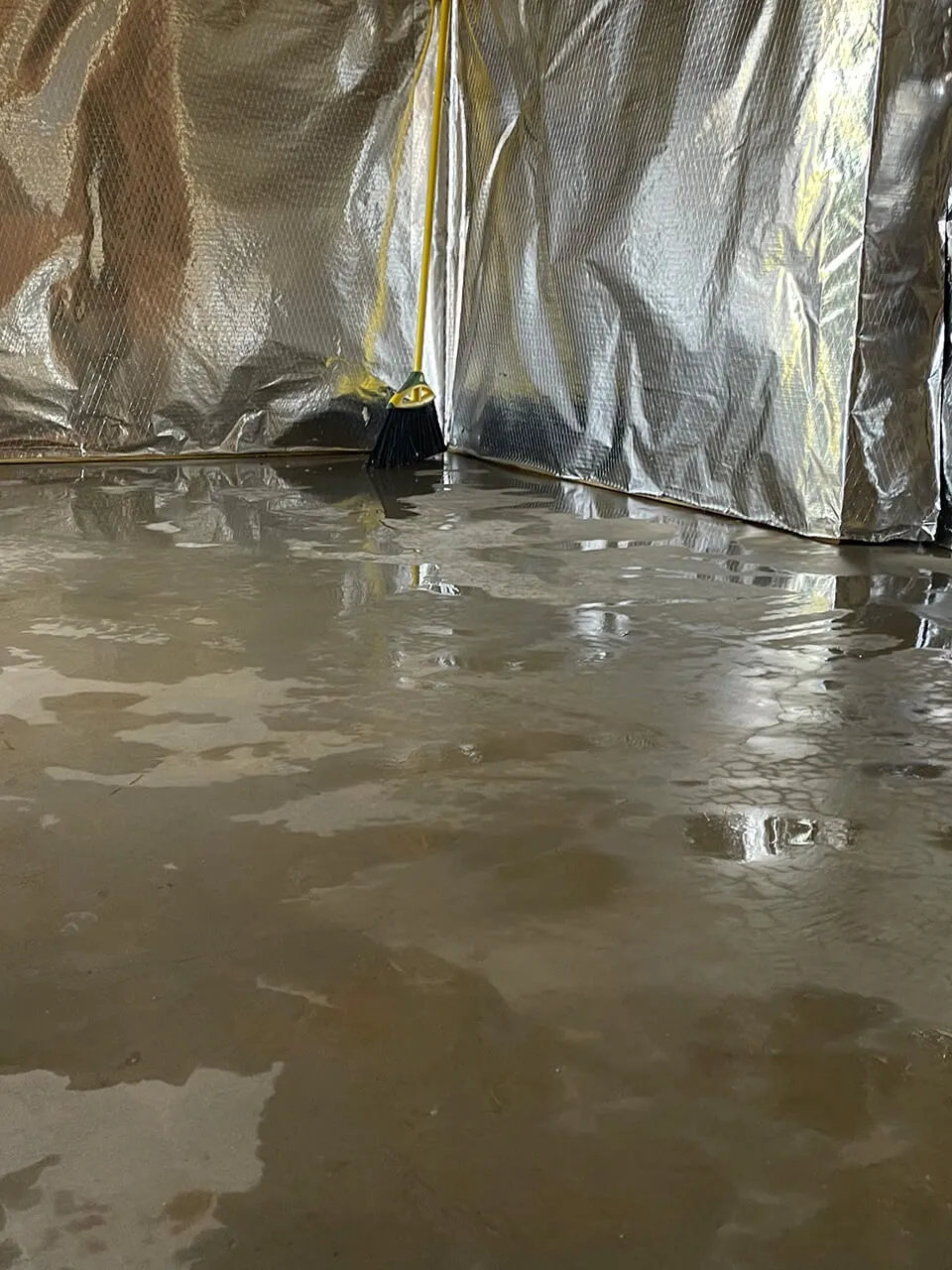
- How much water. A damp corner and four inches across the floor are different jobs.
- How long it sat. Same water two days later costs more, because more material has to leave.
- How much wet organic material comes out. Carpet, pad, insulation and the bottom of drywall drive cleanup most.
- Linear feet of drainage. One wall versus a full perimeter is the biggest factor on the permanent side.
- Finished or unfinished. Built-ins, a bar and a bathroom mean careful work before the real work starts.
- Sump situation. Some homes have a serviceable basin already. Plenty of original 1970s setups don’t.
- What’s happening outside. Sometimes regrading and extending two downspouts handles most of it.
Small exterior corrections land at the low end, while a full perimeter system with a new sump and backup power sits at the top. Most homes fall in between, and you’ll get one written number with the scope spelled out. Our Roswell basement flooding cost breakdown uses the same math.
Why did the sump pump let this happen?
Because sump pumps fail in a handful of predictable ways, and every one is fixable. Knowing the list turns “my pump betrayed me” into “oh, that’s all.”
- Power went out during the storm. The storm that fills a basement is the one that drops the power. That’s the argument for a battery backup.
- The float got stuck. A basin wall or some debris, and the switch never tells the pump to wake up.
- It’s undersized. The pump runs nonstop and still loses ground.
- No check valve. Water slides back down the pipe, so the pump moves the same gallon forever.
- Clogged or frozen discharge. A crushed line or a mulch-packed outlet, and water has nowhere to land.
The fix for all five is one idea: sized right, tested, valved, and given a clear path away. FEMA’s building science resources cover the same thinking at the whole-home level.
Will insurance cover any of this?
Sometimes, and we’d rather be straight than hopeful. Standard homeowners policies commonly exclude surface flooding, and sump backup coverage is usually a separate endorsement you add on purpose. So read your own policy, or ask your agent both questions. Either way, we document everything with photos.
What can you honestly do yourself?
More than you’d think, and we’d rather tell you than charge you for a Saturday. Extending downspouts six to ten feet out, cleaning gutters twice a year, regrading soil away from the house, and testing the pump with a bucket handle plenty of minor moisture complaints.
What DIY can’t reach is anything below the slab. You can’t set drain tile without opening concrete, and no product in a bucket outmuscles saturated clay. Our basement waterproofing page compares the system types.
What should you do every year once it’s fixed?
This is the part almost nobody hands you. A finished system is close to maintenance-free, but ten minutes a season keeps it that way.
The yearly list
- Spring and fall: pour a five-gallon bucket into the sump basin and confirm the pump kicks on and shuts off clean.
- Twice a year: clean gutters and check every downspout still empties well away from the foundation.
- Once a year: clear mulch, leaves or soil from the discharge outlet, then test the battery backup.
- After a big storm: take thirty seconds to look at the floor and the cove joint. Dry means it’s working.
- Every couple of years: check that soil still slopes away, because clay settles and grading drifts.
Picture next April. Storms roll across I-285, rain sits on the hill behind your house for two days, and you walk downstairs out of curiosity instead of dread. The floor’s dry.

How do you know the job was done right?
Ask for four things and you’ll sort careful work from fast work. A written scope naming linear feet and the discharge location. A warranty you can read. Photos of the stone and pipe before concrete goes back down. Then a live test while you watch.
We’ve worked this side of DeKalb for over twenty years — sloped lots in Branches, old block basements near Dunwoody Village, homes for folks who work at Emory Saint Joseph’s Hospital. Since the same crews come back, the warranty still means something in year seven.
Where we work around Dunwoody
Our shop is about thirty minutes northeast in Lawrenceville, so we’re in Dunwoody most weeks. We also cover Sandy Springs, Brookhaven, Peachtree Corners, Chamblee, Doraville, Norcross, Tucker, Duluth, Stone Mountain and the wider DeKalb County area.
Questions we get from Dunwoody homeowners
Because the soil around your foundation only holds so much. A long rain saturates the clay, pressure builds, and water gets pushed through the cove joint where wall meets floor. Dry weeks let that water drain off, so the basement looks fine until the next storm.
Often not, so check your own policy before assuming either way. Standard homeowners policies commonly exclude surface flooding, and sump pump backup coverage is usually a separate endorsement. Ask your agent about both, and we’ll document everything with photos and a written scope.
Quickly — mold can begin on wet materials in about 24 to 48 hours. Pulling standing water and getting air moving the same day makes a real difference in what can be saved. Speed is also the cheapest thing you can do, since less soaked material means less removal.
That’s the cove joint. Your floor slab and your walls are separate pieces of concrete, and the seam between them is the easiest path when soil water is under pressure. It isn’t a crack or a defect, which is why sealing the wall never fixes it.
Yes, when you fix the source instead of the symptom. Interior drainage below the slab, a properly sized sump with a check valve and backup power, and water sent well away handle it long term. Add ten minutes of yearly checks and most homeowners stop thinking about it.
Let’s find out what your basement actually needs
The inspection is free, the estimate is free, and nobody pressures you at the end. We’ll show you where water is getting in, what it takes to stop it, and what that costs in Dunwoody.
(678) 914-5112Serving Dunwoody and all of Metro Atlanta · $500 off projects over $3,500 · Live support 7am–8pm, 7 days a week