

Basement Drying Options Dunwoody Homeowners Have — Pro Crew or Do It Yourself?
Both paths are real. Here’s how each one works, what decides it, and which one we’d pick for your house.
Good news first, because you’ve probably had a rough morning. Most wet basements we see come back completely, and a lot of them dry out just fine without a big invoice. The whole point of sorting through basement drying options Dunwoody homeowners face is figuring out which group you’re in — and that’s usually a short conversation, not a long one.
So here’s the honest version. Sometimes a shop vac, a couple of fans and a weekend get it done. Other times the water is already somewhere you can’t reach, and rented equipment just moves warm air past a wet wall. Both situations are common around here, and telling them apart is the real skill.
What comes before any drying at all?
Power. Before you step into standing water, go to the panel and shut off the circuits that feed the basement. If the panel itself is down there, or you’d have to wade to reach it, stop and call an electrician or Georgia Power instead. That’s not a scare tactic — it’s just the one step that has no shortcut.
Once the power is off, take pictures before you move a single box. Insurance adjusters ask for them later, and nobody has ever regretted having too many.
Worth knowing
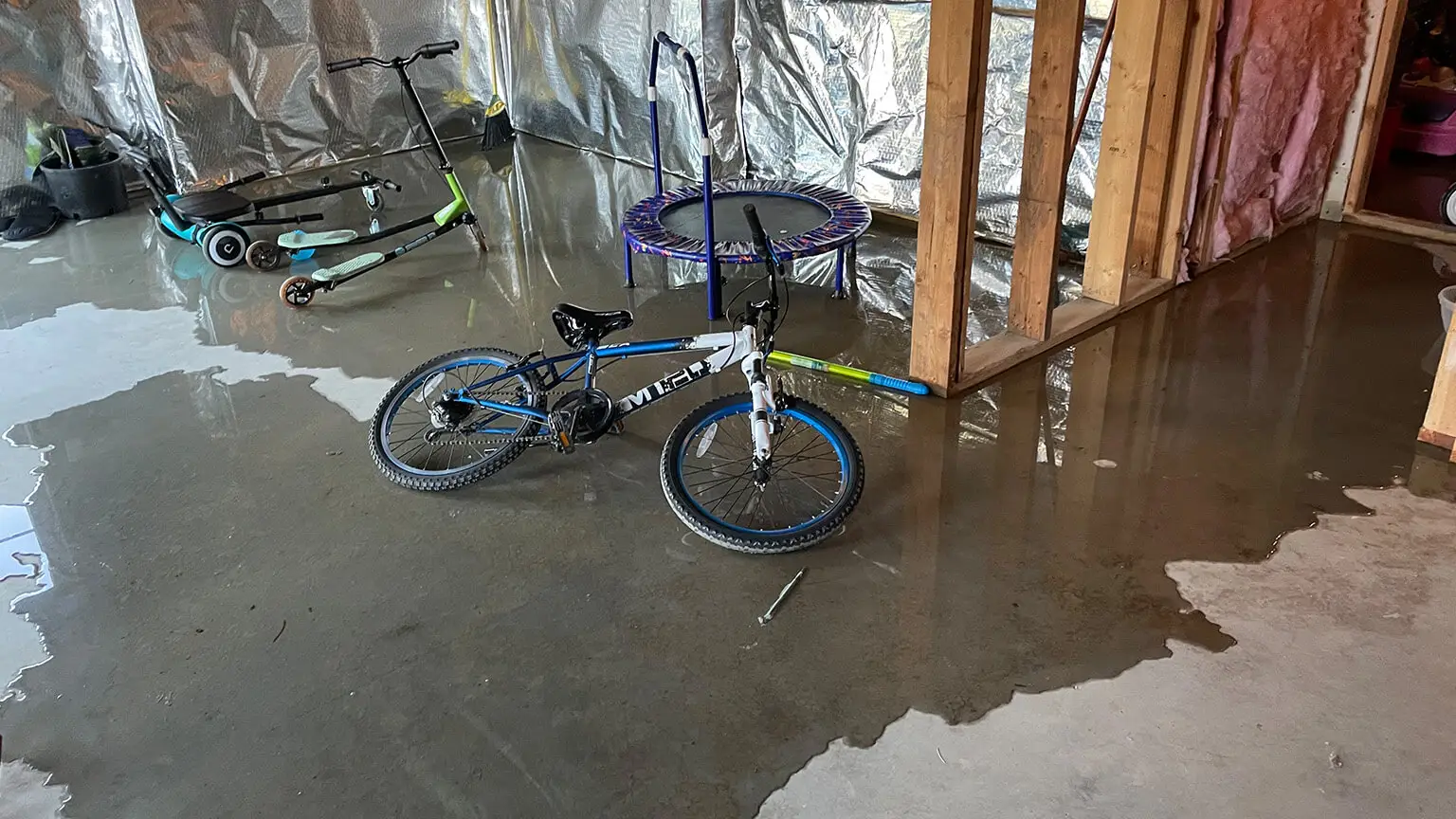
One inch of water across a 1,000-square-foot basement is more than 600 gallons. That’s why a wet-vac can feel like it’s losing — it isn’t broken, it’s just carrying a lake five gallons at a time.
Option A: can you dry it yourself?
Often, yes. The do-it-yourself version is a shop vac for the standing water, box fans aimed low along the walls, and a rental dehumidifier running around the clock. Add a squeegee and a mop bucket and you’ve got the whole kit. Plenty of homeowners in Kingsley and Georgetown have handled a small storm this way and never called anybody.
When it wins: clean rainwater, a shallow amount of it, caught within a few hours, on an unfinished slab with nothing soft in the way. If you can see every square foot of floor that got wet, you’re in good shape.
What it costs: a rental dehumidifier runs a modest daily rate, and the fans you probably already own. The bigger cost is your weekend and a power bill that ticks up while everything runs.
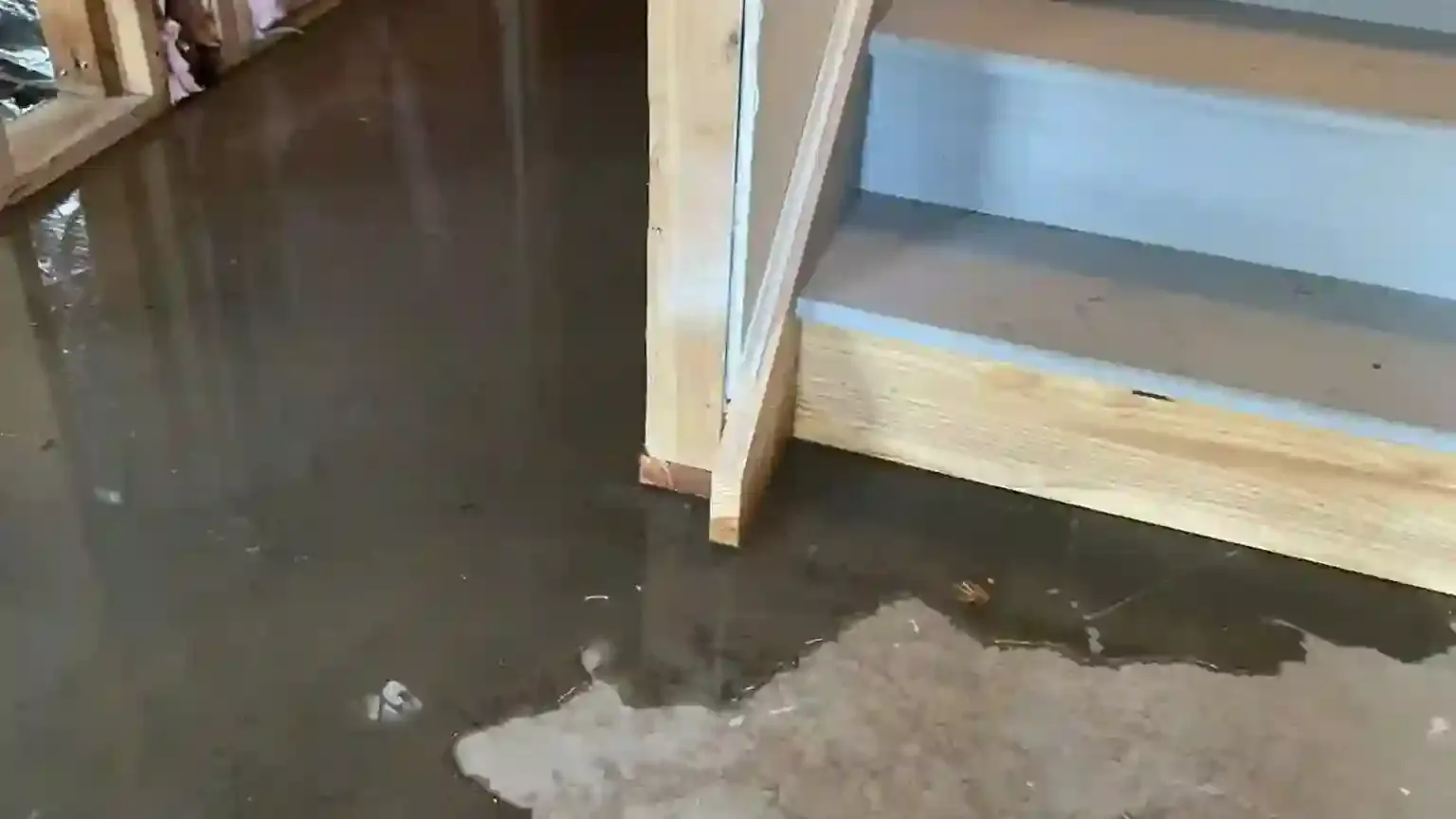
The trade-off: you’re drying what you can reach. Box fans push air across surfaces, and a rental dehumidifier pulls a limited amount of water out of the air per day. Neither one knows what’s happening inside a wall cavity, because neither one measures anything.
Option B: what does professional drying actually involve?
It’s less dramatic than people expect. First comes extraction with a truck-mounted or portable unit that pulls water out far faster than a shop vac can. Then wet organic material comes out — carpet pad, the bottom edge of drywall, any insulation that got soaked. After that, air movers get placed at angles that push air along and behind surfaces instead of just over them.
Commercial dehumidifiers do the heavy part. They pull far more water per day than a rental unit, and they keep pulling while the crew is off site. Meanwhile, moisture meters and readings taken every day tell everyone whether the wall is actually drying or just feeling dry. That documentation is the quiet reason this option exists.
When it wins: a lot of water, water that sat overnight or longer, finished walls, or anything that came from a sewer backup. Category matters — clean rain off the roof and water backing up out of a drain are two different jobs, and the second one isn’t a DIY project at any volume.
What it costs: more than a rental, less than people fear. Price rides on square footage, how many days the equipment stays, and how much material has to come out. You should get a written scope, not a number over the phone.
How do the two compare, straight across?
Doing it yourself
- Cheap, and you can start in ten minutes
- Great for clean rainwater caught early
- Works well on bare slab and open block
- Slower removal, so hours add up
- No readings, so you’re guessing at “dry”
- Can’t reach inside a finished wall
Professional structural drying
- Extraction removes the bulk fast
- Wet organic material gets removed, not dried
- Commercial dehumidifiers pull far more per day
- Daily moisture readings, written down
- Handles contaminated water safely
- Costs more, and needs scheduling
Notice that neither column says “better.” One is a tool problem and the other is a reach problem, so the right pick depends on where your water went, not on how much you want to spend.
Why do so many DIY jobs almost work?
Here’s the part most companies skip when they explain this. The floor drying is the easy half. What decides the outcome is whether wet organic material is trapped where air can’t get to it — carpet pad, the paper face on the bottom of drywall, fiberglass batts sitting in a finished stud bay.
Those materials hold water like a sponge in a closed box. You can run fans for a week, walk down, touch the wall and feel nothing but cool paint. Meanwhile the cavity behind it is still wet, and that’s the classic mistake. It isn’t a lack of effort. It’s that the air never got where the water was.
Good news, though: it’s a completely fixable thing once you know. Cutting the drywall a foot up, pulling the wet pad, and opening the bay lets air do its job in a day or two instead of never. Homeowners are usually relieved when we show them, because a small cut beats a mystery smell in April.
Speed is the other half. Mold can begin on wet organic material in roughly 24 to 48 hours, which means acting quickly matters more than owning big equipment. The CDC’s guidance on mold cleanup after a flood walks through the same timeline in plain language. That’s why we’d rather you start today with fans than wait three days for a perfect plan.
So which would we pick for your house?
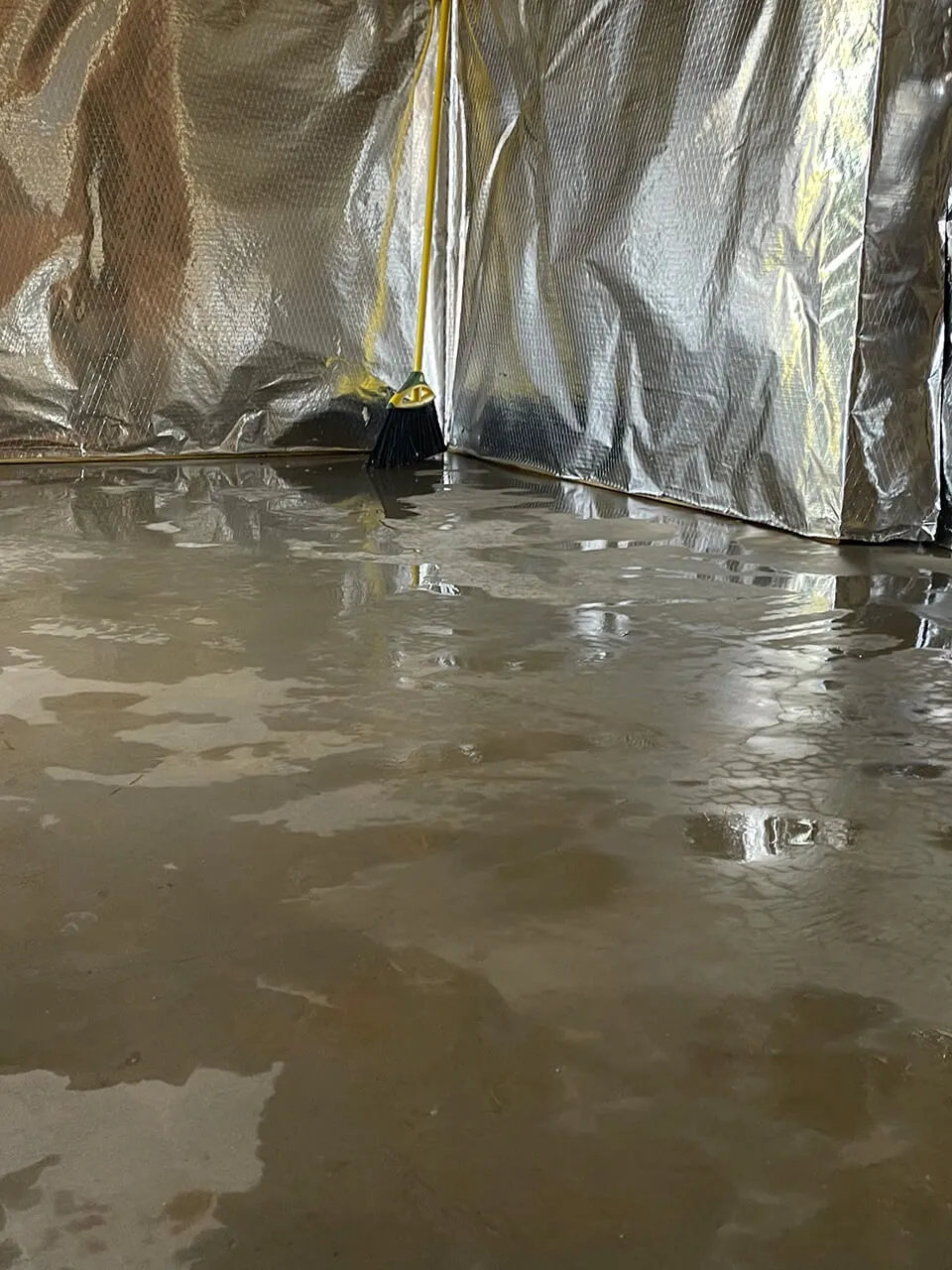
You asked for a recommendation, so here it is. Handle it yourself when four things are true: the water was clean rain, it’s under about an inch, it sat less than a day, and nothing soft or finished got touched. In that case, extract it, run fans and a dehumidifier for two or three days, and keep your money.
Call a crew when any one of these shows up: water deep enough to cover your shoes, water that sat overnight, finished walls or carpet involved, or anything that smells like it came from a drain line. Sewer water isn’t a volume question at all — it’s a contamination question, and that one has a clear answer.
And yes, we tell people to skip the bigger option all the time. A homeowner off Mount Vernon Road called after a spring storm, and by the time we got there the slab had already dried on its own. We checked the walls, found nothing, and left. No invoice, no upsell, just a plan for the downspout that caused it.
That’s usually the moment homeowners relax. Knowing you spent the right amount — not the most, not the least — is its own kind of comfort.
Twenty years in, here’s what we’ve learned: drying a basement is a measuring job, not a muscle job. The crew that writes down readings beats the crew with the biggest fans every single time.
Ever had a diagnosis surprise you?
All the time. A family in Dunwoody North called about a basement that flooded twice in one spring, and they were sure the block wall had finally given up. They’d already priced out a big exterior job in their heads, which is a rough way to spend a Tuesday.
But the wall was fine. The original footing drain around that 1970s foundation had been crushed and clogged for years, so rain that should have run to daylight was collecting against the footing and coming up at the cove joint. That’s a Dunwoody classic. Dunwoody’s split-levels and ranches were built when waterproofing meant a spray coat of asphalt on the outside of a block wall, and fifty years of Georgia clay later, those walls are telling on themselves.
The fix was interior drainage and a sump, not an excavator. It cost a fraction of what they’d braced for, and their lower level has been dry through two storm seasons since. What’s more, they got the basement back — the treadmill came out of the garage, the kids’ stuff came off the shelves, and the room stopped being storage.
Stories like that are why we start with drying and diagnosis instead of a proposal. Once things are dry, you can see the real problem, and the real problem is usually smaller than the fear.
What keeps it from happening again?
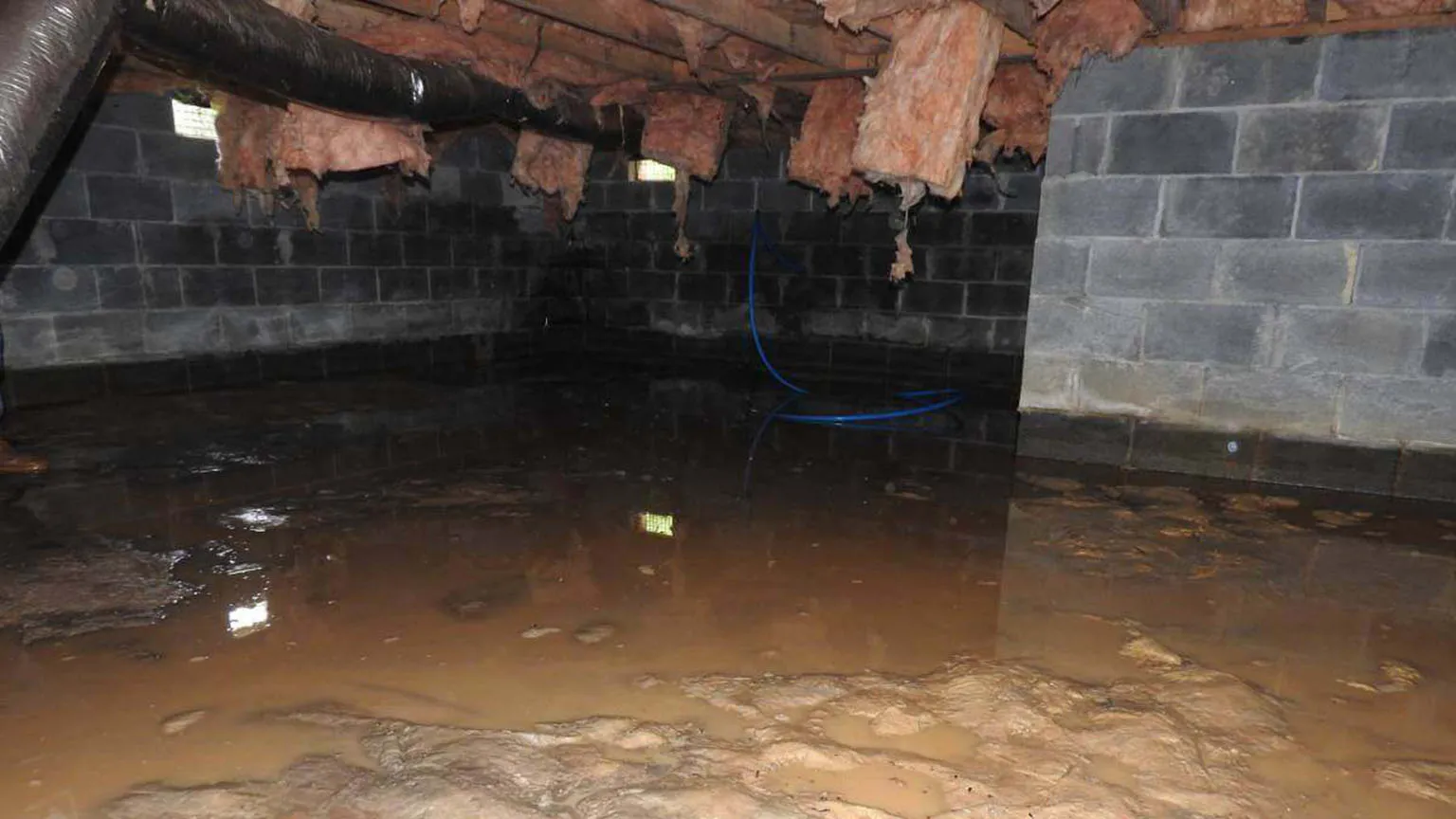
Drying is step one, and it’s the step everyone remembers. Still, drying isn’t a repair — if water found a way in once, it knows the route. That’s why we walk the outside after every job.
- Extend the downspouts. Six feet out, minimum. On the hilly lots between Donaldson-Bannister Farm and the older streets nearby, this alone solves a surprising number of calls.
- Check the grade. Soil should fall away from the house. Clay settles, so add dirt where it’s dished, not mulch.
- Watch the big trees. Sixty-year-old oaks send roots into old drain lines. Roots win, so plan around them.
- Test your sump twice a year. Pour a bucket in and watch it kick on before spring storms, not during.
- Keep gutters clear. Dunwoody’s canopy is beautiful in October and hard on gutters the same week.
For a broader look at protecting a house from water, FEMA’s building science guidance on flood protection is a solid free read. Then, if you’d rather just have someone look, that’s what the free inspection is for.
Why does a local crew matter here?
Because water behaves differently on these slopes than it does in flat neighborhoods. Homes near Emory Saint Joseph’s Hospital and throughout the older sections of town often sit below street grade with the basement cut into a hill. We’ve been in enough of these houses to know what the 1970s builders did, and what they didn’t.
Want to read further before you call? Our page on basement waterproofing explains the systems we install, and our guide to the best basement drainage setups covers what happens after the drying. If the walls are cracked or bowing, start with foundation repair instead. Neighbors up north can read the same breakdown in our Roswell basement drying options guide.
Where we work around Dunwoody
We’re based in Lawrenceville, about thirty minutes northeast, and we’re in Dunwoody most weeks. We also cover Sandy Springs, Brookhaven, Peachtree Corners, Chamblee, Doraville, Norcross, Tucker and Duluth, plus the wider DeKalb area.
Questions Dunwoody homeowners ask us
Start the same day if you can. Mold can begin on wet organic material in roughly 24 to 48 hours, so speed matters more than equipment size. Even a couple of fans and an open window in the first few hours makes the rest of the job easier.
Because the seam where the wall meets the slab is the easiest opening in the room. When saturated clay pushes water down against the footing, it takes that seam rather than pressing through solid block. It usually means drainage outside the wall has stopped working, not that the slab has failed.
It can be managed permanently, which in practice looks the same. A perimeter drainage system with a sump gives water a route out instead of a fight, and it works during the storm rather than after it. Add good gutters and grading and most homes stop having wet-basement seasons entirely.
It depends on how much wall is involved, whether you need a sump, and how much finished space has to come out first. Drying alone sits at the low end, while a full perimeter system under a finished basement sits at the high end. You get a written scope with the number, never a phone guess, and projects over $3,500 get $500 off.
That’s still worth a look, though it doesn’t always mean a big project. Twice-a-year water often traces back to a downspout, a settled grade, or one clogged section of old drain line. We’ll tell you plainly if that’s your situation instead of selling you a system you don’t need.
Let’s figure out what your Dunwoody basement actually needs
The inspection is free, the estimate is free, and there’s no pressure at the end. We’ll check moisture where you can’t see it, tell you honestly if fans and a rental will do the job, and give you a real plan either way.
(678) 914-5112Serving Dunwoody and all of Metro Atlanta · $500 off projects over $3,500 · Live support 7am–8pm, 7 days a week