

Basement Flooding Cost in Alpharetta: Two Bills, Not One
What cleanup really costs, what the permanent fix really costs, and how to tell which one you’re being quoted.
The line in the inspection report was eleven words long. “Evidence of past water intrusion at the basement wall-floor joint.” One sentence, and a closing that had been cruising along suddenly had homework attached. That’s how plenty of folks first go looking for the basement flooding cost Alpharetta homeowners should actually expect — not during a storm, but at a kitchen table with a report in front of them.
Good news right up front: that sentence isn’t a verdict. It’s a to-do, and it’s the kind we handle every week.
Why are there two prices, not one?
Here’s the thing most quotes never spell out. Flooding splits into two different jobs, and people compare bids without noticing which one they’re holding.
Job one is getting water out and drying the space. Extraction, hauling out soaked carpet and pad, cutting away wet drywall, then running air movers and a dehumidifier for days. That’s cleanup. It restores the room, but it changes nothing about why water showed up.
Job two is making sure it doesn’t happen again. Interior drainage, a sump system, grading and downspout work. That’s a separate scope with a separate number. Mixing the two up is like paying to mop under a leaky sink and being surprised the sink still leaks.
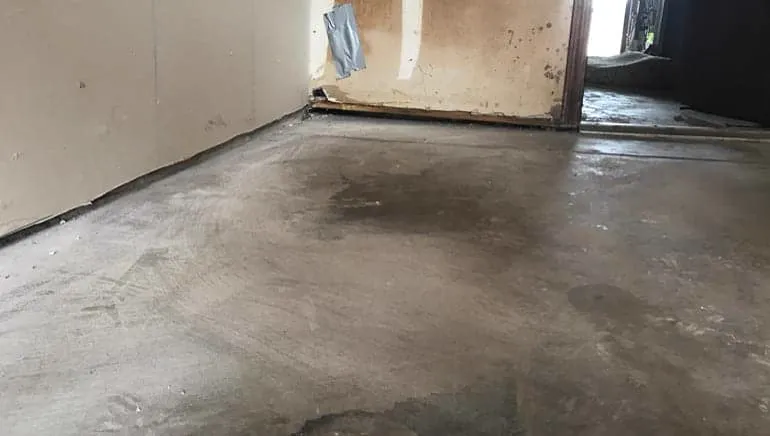
So the first question isn’t “how much.” It’s “which job is this?” A cleanup-only bid will always look cheaper than one that includes drainage.
Worth knowing
Plenty of Alpharetta homes only need part of job two. Sometimes regrading a corner and moving two downspouts does most of the work, and we’ll say so.
What happens, in order?
- Safety first. Power gets shut off to the wet area before anyone wades in. Always.
- Extraction. Standing water comes out with a truck-mount or a submersible pump.
- Removing wet organic material. Carpet, pad, drywall, insulation, cardboard. Anything porous that soaked through — this drives a big share of the bill.
- Structural drying. Air movers plus a dehumidifier, usually three to five days, with moisture readings along the way.
- The diagnosis. Once it’s dry, we find the entry point. Dry walls tell the truth; wet ones look wet everywhere.
- The written scope. Linear feet, sump location, discharge point, price. One number you can read on your phone between meetings.
- The permanent work. Interior channel, pipe in washed stone below slab level, wall liner, sump basin, then fresh concrete.
- The live test. We run water through the system while you watch it leave.
Notice where the diagnosis sits. It comes after drying, and that order saves people money more often than any discount does.

What actually moves the number?
Real talk: we won’t publish a flat price, and you should be a little suspicious of anyone who does. Still, you deserve to know what sets the basement flooding cost Alpharetta homeowners get quoted.
The six things that set the price
- How much water. A damp corner and four inches across a finished basement are different planets.
- How long it sat. Water caught in six hours costs less than water found after a weekend away.
- How much wet organic material comes out. Usually the biggest line item in cleanup.
- Finished or unfinished. Built-ins, a home office and a bathroom mean careful demo first.
- Whether drainage or a sump is part of the fix. Exterior corrections sit at the low end; a full perimeter with a new basin and battery backup sits at the top.
- Wall condition. Active cracking gets handled first, because waterproofing over a moving wall is money spent twice.
Most jobs land in the middle. To see the same math one county over, our breakdown of Duluth basement flooding cost uses an identical framework, while our guide to basement drying options digs into equipment and drying times.
What does this look like from the water’s side?
Flip it around for a second. Think like the rain landing on your roof — because water isn’t sneaky, it’s just extremely consistent.
Water leaves the roof, hits a downspout, and lands wherever that downspout ends. If that’s three feet from the wall, it soaks into red clay beside your foundation. Clay drinks slowly and holds on, so the water sits and pushes. That push has a name — hydrostatic pressure — and it hunts for the easiest opening.
It finds the cove joint almost every time. That’s the seam where wall meets floor slab, and it’s the most common entry point in Metro Atlanta. Not a crack, just two pours meeting, which to water reads as a door left open.
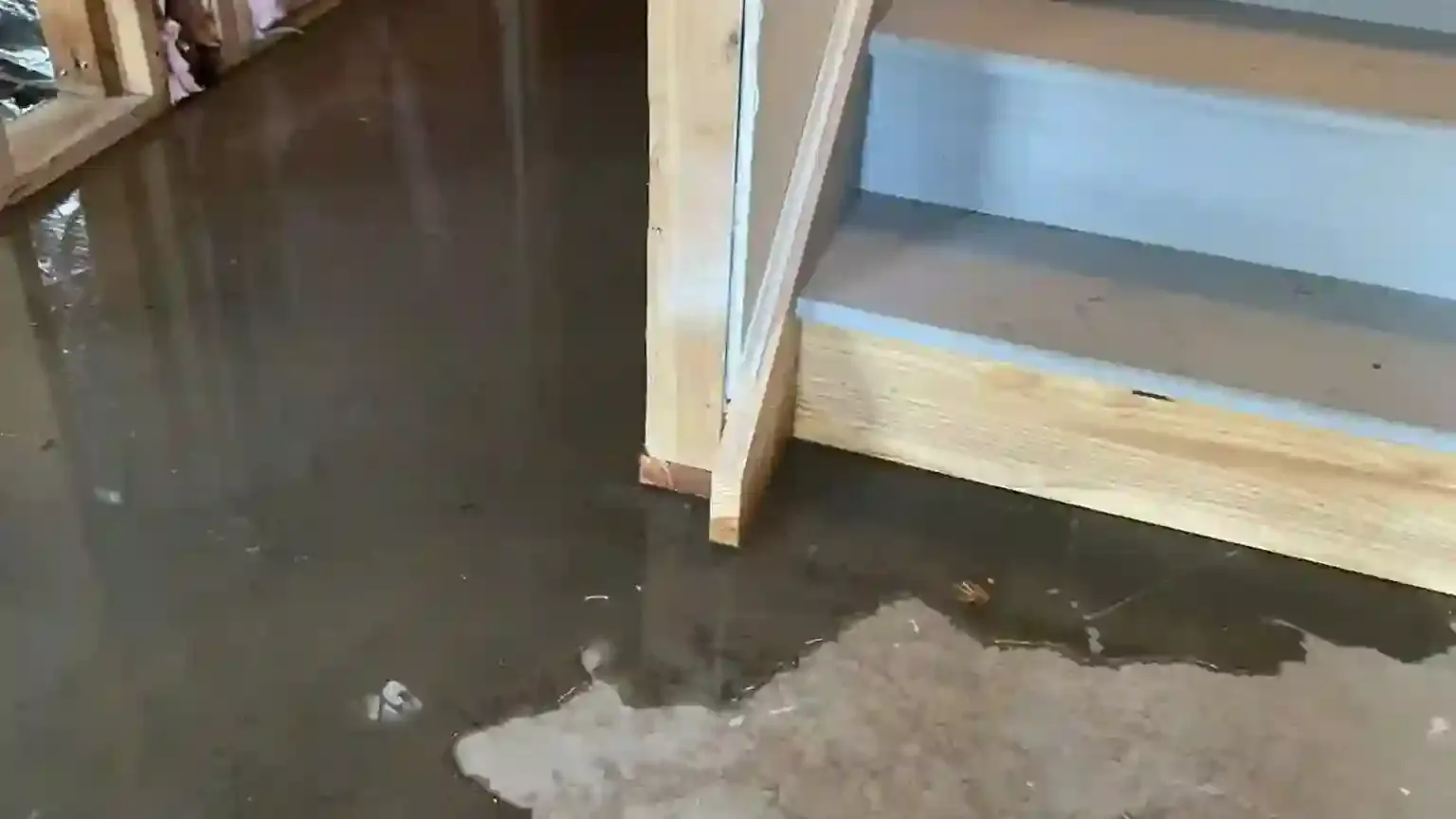
Seen that way, the fix stops sounding like magic. We don’t block water at the wall, where it arrives with all its pressure behind it. We meet it lower — a channel under the slab routed to a sump that carries it well away. In other words, we hand water a faster exit, and it takes the fast exit every time.
You can’t out-muscle water. You can absolutely out-plan it.
This matters here specifically. Alpharetta’s boom-era subdivisions are now old enough that the original waterproofing has simply worn out — even on homes that look brand new from the street. Downspouts and grading that moved water beautifully in 1995 don’t anymore. We see it in Crabapple, in Milton Park, and constantly along Nesbit Ferry, where mature landscaping slowly changed how those lots shed water.
How long does it take, and what about insurance?
Drying runs three to five days with equipment on site. The permanent work is usually one to three days after that, though a full perimeter in a finished basement stretches longer. New concrete then wants a few days before you park a treadmill on it.
Your prep list is short. Clear about four feet along the affected walls, photograph everything before it moves, and make sure we can reach an exterior door. We’ll handle the heavy furniture.
Now insurance, honestly. Standard homeowners policies commonly exclude surface flooding — water arriving from the ground outside. Sump failure and water backup are usually a separate endorsement you add on purpose. So read your own policy or call your agent, since coverage varies house to house. The National Weather Service flood safety pages are a good plain-English start.
Why speed changes the price
Mold can begin growing on wet organic material within roughly 24 to 48 hours. That’s biology on a schedule, and it’s the best argument for calling the same day instead of next weekend. Dry it fast and you’re replacing pad; wait a week and you’re replacing drywall too. The CDC’s guidance on mold after a flood covers the cleanup side clearly.
What can you honestly handle yourself?
More than you’d guess, and we’d rather say so than bill you for a Saturday.
Real DIY wins: extending downspouts six to ten feet out, cleaning gutters twice a year, regrading soil so it falls away from the house, clearing window wells, and testing your sump with a bucket of water. Those five fix a fair share of minor water complaints.
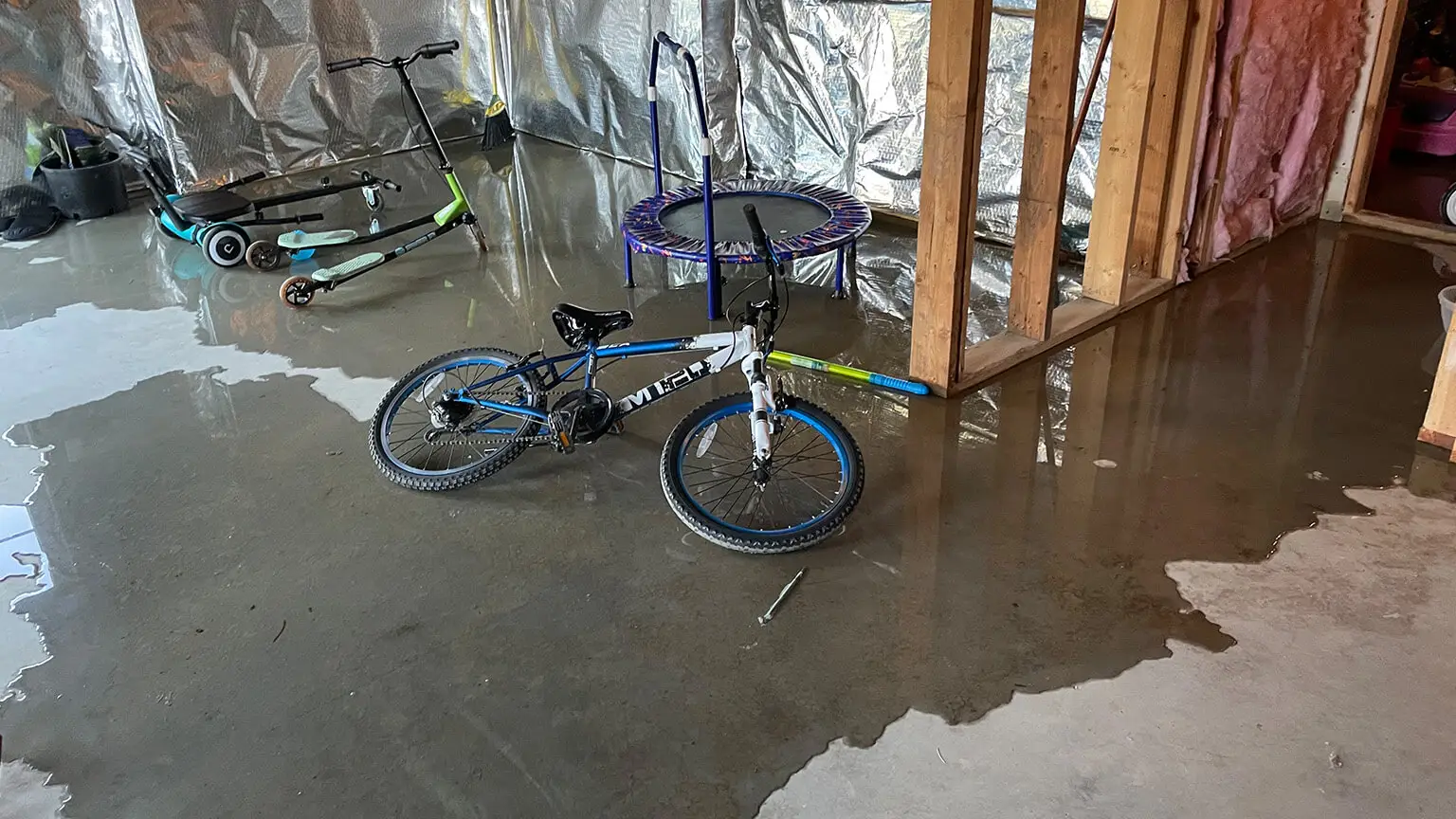
What DIY can’t reach: anything below the slab, and anything past a small spill. A shop vac moves gallons; a flood is hundreds of gallons hiding inside materials you can’t see. Fans move air, but they don’t pull moisture from a room the way a commercial dehumidifier does.
Why sump pumps quit
Sump failures are boringly predictable, which is great news, since predictable problems are preventable ones. Power drops during the exact storm that needed the pump. The float sticks against the basin wall. The pump was undersized. There’s no check valve, so water drains back down after every cycle. Or the discharge line is clogged at the far end. Each of those costs less to fix than a flood does, and a battery backup is the big one here.
What if it isn’t what you think?
Here’s a story worth telling. A homeowner near the Big Creek Greenway called us braced for a big number, sure they needed a full perimeter. Water showed up after every hard rain, same corner, always overnight.
We dried it, then looked. The cove joint was clean, and so were the walls. What we found was a downspout extension a landscape crew had crushed flat while burying it — so every gutter on that side of the roof dumped into one spot four feet from the wall. One afternoon of work, a new buried line out toward the yard, plus regrading a shallow spot. No jackhammer.
They spent a fraction of what they’d budgeted, and honestly, small estimates are our favorite ones. Not every job goes that way — plenty of homes do need the system — but you won’t know which one you have until somebody dries it and actually looks.
How do you know it was done right?
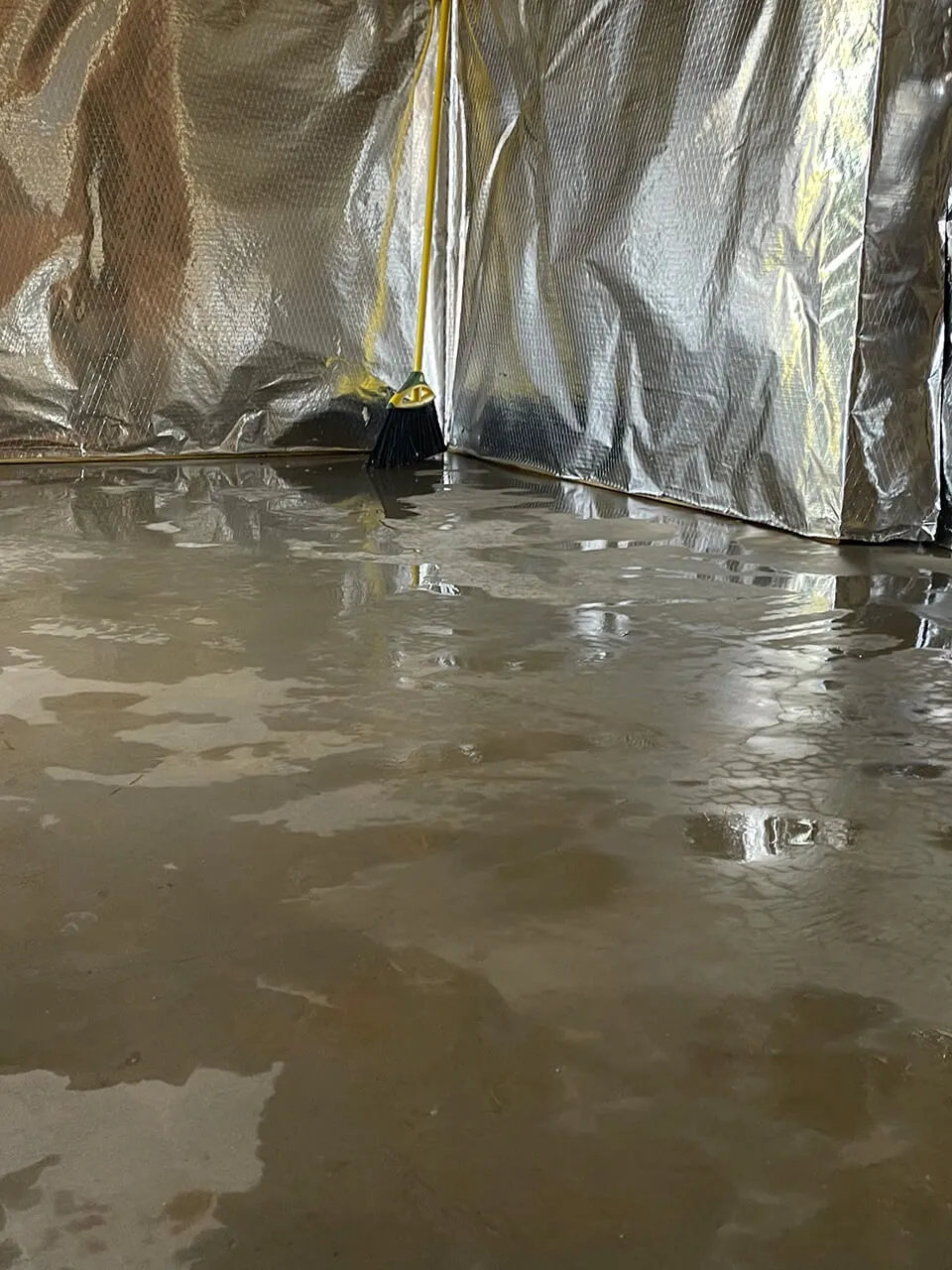
Ask for four things and you’ll sort careful work from fast work in a minute. First, moisture readings at the start and end of drying. Second, photos of the stone and pipe before concrete goes back down. Third, a written warranty you can read without a translator. Fourth, a live water test while you’re standing there.
After that, proof shows up on its own schedule. A hard spring storm rolls through, you walk downstairs out of habit, and the floor is dry. It happens again in the fall, and you stop checking. That’s the real result: quiet pride — my house is solid, and I take care of it.
We’ve worked this side of GA-400 for over twenty years, from soccer weekends around Wills Park to walkout basements on graded lots all over town. If a system needs attention in year seven, you’re calling the same crew that installed it. Our range of basement waterproofing systems sits on the service page, and if your report flagged wall cracks too, our page on foundation repair explains how those connect.
Where we work around Alpharetta
Our shop sits about twenty-five minutes east in Lawrenceville, so we’re up GA-400 constantly. We quote basement flooding cost Alpharetta homeowners can plan around, and we cover Milton, Johns Creek, Roswell, Cumming, Duluth, Sandy Springs, Suwanee, Peachtree Corners and the wider Fulton County area.
Questions we get from Alpharetta homeowners
That’s still a pattern, not bad luck. Water arrives the same way every time, and only the rain totals change. Occasional flooding usually has a simpler cause, so those inspections often end with a smaller fix than people expect.
For a small spill you caught right away, sure. For real flooding, no — a fan moves air but doesn’t pull moisture out of a room, and water hides inside pad, drywall and framing. Commercial dehumidifiers and air movers are what actually dry a structure.
Mold can begin on wet organic materials in roughly 24 to 48 hours. That’s why drying speed matters more than almost anything else after a flood. Call the same day if you can, since every hour saved usually saves material too.
Shut off power to the wet area before you step in it, then photograph everything for your records. After that, lift what you can off the floor and call for extraction. Live support runs 7 a.m. to 8 p.m., seven days a week.
Because red clay saturates and pushes water against the foundation until it finds the easiest opening, usually the cove joint where wall meets floor. Light rain never builds that much pressure. Interior drainage relieves it, so heavy rain stops being an event.
Let’s find out what your basement actually needs
The inspection is free, the estimate is free, and nobody pressures you at the end. We’ll show you where water gets in, what it takes to stop it, and what that costs here in Alpharetta — even when the answer is smaller than you planned for.
(678) 914-5112Serving Alpharetta and all of Metro Atlanta · $500 off projects over $3,500 · Live support 7am–8pm, 7 days a week