

Basement Drying Options Suwanee Homeowners Can Choose Between — DIY or Pro?
Fans and a shop vac, or a real structural dry-out? Here’s how each one works, what decides it, and when we’d tell you to skip the big one.
Most of the basement drying options Suwanee calls we get don’t start with a flood. They start with a fix that already happened. A homeowner over near Settles Bridge told us he’d caulked the crack, ran two box fans for a weekend, and called it done. Six weeks later the room smelled like a tent that got packed up wet.
So what went wrong? Nothing dramatic, honestly. He dried the part he could see. The carpet pad underneath and the bottom edge of the drywall never got the memo, because air can’t move through things it can’t reach.
Good news, though: that’s a very common miss, and it’s easy to avoid once you know what you’re looking for. By the end of this you’ll know which drying path fits your basement — and we’ll say plainly when the smaller one is enough.
Why does the quick patch fail so often?
Here’s the thing. Drying a basement isn’t one job, it’s two. There’s surface water, which is the puddle you can see and mop. Then there’s bound water, which is the moisture soaked into porous stuff — the pad, the drywall, the framing, the concrete itself. Surface water leaves in an afternoon. Bound water takes days and needs help.
That’s why a floor can look bone dry while a wall cavity two inches away is still sitting at soaked. The fix is simple in concept: open it up, take the wet organic material out, and move dry air across what’s left. Do that and the room comes back clean, with no lingering smell and no guessing.
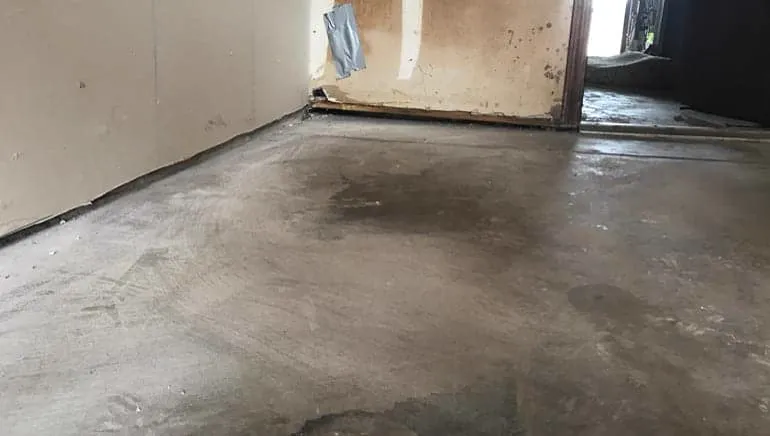
Before you go down there
Never step into standing water while the power is on. Go to the panel first and shut off the circuits that feed the basement. If the panel itself is in the wet area, call your electrician or Georgia Power and wait. This one isn’t a judgment call.
Where does the water usually come from here?
Suwanee grew up in one fast wave in the late nineties and early two-thousands. Those homes are now all hitting their first real waterproofing failure at the same time, which is why our schedule fills up in the same few weeks every spring. It isn’t bad luck. It’s a birthday party nobody wanted an invitation to.
The other big one is grading. Soil that sloped away from the house in 2001 has had twenty-five years to settle, and now it tips back toward the foundation. Every storm, the yard hands its water to your wall. We see it constantly in Ivy Falls and on the older lots around Suwanee Station, where the original fill has quietly compacted a few inches.
Either way, the drying decision is the same. What matters isn’t where it came from — it’s how much, how long, and what it touched.
Option A: can you dry it yourself?
Sometimes, yes. Let’s give this option a fair shake, because plenty of homeowners handle it and never need us for the cleanup part at all.
How it works: pull the water with a wet/dry shop vac, working in passes until nothing new comes up. Take out anything soft and soaked — rugs, cardboard boxes, that pile of school projects from North Gwinnett High School that has been in the corner since 2019. Then set box fans to push air across the floor, run a rental dehumidifier with the doors closed, and empty it religiously.
What it costs: a decent shop vac and a weekend dehumidifier rental land in the low hundreds. If you already own the vac, it’s mostly your Saturday.
When it wins: small volume, clean rainwater, caught within a few hours, and nothing finished or soft got soaked. An unfinished basement with a bare slab and a half inch of clear water is a genuinely good DIY job. We’d tell our own families the same thing.
The trade-off: you’re drying what you can reach. No moisture readings, no way to prove the wall cavity came back to normal, and consumer equipment is slower. Slower matters more than people expect, and we’ll get to why.
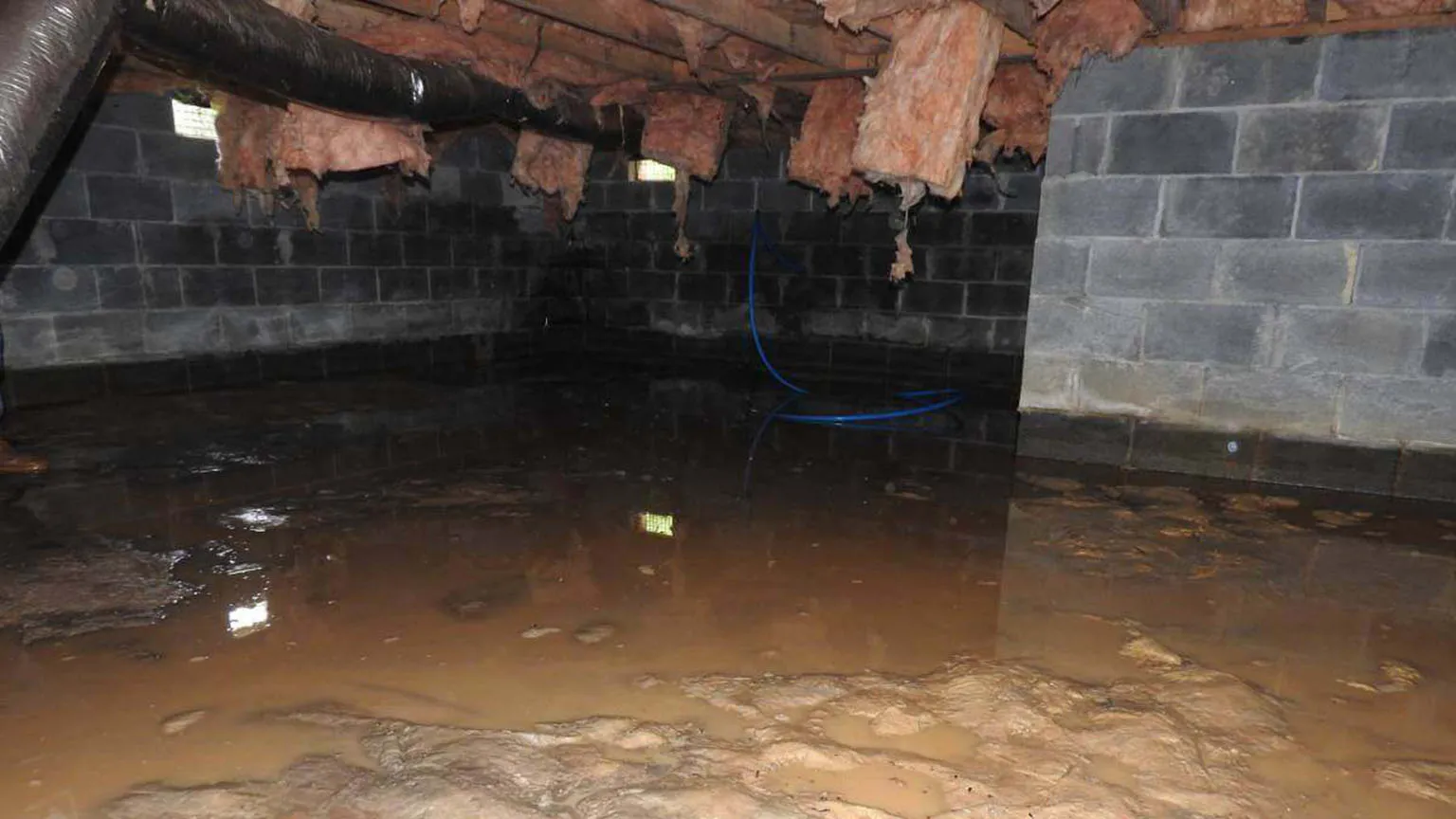
Option B: what does professional structural drying involve?
This one is bigger, and it’s a real process rather than a bunch of fans. First comes extraction, which pulls standing water fast, including water sitting under carpet. Then we open what has to be opened. Wet carpet pad comes out, the bottom edge of soaked drywall comes off, and wet insulation in a finished wall gets pulled. Those materials hold water and won’t give it back on any useful schedule.
After that, air movers get aimed at surfaces on purpose — angled low along walls and across the slab, not just pointed at the middle of the room. Commercial dehumidifiers pull the released moisture out of the air so it doesn’t just resettle. Meanwhile we take moisture readings in the same spots each day and write them down, so “dry” is a number instead of a feeling.
When it wins: a lot of water, water that sat overnight or longer, finished walls with anything soft behind them, or water that wasn’t clean. Sewer backups are their own category and are never a DIY job.
What it costs: more, and the range is wide. Price rides on how many rooms, how much material has to come out, and how many days the equipment runs. A single unfinished room dried in two days is a very different ticket than a finished basement with three wet walls.
The trade-off: your basement is a small job site for a few days, with equipment humming. The upside is that when it’s off, you know it’s done.
How do they compare, straight across?
Doing it yourself
- Cheapest by a wide margin
- You can start in the next ten minutes
- Great for small, clean, fresh water
- Fine when nothing finished got wet
- No readings, so “dry” is a guess
- Can’t reach inside wall cavities
Professional structural drying
- Extraction pulls water out fast
- Wet organics come out, not just dry out
- Documented daily moisture readings
- Handles finished walls and dirty water
- Higher cost and a few days of equipment
- Paperwork that helps with a claim
Notice neither column says “always.” They’re not rivals. One is a tool for a small problem and the other is a tool for a bigger one, and picking wrong in either direction costs you money.
Most advice online stops right here — it shouldn’t
Search this topic and you’ll get a tidy list: vacuum, fan, dehumidifier, done. What almost nobody tells you is that the equipment barely matters compared to four questions. Answer these honestly and the choice makes itself.
The four questions that actually decide it
- How much water? A damp patch by the door is one thing. Water sheeting across the whole slab is another, and volume changes the tool.
- How long did it sit? Caught in an hour is a totally different job than found on Sunday after a Friday storm. Time is the biggest factor on this list.
- Is wet organic material trapped? Carpet pad, the bottom of drywall, insulation in a finished wall. If those are soaked, drying the surface just hides it.
- Was the water clean? Rainwater through the wall is one conversation. A sewer backup is a different one entirely, and that one is never DIY.
Question three is the one that trips up good, careful homeowners. A finished basement looks fine again long before it is fine, because the drywall face dries in a day while the cavity behind it stays wet for a week. That’s the classic mistake, and it’s the whole reason that Settles Bridge basement smelled six weeks later.
One more note on timing, gently but clearly: mold can begin growing on wet organic material in roughly 24 to 48 hours. The CDC’s guidance on mold cleanup after flooding lays out the same window. That’s not a reason to panic — it’s just the reason speed beats horsepower.

Here’s the number that changes the whole argument
Ready for the part that reframes this? A rental dehumidifier from the big-box store typically pulls something like 4 to 6 gallons of water out of the air per day under basement conditions. A commercial low-grain refrigerant unit pulls in the range of 15 to 30 gallons a day, and a pro dry-out usually runs more than one.
Line that up against the 24-to-48-hour window and the picture snaps into focus. This was never about which machine is fancier. It’s about whether your equipment can finish the job inside the time you have. Small spill, plenty of time, home unit wins on cost. Big soak, clock running, the rental simply can’t get there.
That’s also why we say fans are the cheap part and readings are the valuable part. Anyone can move air. Knowing when to stop is the skill.
Twenty years in, here’s what changed how we work: we stopped trying to dry things and started removing what wouldn’t dry. Wet pad and soaked drywall don’t come back. Pull them early and the rest of the job gets easy.
So which one would we pick for your house?
You asked for a recommendation, so here it is, plainly. If your basement is unfinished, the water was clean rain, it’s under about an inch, and you caught it the same day — do it yourself. Shop vac, fans low along the walls, a rental dehumidifier with the doors shut, and check the base of the walls with your hand for three days. Save your money.
Call for a pro dry-out when any one of these is true: the water sat overnight, it reached finished walls or carpet, it covered more than a room, or it wasn’t clean. One yes is enough. You don’t need all four.
And the honest middle case? Sometimes you dry it yourself and just have someone confirm it. We’ve had homeowners near PlayTown Suwanee do a great job over a weekend and ask us to come read the walls. Half the time we tell them it’s dry, hand them the numbers, and leave. That’s a fine outcome and we’re not going to invent work.
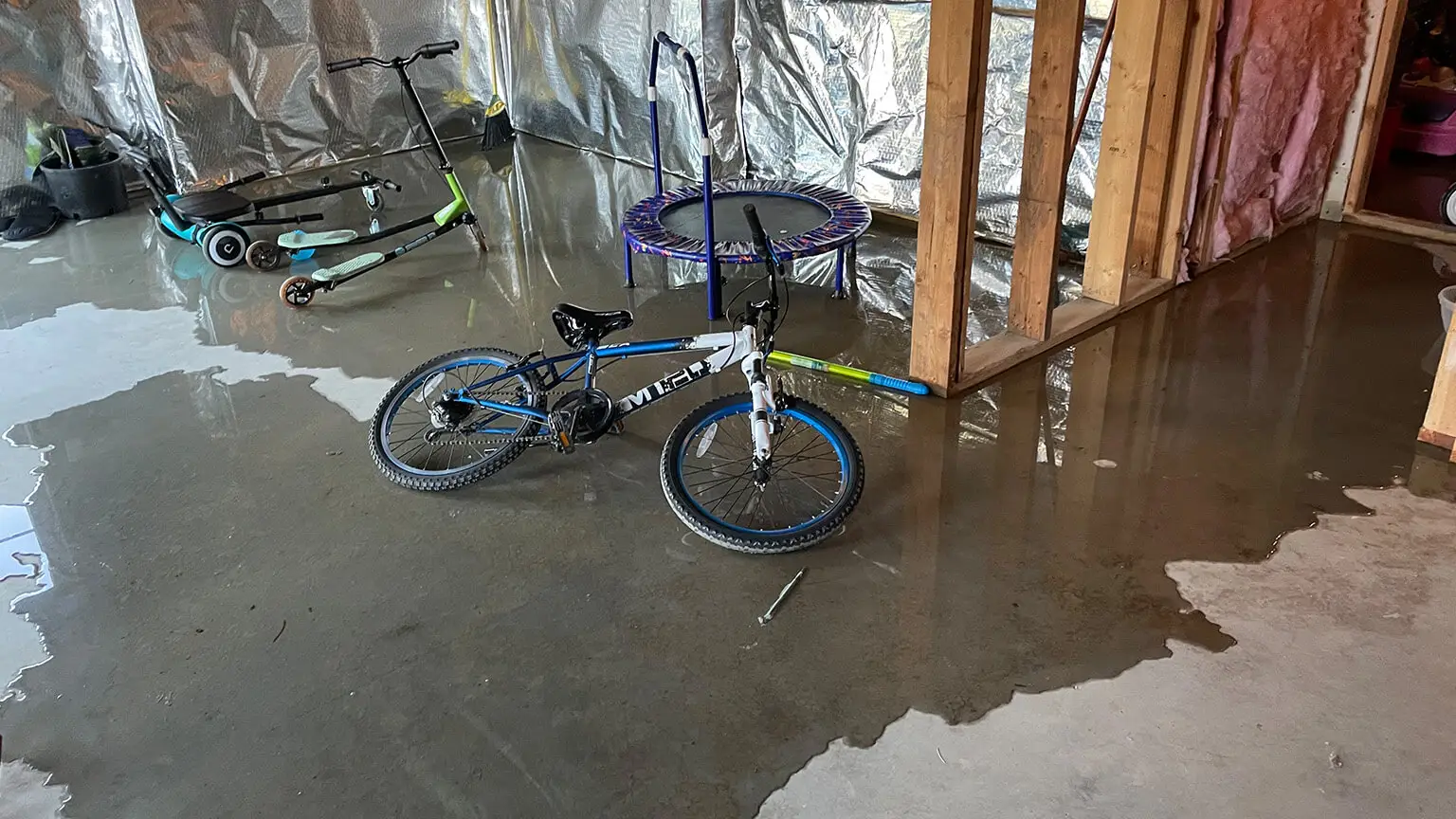
What about insurance, and what about next time?
Quick heads-up that surprises people every spring. Standard homeowners policies usually exclude groundwater seepage, which is exactly how most basements around here get wet. Coverage for a sump pump failure is typically a separate rider you have to add on purpose. So call your agent and ask before you need the answer, and take photos and keep receipts either way.
Now the better conversation. Drying is cleanup, not a cure — the water will come back on the same schedule until something changes. Usually the change is small: extend the downspouts six feet out, add soil where the grade has dished toward the house, and get the water routed away. If it’s coming through the wall or up at the floor seam, a proper interior system and a sump with a battery backup handles it for good.
Storm timing helps too. Keep an eye on the National Weather Service flood safety guidance during spring, and book non-emergency work in fall or winter when the ground is workable and the schedule is open.
Picture the next big one. Rain hammers the roof, you hear it, and you go back to your show — because the basement isn’t a thing you have to think about anymore. That’s the whole point of doing this once and doing it right.

Why does hiring local matter for this?
Because we’re fifteen minutes down the road and we know these houses. We’re on this side of I-85 nearly every day, so we’ve seen how the same handful of builders framed these basements and where the water tends to travel. If something needs a second look in year six, you’re calling the same crew that did the work.
Want to read further before you decide? Our guide to the best basement drainage setups covers what happens after the dry-out, and the service page on basement waterproofing walks through the systems we install. Neighbors one town over can read the same breakdown on Peachtree Corners basement drying. If you’re also seeing cracks or doors that stick, start with foundation repair instead.
Where we work around Suwanee
We’re based in Lawrenceville, about fifteen minutes south, so we’re in Suwanee constantly. We also cover Duluth, Buford, Sugar Hill, Johns Creek, Cumming, Peachtree Corners, Norcross and Snellville, plus Berkeley Lake and the wider Gwinnett area.
Questions Suwanee homeowners ask us
Because it takes a big rain to saturate the clay around your foundation. Once that soil is full, the water has nowhere to go but sideways into the wall or up through the floor seam. Light rain soaks in and disappears, so the problem stays hidden until a storm shows up.
Often not. Standard policies typically exclude groundwater seepage, which is the most common cause around here, and coverage for sump pump failure is usually a separate rider you add on purpose. Call your agent and ask what your policy actually says. Take photos and keep receipts no matter what.
Start the same day if you can. Mold can begin growing on wet organic material in roughly 24 to 48 hours, so speed matters more than how big your equipment is. Getting soaked carpet pad and cardboard out of the room in hour one does more good than any fan.
The seam where the wall meets the slab is the easiest path in the whole basement, so saturated soil pushes water through there first. You’ll often see a wet line along the edge of the floor with dry walls above it. That pattern points to a drainage fix rather than a wall repair.
It can be managed permanently, which in practice feels the same. Fix the grading and downspouts, then route any water that still reaches the foundation into a drainage system and a sump with a battery backup. Homes we set up that way go years without a wet floor.
Not sure which drying option your Suwanee basement needs? Let’s look.
The inspection is free, the estimate is free, and there’s no pressure at the end. We’ll take readings, show you what’s actually wet, and tell you honestly if you can handle it yourself.
(678) 914-5112Serving Suwanee and all of Metro Atlanta · $500 off projects over $3,500 · Live support 7am–8pm, 7 days a week