

Encapsulation Cost in Tucker: The Honest Breakdown
Every step in order, what moves the number up or down, and how to tell a real system from plastic on the dirt.
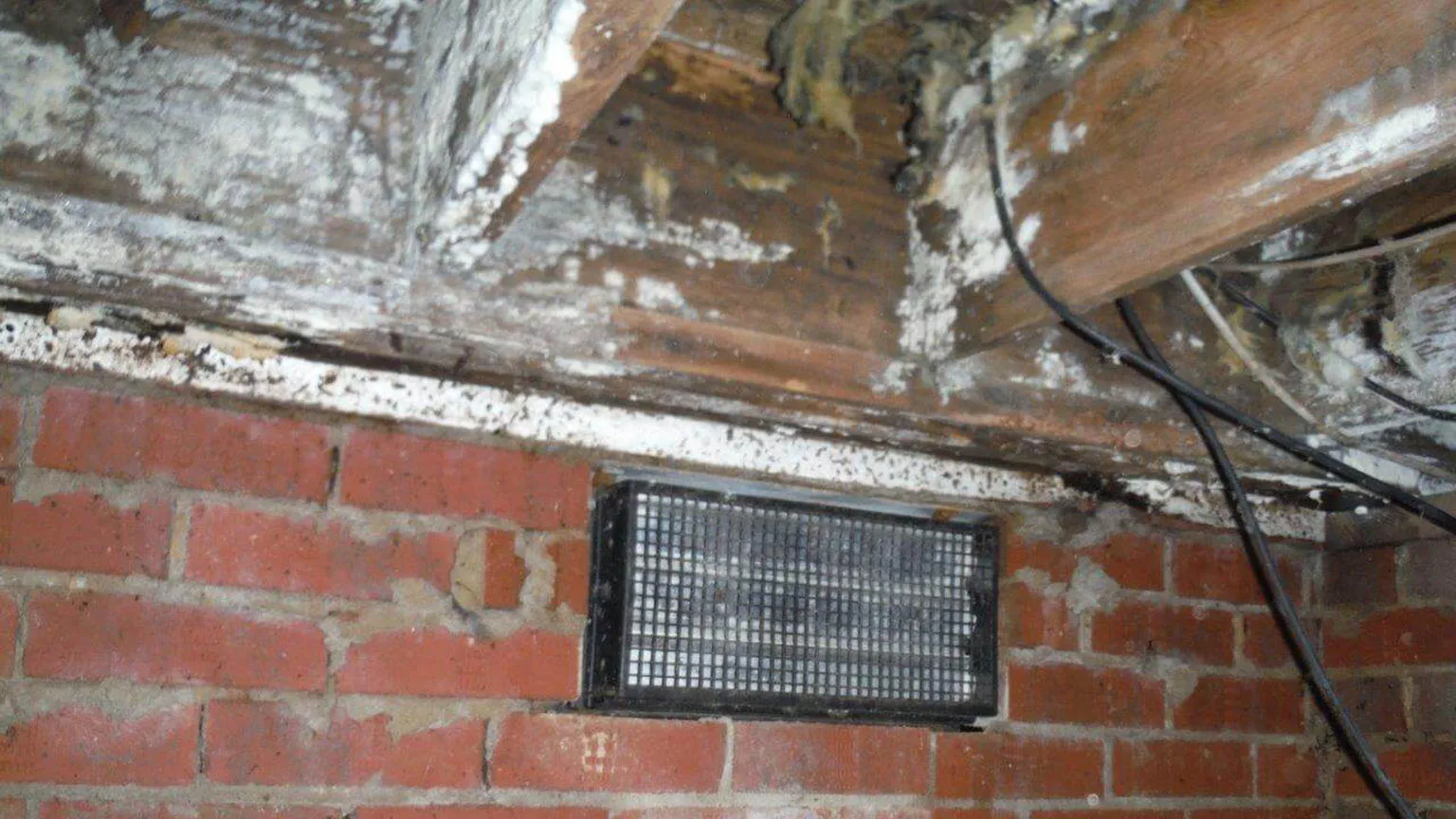
Here’s the thing almost nobody tells you when you start pricing encapsulation cost Tucker projects: those foundation vents in your block wall were never a bad idea on purpose. For decades, code required them, because everyone believed outside air dried a crawl space out. In a humid climate, though, warm outside air hits cool surfaces underneath your floor and condenses. So the vents that were supposed to dry the space have been quietly wetting it instead.
Good news right away — this is very fixable, and it’s the kind of work we do most weeks. Better yet, you can understand every line of the estimate before you agree to anything. Let’s walk the whole thing together.
Why does that vent idea matter so much?
Because it explains why a normal house ends up damp underneath and nobody did anything wrong. Think of a glass of sweet tea on the porch in July. The glass isn’t leaking, but water shows up on it anyway. Your floor joists do the same trick when humid air rolls through an open vent.
Then that damp air doesn’t sit still. Air moves upward through a house all day, so what’s under the floor ends up in the rooms you live in. That’s the musty “old house smell.” It isn’t the age of the house. It’s moisture, and moisture has an off switch.
What makes Tucker ground different?
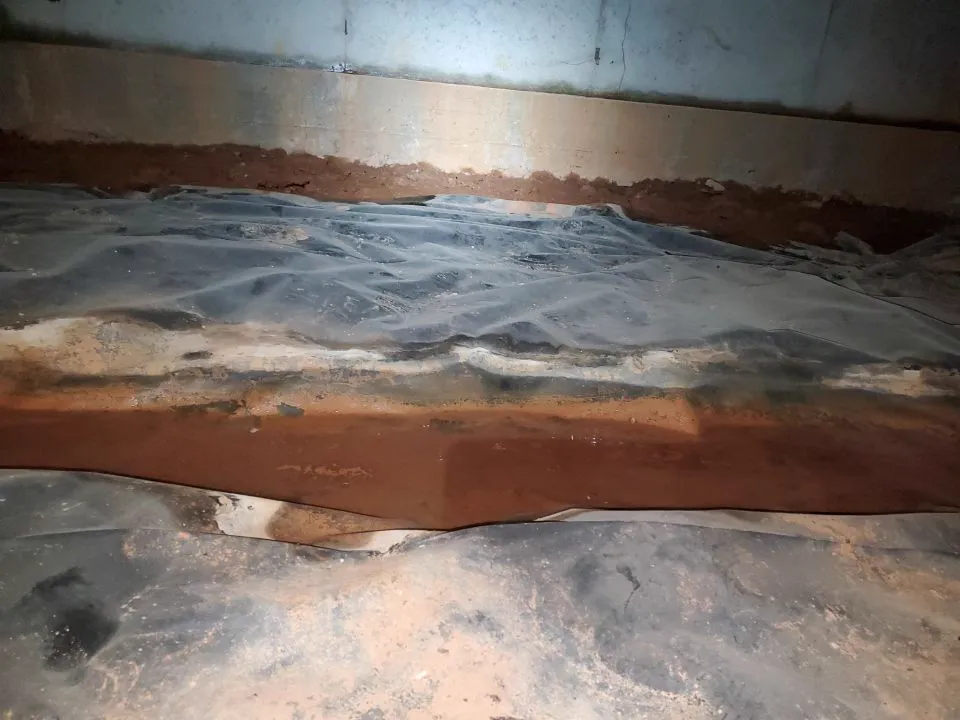
Granite, mostly. Tucker sits on the edge of the Stone Mountain granite, and that rock runs shallow in a lot of yards here. When rain soaks through red clay and reaches stone, it can’t keep going down. So it turns and travels sideways instead — quite often straight toward somebody’s house.
Add the housing stock and the picture sharpens. Most of Tucker went up between the mid-1950s and the mid-1980s, so a whole city’s worth of original moisture control is aging out on the same schedule. We see it in Brockett, along the Pine Lake edge, and in the older streets off Chamblee-Tucker Road.
One more local wrinkle: old finished basements that were paneled over back in the day. Paneling hides long-term moisture beautifully, which is a polite way of saying it hides it until somebody pulls a corner loose. Don’t worry — that’s an ordinary find, and it doesn’t automatically mean a big job.
Worth knowing
Damp and damaged are two different conversations. Plenty of the crawl spaces we open up are humid while the framing is sound. We’ll tell you which one you have before anybody talks money.
What does the job actually look like?
Every house is a little different, but the order almost never changes. Below is the honest version, front to back.
- Inspect and measure. We crawl the whole space, measure square footage and headroom, check framing, and read the moisture level. Then you get photos.
- Clear it out. Fallen insulation, torn plastic and construction scraps come out first. Nothing gets sealed in.
- Handle the water. If water is entering, that gets solved first — a drain line, a sump basin and pump, or grading work outside.
- Treat the wood. Surface growth on joists or subfloor gets cleaned and treated while it’s still easy to reach.
- Seal the vents. The openings get closed so outside air stops feeding the problem.
- Install the liner. A reinforced liner goes over the ground, up the stem walls and around every pier, sealed at the seams.
- Insulate and condition. Rim joists get insulated, and a dehumidifier sized to the space holds humidity steady all year.
- Walk it with you. We show you the finished space in photos and hand over the paperwork.
Timeline runs two to four working days for most homes here. Add a day for heavy debris, and another when drainage is in the scope. Your prep is light: clear a path to the access door, keep pets inside, and plan on a truck in the driveway.
What question tells you somebody actually diagnosed it?
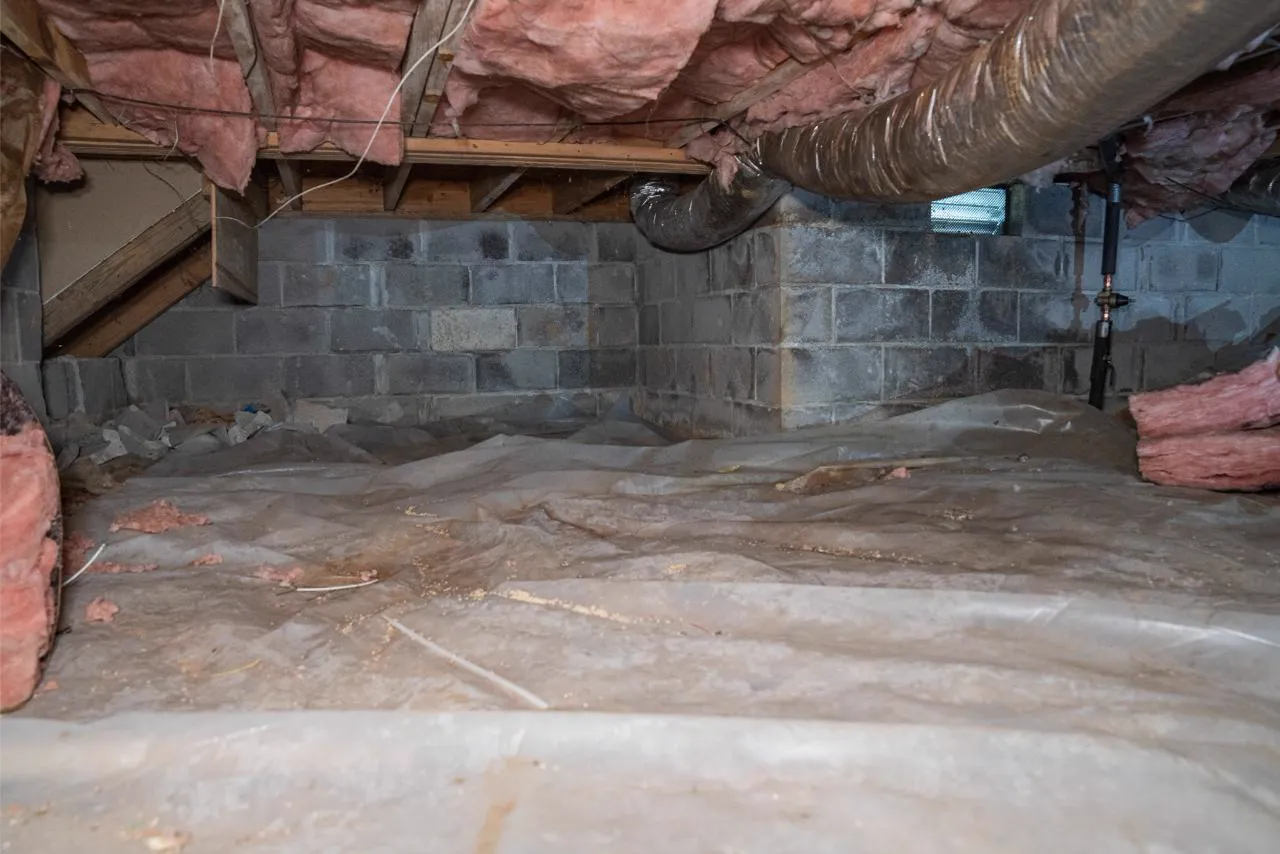
Ask this one: “Where is the moisture coming from, and how do you know?” A real answer sounds specific. Ground evaporation through bare clay. Humid air through open vents. Water riding sideways on shallow granite from the uphill side of the lot. Any of those, and you’re talking with somebody who genuinely looked.
A vague answer sounds like “crawl spaces are always wet, we’ll just wrap it.” That’s a product being sold, not a problem being solved. Here’s the thing — the source decides the scope, and the scope decides the price.
The estimate isn’t the first thing that should show up at your house. The diagnosis is.
Most folks here get two or three quotes and compare them line by line, which we respect. Once you know the source, you can see who priced the actual problem and who priced a roll of plastic.

What actually moves the number?
Straight answer: square footage first, then how hard the space is to work in. We won’t publish a flat price, because a flat price for a crawl space is a coin flip. Here’s exactly what we weigh.
Price drivers, biggest first
- Square footage. More ground and more wall means more liner, more seam work and more hours. It’s the biggest swing.
- Headroom and access. A twenty-four-inch crawl costs more than a four-foot one, every time. Everything happens lying down.
- Cleanout volume. Old insulation, torn sheeting and decades of stored stuff have to come out first. That’s real labor.
- Standing water. If water pools down there, you need drainage and usually a pump. That’s a system, not an add-on.
- Vent count and wall condition. Sealing eight vents in sound block is quick. Crumbling parge on a 1960s wall takes longer.
- Dehumidifier. Whether one is included, and what size, changes the total noticeably.
- Extras. Rim joist insulation, duct repairs and wood treatment each nudge the number.
So a small, tall, clean crawl space with no water sits at the low end. A sprawling low one with standing water, a full cleanout and a dehumidifier sits at the top, and most encapsulation cost Tucker projects land in between. After we walk it, you get a written scope with every line spelled out. Our page on crawl space repair covers the local side, and the crawl space repair service page shows what we install.
Can you do any of this yourself?
Some of it, honestly. Cleaning gutters, extending downspouts eight or ten feet from the wall, and pulling soil back so the grade slopes away are real wins that cost almost nothing. Plus they cut the water load before anybody quotes you a system.
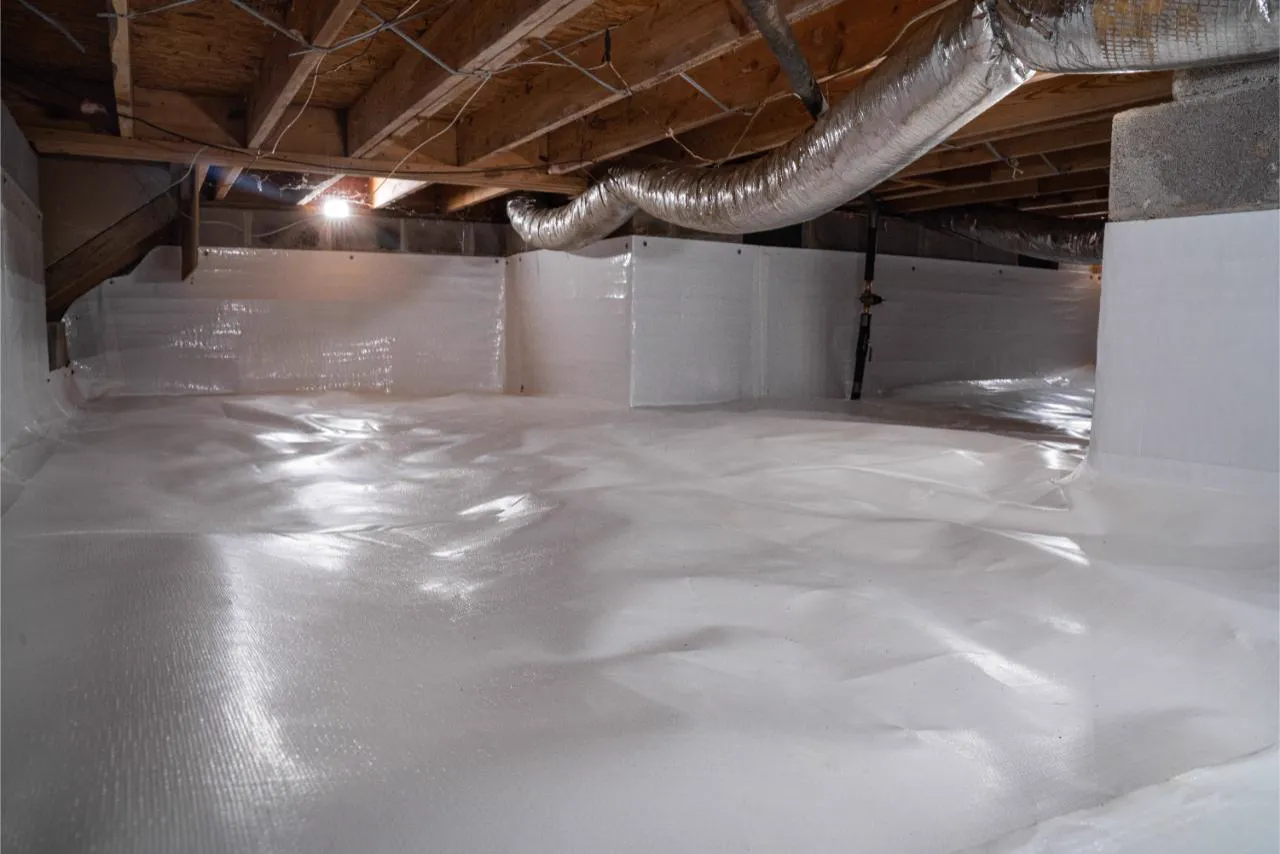
Now the honest limit. A roll of hardware-store plastic laid loose on the dirt is not encapsulation, and it never was. Real encapsulation uses a reinforced liner sealed to the walls and piers, so moisture has nowhere to sneak around. That difference is why one job lasts a season and the other lasts decades.
Sizing a dehumidifier, setting drainage, and sealing vents without trapping a combustion appliance aren’t weekend work either. Not because the tools are exotic, but because a wrong choice looks exactly like a right one until August. The EPA’s page on mold and health explains why controlling moisture beats cleaning up after it.
Want the number that reframes the whole thing?
Bare ground under a house can give up roughly 10 to 15 gallons of water a day for every 1,000 square feet of exposed dirt. Read that again, because it lands differently the second time. A typical crawl space here is quietly releasing more water in a week than most families drink.
Once you see it that way, the liner stops looking like an upgrade and starts looking like a lid. You’re not decorating a crawl space. You’re shutting off a water source that runs every day, rain or shine, and has been running since the house was framed.
That’s also why “it dried out last week” doesn’t mean much. The CDC’s guidance on mold in the home makes the same point: keep moisture down and the rest tends to take care of itself. To be fair, a few homes really do just need a downspout moved. We’ll say so when that’s the case.
A couple of Tucker crawl spaces we remember
A homeowner over in Brockett called about a smell in the hallway and expected the worst. What we found was a disconnected dryer vent blowing warm wet air under the floor, plus a downspout emptying two feet from the wall. The framing was fine, so the scope shrank and she paid for an upgrade instead of a rescue.
It runs the other way too. A split-level closer to the Northlake area looked spotless from the access door, but thirty feet in there was standing water nobody had ever seen. It had come sideways off a rock shelf uphill, exactly the way this ground behaves between here and Stone Mountain Park. Either way, you want the truth before the estimate.
How do you know it was done right?
Ask for five things, and any straight contractor will hand them over without blinking.
Your five-item checklist
- Before-and-after photos of the whole space, not one flattering corner.
- Liner details. Thickness, whether it’s reinforced, how it’s sealed at seams and piers.
- A humidity target. A real system holds a stated range, and you should be told it.
- The water plan in writing — where water goes, and where it discharges outside.
- A warranty you can read in one sitting. If it takes a lawyer, it isn’t helping you.
After that, life gets pleasantly boring. Floors stop feeling cold in February, the musty smell leaves for good, and the space becomes clean dry storage instead of somewhere you shine a flashlight and back away from. Best of all, you stop thinking about it — and that’s the real product of any encapsulation cost Tucker estimate worth signing.
One last note. If your house has a full basement instead, our guide to flooded basement repair is the better read. And if you’re comparing towns, the write-up on Johns Creek encapsulation cost lays out the same math for different ground.
Where we work around Tucker
We’re based in Lawrenceville, about twenty-five minutes northeast, so we’re in this corner of DeKalb County most weeks. That includes Tucker, Lilburn, Stone Mountain, Norcross, Decatur, Clarkston, Doraville, Brookhaven and the wider DeKalb area. Whether you’re near Main Street downtown or up a steep wooded lot, we know these houses.
Questions Tucker homeowners ask us
Most homes take two to four working days from start to finish. Heavy debris removal adds about a day, and drainage work adds another. We give you the schedule with the estimate, so nothing about the timing is a surprise.
Usually it helps, because your system stops working so hard to pull moisture out of damp air. Sealing the vents and insulating the rim joists also cuts that cold-floor feeling in winter. We won’t promise a percentage, since every house is different, but most homeowners notice.
In most older crawl spaces it comes out. Batt insulation stapled under the floor soaks up humidity, gets heavy, and falls down, so leaving it just seals in a wet sponge. We haul it off and insulate the rim joists instead, which is where it actually does the work.
It beats bare dirt, but it isn’t the same product. Loose sheeting has open seams and open edges, so moisture travels around it, and foot traffic tears it within a season or two. A real encapsulation uses a reinforced liner sealed to the walls and piers, so there’s no way around it.
Common signs are a musty smell upstairs, cold or springy floors, insulation hanging down, and higher indoor humidity in summer. Standing water or fallen sheeting is a clear signal too. The simplest answer is to have somebody look and show you photos, and our inspection is free either way.
Let’s find out what your Tucker crawl space actually needs
We’ll crawl it, photograph it, tell you where the moisture is coming from, and price only what your house needs. Inspection free, estimate free, no pressure at the end.
(678) 914-5112Serving Tucker and all of Metro Atlanta · $500 off projects over $3,500 · Live support 7am–8pm, 7 days a week