

Wet Crawl Space in Decatur: What’s Really Causing It, and How It Gets Fixed
Somebody already tried plastic and a fan, and it didn’t hold. Here’s the plain-English reason why — and what an honest fix looks like under a hundred-year-old house.
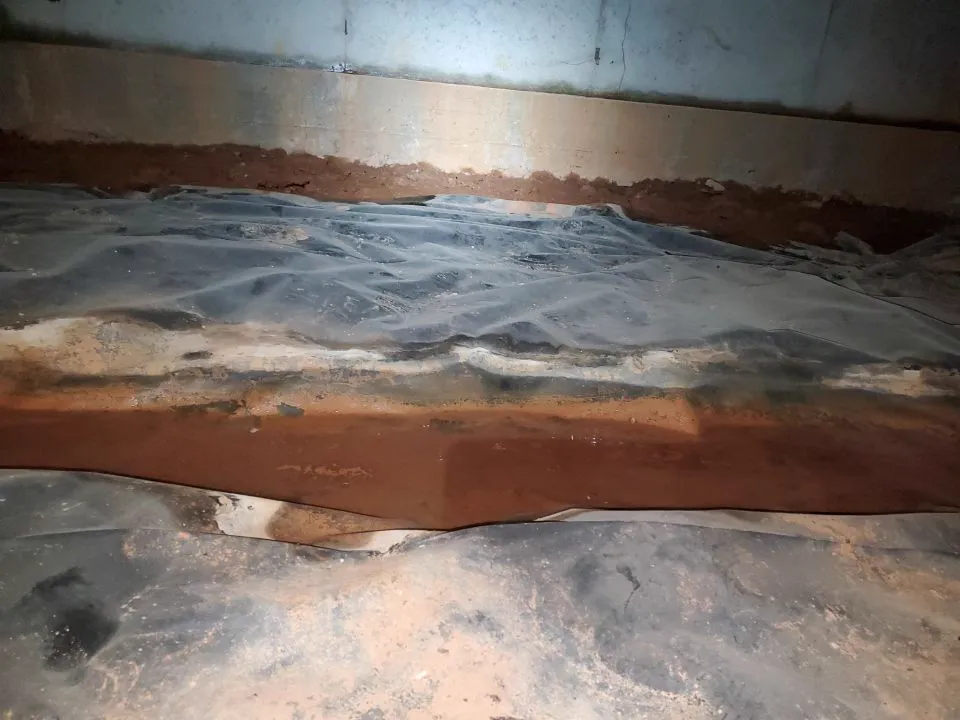
Almost every wet crawl space Decatur homeowners call us about has already been “fixed” once. Usually that means a roll of black plastic laid loose on the dirt, maybe a box fan wedged in a vent, and a bag of odor crystals in the corner. It worked for one season, then the smell came back. So before we talk about the real fix, let’s talk about why that patch never had a chance.
Good news right up front: none of this is unusual, and it’s very fixable. Better yet, the honest fix is mostly sealing and drying — not tearing into a house that’s stood since the Coolidge administration.
Why didn’t the plastic work?
Because loose sheeting on dirt is a suggestion, not a barrier. Vapor doesn’t need a hole to get through. It slips around every unsealed edge, up every pier, and out every seam nobody taped.
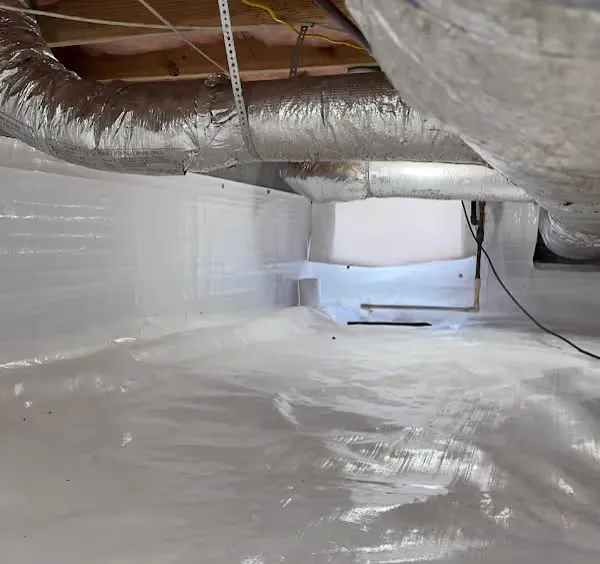
Here’s the part that matters: a true encapsulation uses a reinforced liner sealed to the walls and piers, not sheeting laid on the ground. That one difference is why the patch lasts two summers and the real thing just stays dry.
The fan usually makes things worse, which surprises people. Pulling humid Georgia air into a cool space under the floor is basically running a fog machine. That’s not your fault, though — it’s what everybody was taught for seventy years.
So where is the water coming from?
Three places, and they stack. Bare dirt gives off vapor all day. Rain moving through clay pushes moisture toward the footing. Then open vents invite warm air in, where it hits cool pipes and drops its water as condensation.
In older parts of town there’s a fourth source, and it’s the sneaky one. Original grading here has been buried by a hundred years of added soil, mulch beds and walkways. As a result, the dirt outside now sits higher than the crawl space floor inside. Water only ever does one thing with that arrangement.
Worth knowing
If your flower bed is level with your siding, the ground is no longer draining away. Lowering that grade is often cheap, and it’s usually the first thing we point at.
Red clay finishes the job. It holds water like a sponge and lets it go slowly, so a crawl space stays damp two weeks after the last spring storm.
Is yours mild, or something more?
Fair question, and you can answer most of it without going under the house. None of this is alarming. It simply shows where you land on the scale.
Reading the signs
- Musty smell, nothing visible. Moisture is arriving as vapor. Mild, and the cheapest to solve.
- Humidity parked in the mid-sixties. Your air conditioner is fighting the ground and losing.
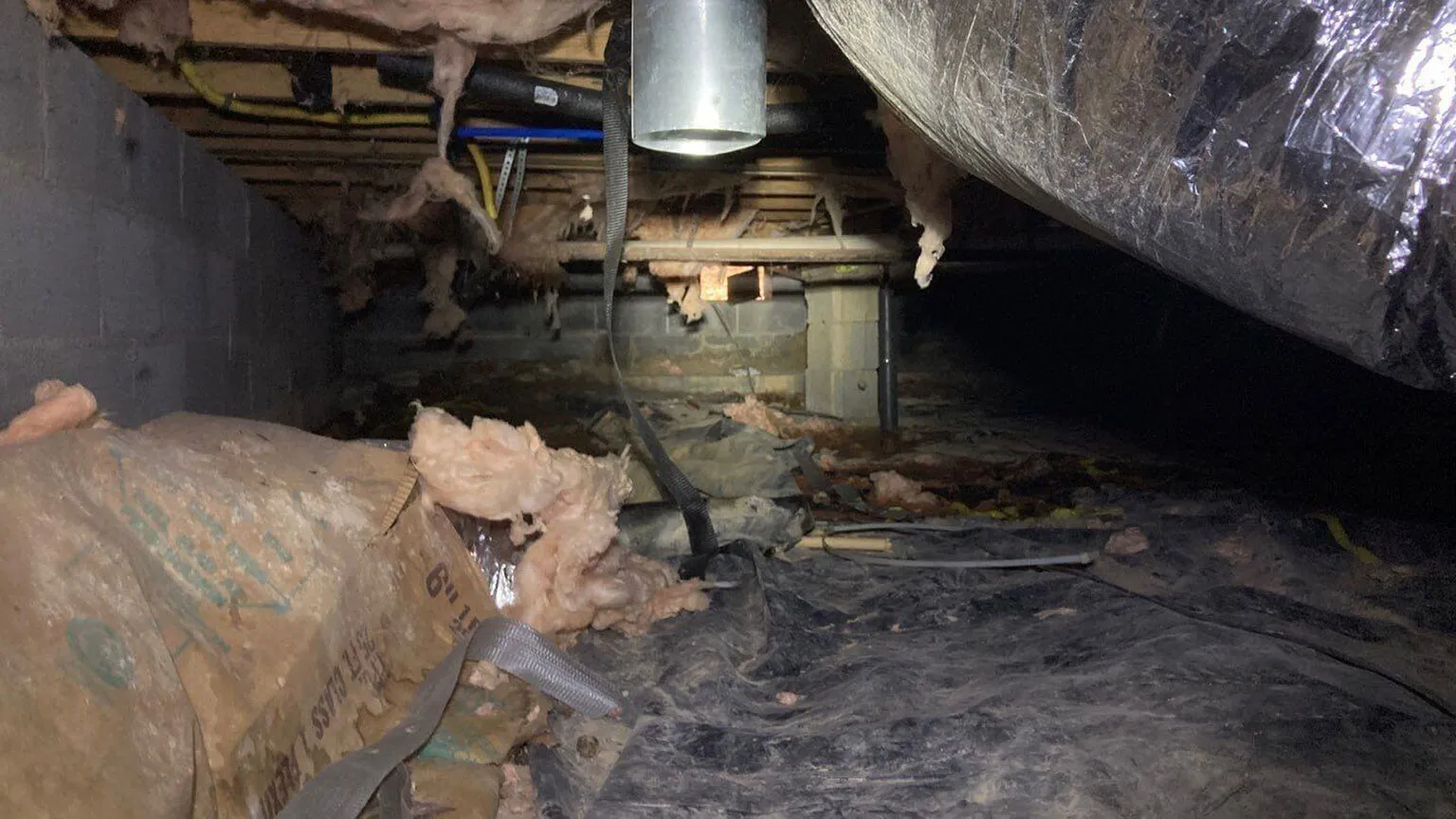
- Insulation drooping between the joists. Fiberglass soaks up moisture, gets heavy, then lets go.
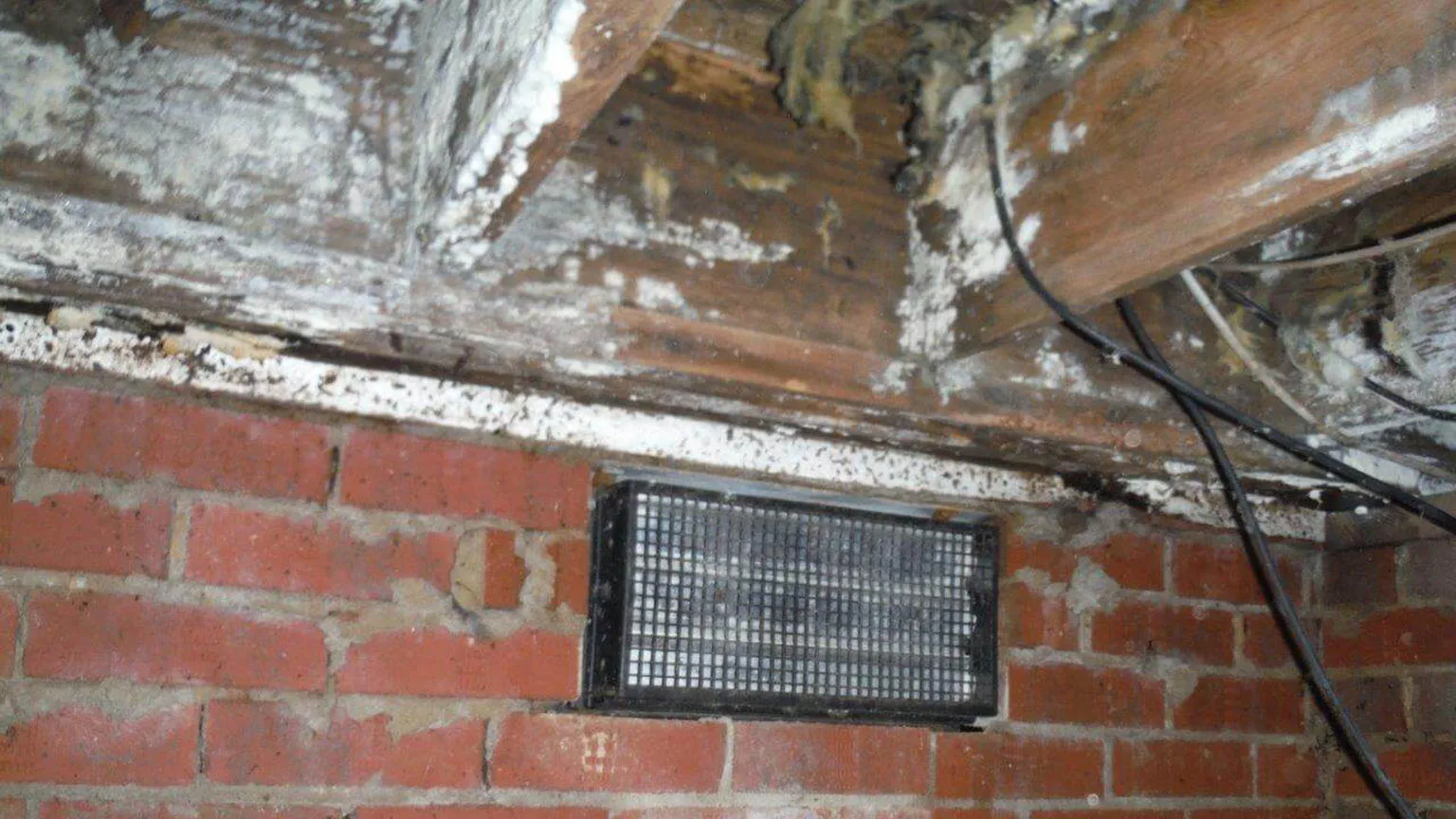
- White bloom on the rim joist. Surface growth on damp wood. Still very fixable.
- Standing water or soft mud after rain. Bigger scope, same plan — worth a look sooner.
Wood tells the truth down there. Framing starts supporting growth once its moisture content reaches roughly twenty percent, and in a vented Georgia crawl space in July, joists hit that number regularly. So we bring a meter and show you the reading, because you shouldn’t have to take our word for anything.
If you’d rather hear the health side from somebody with nothing to sell, the CDC’s page on mold and your home is short and level-headed. Read it before any contractor’s brochure, ours included.
Why do so many old Decatur houses share this?
Because of when they were built. A Decatur bungalow went up before basement waterproofing existed as a trade at all. These houses have stood for a century, and the fix has to respect that instead of fighting it. Nobody in 1926 was drawing a moisture plan — they were drawing a front porch. So a wet crawl space Decatur homeowners find under a bungalow is almost never a sign of a bad house.
We see the pattern by street. The Adair Park area bungalows tend to have hand-laid stone piers and a dirt floor that was never covered by anything. Winnona Park, near Agnes Scott College, mixes original crawl spaces with half-basements added later. Up in Great Lakes, the fifties ranches usually have a shallow crawl and a grade that’s been raised twice.
Tree canopy plays its part too. Those enormous oaks that make the walk toward Decatur Square feel like a tunnel drop enough leaves each fall to bury every drain on the block. Beautiful trees, opinionated trees.
Terrain matters as well. Houses below the ridge along Clairmont Road catch water that started in three other yards, so it shows up with a running start. Still, a low lot is not a bad lot. It just needs its water managed on purpose.
What if you don’t need the big version?
Here’s the good news that surprises people most: the expensive-sounding fix usually isn’t the one you need. Homeowners call us braced for interior drains and a five-figure number. Then we get under the house and find a downspout dumping four feet from a pier.
Real talk: we’d rather sell the small fix that works than the big one that impresses. Sending water away from the house, fixing buried grade, and sealing the ground properly solves a large share of what we look at. Drains and sumps are for houses with real groundwater, not for houses with a gutter problem.
Most of the time the house is fine. Something is simply delivering more water than the ground can carry away — and that’s a much friendlier problem to fix.
Cost follows scope. Square footage, ceiling height, debris, and whether water has to be moved are the four things that move the number, and our encapsulation cost breakdown walks through each one. No flat price, because nobody can honestly quote a house they haven’t seen.
How does encapsulation actually work?
Simpler than most people expect. Fixing a wet crawl space Decatur homeowners live over means treating that space as part of the house instead of as outdoors. Here’s the sequence, since order is most of the job.
- Handle the water first. Downspouts, buried grade, and a drain with a sump only if groundwater is truly coming in.
- Clear it out. Old plastic, debris and soaked insulation come out. Wood gets cleaned and treated where needed.
- Line everything. Reinforced liner across the dirt and up the walls, seams sealed, every stone pier wrapped.
- Close the vents. Once the ground is sealed, outside air has no drying job left — only a wetting one.
- Insulate the walls, not the ceiling. Foam on the stem walls holds the space near house temperature, which stops condensation.
- Control what’s left. A dehumidifier keeps humidity steady, plus a gauge you can read without crawling anywhere.
Wall insulation instead of ceiling insulation catches people off guard. The Department of Energy’s guide to insulation and moisture control explains why a sealed crawl space performs better in a humid climate. Our crawl space repair page shows what we install.
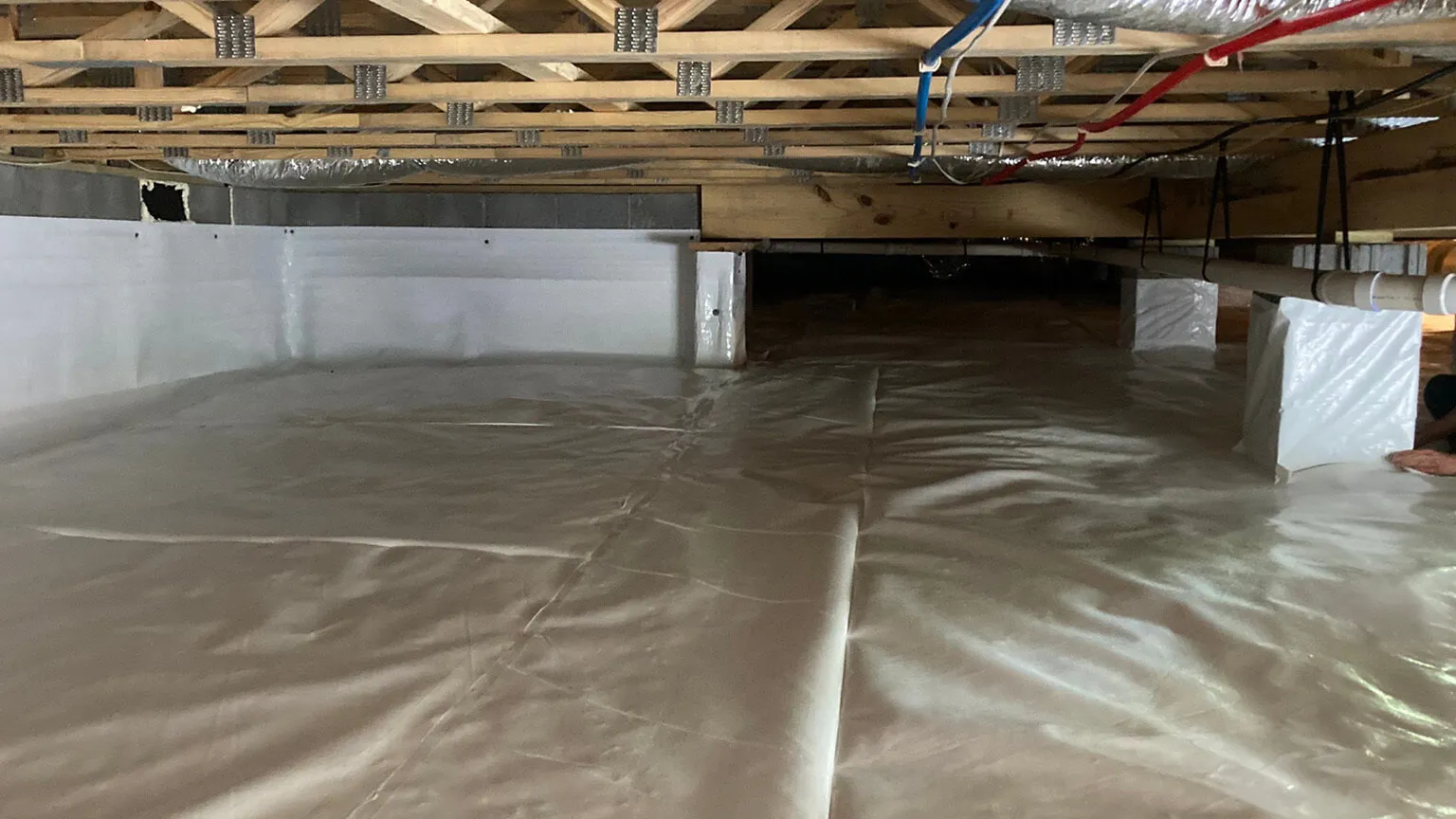
On a century-old foundation we work gently. Hand-laid stone and old mortar get wrapped and supported rather than drilled and chased, so the liner follows the house instead of the other way around. Most jobs run two to four working days.
Which rooms does this quietly touch?
More than people realize. Your house pulls air in from its lowest point and pushes it out the top, so damp crawl space air lands in rooms nobody would connect to the dirt below.
The hall closet that smells like a tent. Dining room hardwood that cups every August, then flattens by November. A guest bedroom over the crawl that runs three degrees colder than the thermostat claims.
Good news? It all moves together. Seal the ground and those symptoms fade as a group, usually within a couple of weeks. One homeowner near the Square called us about the smell, then said later what she noticed most was her piano finally holding its tuning all summer.
What about leaving it alone? Nothing dramatic happens. It widens slowly instead: more insulation falls, humidity upstairs stays high, and cooling costs creep. Over enough years damp framing softens, which turns a sealing job into a carpentry job. So the reason to handle it sooner is money, not fear.
What does the house feel like afterward?
Calm, honestly. The smell fades within a week or two because the source is gone rather than covered. Floors warm up, the humidity number sits still, and the next big storm becomes something you hear instead of something you think about.
A year in, people forget it happened. If your house has a partial basement, our flooded basement repair guide covers that half of the story, and our Lawrenceville wet crawl space guide shows how newer homes hit the same wall.
Where we work around Decatur
We’re based in Lawrenceville, about thirty-five minutes northeast, and we’re in this part of DeKalb County constantly. That includes Decatur, Avondale Estates, Tucker, Brookhaven, Clarkston, Stone Mountain, Atlanta, Chamblee, Scottdale, Pine Lake and the surrounding DeKalb area. Old-house work is our favorite kind, so bring us your questions.
Questions Decatur homeowners ask us
Closed, once the ground below is properly sealed. Open vents were required for decades on the theory that outside air dries the space out, but in a humid climate that warm air just condenses on cool surfaces. Until the liner is in, leave them as they are, since sealing vents over bare dirt traps moisture with nowhere to go.
In almost every case, yes, because that smell is damp air moving up from the ground. Once the dirt is sealed and humidity is held steady, nothing is left to carry the odor into your living space. Most homeowners notice a real difference within a week or two.
Most crawl spaces take two to four working days from start to cleanup. Add a day if drainage or a sump is part of the scope, and another if the space is tight, low, or full of a century of debris. You can stay in the house the whole time, since all of the work happens below the floor.
Usually it helps, though how much depends on your house and your habits. Dry air is much easier to cool than damp air, so your system runs shorter cycles in summer. Sealed, insulated walls also keep ductwork out of the weather, which cuts the energy you were losing under the floor.
If it’s wet, sagging or falling, it comes out, because damp fiberglass holds moisture against the wood instead of protecting it. After that, insulation goes on the stem walls rather than back between the joists. That keeps the whole space near house temperature, which is what stops condensation from forming again.
Let’s find out what your Decatur crawl space really needs
We’ll go under the house, take real moisture readings and photos you can see, then explain the fix in plain language. The inspection is free, the estimate is free, and nobody pressures you. If all you need is a downspout and a grade change, we’ll tell you that.
(678) 914-5112Serving Decatur and all of Metro Atlanta · $500 off projects over $3,500 · Live support 7am–8pm, 7 days a week