

Encapsulation Cost Decatur: A Step-by-Step Breakdown
The steps in order, what moves the number, and how a hundred-year-old house changes the math.
Pin a map everywhere we’ve worked under a floor in this city and a shape shows up fast. Great Lakes. The MAK Historic District. Lenox Place. The older pockets off North Decatur Road. If you’re pricing out encapsulation cost Decatur numbers right now, odds are your house sits in one of those clusters — and there’s a plain reason why.
Those areas share three things: old houses, hand-built foundations, and a canopy that keeps the ground damp long after the rain quits. None of that is a mystery, though. It just changes the plan. So let’s walk the job in order, with the price drivers out in the open.
Why does this show up so often in these neighborhoods?
Because a Decatur bungalow was built before basement waterproofing existed as a trade. Nobody was thinking about vapor barriers in 1928. They set stone, brick or hand-laid block on red clay, framed a floor over it, and left the ground bare. That’s not a flaw — it’s an old system meeting a modern expectation of dry air.
Then there’s the canopy. Those enormous oaks are half the reason people move here, but shade means the soil barely dries between spring storms. Add a century of added dirt burying the original grading, and water has no clear place to go.
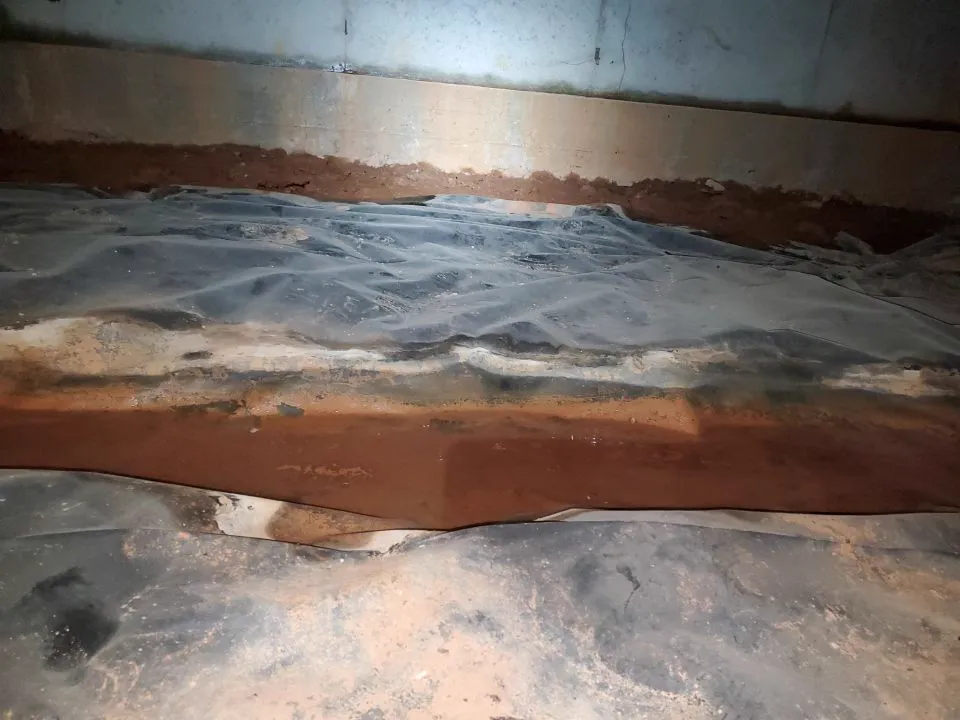
Here’s the part that trips people up. Air moves upward through a house all day — the stack effect — so a big share of the air you breathe in the living room started under the floor. That’s why the musty smell shows up upstairs while the crawl space stays out of sight. Which means the fix isn’t cosmetic. It’s air quality.
One more thing we see constantly here: renovated basements where moisture got covered up instead of solved. Fresh paint, new flooring, and behind the drywall a stone wall still doing what stone walls do.
Worth knowing
Damp and damaged are two different conversations. Many old crawl spaces are humid while the framing is fine — and we’ll tell you which one you have before anyone talks money.
What does the job actually look like?
Every house is different, and old houses are more different than most. Still, the order almost never changes.
- Inspect and measure. We crawl the whole space, measure square footage and headroom, read moisture, and look hard at the mortar and framing. Then you get photos, because most homeowners have never seen down there.
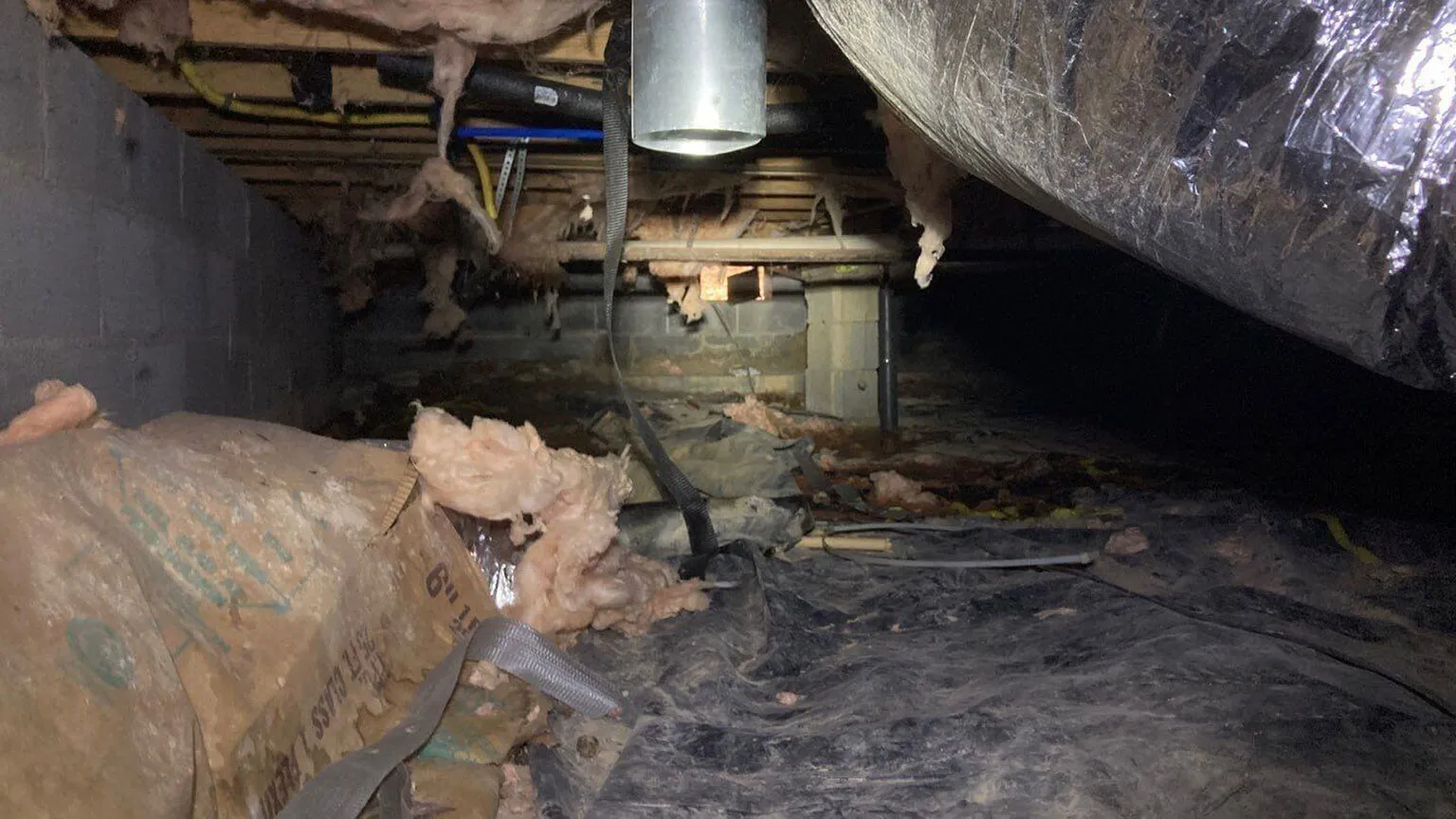
- Clear it out. Fallen insulation, torn sheeting, old brick, and eighty years of odds and ends come out first.
- Handle the water. If water is entering, that gets solved first — a drain line, a sump pump, or regrading and downspout work outside.
- Address the wall. On stone and hand-laid block, tired mortar gets attention while everything is reachable. We work with the old wall, not against it.
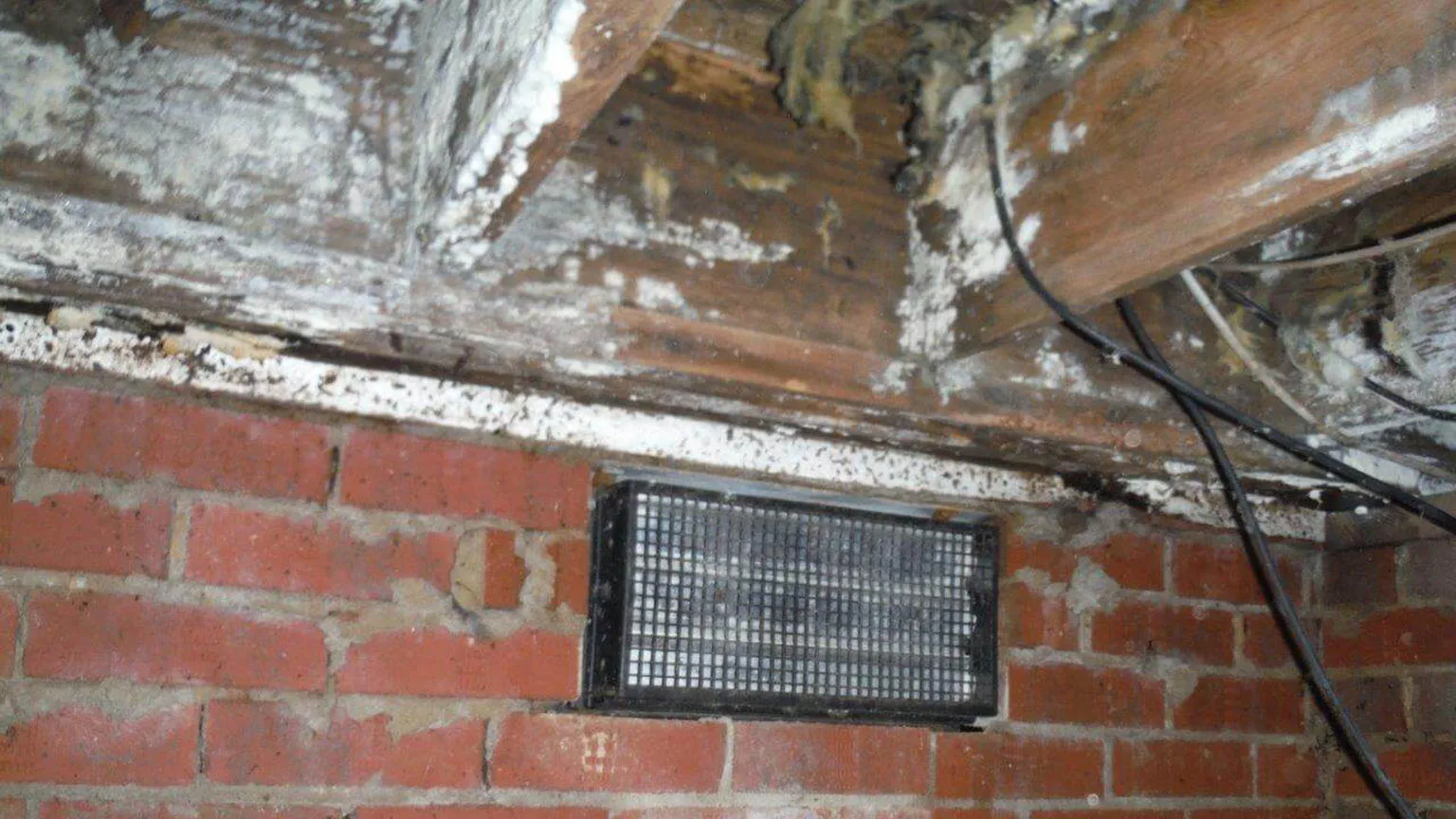
- Treat the wood. Surface growth on joists or subfloor gets cleaned and treated at this stage.
- Seal the vents. The openings get closed so humid outside air stops feeding the problem.
- Install the liner. A reinforced liner runs over the ground, up the stem walls, and around every pier — sealed at the seams, fastened at the top.
- Insulate and condition. Rim joists get insulated, and a right-sized dehumidifier holds humidity steady year-round.
- Walk it with you. We show you the finished space in photos and leave the paperwork with you.
Timeline runs two to four working days for most homes here. Add a day for heavy debris, and another when drainage or mortar work is in the scope — which in this part of DeKalb it often is. Your prep is light: clear a path to the hatch, keep pets in, and expect a truck at the curb.
What would we want to know if it were our own house?
Fair question, so here’s the straight answer. If one of our crew owned a 1930s house off Ponce, we’d want three things settled before a dollar got quoted.
First: where is the moisture coming from, and how do you know? A real answer sounds specific. Ground evaporation through bare clay. Humid air through open vents. A century-old clay sewer line soaking the soil at the footing. Any of those, and you’re talking to somebody who actually looked.
Second: what does this old wall need, and what does it not? Plenty of stone foundations get sold repairs they don’t need, because the wall looks dramatic to anyone who hasn’t seen a hundred of them. Meanwhile the real issue is a downspout twelve feet away.
The estimate isn’t the first thing that should show up at your house. The diagnosis is.
Third: will this respect the house? These homes stood here before Agnes Scott College had half its current campus, so the fix works with them, not against them. Our guide to crawl space repair covers the structural side.
What actually moves the number?
Square footage first, then how hard the space is to work in. We won’t publish a flat price, because a flat price on a hundred-year-old crawl space is a coin flip with your money. Here’s what we weigh instead.
Price drivers, biggest first
- Square footage. More ground and more wall means more liner, more seam work, more hours. It’s the single biggest swing.
- Headroom and access. A twenty-inch dirt cellar costs more to work in than a four-foot crawl. Everything happens lying down, through one small door.
- Wall type and condition. Sealing to smooth block is quick. Sealing to irregular stone with tired mortar takes time — and it’s the line most quotes on old homes get wrong.
- Cleanout volume. Old insulation, torn sheeting, rubble, and decades of storage come out before step one.
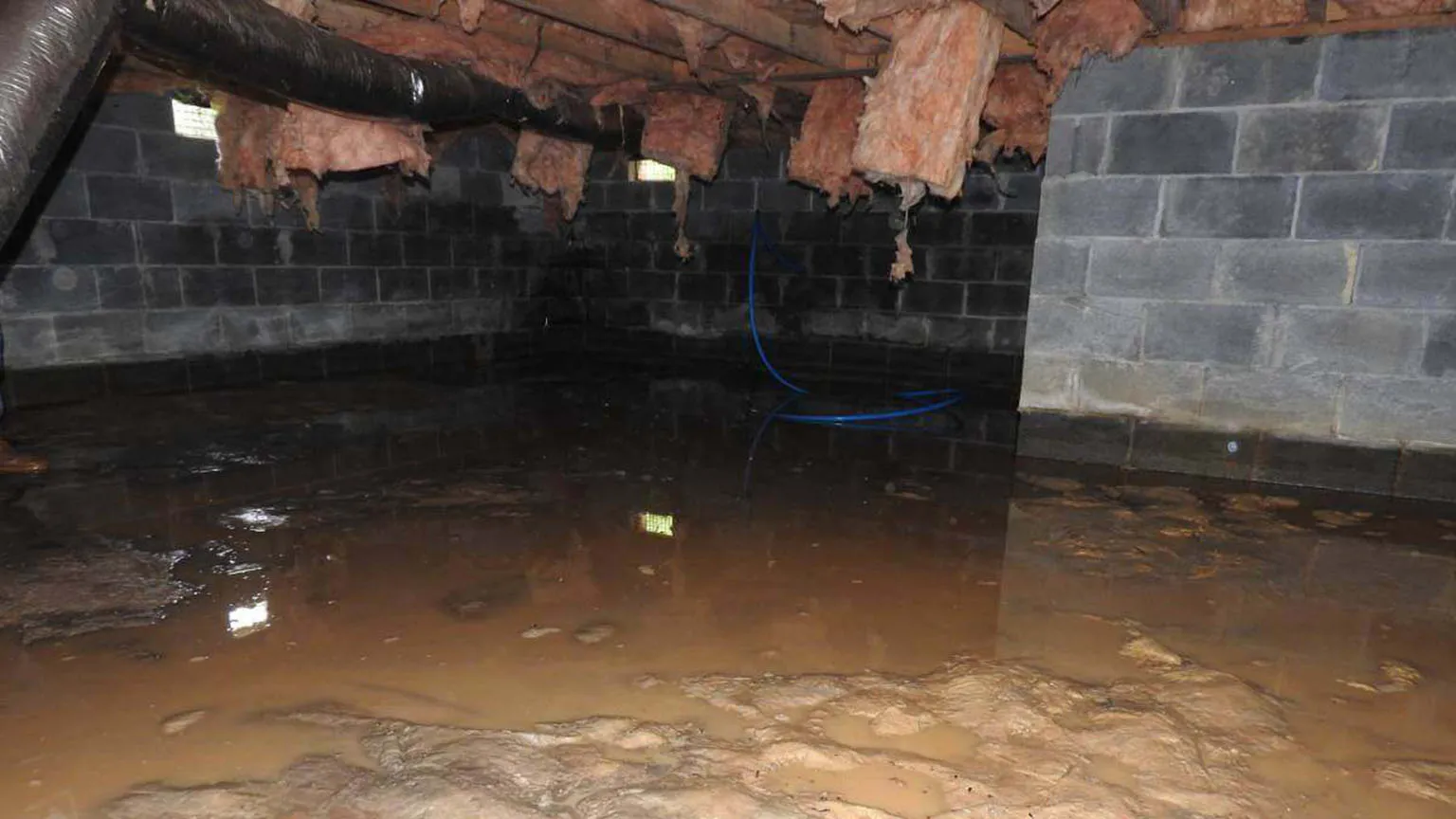
- Standing water. If water pools down there, you need drainage and usually a pump. That’s a system, not an add-on.
- Dehumidifier and extras. Unit size, rim joist insulation, duct repairs, and wood treatment each move the total.
So a small, tall, clean space with sound walls sits at the low end. A sprawling dirt cellar with stone walls, standing water, and a full cleanout sits at the top, and most encapsulation cost Decatur projects land between. After we walk it, you get a written scope with every line spelled out. If you’re comparing towns, our Lawrenceville encapsulation cost breakdown is a useful side-by-side.
Can you do part of this yourself?
Some of it, genuinely — and here the DIY wins are bigger than usual. Cleaning gutters matters double under that canopy, since fall leaf drop buries every drain on the block. Extending downspouts eight or ten feet out helps too, and so does pulling back the soil that’s crept up the foundation. Plus each of those cuts the water load before anybody quotes a system. The Department of Energy’s guide to insulation and moisture control is a sales-free place to start.
Now the honest limit. A roll of hardware-store plastic laid loose on dirt is not encapsulation. Real encapsulation seals a reinforced liner to the walls and piers — exactly the hard part on irregular stone. That’s why one job lasts a season and the other lasts decades.
Sizing a dehumidifier, setting drainage, and sealing vents without starving a combustion appliance aren’t weekend work either. Not because the tools are exotic, but because a wrong choice looks identical to a right one until August. The EPA’s page on mold and health explains why controlling moisture beats cleaning up after it.
A bungalow that went the good way
A homeowner in the MAK Historic District called last spring about a smell in the hall closet that got worse after every storm. She’d already had one quote, and already been told her stone foundation needed rebuilding. Understandably, she was bracing for a big number.
What we found was a dirt-floor cellar, bare clay, two downspouts emptying at the wall, and grading buried under decades of mulch. The stone was in good shape. A little mortar was tired at one corner, but nothing structural.
So the scope shrank. We repointed that corner, moved the roof water away, treated the joists, sealed the vents, encapsulated the cellar with a reinforced liner run up the stone, and set a right-sized dehumidifier. Four days total. Two weeks later she said the closet smelled like a closet again — and that she finally understood her own house. She’d budgeted for a rescue and paid for an upgrade.
How do you know it was done right?
Ask for five things. Any straight contractor hands them over without blinking.
Your five-item checklist
- Before-and-after photos of the whole space, not one flattering corner.
- Liner details. Thickness, whether it’s reinforced, and how it’s sealed to an irregular wall.
- A humidity target. A real system holds a stated range, and you should be told it.
- The water plan in writing — where water goes, and where it discharges outside.
- A warranty you can read in one sitting. If it takes a lawyer, it isn’t helping you.
After that, life gets pleasantly boring. The musty smell leaves for good, the floors quit feeling cold in February, and the space under your house turns into clean dry storage instead of somewhere you shine a flashlight and back away from. Best of all, you stop thinking about it.
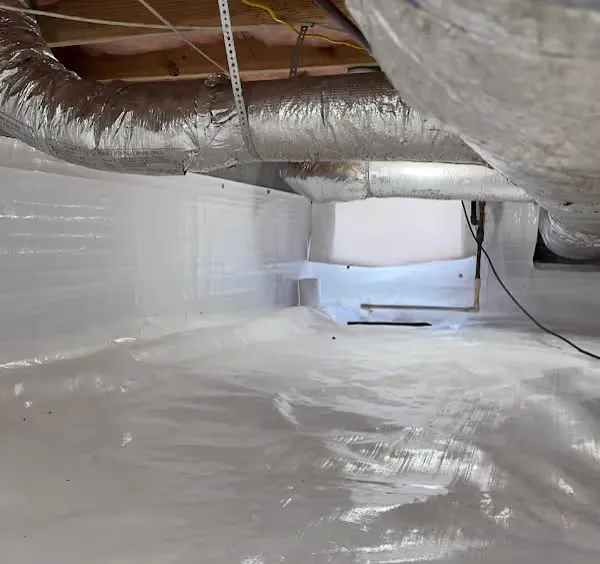
One note for our neighbors: historic district guidelines can affect visible exterior work, so we coordinate that with you. We’re near Emory University weekly, so scheduling is easy. If your home has a full basement, our guide to flooded basement repair fits better, and the crawl space repair page shows what we install.
Where we work around Decatur
We’re based in Lawrenceville, about thirty-five minutes northeast, and we’re in this part of DeKalb most weeks. That includes Decatur, Avondale Estates, Tucker, Brookhaven, Clarkston, Stone Mountain, Scottdale, Chamblee, Atlanta, and the wider DeKalb area. Near the Square, over in Great Lakes, or tucked into Lenox Place — we’ve worked on houses like yours.
Questions Decatur homeowners ask us
Most homes here run two to four working days. Older houses with a dirt-floor cellar or stone walls often add a day, and drainage adds another. You’ll get the schedule in writing before we start.
Usually it helps, because your system stops working so hard to pull moisture out of damp air. Sealing the vents and insulating the rim joists also cuts that cold-floor feeling. We won’t promise a percentage, but most homeowners notice.
In most older crawl spaces it comes out. Batt insulation stapled under the floor soaks up humidity, gets heavy, and falls, so leaving it seals in a wet sponge. We haul it off, then insulate the rim joists instead.
It’s better than bare dirt, but it isn’t the same product. Loose sheeting has open seams and edges, so moisture travels around it, and foot traffic tears it within a season. Real encapsulation seals a reinforced liner to the walls and piers.
Common signs are a musty smell upstairs, cold or springy floors, insulation hanging down, and higher indoor humidity in summer. Standing water or fallen sheeting is a clear signal too. Simplest answer: have somebody look and show you photos. Our inspection is free either way.
Let’s find out what your Decatur crawl space actually needs
We’ll crawl it, photograph it, tell you where the moisture is coming from, and price only what your house needs. Inspection free, estimate free, no pressure.
(678) 914-5112Serving Decatur and all of Metro Atlanta · $500 off projects over $3,500 · Live support 7am–8pm, 7 days a week