

Crawl Space Encapsulation Lawrenceville: What It Costs and What You Get
You’re ready to hire somebody. So here’s the whole picture — what the work includes, what moves the price up or down, what the warranty covers, and how to read an estimate like a pro.
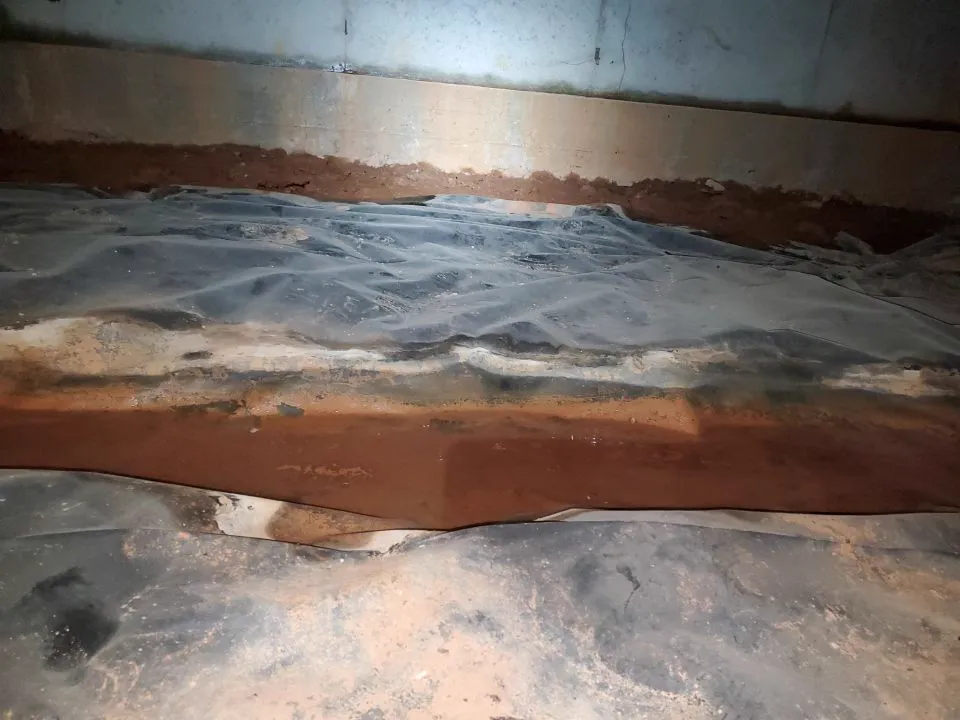
Somebody stood on your lot years ago and decided your house would sit on a crawl space instead of a slab. That decision saved money then, and it’s the reason crawl space encapsulation Lawrenceville homeowners keep calling about is even a thing now. Because along with the crawl space came open foundation vents, a thin sheet of plastic on bare red clay, and a plan that assumed Georgia air was dry. Our air, as you may have noticed, is not dry.
Good news? You’re not stuck with that old decision. Sealing a crawl space is routine work, the pricing follows a logic you can actually check, and we’ll walk you through it before anybody talks money.
Why did builders leave it open?
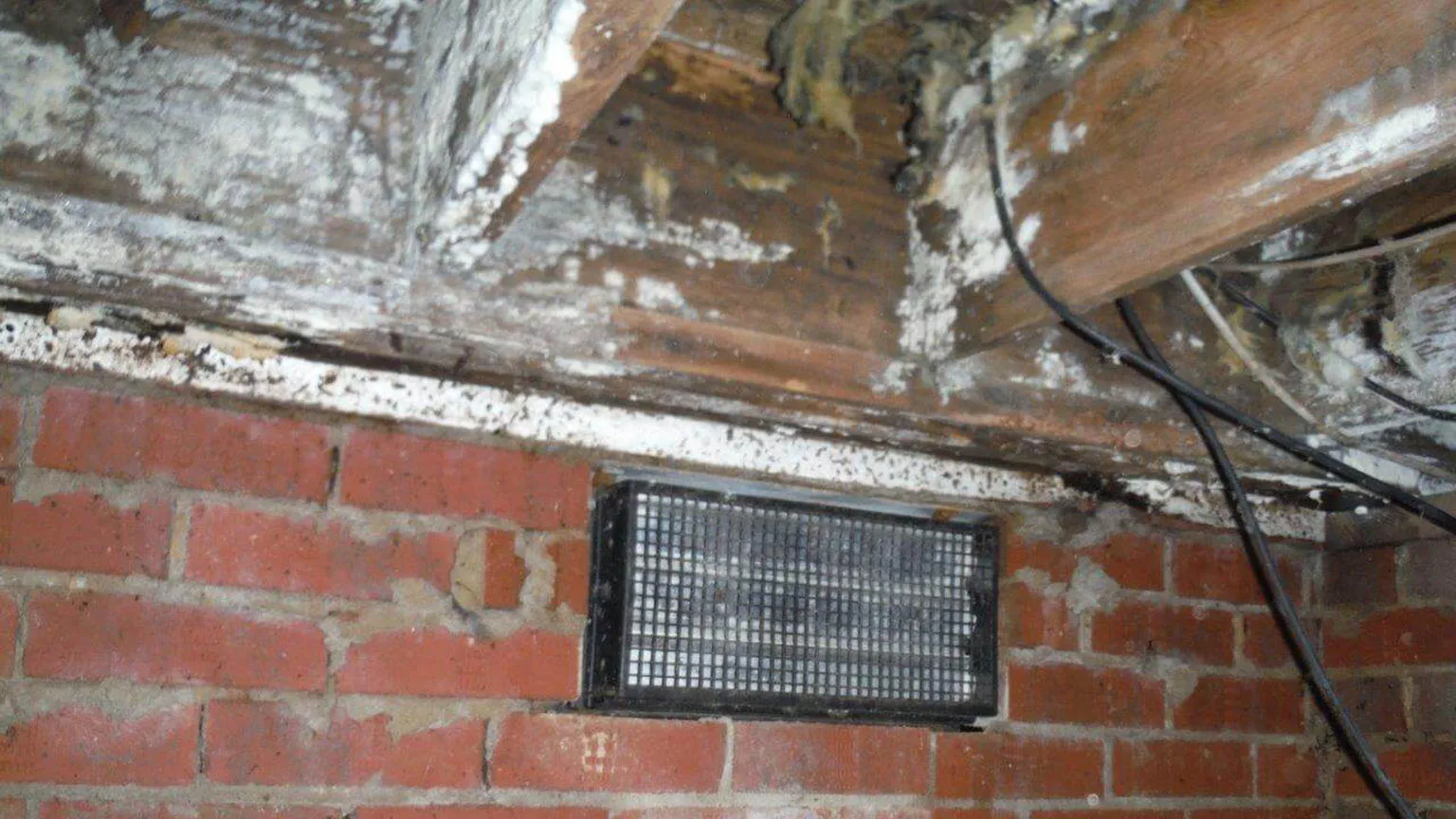
The code said to. For decades, vents were required on the theory that moving air dries out the wood under your floor. That works in Arizona. Here, warm humid air rolls in through those vents, meets the cool ground and cool framing, and lets go of its moisture right on the joists.
So the vents don’t dry the space. They feed it. Wood starts supporting mold growth somewhere around twenty percent moisture content, and a vented crawl space in a Gwinnett August gets there without anything being broken at all. That’s a design assumption, not a defect — and it’s a fixable one.
What is encapsulation, in plain words?
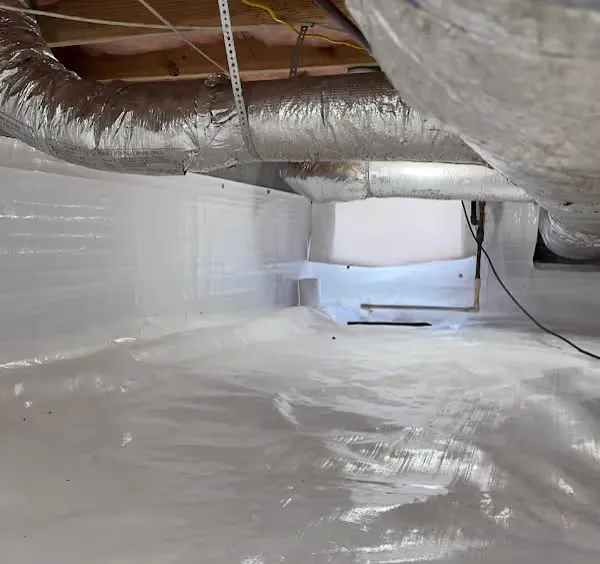
Picture a heavy white liner covering every inch of the floor, running up the foundation walls, and wrapping each pier. Here’s the part that matters most: a true encapsulation uses a reinforced liner sealed to the walls and piers, not loose sheeting laid on the dirt. Sealed is the whole word. Everything else is decoration.
After the liner goes in, we close the vents, seal the access door, and start treating that space as part of your house instead of part of your yard. Then comes moisture control — usually a dehumidifier sized to the space, with a drain line so you’re never carrying a bucket up the steps.
Some homes need one more step first. If groundwater is pushing in, we handle drainage before the liner, because sealing a space that’s actively taking on water just gives the water a nicer room to sit in. Seeing standing water instead of damp air? Start with our guide to a wet crawl space, since the order of operations changes.
What does a real job look like?
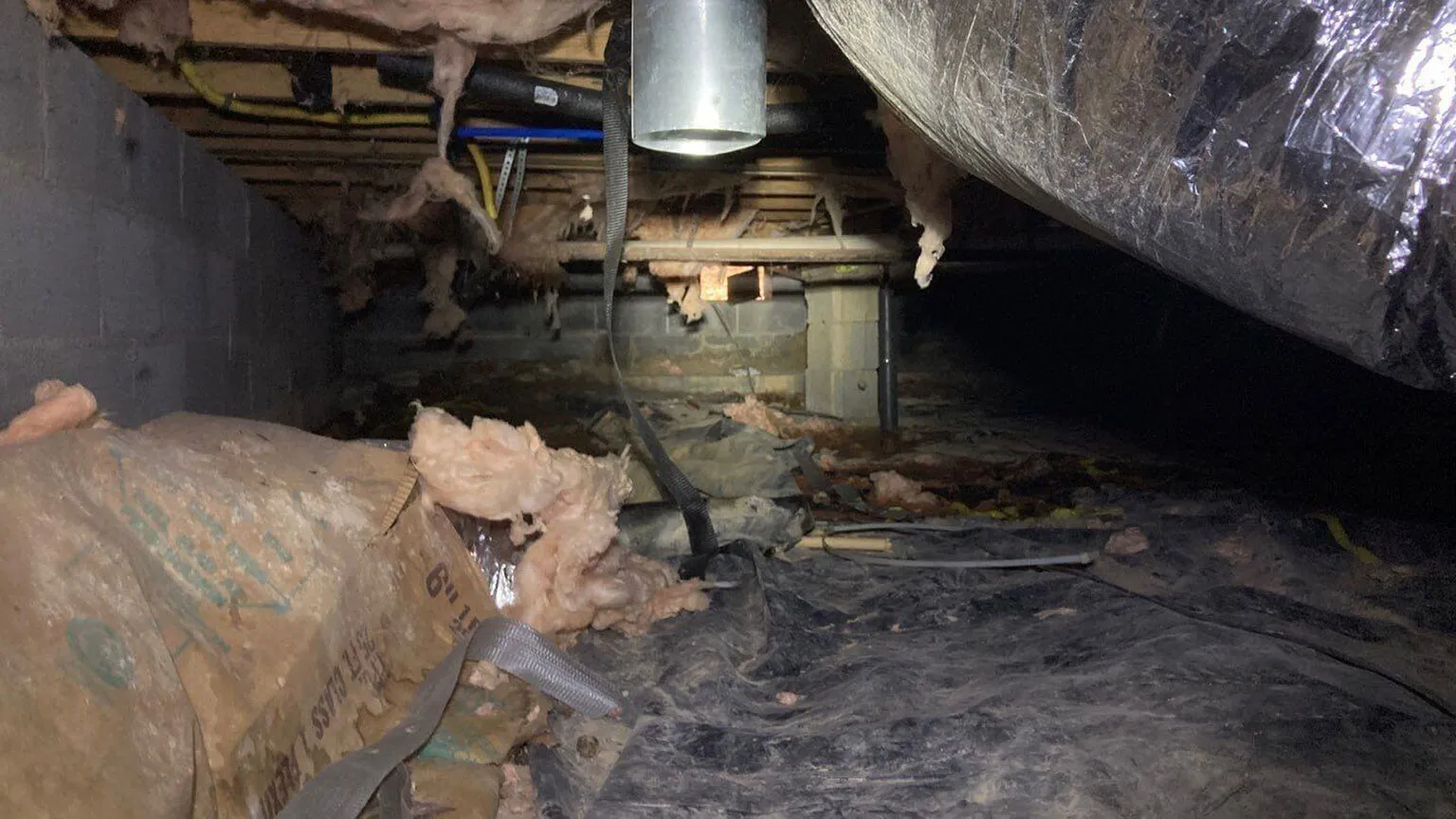
Day zero is the free inspection. We crawl the whole space — not the first ten feet past the door — and we read the wood. Moisture readings, staining lines, rusted duct straps, insulation hanging like wet laundry: all of it tells us where water comes in and how long it’s been doing that.
Cleanout comes next. Old batt insulation gets pulled, torn plastic and debris go out, and the dirt gets raked smooth so the liner lies flat. Drainage work, if you need it, happens at this stage. Nothing gets covered up before it gets solved.
Then the liner goes down, up the walls, and around every pier, sealed as it goes. Vents get closed, the door gets sealed, the dehumidifier gets set and drained, and we photograph everything before we button it up. Most homes here take two to four working days. A homeowner over near the Courthouse district told us the loudest thing all week was our radio.
What does this look like from the water’s side?
Flip the whole thing around for a second. Water isn’t attacking your house — it’s just following the easiest path it can find, the way water always has. Your crawl space happens to be the most inviting room on the property.
Think about the trip. Rain lands on the roof, runs off the gutters, soaks into red clay that holds it like a sponge, and starts moving downhill until something stops it. Your foundation wall is that something. Meanwhile more moisture rises straight up out of bare dirt as vapor, quietly, every hour of every day. Both routes end in the same place.
That’s why the lots east of town along the Alcovy tributaries behave the way they do. Seasonal high water lifts under those houses in spring, and the crawl space is simply the low point that fills first. Same story off Riverside Parkway when a long storm sits over Gwinnett for two days.
Once you look at it that way, the fix stops sounding mysterious. Give water somewhere better to go, then seal a lid between the ground and your floor.

What actually moves the price?
Square footage, headroom, and how much has to come out before anything goes in. We won’t publish one flat number, because a tight 900-square-foot space and a tall 2,200-square-foot space with a sump can’t honestly share a price tag. Still, you deserve to see exactly what we’re weighing.
Price drivers, biggest first
- Square footage. Liner, labor and crawling hours all scale with floor area. This is the biggest swing by a mile.
- Headroom and access. A space you can duck-walk through costs less to work in than an eighteen-inch belly crawl. That’s real labor, not a surcharge.
- Cleanout. Fallen insulation, old plastic and debris have to leave before the liner goes down.
- Drainage needs. If groundwater shows up, a drain and pump go in under the liner, which changes the scope.
- Dehumidifier size. Bigger spaces need bigger units, plus somewhere sensible for the condensate line to go.
- Extras. Subfloor insulation, duct sealing and a new access door are common add-ons — never automatic ones.
Small sealed spaces land at the low end. A big space with drainage, a pump and a commercial dehumidifier sits at the top, while most homes settle somewhere in the middle. Either way you get one written number with the scope spelled out beside it. Comparing quotes across the county? Our Snellville crawl space encapsulation guide walks the same cost logic.
Ask every bidder one question: “How do you attach the liner to the walls and the piers?” A real answer names fasteners, sealant and seam overlap. A weak answer is a thickness number and nothing else. Thickness is fine, but a thick liner sealed to nothing is still sealed to nothing.
What’s included, what isn’t, and what’s the warranty?
Included: inspection, estimate, diagnosis, the liner and all sealing, vent and door closure, the dehumidifier and its drain, haul-off of everything we remove, and photos of the finished work. Ask any contractor for those photos. Nobody honest minds.
Not included, usually: mold remediation, structural repairs to damaged joists, HVAC replacement, and plumbing issues we happen to find. Those get flagged during the walkthrough, not mid-project, because surprises belong at birthday parties. Sagging framing or rotted supports become a crawl space repair conversation of their own.
The warranty is written in plain English and short enough to read in one sitting. Better yet, it transfers with the house. Sellers in Historic Downtown Lawrenceville have handed ours straight to a buyer’s agent and gone right back to taping boxes.
What should you do every year once it’s sealed?
Here’s the part most companies never mention. A sealed crawl space is low-maintenance, not no-maintenance, and about thirty minutes once a year keeps it working the way it did on day one. Put it on the calendar next to the smoke detector batteries.
Your once-a-year, thirty-minute check
- Rinse the dehumidifier filter. A clogged filter makes the unit work harder for less result.
- Follow the drain line. Make sure it still runs where it should and nothing has crimped it.
- Read the humidity. Steady in the fifties is the target. A slow climb means something changed.
- Look at the liner seams. Storage bins and pest-control visits are the usual culprits behind a lifted edge.
- Clean the gutters and check downspouts. Water dumping at the wall is still the number one thing we see.
- Walk the grade after a storm. Soil should fall away from the house, not pool against it.
Notice that half that list happens outside. Roof water and yard grade cause more crawl space trouble than anything under the floor, so keeping them right protects the money you already spent. We’ll show you exactly where to look on handover day.
Curious about the why behind any of it? The CDC’s homeowner guidance on mold and moisture and the Department of Energy’s page on insulation and moisture control both explain the science without selling you anything.
Why does hiring locally matter here?
Because this is home. We’ve been fixing basements and crawl spaces in Lawrenceville for over twenty years, which means we’ve probably already worked on a house in your neighborhood — maybe on your street. Our shop is here, our trucks are here, and our crews live here.
That local history shows up in the estimate. Houses out toward the Hamilton Mill edge were built in a different decade than the ones downtown, so we already know which foundations use block, which use poured walls, and where the original vapor barriers gave up first. Guessing costs money. Knowing doesn’t.
Being close helps in a simpler way too. We’re over by Rhodes Jordan Park most weeks, and a night game at Coolray Field is basically our commute, so a warranty follow-up isn’t a scheduling project. Same crews, same trucks, no subcontractor roulette. And if water is showing up lower in the house instead, our flooded basement repair guide covers that side of things.
Picture next spring: dry floor under your feet, a hallway that smells like nothing at all, and storage bins you’d actually trust down there. That’s the real product. The liner is just how we get you to it.
Where we work around Lawrenceville
We’re based right here, so we’re all over this county every single day. That covers Lawrenceville, Snellville, Grayson, Dacula, Suwanee, Duluth, Lilburn and Loganville, plus the wider Gwinnett area. Whether your house sits high on a ridge or down near a creek, there’s a good chance we’ve already worked on one just like it a few streets over — and there’s usually a truck close by.
Questions Lawrenceville homeowners ask us
Almost always, yes. Sealing keeps new moisture out, but the dehumidifier is what holds the space steady through a humid Georgia summer. We size it to your square footage and run a drain line, so you never have to empty anything.
In our climate, closed. Vents were required for years on the idea that outside air dries a crawl space, but humid air condenses on cool surfaces instead. Once the space is sealed and controlled, closing them is the entire point.
Usually it does. Air moves upward through a house, so that hallway smell often starts under the floor. Once the moisture feeding it is gone, the odor fades over the following weeks, and anything that lingers tells us to look for a second source.
Most homes take two to four working days. Heavy cleanout adds a day, and drainage work adds another. You get the timeline in writing before we start, so you can plan around the driveway and the dogs.
Often it helps, though we won’t promise a number. Drier air is easier to cool, and ductwork in a sealed space works less hard than ductwork sitting in summer humidity. Most homeowners notice the comfort first and the bill second.
Let’s find out what your Lawrenceville crawl space actually needs
We’ll crawl the whole space, take real moisture readings, show you photos of what’s down there, and explain the fix in plain language. The inspection is free, the estimate is free, and nobody pressures you at the end of it.
(678) 914-5112Serving Lawrenceville and all of Metro Atlanta · $500 off projects over $3,500 · Live support 7am–8pm, 7 days a week