

Crawl Space Repair Alpharetta Homeowners Ask About: Full Encapsulation or Just a Vapor Barrier?
An honest side-by-side of the big fix and the smaller one — and a straight recommendation you can act on.
Here’s the good news first, because you’ve probably been bracing for the opposite. Most of the homes we look at for crawl space repair Alpharetta owners call us about need less work than they expect, and the smell under the floor is almost always fixable in a couple of days. So take a breath. Then let’s talk about the two real choices.
There are two honest paths under your house. One is full encapsulation, which is the big one. The other is a floor vapor barrier plus fixing whatever is letting water in — smaller, cheaper, and genuinely the right answer on plenty of homes. We’ll lay out both, and then we’ll actually pick one for you.
What is full encapsulation, exactly?
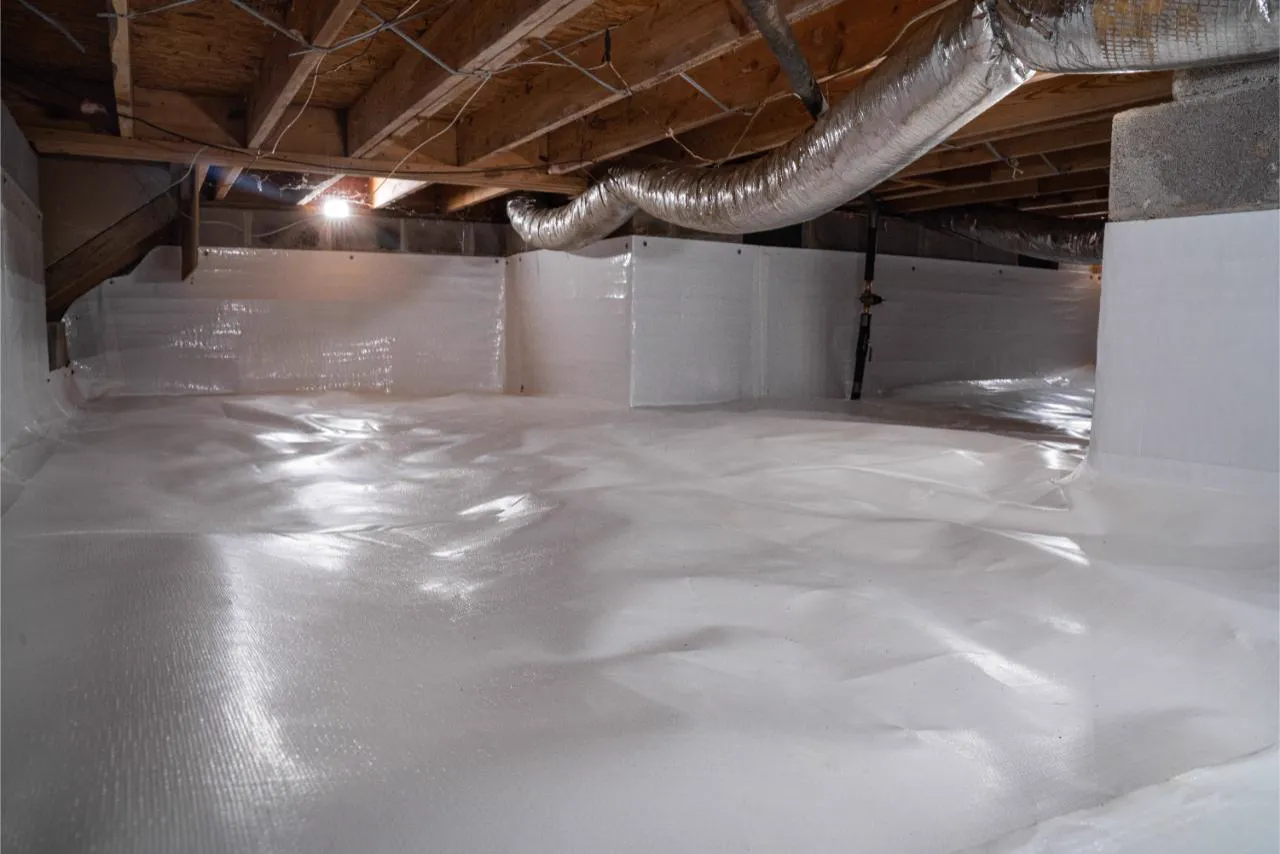
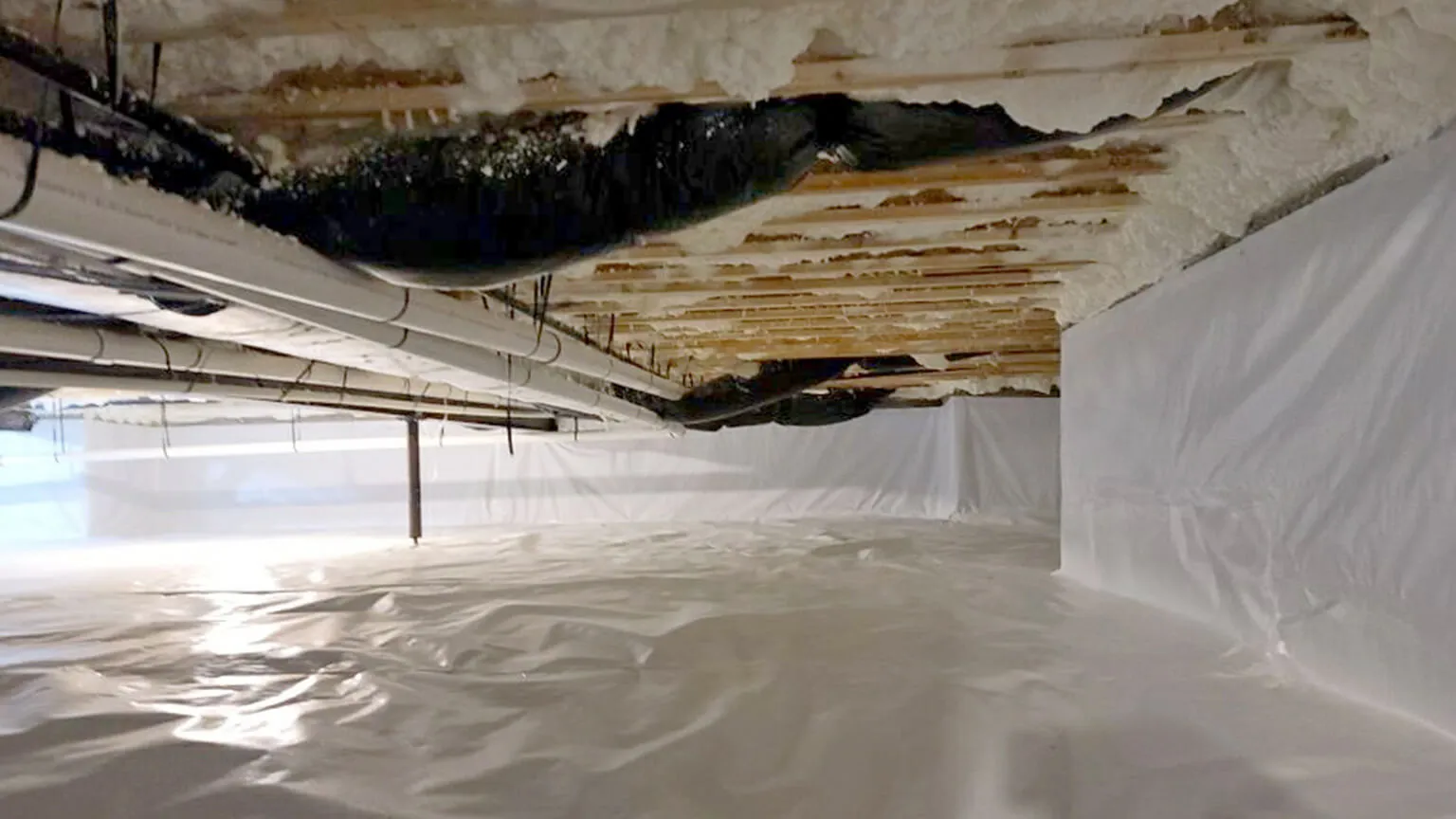
Think of it as sealing the crawl space off from the ground and the outside air completely. A heavy reinforced liner goes down over the dirt floor, then continues up the block walls and gets fastened near the top. Seams get taped, piers get wrapped, and the vents get closed and sealed.
After that, a dehumidifier usually goes in to hold the space at a steady humidity level. Because the space is now sealed, that unit has an easy job — it’s conditioning a closed room instead of fighting all of north Fulton County. The crawl space becomes part of your house rather than a hole under it.
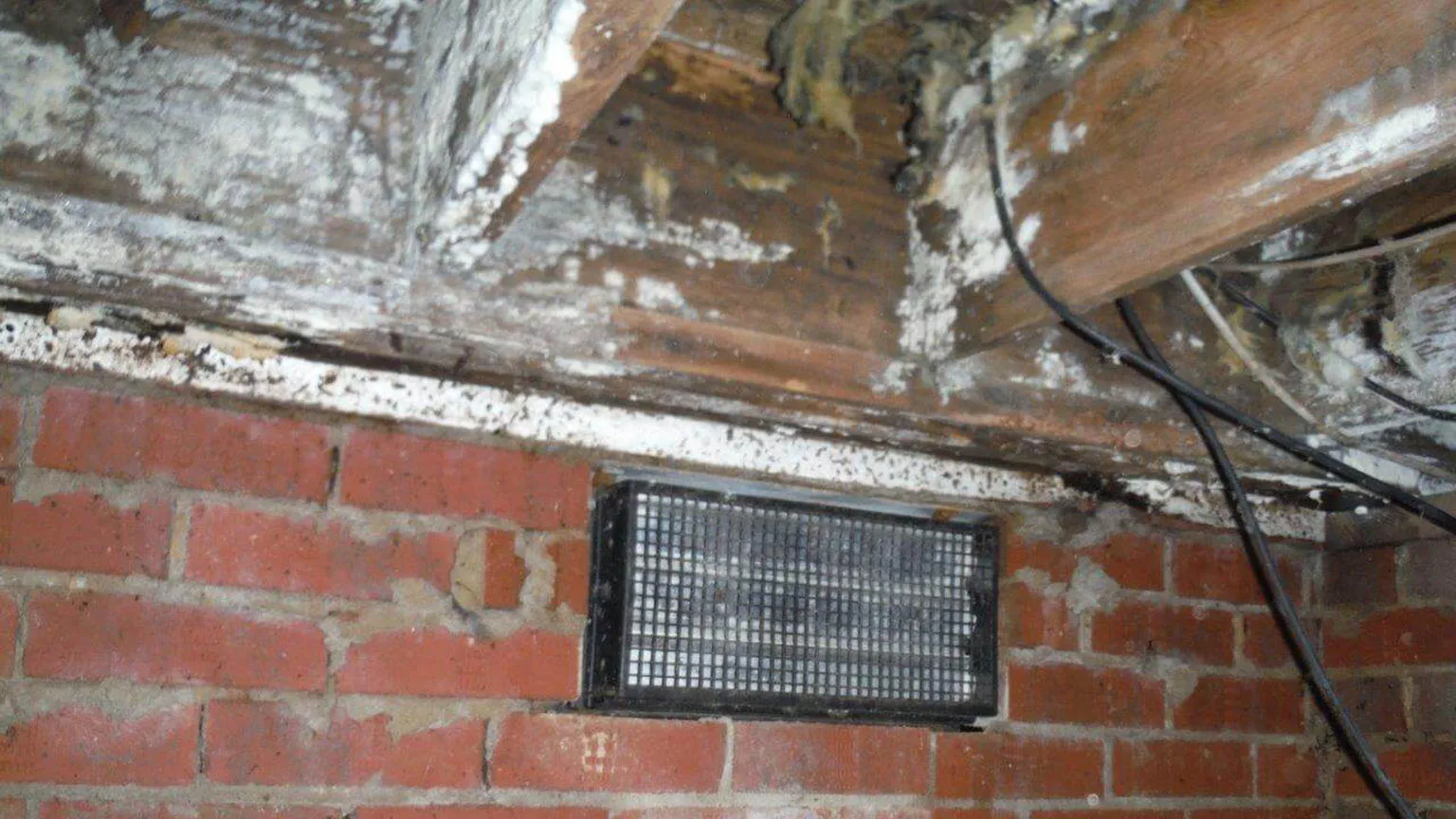
Why does sealing help so much? Because bare Georgia clay never stops giving off moisture, even when it looks dry. That vapor rises into the wood all summer. Wood starts supporting mold growth at around 20% moisture content, and in a vented crawl space in July, framing here regularly gets there.
Encapsulation shuts that pipeline off at the source. Floors stop feeling clammy, the musty draft at the stairs disappears, and the HVAC quits working overtime on humid air. Homeowners tell us the summer difference upstairs surprises them most.
So what’s the lighter option?
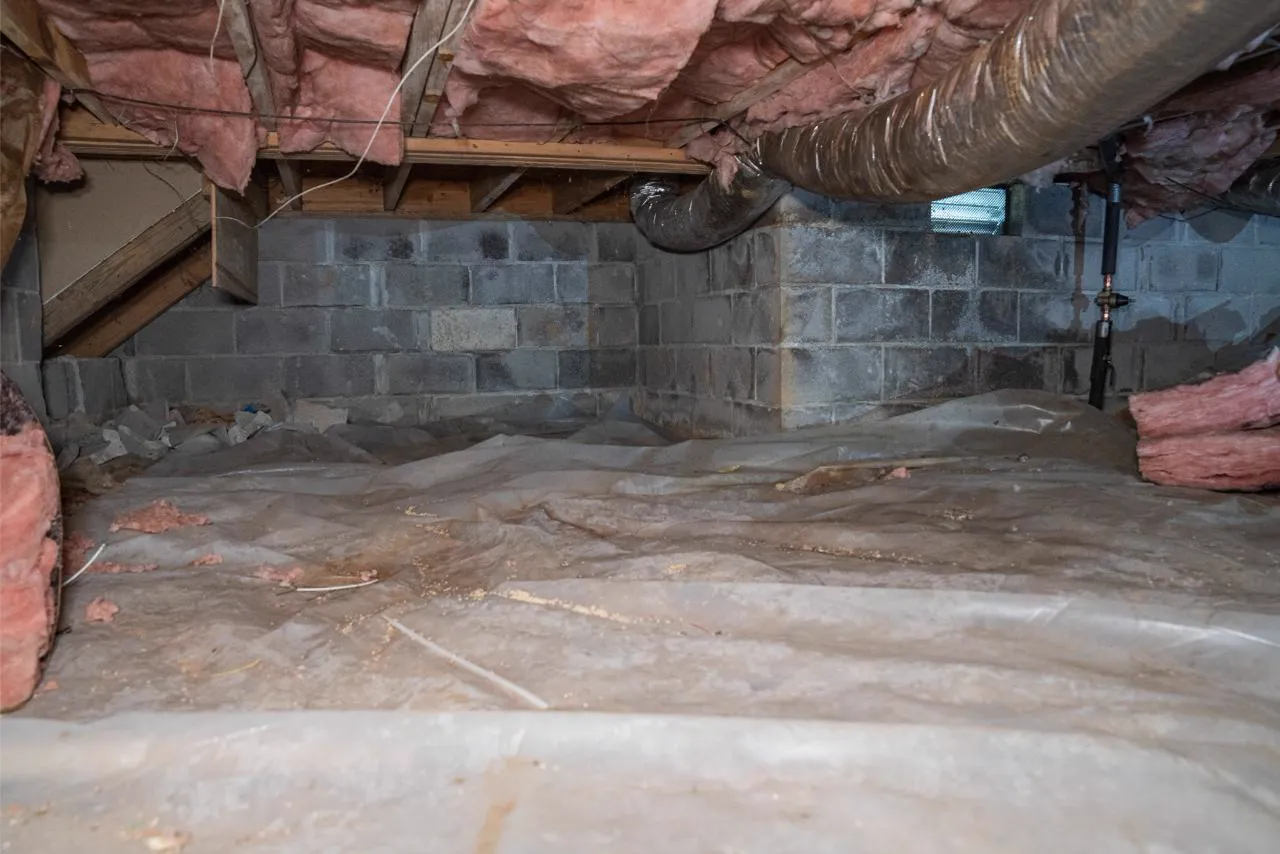
The smaller path has two pieces, and both matter. First, you stop the water at its source — gutters, downspout extensions, grading, and a drain line or sump if groundwater is genuinely pushing in. Second, a vapor barrier goes down across the dirt floor to block ground moisture.
Notice what’s missing. Walls stay bare, vents stay open, and there’s no dehumidifier. That sounds like a compromise, and sometimes it is — but on a dry, well-drained crawl space, it does the job fine. We’d rather say that than sell a liner you don’t need.
Worth knowing
A vapor barrier is only as good as its coverage. Plastic that stops two feet short of the wall, or that’s been shoved aside by a plumber crawling through, is doing maybe half of what it should. Overlap and fastening are most of the value.
Cost-wise, the lighter option lands well below encapsulation, but the honest answer depends on how much drainage work rides along. New plastic alone is one number. Add a sump and forty feet of regrading and it’s another, which is why we walk it before we quote it.
Good news: the expensive one usually isn’t the one you need
Real talk — we walk a lot of crawl spaces where the right recommendation is the smaller job. Maybe half, honestly. That surprises people, since encapsulation gets all the attention online.
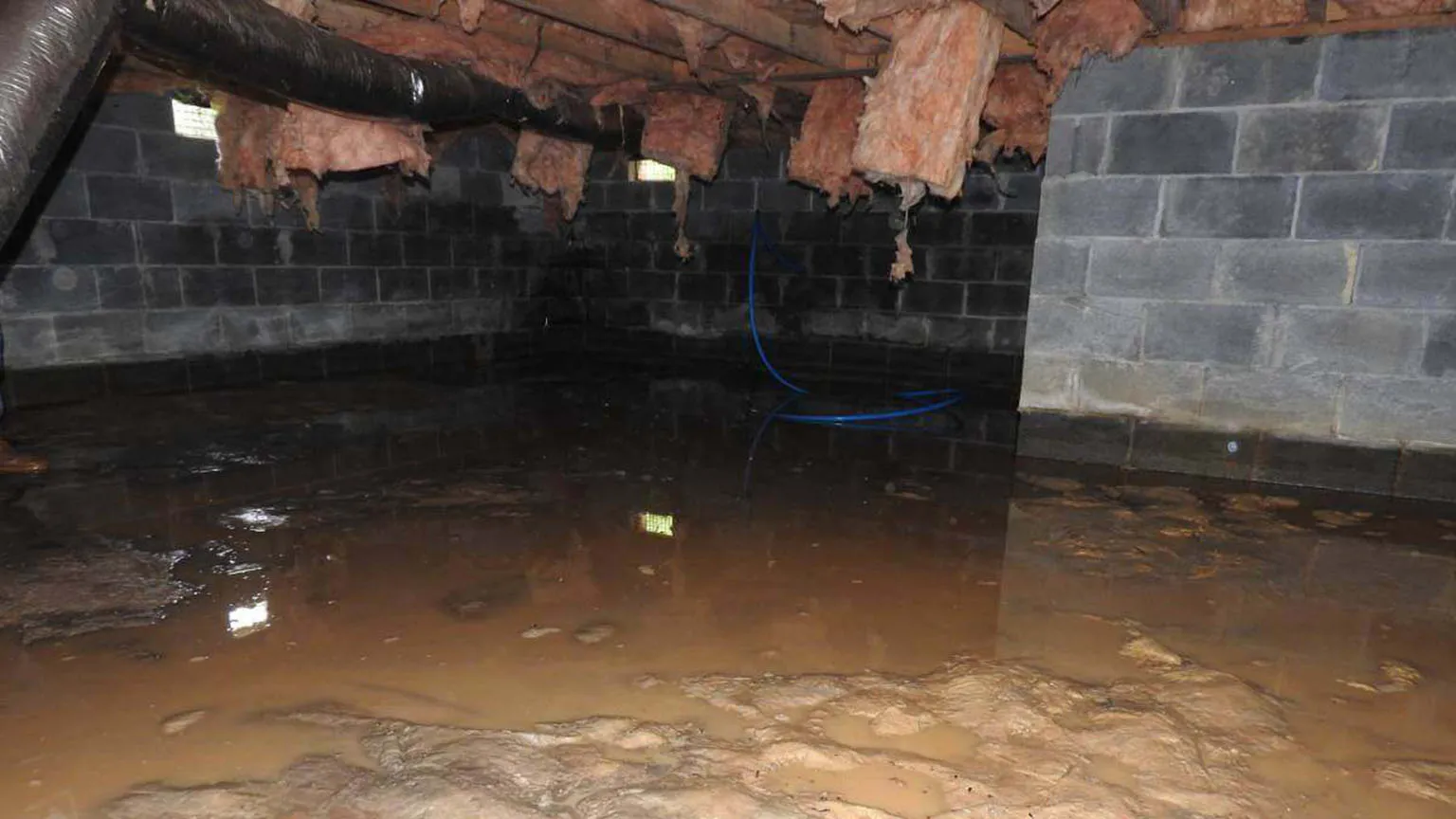
Here’s the thing, though. Encapsulation manages moisture, not water. If water runs in after a storm, sealing the walls doesn’t stop it — you’ve just put a nice liner over a puddle. Drainage comes first either way, and once it’s right, some homes simply don’t need more.
Stop the source first. If the smaller fix holds after that, we’ll say so and hand you a smaller invoice. We’d rather be the company you call again than the one you wonder about.
That’s especially true around here. Alpharetta’s boom-era subdivisions are now old enough that the original waterproofing has simply worn out — even on homes that look brand new from the street. In a lot of those houses, the crawl space is basically fine and the gutters are the villain.
We saw exactly that on a home in Milton Park. The owner was braced for a full liner, and the real problem was two downspouts dumping at the foundation corner. Extensions, fresh plastic, done. Nobody needs a dehumidifier to fix a gutter.
Side by side, honestly
Enough theory. Here’s how the two stack up once we’re on our backs under your floor with a flashlight and a moisture meter.
Full encapsulation
- Heavy reinforced liner on the floor and up the walls
- Vents closed and sealed, so outside humidity stays out
- Dehumidifier holds a steady level year-round
- Protects ductwork, insulation and stored items
- Costs more up front and adds one appliance to maintain
- Usually the answer where humidity stays high after drainage is fixed
Vapor barrier and moisture control
- Floor barrier blocks ground moisture rising from the clay
- Gutters, downspouts and grading get corrected outside
- Drain line or sump added only if water is really coming in
- Meaningfully lower cost, and often a one-day job
- Walls and vents stay open, so summer air still gets in
- Plenty for a dry, well-drained crawl space on a graded lot
Neither column says “better,” and that’s on purpose. Once we’ve seen your lot and read the moisture numbers, one of these is usually obvious — and the other becomes a conversation we can skip.
What decides it on an Alpharetta house?
Four things, more or less. They come up on nearly every inspection we run between Old Milton Parkway and the Big Creek Greenway.
The deciding factors
- Is there standing water, or just damp air? Water means drainage first. Damp air alone points toward sealing.
- Where does the lot fall? Ground sloping toward the house changes the plan immediately.
- What are the wood moisture readings? Numbers creeping toward the twenties tell us the vents are losing the fight.
- Is there ductwork or storage down there? If yes, sealing usually pays for itself in comfort and energy.
That last factor matters more than people think. The U.S. Department of Energy’s guidance on insulation and moisture control is clear that damp air undercuts insulation. So if your ducts run through a humid crawl space, you’re cooling the house through a swamp.
Which one do we actually recommend?
For most Alpharetta homes with a crawl space, we recommend fixing drainage first, then full encapsulation if the humidity stays high afterward. In these 1985–2005 subdivisions, downspouts and grading that were fine in 1995 no longer move water away from the house, so that outside work is rarely optional.
We recommend the lighter option when three things are true: no standing water after a storm, ground that slopes away, and wood readings sitting comfortably in the low teens. Those crawl spaces exist, and we see them regularly on the higher graded lots up around The Hills at Windward.
And sometimes we recommend neither. If your only complaint is a smell after a heavy week of rain and the gutters are packed with pine straw, start with an afternoon of gutter work. Curious how the same call plays out a few exits east? Our breakdown of Duluth crawl space repair covers that market, and if your bigger worry is water downstairs instead, our guide to flooded basement repair is the better read.
Once it’s fixed, what should you do every year?
Good question, and almost nobody asks it. A crawl space fix isn’t set-it-and-forget-it, but the upkeep is small. Ten minutes a year catches anything early.
Your yearly ten-minute list
- Clean the gutters twice, since pine and oak drop on different schedules
- Walk the downspouts after a storm and make sure water lands well away
- Open the access door and look for new plastic that’s been pulled loose
- Check the dehumidifier filter and the drain line, if you have one
- Glance at the wall seal tape near the access door for lifted corners
- Notice the smell — a change in smell is your earliest free warning
Most of that you can do yourself on a Saturday. Plumbers and cable installers are the usual reason a liner gets scuffed, so peek after anyone works down there. Nobody’s careless — crawling on plastic just moves it.
If mold is part of your concern, the CDC’s guidance on mold and your home is a calm, plain read. The short version matches ours: control the moisture and the rest takes care of itself.
Picture the after
It’s a sticky August evening and you’ve got people over. The floors feel normal instead of clammy, and the hallway smells like nothing at all — which is exactly what a house should smell like. Upstairs stays even, so the thermostat argument finally ends.
Better yet, you know you didn’t overspend. That’s the feeling we’re after. You looked at both options and picked the one your house needed, not the one with the best photos.
We hear from folks all over town, from the older streets around Crabapple to families who moved in last spring. If you want the technical detail, our crawl space repair service page goes deeper, and our guide to the best crawl space approaches compares systems side by side. Same crews, same trucks, warranty in writing before anything starts.
Where we work around Alpharetta
We’re based in Lawrenceville, about twenty-five minutes east, so we’re up GA-400 constantly — sometimes sitting in Ameris Bank Amphitheatre traffic like everyone else. We cover Alpharetta, Milton, Johns Creek, Roswell, Cumming, Duluth, Sandy Springs, Suwanee, Norcross, Dunwoody and the wider Fulton area. Odds are we’ve already been under a house near yours.
Questions Alpharetta homeowners ask us
Trust your nose and your floors first. A musty smell at the lowest level, floors that feel cool and damp in summer, or insulation hanging down are the three signs we hear most. From there, a moisture meter on the framing answers it in about five minutes, and that reading is what we base the plan on.
It’s sealing the space off from the dirt and the outside air. A heavy liner covers the floor and runs up the walls, the seams get taped, and the vents get closed. Then a dehumidifier keeps the humidity steady, so the wood above stays dry all year.
It depends on square footage, how tall the walls are, and whether drainage work comes with it. A straightforward floor barrier sits at the low end, while a full sealed system with a dehumidifier and a sump sits at the high end. Anyone quoting a flat number over the phone is guessing, so we measure it and hand you a written scope.
If you’re doing full encapsulation, yes — a sealed space needs something managing the air inside it. With the lighter vapor barrier option, usually not, since the vents are still doing that work. We check the humidity after the barrier goes in and tell you honestly which camp you’re in.
It depends on whether the space is sealed. In an encapsulated crawl space, vents stay closed, because open vents just invite humid summer air onto cool framing. In an unsealed crawl space with a floor barrier, leave them open and let the space breathe.
Let’s find out which one your Alpharetta crawl space actually needs
The inspection is free, the estimate is free, and there’s no pressure at the end of it. We’ll take moisture readings, walk your grading with you, and tell you plainly if the smaller fix is the right call.
(678) 914-5112Serving Alpharetta and all of Metro Atlanta · $500 off projects over $3,500 · Live support 7am–8pm, 7 days a week