

How to Hire the Best Crawl Space Alpharetta Company for Your Home
A five-minute check you can do today, what a real encapsulation includes, and the questions that sort a good bid from a cheap one.
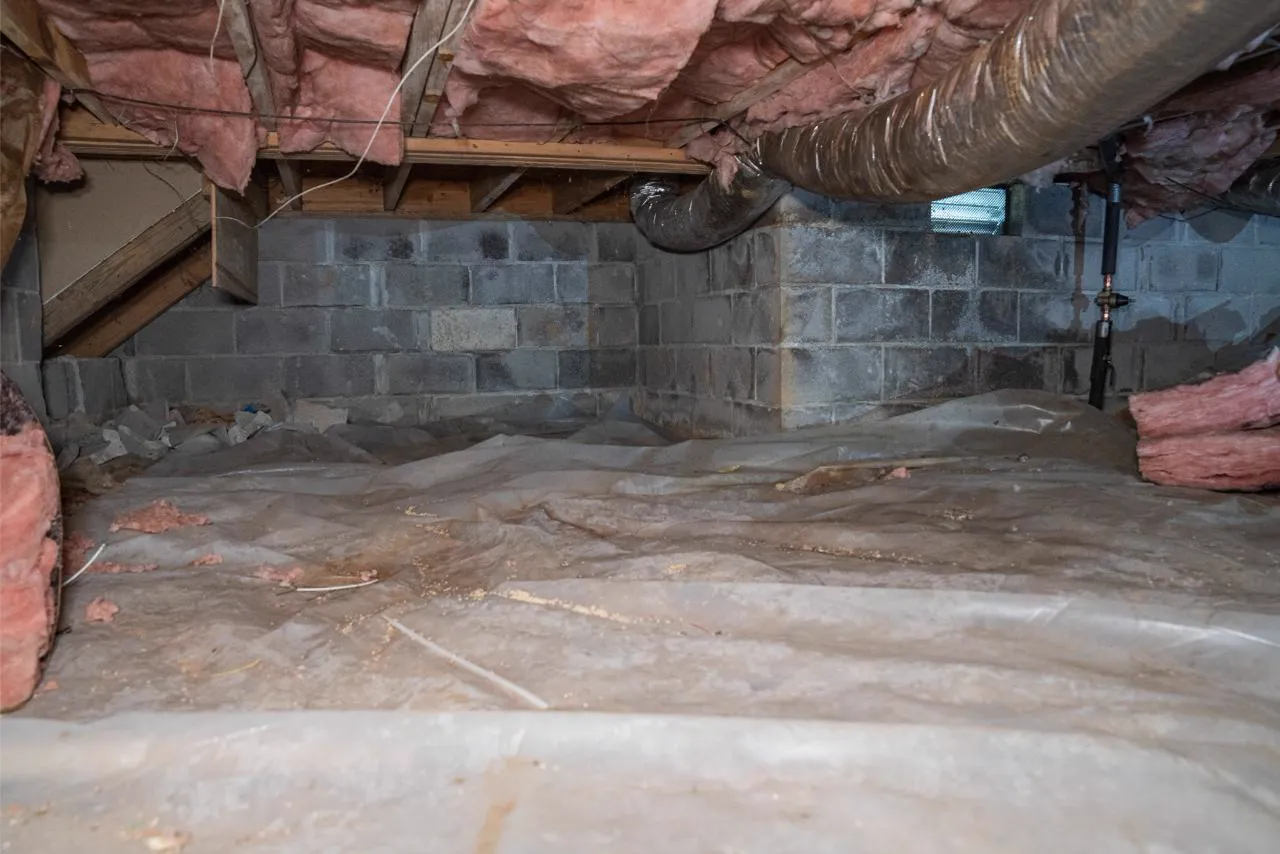
Want to know where you stand in about five minutes? Grab a flashlight, pop the crawl space hatch, and shine the light on the dirt. If you see plastic that stops a foot short of the wall, or plastic with a seam flapping loose, you already know more than most people shopping for the best crawl space Alpharetta has to offer. That gap is the whole ballgame.
Good news right away: this is a very fixable thing, and it’s a job we do constantly. But two companies can hand you bids that look identical and mean completely different work. So let’s make you hard to fool.
What are you actually looking for down there?
Four things, and none of them need a tape measure. First, does the plastic run up the walls and around the piers, or does it just lie on the dirt like a picnic blanket? Then check whether the ground is damp anywhere, especially in the low corner. Also look at the foundation vents — open to outside air, or sealed?
Last, take a sniff. That cool, earthy smell people call “old house” is usually damp wood telling on itself, and since a lot of the air upstairs rises from below, your nose is a good inspector.
Why is an Alpharetta crawl space its own animal?
Because of what’s under it and when it was built. Most of this city went up between 1985 and 2005, on red clay sitting over weathered granite. Clay drains slowly, so after a long spring rain it holds water right against the foundation instead of letting it move on.
Then there’s the ground itself. Big Creek runs through the middle of town, and lots anywhere near that floodplain can have genuinely high groundwater — the neighborhoods off the Big Creek Greenway see it most. Homes over near Nesbit Ferry and Hopewell Plantation sit on rolling grades where water arrives from uphill, too. None of that is a defect. It’s just the ground this city sits on.
Here’s the part that surprises people. Alpharetta’s boom-era subdivisions are now old enough that the original moisture control has simply worn out, even on houses that look brand new from the street. A thin builder sheet from 1998 has had decades of HVAC techs and pest crews walking on it. That said, worn out is a very different problem from broken.
What separates a real encapsulation from a plastic drop?
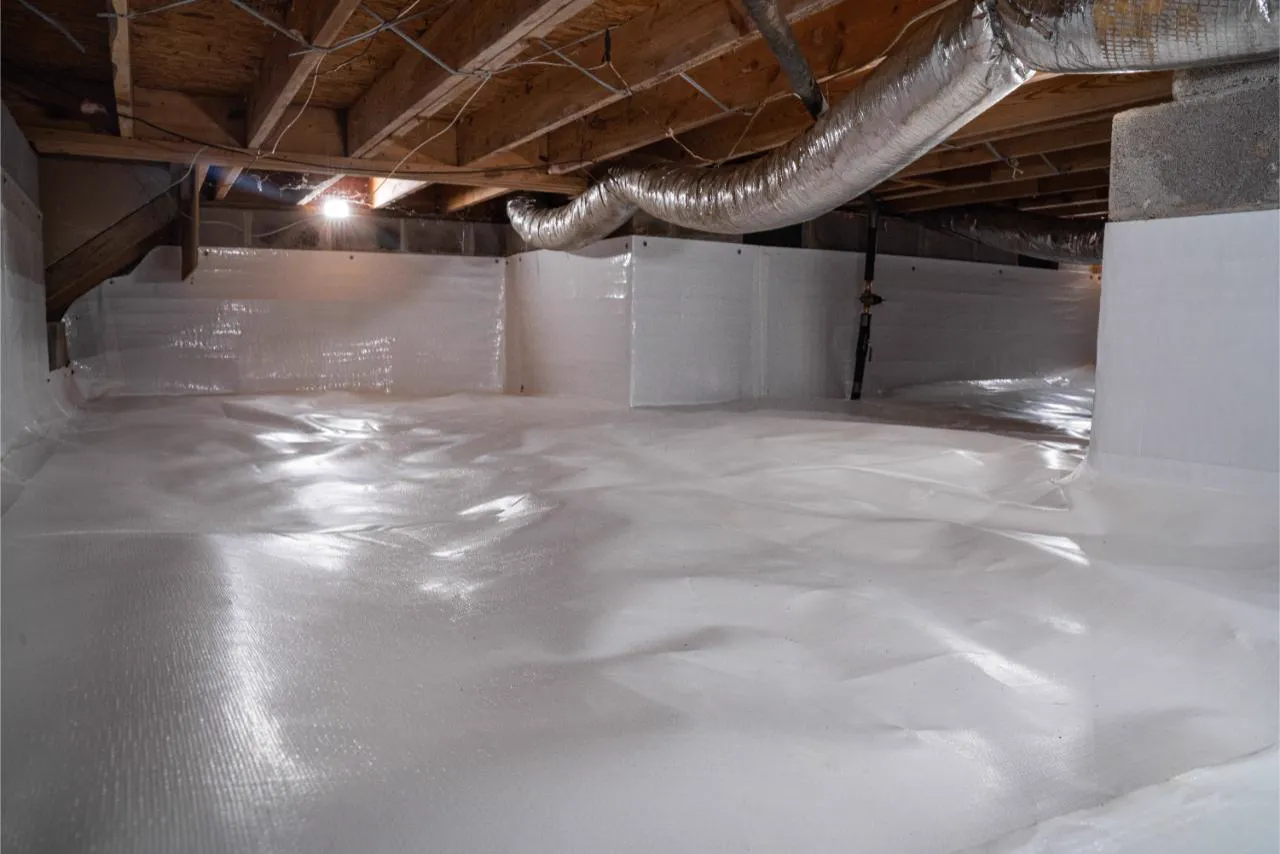
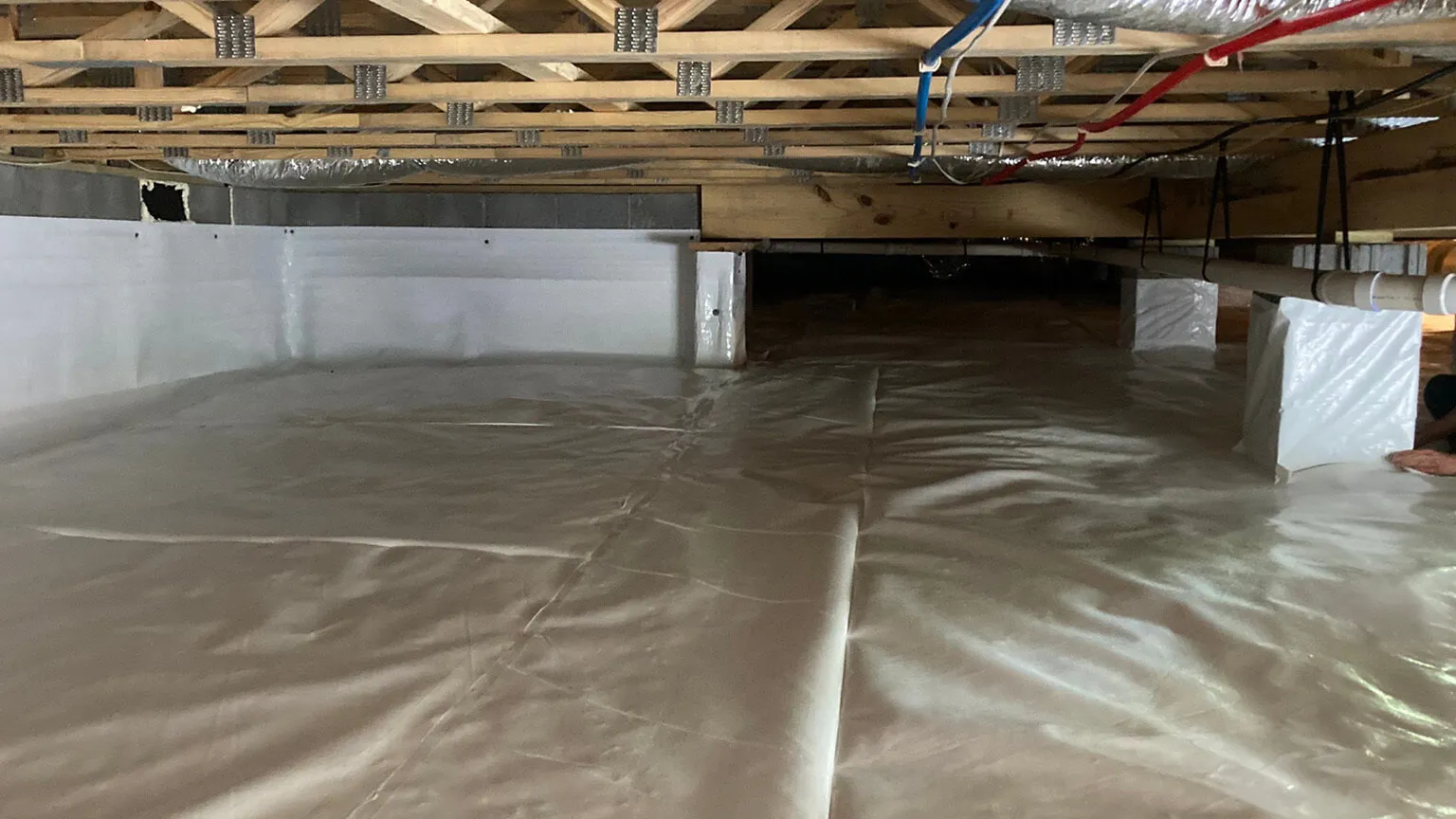
Sealing, thickness, and air — that’s what the best crawl space Alpharetta crews get right. A “vapor barrier” job usually means loose plastic laid over the dirt with the edges tucked near the wall. Real crawl space encapsulation means the liner runs up the stem walls, wraps every pier, gets mechanically fastened, and has every seam taped into one continuous surface. Same photo on a website, wildly different job.
Thickness matters as well. Thin builder film tears the first time somebody crawls a service line, while a reinforced liner has a string grid inside it that holds up to knees and toolbags for decades. If a bid doesn’t name the mil thickness and say the word reinforced, ask why.
Worth knowing
Open foundation vents were required for decades, on the theory that outside air dries a crawl space out. In a humid climate like ours, warm outside air hitting cool surfaces does the opposite — it condenses. That’s why sealed vents and controlled air have replaced the old rule.
Air is the last piece, and it’s the one that gets skipped. A sealed crawl space still needs its moisture managed, which usually means a dehumidifier sized to the square footage and set to drain on its own. Plugging in a hardware-store unit and calling it conditioned air is a bit like fanning a swimming pool with a magazine. The U.S. Department of Energy covers the moisture-and-insulation relationship well in its home insulation guide if you want a neutral source.

What would we want to know if it were our own house?
Honestly? We’d want the boring questions answered first, because the value lives in the parts you’ll never see again once the hatch closes.
We’d start with water. If there’s ever standing water down there, drainage comes first — a perimeter drain and a sump, moving water off the property. Sealing a wet crawl space without handling that water is the most common shortcut in this trade. After that, the liner has something dry to sit on and it lasts.
The six things a real bid should name
- Where the liner stops. Floor only, or floor plus walls plus piers, sealed and fastened.
- Mil thickness and reinforcement. A number and the word reinforced, in writing.
- Vent treatment. Sealed and insulated, not stuffed with foam board and hope.
- Dehumidifier and its size. Matched to the square footage, with a real drain line.
- Water and drainage, handled first. Sump, discharge point, and where that water ends up.
- Warranty terms, including transfer. A warranty that moves with the house is worth real money.
That last one deserves a second look. Plenty of Alpharetta homeowners move within ten years, so a transferable warranty turns your repair into something a buyer’s inspector nods at.
How do you read two bids that look the same?
Compare scope lines, not totals. When one number comes in far below the others, something got left out — usually the wall liner, the dehumidifier, or the drainage. Line them up side by side, and the best crawl space Alpharetta bids sort themselves out fast.
Red flags are simple, too. A firm price quoted over the phone means nobody measured your crawl space. Pressure to sign today is a sales script, not a scheduling reality. Also be careful with a bid that promises to fix mold without ever mentioning where the moisture comes from — the EPA’s guidance on mold and health is clear that controlling moisture is the actual fix.
Five questions to ask every company
- “Does the liner attach to the walls and piers?” A yes should come with a photo of their own work.
- “What are you doing about the vents?” Sealed, or you’re paying to air-condition Fulton County.
- “Is a dehumidifier included, and what size?” Vague sizing usually means it’s an upsell later.
- “What happens if water shows up after?” Listen for drainage, not for reassurance.
- “Who’s on my job, and is the warranty transferable?” Same crews and a yes are both good signs.
Prices swing because crawl spaces do. Height, access, square footage, standing water, and old fallen insulation all move the number, which is why we won’t guess one before somebody stands under your house. For the mechanics of the systems themselves, our crawl space repair page walks through what we install.
What about the homeowner whose problem wasn’t what they thought?
A while back we walked a home in Milton Park where the owner was certain she had a plumbing leak. Two bids had already called for a full liner, and one had quietly skipped the wet corner entirely.
So we started outside instead. Turns out a downspout on the shaded side had been discharging about eight inches from the foundation for years, and the grade had settled toward the house. Inside the crawl space, the dirt was damp in exactly that one corner and dry everywhere else — a pattern that points outside every time. Meanwhile the plumbing was perfectly fine.
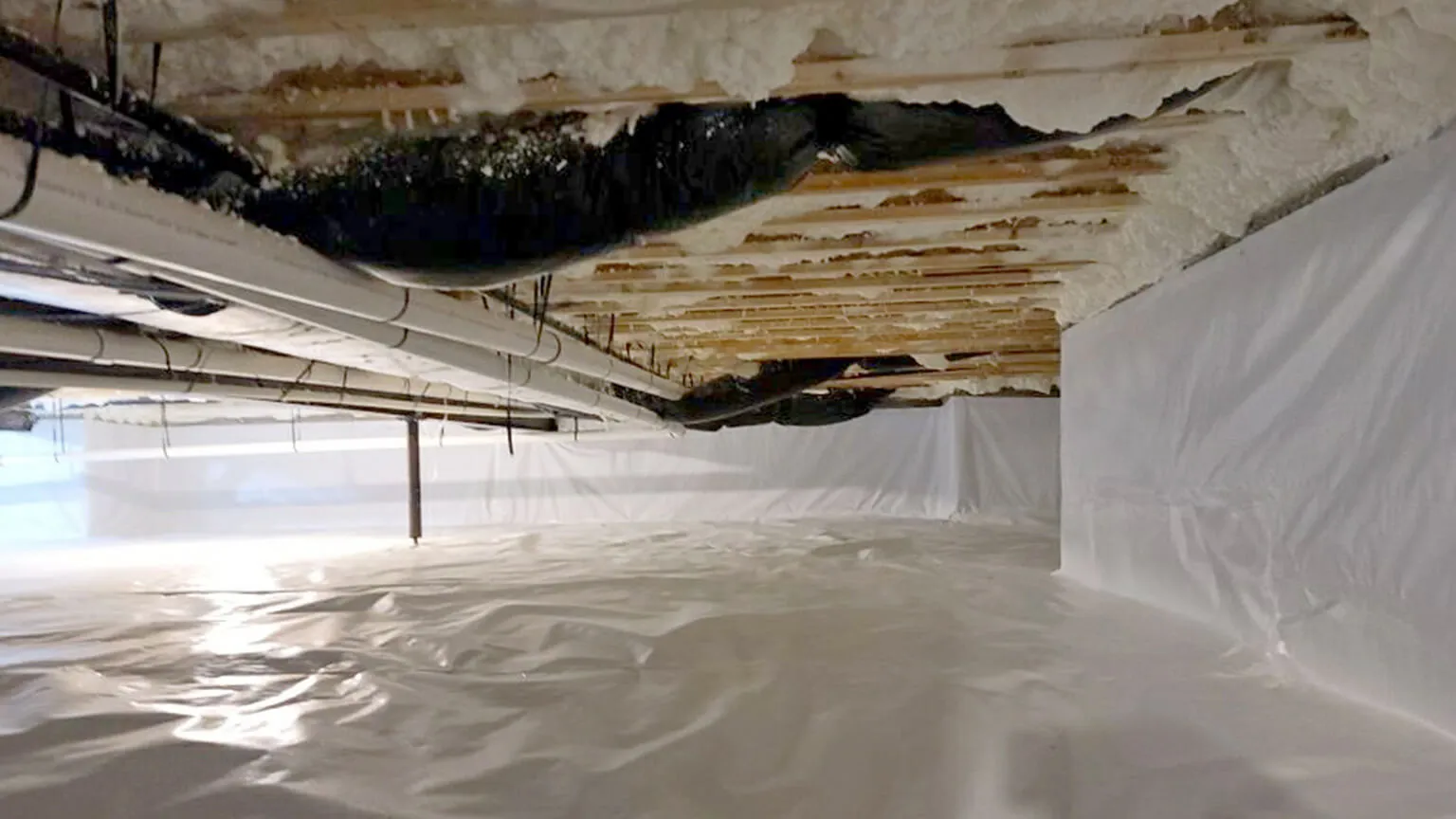
The plan came out cheaper than she expected. Move the roof water out, correct the grade, add a short run of drainage in the low corner, then encapsulate with a reinforced liner sealed to the walls and piers and a right-sized dehumidifier. Three days total. What she mentioned first afterward wasn’t the liner — it was that the hallway upstairs stopped smelling like a basement.
That’s the feeling worth paying for. Not “we sealed it,” but “somebody actually looked, and told me the truth about what I needed.” Even though we made less on that job, she’s sent us three neighbors since.
Why are we a fit for these houses?
Because we’ve been under a lot of them. Twenty-plus years around Metro Atlanta means we’ve watched these 1990s subdivisions age, from the streets near Wills Park to the ones behind Academy Street. Same crews, same trucks, and a real person answering the phone seven a.m. to eight p.m.
You’ll also get photos and a plain explanation, which busy Alpharetta homeowners tend to appreciate more than a sales visit. If your house has a basement instead, the honest answer might be flooded basement repair. And if you’re comparing across town lines, our Duluth best crawl space guide covers similar homes just up the road.
Where we work around Alpharetta
We’re based in Lawrenceville, roughly twenty-five minutes east, and we’re on the GA-400 side constantly. That includes Alpharetta, Milton, Johns Creek, Roswell, Cumming, Duluth, Sandy Springs, Suwanee and Sugar Hill, plus the wider Fulton area. Whether your home sits near the Big Creek Greenway or up in the Windward corridor, there’s a good chance a truck is already nearby.
Questions Alpharetta homeowners ask us
It depends mostly on square footage, crawl height, and whether water has to be handled first. A clean, dry, easy-access crawl sits at the low end, while a wet one needing drainage and a dehumidifier sits at the top. We give you the number in writing after somebody has been under the house, since a phone quote would just be a guess you’d end up paying for.
In our climate, almost always. Sealing the space stops new moisture from coming in, but the air already down there still needs somewhere to go. A properly sized unit with its own drain line keeps things steady without you ever thinking about it.
Closed, in Georgia. Open vents were the old standard, back when the thinking was that outside air dries things out. Here that warm humid air hits cool surfaces and turns into water, so a sealed and conditioned crawl space performs much better.
Usually yes, because a good chunk of the air in your house rises up from the crawl space. Once the ground is sealed off and the humidity is controlled, that smell fades over the following weeks. If it lingers, something else is holding moisture, and we’ll come back and find it.
Most Alpharetta crawl spaces take two to three working days. Add a day if old insulation and debris have to come out first, and another if drainage goes in before the liner. You can stay home the whole time, since the work happens under the house.
Let’s look under your Alpharetta home together
We’ll open the hatch, show you photos of what’s actually down there, and explain the plan in plain language — including the parts you don’t need. Free inspection, free estimate, and no pressure at the end of it.
(678) 914-5112Serving Alpharetta and all of Metro Atlanta · $500 off projects over $3,500 · Live support 7am–8pm, 7 days a week