

Wet Basement in Loganville: What’s Causing It, and How It Gets Fixed
By the time you notice the damp spot, the water has usually been showing up for years. Here’s how to read your own house — calmly, and in plain English.
Here’s something almost nobody expects to hear. That damp corner you finally noticed last month? It has probably been arriving quietly for three or four years. Water is patient and a basement is dark, so a wet basement Loganville homeowners just discovered is usually an old story with a new audience. Good news, though: none of that lost time counts against you.
So let’s take it apart slowly, just so you finish this page knowing what’s happening under your own house.
How long has this really been happening?
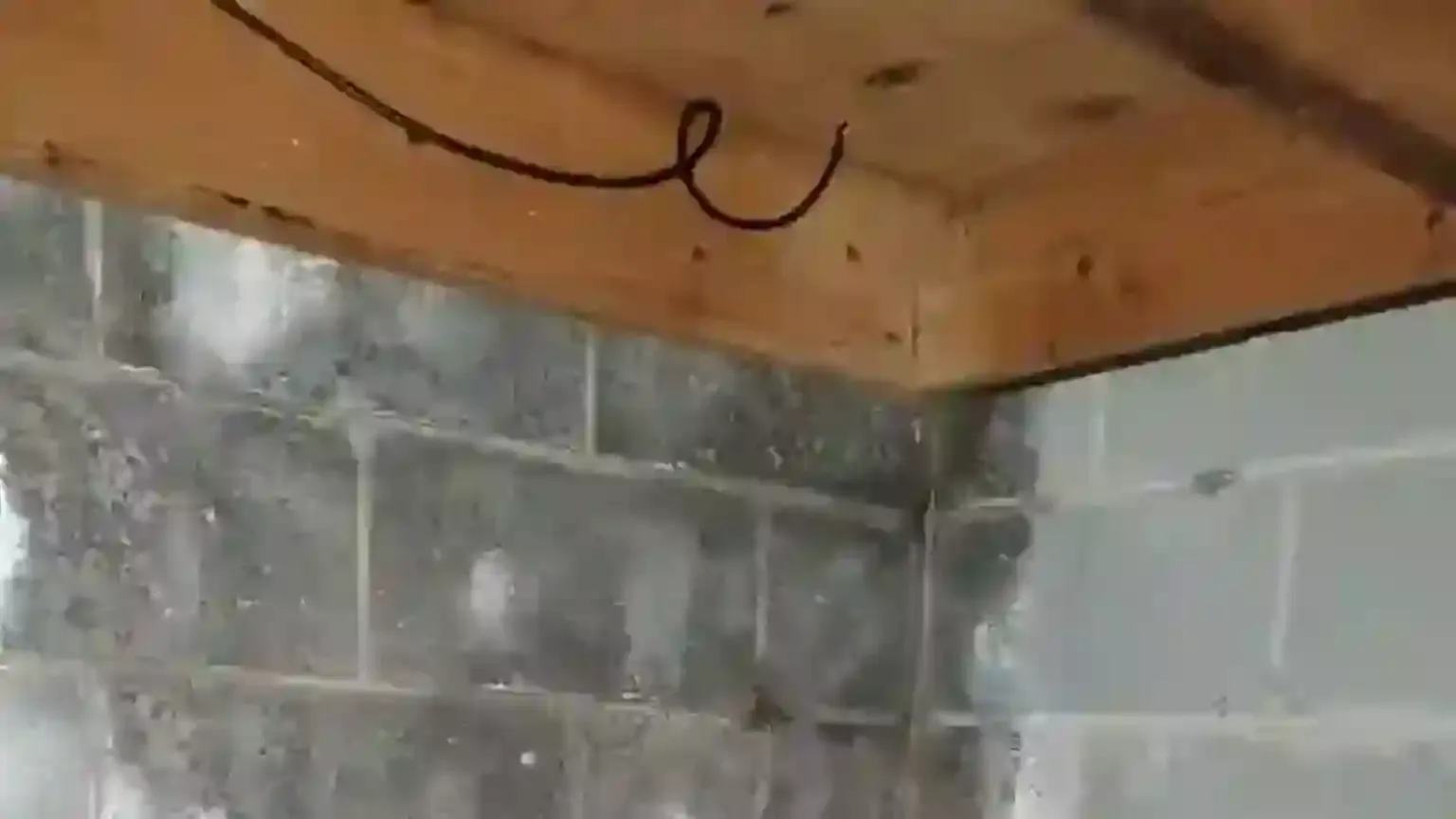
Longer than the stain suggests. Moisture shows up as vapor first, and vapor leaves no marks. Then comes the faint musty smell you blame on the boxes. After that, a chalky bloom appears on the block, and only then do you get a wet spot on the floor.
That ladder takes years to climb. Because of that, most people meet the problem at step four and assume it started last week. It didn’t, and that’s good news — something moving this slowly gives you time to handle it right.
Loganville adds one wrinkle worth knowing. Plenty of homes out here sit on crawl spaces instead of full basements, especially on the older semi-rural lots. A wet crawl space doesn’t politely stay down there, either. That damp air rises straight up into the house you’re living in, so some folks smell the problem long before they see it.
What’s actually pushing water through the wall?
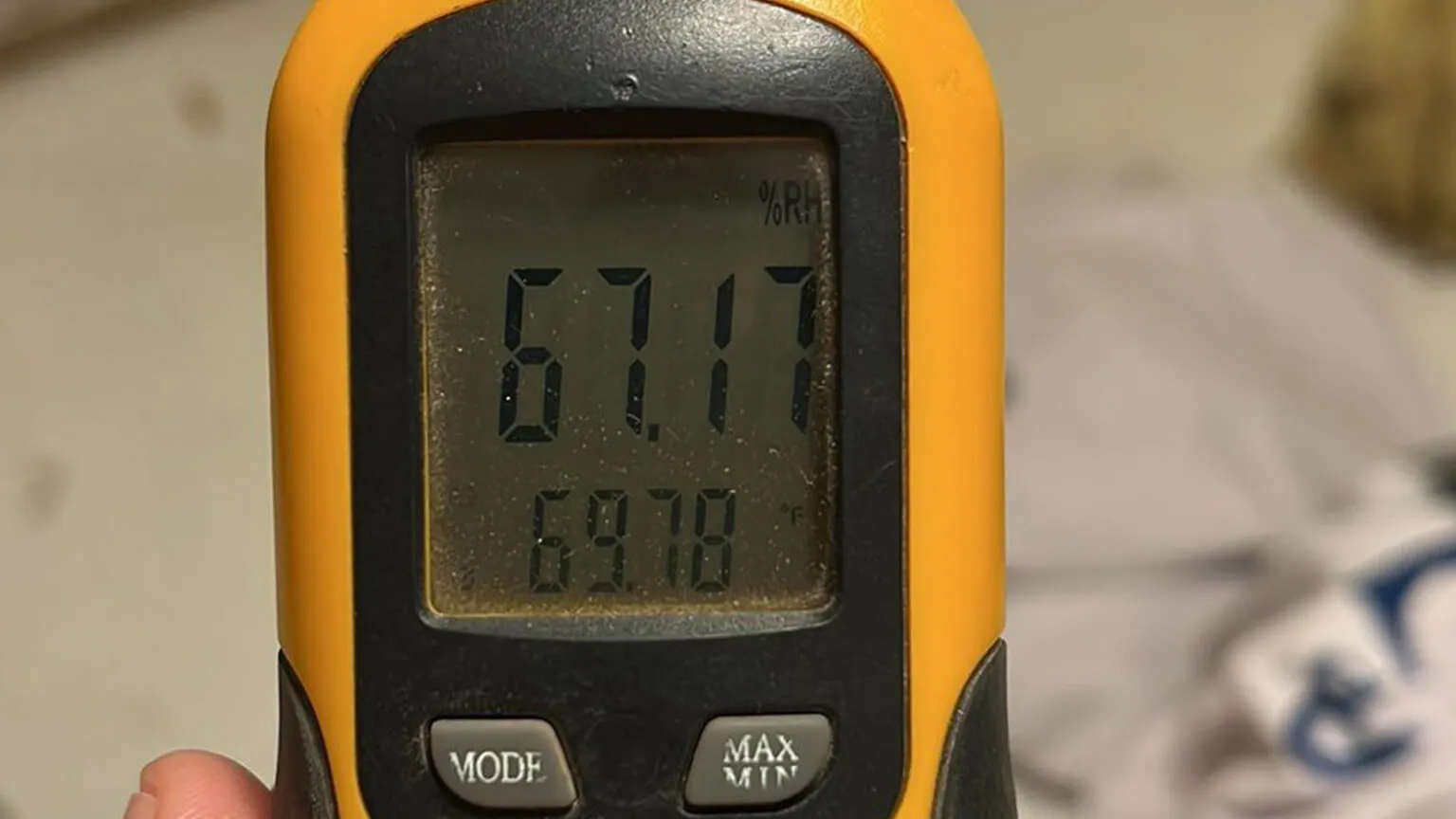
Two words cover most of it: hydrostatic pressure. Our red clay soaks up rain and swells, and saturated clay presses on everything it touches. A basement wall can face thousands of pounds of that push, so water doesn’t need a crack to get inside. Under enough pressure it moves through solid concrete the way it moves through a sponge.
That part surprises people most. Your wall can be perfectly sound and still weep. In fact, most walls we inspect out here are structurally fine — they’re just standing in wet dirt.
Loganville keeps that dirt wetter than average for three reasons. The lots are big, open, and often have no real drainage. Many homes are on septic, so the drain field keeps soil near a foundation damp long after the rain stops. Plus, low properties in the Alcovy River basin see seasonal high water.
Worth knowing
Seepage and structural movement are two separate conversations. We’ll tell you clearly which one you have — and if it’s only seepage, you’ll hear that before anyone mentions money.
Timing matters too. Spring storms here arrive fast and heavy, so the ground goes from thirsty to soaked in a single afternoon. If you like watching that, the National Weather Service Peachtree City office puts out the local outlooks worth bookmarking.
Is yours mild, or is it something bigger?
Great question, and a flashlight answers most of it. None of these signs are alarming — they just show where you sit on the scale.
Reading the signs
- Musty smell, nothing visible. Moisture is coming in as vapor. Mild, and often solved out in the yard.
- Chalky white bloom on the block. That’s efflorescence — mineral left behind after water passed through.
- One damp corner after a hard rain. Very common, and usually one downspout is doing all the damage.
- Water tracking along the floor-and-wall seam. Pressure is winning at the joint, which points toward drainage.
- Standing water that hangs around for days. Time to have someone look. Still fixable — just a bigger scope.
What happens if you leave it? Nothing dramatic, honestly. Moisture problems just widen slowly, so stored things get ruined and easy repairs turn into medium ones. The EPA’s guide to moisture control explains the indoor-air side well.
What if the first step is easier than you think?
Ready for the part most articles skip entirely? Before anybody opens a slab, you have a cheaper move available — and a surprising number of homes never need more than that.
Walk your foundation on a dry day and follow the water backward. Where do your downspouts end? If they dump a few feet from the wall, that roof is delivering hundreds of gallons to the exact spot you’re worried about. Extending them ten or twelve feet costs almost nothing.
Then check your grade. Soil should fall away from the house, but yards creep upward over time from mulch and new beds. Also look for dirt sitting above the top of the block, since lowering it is usually the cheapest item on any list we hand out.
Most of the time the wall isn’t failing. Something outside the wall is delivering more water than the ground can carry away — and that’s a much friendlier problem to own.
Out on the bigger lots, this step matters even more. Newer homes along the Highway 81 corridor often have wide open yards with no defined drainage, so every storm just sits there. A shallow swale or a French drain moves that water toward the street instead of your footing. Better yet, it’s yard work — not basement work.
So how does the fix actually work?
Simpler than most people picture. The old approach fought water at the wall with coatings and patches, which is a raincoat on a submarine. Interior drainage does the opposite, collecting water below the slab before it reaches your floor.
- Find the outside source first. Downspouts, grade, patios, septic field, drain lines. Sometimes the entire fix lives in the yard.
- Read the foundation. Poured concrete, block and old block piers all behave differently, so the plan follows the house.
- Open a narrow strip of slab. Only along the affected walls, and only for a day of noise.
- Set perforated pipe in clean stone, below floor level. Depth is the whole ballgame here.
- Route it to a sump basin. The pump carries water well away, not back into the flower bed for a second attempt.
- Close it up. Fresh concrete, wall liner where it’s called for, and our mess leaves in our truck.
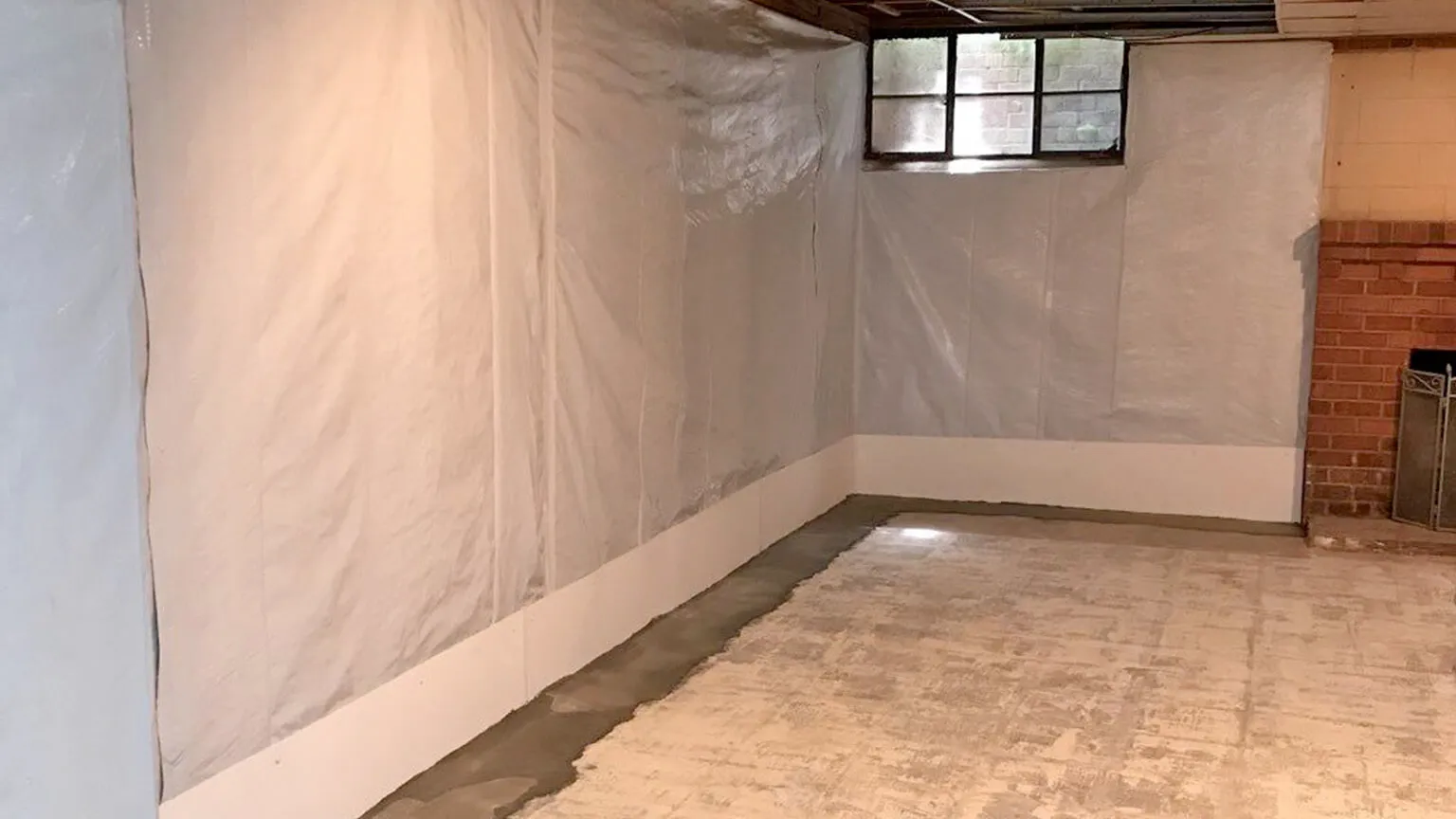
Most interior systems run two to four working days. Add a day for a finished space, plus another if a crawl space gets sealed at the same time. Scope drives price more than anything, so our waterproofing cost breakdown walks through the drivers. The basement waterproofing page shows what we install.
The house on the older side of town
Want the story that changes how people think about this? A homeowner near Grand Rivers called us about water crossing his basement floor every spring. He’d already made peace with a full perimeter system.
We walked the outside first, like always. His lot sloped gently off Rosebud Road toward a low back corner, and a rebuilt patio had reversed the grade along one wall years earlier. Above that, a buried downspout line had collapsed and was feeding the same six feet of dirt with every storm.
The real fix turned out to be regrading, a new discharge line, and one short run of interior drainage on that wall alone. Nothing close to what he’d braced for. That’s why we look outside before quoting inside — we’d rather hand you the small answer when it’s the true one.

What should a fair estimate include?
Four things, and any honest crew hands them over without flinching. First, what they found outside. Second, the depth and route of the drainage, in writing. Third, where the water discharges. Fourth, a warranty you can read in one sitting.
A price quoted over the phone with no walk-through is a guess, and you’d be paying for it. Ask plenty of questions, too. Loganville folks ask straight ones and hate being upsold, which honestly makes our job easier.
Some homes here have a crawl space rather than a basement, and a few have both. In that case crawl space encapsulation is usually the better system — sealed liner, controlled humidity, same goal. If you’re comparing notes across the metro, our Tucker wet basement guide covers how older in-town foundations behave differently than the newer builds out this way.
What does life look like once it’s dry?
Quieter, mostly. The smell fades within days once the source is cut. Your sump cycles after a storm, which is the system working rather than a problem. By the second weekend, people carry boxes back downstairs without thinking about it.
A year later, you stop checking after rain. One homeowner over in Windsor Creek said the strangest part was realizing she hadn’t thought about her basement since March. Ten years in, the pipe and stone below the slab still work, because nothing down there wears out. Only the pump has a service life.
Best of all, you understand your own house now. That’s the feeling people describe most — not relief exactly, more like being back in charge. Families near Bay Creek Park have turned dry basements into guest suites, offices, and one home gym that gets more use than the Rock Gym membership it replaced.
Where we work around Loganville
We’re based in Lawrenceville, about twenty minutes northwest, so we’re on this side of the map constantly. That includes Loganville, Snellville, Grayson, Monroe, Between, Bay Creek, Dacula, Lawrenceville, Centerville and the wider Walton and Gwinnett Counties area. Big lots, septic fields and crawl spaces are normal work for us.
Questions Loganville homeowners ask us
Only what sits along the walls we’re working on, and we’ll tell you exactly which ones before the first day. Everything else can stay where it is. If moving heavy items is a problem, say so — our crews help slide things over rather than leaving you to it.
Sometimes, but they’re two different jobs. Drainage handles the water, while a crack may also need sealing or reinforcement depending on what caused it. We look at both during the inspection and tell you plainly whether yours is cosmetic, active, or simply worth watching for a season.
It depends on where the water is coming from and what’s around your house. Interior drainage is less disruptive and works well on big rural lots, since it collects water below the slab instead of fighting it at the wall. Exterior work makes more sense when grading, roof water or a septic field is the real source, and plenty of homes get a mix of both.
The drainage itself is built to last as long as the house, because pipe and clean stone below the slab have nothing to wear out. The pump is the one part with a service life, so plan on replacing it somewhere around the ten-year mark. Everything else keeps working quietly in the background.
Yes, and you get it in writing before the work starts rather than after. Ask us to spell out what’s covered and for how long. If a warranty can’t be summed up in a sentence or two, it isn’t doing you much good.
Let’s find out what your Loganville basement really needs
We’ll walk the property with you, show you where the water starts, and explain the fix in plain language — crawl spaces and big open lots included. The inspection is free, the estimate is free, and nobody pressures you.
(678) 914-5112Serving Loganville and all of Metro Atlanta · $500 off projects over $3,500 · Live support 7am–8pm, 7 days a week