

Waterproofing Options Lawrenceville Homeowners Compare — And How We’d Choose
Two real fixes, laid out fairly, from the crew whose shop and trucks sit right here in town.
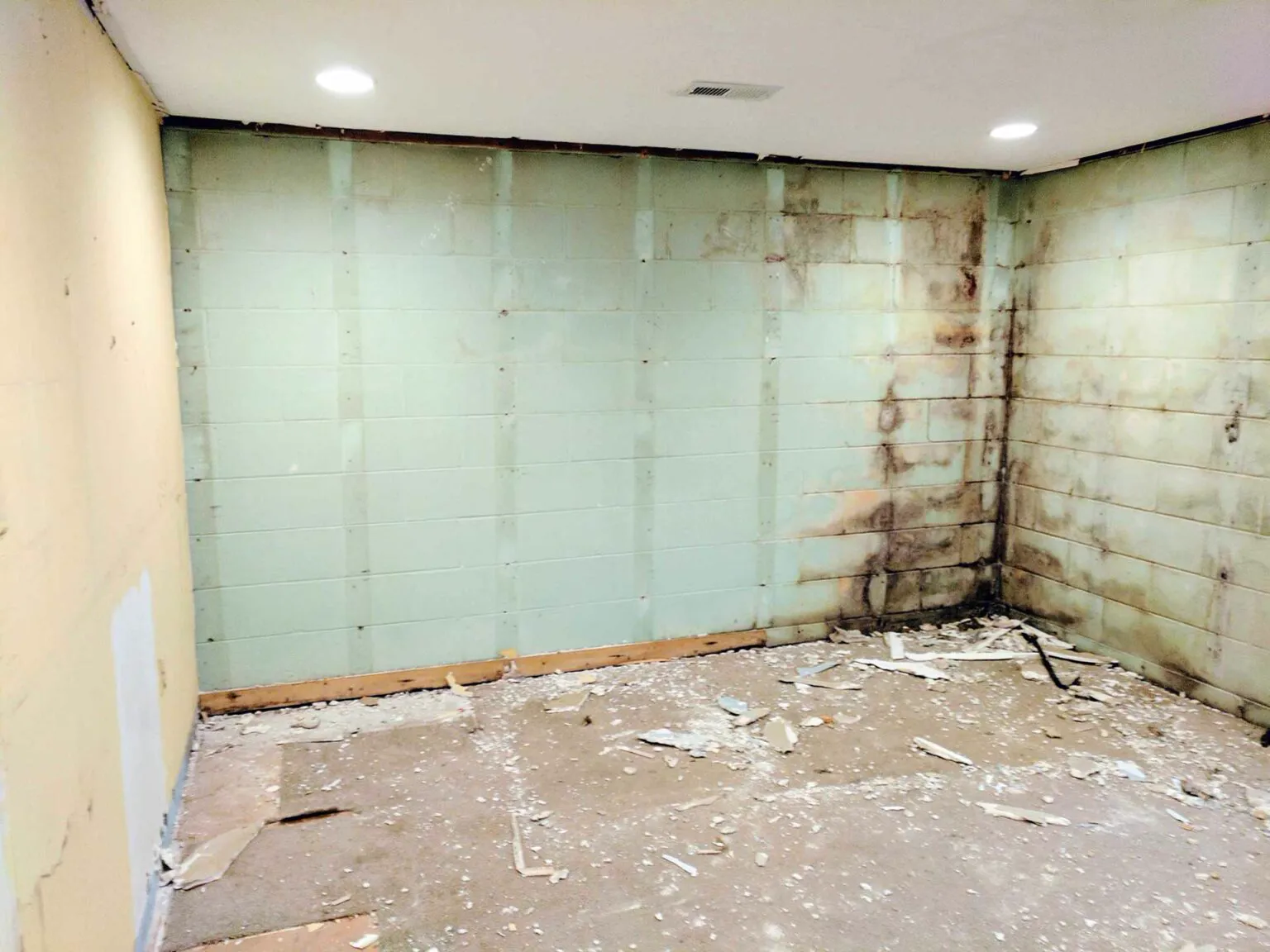
Here’s the thing almost nobody mentions when you start pricing waterproofing options Lawrenceville companies sell: most of the water in a Georgia basement never comes through a crack at all. It comes up through the cove joint — the seam where your wall meets the floor slab. That single seam is the most common water entry point in homes around here, and it’s the one people spend years sealing the wrong way.
Good news, though. Once you know where the water is really coming from, the choice in front of you gets a lot smaller. So let’s walk both real fixes, side by side, and then we’ll tell you which one we’d pick.
Why does that seam matter so much?
Your slab and your walls were poured at different times. Concrete shrinks a little as it cures, so a hairline gap forms between them. It isn’t a defect — it’s just how concrete behaves.
Then red clay does what red clay does. Gwinnett clay holds water like a sponge and pushes it at the foundation, and the easiest path in is that seam. That’s why sealing a wall from inside so rarely works. Paint can’t stop water arriving under your feet.
Worth knowing
Concrete is porous, so a wall can be damp with no crack anywhere on it. If you’ve hunted for the crack and come up empty, you didn’t miss it.
Option A: how does interior drainage work?
An interior system stops arguing with the water and starts giving it somewhere to go. A narrow channel opens in the slab along the walls that leak, and perforated pipe drops in below floor level, packed in clean stone. Everything runs to a sump, and the pump carries water well away from the house.
After that, the channel closes back up with fresh concrete. Because the work happens indoors, rain never pushes the schedule.

Why does this one fit so much of our town? Because it works the same on any wall. Lawrenceville has 1970s and 1980s block basements, 1990s and 2000s poured walls, and crawl spaces on the older east-side properties — three different animals. Interior drainage sits below all of them and doesn’t care which you own.
Block walls especially. A block wall is hollow, so water fills the cores and sits inside the wall. So we open the bottom cores and let the wall empty into the drain instead of holding water like an expensive vase.
Option B: what does exterior waterproofing involve?
Exterior work catches water earlier, before it ever touches your foundation. Soil gets dug out down to the footing, the wall is cleaned and coated with a membrane, and a footing drain goes in at the base. Then the trench is backfilled and the grade around the house is corrected.
On paper it’s the more complete approach, and we’ll say that plainly. Water never reaches the wall, so the wall never has to fight. For a block foundation with tired mortar joints, that’s genuinely worth something.
But it’s also the bigger job, and on our lots that matters. A machine has to physically reach the wall, which rules out plenty of houses on the River Club edge where mature trees sit close and side yards are tight. Decks, patios and irrigation come out first, then go back. Rain pauses everything too.
We stopped blocking water and started routing it. Water wins the blocking fight eventually, because every coating ages. Stone and pipe don’t.
Is there an easier first step?
Often, yes — and this is the part most homeowners don’t realize they have. Before either system, there’s a smaller move that fixes a surprising number of basements: getting the water off your yard in the first place.
Standing water after Gwinnett’s heavy spring rain is our most common call, and it usually isn’t a foundation story at all. Downspouts dumping two feet from the wall. A flower bed graded back toward the house. An old buried drain line that silted shut years ago. Each one soaks the soil right where you least want it soaked.
The fix is cheap by comparison. Extend the downspouts well past the foundation, re-slope the first ten feet of ground away from the house, and clear or replace the buried lines. In a lot of 1990s subdivisions off Sugarloaf Parkway, that’s the whole job — the original drain system simply silted up over thirty years and nobody knew it was there.
We say this out loud on estimates even though it’s a smaller invoice. Honestly, telling somebody they don’t need the big system is the fastest way to earn a call back in five years. Our page on basement waterproofing walks through the full range if you want the technical version.
That said, drainage corrections have a ceiling. Once water reaches the footing, regrading can’t catch up, and the EPA’s guide to moisture in the home explains why chasing symptoms indoors goes nowhere.
So how do they compare?
Enough theory. Here’s how the two stack up when we’re standing in your basement with a flashlight.
Interior drainage
- Handles the cove joint, where most water shows up
- Landscaping, patios, decks and trees stay put
- Typically one to three days, and weather never delays it
- Works the same on block, poured or stone walls
- Includes a sump pump, so there’s a part to service
- Also manages rising groundwater under the slab
Exterior waterproofing
- Stops water in the soil before it reaches the wall
- Requires digging to the footing along the wet walls
- Longer job, and hard rain pauses it
- Costs more, mostly for digging and putting the yard back
- Not possible where trees or tight setbacks block access
- Lets us repair the mortar face while the wall is open
Notice neither column says “better.” Because once we’ve seen the lot, one of these is usually obvious — and the other is a conversation we can skip.
What actually decides it here?
Four things, more or less. They come up on nearly every inspection we run between Rhodes Jordan Park and the far side of town.
The deciding factors
- Where is water entering? The floor seam points inside. High on the wall face points outside.
- What’s the wall made of? Tar-only block from the seventies behaves nothing like a 2001 poured wall.
- Can a machine get there? Sloped lots, mature trees and close property lines answer this before we do.
- What’s already been done? Sealer hiding behind finished drywall changes the plan fast.
Here’s our real recommendation, since you came for one. Of the waterproofing options Lawrenceville homes qualify for, we start with interior drainage plus the outside corrections that don’t require digging — downspouts, grading, and clearing buried lines. That pairing solves most of what we see, and it protects the finished space you already paid for.
Full exterior work earns its keep when three things line up: the wall is deteriorating, machine access is clear, and you’re already redoing that side of the yard. Given all three, going outside is worth every dollar. Missing any, you’re paying a premium to remove trees.
The one that wasn’t what they thought
A homeowner over in Rivermist called us convinced they needed the whole exterior package. Water showed up along one wall every spring, and they’d already braced their budget for excavation. Fair enough — that’s a reasonable read of the symptoms.
Then we ran the inspection. The wall was solid, and the seepage line sat right at the cove joint, not up the block. Out back, a downspout fed a buried line that had collapsed years earlier, so every hard rain pumped roof water into the soil beside that wall.
What they actually needed was a new drain line, corrected grade, and about eighteen feet of interior channel on that one wall. No excavation, no lost trees, no new patio. They spent a fraction of what they’d planned, and they told us afterward that the surprising part wasn’t the price — it was somebody talking them out of the bigger job.
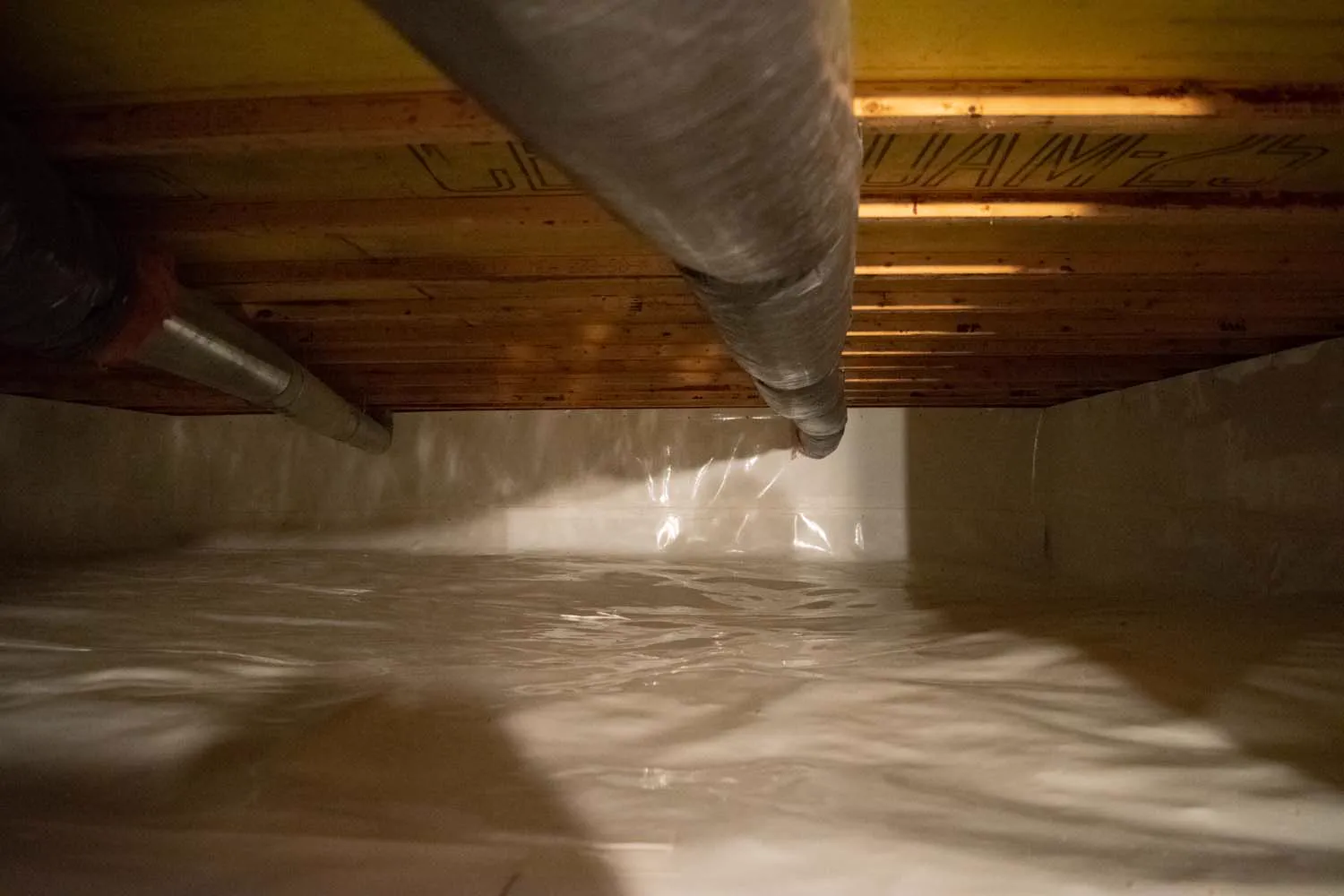
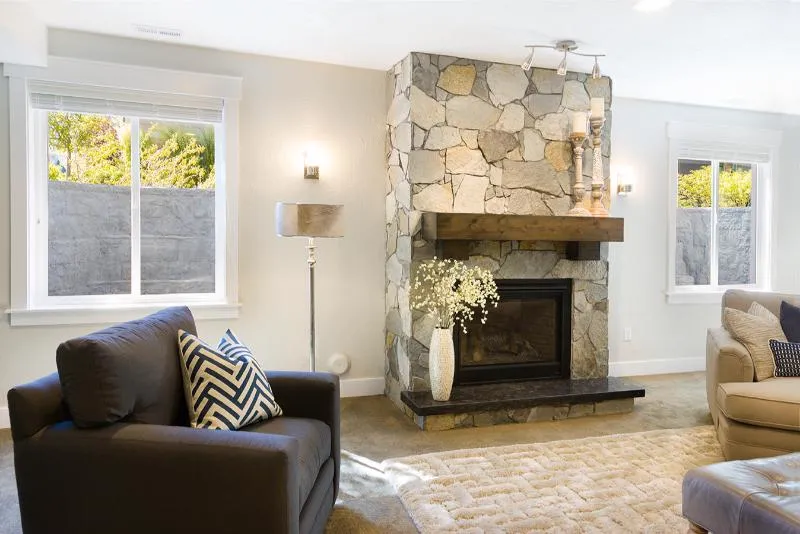
Now picture your own version. The floor stays dry through a hard spring storm, and around here spring is the whole ballgame — you can watch the fronts line up on the National Weather Service Peachtree City outlook. That smell at the bottom of the stairs is gone. Better yet, the basement is a room again.
Why does local matter on this one?
Because this is home for us. Our shop is in Lawrenceville, our trucks park here, and our crews live in the same neighborhoods you do. We’ve been fixing basements in this city for over twenty years, which means we’ve probably already worked on a house in your neighborhood — maybe on your street.
That history helps in a practical way. We know what builders did on the Sugarloaf Country Club edge in the late nineties, and what original tar-only waterproofing looks like on older block foundations near Alexander Park. So we spend the inspection confirming a hunch instead of guessing.
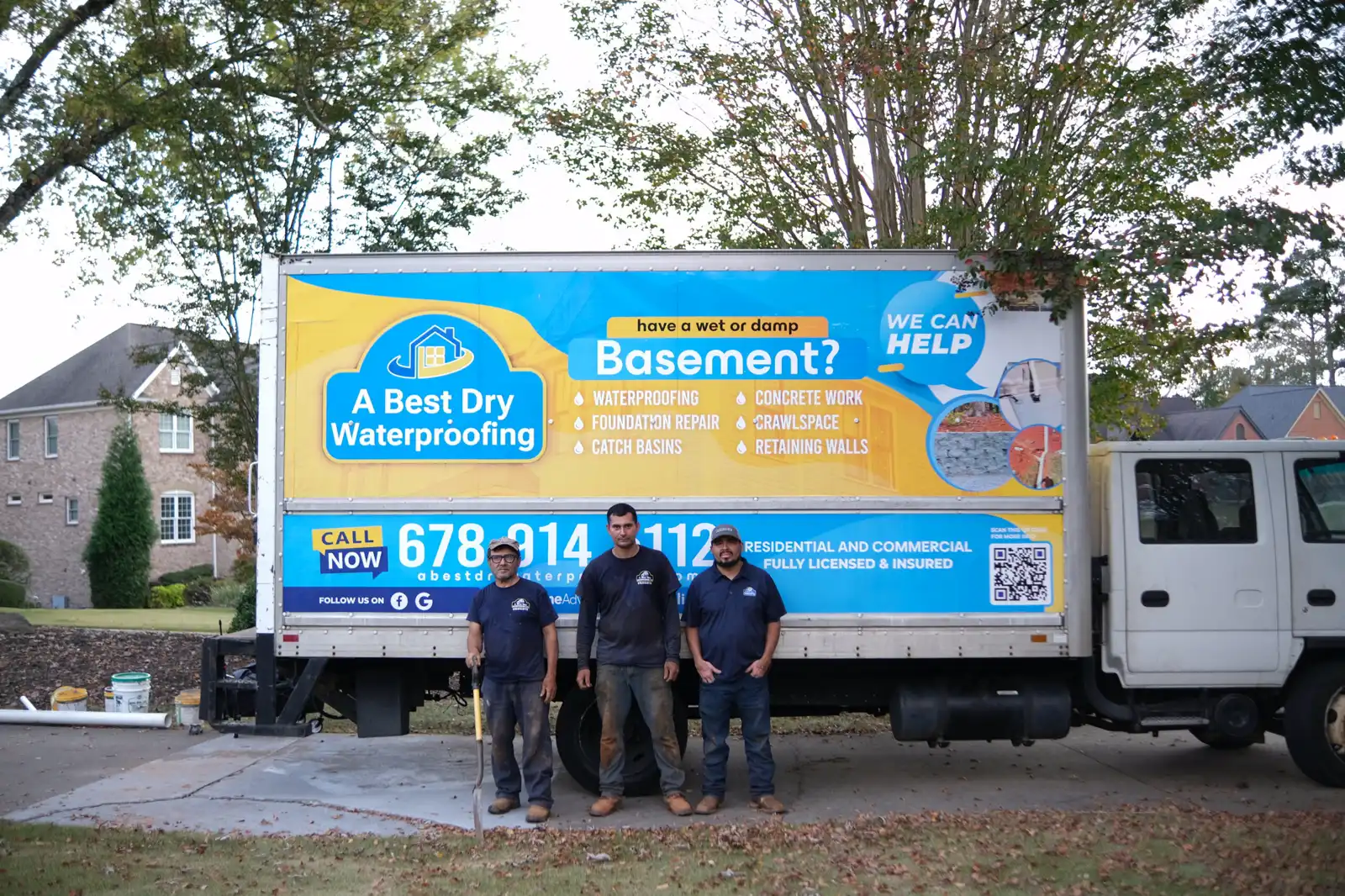
You’ll get a written scope before anything starts, a warranty in writing, and the same faces from the estimate to the cleanup. If you want more depth, our guide to the best basement waterproofing approaches goes further on block walls, and if your home sits over a crawl space instead, crawl space encapsulation is probably the real conversation.
Where we work around Lawrenceville
We’re right here, so Gwinnett is home turf. Along with Lawrenceville we’re in Snellville, Grayson, Dacula, Suwanee, Duluth, Lilburn and Loganville constantly, plus the wider Gwinnett area every week. Comparing notes with a neighbor south of us? Our Snellville waterproofing options breakdown covers that side.
Questions we get around town
It helps in two ways. A dry lower level is square footage a buyer will actually count, and a transferable warranty answers a question that otherwise lands in every inspection report.
Usually within a few days, and sooner if water is actively coming in. Since we’re based in town, getting a truck to you isn’t a puzzle. Live support runs 7 a.m. to 8 p.m., seven days a week, and the inspection and estimate are free.
It depends on how much wall is involved and how hard it is to reach. Drainage corrections sit at the low end, while a full perimeter system in a finished basement sits at the high end. Anyone quoting a flat number over the phone is guessing, so we walk the house first and then hand you a written scope.
Most interior systems run one to three days from start to cleanup. Exterior excavation takes longer and pauses for rain. Either way you get a schedule up front, and the crew hauls its own mess away.
Only what sits along the walls we’re treating. We need roughly four feet of clear perimeter there, so the middle of the room can usually stay put. Tell us what’s heavy or fragile and we’ll plan the sequence around it.
Let’s find out what your Lawrenceville basement is really doing
The inspection is free, the estimate is free, and nobody pressures you. We’ll show you where water is getting in, walk both approaches, and say so plainly if the smaller fix is right.
(678) 914-5112Based in Lawrenceville, serving all of Metro Atlanta · $500 off projects over $3,500 · Live support 7am–8pm, 7 days a week