

Waterproofing Cost in Grayson: A Step-by-Step Breakdown for Big-Lot Homes
What the work involves, what moves the number, how long it takes, and why the yard is sometimes half the job.
By the time you see water, it has usually been happening for years. That stain on the block didn’t show up last Tuesday, and the musty smell didn’t either. So when you look up waterproofing cost Grayson numbers on a rainy night, you’re not reacting to something new. You’re finally catching something that’s been running on its own quiet clock.
Good news: catching it is the hard part, and you already did. So let’s walk the whole thing — steps, price drivers, timelines, and where a weekend project runs out of road.
Why now, after twenty good years?
Because most Grayson homes went up between the late 1990s and about 2012, and that’s exactly when first-generation waterproofing starts to age out. A tar coating sprayed on the foundation was never meant to last forever. Neither was a builder-grade footing drain packed in clay. Those homes in Hidden Falls and Herrington Trace didn’t do anything wrong — they just hit a birthday.
Then there’s the ground. Red clay swells when it takes on water, and swollen clay pushes hard. A basement wall can face thousands of pounds of force from saturated soil, and that force has a name: hydrostatic pressure. It’s strong enough to move water through solid concrete with no crack at all. For the plain-science version, the USGS groundwater primer explains it well and sells you nothing.
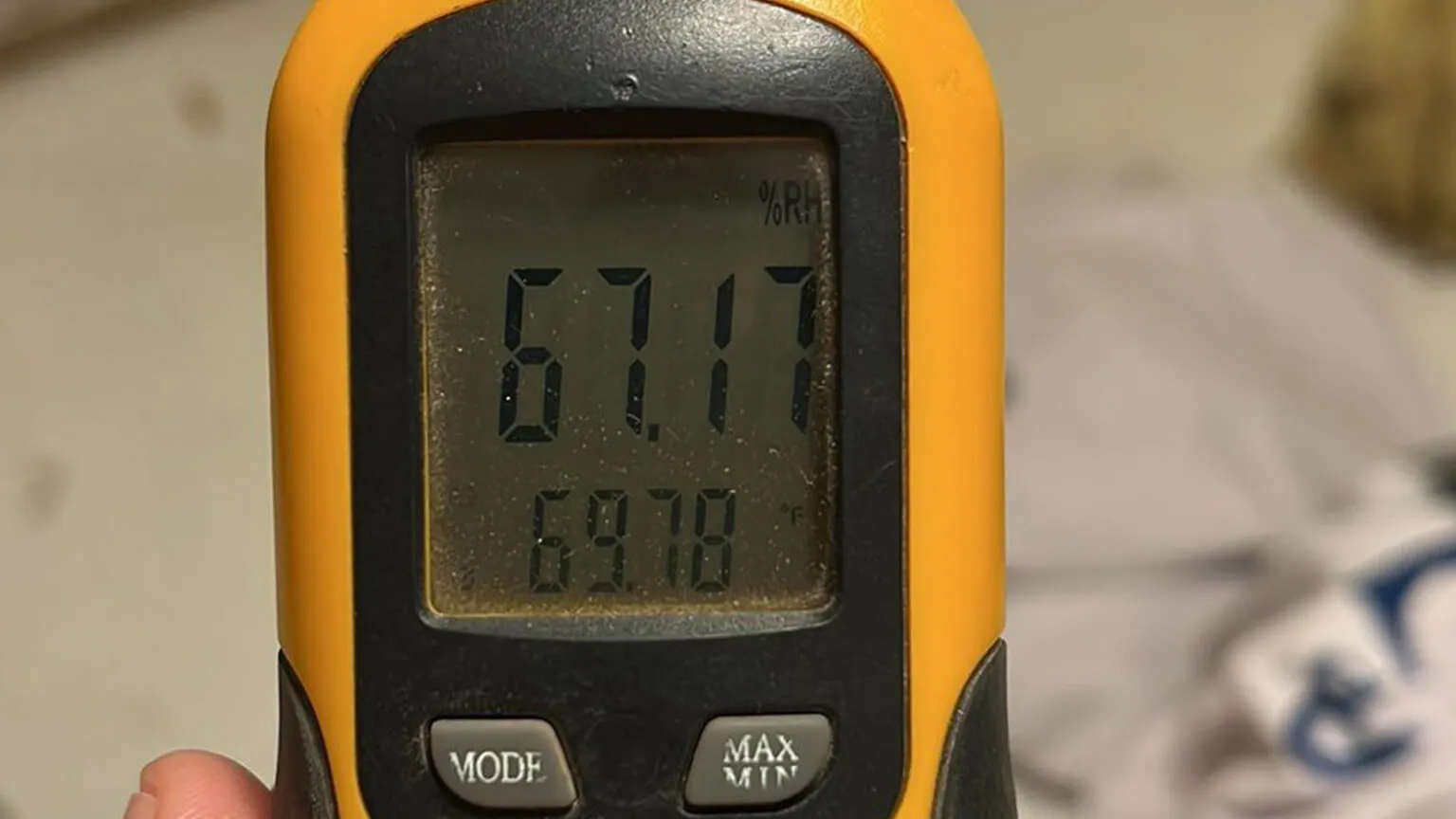
Here’s the piece that makes Grayson different from tighter Gwinnett neighborhoods, though. Bigger yards are wonderful right up until a heavy rain, when all that water has to go somewhere — and your foundation sits downhill of it. Original grading settles over twenty years too, so the slope that once carried water away now quietly walks it back.
On older parcels, a septic drain field adds to it. Even a field working perfectly keeps that soil damp, so when it sits uphill, the ground near your footing never fully dries out.
Worth knowing
Seepage and structural trouble are two different conversations. Plenty of the Grayson foundations we see are letting water in while staying perfectly sound. We’ll tell you which one you have before anyone talks money.
What does the job actually look like?
Every house is different, but the order rarely changes. Here’s the honest sequence.
- Walk the outside first. Downspouts, slope, low spots, and where the yard sends water in a hard rain. On a big lot, this matters most.
- Read the basement. Wall type, stain lines, floor joints, past patchwork. Where water enters tells us where it’s coming from.
- Write the scope on paper. What gets installed, where, and why — readable in one sitting.
- Open the perimeter. A narrow strip of slab comes up along the affected walls. Loud for a day, then done.
- Set drainage low. Perforated pipe in clean stone, placed below floor level, so water gets caught early.
- Route it to a sump. The pump pushes water well away from the house — not back to the flower bed for a second try.
- Handle the outside, if needed. Regrading, a French drain, buried downspout lines. Sometimes this is the whole fix.
- Close up and clean. Fresh concrete, wall liner where it’s called for, and our mess in our truck.
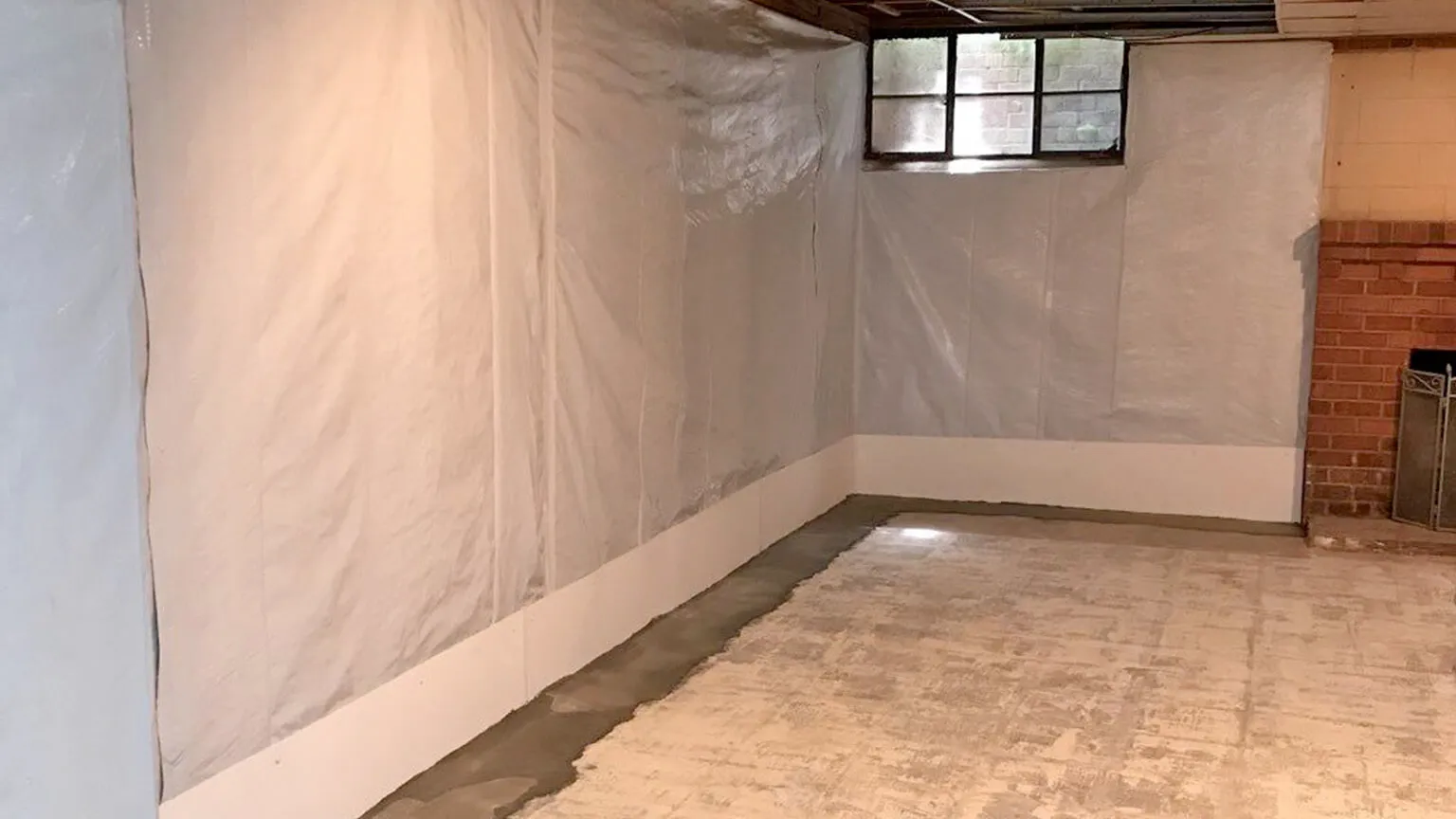
Timeline? Most interior systems in a Grayson home run two to four working days. Add a day for a finished basement, and another when exterior grading is in the scope. Weather moves things too, since we won’t trench a yard mid-downpour and call it drainage.
Can we clear up one myth?
There’s a belief we hear on nearly every estimate out here: “If we just fix the grading, we won’t need anything inside.” Sometimes that’s true, and when it is, we say so and write a much smaller invoice. But on a lot of Grayson properties, it’s half the story.
Grading controls the water that hasn’t soaked in yet. It does nothing about the water already sitting in the clay beside your footing.
That’s the whole distinction. Surface water and groundwater are two problems wearing the same raincoat. Fix the grade and you cut the volume, which helps. Still, once clay is saturated, pressure keeps pushing moisture through until something below the floor gives it somewhere to go.
So the honest answer is usually both. A homeowner near Wisteria Park had been regrading for three seasons before we met, and her slope was good by then. What she lacked was anywhere for the water underneath to go, so a modest interior channel finished what her shovel started.
What can you honestly do yourself?
Quite a lot, and we won’t pretend otherwise. Some of the best outcomes we’ve seen started with a homeowner, a shovel and a free Saturday. Here’s where your effort really pays.
Real DIY wins
- Run downspouts farther out. Ten feet beats a splash block, and on a big lot you have the room.
- Pull soil back from the wall. Beds and mulch creep up over the years, so cutting them back drops the water load.
- Fill the low spots. A puddle that sits for a day after rain is slowly feeding the clay.
- Keep notes. Which wall gets wet, after which storm, and how fast it dries. That log beats any photo.
Now the other side, said with respect. Waterproof paint is the big one, because a coating can’t beat pressure — it’s a raincoat on a submarine. Hydraulic cement patches move the problem sideways. Sub-slab drainage isn’t really DIY either, and not because of the tools. It’s because a system set at the wrong depth looks identical to a correct one until the first serious storm, and the Peachtree City forecast office gives us plenty of those.
So what actually moves the number?
Straight answer: how much wall is involved, how hard it is to reach, and how much of the fix lives outdoors. Most waterproofing cost Grayson estimates swing on those three. Anyone quoting a flat price by phone is guessing, so here’s what we weigh.
Price drivers, biggest first
- Linear feet. One wall versus a full perimeter is the single largest swing.
- Exterior grading and drainage. On these bigger lots it’s often a real line item, not an upsell, because moving dirt across a half acre takes machines.
- Access. Built-ins, a bar or a finished bathroom all mean careful work before the real work.
- Sump and discharge. Some homes have a good basin. Many have one that’s been quietly retiring for years.
- Distance to daylight. Walkout lots sometimes drain by gravity, which is cheaper. Others need a buried line.
- Wall repair. If a crack or bowing wall needs attention, that’s separate work with its own number.
Small exterior corrections land at the low end. A full perimeter system plus regrading and a new sump sits at the top, and most jobs land in between. Either way, you get a written number first. Want to compare systems? Our breakdown of waterproofing options lays them side by side, and the basement waterproofing page shows what we install. Curious how pricing shifts one town over? The Dacula waterproofing cost guide covers similar housing stock.
How should you get ready?
Not much, honestly. Clear about four feet along the walls we’re working on and slide boxes toward the middle. We’ll handle the heavy things. Plan on driveway space for a day or two, and keep pets upstairs while the saw runs.
Ever have a diagnosis surprise you?
All the time. A homeowner off Grayson Highway called about a wet corner, fully expecting to hear “you need a full perimeter system.” What we found instead was a buried downspout line, collapsed about fifteen feet out, dumping every roof gallon into the soil beside the footing.
The wall wasn’t failing. The roof drainage was. Repiping that line cost a fraction of what he’d braced for, and a wet season later the corner stayed dry. That’s why we walk the outside before we ever talk about opening a floor.

What does life look like afterward?
Week one. The floor is closed and curing, and the sump cycles when it rains. That’s the system working, not a problem. Once the source is cut off, the smell fades fast.
Year one. You get through a full spring storm season without checking that corner every time thunder rolls over Grayson City Park. Better yet, you stop thinking about it.
Year ten. Stone and pipe below the slab have nothing to wear out, so drainage keeps working quietly. The pump is the one part with a service life, so plan to replace it near the ten-year mark, the same way you plan for a water heater.
How do you know it was done right?
Ask for four things, and any honest contractor will hand them over. First, photos of the stone bed and pipe before the concrete goes back. Second, the discharge point, shown to you outside. Third, a warranty you can actually read. Fourth, a plain reason your house got the plan it got.
If your home is one of the older properties near Historic Grayson downtown with a crawl space instead of a basement, the right answer is often crawl space encapsulation. Different system, same goal: dry air, solid house, a space you trust again.
Where we work around Grayson
We’re based in Lawrenceville, roughly twelve minutes up the road, so we’re in this part of Gwinnett constantly. That includes Grayson, Lawrenceville, Snellville, Loganville, Dacula, Bethlehem, Lilburn, Auburn, Duluth and Suwanee. Whether you’re on a wooded acre or in a newer pocket near the village, we know these foundations.
Questions Grayson homeowners ask us
Often within a few days, and sooner right after a storm. Live support runs seven a.m. to eight p.m., seven days a week, so call whenever it suits you. The inspection and the estimate are both free.
It depends mostly on how many feet of wall are involved and whether outdoor drainage is part of the plan. A targeted exterior correction sits at the low end, while a full perimeter system with regrading and a new sump sits at the top. We won’t quote by phone, because that number would be a guess — but you’ll have a written one after we walk the house.
Most interior systems take two to four working days. Finished basements add about a day, and exterior grading can add another. We’ll give you a realistic window up front, not an optimistic one.
No. Just clear about four feet along the walls we’re working on and slide things toward the middle. Our crew moves the heavy items and covers what stays. Nobody expects you to empty a storage room over a weekend.
Sometimes, though they’re really two jobs. Drainage removes the pressure that made the crack move, which often stops it from getting worse. If the wall itself needs repair, we’ll show you and price it separately.
Let’s find out what your Grayson basement actually needs
We’ll walk the house and the yard with you, show you where water is getting in, and explain the fix in plain language. Inspection free, estimate free, and nobody pressures you at the end.
(678) 914-5112Serving Grayson and all of Metro Atlanta · $500 off projects over $3,500 · Live support 7am–8pm, 7 days a week