

Picking a Waterproofing Company in Sugar Hill: What to Look For Before You Sign
How this hill moves water, and the questions that sort out the bids.
You smelled it first. Weeks before any water showed up, there was that heavy, earthy smell near the stairs — the one that hits you the second you open the basement door. If that sounds familiar, then you’re already looking for a waterproofing company Sugar Hill homeowners actually stand behind, and honestly, your nose gave you a head start.
Good news right up front: a smell is a warning, not a verdict. It means the air down there is holding moisture, so there’s still time to find the source and route it away. Let’s skip the pitch and talk about what makes homes on this hill behave the way they do.
Why do Sugar Hill homes behave differently?
One word: grade. Sugar Hill is named for a hill, and it earns it. The land drops hard toward Lake Lanier, so water here doesn’t sit — it runs, and it runs toward whatever is downhill of it. Sometimes that’s a creek. Sometimes that’s your back wall.
On flat ground, water is a puddle. On this hill, water is traffic — and your job is to give it a lane that isn’t your basement.
That grade is also why so many houses here are walkouts and daylight basements. Builders leaned into the slope, so one side sits buried deep while the other stands wide open. Water treats those two sides very differently.
Then there’s what’s under the grass. Red clay sits over rock that runs close to the surface on the steeper streets, especially around Level Creek. Water soaks down, hits that rock, and turns sideways until it meets a foundation wall. That baffles homeowners, because the yard can be bone dry six feet away.
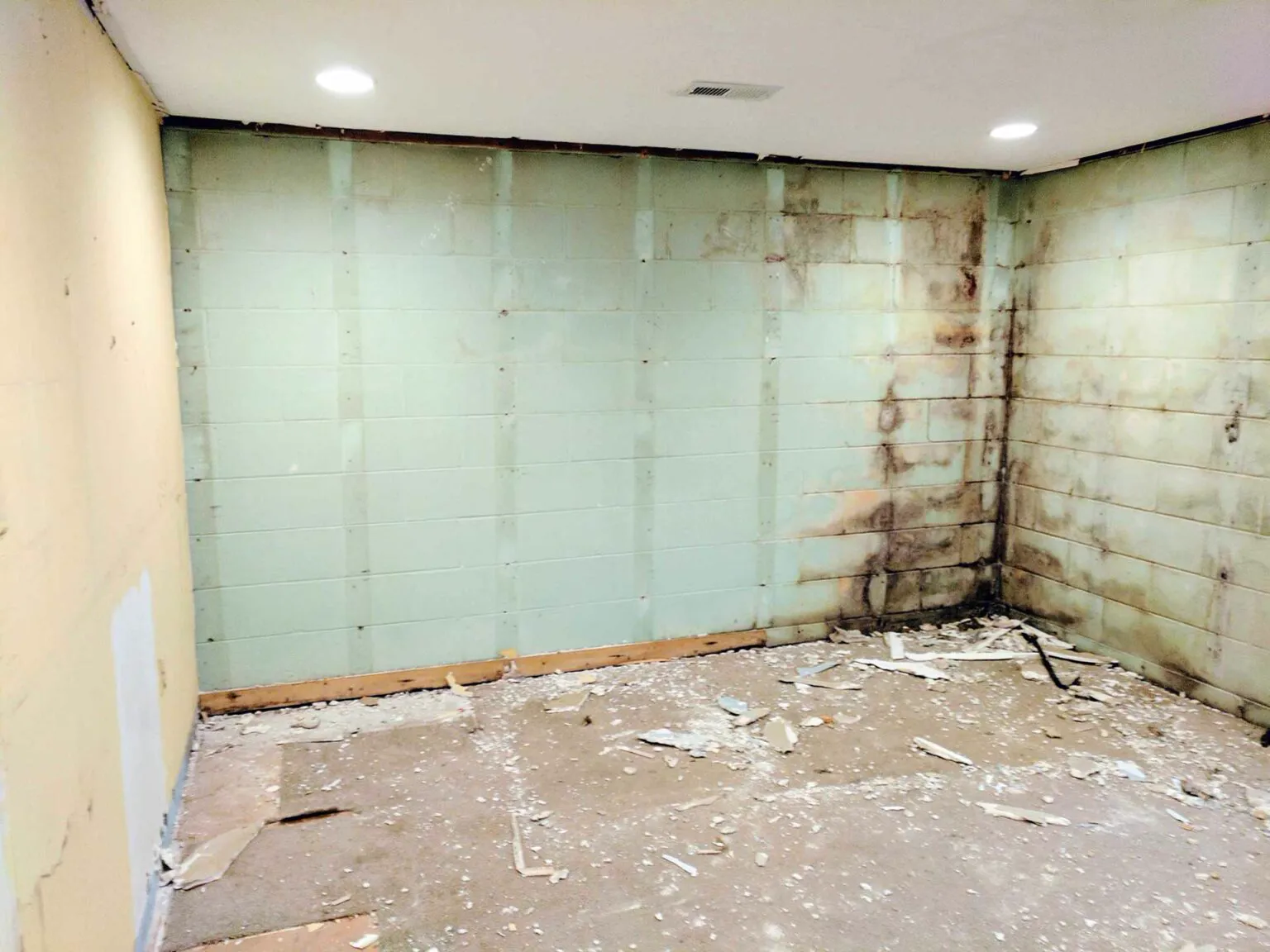
Age plays a part too. Most of this city went up between about 1990 and 2015, so plenty of homes are on their second owner and their first real problem. Original drain tile silts up, and sump pumps quit. In Sycamore Farms and around the Sugar Mill area, we mostly see systems that ran fine for twenty years and reached the end of their life — a much better story than a defect.
Worth knowing
Saturated clay pressing on a basement wall can add up to thousands of pounds of force. That push is called hydrostatic pressure, and it drives water through solid concrete with no crack in sight. So a wall can be soaking wet and still look fine.
What should a good company do differently here?
Walk the yard first. Any crew worth hiring here goes uphill before it goes downstairs, because on a slope the cause is usually above the house. Gutters, downspouts, the grade at the corners, buried yard drains packed with leaf litter — all of it gets checked before anybody mentions a trench.
Next, the retaining walls. Steep lots here are full of them, and a wall that’s leaning or plugged stops holding soil and starts aiming water. We’ve had homeowners near Level Creek sure their foundation was failing when the culprit was a tired wall twenty feet uphill.
They should also treat a walkout like a walkout. Those doors and window wells sit at the low point of the yard, so they catch sheet water during spring storms. As a result, the fix often includes a drain at the door and a properly drained well — not just an interior system waiting indoors.
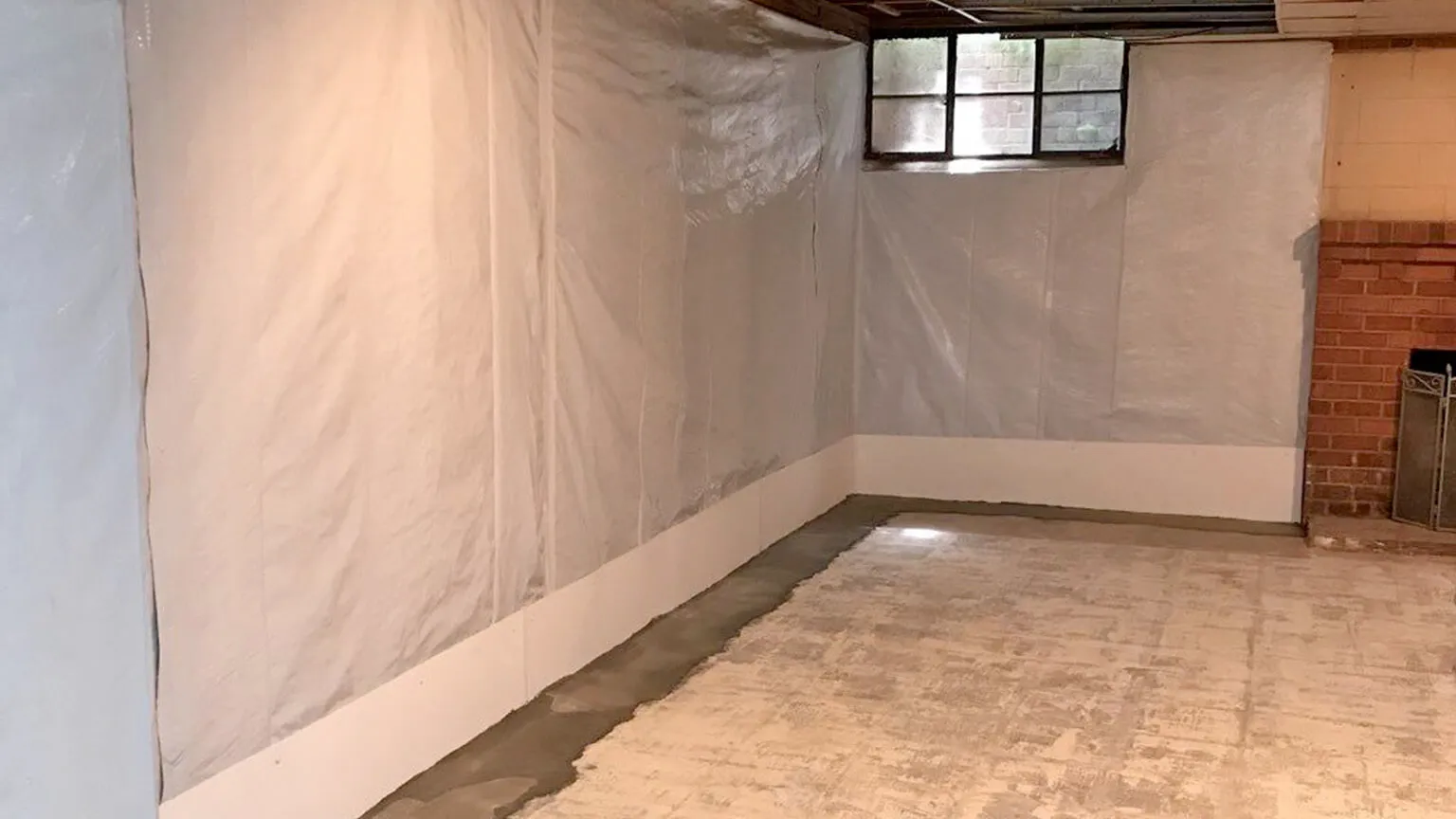
Last, a good crew routes water instead of blocking it. We spent years trying to seal our way out of this, and pressure won every time, because sealant ages and water never tires. So now we assume water shows up and build it an exit: perforated pipe in clean stone under the slab, carried to a sump, discharged well downhill.
Why do two estimates land thousands apart?
This next part explains almost every price gap you’re staring at. Two companies can look at the same basement and quote very different numbers, and it usually isn’t greed. One priced the symptom, and the other priced the source.
Pricing the symptom looks like this: water shows on the north wall, so quote thirty feet of drainage there. That bid is real work, and it helps. But on a hill, water arriving at one wall often entered the ground elsewhere — so the low bid can be right about the water and wrong about the cause.
Pricing the source adds the uphill corrections, the discharge run, maybe a door drain, plus the interior system. That estimate stings more at first glance. Still, it’s the one that ends the problem instead of moving it.
So how do you tell them apart? Ask each company where the water comes from before it reaches your wall. A crew that answers with a story about your yard has diagnosed something. One that answers with a package name has sold something.
How do you read an estimate?
Slowly, with one question in mind: does this describe my house? A real estimate names the walls, the footage, the trench depth, the pump, and where the discharge ends up. A weak one says “waterproofing system, basement” and a number.
What should be spelled out in writing
- Linear feet and which walls. One wall is a different job than a full perimeter, and it drives the price.
- Exterior corrections, listed separately. Grading, downspouts, retaining wall drainage, cleared yard drains. On a slope these aren’t extras.
- Pump, basin and backup. Model numbers, not adjectives. A battery backup runs during the storm that kills your power.
- Discharge distance and route. Feet from the foundation, and where it daylights downhill.
- Rock plan. Ask what happens to the price if the trench hits stone.
- The warranty, in plain words. Coverage, length, and whether it transfers when you sell.
About price: anybody handing you a firm number over the phone is guessing, and you’d be paying for that guess. Small drainage corrections land at the low end, while a full perimeter with a new basin and backup pump sits at the high end. Most jobs land between, so insist on a written scope.
What should you ask, and what should worry you?
Five questions do most of the sorting. Ask how many jobs they’ve done on slopes like yours. Ask what they found outside before coming in. Then ask who performs the work — the company, or a sub you meet on day one. Finally, ask what happens if water returns in year six.
Red flags are simpler than people think. Pressure to sign today. A discount that expires when the visit ends. Talk about your house falling down, which is a sales tool and not a diagnosis. Be careful with waterproof paint sold as the main fix, too — a coating can’t beat pressure. It’s a raincoat on a submarine.
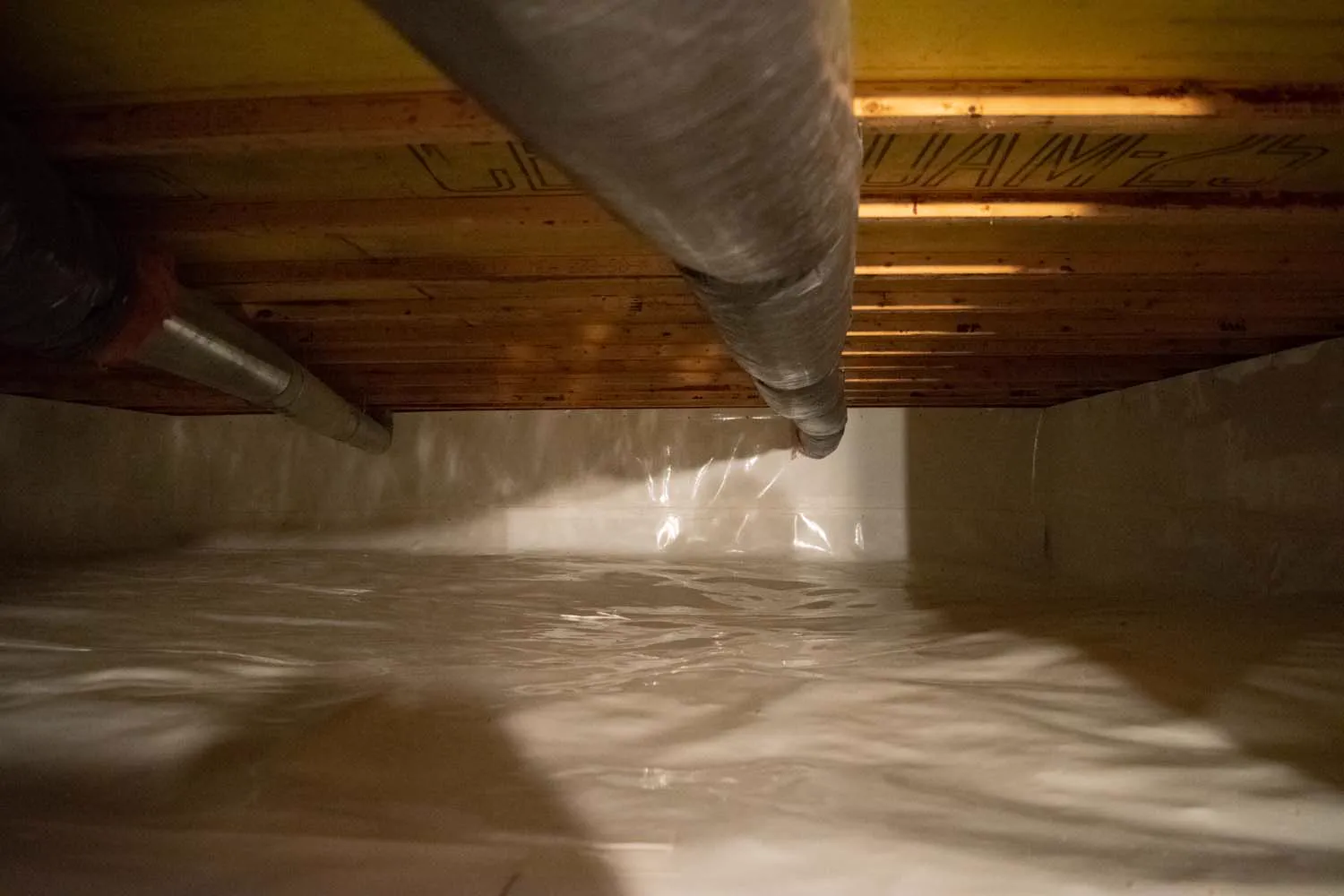
One more: a crew that won’t crawl under the low side of the house. Plenty of homes here mix a basement with a crawl space under an addition, and that space may need crawl encapsulation instead of interior drainage. If the only tool somebody owns is a trench, everything looks like a trench.
What does this have to do with the air upstairs?
More than most homeowners expect. Air doesn’t stay put — warm air rises and leaks out of the upper floors, so replacement air gets pulled up from the lowest, dampest level. In other words, a good share of what you breathe upstairs started in the basement.
That’s why the smell showed up before the water did. Damp air carries odor upstairs long before anything puddles, and in a humid Georgia July it makes the whole house feel sticky. Good news? This one responds fast. Once the source is routed away and the space dries, the smell usually fades within days.
The fix has two halves. First, stop the water — drainage, discharge, outside corrections. Second, control what’s left with a sealed wall liner and a right-sized dehumidifier that drains into the system instead of a bucket you forget about. The EPA’s guide to moisture control explains why humidity, not just leaks, is the thing to manage.

What you get back is bigger than a dry floor. The stairwell stops announcing itself, storage stays usable, and the guest room downstairs stops being a maybe. Better yet, the house feels cared for — you walk down there and feel proud of it.
What keeps it working after we leave?
About an hour a year. Fall matters more on this hill than most places, since leaf drop plugs the drainage steep lots depend on. Set a reminder and run this list.
- Test the pump in early spring. Pour five gallons into the basin and watch it cycle. If it hums but nothing moves, call before storm season.
- Walk the discharge line after a hard rain. Water should be exiting downhill, with the end still clear of mulch.
- Check the grade and retaining walls each spring. Clay settles, and a leaning wall means water is stacking up behind it.
Why we might be the right fit
We’ve done this for over twenty years, most of it in Gwinnett County, so we’ve likely worked on a house built the same year as yours. Sugar Hill is twenty minutes up from our Lawrenceville shop, so we’re running Peachtree Industrial Boulevard most weeks anyway. Some of our crews have kids in shows at the E Center, and a few of us plan Friday nights around whatever’s on at The Bowl at Sugar Hill.
That history matters for one unglamorous reason: a warranty is only as good as the company behind it. If something needs a look in year seven, you’re calling the people who dug the trench, not a call center in another state. We’ll also tell you when the fix is smaller than you feared.
Still sorting out what you’re seeing down there? Our local guide to basement waterproofing covers symptoms and repair options, and the systems we install are laid out in plain language. Comparing notes with family south of here? We cover the same ground in Lilburn best basement waterproofing. Since spring storms drive most calls on this hill, the National Weather Service office in Peachtree City is a handy bookmark.

Where we work around Sugar Hill
We’re based in Lawrenceville, so the drive up is short. We work throughout Sugar Hill, Buford, Suwanee, Cumming, Gainesville, Flowery Branch, Braselton, Duluth, Dacula and Lawrenceville, plus the rest of Gwinnett County. If you’re anywhere between Buford Dam and the downtown strip, one of our trucks is usually nearby already.
Questions we get up this way
The drainage is built to last the life of the house, since it’s stone and pipe under the slab with nothing to wear out. The pump is the part with a service life, so plan on replacing one near the ten-year mark. Think water heater — expected, not alarming.
Yes, and you get it in writing before we start rather than after. Ask what’s covered, how long it runs, and whether it transfers if you sell. If a warranty can’t be summed up in one sentence, it isn’t doing much good.
Usually, yes. We open a narrow strip of drywall and flooring along the affected walls, do the work, then put it back — so the room comes apart at the edges instead of all over. It costs more than an open basement, but it beats gutting a finished space.
It protects value first, because a documented dry basement clears the moisture findings that stall a sale. After that, a dry lower level is square footage you can finish and use. Walkouts sell well here, so a transferable warranty is a nice thing to hand a buyer.
Often within a few days, and sooner when water is actively coming in. Call or text and we’ll set a window around your schedule. The visit is free, and you’ll get a written scope rather than a number on a napkin.
Let’s find out what’s really going on down there
The inspection is free, the estimate is free, and nobody pushes you afterward. We’ll walk the slope with you, show you where water gets in, and explain what it takes to send it elsewhere — even if the answer is simpler than you expected.
(678) 914-5112Serving Sugar Hill and all of Metro Atlanta · $500 off projects over $3,500 · Live support 7am–8pm, 7 days a week