

Waterproofing Options in Cumming: Which One Is Right for Your Home?
Interior drainage or exterior work? Here’s how both really work, what each one costs you, and which one we’d point you toward.
Most of the waterproofing options Cumming homeowners call us about start the same way — with a stain somebody noticed last Tuesday. But that water didn’t show up last Tuesday. It had been quietly working on that wall for a couple of years first, and the stain was just the day it finally got noticed.
Good news, though: none of that lost time counts against you. A basement that’s been damp for three years fixes the same way a basement that’s been damp for three weeks does. So let’s slow down and compare the two real choices in front of you, honestly, and then we’ll tell you which one we’d actually pick.
Why didn’t I catch this sooner?
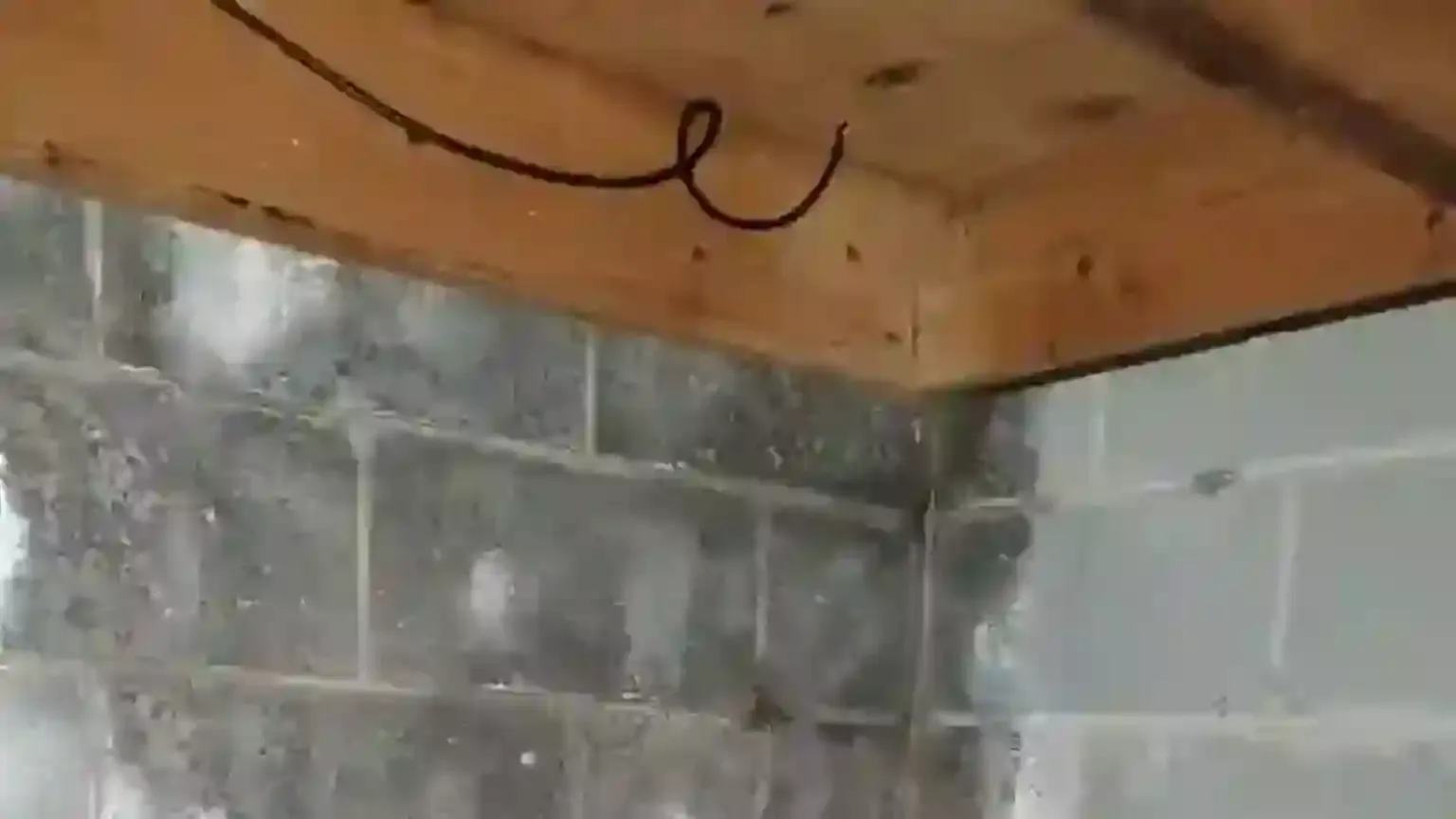
Because water is patient, and because your house hid it well. Moisture moves through concrete slowly, so it darkens the block from the inside long before anything reaches the surface. By the time you see a stain, the wall has usually been wet for a while.
That’s not carelessness on your part. Honestly, it’s the single most common thing we hear in South Forsyth, and it comes with a twist: a lot of these homes still feel new. Twenty years, though, is exactly when builder-grade waterproofing starts to give up. The membrane sprayed on during construction was never meant to be permanent, so the clock was ticking from day one.

Option A: what does interior drainage do?
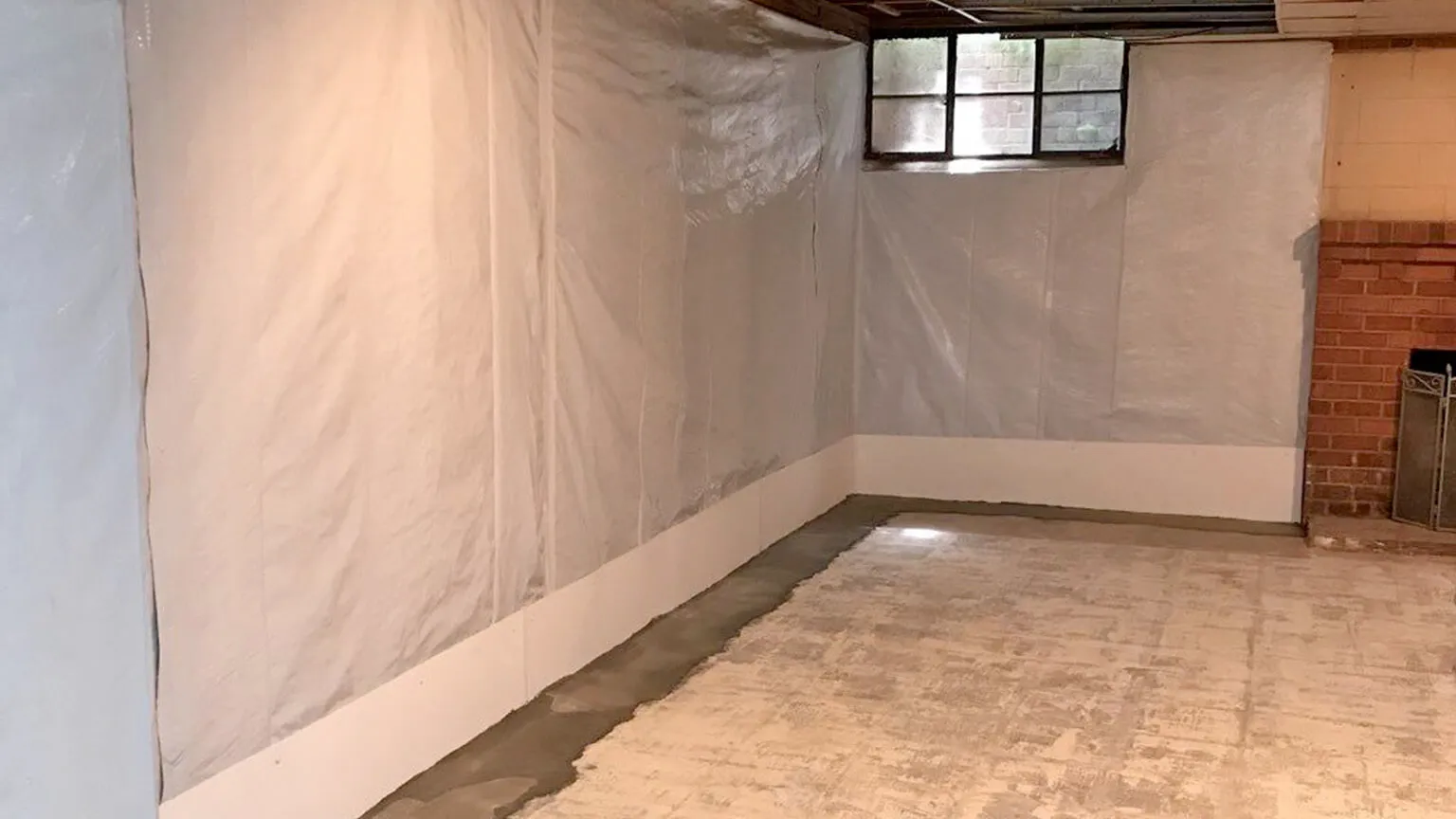
Interior drainage works from the inside, and the idea behind it is simple. Instead of fighting water at the wall, you give it an easier place to go. We cut a narrow channel in the slab around the affected walls, set perforated pipe in clean stone below floor level, and route everything to a sump basin. Then a pump carries it well away from the house.
So water still arrives — we just collect it before it ever reaches your floor. A wall liner goes on where it’s called for, fresh concrete closes the channel, and most homes are done in one to three days. Your yard never gets touched.
Where interior work wins
Finished landscaping, a deck, a patio, a walkout on a tight lot, or seepage coming up at the floor-to-wall seam. It’s also the lower-cost path in most cases, which matters more than people admit.
Option B: what does exterior waterproofing do?
Exterior work goes after the same problem from the other side. We excavate down along the foundation, clean the wall, apply a real waterproof membrane, and add a drainage board plus footing drain so water sheds down and away instead of pressing in.
It’s the more thorough answer, because water never touches the foundation at all. But it’s also the bigger day. Excavation means machines in your yard, and anything sitting on that soil — shrubs, a walkway, a retaining wall — has to move first. Plan on more time and more money, plus some landscaping to redo afterward.
Where exterior work wins
Failed builder membrane on a home built in the late 1990s or early 2000s, water entering high up the wall, or a lot with heavy uphill runoff — the kind of grade you get on the slopes near Sawnee Mountain Preserve.
How do they compare, straight across?
Interior drainage
- One to three days on most homes
- Lower cost, and easier to phase one wall at a time
- Yard, deck and plantings stay untouched
- Handles seepage at the seam and a rising water table well
- Needs a sump pump running for the life of the system
Exterior waterproofing
- Usually a week or more, weather permitting
- Higher cost, plus landscaping to restore
- Stops water before it reaches the foundation
- Best answer for failed original membrane and high entry points
- Hard to do where a patio, deck or slope blocks access
Notice that neither column says “better.” That’s on purpose, because the right pick isn’t a product debate — it’s a question about your lot. Even so, we won’t leave you with a shrug.
The small detail that quietly decides everything
Want to know the thing we check first, before we even look at the wall? Where your sump pump dumps the water. It sounds like a footnote. In practice, it’s the difference between a system that works and one that recycles the same water all week.
Plenty of builder-grade discharge lines end three or four feet from the foundation. So the pump pushes water out, the clay soaks it up, and it walks right back to the wall it just left. Meanwhile the pump itself is often twenty years old and living on borrowed time. The fix is refreshingly cheap: extend the line well past the backfill zone and put in a pump you can count on. Do that first, and sometimes the “big job” shrinks a whole lot.
What actually decides it on a Cumming lot?
Four things, mostly. The waterproofing options Cumming homes need come down to where water enters, how steep the lot is, what’s sitting on the soil outside, and how old the original waterproofing is.
Take a walkout in Windermere with a patio and mature plantings across the back. Excavating there means demolishing what you paid for, so interior drainage is almost always the smarter call. Now picture a hillside lot up off GA-20 where runoff sheets toward the house every spring — that one may genuinely need exterior work, because you’re losing the fight at the grade, not at the floor.
Lake Lanier changes the math too. Lots closer to the water can sit on a genuinely high water table, and a high table pushes up from below, where no exterior membrane can help. The USGS explains groundwater levels better than we can in one paragraph. Either way, interior drainage is the tool for that job.
So which one would we pick?
Here’s our real answer, not a hedge. Of the two waterproofing options Cumming homeowners weigh, interior drainage is the right first move for most homes in South Forsyth. It solves the majority of what we see, it costs less, it doesn’t cost you a yard, and it can be done in a couple of days.
We go exterior when the evidence points there: water coming in above the seam, a wall showing pressure damage, or an original membrane that’s clearly done. On one home over near the Polo Golf & Country Club side, the water was entering four feet up a wall — interior drainage wouldn’t have touched that, so exterior was the honest recommendation and we said so.
And sometimes we recommend neither. Truly. We’ve walked homes near the St. Marlo edge where the whole issue was two downspouts dumping beside the foundation and grade sloping the wrong way. That’s a half-day of drainage correction, not a system. We’d rather tell you that and earn the call you make in five years.
The number that reframes the whole thing
Ready for the one that surprises everybody? Saturated clay pressing against a basement wall can put thousands of pounds of force on it. Water alone weighs about 62 pounds per cubic foot, and wet clay is heavier still, so the load stacks up fast across a single wall.
That force has a name — hydrostatic pressure — and it’s why sealant and waterproof paint keep losing. A coating is asking a thin film to out-muscle a wall of wet clay. Drainage doesn’t fight that pressure at all. Instead, it relieves it, which is a much easier argument to win.
Picture the after for a second. A hard spring storm rolls in off Lake Lanier, and you don’t go downstairs to check anything. The musty smell at the bottom of the steps is simply gone. Better yet, you finally know what’s happening in your own house — no guessing, no dread, just a system doing its job while you get on with your weekend.
Still sorting out what you’re looking at? Our guide to the best basement waterproofing for this area goes deeper on systems, and the full rundown of basement waterproofing we install is laid out plainly. If your problem is under the house rather than in it, crawl space encapsulation is likely the better path. Comparing notes with family in town? We cover the same ground for Decatur waterproofing options. For a neutral read on moisture and health, the EPA’s moisture guide is ten good minutes.
Where we work around Cumming
We’re about thirty minutes south in Lawrenceville, so Forsyth County is an easy run up GA-400 for our crews. We work throughout Cumming and South Forsyth, plus Alpharetta, Milton, Suwanee, Buford, Gainesville, Dawsonville, Johns Creek and Duluth. If you’re anywhere between Lake Lanier and Sawnee Mountain Preserve, there’s a good chance we’ve already worked a house on your street.
Questions Cumming homeowners ask us
Yes, and you get it in writing before the work starts rather than after. Ask us to walk you through what’s covered and for how long — if a warranty can’t be explained in a sentence or two, it isn’t doing much for you. Same local crews stand behind it, so you’re calling us in year six, not a call center.
Usually, yes. We open the drywall in a controlled strip along the affected walls, do the work, and close it back up — so the rest of your finished space stays as it is. It adds some labor compared to an open basement, but it beats gutting a room you just paid to build.
It helps in two ways. First, a dry basement is usable square footage, and a finished lower level is worth real money in South Forsyth. Second, a documented, warrantied repair removes a question that comes up in every inspection — buyers get nervous about water, and paperwork calms that down fast.
Usually within a few days, and often sooner outside of a heavy storm week. Give us a call at (678) 914-5112 between 7 a.m. and 8 p.m. any day of the week and a real person will pick up. The inspection and the estimate are both free.
It depends mostly on how much wall is involved, how hard it is to reach, and whether you need a sump. A drainage correction outside sits at the low end; a full perimeter system in a finished basement sits at the high end. Anybody quoting a flat price over the phone is guessing, so we walk it first and then hand you a written number with the scope spelled out.
Let’s figure out which option your Cumming home actually needs
The inspection is free, the estimate is free, and nobody pressures you at the end. We’ll show you where water is getting in, explain both paths in plain words, and tell you honestly if the smaller fix is enough.
(678) 914-5112Serving Cumming and all of Metro Atlanta · $500 off projects over $3,500 · Live support 7am–8pm, 7 days a week