

Wet Basement in Milton: What’s Actually Causing It, and How It Gets Fixed
A calm, plain-English walk through the damp spot, the smell, and the soft baseboard — and what it really takes to make it stop.
Start with the good part: almost every wet basement Milton homeowners call us about turns out to be a drainage problem, not a foundation problem. Those are two very different conversations, and the first one is far easier and far cheaper than most people brace for. So take a breath. What you’re looking at down there is common, it has a name, and it has a fix we do most weeks of the year.
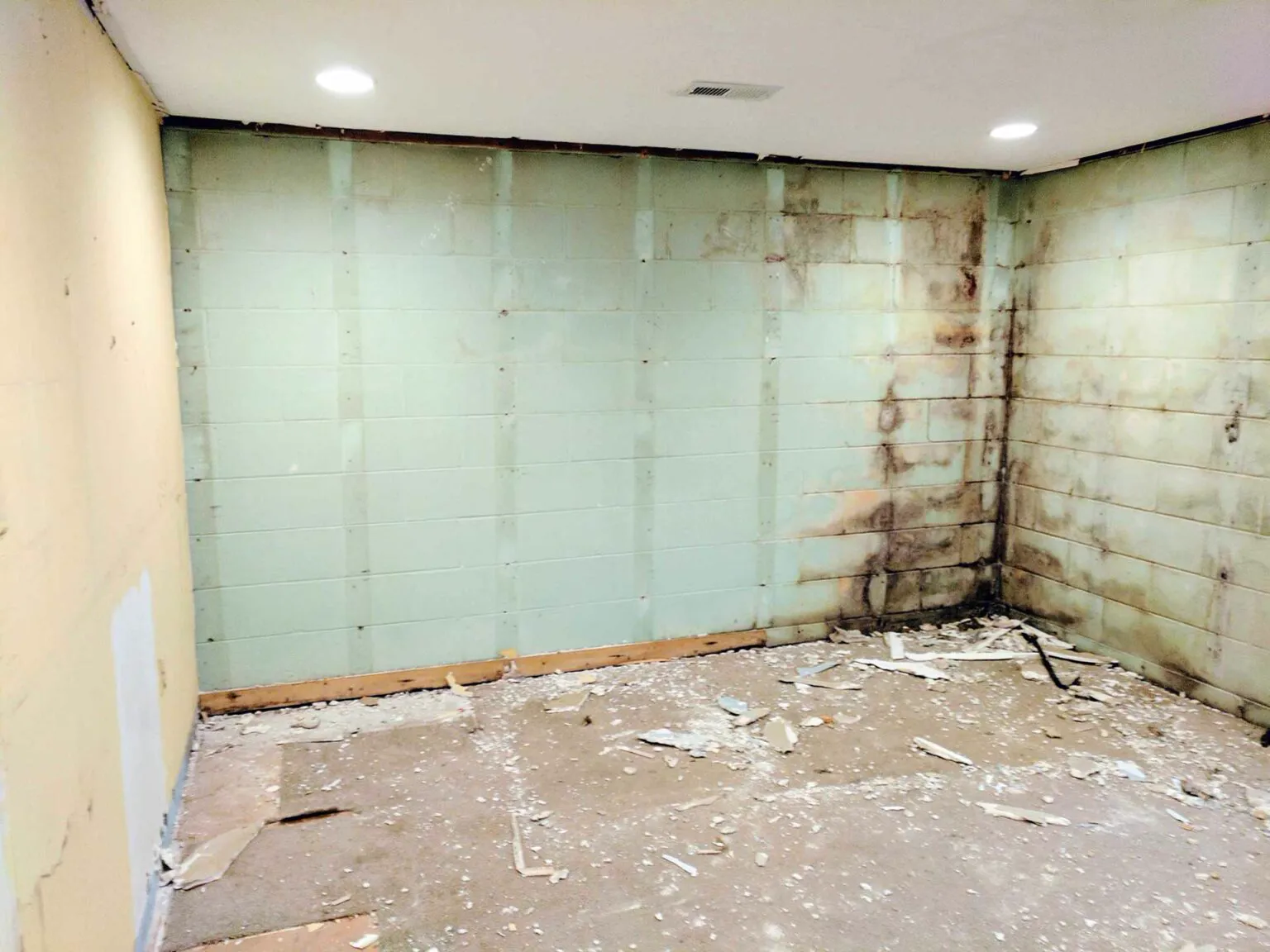
Now let’s name the thing. Maybe it’s a dark patch at the bottom of a wall. Maybe the carpet by the theater room feels cool and slightly heavy. Or maybe nothing looks wrong at all and the room just smells like an old cooler. Whatever version you have, the cause usually sits outside the house, which is honestly great news, because outside is a much friendlier place to work.
Why is the wall wet when there’s no crack?
This one throws people, so let’s back up a second. Concrete looks solid. It isn’t. Concrete is porous, and water moves through solid, uncracked concrete by capillary action — the same way a paper towel pulls a spill up its own edge. That’s why a wall can be damp along a whole section without one visible crack anywhere.
Because of that, hunting for “the hole” usually goes nowhere. There often isn’t one. Instead, wet soil is sitting against the wall, and the wall is quietly wicking it inward, inch by inch. Plug a crack and the water simply keeps doing what it was already doing.
So why is the soil that wet in the first place? In Milton, it’s mostly a land question. Lots out here are big and rolling, with real grade changes from the road down to the house, and red clay underneath that drains slowly on a good day. Rain lands across acres and then has to go somewhere. Too often the somewhere is your foundation wall.
Long driveways make it worse, and Milton has plenty of long driveways. A few hundred feet of pavement collects everything that falls on it and delivers it downhill in one steady ribbon. Add hardscape, a courtyard, a pool deck, and you’ve built a very polite little river with your house at the end of it. We see this constantly on properties along Freemanville Road, where the drive drops toward the home and the grading was never asked to solve it.
Good news
A damp wall is not a failing foundation. They’re separate issues, and most of the homes we walk only have the first one. If the second one is present, we’ll say so plainly and show you what we’re looking at — no guessing games.
What does this look like from the water’s side?
Here’s a trick that makes the whole topic click. Stop thinking like a homeowner for a minute and think like the water. Water has no plan and no grudge. It only ever does one thing: it takes the easiest path available, over and over, forever.
Follow it, then. Rain lands on the roof and the pasture and the drive. Gravity pulls it down through topsoil until it hits clay, which is dense, so it slows down and spreads sideways. Then it meets the backfill around your foundation — the loose soil that got shoveled back in when the house was built. That backfill is fluffier than the packed ground around it, which means it’s the easiest path in the neighborhood. Water finds it and sits there.
Once it’s sitting there, it presses. That pressure is called hydrostatic pressure, and it’s the reason a basement wall can weep at the floor seam while the wall above stays bone dry. The water isn’t attacking. It’s just leaning on the softest spot it can find, and the seam where the wall meets the slab is almost always that spot. The U.S. Geological Survey’s groundwater primer lays out how this movement works if you want the science version.
Why does this matter for the fix? Because if water only ever takes the easiest path, you don’t have to beat it. You just have to offer it something easier than your basement floor. That single idea is the whole strategy, and it’s why sealants and waterproof paint disappoint people. A coating tries to win an argument with physics. A drainage system just changes the subject.
Twenty years in, the thing that changed how we work is simple: we stopped trying to block water and started giving it a better place to go.
That shift also explains why we spend the first part of every visit outside. Downspouts, grade, driveway runoff, where the pool deck drains, whether a septic field is soaking the ground uphill of the house — those are the levers. Sometimes the whole answer is out there and the invoice is small. We had a homeowner near the Crooked Creek edge who was ready for a full system, and the real culprit was two downspouts dumping four feet from the wall. Not every story ends that way, but enough do that we always look first.
Is this mild, or is it serious?
Fair question, and you can get pretty close on your own. Mild usually looks like: a damp smell after heavy rain, a chalky white bloom on block, a small stain that dries out in a few days. Those are early signals, and early is the cheapest place to be.
More involved usually looks like: standing water after a storm, a floor seam that seeps every single time, swollen trim, or a rusted line across metal shelving legs. None of that means anything is falling down. It means water has been arriving for a while and the house has run out of polite ways to mention it.
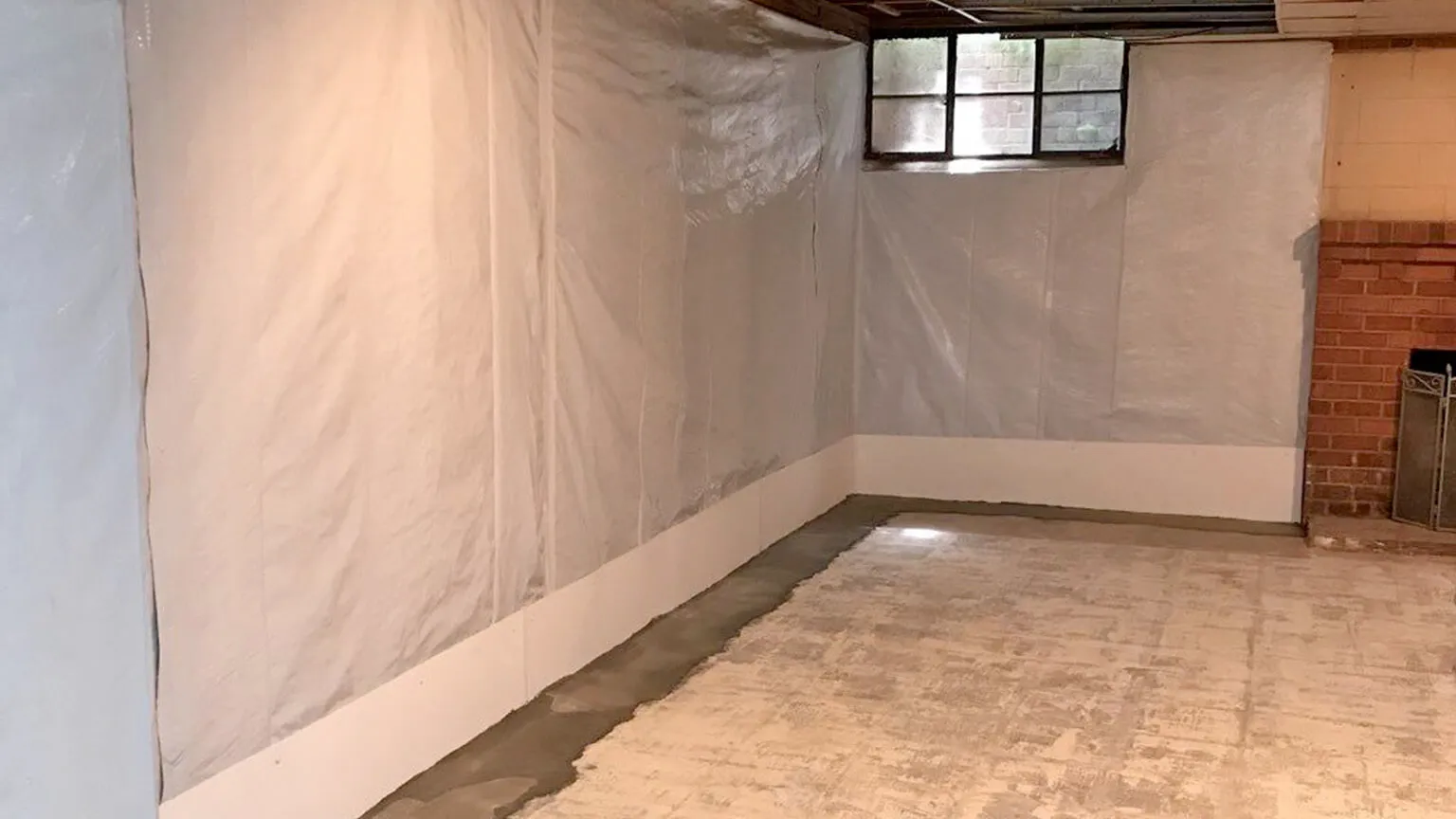
What if you just leave it? Honestly, nothing dramatic happens tomorrow. Over time, though, moisture keeps feeding the same corner, drywall and framing stay damp, and the repair grows from a drainage job into a drainage job plus a finish-carpentry job. That’s the real cost of waiting — not danger, just a bigger scope than you needed.
And that’s exactly why this matters more here than in most towns. In Milton the basement isn’t storage. It’s a finished floor of the house — a theater, a gym, a wine room, an in-law suite — so a small amount of water causes a very large amount of damage. Protecting a floor you already paid to finish is one of the better returns in home maintenance. Your media room shouldn’t double as a splash zone.
So what’s the actual fix?
Most interior systems follow the same shape, and you deserve to know it before anyone shows up with equipment. Here’s the honest version:
- Find the source. We walk the grade, the drive, the downspouts and the outside corners before we ever price the inside. Stop the Source comes first for a reason.
- Open a channel at the perimeter. A narrow strip of slab comes up along the affected walls. It’s loud and dusty, and it’s usually a day or two of work.
- Set drainage below the floor. Perforated pipe in clean stone, placed under slab level, so water is collected on its way in instead of mopped up after.
- Route everything to a sump. The pump carries water well away from the house, not back to the same soil it just came from.
- Close it up clean. Fresh concrete, wall liner where it’s called for, dehumidification if the air needs help, and our mess hauled off.
On finished basements, which is most of them around the Bethany Bend corridor, there’s careful prep before the real work — protecting floors, pulling back a section of finish, then putting it back right. That prep is a real part of the schedule, and it’s part of why a detailed written proposal beats a phone quote every time. If you want the full breakdown of what moves the number, our waterproofing cost guide walks through it, and the systems themselves are laid out on our basement waterproofing page.
Ready for the number that reframes all of this?
Picture one inch of water across a 1,500 square foot basement floor — a modest size by Milton standards. That’s about 935 gallons sitting on your slab. One inch. Not a flood, not a storm you’d tell your neighbors about. Just an inch.
Suddenly the damp corner reads differently, doesn’t it? Water that never puddles at all is still moving through, evaporating into the room, and loading the air with moisture your HVAC then has to fight. That’s the musty smell. That’s also why the EPA’s guidance on moisture control treats humidity as the thing to manage, not just visible water.
Now picture the other side of it. The floor stays dry through a hard spring storm. The smell at the bottom of the stairs is simply gone. Instead of checking the corner every time it rains, you don’t think about the basement at all — it’s just a room again, and a nice one. Homeowners tell us the surprise isn’t the dry floor. It’s realizing they made a smart call with their money and can stop thinking about it.

Why hire someone who knows Milton?
Because the ground here behaves like Milton, not like a subdivision. Big lots, long grades, slow clay, septic fields, and homes built mostly between the mid-nineties and the mid-twenty-teens — which means settlement patterns and drainage details that differ from older housing stock. We’ve worked from the Crabapple Market district out past Milton City Hall and up toward Scottsdale Farms, so we’re not learning your soil on your dime.
There’s a boring reason this matters too: a warranty is only worth the company behind it. If something needs attention in year seven, you’re calling the same local crew that did the work. Not a call center. Not a franchise three states away.
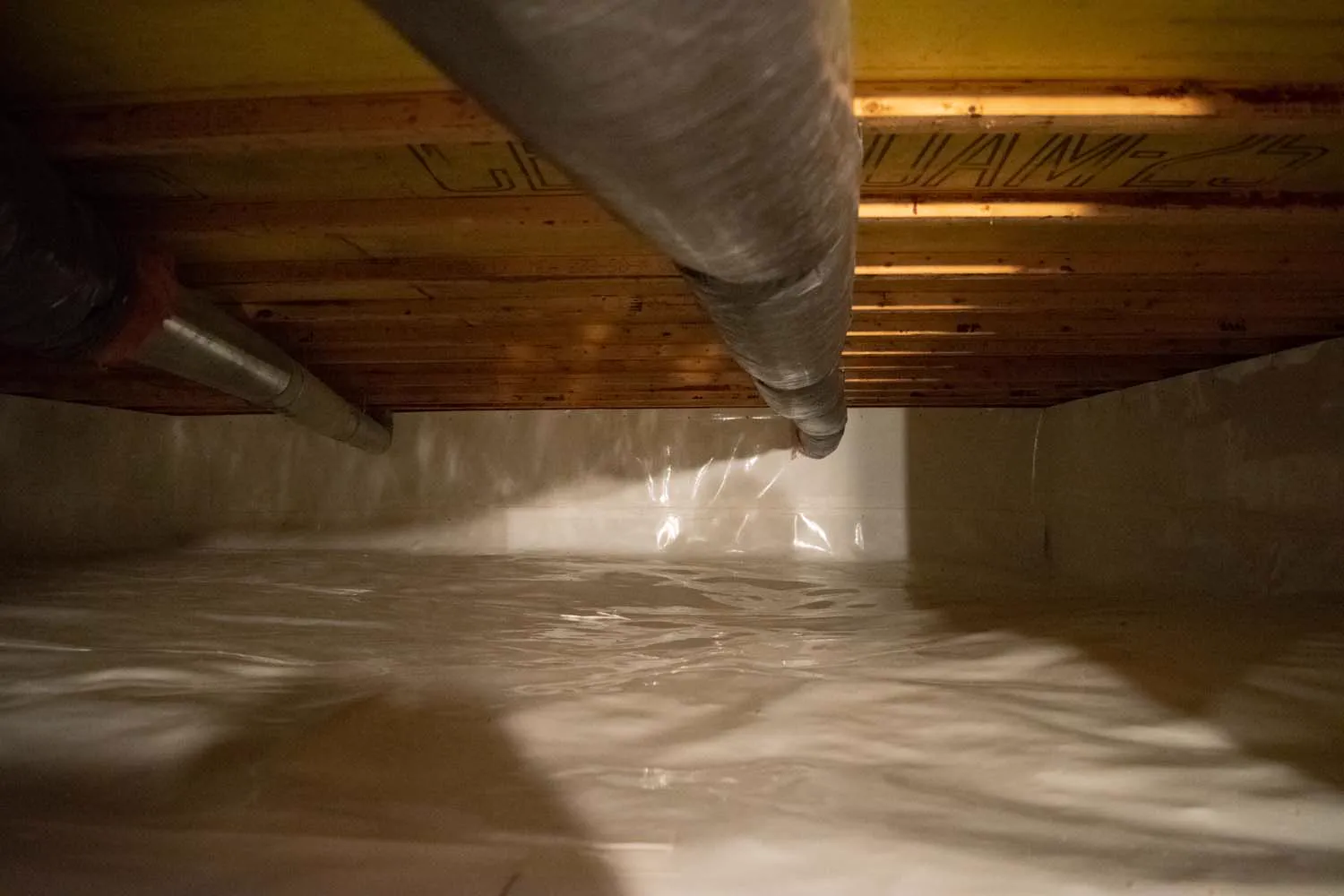
One more note: if the damp air is coming from a vented crawl space under part of the house rather than the basement itself, the answer changes, and crawl space encapsulation is usually the better tool. Comparing notes with family across the county line? We cover the same ground for a Cumming wet basement, since Forsyth soil throws its own curveballs.
Where we work around Milton
We’re based in Lawrenceville, and Milton is a regular stop for our crews. We also work throughout Alpharetta, Roswell, Cumming, Johns Creek, Woodstock and Canton, plus Sandy Springs, Duluth and Suwanee, along with the rest of Cherokee County and the wider Fulton area. If you’re anywhere between Crabapple and the Cherokee line, there’s a good chance we already have a truck nearby.
Questions Milton homeowners ask us
Most jobs run one to three days on site. A single wall can wrap up in a day, while a full perimeter in a large finished basement takes longer because of the prep and the put-back. You’ll get the schedule in writing before we start, so nothing about the timeline is a surprise.
Only the perimeter needs to clear. We ask for roughly four feet of open space along the walls we’re working on, so shelving and furniture shift toward the middle. The rest can stay put, and we’ll help with the heavy pieces.
Sometimes, but they’re really two jobs. Drainage handles the water, while an actively moving crack needs its own repair first. Sealing a wall that’s still shifting only buys you a season, so we’ll tell you during the inspection which situation your home is in.
Neither is automatically better — it depends on where water enters and what sits on the soil outside. Exterior work stops water before it touches the foundation, but it means excavating, and a patio, pool deck or mature landscaping changes that math fast. Interior drainage is less disruptive and works well on most Milton homes.
The drainage itself is built to last the life of the house, since stone and pipe below the slab have nothing to wear out. The pump is the part with a service life, so plan on a replacement somewhere around the ten-year mark, the same way you’d plan for a water heater. Your written warranty spells out what’s covered.
Let’s find out what’s really going on under your Milton home
The inspection is free, the estimate is free, and nobody pressures you at the end of it. We’ll show you where the water is getting in, explain the plan in plain words, and put the scope in writing — even if the fix turns out smaller than you expected.
(678) 914-5112Serving Milton and all of Metro Atlanta · $500 off projects over $3,500 · Live support 7am–8pm, 7 days a week