

Waterproofing Cost in Roswell: A Step-by-Step Breakdown Before You Spend a Dime
Every step of the job, in order, in plain words — plus what raises the price, what lowers it, and how to tell the work was done right.
Why does everybody start researching waterproofing cost Roswell in March? Because that’s when the first big spring storm rolls through, and a hillside town finds out where its water goes. One long rain, one damp corner, and suddenly you’re on your phone at 10 p.m. trying to guess what this is going to run you.
Good news, and we mean it: you can stop guessing. Below is the whole job laid out in order, the honest list of things that push the price up or down, and the parts you can genuinely handle yourself. No pitch. Just the same walkthrough we’d give you standing in your basement.
Why does this show up in spring here?
Roswell is built on hills. Water always wins on a hill unless somebody gives it somewhere better to go — and that’s the whole job, start to finish. Spring storms drop a lot of rain fast, and on a slope that rain doesn’t soak in politely. It runs.
There’s a second thing under your feet. Our soil is red clay sitting on granite, often with rock close to the surface. So water hits that shallow rock, can’t go down, and travels sideways instead. Then it meets the back wall of a house cut into the hillside. Your basement isn’t leaking so much as it’s standing in the road.
Worth knowing
Concrete is porous. Water can move through solid, uncracked concrete by capillary action — the same way a paper towel pulls water uphill. That’s why a wall can be damp with no crack anywhere on it. Nothing is broken. Water is just doing what water does.
What are the actual steps?
Most interior systems follow the same order, so you’ll know what a day on site looks like before anyone knocks on your door.
- Find the source. We walk the outside first — grade, downspouts, retaining walls, where the roof dumps. After that we walk the inside with the outside in mind. Skipping this step is how homes get sold a system they didn’t need.
- Map the wet zone. Not every wall needs work. On hillside lots it’s often just the uphill side, which means less footage and a smaller number.
- Open the perimeter channel. A narrow strip of slab comes up along the affected walls. It’s loud and dusty for a day or so, and yes, we tarp the stairs.
- Set drainage below the floor. Perforated pipe in clean stone, placed under slab level, so water is collected before it ever reaches your floor instead of after.
- Route it to a sump. The line carries water to a basin, and the pump pushes it well away from the house. Discharge next to the foundation just sends it back for a second lap.
- Close it up and clean up. Fresh concrete over the channel, wall liner where it’s needed, and our mess leaves with us.

So what moves the number?
Straight answer: we can’t quote a house we haven’t seen, and neither can anybody else. Still, you deserve to know what we’re adding up while we walk it, because almost all of it is stuff you can look at yourself tonight.
What raises or lowers the price
- How many linear feet. One wall versus a full perimeter is the single biggest swing, and on sloped lots it’s often just one or two walls.
- Access. An open basement is easy work. A finished room with built-ins and a wet bar takes careful work before the real work starts.
- Sump or no sump. Some homes already have a usable basin. Plenty of 1970s and 1980s houses have one that’s long past retirement.
- What’s happening outside. If regrading and downspout extensions solve most of it, that’s a much smaller invoice — and we’ll say so out loud.
- Wall condition. A cracked or bowing wall needs structural attention first. Otherwise you’d pay for the same area twice.
- Backup power. A battery backup costs more. It also runs during the storm that kills your power, which is the exact storm that matters.
- Foundation type. Historic stone and rubble foundations downtown take a gentler, slower approach than block does.
Small drainage corrections sit at the low end. A full perimeter system with a new sump, a backup, and careful demo in a finished basement sits at the high end. Most homes land between, and after we walk it you get a written scope with a real number attached — not a range, and not a “starting at.”
Here’s the part most people don’t expect
Good news? The expensive-sounding version usually isn’t the one you need. When homeowners call about waterproofing cost in Roswell, they’ve often already pictured the worst — the whole floor torn out, the whole perimeter dug up, a truck parked in the yard for a week.
That happens sometimes. But honestly, a big share of the homes we see on hillside lots need a much smaller fix, because on a hill the water arrives from one direction. Fix the uphill side, give that water a path, and the rest of the basement never had a problem in the first place. You don’t waterproof three dry walls out of politeness.
We’d rather sell you the small job that works than the big job that impresses. One of those gets us referred to your neighbor.
We had a homeowner over near Horseshoe Bend braced for a full system, and the real problem was a retaining wall pouring runoff at the back corner. Grading, a redirected downspout, and drainage on one wall handled it. Was that a smaller invoice? Yes — and she’s sent us three neighbors since, so the math works out fine.
How long does it take, and what should you do first?
Most residential systems run one to three days on site. Single-wall jobs often wrap in a day. Bigger perimeters with a new sump usually take two or three, plus a little cure time before you put anything heavy back down.
Your prep list is short. Clear about four feet along the walls we’re working on, move anything fragile out of the room, and make sure we can reach the space with a hose and an outlet. That’s it. We’ll move the heavy shelving, because that’s not your job.
What can you genuinely do yourself?
Plenty, actually — and we’d rather you try the cheap stuff first. Extend your downspouts six to ten feet from the house. Clean the gutters, since a clogged gutter is basically a sprinkler aimed at your foundation. Build the soil up so it slopes away from the wall, and keep mulch beds from trapping water against the block.
Now the honest limits. DIY can’t beat pressure. Waterproof paint is a coating, so it peels the moment water pushes from behind, which is a raincoat on a submarine. Hydraulic cement in a crack buys a season. Sub-slab drainage, a properly discharged sump, and anything touching a stone foundation need equipment and experience — plus a warranty you can actually hold someone to. The EPA’s guidance on moisture control is a good neutral read on why drying the air alone never solves the source.
The diagnosis that surprised somebody
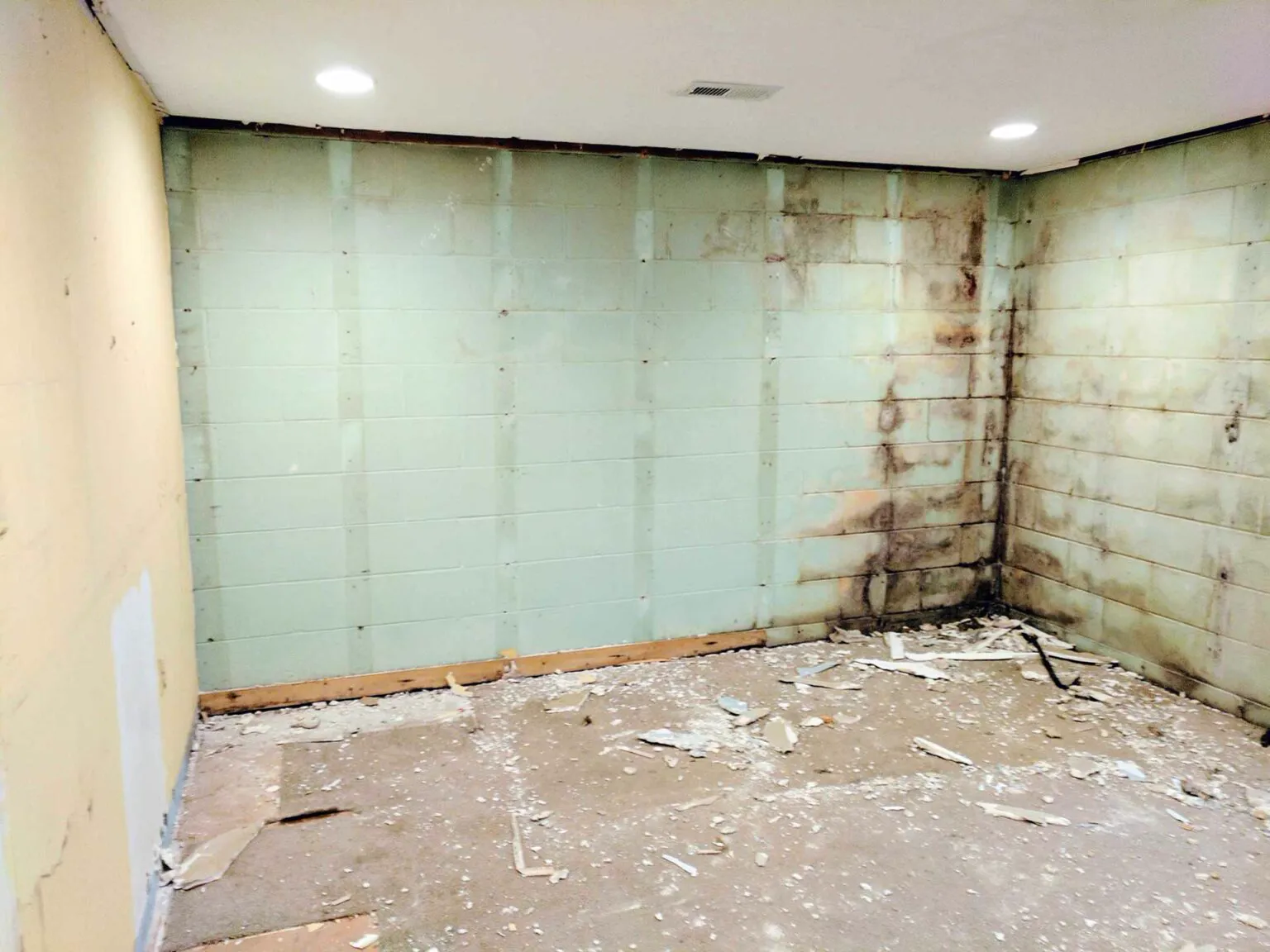
Ever been sure you knew the answer and been wrong in a good way? A homeowner in the Historic Roswell area near Canton Street was convinced her old stone foundation had finally given up. Cellar floor damp, that unmistakable smell, a house well over a century old. She’d already saved up for the worst.
The wall was fine. What we found was a buried, collapsed drain line from a much earlier renovation, dumping straight into the soil beside the foundation every time it rained. Water was pooling there, then wicking through the stone — no crack, no failure, just capillary action doing its slow thing. We replaced the line, added a small collection point, and the cellar dried out.
Her reaction is the one we like best: relief. Not “great, I’m spending money,” but “oh good — it’s fixable and it wasn’t the disaster I pictured.” That’s the most common ending to these stories, honestly. Water problems look scarier than they are because they’re hidden, and the moment somebody shows you the actual cause, the whole thing gets smaller. If you want the plain science of how groundwater moves, the USGS groundwater basics page explains it well.
How do you know the job was done right?
Ask for these before you sign, and you’ll be ahead of most buyers.
- A written scope. Linear feet, depth, pipe type, stone, sump model, discharge location. Vague scopes create vague results.
- Discharge you can see. Walk outside and confirm the water exits far from the house, downhill, and not toward a neighbor.
- A clean patch. The new concrete should be level with the old floor, not a speed bump you trip over in the dark.
- A wet test. Run a hose along the outside for a while and watch. A real system moves that water without drama.
- A warranty in writing, plus the name of the local company standing behind it.

Picture the other side of it. Storms roll over Big Creek Greenway, the gutters roar for an hour, and your floor stays dry. That basement smell at the bottom of the stairs is simply gone. Instead of a room you apologize for, you get storage you trust and space you use — and the next ugly forecast becomes somebody else’s problem.
Why hire someone who knows these hills?
Because terrain here changes house by house. The lots off Riverside Road behave nothing like the flatter ground near Roswell Area Park, and a floodplain property along Vickery Creek or the Chattahoochee needs a different plan than a 1980s subdivision on a cut slope. Meanwhile the old homes around Mimosa Boulevard have stone and rubble foundations that reward patience and punish shortcuts.
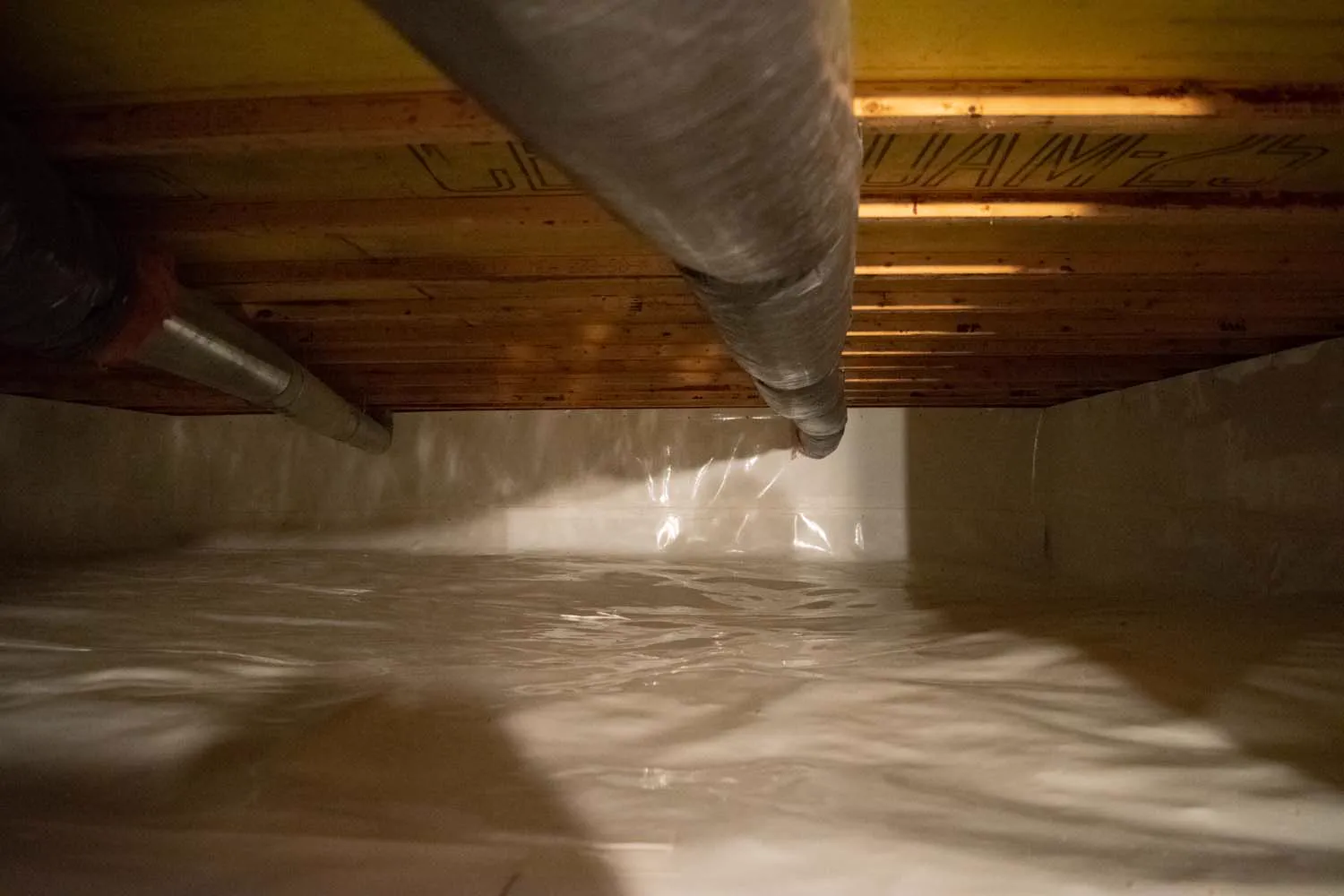
Still sorting out what you’re dealing with? Our rundown of waterproofing options compares the systems side by side, and basement waterproofing covers what we install and why. If your house sits over a damp, musty crawl space instead of a basement, crawl space encapsulation is usually the better answer. Comparing notes with family one town over? We break down Milton waterproofing cost the same way.
Where we work around Roswell
We’re a short drive up from Lawrenceville, and we’re in this part of Fulton County constantly. That includes Roswell, Alpharetta, Milton, Sandy Springs, Johns Creek and Marietta, plus Dunwoody, Woodstock, Mountain Park and the surrounding Fulton area. If you’re anywhere between the river and GA-400, odds are good we have a truck nearby today.
Questions Roswell homeowners ask
Just the perimeter. We need roughly four feet of clear space along the walls we’re working on, so boxes and shelving shift toward the middle of the room. You don’t have to empty it, and we’ll handle the heavy pieces ourselves.
Sometimes, though they’re really two separate jobs. Drainage handles water, while a crack that’s still moving needs its own repair first. Otherwise you’re sealing a wall that hasn’t finished shifting, and that only buys a year. We’ll tell you which one you’re looking at during the inspection.
Neither wins automatically — it depends on where water gets in and what’s sitting on the soil outside. Exterior work stops water before it reaches the foundation, but it means excavating, and a deck or a mature tree changes that plan fast. On steep Roswell lots, interior drainage is often the less disruptive path.
The drainage itself is built to last the life of the house, since it’s stone and pipe below the slab with nothing to wear out. The pump is the part with a service life, so plan on replacing one somewhere around the ten-year mark, about like a water heater.
Yes, and you get it in writing before the work starts rather than after. Ask us to explain exactly what’s covered, because a warranty nobody can summarize in one sentence isn’t worth much.
Let’s find out what’s really going on down there
The inspection is free, the estimate is free, and nobody pressures you at the end of it. We’ll show you where water is getting in on your Roswell home and what it would take to stop it — even when the answer turns out smaller than you expected.
(678) 914-5112Serving Roswell and all of Metro Atlanta · $500 off projects over $3,500 · Live support 7am–8pm, 7 days a week