

Basement Waterproofing in Roswell: What It Costs and What You Actually Get
A plain-English look at the work, the price drivers, and the questions that separate a real estimate from a guess.
Somebody made a decision about your house before you ever walked through it. When the lot was cut into the hillside, a builder chose where the water would go — and that single choice is why basement waterproofing Roswell homeowners ask about today looks the way it does. Back then the plan worked fine. It just wasn’t drawn for forty more springs of rain coming down a slope.
Good news, though: this is one of the most fixable problems a house can have. You don’t need a new foundation, and you almost certainly don’t need to panic. What you need is a clear picture of the work, an honest read on the cost, and enough information to tell a real plan from a sales pitch. So let’s go through all three, in order, with nothing dressed up.
What is this work, in plain words?
Waterproofing is giving water an easier path than the one it’s taking through your house right now. That’s the whole idea. Water is lazy and stubborn at the same time, so it takes the simplest route available, and on a lot of local homes that route runs through the seam where the wall meets the floor.
Roswell makes this more interesting than most towns, because Roswell is built on hills. Water always wins on a hill unless somebody gives it somewhere better to go — and that’s the whole job. Add red clay sitting on top of granite, and the water can’t soak straight down. Instead it slides sideways along the rock until it bumps into something. Often that something is the uphill wall of your basement.
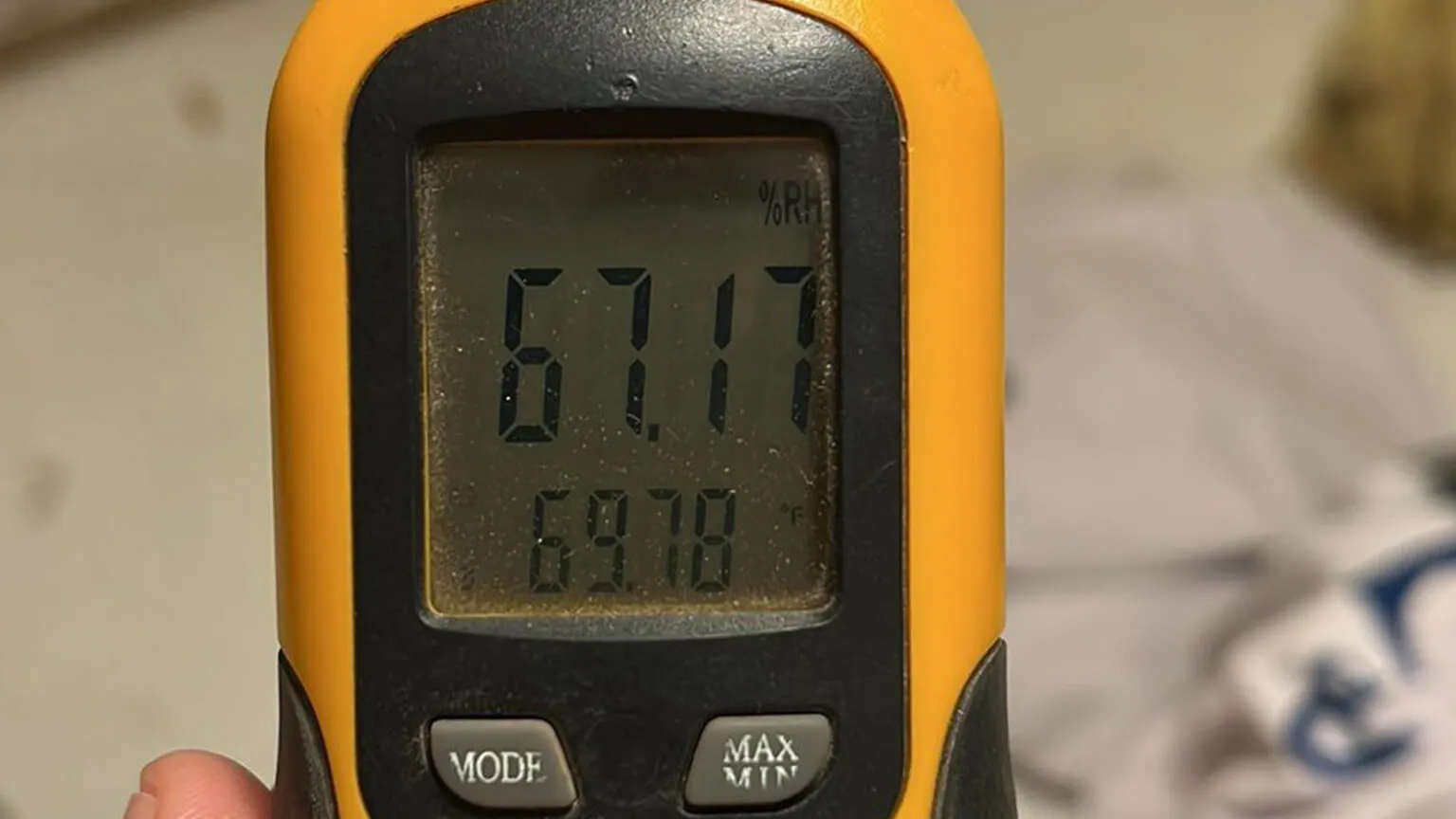
Here’s the part that surprises people. That moving water is groundwater doing exactly what groundwater does, and the U.S. Geological Survey explains the basics well if you like knowing the why. Because your basement is dug into the hill, it isn’t really a room. It’s a boat, parked in wet soil.
Good news
A wet basement and a failing foundation are two different conversations. Most of the homes we look at only need the first one, and we’ll say so plainly instead of stretching the job.
What does a real job look like?
Most interior systems follow the same shape, so you can picture your week before anyone shows up with a jackhammer. Here’s the honest version, step by step.
- We find the source first. Before quoting anything, we walk the yard — grading, downspouts, retaining walls, where the runoff lands. Then we walk inside. Fairly often the real fix is smaller than the homeowner feared, because the trouble was outside the whole time.
- We open a channel at the perimeter. A narrow strip of slab comes up along the walls that need it. It’s loud and dusty, but it usually wraps in a day or two.
- We install drainage below the slab. Perforated pipe in clean stone, set under floor level. Interior drainage systems collect water below the slab and route it to a sump before it ever reaches the floor, instead of trying to block it at the wall.
- Everything routes to a sump. The pump then pushes water well away from the house — not two feet from the foundation, where it would simply come back for a second try.
- We close it up and clean up. Fresh concrete over the channel, wall liner where it’s called for, and our mess leaves in our truck. Leaving debris in your driveway isn’t a finish.
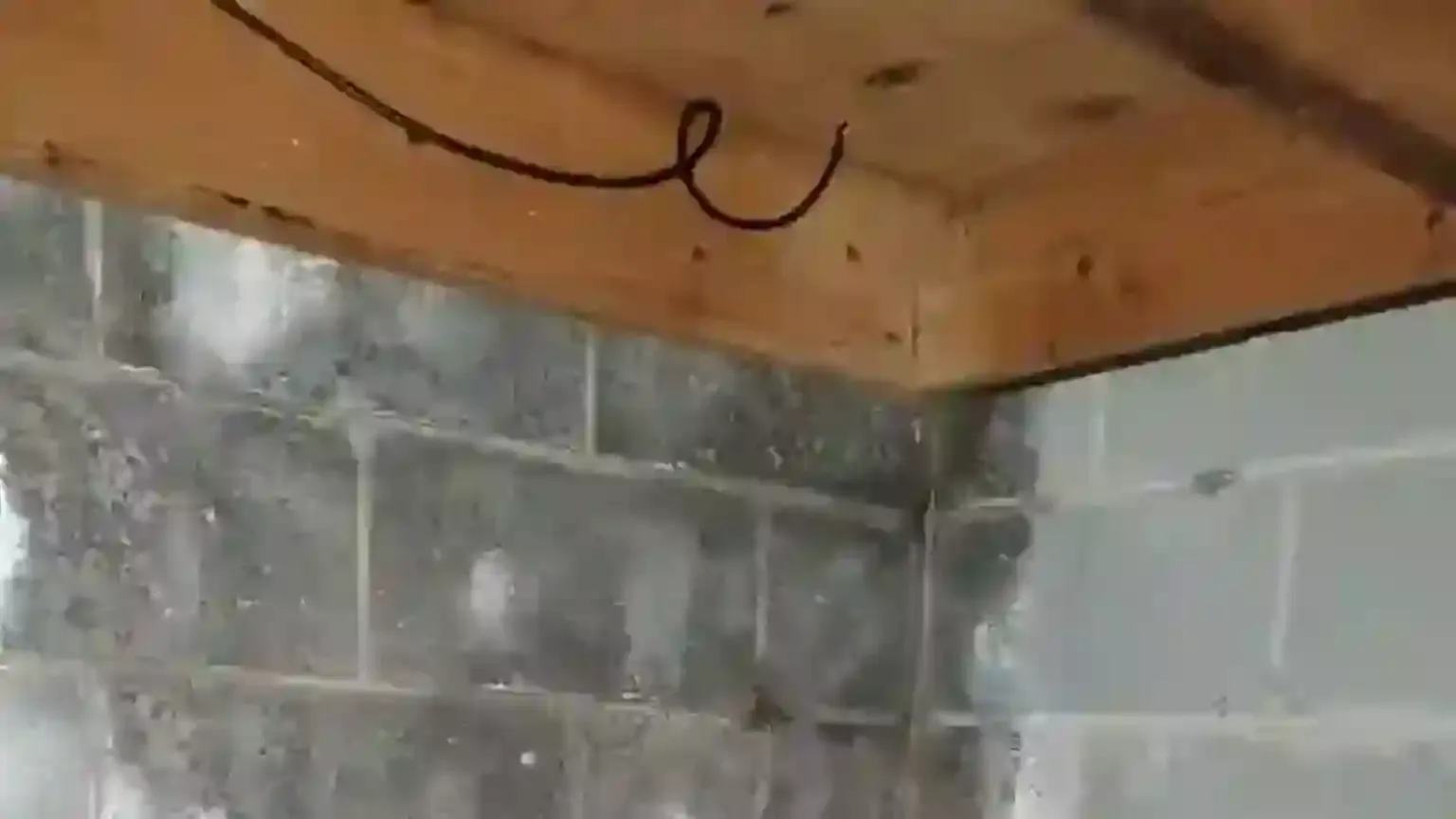
Notice what nobody painted. Waterproof paint is a fine product for what it is, but it’s a coating, and a coating can’t beat pressure. Honestly, it’s a raincoat on a submarine.
We stopped trying to block water years ago and started routing it instead. Water wins the blocking fight eventually. It never argues with an easier exit.
What happens after the crew drives off?
This is the part almost nobody asks about during an estimate, and it’s the part that decides whether you’re happy in year seven. A system isn’t a thing you buy once and forget. Instead, think of it like the HVAC upstairs: mostly automatic, with one or two small habits attached.
So here’s the maintenance list, and it’s short. Pour a bucket of water into the sump basin twice a year to be sure the pump kicks on, and keep the discharge line clear where it exits the yard. Also glance at the pump after a long power outage, because that’s the one storm that matters. About ten minutes a year, total.
Now the warranty, since that’s really what “after we leave” means. Ours goes in writing before work starts, and it covers the system we installed doing the job we said it would do. Ask for yours in plain language. If nobody can explain the coverage in one sentence, that’s your answer.
What’s included in a normal job, then? Labor, materials, the concrete patch, debris hauling, and permits when the scope calls for them. Usually not included: drywall repair, flooring you had down there before, and landscaping if we also recommend exterior grading. It’s all listed on the estimate, so there’s no interesting conversation later.
So what does it actually cost?
Straight answer: it depends on how much wall is involved and how hard it is to reach. Anyone quoting a flat number over the phone, sight unseen, is guessing — and you’d be paying for that guess. Still, you deserve to know what moves the number, so here’s exactly what we’re weighing.
What drives the price up or down
- Linear feet. One wall is a very different job than a full perimeter. This is the single biggest factor, every time.
- Access. An open basement is simple. A finished space with a bar, a bath and built-ins costs more, because careful work comes before the real work.
- The slope. Hillside lots often need more discharge line to reach a safe outlet. Gravity helps us here, but distance still costs.
- Sump and backup. Some homes have a serviceable basin already. Many don’t, and a battery backup adds cost while running during the exact storm that knocks out power.
- Wall condition. Bowing or an active crack means structural work comes first, since waterproofing a moving wall is money spent twice.
- What’s outside. Sometimes regrading and moving two downspouts handles most of it. That’s a smaller invoice, and we’ll tell you.
Small drainage corrections land at the low end. A full perimeter system with a new sump, a backup pump and a finished basement to protect sits at the high end. Most jobs land in the middle, and after we walk your house you get a written number with the scope spelled out — not a range, and definitely not a “starting at.” If your place has a crawl space instead of a basement, by the way, crawl space encapsulation is usually the better answer.
One more cost note worth saying out loud. Spring storms move fast down these slopes, and the National Weather Service office in Peachtree City tracks the rainfall totals for our whole area. Booking in a calm month is easier on the schedule than calling during the week everybody else is calling.
What does a damp basement have to do with the air upstairs?
More than most people expect, and this is the part that changes how homeowners think about the whole project. Air in a house doesn’t sit still. It rises, so air leaves through the upper floors and gets pulled up from the lowest level to replace it — which means a big share of what you breathe in the kitchen started its trip in the basement.
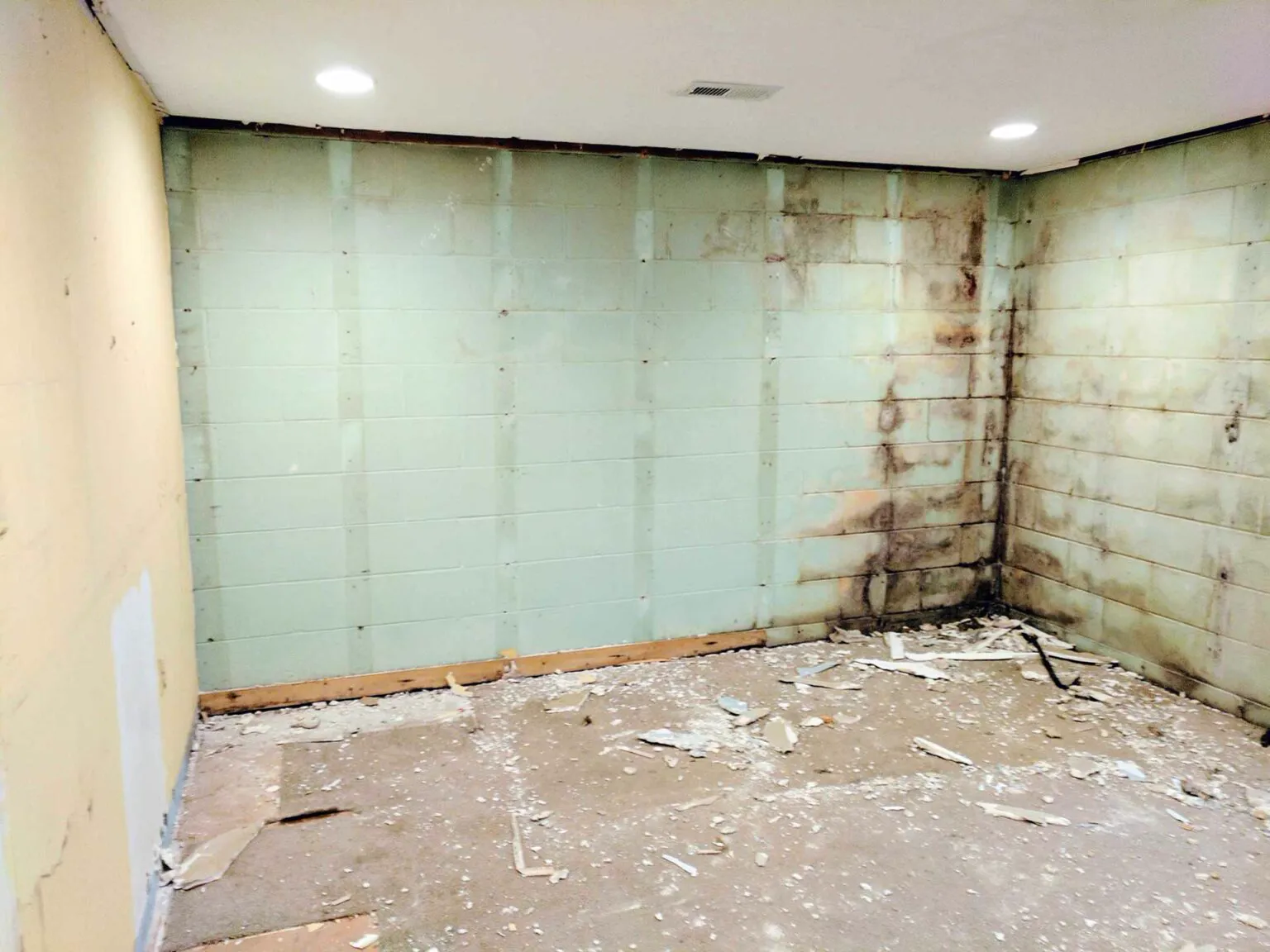
Damp block holds humidity, and humidity is what mildew and musty smells need to get going. That’s why a house can have a spotless upstairs and still smell like an old cooler. Once the water is routed away and the space dries out, the smell fades on its own, because you removed the cause instead of covering it. Plenty of homeowners tell us the difference showed up in the laundry room and the stairwell first.
Picture the rest of it. The floor stays dry through a hard spring storm off the ridge. Boxes you kept on pallets go back on the floor. Instead of a level you apologize for, you get a room worth finishing — storage you trust, a workshop, a place the kids can be loud. Best of all, the next time the forecast turns ugly, you simply don’t think about it.
Why hire somebody local for this?
Because terrain knowledge isn’t something you can look up on the way over. We’ve worked the 1970s and 1980s hillside subdivisions around Brookfield and Roswell Farms, where the original drainage was undersized for the slope behind the house and finally gave out. Over in Hembree, we’ve seen how differently two houses on the same street behave when one sits three feet lower. Down along Riverside Road, near Old Mill Park, the river bottom adds a whole different water table to the conversation.
Older homes near Bulloch Hall are their own category, too. Stone and rubble foundations need a gentler approach, since the goal is a dry house that still looks like the house. We’re not going to wreck the character of a historic basement to solve a drainage problem.
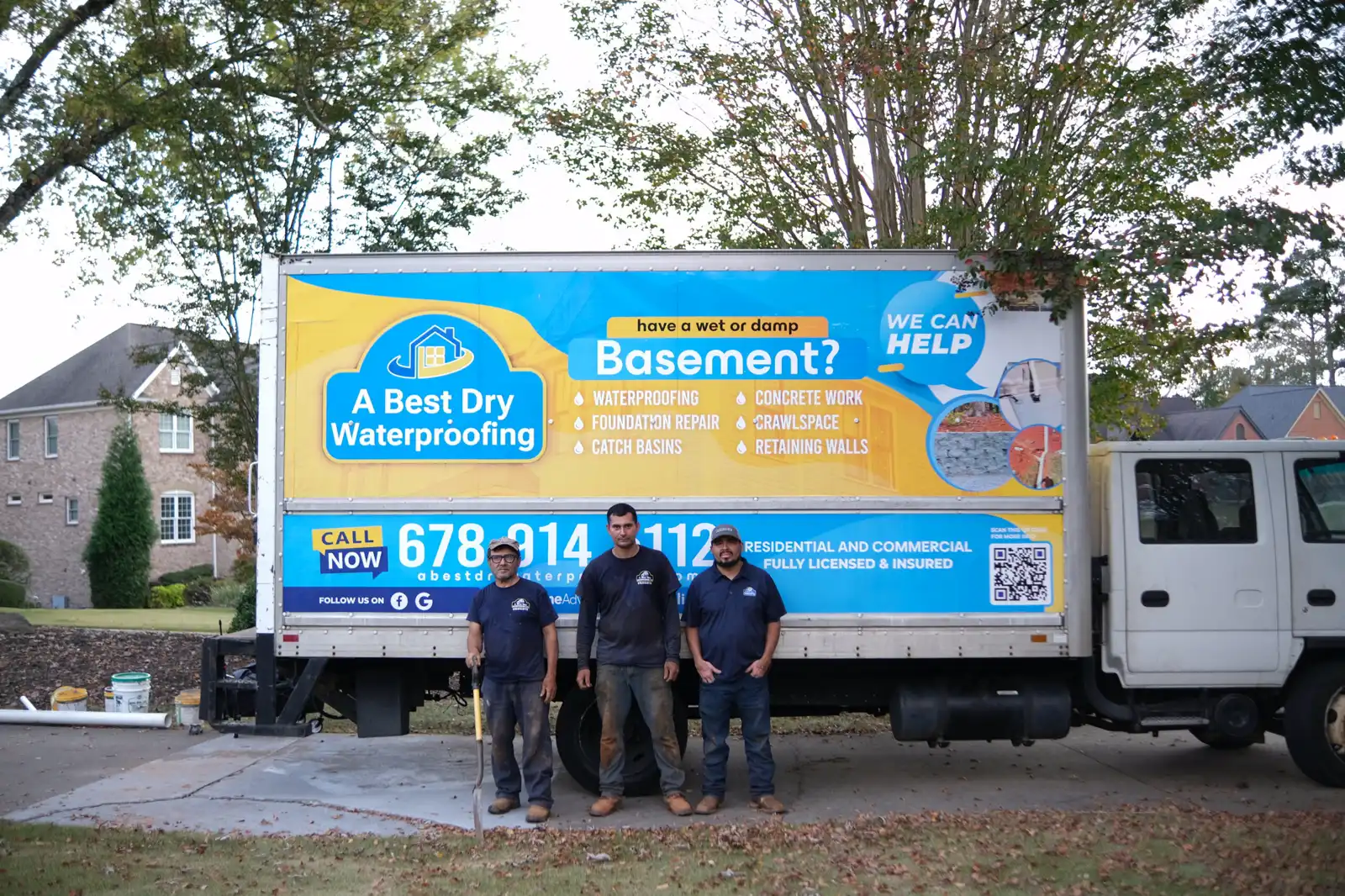
Still working out what you’re seeing down there? Our guide to what causes a wet basement walks through the symptoms one by one, and the systems we install are laid out in full detail. Comparing notes with family a few miles north? We cover the same ground for Milton basement waterproofing as well.
Where we work around Roswell
We’re about half an hour east of you in Lawrenceville, so Roswell is a regular stop on our week. That includes Alpharetta, Milton, Sandy Springs, Johns Creek and Marietta, plus Dunwoody, Duluth, Suwanee, Woodstock and the wider Fulton County area. If you’re anywhere between the river and GA-400, there’s a good chance we’ve already worked on a house near yours.
Questions Roswell homeowners ask us
It helps in two ways. A dry, documented basement removes a common inspection headache when you sell, and it turns unusable square footage into space a buyer counts. Keep your paperwork and warranty together, since a transferable warranty is a real selling point.
Usually within a few days, and sometimes sooner if we already have a crew nearby. Call or text and we’ll find a window that fits your schedule. The inspection and the estimate are both free, with no pressure at the end.
It depends mostly on how many linear feet of wall are involved, whether you need a sump, and how much finished space we have to work around. A small drainage correction is a modest job, while a full perimeter system with a backup pump sits much higher. We give you one written number after we see the house, never a phone guess.
Most interior systems run one to three days on site. Finished basements take longer, because we open and restore the affected areas carefully. The concrete then cures over the following days, and you can use the space again right away.
Only along the walls we’re working on. We need roughly four feet of clear space at the perimeter, so shelves and boxes shift toward the middle of the room. You don’t need to empty it, and we’ll help with the heavy things.
Let’s find out what’s really going on down there
The inspection is free, the estimate is free, and nobody pushes you at the end of it. We’ll show you where water is getting in, what it would take to route it away, and what a fair number looks like for your Roswell home — even if the fix turns out to be simpler than you expected.
(678) 914-5112Serving Roswell and all of Metro Atlanta · $500 off projects over $3,500 · Live support 7am–8pm, 7 days a week