

Wet Basement in Suwanee: What’s Causing It and How It Gets Fixed
The plain-English version — what the water is actually doing, how to tell mild from serious, and why this is far more common than you think.
Let’s start with the physics, because it makes everything else make sense. Water in the soil around your house isn’t sitting still down there — it’s under pressure, and it presses on your walls and your slab looking for the easiest way through. That is the entire story behind almost every wet basement Suwanee homeowners call us about. Not a mystery, and not a catastrophe. Just water doing the one thing water always does.
So if you’re here because of a damp corner, a musty smell, or a puddle by the stairs, take a breath. You’ve got an ordinary problem with an ordinary fix. Let’s walk through what it takes to make it stop.
Where is the water even coming from?
Here’s the part that surprises people: your concrete is not solid. It looks solid, sure, but concrete is porous, and water moves through solid uncracked concrete by capillary action — the same way a paper towel pulls a spill up its edge. That’s why a wall can be damp across a wide patch without a single visible crack anywhere on it.
Add Georgia red clay to that, and the picture gets clearer. Clay soil swells when it drinks, and as it swells it leans on your foundation walls with real force. Engineers call that hydrostatic pressure. You can just call it “the reason my floor is wet in April.”
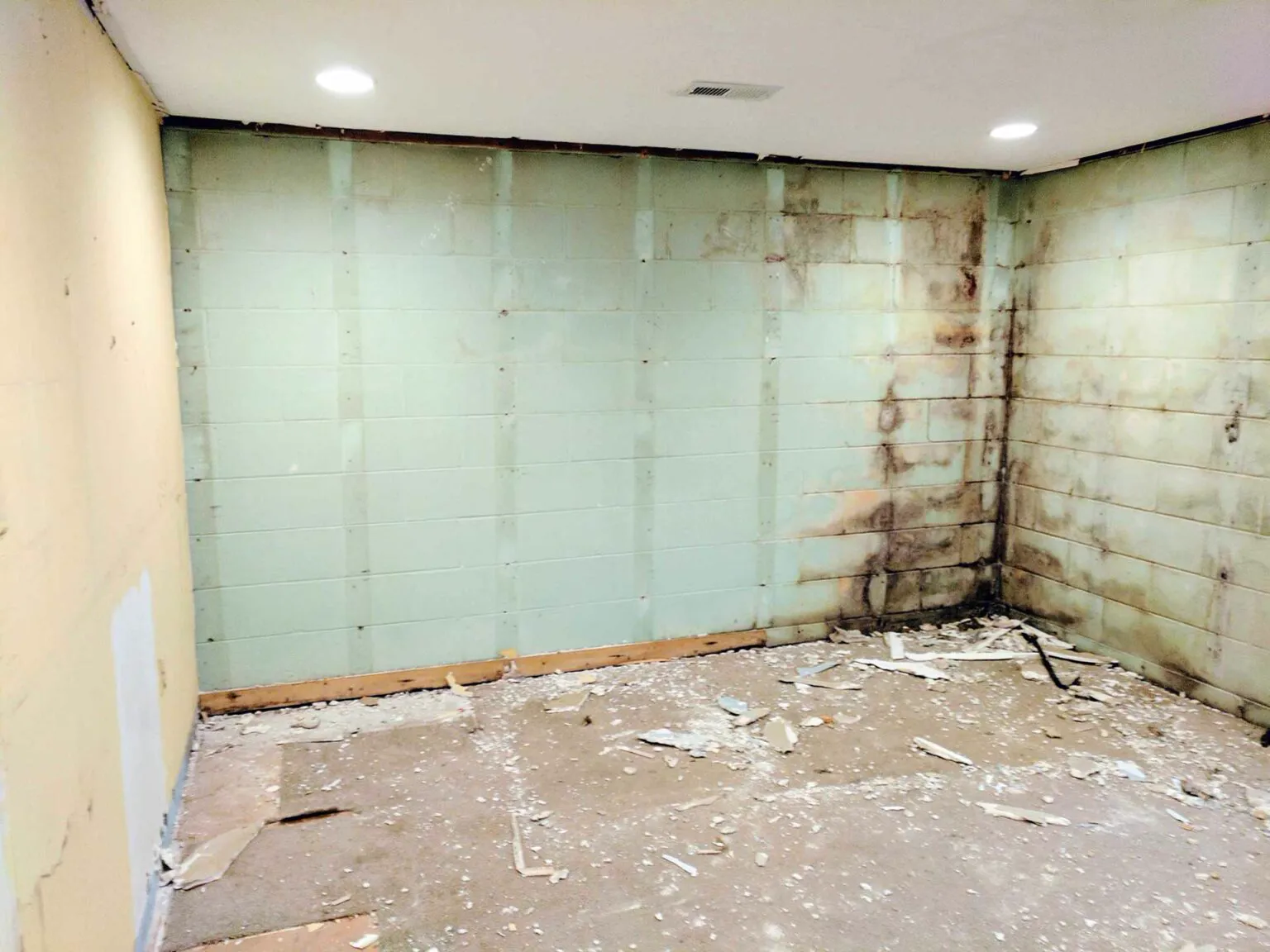
Suwanee has its own version of this story, and it’s really a timing story. The city grew up in one fast wave in the late nineties and early two-thousands, so those homes are all hitting their first real waterproofing failure at the same time. Neighbors compare notes at PlayTown Suwanee and realize three of them have the identical damp corner — which is exactly what you’d expect from houses poured the same decade.
Good news first
A wet basement and a failing foundation are two different conversations. Most homes we look at are only having the first one. We’ll tell you plainly which one you’re in, and we’ll show you what we’re looking at while we do it.
Is mine mild, or is it something more?
Fair question, and you can get a decent read on it yourself in about ten minutes. Mild usually looks like a chalky white bloom on the block, a stain that darkens after storms, or a smell that shows up in humid weather and fades in fall. Those are signs that water is passing through slowly, which means you likely caught it early.
More involved looks like standing water, a floor seam that weeps every time it rains hard, or wood trim near the slab gone soft. None of that means panic — it just means water has been working longer, so the fix needs to be a real system instead of a small correction.

And what if you leave it alone? Plainly, without drama: it usually gets slower to fix, not faster. Moisture keeps feeding mildew, drywall wicks it up, and the little seasonal seep turns into a spring routine. Nothing here is an emergency, but it doesn’t quietly resolve either.
Real talk: this is the part that decides whether it lasts
Anyone can install drainage. What separates a fix that holds for decades from one that disappoints you in a year is the hour spent before anybody touches a tool — finding the actual source. Nearly every wet basement Suwanee homeowners call us about traces back to roof water, settled grading, or groundwater, and about a third of them are fed by something you can see from the yard.
Downspouts that dump two feet from the wall. Grading that settled over twenty-five years and now tilts back toward the house. A window well with no drain, quietly acting as a bucket. On the older lots near Ivy Falls we see settled grading constantly, because the ground there has had a quarter century to move. Fix that, and sometimes the basement dries out for the price of a Saturday and some dirt.
We’d rather sell you a small job that works than a big job that impresses. Stop the source first — the system is what protects you after that.
Then there are lots where the water isn’t coming from your gutters at all. Suwanee sits on rolling hills that drain toward Suwanee Creek, and homes on tributary lots carry seasonal groundwater no matter how perfect the grading is. Those houses need interior drainage, because you can’t regrade your way out of a water table.
If you want to see how that shakes out on the invoice, our breakdown of waterproofing cost walks through what raises and lowers the number. Storm patterns matter here too — the National Weather Service office in Peachtree City tracks rainfall for our whole area, and Metro Atlanta gets more of it in a year than Seattle does.
So what does the actual fix look like?
Simpler than most people picture. The core idea: stop fighting water at the wall and give it an easier path to leave. Water is lazy but persistent, so offer it a highway and it stops being creative about your floor.
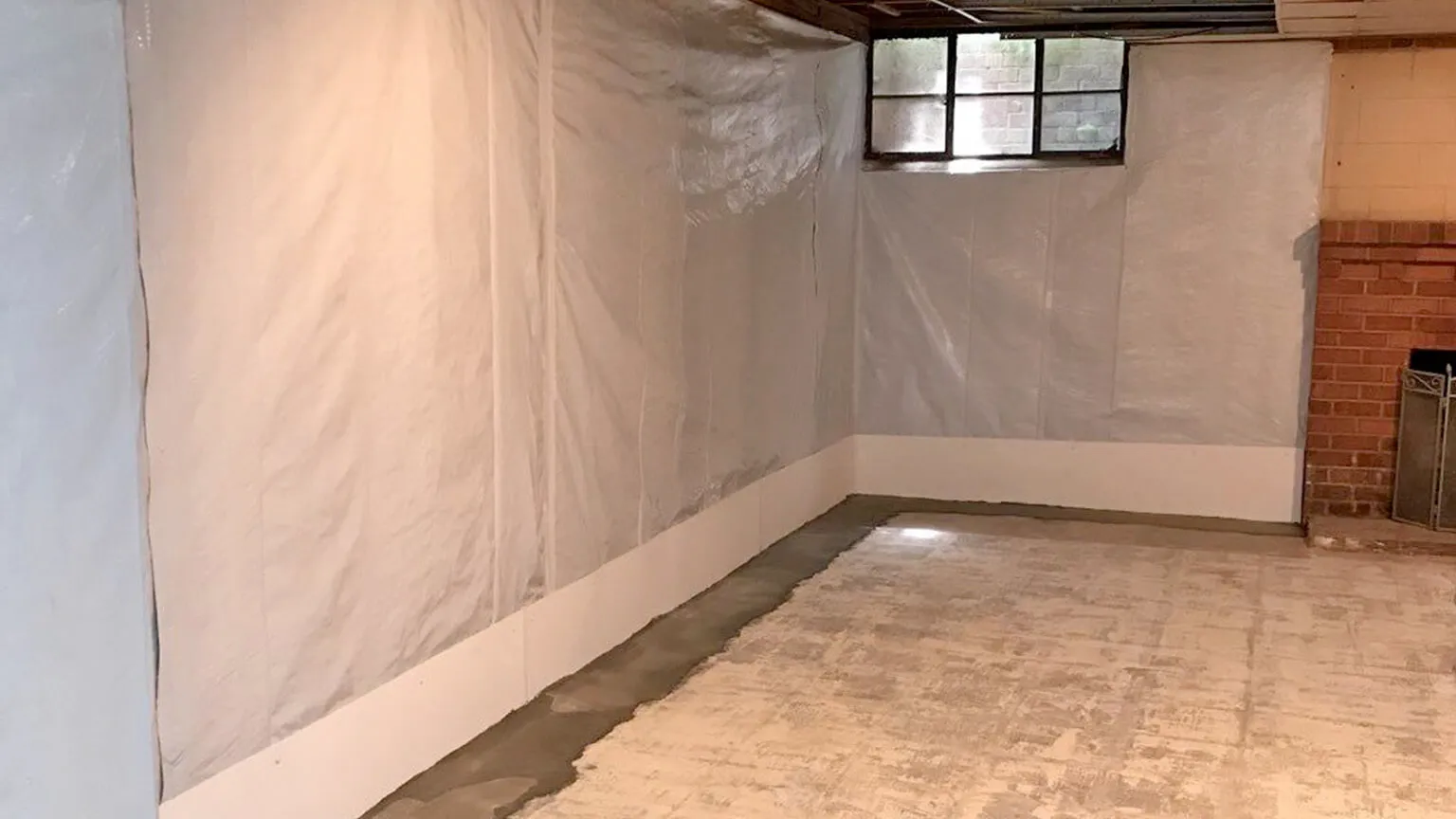
- Find the source. Outside first, inside second, and we show you what we found before we price anything.
- Open a channel at the perimeter. A narrow strip of slab comes up along the walls that are wet — not the whole floor.
- Set drainage below the slab. Perforated pipe in clean stone, sitting under floor level, so water is collected before it ever reaches your feet.
- Route it to a sump. The pump sends water well away from the house, instead of dropping it beside the foundation for a second attempt.
- Close it up clean. Fresh concrete over the channel, wall liner where it belongs, and our mess leaves with us.
Notice that nobody painted anything. Waterproof paint is a fine product for what it is, but a coating can’t beat pressure — it’s a raincoat on a submarine. That’s also why we can put a warranty in writing on a system and never would on a coating. You can read more about the systems we install if you like the mechanical details.
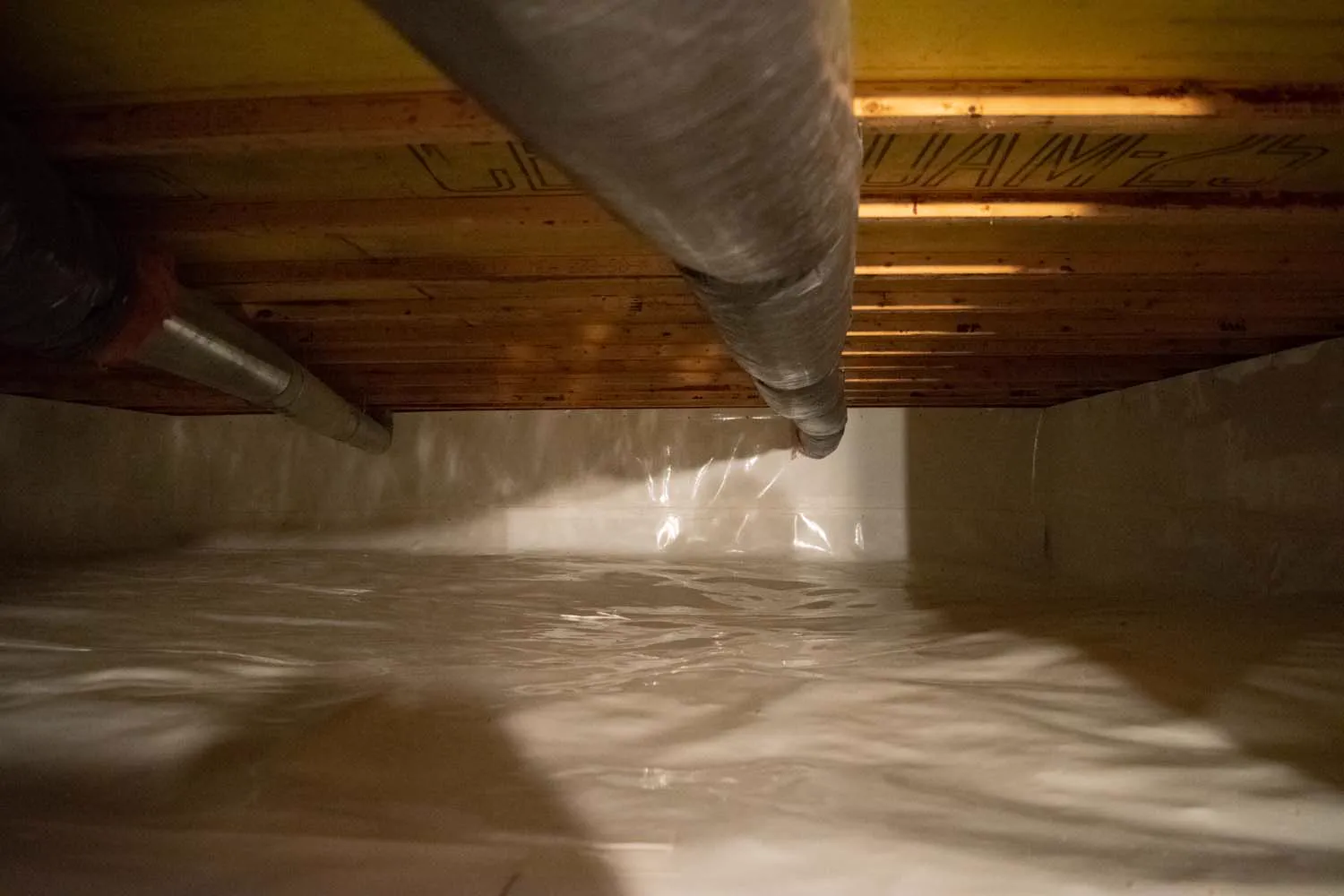
Why does the whole house smell like the basement?
This surprises people more than anything else we tell them, so here it is. Air in a house rises. Warm air escapes out the top, and as it leaves, replacement air gets pulled in from the lowest point — which is your basement. A big share of the air you breathe upstairs started downstairs.
That means a damp basement isn’t only a basement issue. It’s a humidity source for the bedrooms, and it’s why the musty smell somehow reaches the hallway two floors up. Parents in the North Gwinnett High School cluster ask us about this a lot, usually because a kid’s room never quite smells right. Good news, though — the fix is the same fix. Dry the source, and the air upstairs changes within weeks.
Moisture control is the real lever here, not air freshener. The EPA’s guide to mold and moisture makes the same point: control the water and the rest follows. A dehumidifier helps hold the line afterward, but it can’t out-run water that’s still coming in.

What it feels like when it’s done
Picture the next hard spring storm. Rain hammers the windows all evening, and you never walk downstairs to check. The smell at the bottom of the steps is gone, boxes stay where you put them, and that room stops being the one you apologize for. Instead you get a playroom, a gym, or the movie room the kids have been lobbying for.
That’s the real product. Not a pipe in the floor — a storm you get to ignore. We’ve handled homes in Suwanee Station where the owners finished the whole lower level the year after, which is easily our favorite part of this job.
Being local matters for one unglamorous reason: a warranty is only worth as much as the company behind it. Twenty-plus years of wet basement Suwanee work means we know how water moves on the hills off Peachtree Industrial Boulevard, and we know the newer builds around the Town Center district behave differently than the late-nineties homes do. If something needs attention in year seven, you’re calling the same crew. Comparing notes with a friend one town over? We cover the same ground for a Peachtree Corners wet basement. And if your damp space is a crawl space instead, crawl space encapsulation is usually the better answer.
Where we work around Suwanee
We’re based in Lawrenceville, so Suwanee is a short hop up the road for us. We also work throughout Duluth, Buford, Sugar Hill, Johns Creek, Cumming, Grayson, Dacula, Norcross and Snellville, plus the rest of Gwinnett County. If you’re near Sims Lake Park or over toward the Greenway, there’s a good chance we already have a truck close by.
Questions Suwanee homeowners ask
Usually, yes. We open a narrow strip along the base of the affected walls, which means removing the bottom foot or so of drywall and pulling flooring back from the edge. The middle of the room stays untouched, so your bar, your built-ins and your ceiling generally stay right where they are.
It helps in two ways. First, a documented, warrantied system answers the question every buyer’s inspector is going to ask. Second, a dry lower level is square footage you can actually finish and use, and in Suwanee that’s a real selling point.
Usually within a few days, and often sooner outside of the spring rush. Live support runs 7 a.m. to 8 p.m., seven days a week, so you can reach a person rather than a machine. The inspection and the estimate are both free.
It depends on how many linear feet of wall are involved, how hard those walls are to reach, and whether you need a sump and backup power. A small drainage correction sits at the low end, while a full perimeter system in a finished basement sits at the high end. After we walk it, you get a written number with the scope spelled out — never a phone guess.
Most jobs run one to three days on site. One wall can be done in a day, while a full perimeter with a new sump usually takes two or three. We’ll give you the schedule up front, and the concrete needs a little cure time before you move things back.
Let’s find out what’s really going on down there, Suwanee
The inspection is free, the estimate is free, and nobody leaves you with a pressure pitch. We’ll show you where the water is getting in and what it would take to stop it — even when the answer turns out to be smaller than you expected.
(678) 914-5112Serving Suwanee and all of Metro Atlanta · $500 off projects over $3,500 · Live support 7am–8pm, 7 days a week