

Wet Basement Johns Creek: What’s Causing It and What Actually Fixes It
A plain-English look at the damp spot, the smell, and the seam nobody checks — plus how the real repair works.
Water weighs about 62 pounds per cubic foot. So when eight feet of Georgia clay soaks up a long spring rain, the bottom of your basement wall is holding back somewhere near 500 pounds of push on every square foot of it. That one number explains almost every wet basement Johns Creek homeowners call us about — because nothing had to break for water to get in. Something just had to push.
Good news? This isn’t a mystery, and it’s almost certainly not an emergency. It’s physics doing what physics does. Once you know where water gets in and why, the fix is ordinary work — the kind we do most weeks of the year.
What is your basement wall actually up against?
Short version: red clay. Georgia Piedmont clay swells when it gets wet and shrinks back when it dries. That means the soil hugging your foundation breathes in and out with the seasons, and every swell leans on the wall a little.
Concrete looks solid, but it’s porous — kind of like a very dense sponge. So when wet soil presses against it, water doesn’t need a crack to get through. That’s why plenty of homeowners find a damp patch with no visible damage anywhere. Your wall isn’t failing you. It’s just outnumbered.
Now for the part most people haven’t heard of. The seam where your wall meets the floor slab has a name — the cove joint — and it’s the single most common water entry point in a Georgia home. Those two pieces of concrete were poured at different times, so they never truly bonded. As a result, that seam is a hairline door running your whole perimeter. Water is lazy but persistent, so it picks that door every time.
Good news
Seepage at the cove joint is not a structural problem. A wet floor and a moving foundation are two different conversations, and most homes we see are only having the first one. We’ll tell you plainly which one you’re in.
How do you tell mild from serious?
Fair question, and you deserve a straight answer instead of a sales pitch. Generally we sort what we see into three buckets, and none of them are scary.
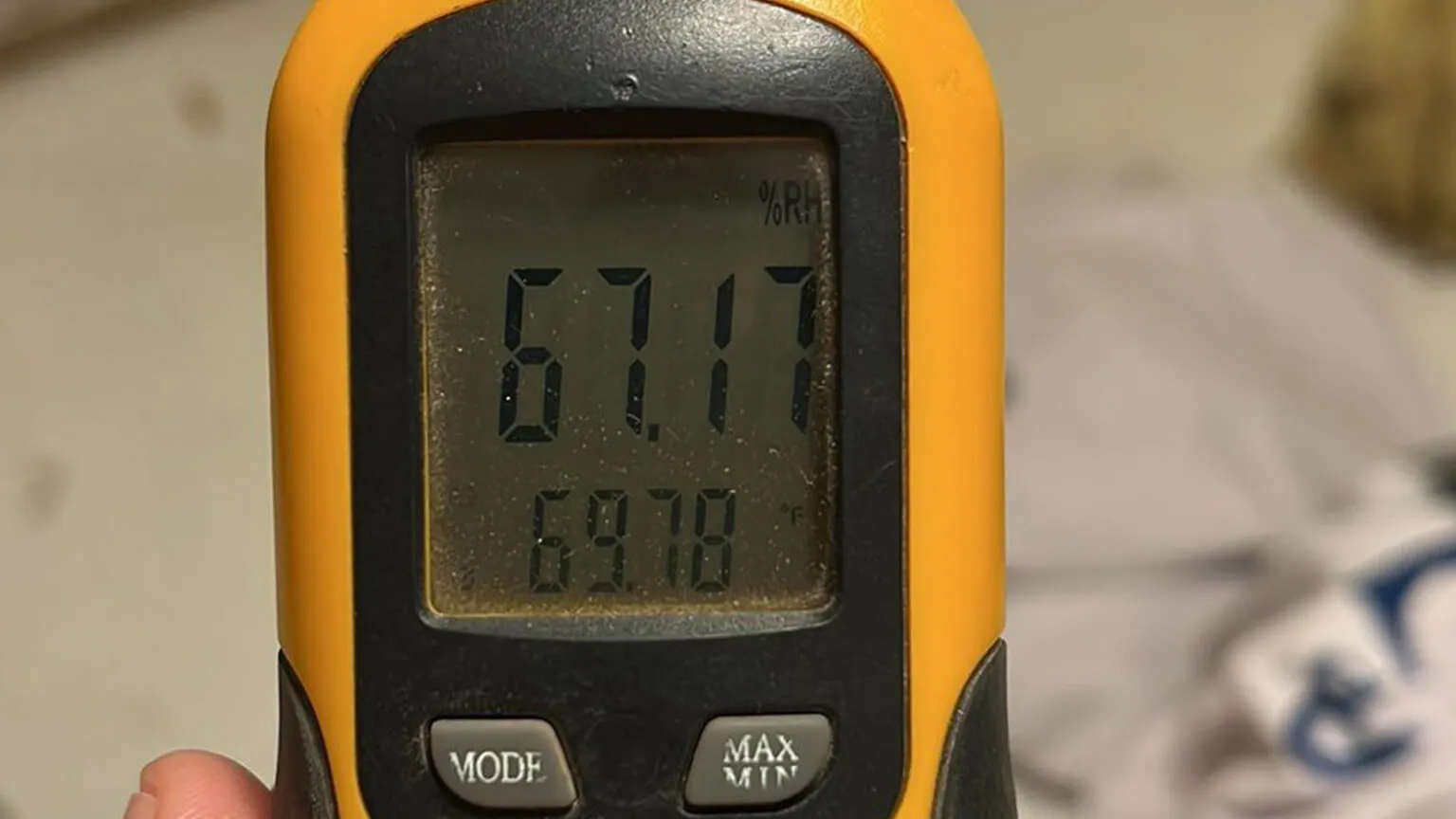
Mild. A musty smell after heavy rain. Damp air. A dark ring at the base of a wall that dries out in a few days. In other words, moisture is arriving slowly, and the space is still winning.
Moderate. Chalky white bloom on block walls. Bubbling paint. Soft baseboards, or carpet tack strips that rusted for no obvious reason. At this stage water arrives on a schedule, and the finishes are keeping score.
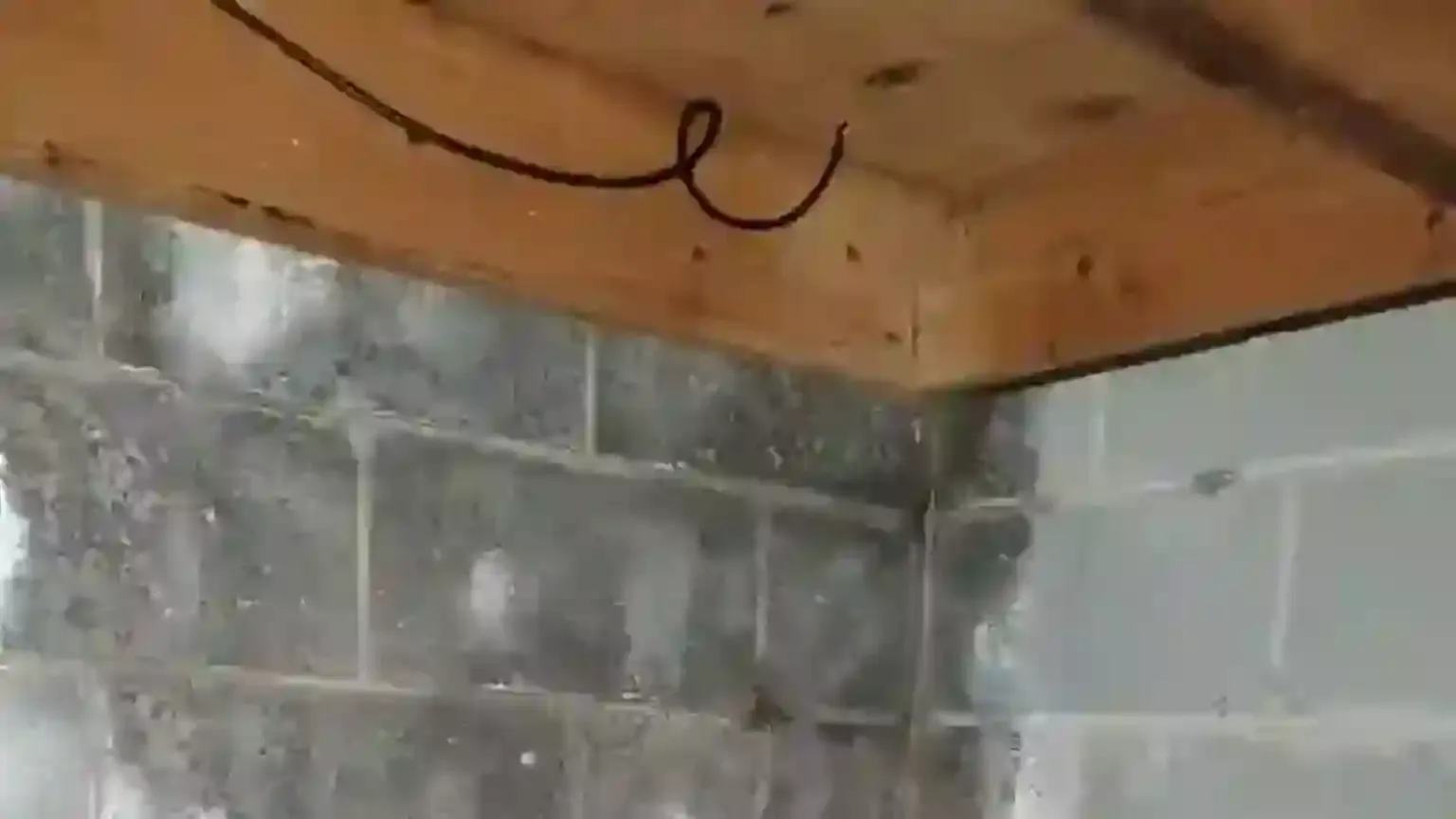
Active. Standing water after a storm. A wet line where the floor meets the wall. A sump pump that used to run now and then and now runs a lot. That said, active doesn’t mean urgent — it means we should stop guessing and go look.
What happens if you leave it alone? Honestly, it holds steady for a while, then slowly gets worse, because clay keeps swelling and the seam keeps widening. The cost of waiting is rarely the concrete. It’s the drywall, the flooring, and the things you stored down there.

Can we back up a second?
Because there’s a question underneath the question. Most people ask, “where is the leak?” But the better question is, “why did this start now?” Your house didn’t change. Something around it did.
Here, the answer is often timing. Johns Creek was largely built in one big wave, mostly between the late eighties and the mid-2000s. That means a whole city’s worth of original waterproofing systems are aging out on roughly the same schedule. Drain tile silts up. Coatings get tired. Sump pumps installed with the house hit twenty-five and quietly retire.
So a homeowner in Seven Oaks isn’t unlucky, and neither is the neighbor. Their system did its job for two decades and is now asking for a turn — a much better story than “something is wrong with my house.”
Terrain matters too. This side of Fulton County drops toward the Chattahoochee, so walkout basements got cut right into the slopes. On lots backing up to the river or its feeder creeks, groundwater sits higher and pushes harder after a wet week. We see it often near Rivermont, where the land keeps sloping past the driveway.
Then there’s the everyday stuff, which is the part we love finding. Downspouts dumping two feet from the wall. Landscape beds built up until the grade tilts back toward the house. Irrigation running on a timer through a rainy March. In fact, on plenty of homes off State Bridge Road, fixing what’s outside handles a real share of what’s happening inside.
What does the real fix look like?
Let’s walk it, so nothing feels like a surprise. It comes down to one idea: stop blocking water, and start giving it an easier path than the one it’s using now.
- Find the source first. We walk the outside — grading, gutters, where water lands — then the inside. Sometimes the answer is smaller than expected, and we say so.
- Open a channel at the perimeter. A narrow strip of slab comes up along the affected walls. It’s loud and dusty for a day or two, then it’s over.
- Set drainage below the floor. Perforated pipe in clean stone, under the slab, so water is collected before it reaches your floor instead of after.
- Route everything to a sump. The pump carries water well away from the house, not back beside the foundation for a second try.
- Close it up clean. Fresh concrete over the channel, wall liner where it’s called for, and our mess hauled off.
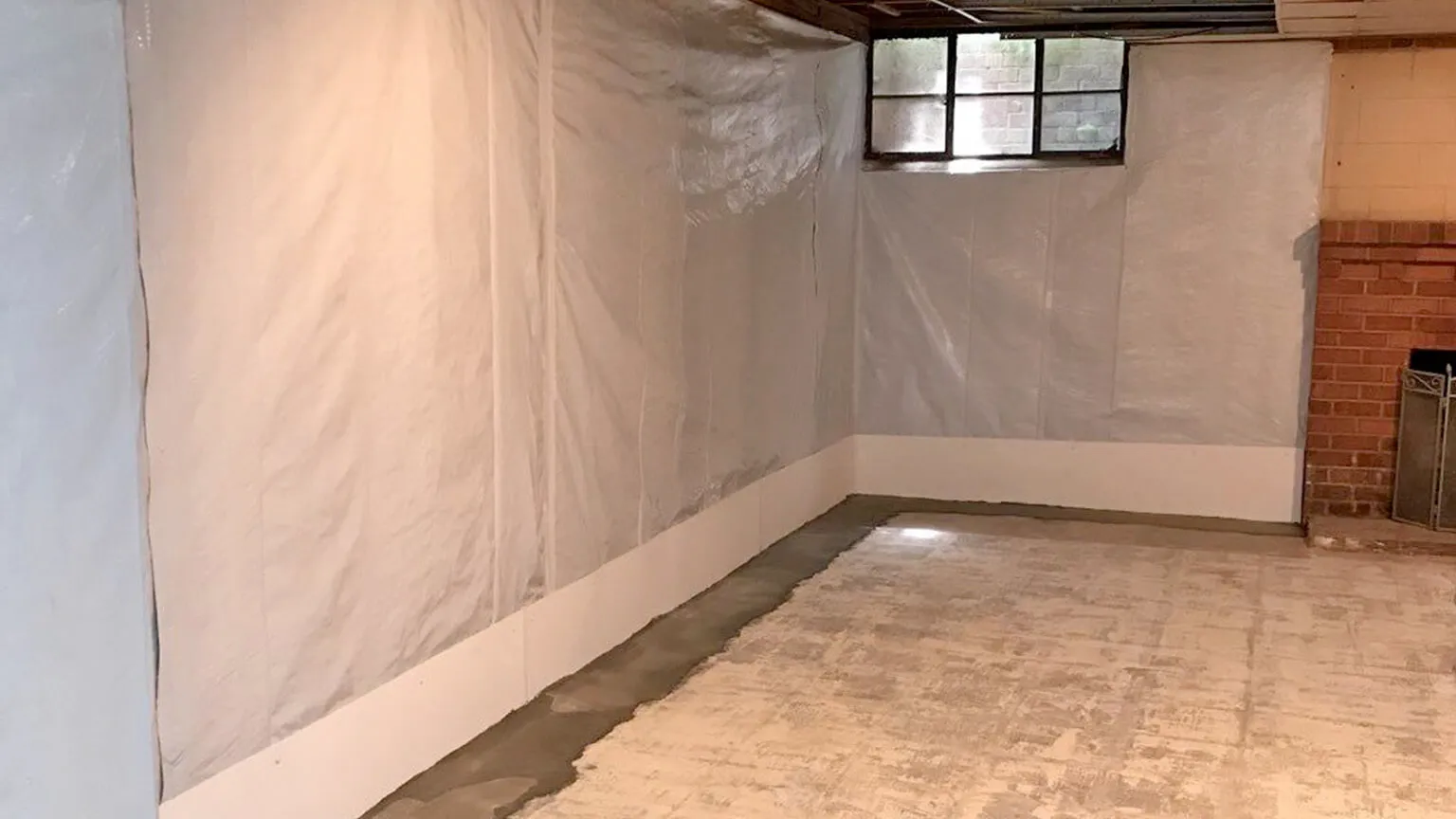
Notice what nobody did in that list? Paint anything. Coatings are fine products, but a coating can’t beat pressure — it’s a raincoat on a submarine. That’s also why we warranty a drainage system in writing and not a bucket of sealer.
We stopped trying to block water years ago. Now we assume it’s coming, and we build it a better way out.
Wondering what it runs? It depends mostly on how much wall is involved and how hard it is to reach, so we walk it before we quote it. Our breakdown of waterproofing cost covers every factor that moves the number, and the systems are explained on our basement waterproofing page. If your home sits on a crawl space instead, crawl encapsulation is the better path.
The number nobody does the math on
Ready for the one that reframes everything? A seep that drips once per second — barely enough to notice — puts about five gallons into your basement daily. Across a year, that’s close to 1,800 gallons through a seam you could cover with a fingertip.
Put that next to our rainfall and it lands harder. Metro Atlanta averages around fifty inches of rain a year, more than Seattle gets — you can check the record through the National Weather Service office in Peachtree City. Meanwhile, most of it comes off the roof and lands within a few feet of your foundation. Suddenly a slow seep doesn’t look so slow.
Here’s what the other side feels like, though. The floor stays dry through a hard March storm. That smell at the bottom of the stairs is simply gone. Instead of a room you apologize for, you get a room you use — a playroom, a gym, storage you trust. Better yet, on the next ugly forecast you don’t think about the basement at all. That’s the real product: a house looking after your family instead of the other way around.

Why does hiring somebody local matter here?
Because we’ve spent twenty-plus years on these exact houses. Most of the homes we visit for a wet basement Johns Creek inspection sit within a few miles of each other. We know the poured walls in Wellington behave differently than older block ones do. We’ve worked the sloped lots near Shakerag Park and plenty of streets minutes from Johns Creek Town Center. Our shop sits about twenty minutes east in Lawrenceville, so the crew that does the work is the crew that answers in year six.
We also know how things run here. Written scope, proof of insurance, a real warranty, clean job site — that’s the standard, and it should be. If your HOA needs exterior work coordinated, we handle that too. For a neutral second opinion, the EPA’s guide to moisture control is a solid ten-minute read. And if a relative one town over sees the same thing, we cover the Alpharetta wet basement crowd too.
Where we work around Johns Creek
Johns Creek is a short drive from our shop, so we’re out this way constantly. We also cover Alpharetta, Duluth, Suwanee, Roswell, Milton, Peachtree Corners, Berkeley Lake and Norcross, plus the wider Fulton area. If you’re along the 141 corridor or over toward State Bridge, odds are we already have a truck nearby.
Questions Johns Creek homeowners ask us
Neither one wins automatically — it depends on where water gets in and what’s sitting on the soil outside. Exterior work stops water before it touches the wall, but it means digging, and a deck or patio changes the math fast. Interior drainage is less disruptive and works on most homes here.
The drainage itself is built to last the life of the house, since it’s stone and pipe under the slab with nothing to wear out. The pump is the part with a service life. Plan on replacing one somewhere around the ten-year mark, the same way you’d plan for a water heater.
Yes, and you get it in writing before we start, not after. Ask us to walk you through exactly what’s covered and for how long. A warranty nobody can explain in one sentence isn’t doing you much good.
Usually, yes. We open only the perimeter we need, which often means a low strip of drywall and a run of flooring rather than the whole room. We protect the rest, contain the dust, and put the finishes back. It does take longer, so we say so up front.
A documented, warrantied system is a real asset at resale, mostly because it removes a question buyers and inspectors always ask. The bigger gain is usually the square footage. A dry basement is one you can finish and count as living space.
Let’s find out what’s really going on down there
The inspection is free, the estimate is free, and nobody pressures you at the end. We’ll show you where water gets in, explain the fix plainly, and put the scope in writing — even if the answer is simpler than you expected.
(678) 914-5112Serving Johns Creek and all of Metro Atlanta · $500 off projects over $3,500 · Live support 7am–8pm, 7 days a week