

Waterproofing Cost in Duluth: A Step-by-Step Breakdown of the Work and the Number
Every step of the job, in order, plus what moves the price — so you can budget it like any other home project.
Let’s start with the good part. The waterproofing cost Duluth homeowners actually pay is almost always lower than the number they had in their head before the inspection — and the work itself is a known, finished, one-time thing. So this isn’t a mystery you have to solve. It’s a project with steps, a price range, and an end date.
Most folks find this page while researching, not panicking. That’s the right order. So let’s walk the job as it happens, and talk honestly about what each part adds to the invoice.
What does the work actually involve?
Here’s the thing about Duluth: these are working basements. In-law suites, home offices, kids’ spaces. When one gets damp here, it’s not storage getting wet — it’s somebody’s bedroom. So the fix has to be a real system, not a coat of paint.
- The inspection. We walk the outside first — grading, gutters, where the downspouts drop. Then we read the walls and the floor seam. It’s free and takes about an hour.
- The plan and the written number. Scope in plain words: which walls, how many feet, what equipment. No “starting at,” no phone quote.
- Prep day. We protect the stairs and finished areas, then pull shelving off the working walls.
- Opening the channel. A narrow strip of slab comes up along the affected perimeter. It’s loud and dusty, but usually a one-day event.
- Drainage below the floor. Perforated pipe goes into clean stone under slab level, so water gets collected before it reaches your floor.
- The sump and discharge. Everything routes to a basin, and the pump carries water well away. Dumping it beside the foundation just invites it back.
- Close-up and cleanup. Fresh concrete over the channel, wall liner where it belongs, and our mess leaves in our truck.
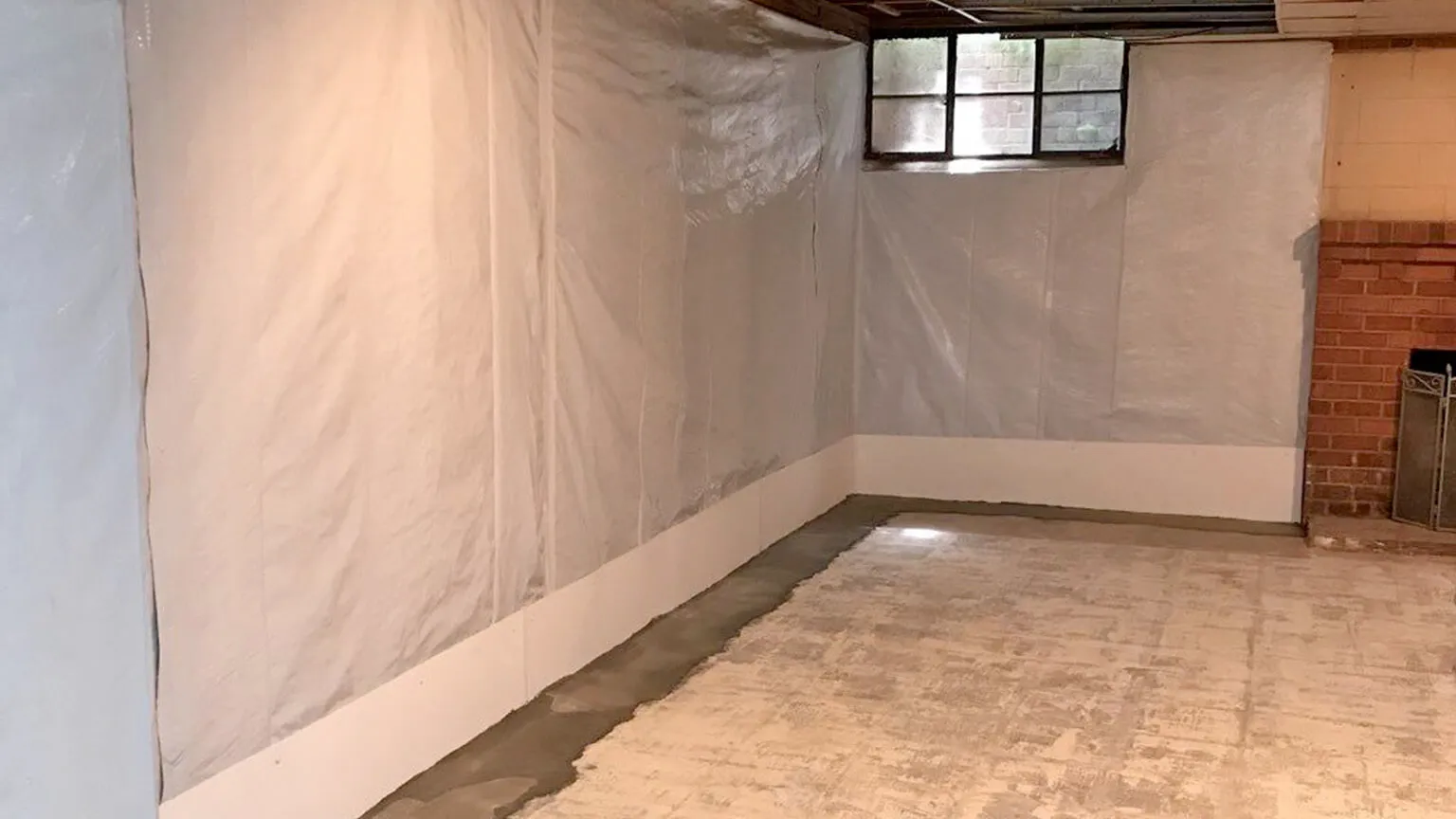
Notice nobody rolled on a sealer anywhere in that list. Waterproof paint is fine for what it is, but a coating can’t beat pressure. It’s a raincoat on a submarine.
Good news
A wet basement and a structural problem are two different conversations. Most homes we look at only need the first one, and we’ll tell you which before you spend a dollar.
Why a dry-looking wall can still be wet
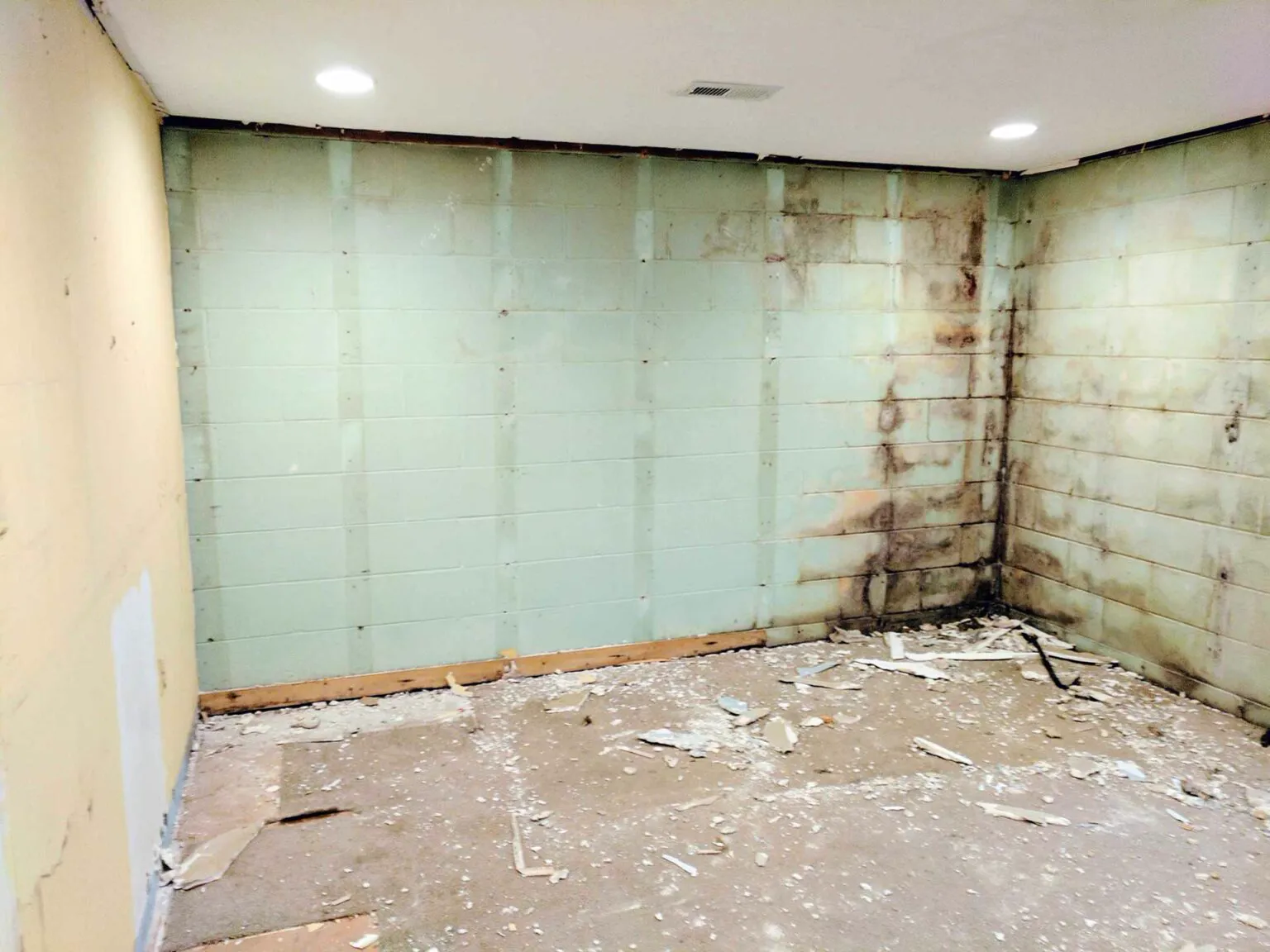
Concrete looks solid. In fact, it’s porous, and water moves through solid, uncracked concrete by capillary action — it wicks, the same way a paper towel pulls up a spill. That’s why a wall can be damp with no crack in sight.
So when a homeowner tells us there’s no crack, we don’t worry. We check the seam, the block cores and the humidity instead. Since the fix routes water rather than blocking it, a missing crack barely changes the price.
What actually moves the price?
Straight answer: how much wall is involved, and how hard it is to reach. Everything else is a smaller adjustment on top of those two. Still, you deserve the full list.
The real cost drivers
- Linear feet. One wall versus a full perimeter is the biggest swing in the estimate.
- Access. An open basement is quick work. A finished lower level with built-ins takes careful demolition first, and that time is real.
- Sump and pump. Some homes have a serviceable basin already. Plenty of 1990s subdivisions have one that’s original and tired.
- What’s outside. Sometimes regrading and moving two downspouts fixes most of it. That’s a smaller invoice, and we’ll say so.
- Wall condition. If a wall is moving, that repair comes first. Waterproofing over a shifting wall is money spent twice.
- Backup power. A battery backup adds cost, and it runs during the exact storm that kills the power.
Small drainage corrections land at the low end, while a full perimeter with a new sump in a finished basement sits at the top. Most jobs land in the middle. So the honest answer to “what will mine cost” is: let us look, and you’ll get a real number instead of a guess.
Twenty years in, the thing that changed our thinking is this: we stopped trying to block water and started trying to route it.
Early on, the instinct was to seal. Find the opening, close it, call it done. But water wins that fight eventually, because the pressure never stops and every sealant ages. So we flipped the approach. Now we assume water will arrive, and we build it an easier way out than the path through your floor.
That matters to your wallet. A routed system costs more up front than a bucket of sealer, but it’s the only version we can put a written warranty on — so you buy it once instead of every few springs. To compare approaches, our rundown of waterproofing options skips the sales pitch.
Can you do any of this yourself?
Yes, and we’d rather you knew it. Some of the most effective moisture work in Duluth costs a Saturday and a hardware-store trip.
Extend your downspouts eight or ten feet out. Clean the gutters, especially after fall leaf drop, which is what fills our phone line every November. Then build the soil back up so it slopes away. Those three moves solve a surprising number of damp corners, and we’ve told homeowners exactly that during a free visit.
Here’s where DIY runs out of road. You can’t cut a below-slab channel with a rented saw and a good attitude — that’s structural concrete with utilities in it. Sealers can’t beat hydrostatic pressure either, no matter what the label promises. What’s more, a discharge line that isn’t pitched right just recycles the same water. The EPA’s guide to moisture control is a good neutral read before you spend.
How do you get ready for the crew?
Not much is asked of you, which is how it should be. Still, a little prep shaves time off the job, and time is money.
- Clear about four feet along the working walls. Everything else stays put.
- Pull anything fragile off those shelves, because vibration travels.
- Leave us a path to an exterior door or walkout for hauling material.
- Park the pets somewhere quiet. Jackhammers are not their favorite.
Timelines are shorter than most people guess. A single-wall system is often one day. A full perimeter with a sump usually runs two to three days, while a large finished basement stretches past that. Curing adds a couple of days before furniture goes back.
What does life look like after?
Let’s walk the calendar forward, because that’s the part nobody explains — and it’s what tells you whether the money was well spent.
The first week
The concrete cures and the dust settles. You’ll hear the pump cycle after the first real rain, which is oddly satisfying. Meanwhile the musty smell at the bottom of the stairs fades, usually within days once a dehumidifier runs.
The first year
You get a full weather cycle — spring storms, then the late-summer tropical leftovers that soak Gwinnett. The floor stays dry through both. That’s when homeowners stop checking the corner every time it rains, though the habit takes a while to break.
Year ten
The stone and pipe under the slab have nothing to wear out, so the drainage still does its job. The pump is the part with a service life; plan on replacing one around the ten-year mark, the same way you’d plan for a water heater. That’s a small line item on a system that protected a finished lower level for a decade.
Picture that space now. A dry in-law suite for a parent. An office that doesn’t smell like a basement. Most of all, you made a call about your money that still looks smart ten years later — and that’s the actual product here.

How do you know it was done right?
Ask for four things and you’ll separate a real system from a patch job fast. Photos of the pipe in stone before the concrete goes back. The discharge point, walked with you outside. The warranty in writing, handed over before work starts. Plus a plain answer to “why this and not something cheaper.”
If a company can’t do all four, that’s your answer. To be fair, a good crew offers most of it unasked — they’re proud of the part you’ll never see again.
Why local knowledge changes the estimate
We’re fifteen minutes down the road in Lawrenceville, so we’ve spent twenty years learning how water moves through this city. The rolling golf-course terrain around Sugarloaf Country Club produces a lot of walkout basements, and walkouts leak in different spots than full-below-grade ones. Homes near the Chattahoochee sit on sandy river-bottom pockets, where groundwater rises higher than the red clay suggests.
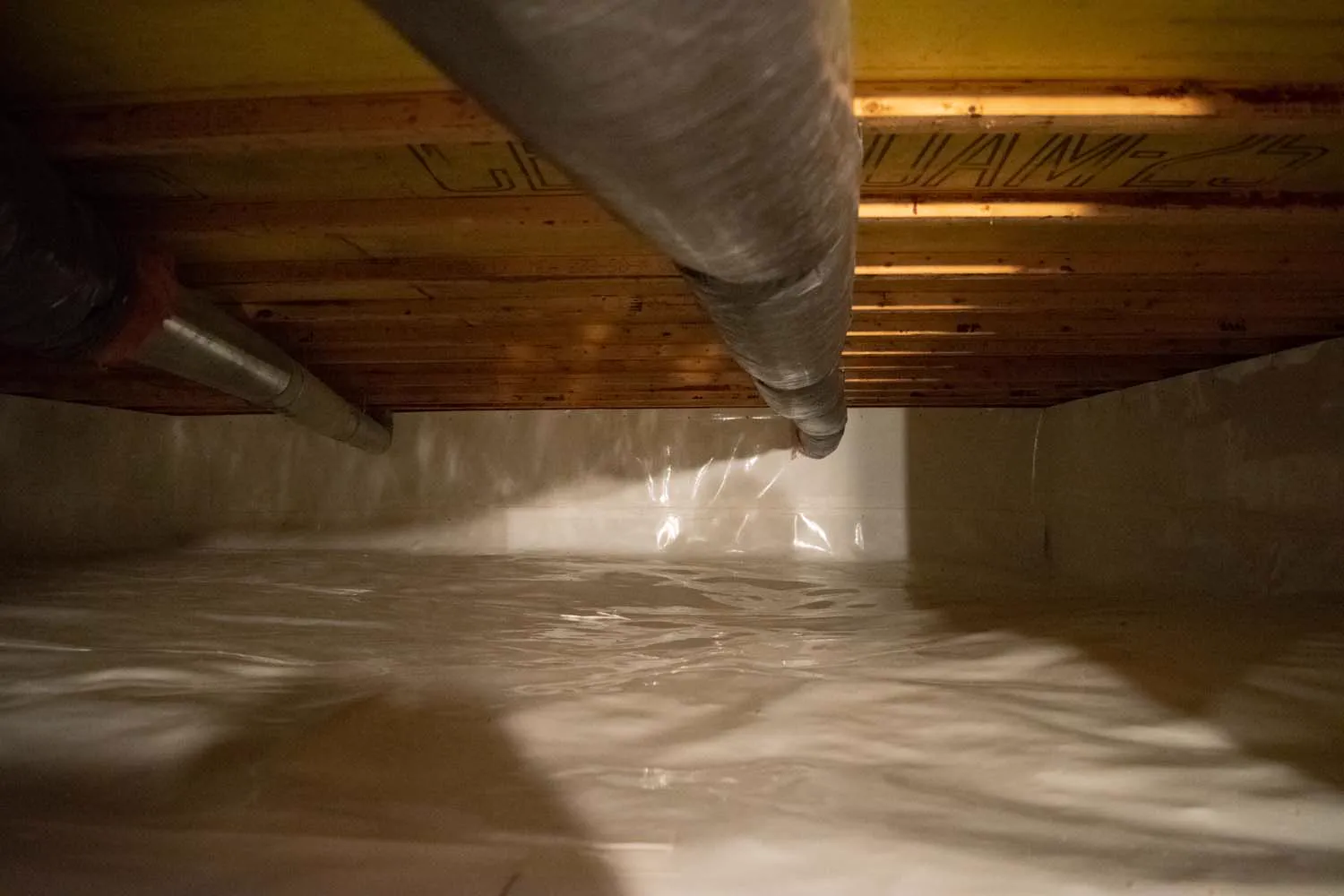
Meanwhile the older properties near the Southeastern Railway Museum and the Downtown Duluth Town Green often have crawl spaces with no vapor barrier at all. Those aren’t waterproofing jobs — they’re crawl space encapsulation jobs, and they cost less. We’ve said that on driveways from the Parsons Alley district out to the Downtown Duluth townhomes off Peachtree Industrial Boulevard.
Curious about the rain math? Metro Atlanta gets more yearly rainfall than Seattle does, and you can check the record through the National Weather Service office in Peachtree City. Want the technical rundown? Our basement waterproofing page covers it, and we break down Suwanee waterproofing cost the same way.
Where we work around Duluth
Duluth is a short hop from our Lawrenceville shop, so we’re out this way constantly. That includes Johns Creek, Suwanee, Berkeley Lake, Peachtree Corners, Norcross, Lawrenceville, Sugar Hill, Buford and Lilburn, plus the rest of Gwinnett County. Near the Gas South District or Rogers Bridge Park? Odds are we have a truck close by.
Questions Duluth homeowners ask us
Usually yes, in two ways. A warrantied system removes a question mark that shows up in every inspection report, and a dry lower level counts as living space instead of a room buyers walk past.
Usually within a few days, often sooner in Duluth since we’re fifteen minutes away. Live support runs 7 a.m. to 8 p.m., seven days a week. The visit takes about an hour and costs nothing.
It comes down to linear feet and access, so the honest range is wide. A small drainage correction outside sits at the low end, while a full perimeter with a new sump in a finished basement sits at the top. After we walk it, you get one written number with the scope spelled out.
A single wall is often one day. A full perimeter with a sump runs two to three days, and a large finished basement goes longer because of the prep work. Add a couple of days for the concrete to cure before heavy things move back.
No — just the perimeter. We need roughly four feet of clear space along the walls being worked on, so shelves and boxes shift toward the middle. We’ll help move the heavy pieces.
Get a real number for your Duluth basement
The inspection is free, the estimate is free, and nobody pressures you afterward. We’ll show you where the water gets in and what it costs to stop it — even when the answer is simpler than you expected.
(678) 914-5112Serving Duluth and all of Metro Atlanta · $500 off projects over $3,500 · Live support 7am–8pm, 7 days a week