

Lilburn Homes and a Wet Crawl Space: What’s Causing It, and How It Gets Fixed
Something smells off and the floors feel cold. Here’s the five-minute check you can do right now, in plain English.
Here’s the thing about a wet crawl space Lilburn homeowners tend to discover: you smell it long before you ever see it. So before you read another word, go stand in your hallway and take a slow breath. Then open the door to the space under your house, or just crouch by a foundation vent, and take another one. If the second breath smells like a damp tent, you’ve already found what those builders vented and walked away from decades ago. That’s the whole five-minute check, and it costs nothing.
Good news right away: this is one of the most common things we look at, and it’s very fixable. Better yet, the fix is about sealing and drying — not tearing your house apart or moving out for a month.
What else should you look at while you’re down there?
Four things, and a phone flashlight handles all of them. Look at the plastic on the ground first. If it’s thin, torn, or half swallowed by red clay, it stopped working years ago.
Next, look up. Insulation hanging between the floor joists is a moisture story, because dry fiberglass stays put. Then check the beams near the outside walls for white or gray fuzz. Finally, put a hand on the dirt. Cool and damp means the ground is still feeding the room.
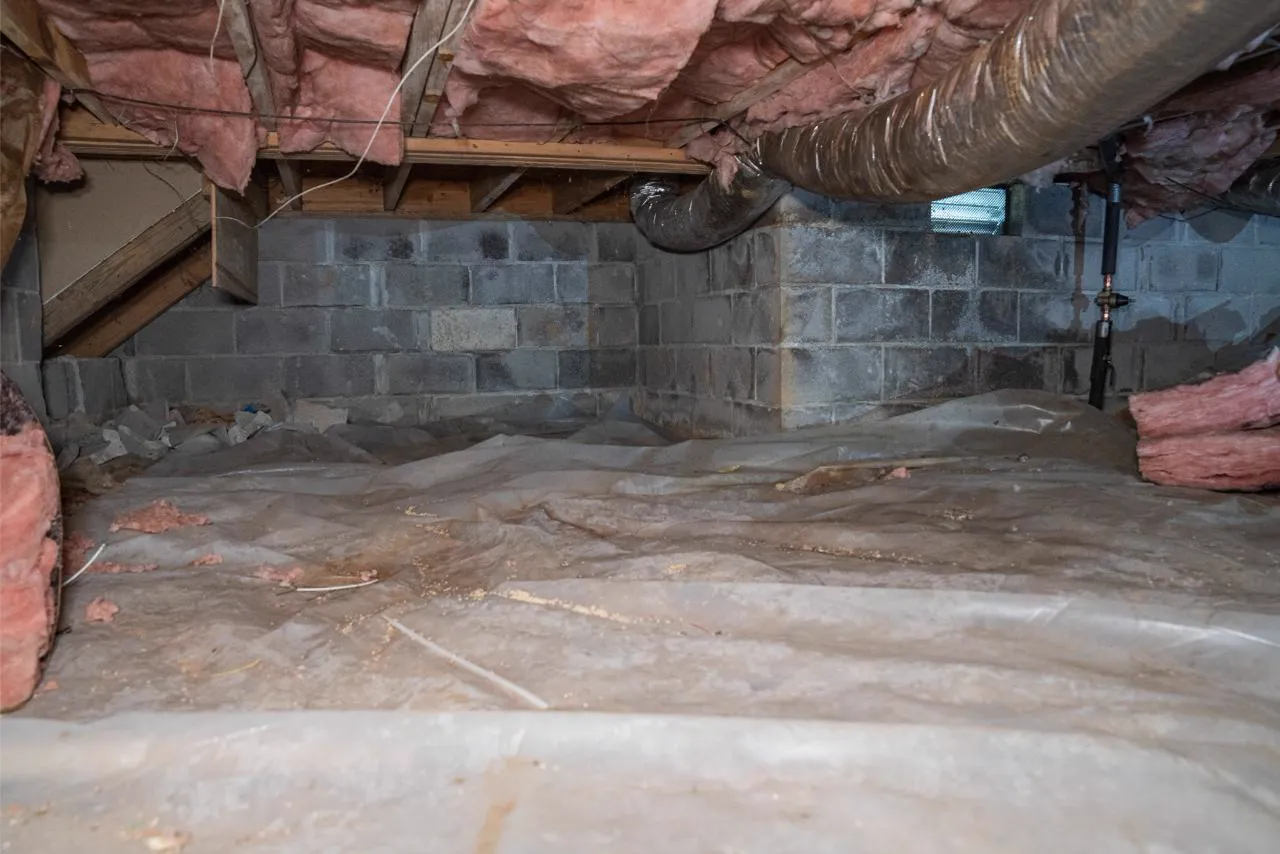
Wood is the honest witness down there. Framing starts supporting mold growth once its moisture content reaches roughly twenty percent, and in a vented Georgia crawl space in July, joists hit that number regularly. So we bring a meter and show you the reading on the screen. That beats taking anybody’s word for it, including ours.
So why does it get wet in the first place?
Three things stack up, and none of them are your fault. First, bare dirt gives off water vapor all day long, every day, forever. Second, rain and clay soil push moisture toward the footing and hold it there.
Third — and this one surprises almost everybody — the vents. Open foundation vents were required for decades on the theory that outside air dries a crawl space out. In a humid climate, however, that backfires. Warm air rolls in, hits a cool subfloor, and drops its moisture there as condensation. In other words, the vents built to dry the space have been quietly watering it.
Worth knowing
Old plastic laid loose on the dirt isn’t a vapor barrier. It’s a suggestion. A real barrier is thick, sealed at every seam, and run up the walls so the ground can’t feed the room anymore.
Then there’s the Lilburn wrinkle. Homes here were mostly built in the seventies and eighties, back when waterproofing meant a coat of tar and hoping for the best. Fifty years is a long time to hope, and the mature hardwoods that make streets around Cedar Creek so pretty have been pushing roots into footings and drain lines that whole time. A cracked drain line under a canopy of fifty-year-old oaks is not a mystery. It’s arithmetic.

Is yours mild, or is it more than that?
Fair question, and you can answer most of it from your kitchen. None of this list is bad news. It simply shows where you sit on the scale.
Reading the signs
- Musty smell, nothing visible. Moisture is arriving as vapor. Mild, and the least expensive version to solve.
- Indoor humidity parked in the mid-sixties. Your air conditioner is fighting the ground and losing.
- Insulation sagging between the joists. Fiberglass soaks up moisture, gets heavy, then lets go.
- White bloom on the beams near the walls. Surface growth on wet wood. Still very fixable at this stage.
- Standing water or fresh mud after a rain. Time for a look. Water is arriving, not just vapor.
If you’d rather hear the health side from somebody who isn’t selling anything, the EPA’s page on mold and health is short, calm and free of hype. Read that before you read any sales sheet, ours included.
Can we clear up the myth we hear on almost every estimate?
Here’s the thing. On roughly nine out of ten first visits, somebody says a version of this: “It only gets wet when it rains hard, so it’s a rain problem.” That sounds completely reasonable. It’s also the belief that keeps crawl spaces damp for another decade.
Real talk: rain is the loud part, not the main part. The typical wet crawl space Lilburn homeowners call us about can go a whole dry August without a drop of rain and still sit at seventy percent humidity, because the ground itself is the source. We’ve measured that in homes off Killian Hill Road during stretches with no measurable rain at all. Storms just turn the volume up on something already playing.
The other half of the myth is the fix: “So I’ll open the vents and let it air out.” Which means, in July, inviting hot wet air onto cold surfaces. That’s not drying. That’s making dew on purpose.
The good news is that once you know the source is the ground, the plan gets simple and permanent. Seal the ground, manage any real water, hold the humidity steady. No subscription, no reason for anyone to keep coming back.
What happens if you just leave it?
Nothing dramatic, honestly. A wet crawl space in Lilburn widens slowly and quietly. Insulation keeps dropping, upstairs humidity stays high, and the cooling system works a little harder each summer. Given enough years, damp framing can soften, which turns a sealing job into a carpentry job. So the reason to handle it sooner is cost, not fear.
Most of the time the house is fine. Something is simply delivering more water than the ground can carry away — and that’s a much friendlier problem to fix.
We say that on purpose, because plenty of folks call us braced for the worst. Neighbors over in Sweetwater have handed us the phone with an apology already loaded, and then we walk out having quoted a straightforward liner job. If the honest answer is “you need less than you think,” that’s the answer you’ll get.
How does the fix actually work?
Simpler than most people expect. Solving a wet crawl space Lilburn homes have lived with for years means treating that space as part of the house instead of as outdoors. Here’s the sequence, in order, because order matters more than products.
- Handle water first. Downspouts, grading, and a drain with a sump if groundwater is truly coming in.
- Clear it out. Old plastic, debris and wet insulation come out. Wood gets cleaned and treated where it needs it.
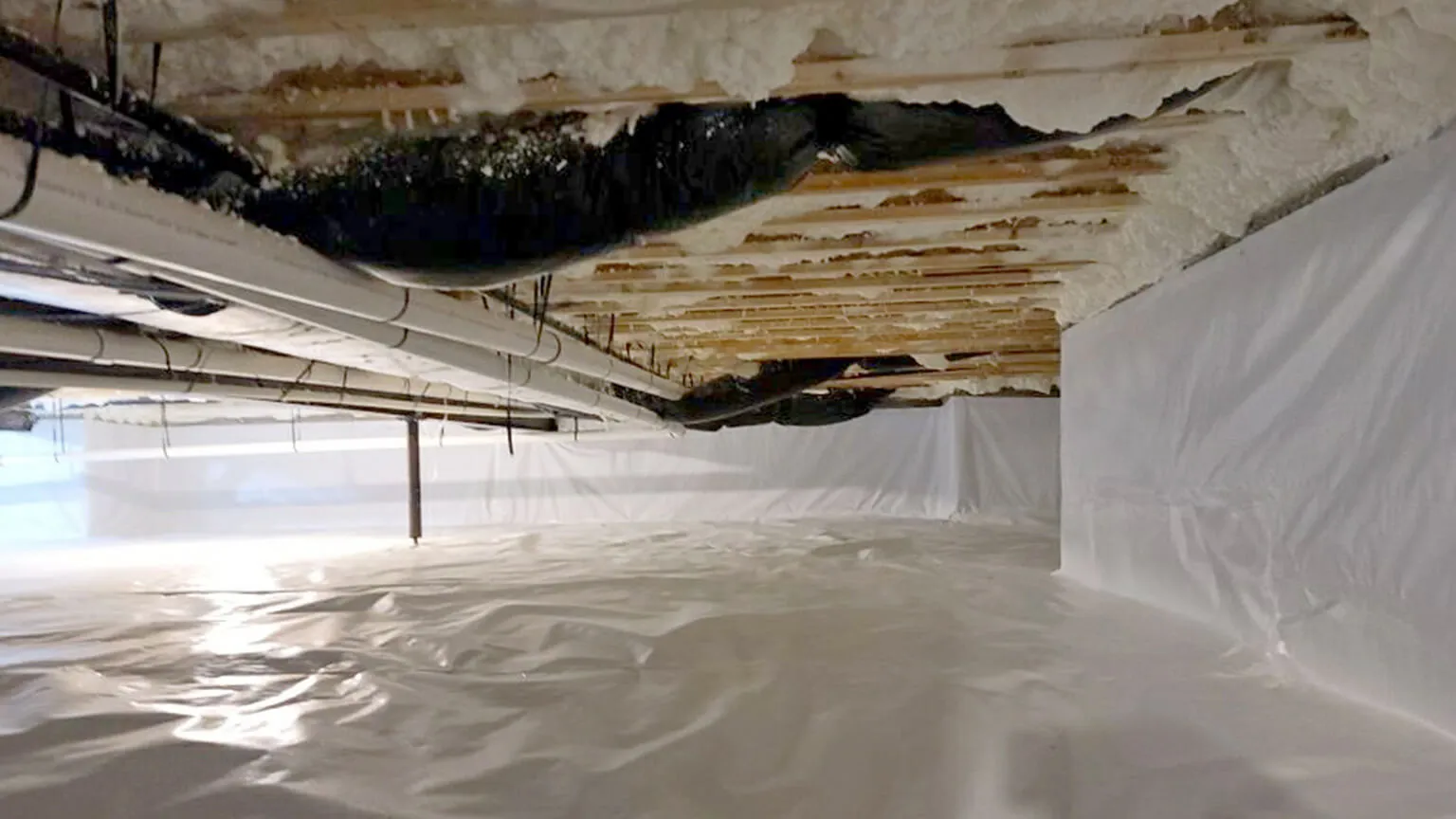
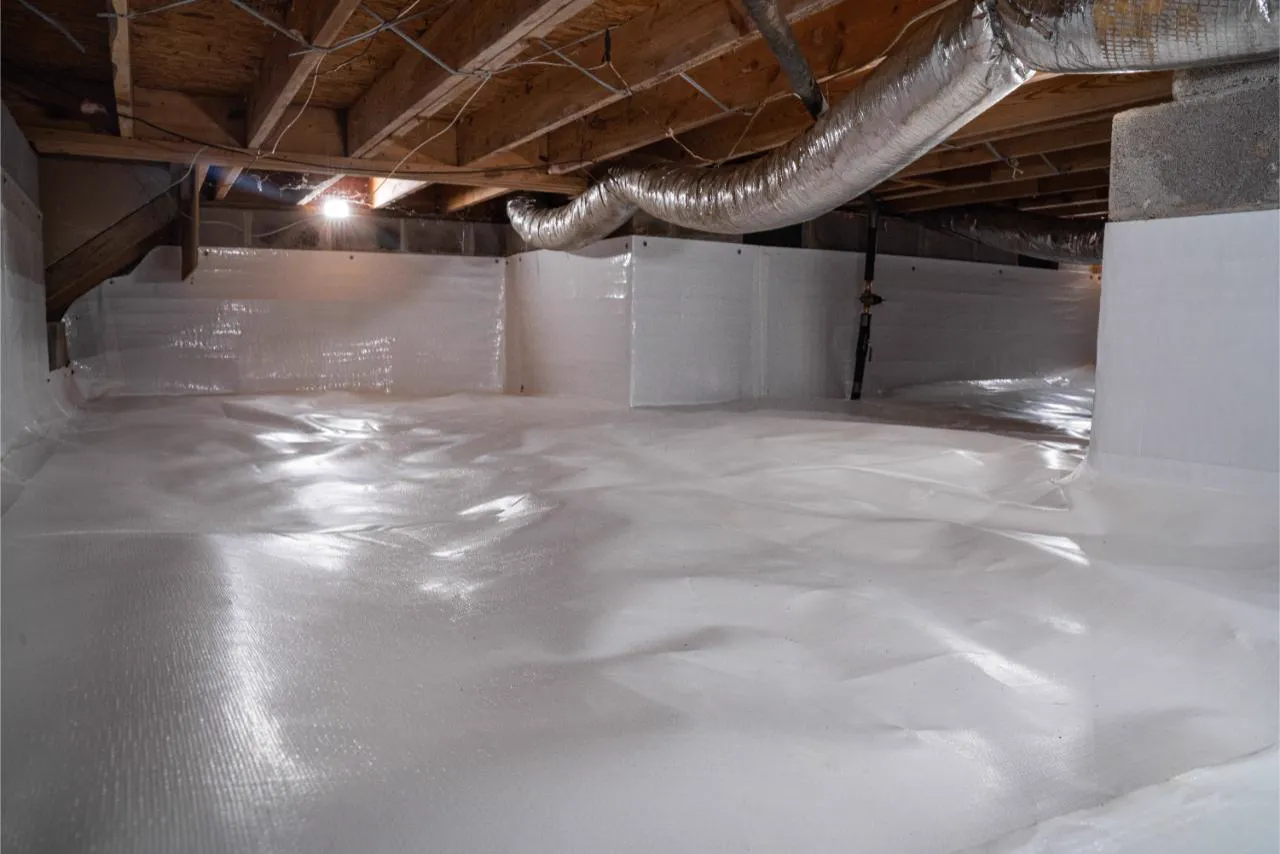
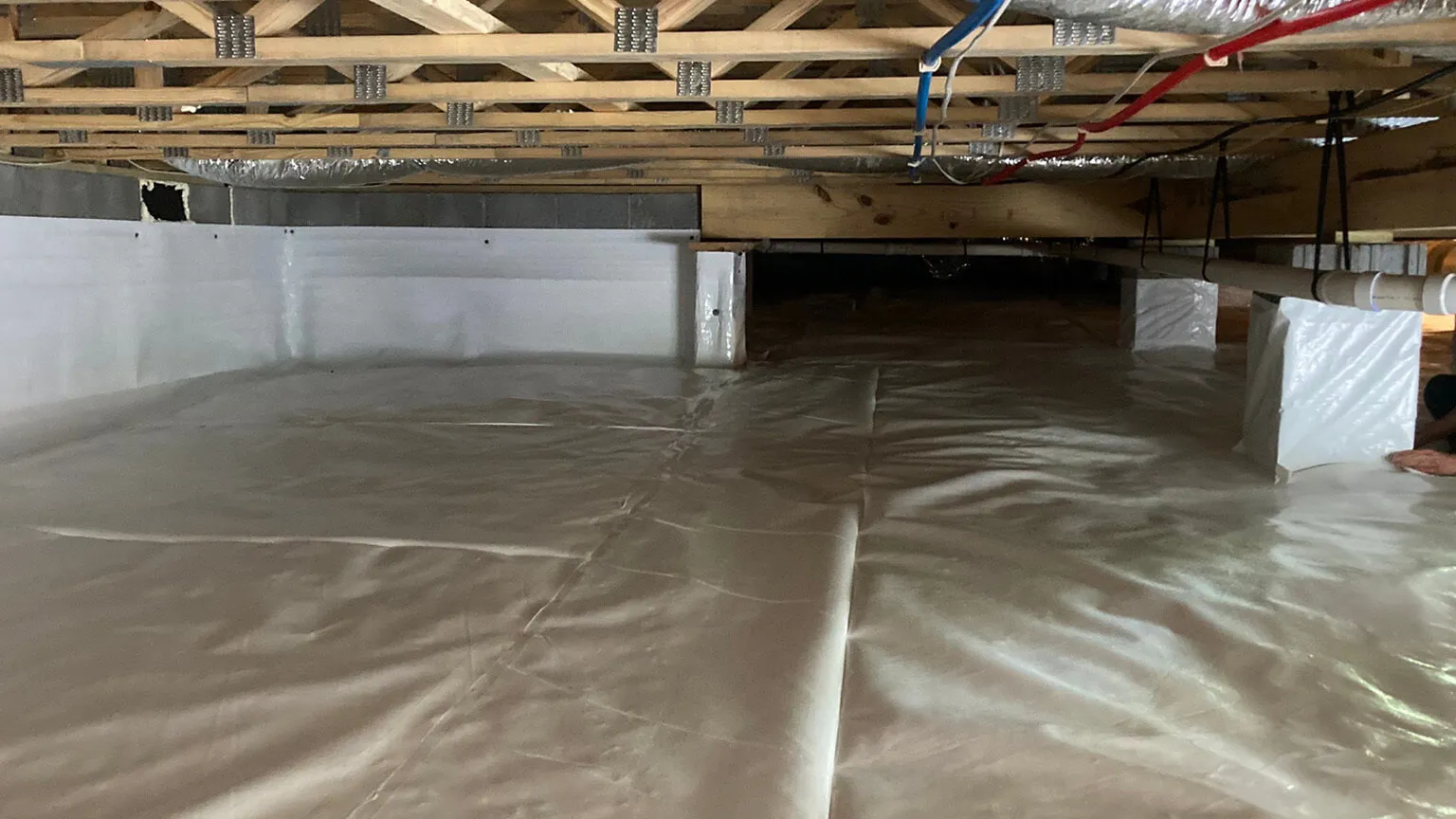
- Line everything. A heavy liner runs across the dirt and up the stem walls, seams sealed and piers wrapped.
- Close the vents. Once the ground is sealed, outside air has no drying job left — only a wetting one.
- Insulate walls, not the ceiling. Foam on the stem walls keeps the space near house temperature, which stops condensation.
- Control what’s left. A dehumidifier holds humidity steady, plus a gauge you can read without crawling anywhere.
Wall insulation instead of ceiling insulation catches people off guard every time. The Department of Energy’s guide to insulation and moisture control explains why a sealed, insulated crawl space performs better in a climate like ours.
Most jobs run two to four working days. Pricing follows square footage, ceiling height, and whether water has to be moved, so our encapsulation cost breakdown lays out the drivers before you ever pick up the phone. The crawl space repair page shows exactly what goes in.
We put the scope in writing too, with proof of insurance and a warranty you can read in one sitting. Lilburn homeowners compare proposals line by line and ask their neighbors first, which we appreciate. Word travels fast here, so we’d rather earn it once and keep it.
Which rooms does this quietly affect?
More than you’d guess, and this is the part nobody connects to the crawl space. Your house breathes from the bottom up: warm air leaves through the roof, so replacement air gets pulled in from the lowest point. A real share of the air in your den started on that dirt.
So the closet in the back bedroom that always smells a little off isn’t a closet problem. Same for the hardwood that cupped one summer, the bathroom door that sticks in August, and the guest room nobody wants to sleep in. All humidity, all traveling upward, all one source.
It shows up in the basement too. Around Killian Hill we see houses with a finished basement on one side and a crawl space on the other, where drywall and trim slowly took on water nobody saw. Our flooded basement repair guide covers that half of the story.
What does the house feel like afterward?
Quieter, mostly. The smell fades within a week or two, since the source is gone rather than covered. Floors stop feeling cold in the morning, and the humidity number finally sits still instead of drifting all summer.
A year later, people stop thinking about it at all. One homeowner told us the best part was walking guests in the front door after a Saturday at Lilburn City Park and not wondering what the hallway smelled like. If you’re comparing notes with family a few miles west, our Norcross wet crawl space guide covers how similar homes behave over there.
Where we work around Lilburn
We’re based in Lawrenceville, about fifteen minutes northeast, so we’re in this part of Gwinnett constantly — from the streets behind the BAPS Shri Swaminarayan Mandir to the older blocks near Old Town. That includes Lilburn, Lawrenceville, Snellville, Norcross, Tucker, Stone Mountain, Duluth, Grayson, Loganville, Peachtree Corners and the wider Gwinnett area. Same local crews on every job, every time.
Questions Lilburn homeowners ask us
It means sealing the space under your floor so the ground stops sending moisture into your house. A heavy liner covers the dirt and runs up the walls, every seam gets sealed, the vents get closed, and humidity is held steady. In short, that space stops acting like outdoors and starts acting like part of the house.
It depends on square footage, ceiling height, and whether real water has to be moved with a drain and sump. A clean, dry space with easy access sits at the low end, while a tight space that needs debris removal and drainage sits higher. We give you a written number after we’ve actually been under the house, never a guess over the phone.
Usually yes, because sealing the ground handles most of the moisture but not all of it. A small unit holds the space in the fifties year-round and drains on its own, so there’s nothing for you to empty. We also set a gauge you can read from the doorway instead of crawling anywhere.
Closed, once the ground is properly sealed. Open vents were required for decades on the idea that outside air dries the space out, but in a humid climate warm air hits cool surfaces and condenses instead. Sealing the dirt first is what makes closing the vents the right move rather than a risky one.
In almost every case, yes, because that smell is damp air rising from the ground below. Once the dirt is sealed and humidity stays steady, there’s nothing left to carry the odor into your living space. Most homeowners notice a clear difference within a week or two.
Let’s find out what your Lilburn crawl space really needs
We’ll go under the house, take real moisture readings and photos you can see for yourself, then explain the fix in plain language. The inspection is free, the estimate is free, and nobody pressures you. If you only need a small thing, we’ll say so.
(678) 914-5112Serving Lilburn and all of Metro Atlanta · $500 off projects over $3,500 · Live support 7am–8pm, 7 days a week