

Foundation Repair Options Johns Creek Homeowners Can Choose From
Piers, foam, straps, or a tube of sealant and a calendar reminder. Here’s what each one really does.
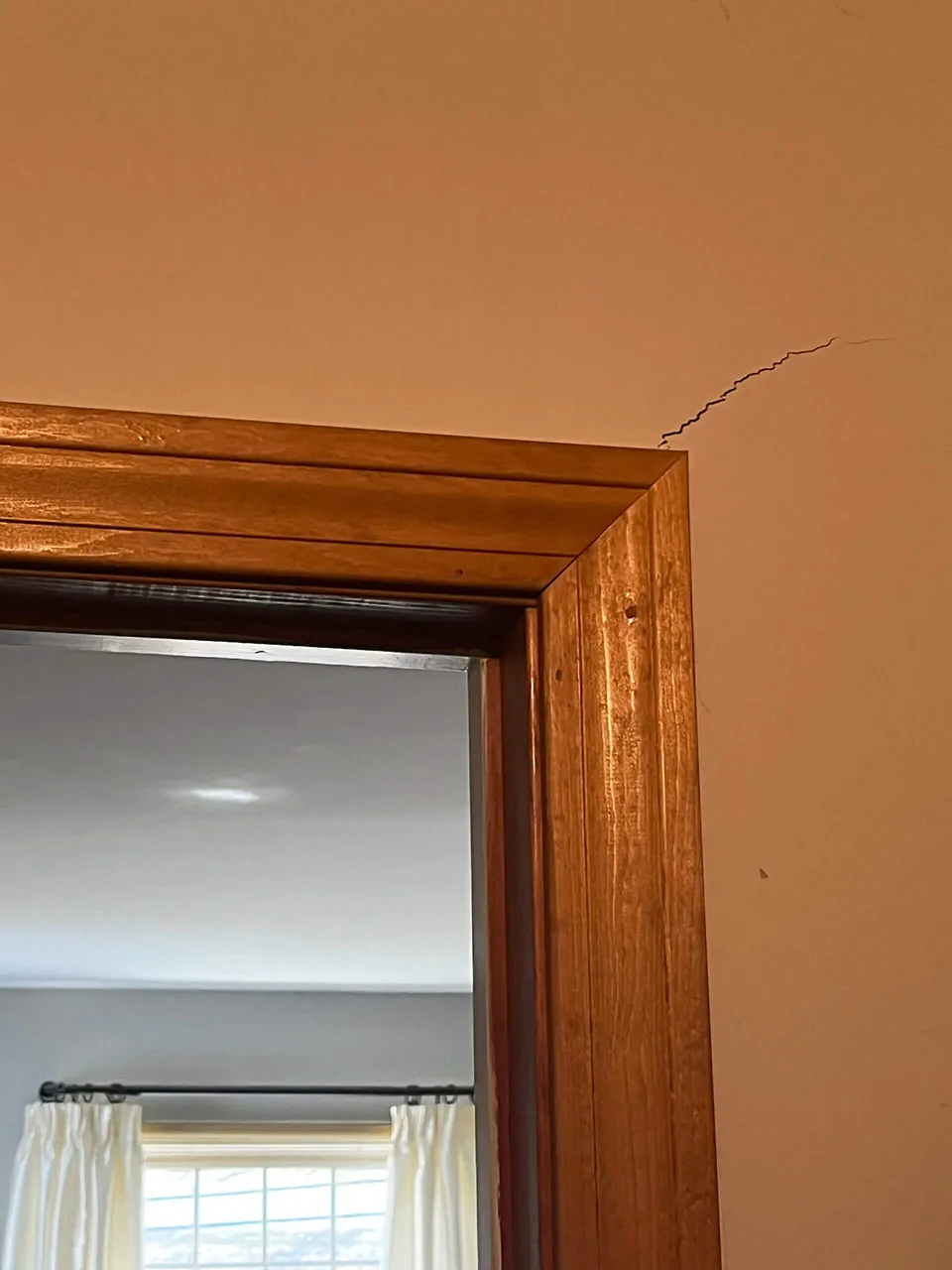
There it is on page nine of the inspection report: stair-step cracking at the front foundation wall, evaluation recommended. Two weeks from closing, one line like that can rattle a whole sale. Good news, though — the repair options Johns Creek houses need are usually smaller and calmer than that sentence sounds.
An inspector’s job is to flag what he sees, and he did it right. What the note can’t tell you is whether the crack has moved, what sits under the footing, or which of six very different fixes belongs to it.
So here’s the whole menu in plain English — including the fixes where we’d charge you almost nothing.
Why does our soil start all of this?
Georgia red clay is expansive soil. It swells when it takes on water, then shrinks back down when August dries it out. That seasonal movement is the biggest driver of foundation problems in this region, and the University of Georgia Extension soils resources cover the science if you like reading the source.
Now add the local twist. Johns Creek went up in one big wave, so a whole city’s worth of homes crossed the twenty-five-year mark together. Lots that back up to the Chattahoochee and its feeder creeks, including plenty near Shakerag Park, also sit over a higher water table that keeps the clay wet longer.
Worth knowing early
Most homes we look at need one repair, not five. This list runs long because houses differ, not because yours needs all of it.
What is a helical pier?
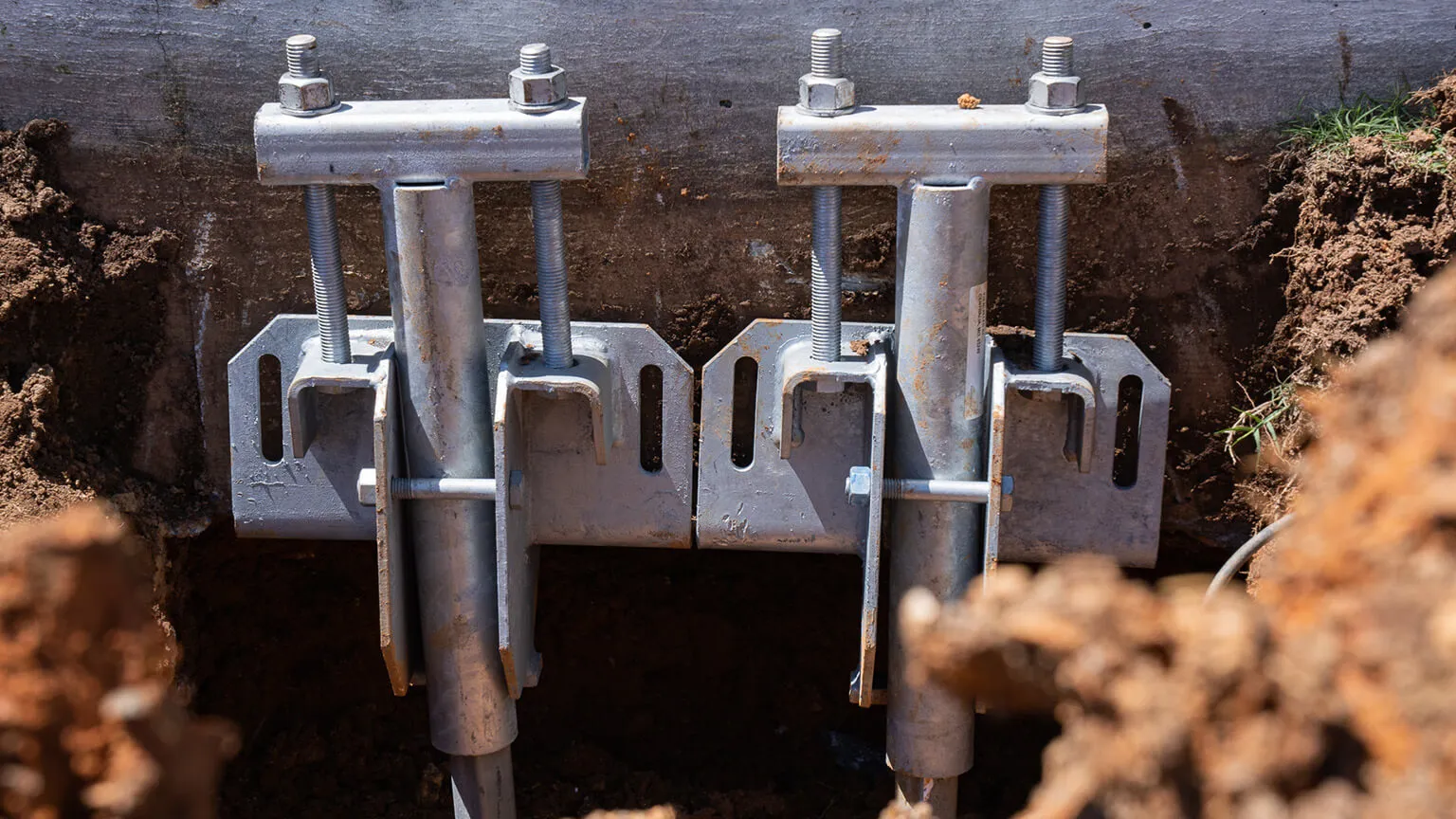
Picture a giant steel screw. Plates are welded along the shaft, and a machine turns the pier into the ground until it reaches soil strong enough to carry weight. A bracket ties it to your footing, so the load rides on the pier instead of on clay that keeps changing its mind.
The clever part is torque. As the pier turns, we read how hard the soil pushes back, which gives a measured capacity for each pier as it goes in. You’re not hoping it went deep enough. You’re watching a number.
Helicals shine under lighter structures: a settling porch, a stoop, a sunroom, an addition tacked on later. They also work where there isn’t much building weight overhead, which matters more often than people expect.
And what is a push pier?
Same goal, opposite method. A push pier, sometimes called a resistance pier, is a steel tube driven straight down using the weight of your house as the press. Sections go in until the pier hits refusal, meaning the soil below won’t let it travel any farther.
Notice who picks the depth here: nobody does. The dirt decides. Under a two-story brick home off McGinnis Ferry Road, that can land deeper than anyone guessed at the estimate.
Since the method borrows the structure’s weight, push piers suit heavy houses. Masonry two-stories give us plenty to work with, while a wood porch does not. That’s exactly why both products exist.
Before you call anyone, which way is your house moving?
This distinction saves homeowners the most money, and almost nobody arrives knowing it. Foundations have two separate problems, and the repairs don’t overlap at all.
Down is settlement. Soil under the footing loses support, part of the house drops, and you get sloping floors plus diagonal cracks. Piers fix down.
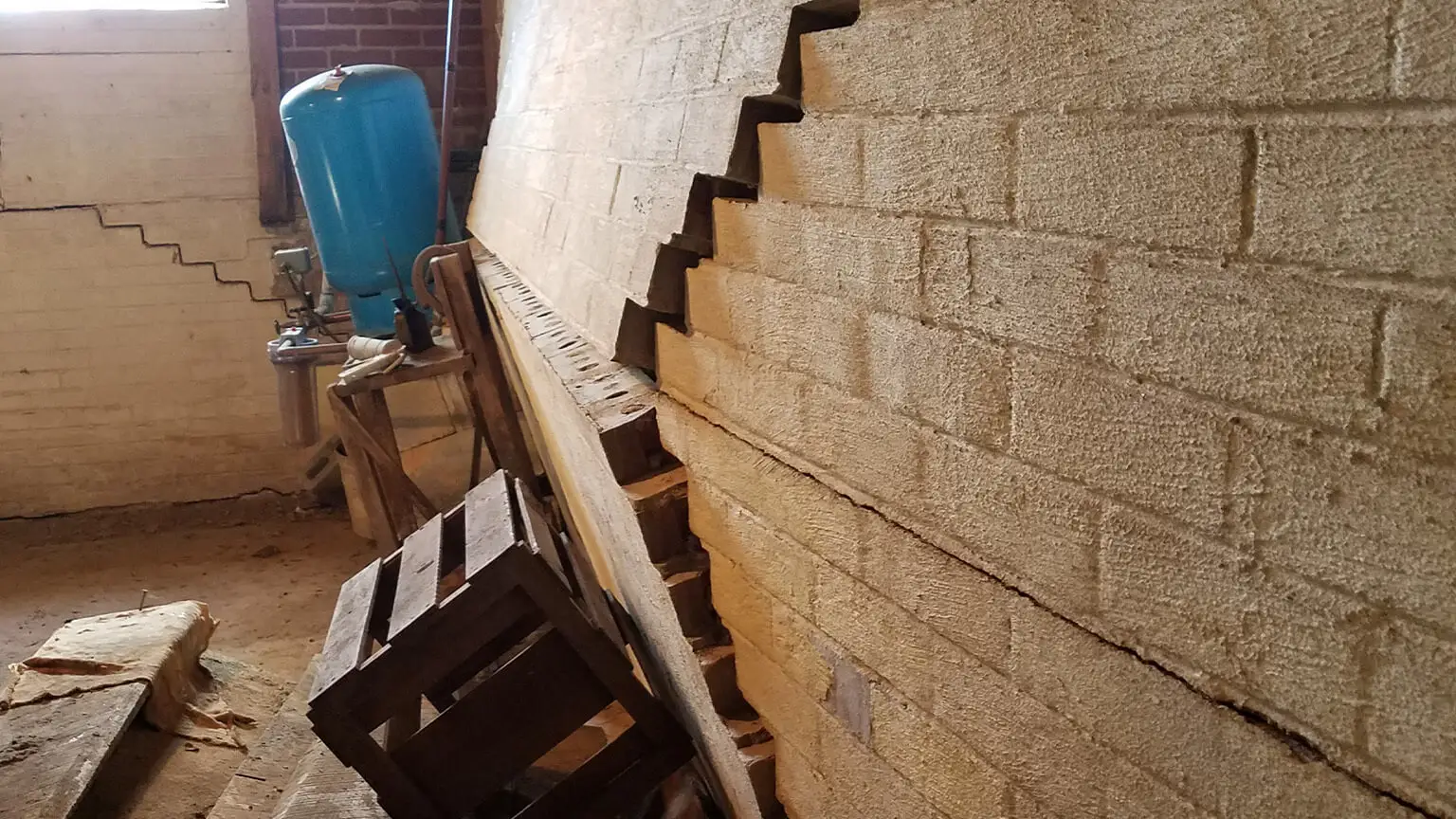
Sideways is lateral pressure. Wet clay leans on a basement wall, and block answers with a horizontal crack or a slow bow near mid-height. Piers do nothing there. Instead, carbon fiber straps bonded across the wall hold it steady, while steel beams do that job on walls that have moved further.
Mixing these two up gets expensive. We’ve had homeowners near Rivermont show us pier quotes for a wall that was plainly leaning inward, which is like buying new tires because the radio quit.
How do the two piers compare?
Helical piers
- Turned into the ground, not driven
- Capacity measured by torque as it installs
- Best for porches, stoops, sunrooms, additions
- Works where little weight sits overhead
- Can go in before a new structure is built
- Cost tracks pier count and shaft length
Push piers
- Driven by the building’s own weight
- Depth set by refusal, never chosen ahead
- Best under heavy masonry and two-story walls
- Needs real load above to install properly
- Reaches deep bearing soil on tricky lots
- Cost tracks pier count and total depth
Neither column wins on paper, because soil and structure make the call. A helical under a heavy wall is undersized, and a push pier under a porch has nothing to push against.
What about slabs, garages and driveways?
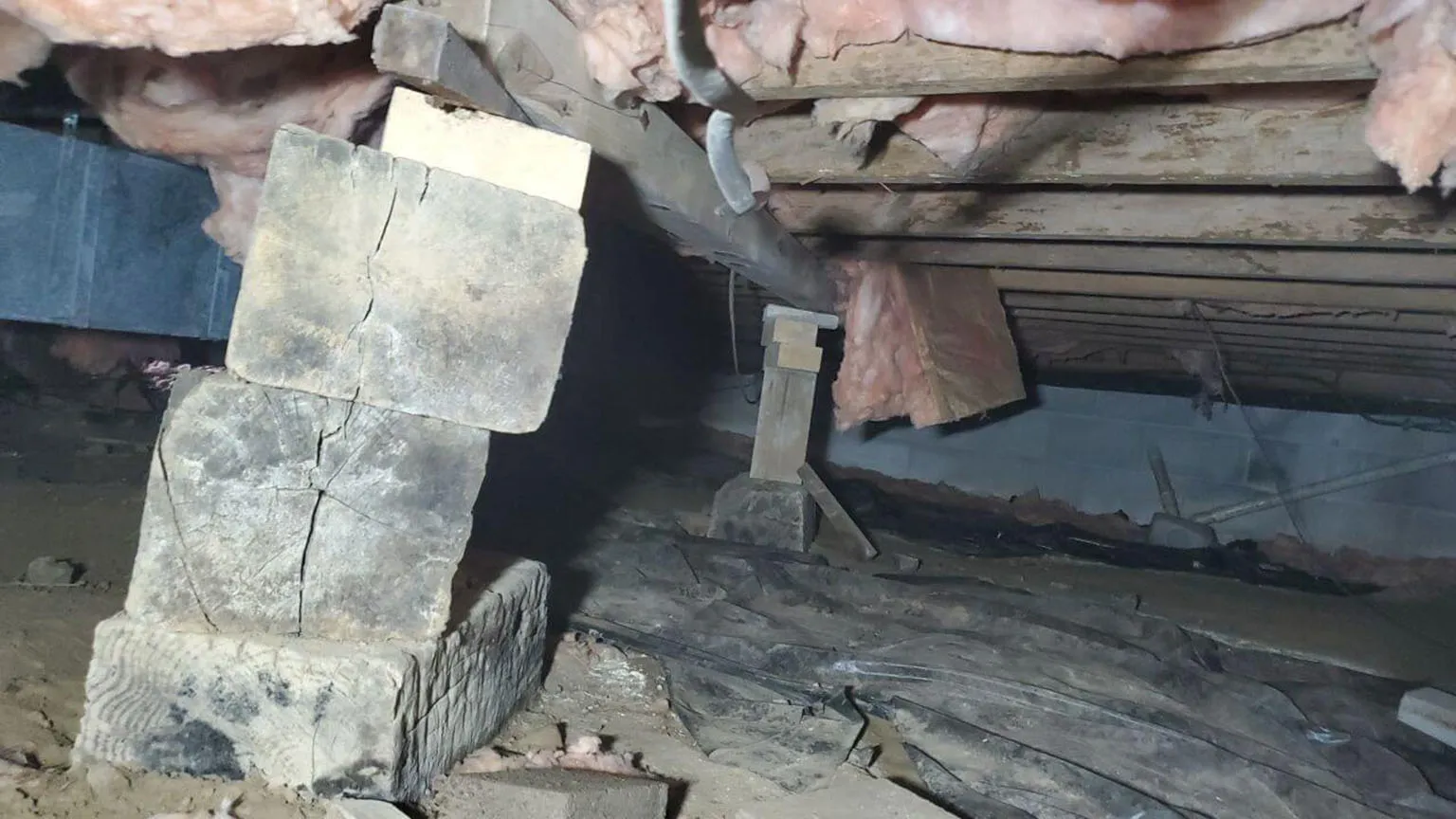
Not everything that sinks is a footing. When an interior slab settles, like a basement floor pulling away from the wall, slab piers carry that floor down to firm soil on its own, separate from the perimeter footing holding up the house.
Outside, polyurethane foam lifting is the quick one. We drill small holes, inject expanding foam under the concrete, and the slab rises as the voids fill. Driveways, garage floors, walkways and patios are its home turf. Bellmoore Park sees plenty of it, since newer construction and settled backfill go together like sweet tea and July.
One honest limit, though: foam lifts slabs. It does not underpin a footing. If a wall of the house has dropped, foam is the wrong tool at any price.
When is doing almost nothing the right call?
More often than our industry likes to admit. A hairline crack that held the same width through a wet spring and a dry August is dormant, and a dormant crack usually needs sealing, not steel. We mark it, measure it, write the date on the wall, and look again later.
Then comes water management, the quiet hero of this whole article. Since clay only misbehaves when its moisture swings, keeping moisture steady around the footing prevents most of what you just read. Clean gutters, downspouts carrying water six feet out, and soil graded to fall away from the house all do that job. Of every repair option Johns Creek homes get quoted, this one costs the least and prevents the most.
Walk the older streets near Ocee Park after a hard rain and you can almost map it. A downspout dumping beside a corner soaks that one spot every storm, so that corner moves first. Extend the downspout, build the low side back up with soil, and the story ends there.

Our rule after two decades: calm the soil first, then fix what the soil moved. Do it backwards and you’ll buy the same repair twice, about five years apart.
Should we stabilize, or actually lift?
Here’s a decision most estimates skip, even though it changes both the price and the result. Piers can hold a house where it stands today, or they can try to raise it back toward its original height. Those are two different jobs.
Stabilizing halts the movement and leaves everything at today’s position. It’s predictable, and it’s usually right when the settlement is old, the cracks are cosmetic, or there’s new tile downstairs you’d rather not disturb.
Lifting recovers lost elevation, so doors swing true again and floors read closer to level. To be fair, though, a house that settled over twenty years has painted and remodeled itself around the new shape. Coming back up can open fresh cracks and stress old plumbing. That’s not a reason to skip lifting — it’s a reason to choose on purpose.
What actually moves the number
- Pier count. Six piers at one corner is a different job than eighteen along a wall.
- Depth to bearing soil. Every added section of steel is material plus time.
- Access. Tight side yards, decks and mature landscaping slow the work down.
- Inside or outside. Interior piers mean floor work; exterior piers mean digging and restoring.
- Stabilize or lift. Lifting takes longer and carries cosmetic repairs behind it.
- Engineering. Some scopes call for an engineer’s letter, which buyers and lenders like anyway.
Permits vary by jurisdiction, so ask any bidder how they handle that. The International Code Council’s building safety resources are a neutral place to start.
So what would we recommend?
Heavy two-story with a settling wall and a clear drop in elevation? Push piers, driven to refusal, stabilized rather than lifted unless there’s a strong reason to go up.
Settling porch, stoop or addition, which is what a homeowner in Wellington brought us this spring? Helical piers. Sunken driveway or garage floor with sound footings elsewhere? Foam, done in a day. Block wall bowing under wet clay? Straps, or beams once it’s past what straps handle.
And here’s the one nobody expects in writing. If the crack hasn’t changed in six months, the floors read flat, and your gutters are the real story, buy downspout extensions and stop there. We’ll put that on the estimate gladly, because we’d rather be the company you call in ten years.
What does any of this have to do with the air upstairs?
More than you’d guess. Air in a house rises, so what sits in the basement or crawl space doesn’t stay put. It drifts up through floors and gaps around plumbing, which means a fair share of the air in your kitchen started downstairs.
That’s why sealed cracks and steady soil moisture matter beyond the structure. The musty smell fades, humidity evens out from room to room, and your air conditioner has less water to pull out of the air all summer.
Homeowners tell us that’s the part they notice. Not the piers, which nobody ever sees again — just a lower level that smells like a room, and the quiet pride of knowing the house is solid because you took care of it.
Does it matter who does the work?
For this kind of repair, yes, because soil is local knowledge. We’re based in Lawrenceville, twenty minutes east, and we’ve priced every repair option Johns Creek homes need, hundreds of times. Which streets sit on fill, which lots hold water, how deep piers usually run before refusal — that comes from repetition.
Want more before you call? Our foundation repair page walks through each method with photos, and our guide to hiring a foundation contractor covers what to ask before you sign. For sealing, start with crack repair. Folks a city over can compare Alpharetta foundation repair options.
Where we work around Johns Creek
We’re in Johns Creek most weeks, and we cover the neighbors: Alpharetta, Duluth, Suwanee, Roswell, Milton, Peachtree Corners, Norcross, Berkeley Lake and Lawrenceville, plus the wider Fulton area. The crew that measures your house is the crew that fixes it.
Questions we get in Johns Creek
Less than you’d expect. Pier work needs a small opening at the footing, so we cut and save the sod, then backfill and tamp once the brackets are set. Interior slab work never touches the yard. If your HOA wants notice before equipment arrives, we’ll handle that with you.
Usually not, though it is a real repair and it won’t straighten itself. We measure the bow, mark it, and check whether it has moved since the last look. Early bowing takes carbon fiber straps, while walls that have gone further get steel beams or an engineer’s review first.
By measuring, not guessing. We shoot floor elevations across the house, look at crack width and pattern, and check whether the same crack has changed over several months. A crack holding steady often needs sealing and a follow-up date, while floors dropping toward one corner point to settlement.
It rides on pier count, how deep the piers go before refusal, and how easy the work area is to reach. Foam lifting and small sealing jobs sit at the low end, while a long run of piers under a two-story wall sits at the high end. You get a written scope with counts and depths, plus $500 off projects over $3,500.
Sometimes, and often not. Wood swells in a humid Georgia summer, so a door that binds in July and behaves in November is usually just wood being wood. When sticking doors arrive with sloping floors, a diagonal crack and a gap above the frame, that combination is worth measuring.
Get a straight answer about your Johns Creek foundation
Bring us the inspection report, or just the crack that’s been bugging you. We’ll measure the movement, hand you elevations and photos, and name the one repair that fits — even when that repair turns out to be a downspout and a bag of soil.
(678) 914-5112Serving Johns Creek and all of Metro Atlanta · $500 off projects over $3,500 · Live support 7am–8pm, 7 days a week