

Foundation Repair Cost Alpharetta Homeowners Can Plan Around
What a pier really costs, why depth changes everything, how long the work takes, and how to tell a good job from a fast one.
The house had been mentioning it for about two years. A guest room door that needed a shoulder in August and swung fine in March. A thin line above the frame that got a coat of paint and came back anyway. So if you’re trying to understand foundation repair cost Alpharetta homeowners actually see on paper, the first useful thing to know is that this started long before you noticed it — and noticing late is normal, not a failure.
Good news right up front: slow is good. Movement that took years to show itself is movement we can measure, track and price honestly instead of guessing at.
How long has this been happening?
Longer than the crack suggests, and that’s the useful part. Georgia’s red clay is expansive soil, so it swells when it takes on water and shrinks back when it dries. That happens under your footings every year, which means a house here doesn’t settle once and stop. It breathes, season after season.
Because of that rhythm, the crack you spotted in September was probably opening a little each dry summer for years. The sticking door, the hairline over the frame and the gap at the baseboard are one story told three ways. If you want the soil science without a sales pitch, the University of Georgia Extension covers how our clays behave.
Here’s the hopeful part: slow movement is measurable movement. Alpharetta’s boom-era subdivisions are old enough now that this turns up on homes that look brand new from the street, especially the 1990s streets off Windward Parkway.

Does every crack mean piers?
Short answer: no. An honest inspection starts by sorting the crack, not by counting piers.
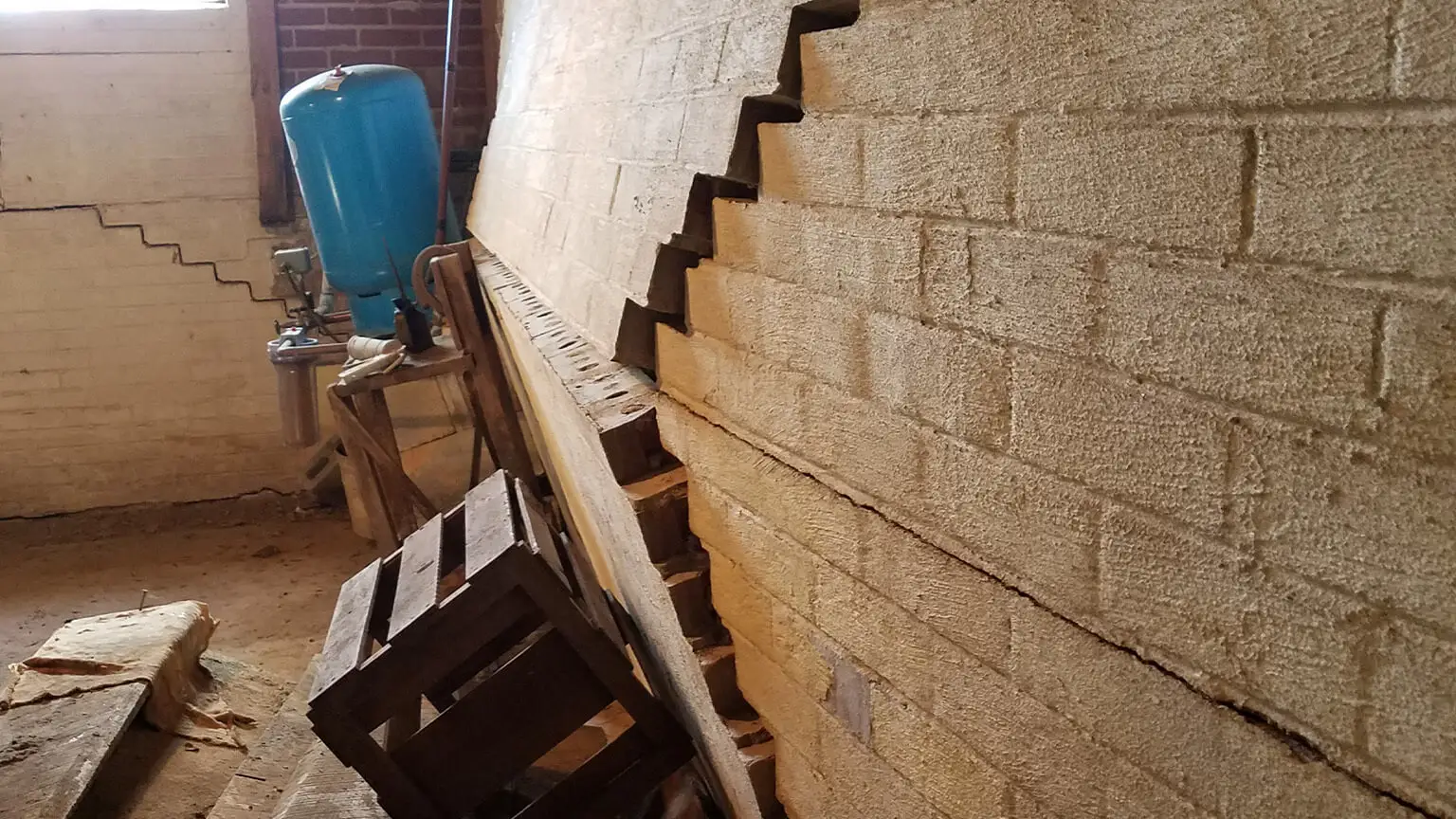
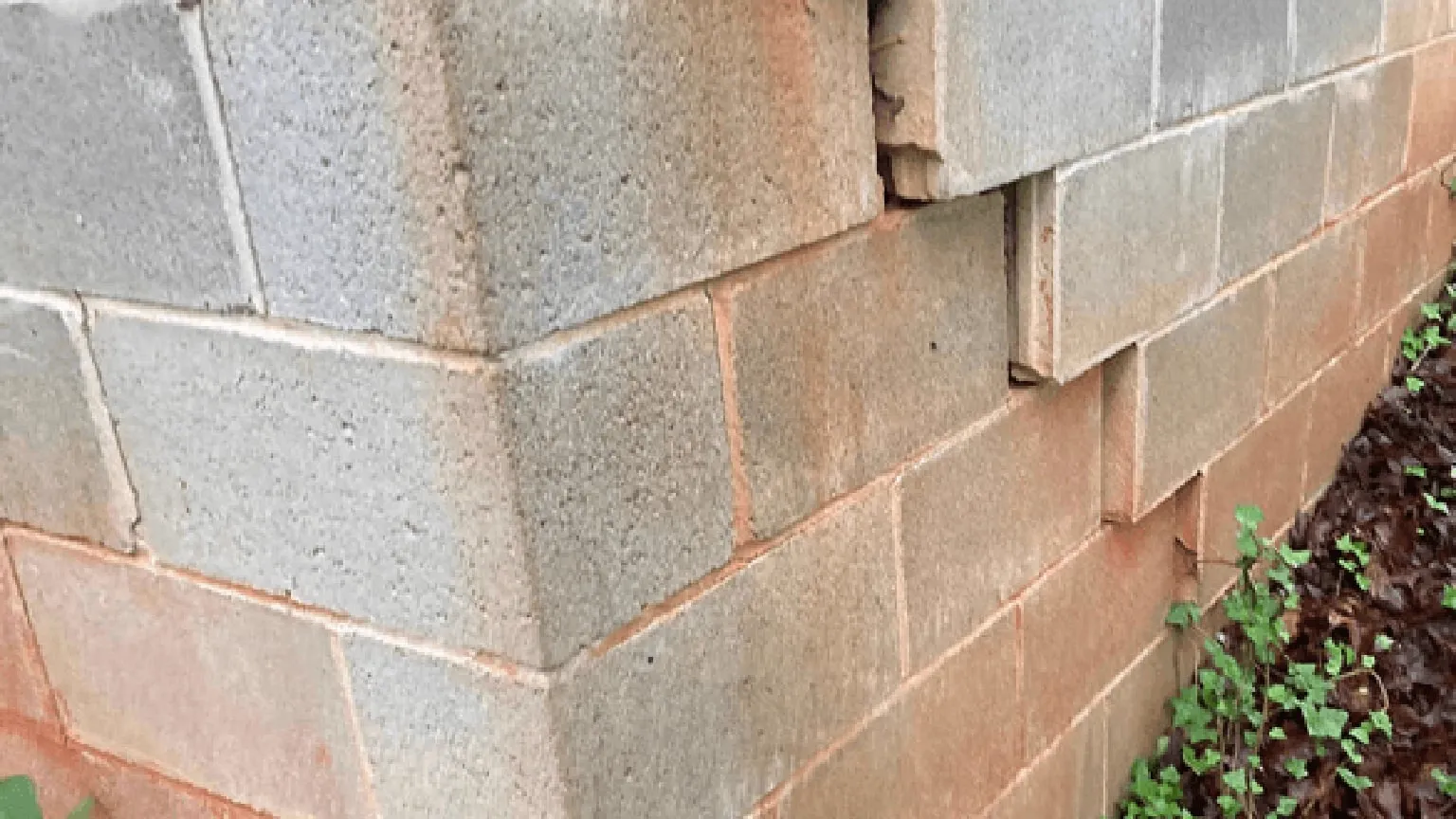
Thin vertical cracks in a poured wall are usually curing shrinkage — concrete giving up water in its first couple of years. Most of them just need sealing so water stays outside where it belongs. Stair-step cracks through block or brick mortar joints tell a different story, because that pattern says one part of the footing dropped more than another. That’s differential settlement, and that’s the family of problems piers were invented for.
Horizontal cracks sit in their own category. A wall cracked side to side is being pushed inward by wet soil, so the answer is bracing rather than lifting — different work, different price. Confusing the two is how homeowners pay for the wrong repair, which is why we name it out loud with you. Our page on foundation crack repair walks through each pattern.
Then comes the question almost nobody asks: is it still moving? We mark the crack, measure the width and check again over several months. A dormant crack that hasn’t budged since the last drought may only need sealing, which costs very little. Not every visit should end in a pier quote.
What is the number actually built from?
The pier. Nearly every foundation quote is built on two figures: how many piers the house needs, and how deep each one must travel before it reaches soil that will genuinely carry weight. Everything else orbits those two.
Depth is the part that surprises people, because we don’t choose it — the ground does. Two houses on the same street can hit competent soil at very different depths, and a pier that travels farther costs more in steel and machine hours. That’s a big reason the foundation repair cost Alpharetta homeowners are quoted can differ between neighbors with the same floor plan.
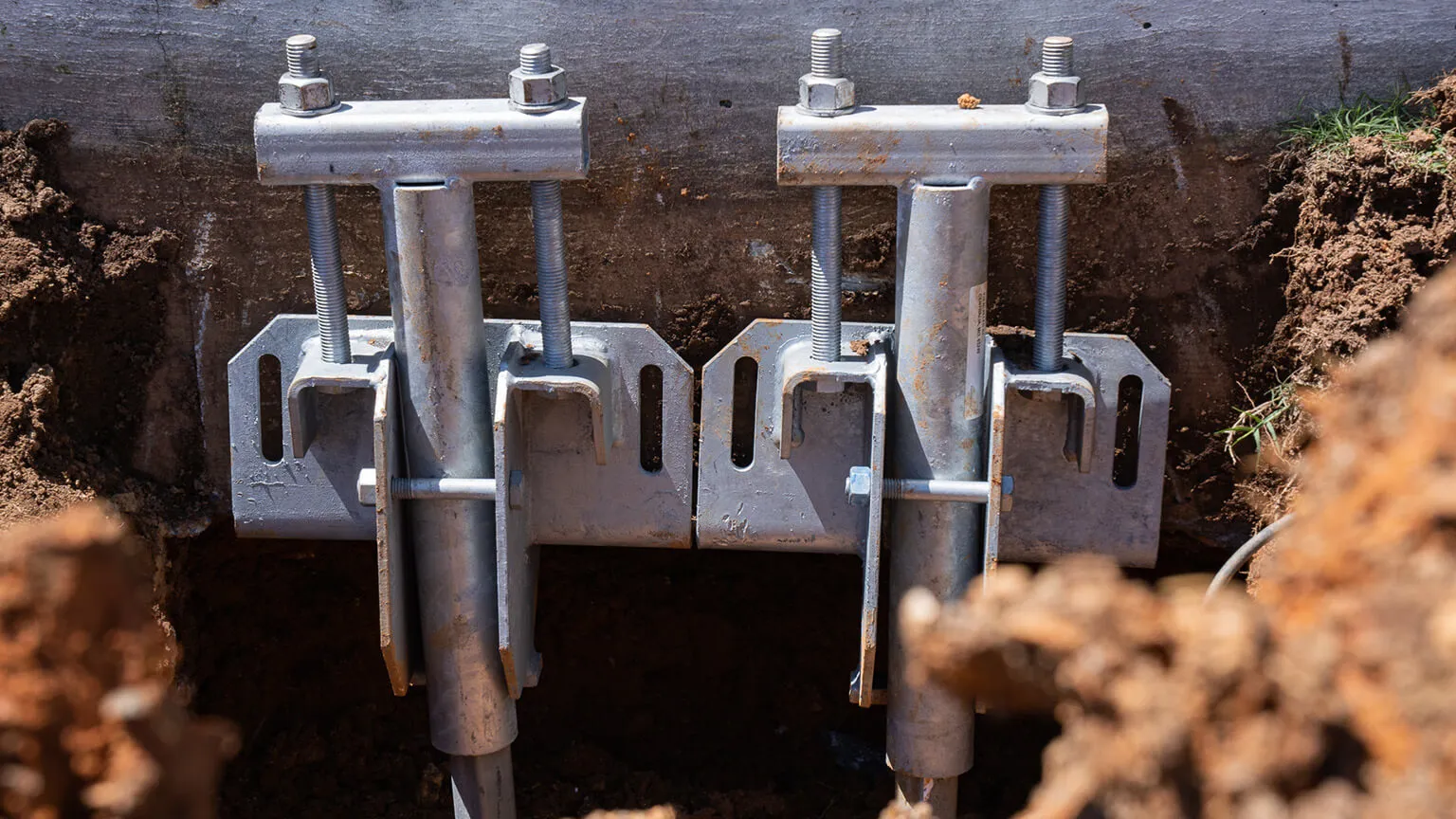
Method matters too. Helical piers screw down like a giant auger and suit tight access, such as the Avalon district townhomes with a few feet of side yard. Push piers use the weight of the house to drive steel to load-bearing soil, slab piers reach under a slab-on-grade floor, and foam lifting can raise some sunken concrete with no piers at all.
Worth knowing
Holding a house still costs less than putting it back. Stabilizing stops the movement where it is, while lifting tries to return the structure toward its old elevation. Lifting isn’t always possible or even wise, since a house that settled over twenty years has trim, brick and plumbing that settled with it — so pushing it back can open new cracks. We’ll tell you honestly which one your house is a candidate for.
What does the work look like, step by step?
Nobody enjoys mystery when there’s an excavator in the driveway, so here’s the order things happen in.
- The free inspection. We start outside — grading, downspouts, where water sits after a storm — then come in with a level.
- Measuring the movement. Floor elevations get shot across the house, and cracks get marked and dated. That’s what separates a diagnosis from a guess.
- The written plan. Pier count, pier type, target depth, stabilize or lift, access route, price. One document you can read at the kitchen table.
- Engineering and permits, when the job calls for it. Bigger repairs may need a stamped report. It adds cost, and it’s often worth it.
- Opening the access points. We dig at each pier location down to the footing, one at a time.
- Setting the piers. Steel goes down until it meets soil that holds, and each pier gets load-tested as it’s installed rather than assumed.
- Transfer, then backfill. Brackets take the weight, lift happens slowly if it’s in the plan, and you finish with photos, final depths and the warranty.
Why can two estimates land thousands apart?
This part confuses good people, so it deserves a plain answer. Two companies can walk the same house and hand you numbers that look like they’re for different planets — usually because they’re pricing different work, not because one found a discount.
What moves foundation repair cost Alpharetta quotes up or down
- How many piers. One dropped corner is a short day. A whole side of the house is not.
- How deep they go. The ground decides this, and no estimate can promise a depth before the first pier goes down.
- Which method. Helical, push, slab piers and foam lifting all price differently, and each suits a different situation.
- Getting to the work. A clear side yard is cheap access, while mature landscaping, a patio or a driveway adds labor.
- Stabilize or lift. Elevation recovery takes longer and costs more than simply stopping the movement.
- Engineering, permits and drainage. A stamped report is a separate line item, and gutter or grading corrections often ride along — piers hold a house up, but they don’t change what the soil does next.
A pier price without a depth conversation is a coin flip with your money. We’d rather explain the variable than pretend it isn’t there.
So when you compare bids, line up the pier count, the pier type and the stated depth assumptions first. After that, ask each company what happens if a pier has to go deeper than planned, because the answer tells you a lot about who you’re hiring. For a side-by-side look at methods, our guide to foundation repair options lays them out, and our breakdown of Duluth foundation repair cost uses the very same math one county over. Code and safety questions are answered neutrally by the International Code Council.
How long does it take, and what should you do first?
Most residential pier jobs run one to three days on site, and small ones finish in a single day. Larger repairs with lift, or homes on the Big Creek floodplain lots where groundwater is genuinely high, can stretch longer because the soil work takes more care.
Your prep list is refreshingly short. Move planters and hoses away from the work area, unlock the gate, keep pets inside for the day, and flag your irrigation lines if you know where they run. We’ll handle the rest, and if landscaping has to move, we talk about it before a shovel touches it — not after.
What can you honestly do yourself?
More than you’d think, and we’d rather tell you than bill you. Extending downspouts six to ten feet out, keeping gutters clear, and regrading soil so it falls away from the house all reduce the moisture swings under your footings. Consistent soil moisture is the real goal, since the clay only misbehaves when it goes from soaked to bone dry.
What DIY can’t reach is load. Stacked blocks, shims and a bottle jack under a girder feel like progress, but they rest on the same soil that moved in the first place. Piers work because they bypass that soil entirely, and that takes equipment, load testing and a warranty behind it.
What does a settling corner have to do with the other rooms?
Here’s the connection almost nobody makes. A foundation doesn’t move in one spot — it tilts a plane, and everything attached to that plane goes along for the ride. That’s why the symptoms show up in rooms nowhere near the crack.
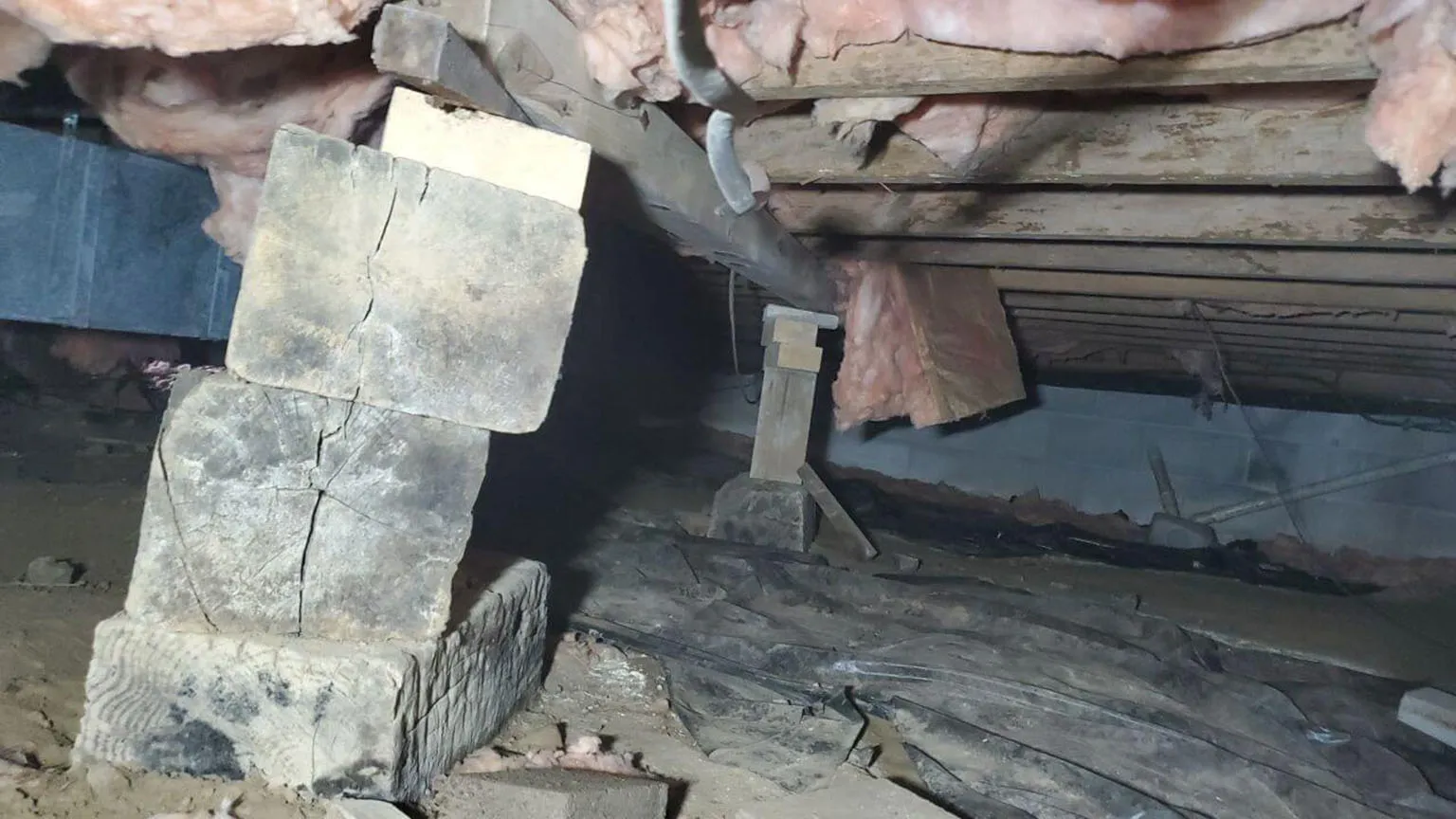
Upstairs doors stop latching. Tile grout lines open in a hallway. A window that used to slide now needs both hands, and a floor develops a spot where a marble rolls on its own. In a crawl space, ductwork joints can pull apart as the framing shifts, so an over-worked HVAC system is sometimes a foundation symptom wearing a disguise.
The good news is that these all come from one cause, which means one correct repair usually quiets the whole list. Once the movement stops, the cosmetic fixes finally hold — because the trim, drywall and grout are no longer being pulled on. We had a homeowner over near Hopewell Plantation who’d re-caulked the same bathroom seam three times before we set piers under the corner outside. It stayed put after that.
How do you know the job was done right?
Ask for four things and you’ll separate careful work from quick work fast. First, the final installed depth of every pier, written down. Second, load-test records or installation pressures for each one. Third, photos from before the backfill went in. Fourth, a warranty you can read in one sitting.
On that warranty, ask exactly what it covers — the pier itself, further settlement at that pier, or the cracks you can see — and ask whether it transfers to a buyer. Those are different promises, and the difference matters at closing. Plenty of Academy Park sellers have been glad to hand a transferable document to an inspector.
Then the real proof arrives quietly. Next August, the door still swings. The crack you marked stays where you marked it. You stop checking it every time you walk by, which is the whole point. We’ve been doing this work for over twenty years, from the older streets near Northwinds office park to the newer builds around Avalon, and our full foundation repair service page covers the systems in detail.
Where we work around Alpharetta
Our shop is about twenty-five minutes east in Lawrenceville, so we’re up the GA-400 corridor most weeks. We also cover Milton, Johns Creek, Roswell, Cumming, Duluth, Sandy Springs, Suwanee, Peachtree Corners and the wider Fulton County area. If you’re anywhere near the Windward Parkway exits, there’s usually a truck close by already.
Questions we get from Alpharetta homeowners
Yes, and you should read it before anyone digs. Ask what it actually covers — the pier, further settlement at that pier, or visible cracks — because those are three different promises. Ask whether it transfers to a buyer too, since that document does real work at closing.
We dig at each pier location, so there’s real disturbance while we work, but it’s targeted rather than a trench around the whole house. Shrubs in the way get moved and replanted when they can be, and we talk that through before the day starts. Soil goes back and gets tamped, and most yards recover within a season.
Usually it’s urgent rather than an emergency, and there’s an important difference. A wall bowing from soil pressure should be looked at soon and monitored, because that pressure doesn’t relieve itself. Get it measured, and we’ll tell you plainly whether it needs bracing now or watching for a few months.
Look for a pattern rather than a single crack: doors that stick seasonally, stair-step cracks in block or brick, floors that slope, and gaps opening at trim. Then track it, because width that grows over several months means active movement while a crack that holds still may only need sealing. Our free inspection includes elevation readings so you’re deciding from measurements.
It comes down to how many piers your house needs, how deep they have to go, which method fits, and whether we’re stabilizing or attempting lift. A few piers under one corner with easy access sits at the low end, while a long run with deep piers, engineering and lift sits at the top. We give you one written number after measuring the house, never a guess over the phone.
Let’s find out what your foundation is really doing
The inspection is free, the estimate is free, and nobody pressures you at the end. We’ll measure the movement, sort the cracks, and show you what the work would involve here in Alpharetta — including the times when the honest answer is “seal it and watch it.”
(678) 914-5112Serving Alpharetta and all of Metro Atlanta · $500 off projects over $3,500 · Live support 7am–8pm, 7 days a week